General Introduction
The Museum of History and Culture, affiliated with the Faculty of Social Sciences and Humanities, Vietnam National University, Hanoi, is the first university museum in the field of social sciences and humanities in the country.
The museum's mission is to research, preserve, and promote heritage, culture, and historical cultural resources to serve the country's development, while also contributing to the training of high-quality human resources in the fields of social sciences and humanities. The museum directly participates in and supports training and scientific research through its unique activities, such as special lecture halls that combine theory with practice to effectively utilize the abundant knowledge and rich experience of leading researchers and a large number of young intellectuals; and to maximize the use of the physical facilities and scientific materials accumulated over decades.
The museum performs the following main functions:
- Collecting, preserving, restoring, and reconstructing artifacts, specimens, and collections of traditional and modern Vietnamese tangible culture;
- Collect and preserve, through various means, traditional and contemporary intangible cultural heritage and assets for research and training purposes;
- Displaying collections of artifacts and specimens in various forms, using both traditional methods and modern techniques;
- Socializing and internationalizing museum activities, utilizing specimen collections in teaching, research, and scientific collaboration;
- Research topics related to the fields of history, culture, conservation, and museums.
- Managing the Museum of Traditions.
Board of Directors
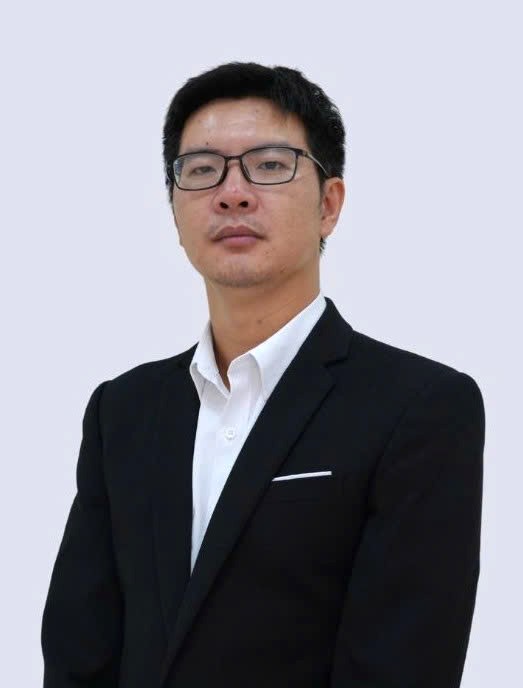 Responsible Dr. Nguyen Huu Manh |
Typical activities
Display
The museum organizes various forms of exhibitions that apply traditional methods combined with the application of modern technology:
- The permanent exhibitions of a university museum, in addition to meeting the general standards of museum exhibitions, also have specific purposes. To achieve the goal of both showcasing cultural values and serving research and training, museum artifacts are arranged in two types of exhibitions: closed exhibitions and open exhibitions, with open exhibitions being a unique approach of the Museum of Anthropology.
- Thematic Exhibitions: For an educational museum, thematic exhibitions, utilizing modern techniques, original artifacts, and diverse illustrations, are just as important as regular exhibitions. The themes of these exhibitions closely follow the research and training content of the School and address current national issues. Typical thematic exhibitions include: “Dien Bien Phu – A Historical Rendezvous”, “Vietnam’s Seas and Islands”, “Truong Sa and Hoang Sa – A Nation at the Forefront of the Waves”, “My School”, “Dialogue with the Heritage of Terraced Rice Fields”…
- Virtual Exhibition: To partially overcome the limitations of the small fixed exhibition space and with the aim of connecting artifacts to their specific historical and cultural context, since 2012, the Museum has implemented the "Virtual Museum" project, which helps to expand, modernize, and change the way information about real museum collections is displayed and disseminated in a more up-to-date, timely, and comprehensive manner.
Artifact collection
The museum was built upon a collection of artifacts from the French School of Far Eastern Studies (Republic of France) and several collections of archaeological artifacts collected over many years by lecturers and students of the Archaeology Department, Faculty of History, from the Pre-, Early, and Historical periods. Besides archaeological collections, for more than ten years, the museum has focused on collecting artifacts related to ethnology, Sino-Vietnamese studies, and Vietnamese culture. Through various collection methods including donations, trade exchanges, exchanges, and field research, the museum's collection has continuously increased in both quantity and quality.
Experimentation, post-field treatment, scientific research
At the Museum, artifacts from archaeological excavations, field trips, ethnographic collections, and Vietnamese cultural studies have been systematically and scientifically processed. After processing, the artifacts have been returned to local museums in accordance with the Law on Cultural Heritage, and some fragments and collected artifacts have been added to the Museum's sample collections. In addition, the Museum actively facilitates learning and living opportunities for students and researchers.
Contact information
Floors 3-4, Building D, University of Social Sciences and Humanities - VNU Hanoi
336 Nguyen Trai Street, Thanh Xuan District, Hanoi
Phone: (024) 3558 9744
E-mail:btnhxhnv@gmail.com
Facebook:btnhxhnv@gmail.com/Museum of Anthropology

