In this era of rapidly developing digital technology, finding and accessing information has become easier than ever. However, amidst thousands of newspapers, magazines, and other forms of media, understanding the history, value, and power of traditional journalism remains essential. With the mission of preserving and disseminating these values, the Vietnam Journalism Museum has become an attractive destination not only for researchers but also for journalism students, where young people can visit and learn about the development of Vietnamese journalism.
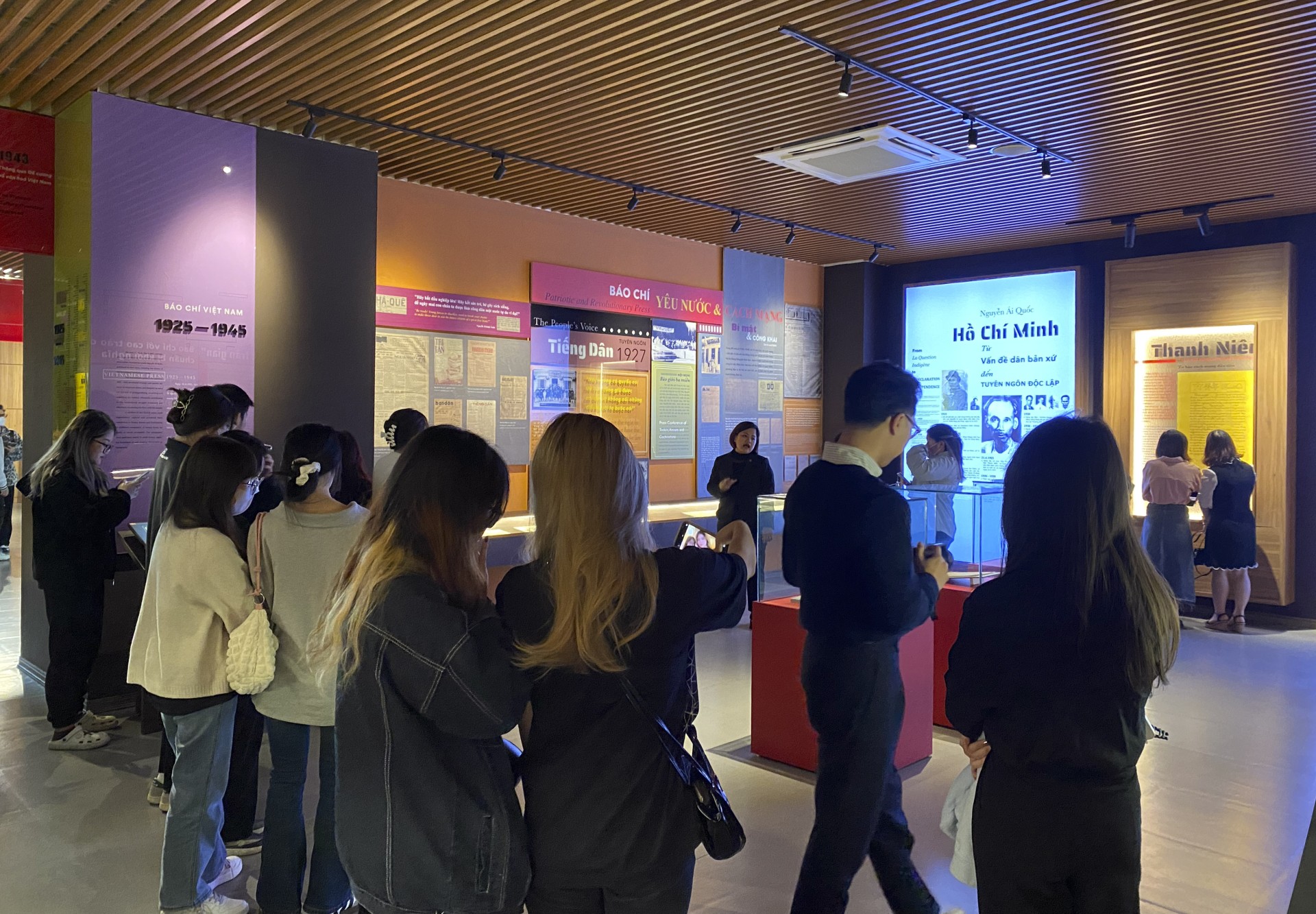
Journalism students on a study tour at the Vietnam Journalism Museum. (Photo: Cam Ly)
At the museum, the historical periods of Vietnamese journalism are vividly recreated through exhibits, artifacts, and ancient documents, divided into five main sections: Vietnamese journalism from 1865 to 1925; from 1925 to 1945; from 1945 to 1954; from 1954 to 1975; and from 1975 to the present.
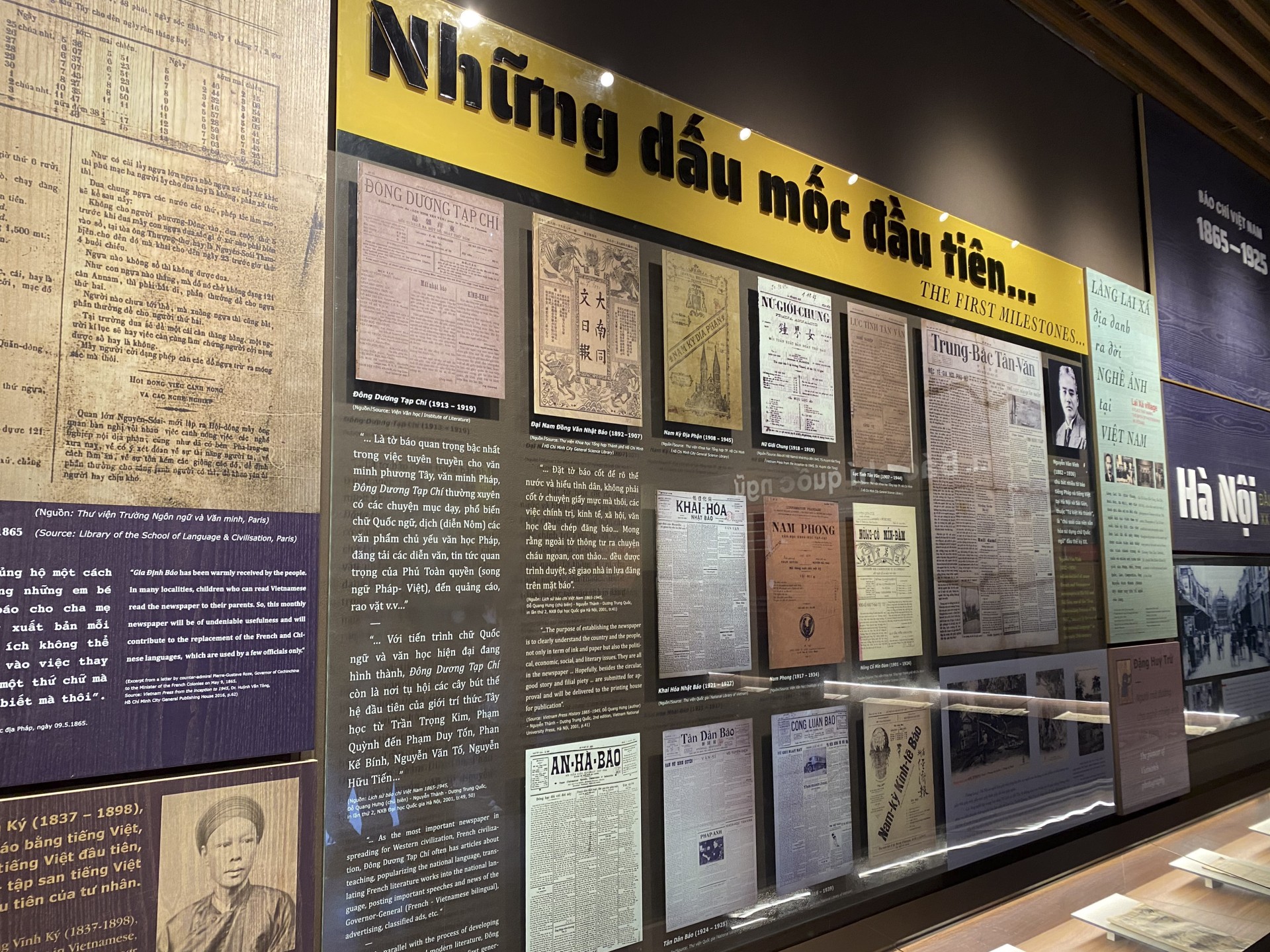
From Gia Dinh Newspaper - the first Vietnamese-language newspaper, or Thanh Nien Newspaper - the newspaper that initiated revolutionary journalism in Vietnam, to important milestones in the development of all aspects of journalism, all are preserved and displayed in the museum's nearly 1,500 square meter area.
The Vietnam Press Museum is a place that preserves memories and artifacts of Vietnamese journalism. (Photo: Cam Ly)
For journalism students, visiting, exploring, and studying at the museum not only provides new knowledge but also offers a chance to gain a deeper understanding of the importance of journalism in the nation's development. The artifacts at the Museum of Journalism also serve as evidence of freedom of speech and citizens' rights.
Furthermore, visiting the museum is also an opportunity for young people to learn about the techniques and technologies used in journalism, from old printing presses to modern printing and broadcasting equipment. Every step in the museum is an opportunity to discover how journalism has advanced in distributing information and communicating with readers.
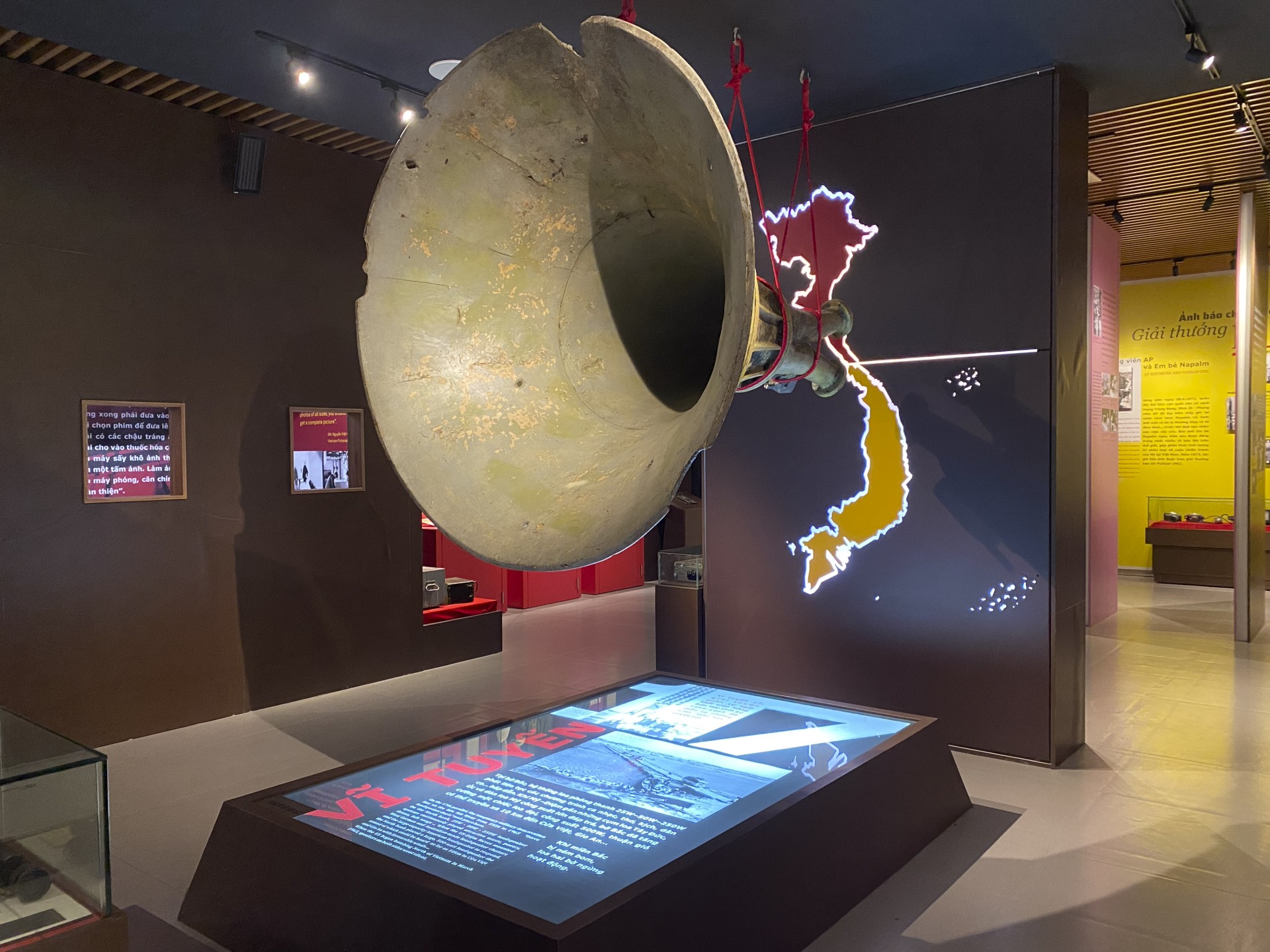
One of the four high-powered loudspeakers located at the 17th parallel – the north bank of the Ben Hai River – is on display at the museum. (Photo: Cam Ly)
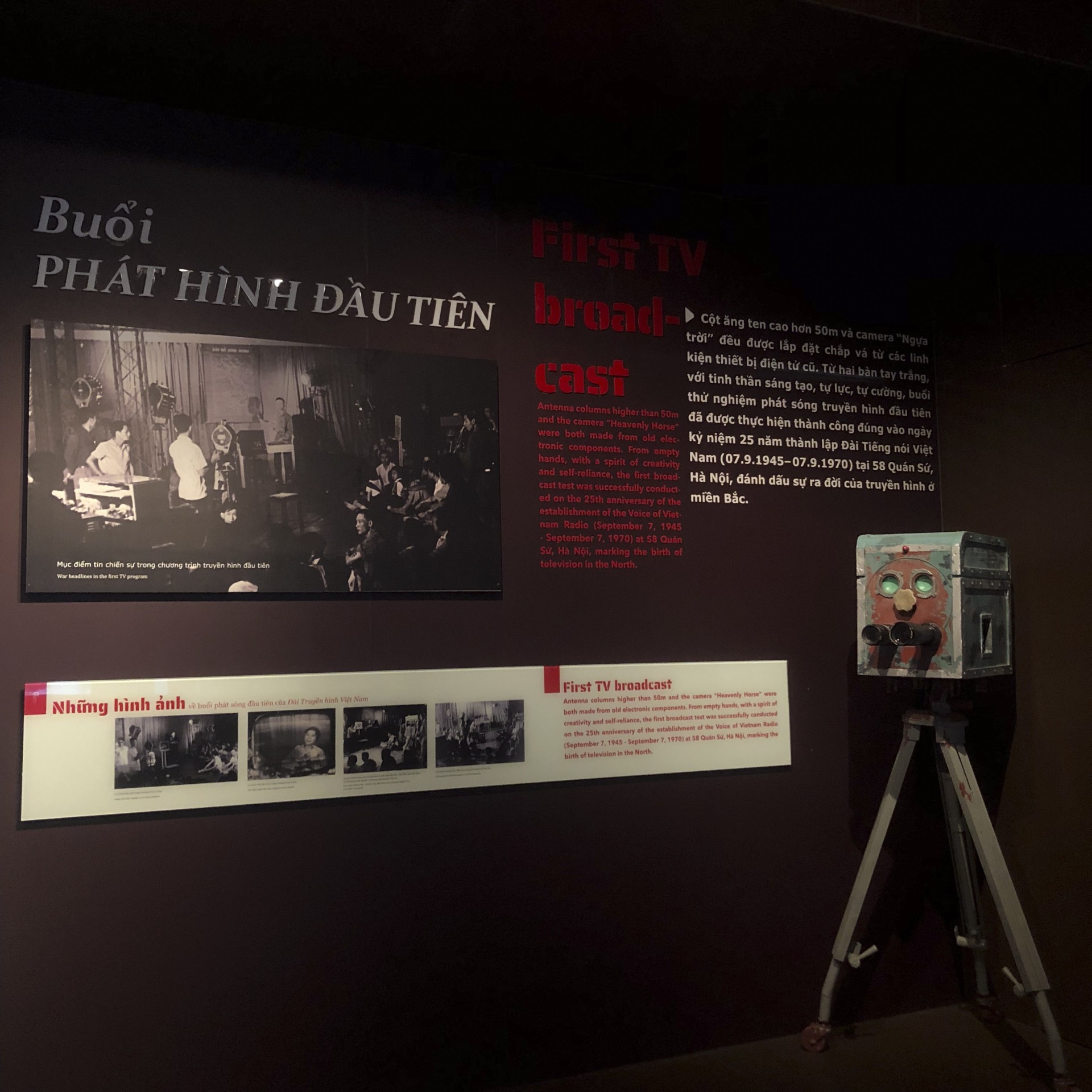
The "sky horse" camera marked the first milestone of Vietnam's first visual news outlet - Vietnam Television - on September 7, 1970. (Photo: Kim Chi)
Visiting and learning at the Museum of Journalism not only helps students of the Institute of Journalism and Communication Training gain a deeper understanding of the history and value of journalism, but also evokes a sense of nostalgia and immense gratitude towards the generations of journalists who came before them. This, in turn, sparks interest and passion in pursuing a career in journalism in the future. The Vietnam Museum of Journalism is not only a place that preserves memories but also an endless source of inspiration for young Vietnamese people on their journey to pursue a career in journalism.