
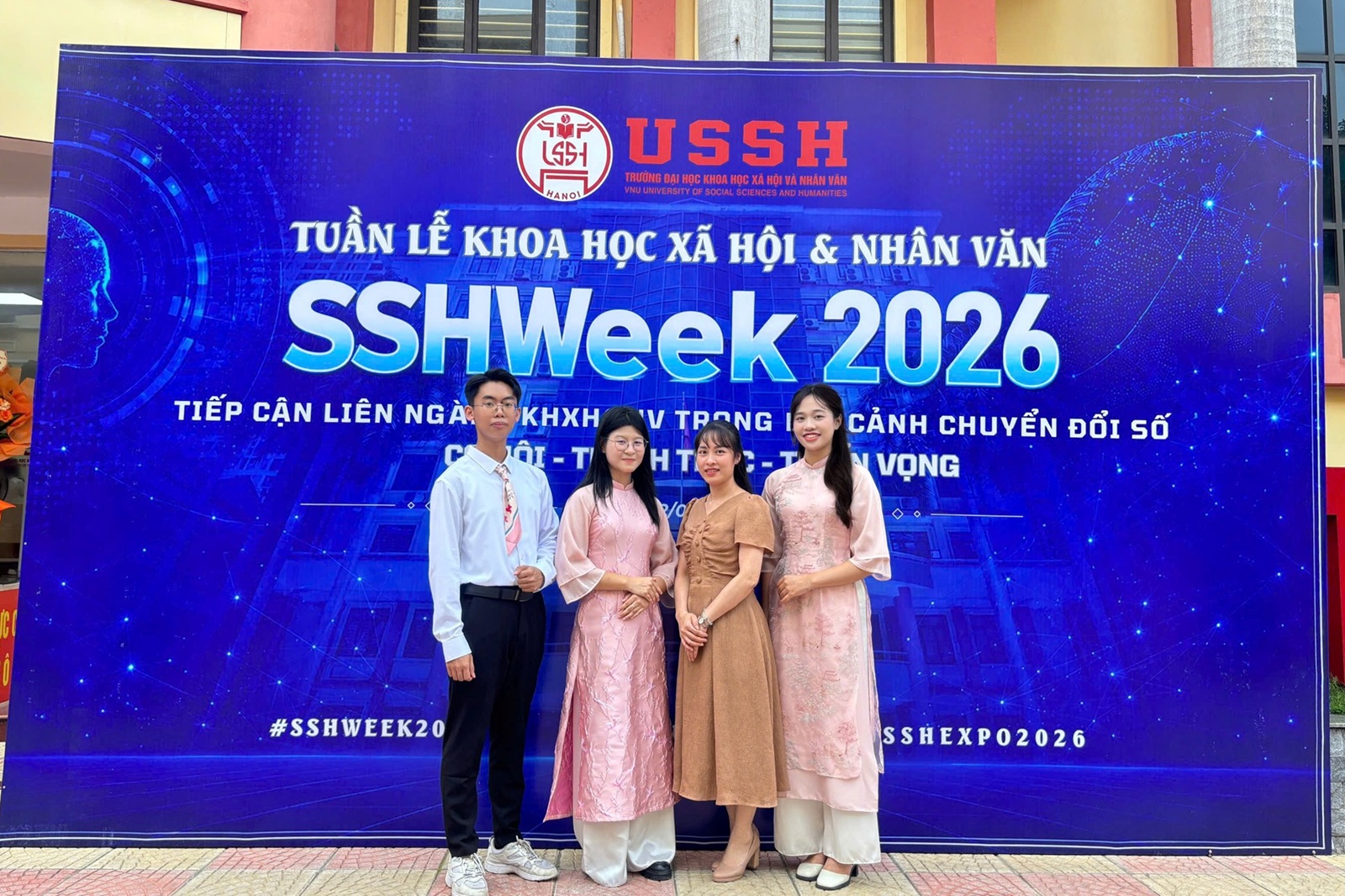
The research team consists of students from the Department of Psychology, Faculty of Social Sciences and Humanities, Vietnam National University, Hanoi.
According to Tran Ngoc Son, the research team leader, the idea for the project stemmed from very common observations in the school environment, where students have distinctly different approaches to learning: some learn out of passion, some learn under pressure, and some learn in a state of "no longer having real motivation."
The question is what makes the difference, and whether the family – the closest element to the student – is playing a decisive role in shaping their motivation to learn.
Motivation to learn doesn't just come from school; it starts in the family.
In their theoretical approach, the research team chose Self-Determination Theory (SDT) as the foundation for their analysis. This is one of the modern psychological theories that argues that human motivation does not only come from rewards or external pressure, but strongly depends on whether individuals are satisfied with three basic psychological needs: the need for autonomy, the need for competence, and the need for belonging.
When these three needs are met, individuals tend to develop sustainable intrinsic motivation, meaning they learn because they understand the meaning and value of learning, rather than out of fear of punishment or a desire for reward.
Within the family context, parents play a particularly important role in nurturing or inadvertently diminishing these needs. The way parents communicate, guide, and respond to their children's academic outcomes can directly impact students' sense of autonomy and self-worth.
The research team was particularly interested in two opposing concepts: supportive autonomy and psychological control. While supportive autonomy helps children feel respected and have a voice in their learning, psychological control causes them to learn in a state of being imposed upon and dependent on external expectations.
A survey of over 1,200 students reveals thought-provoking findings.
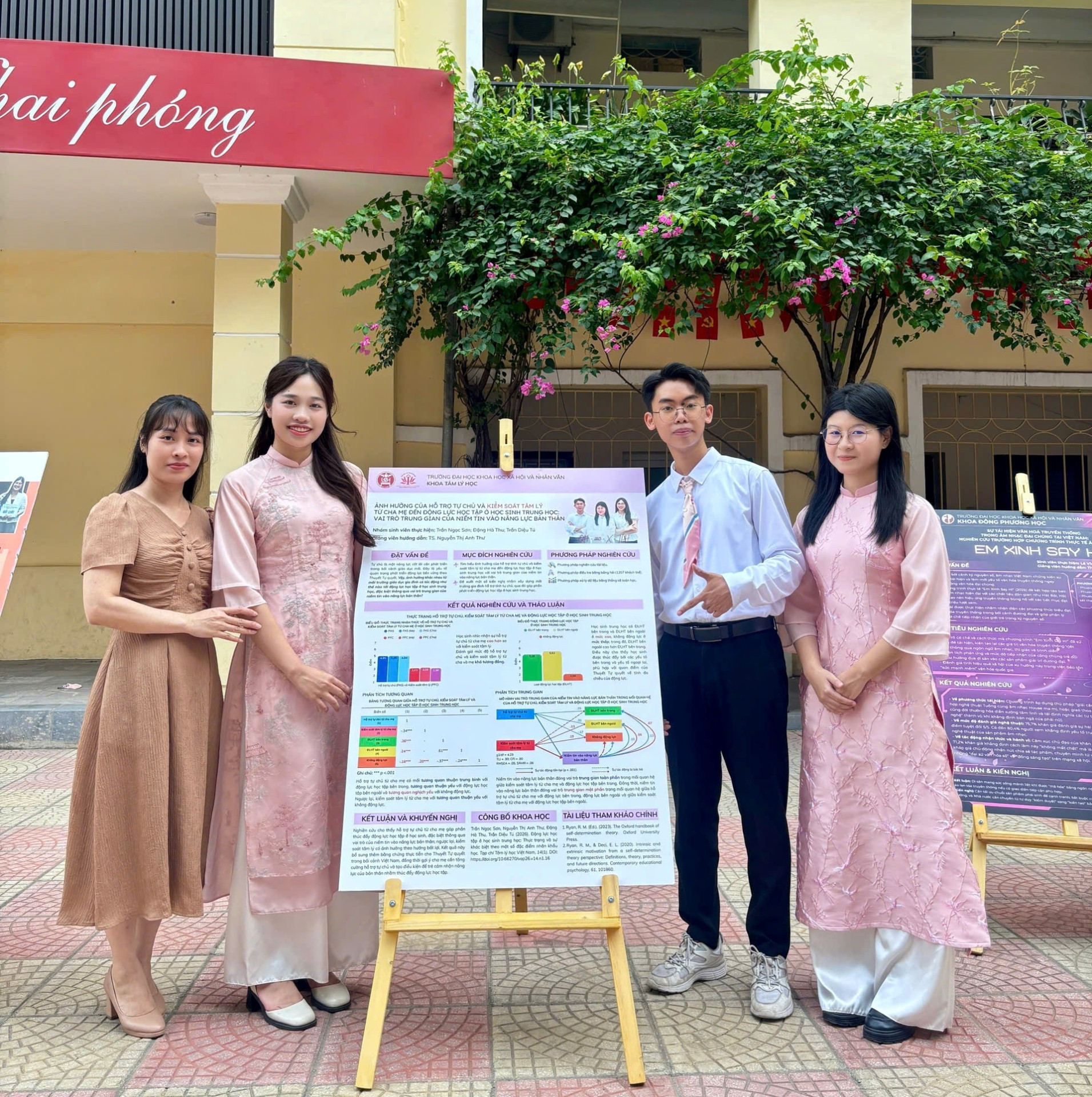
To test the research hypothesis, the team surveyed over 1,200 students in Hanoi and Phu Tho. The results revealed a fairly clear picture of current school psychology.
The first thing to note is that motivation for learning doesn't simply stem from a desire for high achievement, but is closely related to students' self-perception. Students who feel valued, capable, and respected tend to be more motivated learners.
Conversely, students who are frequently under pressure or excessive control tend to learn in a reactive manner, lacking intrinsic engagement with their studies.
A key finding of the study is the mediating role of self-confidence. This is a psychological factor reflecting the extent to which students believe they can complete academic tasks and overcome difficulties.
When students have a positive belief in their own abilities, they are not only more proactive in their studies but also able to maintain long-term motivation, even in the face of failure. Conversely, when this belief diminishes, students are more likely to become anxious, avoid challenges, and quickly lose motivation.
This shows that learning motivation is not a single factor, but rather the result of a complex interaction between the family environment, personal perceptions, and learning experiences.
Supporting autonomy: accompanying rather than controlling.
Based on the research findings, the team emphasized that the concept of "supportive autonomy" does not mean laxity in education, but rather an approach based on respect and understanding.
According to Mageau et al. (2015), support for autonomy includes three main elements: acknowledging children's feelings, providing reasonable justifications for their requests, and offering choices within appropriate limits.
In practice, this means parents need to listen to their children's feelings instead of rushing to judgment. When children are under academic pressure, what they need first is not advice or criticism, but a feeling of being understood.
In addition, explaining the reasons behind the rules helps children understand the meaning of the behavior instead of simply complying out of fear. For example, instead of telling students "you must study right now," parents can explain that regular studying improves memory and reduces stress before exams.
Furthermore, giving children choices within safe boundaries helps them develop a sense of autonomy and responsibility. Small choices in daily life can significantly contribute to building self-confidence.
Conversely, forms of psychological control such as comparison, threats, pressure, or associating self-worth with achievement can have long-term negative impacts. While they may yield short-term results, in the long run, they undermine intrinsic motivation and cause students to study under stress.
Self-belief: the key factor in the sustainability of motivation.
One of the most important findings of the study is the role of self-belief in maintaining learning motivation.
According to the research team, the difference between a persistent student and a student who easily gives up lies not entirely in ability, but in how they evaluate themselves.
Students who believe they can improve tend to be more persistent, embrace challenges, and view failure as part of the learning process. In contrast, students lacking confidence are more prone to avoidance and fear of failure.
From a psychological perspective, self-confidence acts as a "cognitive filter," determining how students interpret success and failure. When this belief is positive, failure is seen as a learning opportunity; when it is negative, failure becomes evidence of "inadequacy." Notably, research shows that students' self-confidence is strengthened through parental support and involvement in their studies and lives.
Therefore, building self-confidence is not only the responsibility of individual students, but also requires support from families and schools through creating opportunities for them to be proactive, have their efforts recognized, and experience a sense of success in their studies.
Students don't need added pressure, but rather understanding and lessons learned from the research process itself.
From the overall research findings, the authors emphasize one important message: pressure is not always a motivator.
In many cases, what students need is not pressure, but an environment where they are trusted, listened to, and allowed to make mistakes.
Families and schools that focus solely on achievement may inadvertently create a learning system based on fear rather than growth.
Conversely, a positive educational environment is one where students are encouraged to experiment, their efforts are recognized, and they are supported in their growth process.
During the research process, the group of students reported that they not only collected data but also listened to the many psychological stories behind each response.
There are subtle nuances in how students choose their survey answers that reflect pressure, hesitation, and internal conflicts between personal desires and family expectations.
This helped the group realize that social science research is not just about analyzing data, but also about understanding people within their specific cultural and social contexts.

Expectations from the research
The research team hopes that the findings will help parents re-evaluate their role in shaping their children's motivation for learning.
With just small changes in how parents communicate, listen, and support their children, they can make a big difference in their children's psychology and motivation to learn.
At the same time, the study also suggests an approach for schools in building a learning environment that supports students' basic psychological needs, thereby helping to reduce academic pressure and enhance intrinsic motivation.
Research by students from the Faculty of Psychology, University of Social Sciences and Humanities, Vietnam National University, Hanoi, not only contributes to clarifying the relationship between family and learning motivation, but also raises an important question for modern education: how can students learn not just out of pressure, but for their own personal development?
Throughout that journey, proper support from parents and schools can be a decisive factor in helping students develop lasting motivation and self-confidence.
Author:According to VNU Media
Older news

