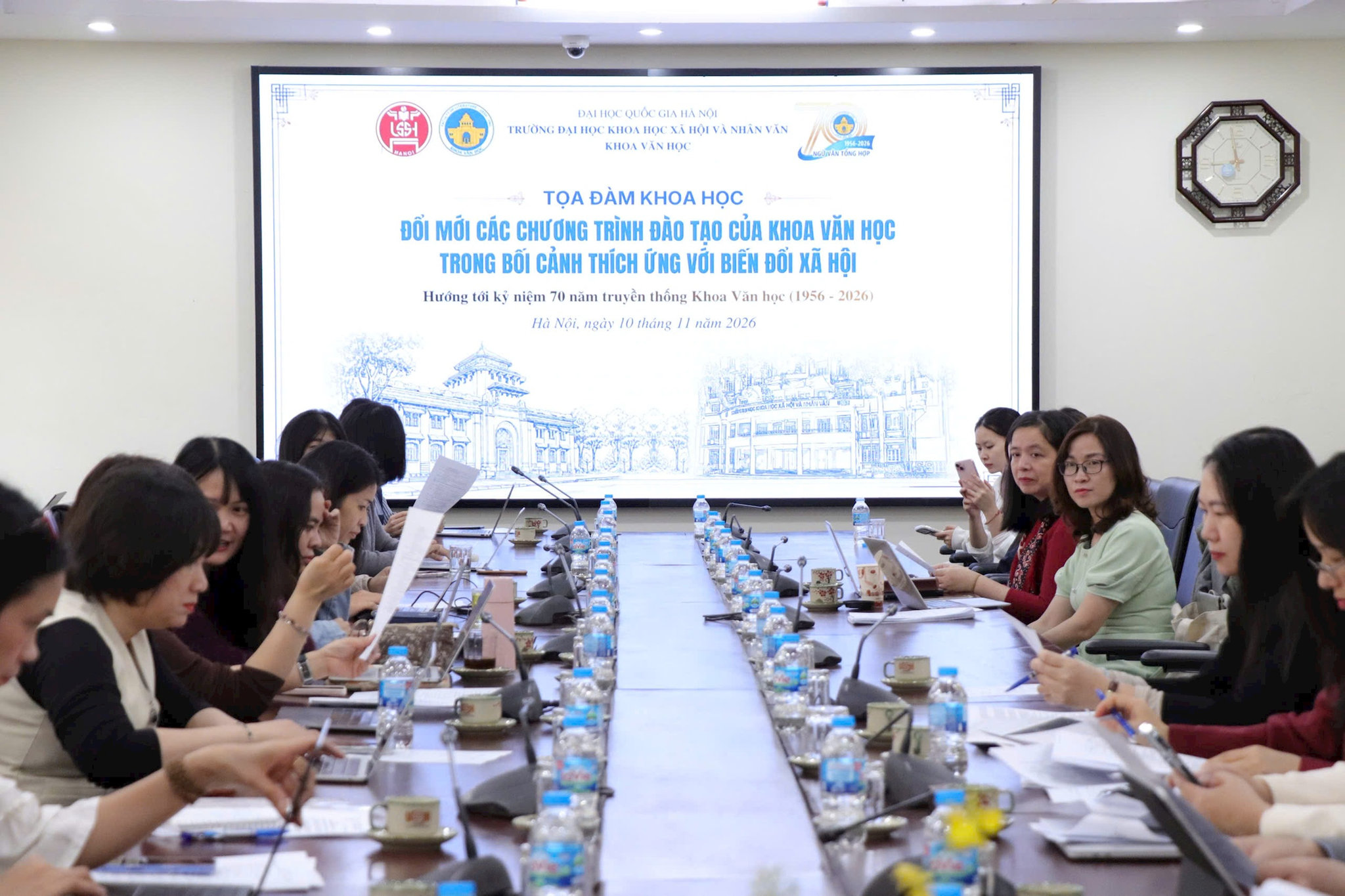
The scene at the seminar. (Photo: Van Khanh)
On November 10-11, the Faculty of Literature, University of Social Sciences and Humanities (Vietnam National University, Hanoi) organized a scientific seminar with the theme "Innovating the training programs of the Faculty of Literature to adapt to social changes".
The seminar consisted of three parts: the contemporary social context and development orientation of the Faculty of Literature's training programs; innovation in training content and methods and leveraging the interdisciplinary potential and integration of the training unit; and developing learners' competencies, linking training with professional practice and societal needs.
Balancing academic background and professional skills
In her opening remarks, Associate Professor, Dr. Nguyen Thu Hien, Head of the Faculty of Literature, stated that the seminar is part of a series of events leading up to the 70th anniversary of the Faculty of Linguistics and Literature, Hanoi University, now the Faculty of Literature.
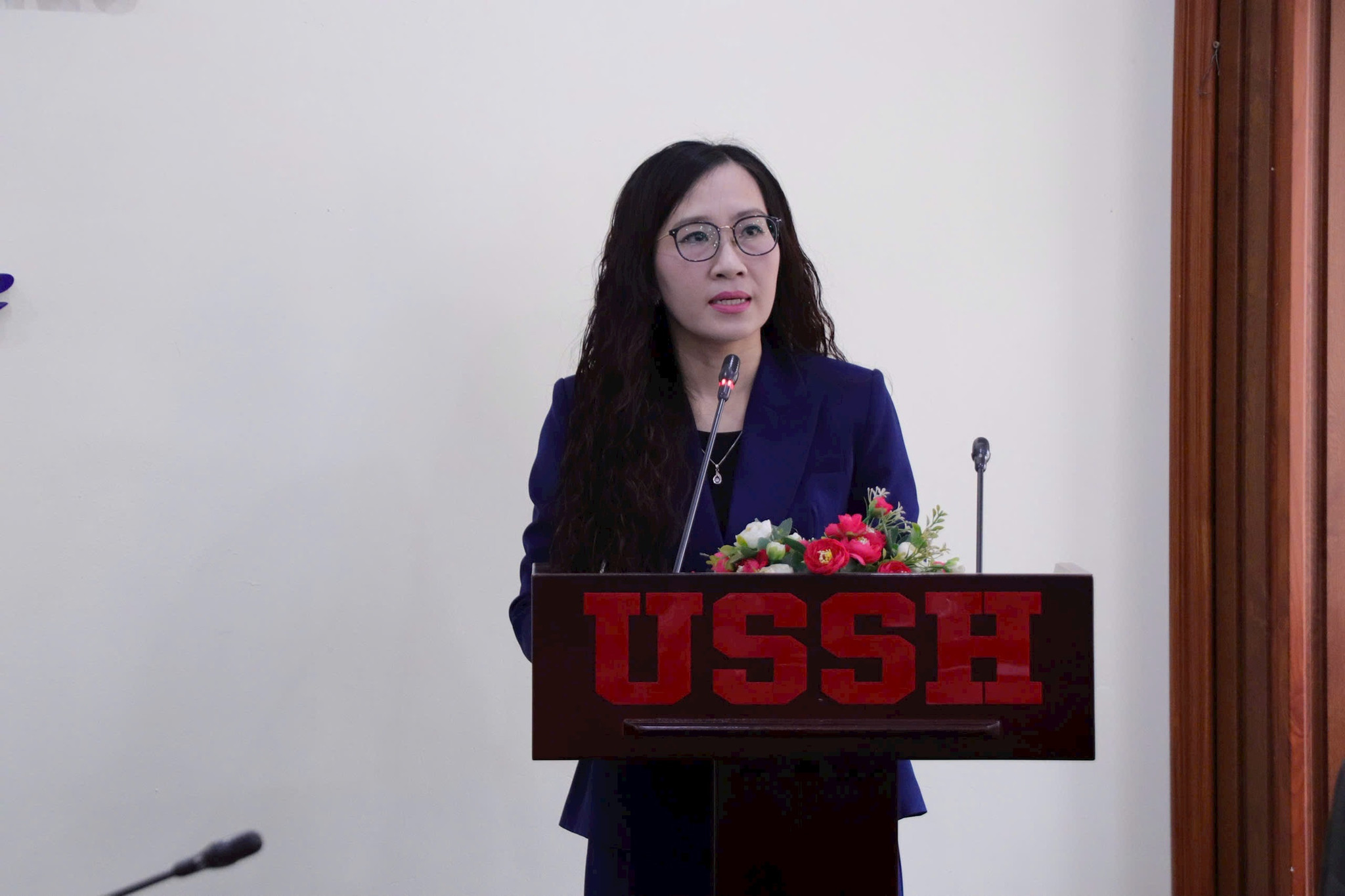
Assoc. Prof. Dr. Nguyen Thu Hien, Head of the Department of Literature. Photo: Van Khanh
This is also an opportunity for the Faculty to listen to the opinions of experts, employers, and organizations that are using the human resources trained by the Faculty, thereby having a basis to adjust the program, helping students better meet the needs of society.
Currently, the Faculty of Literature offers training at three levels: Bachelor's, Master's, and Doctoral. At the Bachelor's level, the Faculty has three majors: Literature, Classical Chinese and Vietnamese Studies, and Film and Television Theory, History, and Criticism. The Literature major has a program of the same name and is developing an international collaborative program called Chinese Culture and Language.
According to Ms. Nguyen Thu Hien, in the context of digital transformation, artificial intelligence, and profound societal changes, the labor market is also changing, leading to new demands on human resources. For social sciences and humanities, innovation in training is not only about updating knowledge and approaches but also about ensuring an academic foundation and professional identity. For the Faculty of Literature, this requirement is even more significant as all three majors are built on the traditional foundation of the Faculty of Linguistics and Literature, Hanoi University.
The enrollment figures show that the Faculty has maintained a fairly good recruitment pool. In 2025 and 2026, the total number of new students enrolled in all three majors is expected to reach approximately 220-240 students each year. Specifically, the Han Nom major will enroll around 30 students, the Film major 50-60 students, and the Literature major 140-150 students. However, maintaining a strong recruitment pool and professional foundation is only part of the requirement. The university must also ensure that students are able to adapt to societal changes. If students only possess specialized knowledge but lack the ability to integrate into the workforce, their job opportunities, as well as the Faculty's standing and training scale, will be negatively impacted.
The issue specifically raised by the Head of the Literature Department is the balance between specialized knowledge and professional skills in the training program. Currently, all three bachelor's programs have 130 credits, of which the in-depth specialized knowledge block accounts for only about 61-64 credits, less than 50%. Therefore, the Department hopes to receive feedback from experts on adjusting the program structure, adding skills-based courses, and strengthening practical skills training for students.
According to Ms. Nguyen Thu Hien, if students only focus on maintaining an academic foundation without equipping them with necessary skills, they will face difficulties applying their knowledge to the professional environment. Through this seminar, the Faculty hopes to better identify strengths to be developed, new demands of the labor market, and experiences from research institutions, press and publishing agencies, and cultural and artistic organizations to continue innovating the training program towards a balance between professional depth and practical adaptability.
Promoting humanistic values and expanding career opportunities.
As an alumnus of the Faculty of Literature, Hanoi University, journalist Nguyen Minh Duc, Permanent Deputy General Director of Hanoi Newspaper, Radio and Television Agency, and Vice President of the Hanoi Journalists Association, expressed his pride in the Faculty's traditions.
Based on his experience managing media organizations, he observed that reporters and editors trained by the Faculty of Literature possessed a solid professional foundation, strong language skills, critical thinking abilities, and professional expertise.
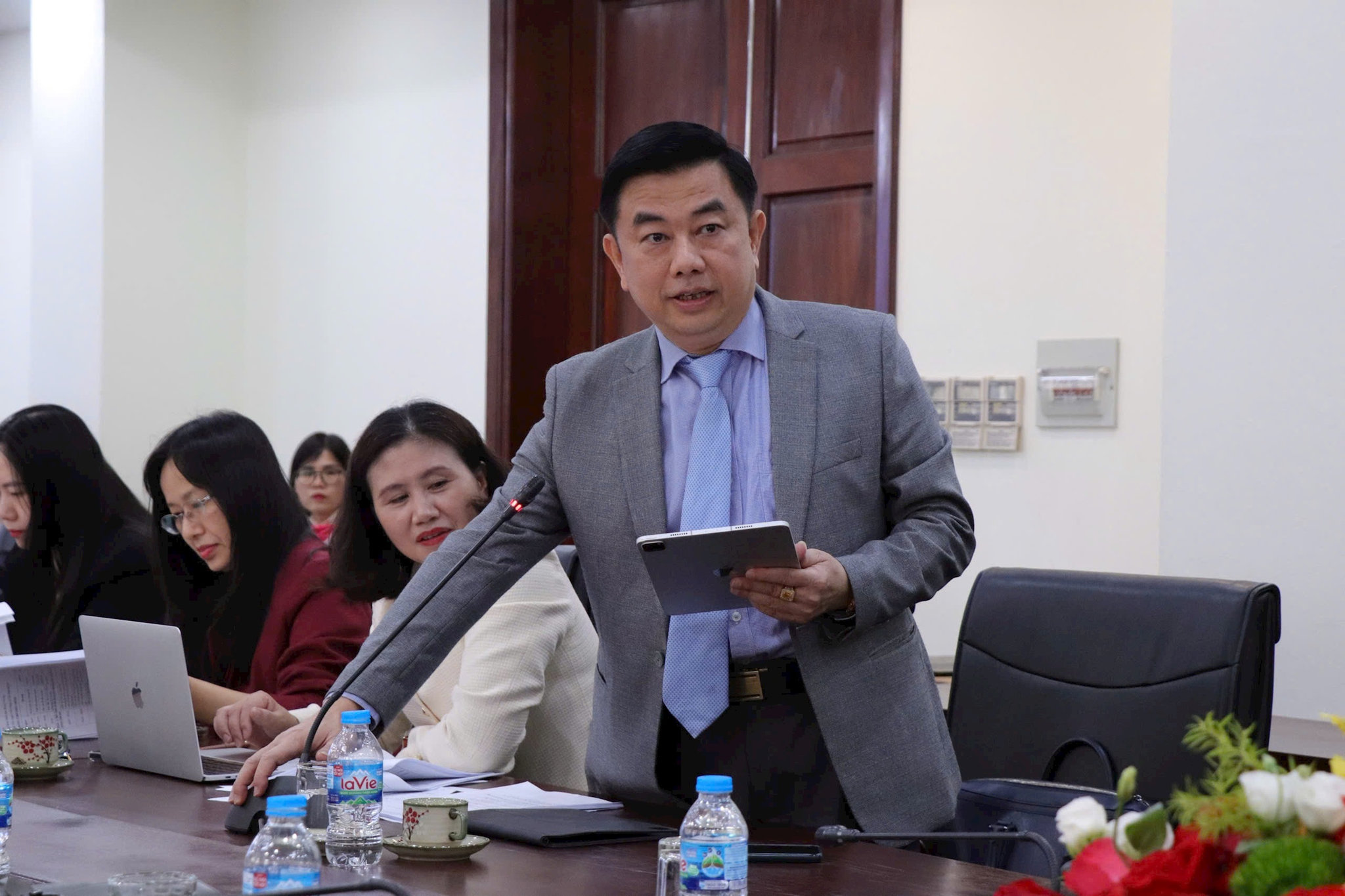
Journalist Nguyen Minh Duc, Permanent Deputy General Director of Hanoi Newspaper, Radio and Television Agency, and Vice President of the Hanoi Journalists Association. Photo: Van Khanh
According to journalist Nguyen Minh Duc, literature is not only a field of study focusing on authors, works, literary movements, and literary history, but also a means of understanding humanity, exploring society, preserving community memory, and conveying national cultural values. Literary knowledge contributes to fostering critical thinking, the ability to appreciate beauty, empathy, and responsibility towards the community.
This source of knowledge can directly contribute to many fields such as journalism, publishing, film, media, creative industries, and social management. In particular, those trained in Literature have an advantage in their ability to observe life, identify problems, build characters, organize stories, and use language effectively. Practical experience at media organizations shows that graduates from the Faculty of Literature have become a source of highly qualified professionals.
Driven by the demands of national development, the reform of literature education needs to be linked to major orientations in the development of science, technology, education, culture, and human resources. Journalist Nguyen Minh Duc proposed a training program aimed at three goals: training human resources with a profound cultural and humanistic foundation; developing the capacity for innovation and creativity, mastering digital technology and artificial intelligence; and having the ability to participate in the production, organization, and development of cultural products.
One key focus is shifting from primarily knowledge-based training to developing practical skills and the ability to create innovative products. Students need to be equipped with the knowledge and skills to participate in six key areas: scientific research and cultural consulting; journalism, publishing, and book development; film, theater, and adapted arts; cultural industries and creative content; event organization and cultural activities; and cultural experts serving the political system and social management.
Based on his experience managing a media organization, journalist Nguyen Minh Duc believes that digital transformation is expanding the demand for human resources in multimedia media organizations. Besides reporters and editors, journalists also need to participate in digital content production, data journalism, artificial intelligence applications, program script development, social media management, audience development, and the production of cultural industry products. These are positions that Literature students can fill if they acquire additional journalistic skills, digital skills, and multimedia production organization capabilities.
To meet these requirements, the Faculty of Literature needs to maintain the depth of its specialized knowledge while expanding applied courses aligned with career orientations. Student assessment also needs to shift significantly from testing knowledge to evaluating competence and practical products. Journalist Nguyen Minh Duc proposed researching a model where each graduating student has a portfolio of outstanding professional skills and products; increasing the responsible use of artificial intelligence; and promoting professional practice through projects and regular collaboration with employers.
For Hanoi, the system of heritage sites, museums, libraries, publishing houses, press agencies, and art organizations facilitates the connection between literature training and practical application. Journalist Nguyen Minh Duc suggested that the Faculty could collaborate with press agencies to develop media products about literature, culture, history, and heritage; organize practical activities in producing multimedia content and cultural events; and develop projects for digitizing and disseminating literary knowledge.
According to journalist Nguyen Minh Duc, cooperation between schools and employers should not be limited to accepting student interns, but should progress to jointly developing courses, guiding projects, and evaluating student competencies. This would leverage the foundation of humanistic knowledge in Literature, while expanding students' career adaptability and practical contributions to the modern social and media environment.
Increase practical training, make training pathways more flexible.
Associate Professor, Dr. Dang Hong Son, Vice Rector of the University of Social Sciences and Humanities (Vietnam National University, Hanoi), believes that curriculum reform should start from the learner's perspective, aiming for graduates to find employment in their field of study or closely related to their training, and to earn a good income. To achieve this goal, the university needs to comprehensively adjust the content, methods, and training roadmap.
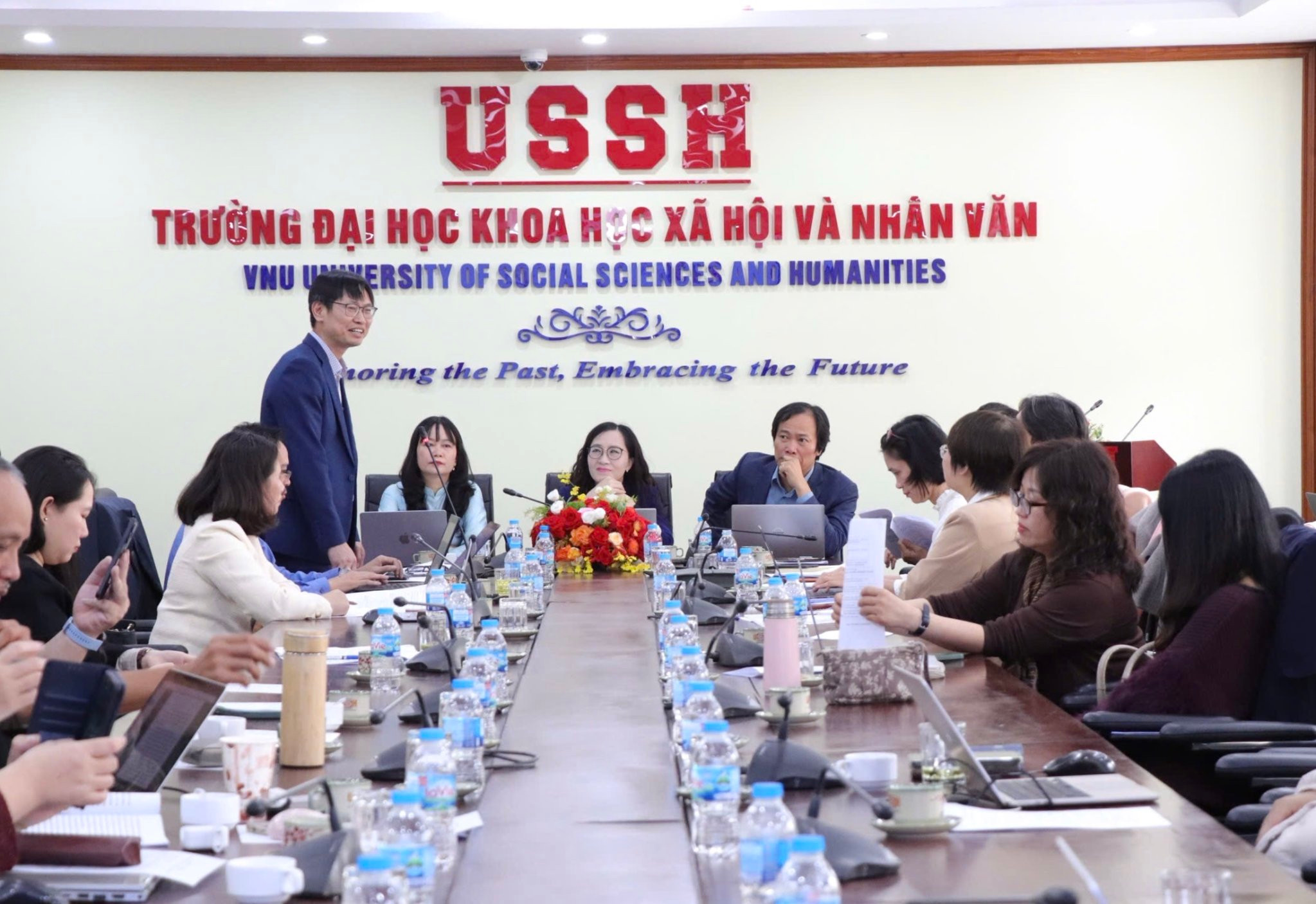
Associate Professor Dr. Dang Hong Son, Vice Rector of the University of Social Sciences and Humanities (Vietnam National University, Hanoi). Photo: Van Khanh
This includes increasing the time spent on foreign language learning, focusing on specialized foreign languages, and encouraging students to complete their theses in a foreign language; while also enhancing professional skills through practical experience at businesses, organizations, and public and private institutions. The university aims to establish internship semesters at external organizations, providing students with opportunities to spend 2-4 months working in real-world situations and honing their professional skills.
Besides digital skills and artificial intelligence, students in social sciences and humanities need to cultivate humanistic skills, with a foundation in national heritage, culture, and traditions. This is fundamental for students to develop their creativity, create cultural industry products, and acquire sufficient knowledge to verify and evaluate information generated by artificial intelligence.
Associate Professor, Dr. Dang Hong Son also suggested that the Faculty of Literature should boldly review and eliminate outdated courses that are no longer taught; listen to the needs of employers to develop new courses and specializations, especially in the creative industries. In addition, the training roadmap could be adjusted, adding specialized courses in the summer semester so that students can graduate after 3-3.5 years, thereby reducing tuition costs and entering the labor market sooner.
According to Associate Professor, Dr. Dang Hong Son, the most important innovation is changing the mindset in management and teaching, while expanding the participation of alumni, employers, employers, and students themselves in the curriculum adjustment process, based on maintaining the professional foundation and meeting practical requirements.
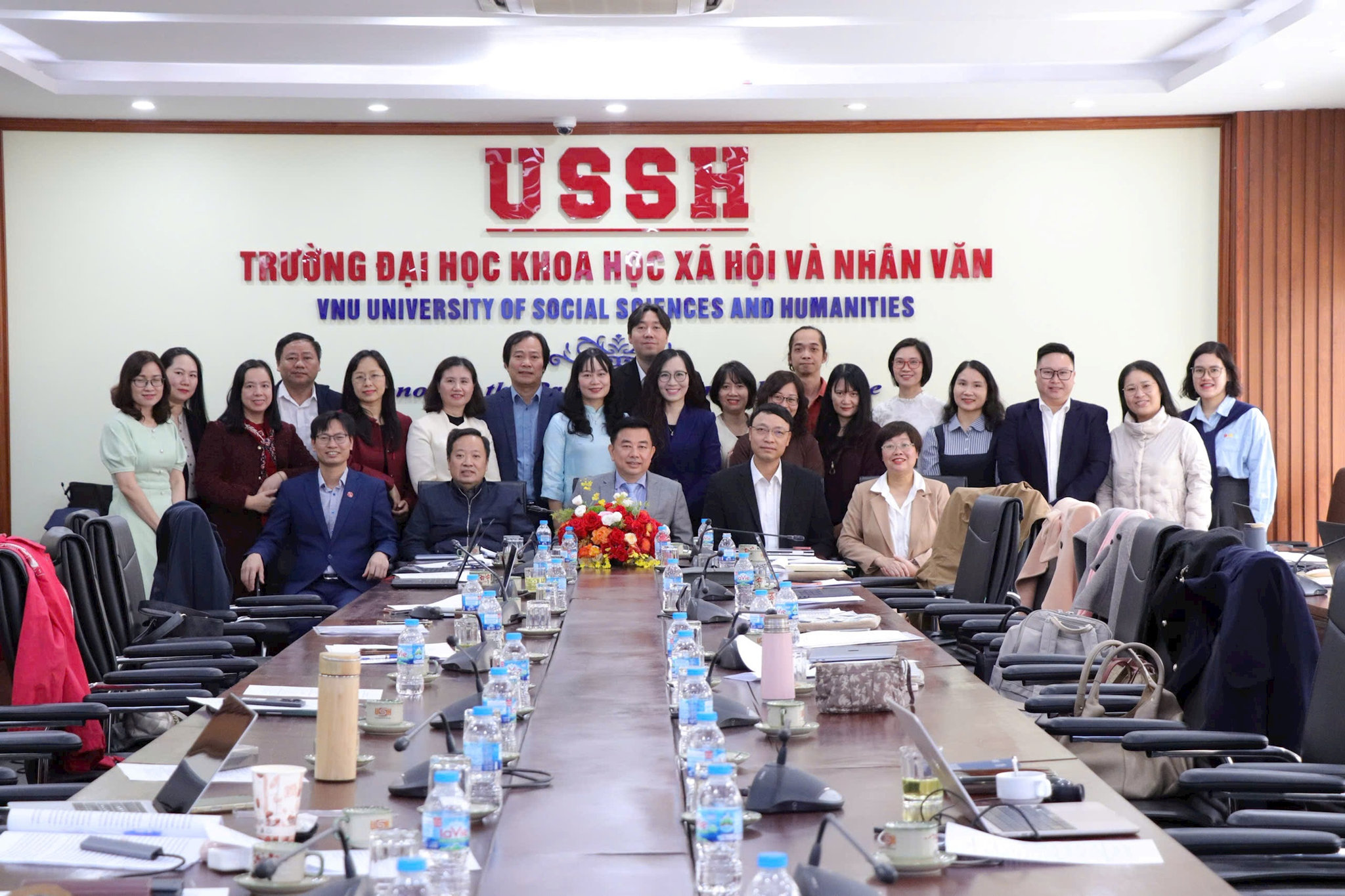
The delegates attending the seminar pose for a commemorative photo. Photo: Van Khanh
Besides discussions on general directions, the presentations at the seminar delved into the need for innovation in each training field and the issues arising from practical experience. Dr. Nguyen Huy Binh, Deputy Director in charge of the Institute of Literature, addressed the direction of innovation in the Literature training program towards developing research capacity, critical thinking, and creativity. Associate Professor, Dr. Nguyen Thi Thanh Chung discussed the training of Han Nom (classical Chinese and Vietnamese script) in the digital age, from heritage value to social needs and prospects for human resource development.
Screenwriter and director Vu Liem, Deputy Director of the People's Police Film Department, shared his views on training literature and arts graduates in conjunction with the task of protecting the Party's ideological foundation. Meanwhile, journalist Pham My, Director of Communications at Ann Group, analyzed the impact of digital transformation and artificial intelligence on training activities…
Author:According to Hanoi New Newspaper
Newer news
Older news

