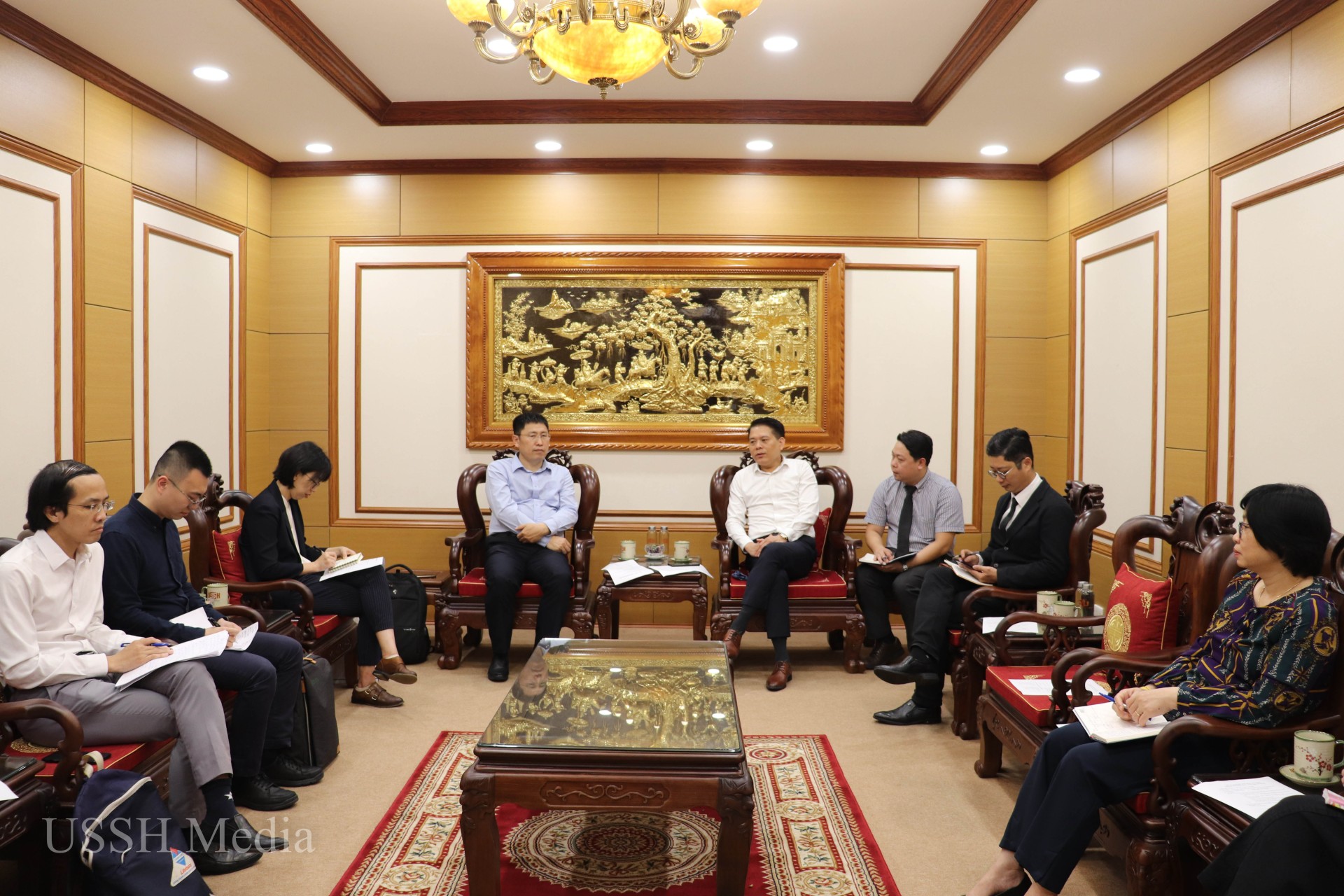
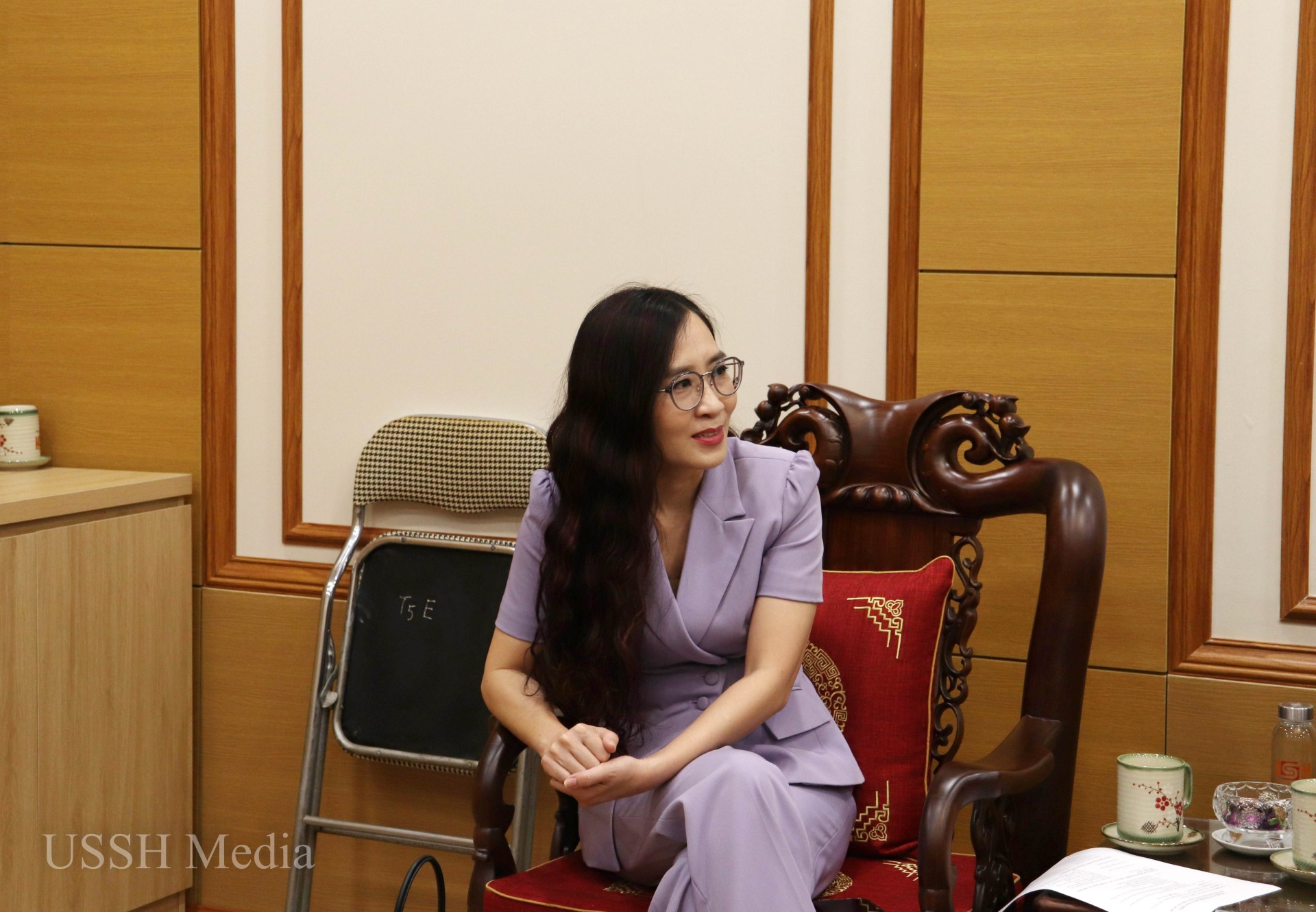
Also attending the meeting were representatives from the Department of Cooperation and Development, the Departments of International Studies and Oriental Studies, and the Center for Chinese Studies.
At the beginning of the meeting, both sides reviewed the close and effective cooperation between the University of Social Sciences and Humanities and Phuc University.
Over the past 10 years, especially since the two schools officially signed a cooperation agreement (in 2019).To date, many faculty members and students from the University of Social Sciences and Humanities have participated in programs organized by Fudan University, creating very beneficial academic exchange opportunities for students and faculty of the University. At the same time, leaders from both sides affirmed their desire to expand and strengthen cooperation in the future.
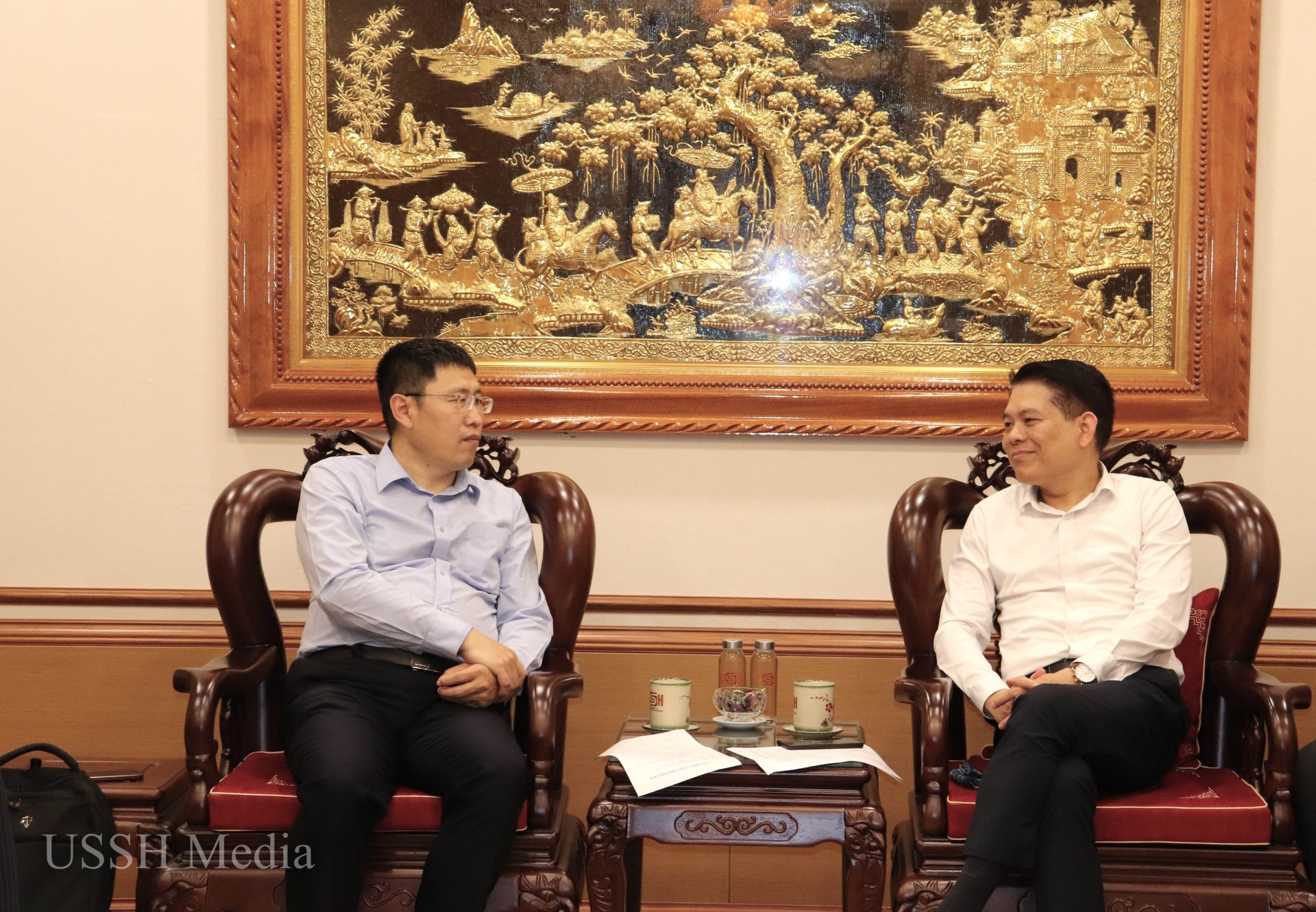
Professor Zhao Weihua (Director of the Center for Research on China's Relations with Neighboring Countries, Fudan University) and Associate Professor Bui Thanh Nam (Deputy Secretary of the Party Committee, Vice Chairman of the Board, Head of the Training Department, University of Social Sciences and Humanities)
Regarding specific areas of cooperation, Professor Trieu Ve Hoa informed that the Center for Research on China's Relations with Neighboring Countries is a key cooperation unit in the policy research program of the Chinese Ministry of Foreign Affairs (2022-2024), tasked with focusing on research related to relations between China and ASEAN countries, including Vietnam. Therefore, the Center wishes to cooperate with the University of Social Sciences and Humanities in academic exchanges and expert exchanges to jointly promote research on the relationship between Vietnam and China, and between ASEAN countries and China, in all fields: student exchange, postgraduate student exchange, doctoral research, and faculty exchange for advanced studies and guest lecturing.
Furthermore, the Center is currently the lead institution for the China-ASEAN Academic Community program, an annual dialogue program between Chinese and ASEAN scientists, bringing together hundreds of prestigious scientists from around the world. Fudan University also organizes an academic forum for young scholars in the region annually, with the Institute serving as the professional hub. Therefore, we hope that in the future, more scholars from the University of Social Sciences and Humanities will participate to exchange research results, propose scientific issues, and suggest new research methods.
Highly agreeing with Professor Trieu Ve Hoa's specific proposal, Associate Professor Bui Thanh Nam (Vice Chairman of the University Council, Head of the Training Department) affirmed: The University of Social Sciences and Humanities has leading experts in the field of international relations research. The university also has many faculties and departments specializing in training and research on China and ASEAN countries: the Faculty of International Studies (International Relations specialization), the Faculty of Oriental Studies (Chinese Studies, Southeast Asian Studies), the Faculty of History (World History specialization), the Center for Chinese Studies, etc. Therefore, both sides have common points and advantages to implement cooperative activities in the direction proposed by Professor Trieu Ve Hoa.
Currently, the University of Social Sciences and Humanities is promoting the internationalization of its training programs, creating opportunities for students to participate in exchange programs, internships, and practical training abroad. We hope that Fudan University and the Institute for Research on Relations between China and neighboring countries can support the acceptance of students from the University of Social Sciences and Humanities for internships, practical training, and participation in research projects to enhance their specialized knowledge.
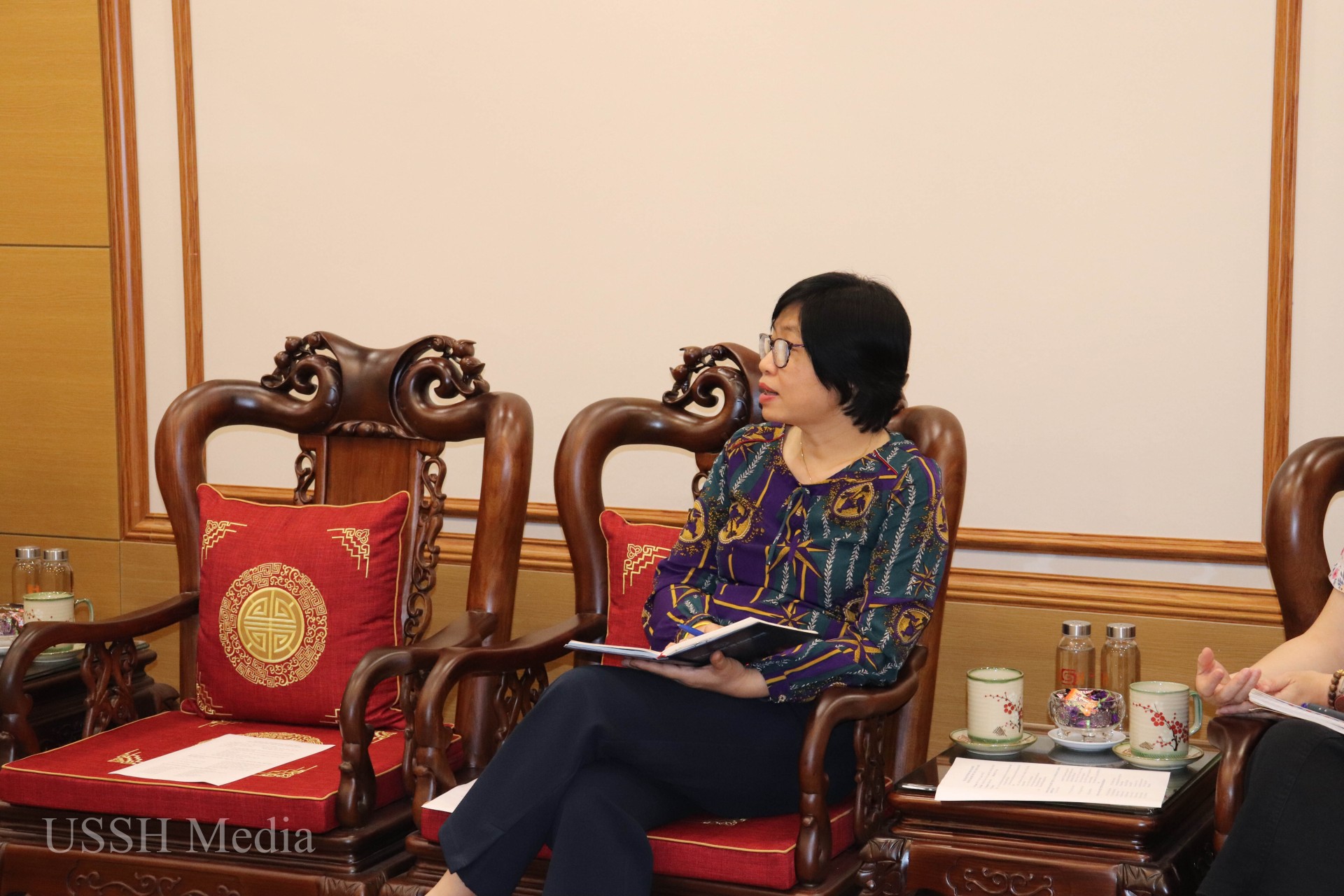
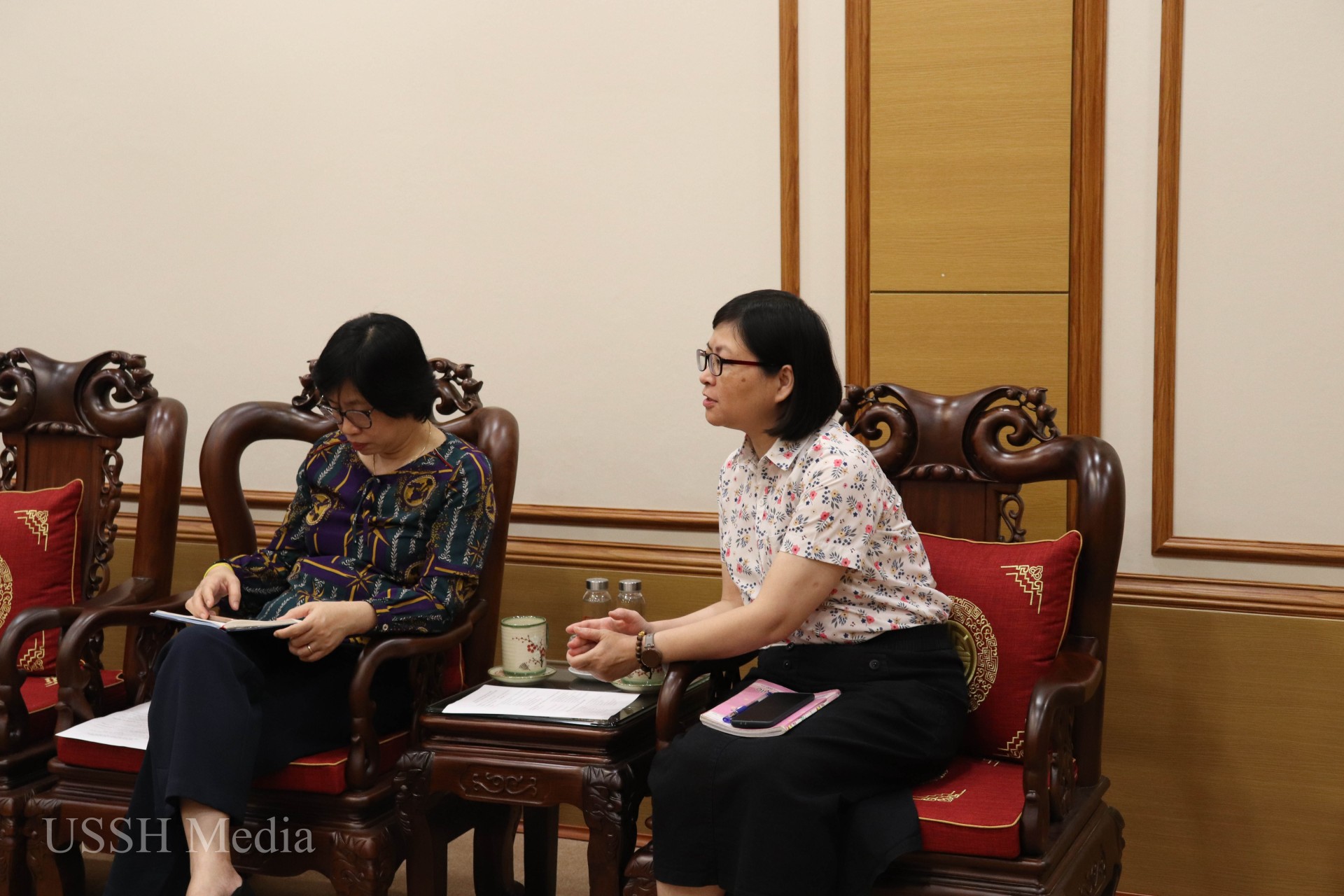
Representatives from the training units, including the Faculty of International Studies, the Faculty of Oriental Studies, and the Center for Chinese Studies, highly appreciated the significance of the cooperation activities between the two universities for students and faculty members, and proposed several areas of cooperation that suit the strengths of each unit.
In conclusion, the two sides agreed on several key areas of cooperation for the coming period:
- Student and trainee exchanges through scholarship programs, academic support, and collaborative training programs.
- Share information about scientific research activities, international conferences, and research projects so that both sides can send personnel to participate, or co-organize international scientific conferences on topics of mutual interest.
- Publish research findings in the scientific journals of both universities.
- Exchange of lecturers, co-supervision of students, doctoral candidates, and young scientific researchers.
At the end of the meeting, Professor Zhao Weihua expressed his gratitude for the warm and thoughtful reception from the University's leadership and affiliated departments and offices. He affirmed that the potential for cooperation between the two sides is vast, and the cooperation contents discussed and agreed upon today are highly feasible and will leverage the strengths of both sides. Following today's visit, the Institute for Research on China's Relations with Neighboring Countries will officially send a document to your University to concretize the cooperation content for 2024.
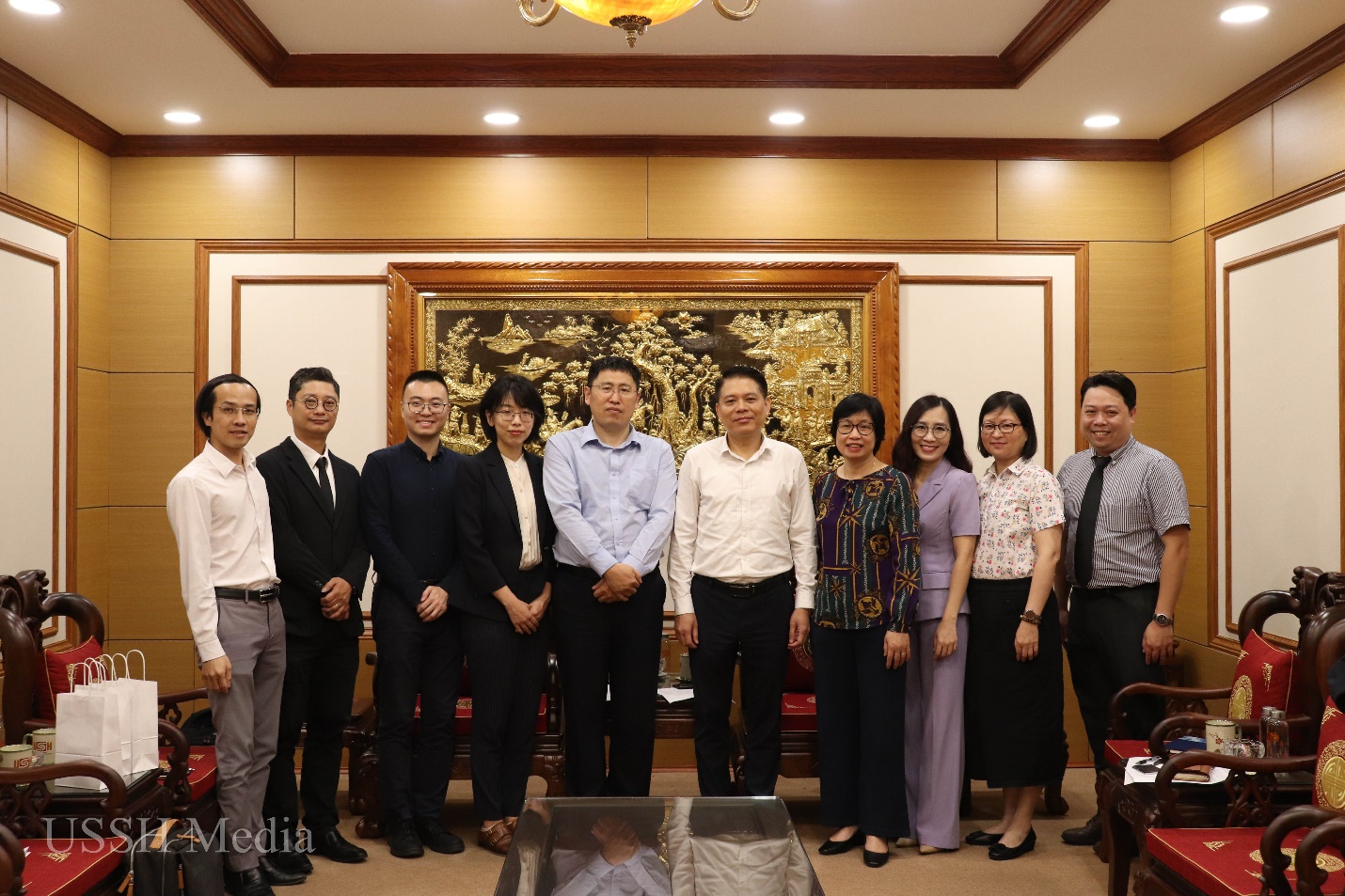
Leaders from both sides, along with attending delegates, posed for a commemorative photo.