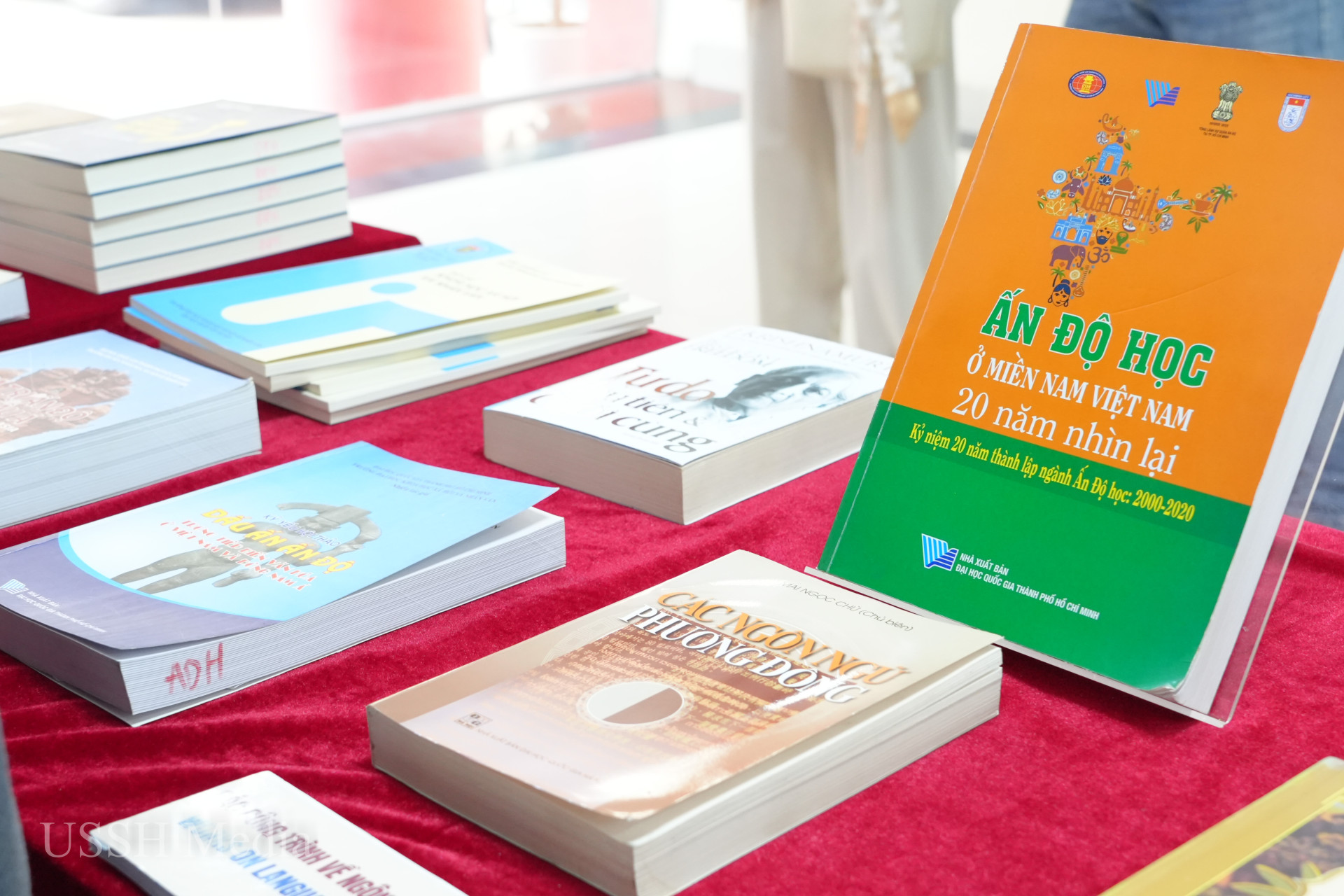
The intellectual achievements of 30 years by generations of Vietnamese scientists.The exhibition not only opens up a space for displaying scientific publications but also celebrates a vibrant intellectual journey spanning more than three decades of Indian studies in Vietnam.
The field of Oriental Studies in Vietnam officially came into existence in 1993, closely linked to the Doi Moi (Renovation) process and the urgent need for human resources knowledgeable about the Asian region. Under the leadership of the late Professor Phan Huy Le, this field of study was formed from the practical demand for a team of experts proficient in regional issues.
Within that academic landscape, the Department of Indian Studies at the University of Social Sciences and Humanities has emerged as a vital pillar. Generations of dedicated leaders, such as Professor Luong Ninh, Associate Professor Dr. Do Thu Ha, Dr. Phung Thi Thao, and many generations of lecturers from the Faculty of Oriental Studies, have transformed this department from a knowledge-receiving institution to a global theoretical dialogue, making the University of Social Sciences and Humanities a leading center for Indian studies in the region.
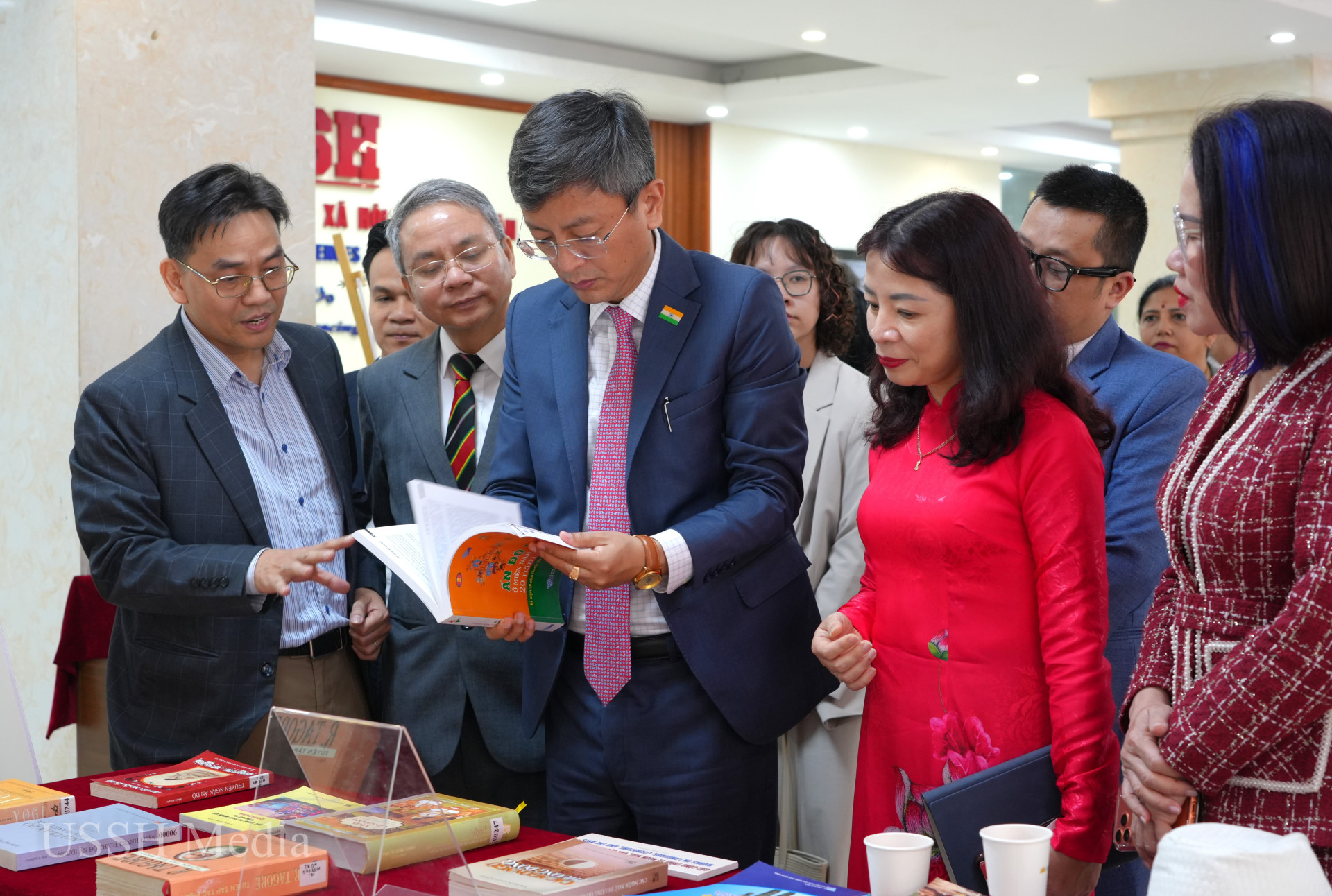
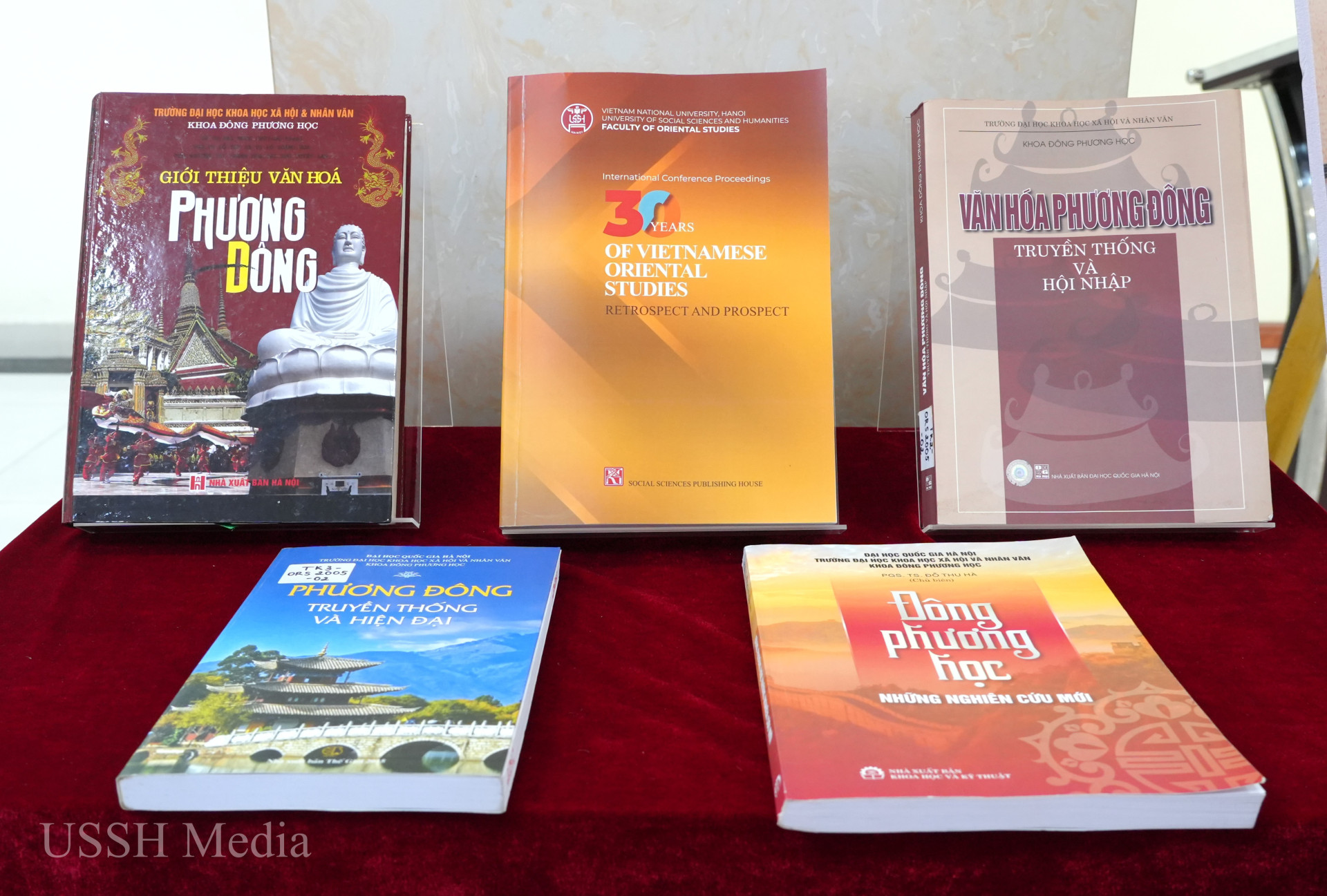
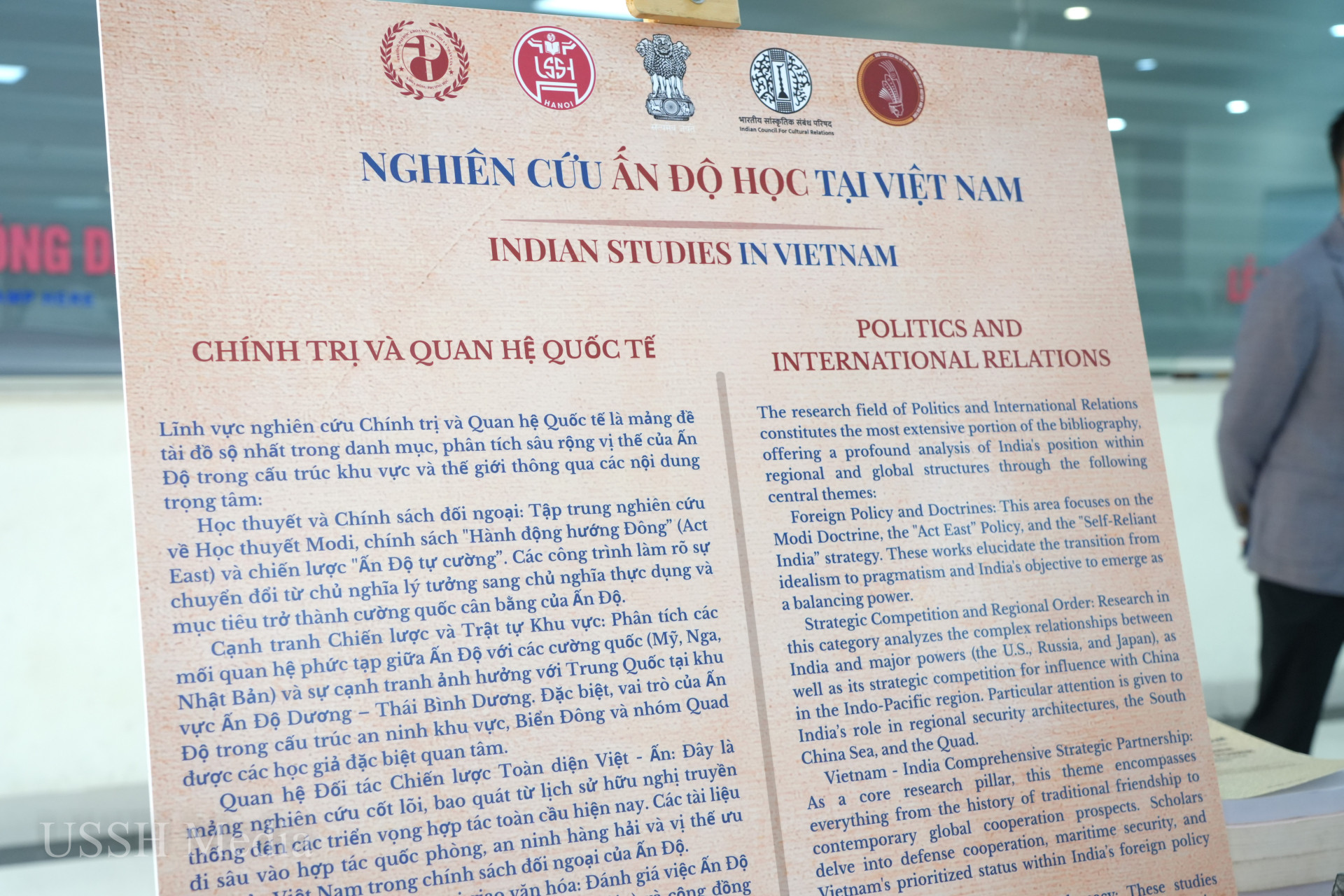
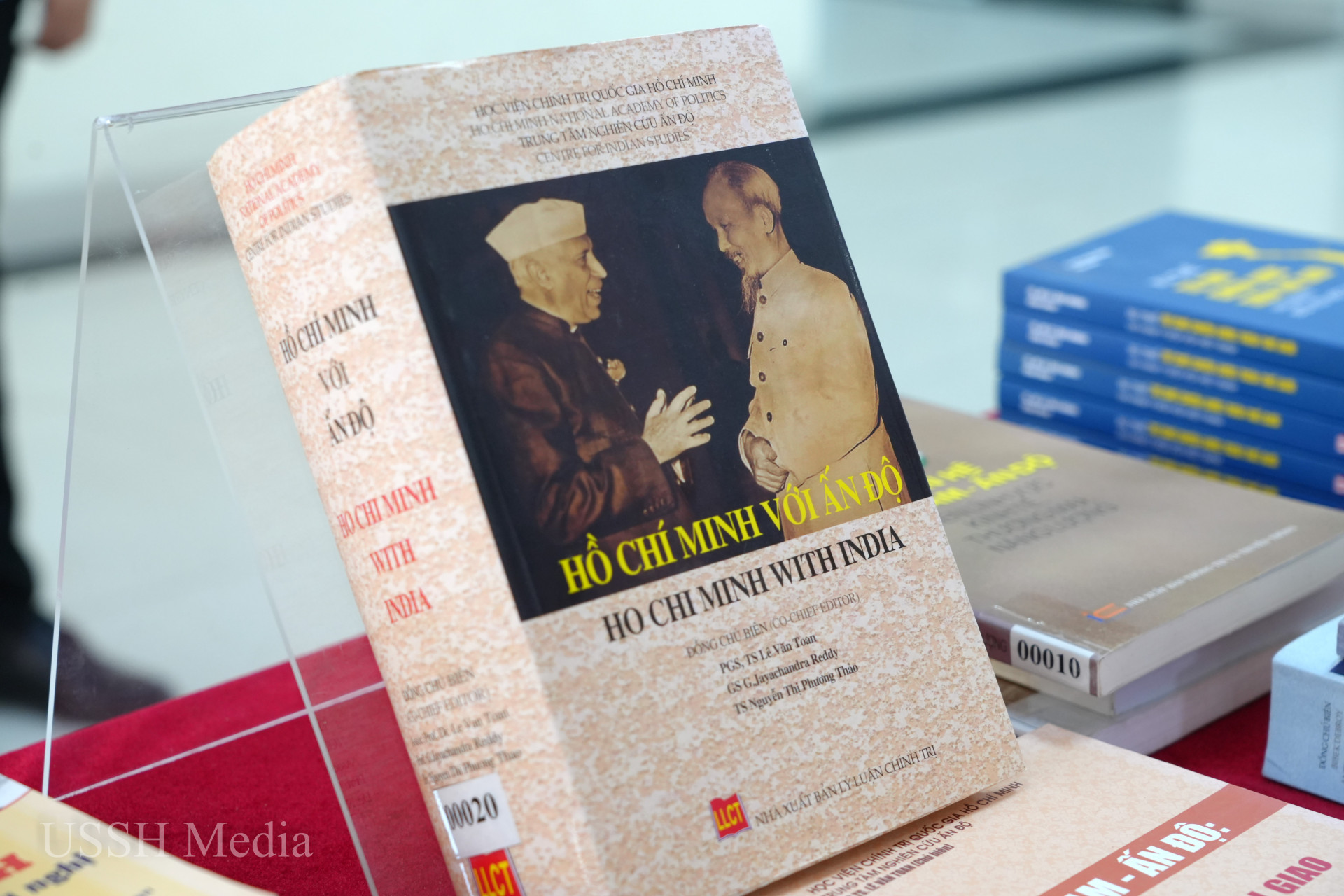
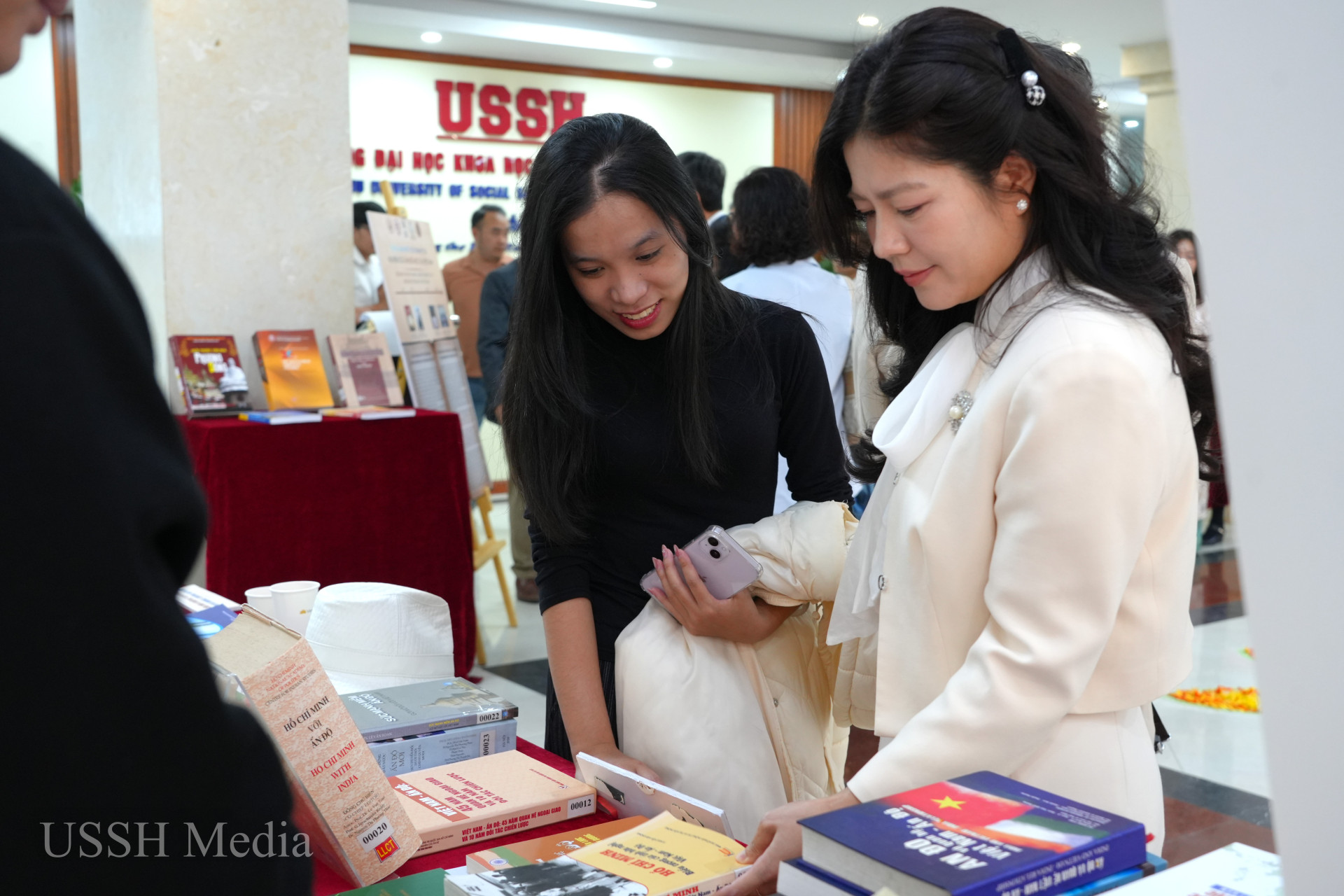
The exhibits at the exhibition "Some Achievements in Indian Studies in Vietnam" outlined the comprehensive research scope of Vietnamese scientists. Oriental studies and Indian studies have developed into a multidisciplinary field. Scholars from the University of Social Sciences and Humanities have gone far beyond traditional historical research to explore the complex interplay between philosophy, linguistics, and socio-economic and political dynamics. Scientists have successfully integrated foundational studies on Indian civilization with contemporary regional studies, making a significant contribution to helping Vietnam understand the dynamic and resilient country of India.
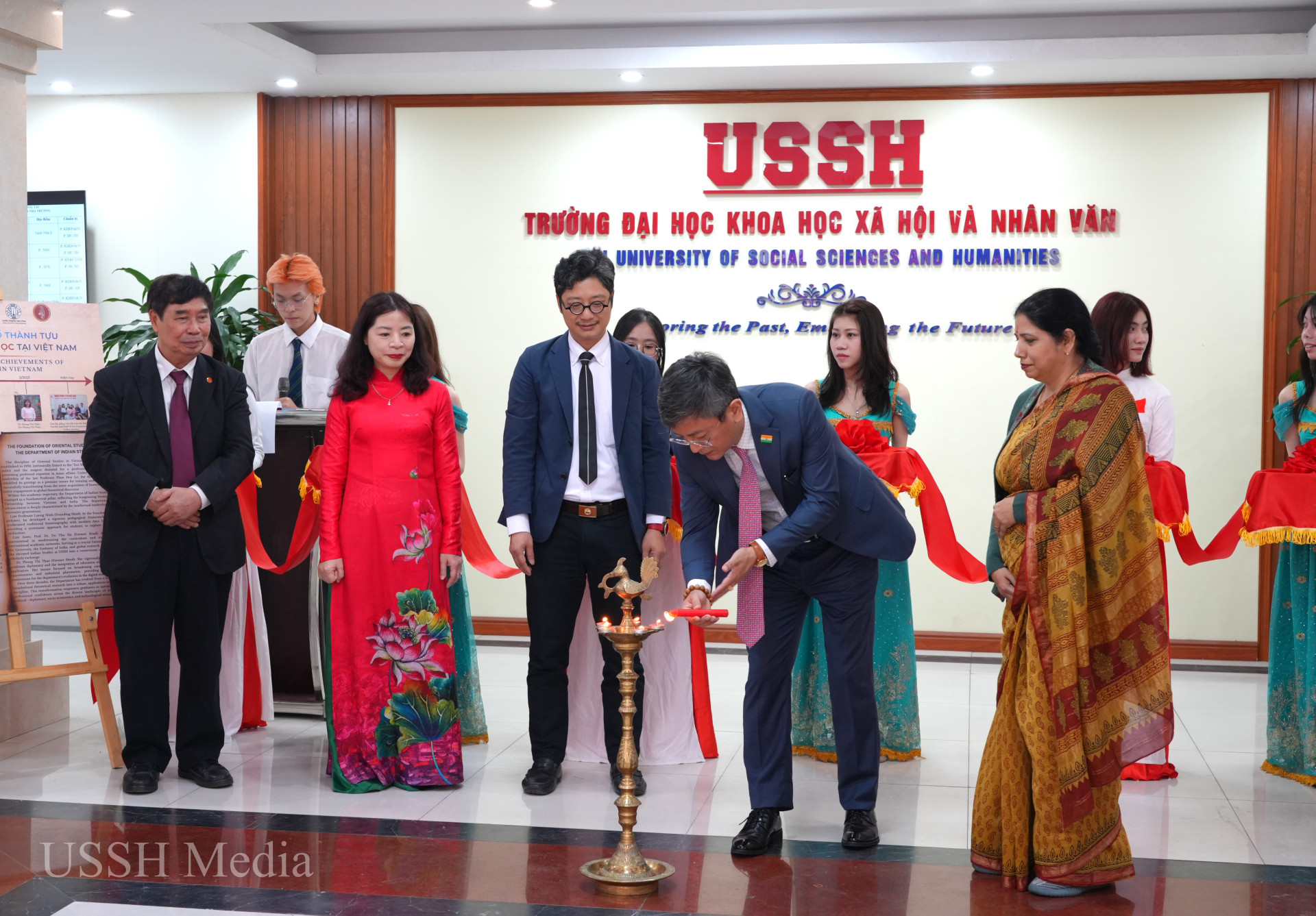
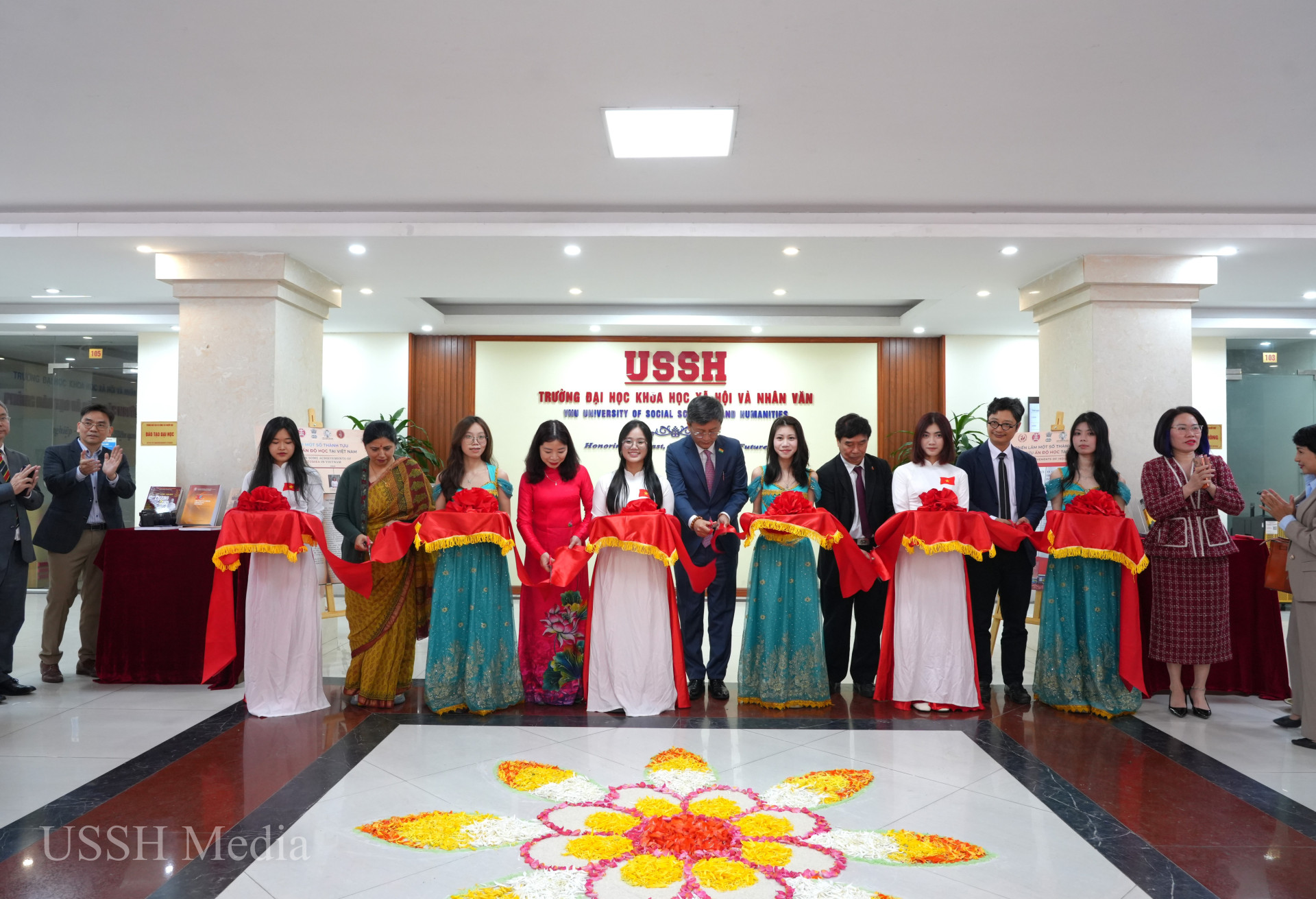
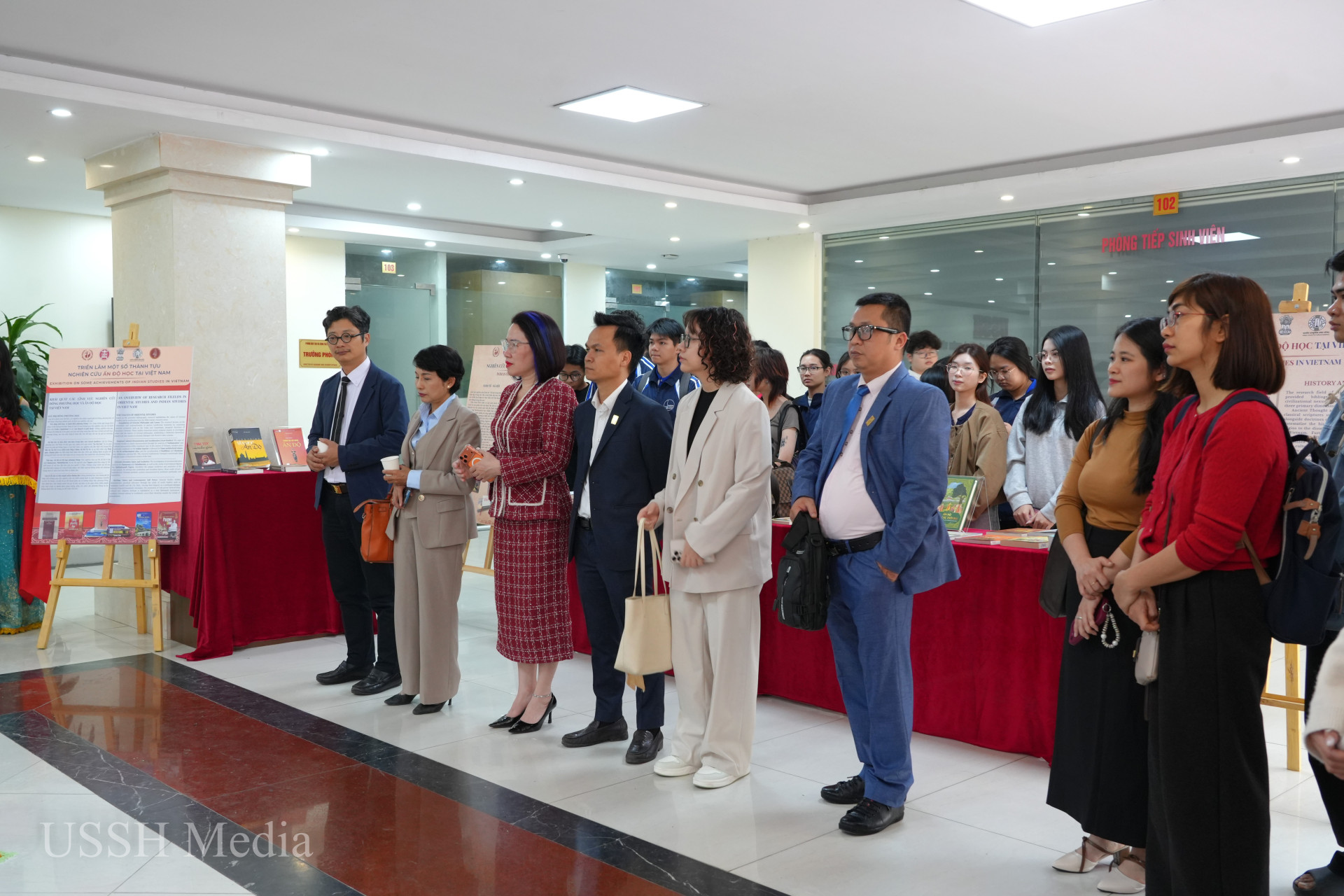
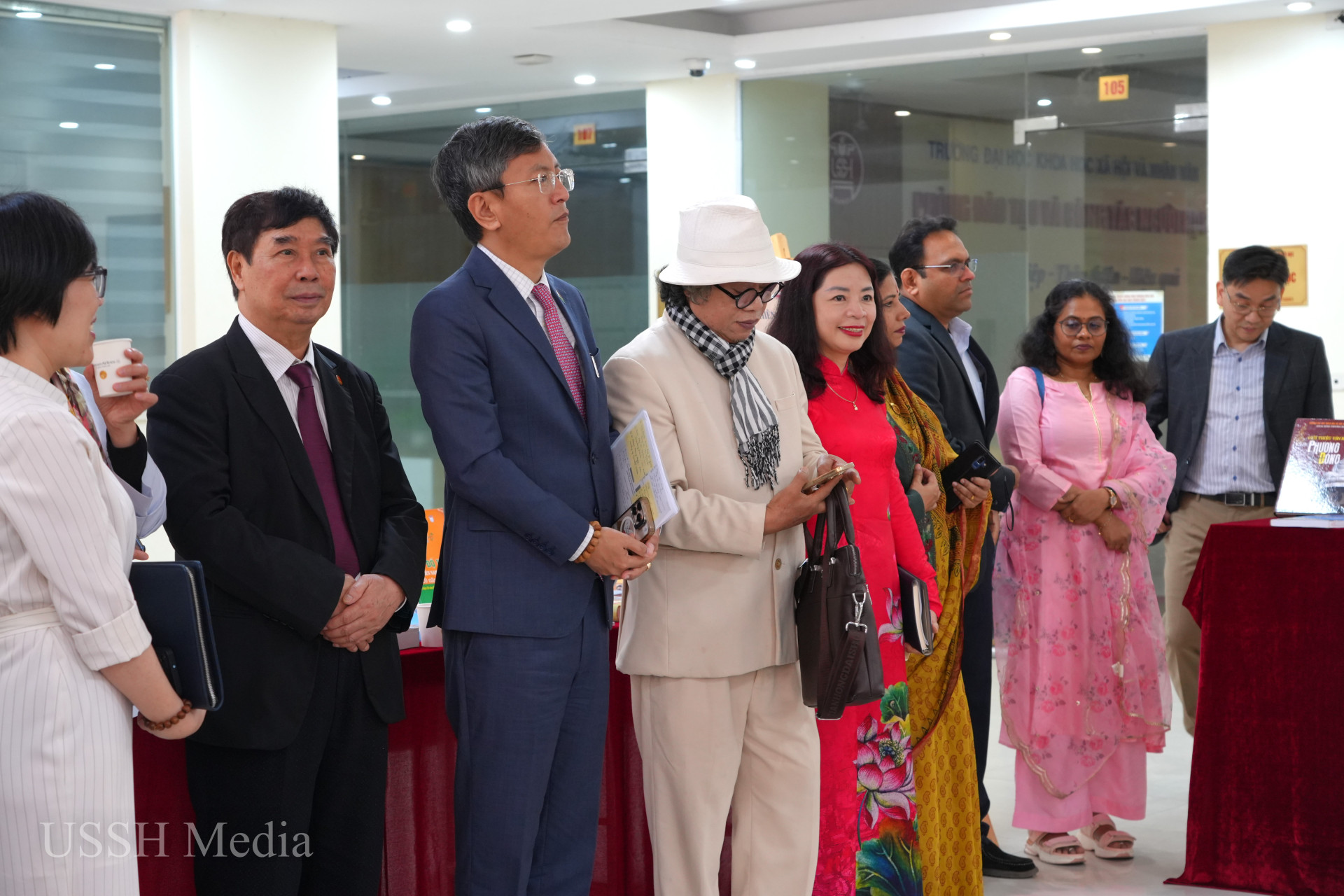
The ribbon-cutting ceremony for the exhibition "Some Achievements in Indian Studies in Vietnam" was held at the campus of the University of Social Sciences and Humanities.
New research directions in Indian studies and Vietnam-India relations.Besides continuing to leverage its core strengths in research on the history, culture, and ancient religion of India, the current research strategy of VNU-USSH scholars is undergoing a strong shift towards applied Indian studies. This transformation aims to turn classical academic knowledge into practical tools for modern development, such as:
- Cultural Heritage - A Catalyst for Tourism and Creative Industries:This study assesses how to apply Indian historical and artistic heritage to develop sustainable cultural tourism models, while also exploring how traditional Indian cultural values can inspire design, media, and the entertainment industry in Vietnam.
- Applied Philosophy of Religion in Modern Management and Ethics:Studies of Buddhism and Hinduism are being placed in a new context to address contemporary social challenges such as corporate governance, conflict resolution, and promoting mental health in a digital society.
- The synergy of a comprehensive strategy:This study explores the connection between cultural diplomacy—particularly through shared Buddhist heritage—and modern economic cooperation. By reviewing 2,000 years of maritime and religious exchange, scholars are identifying the "soft power assets" that underpin current people-to-people diplomacy and strategic partnerships.
- Regional Security Structure and Maritime Cooperation:A significant portion of current scientific research is devoted to India's role within the "Quad" group and its security contributions to the ASEAN-centric regional order, including studies on maritime security and freedom of navigation in the South China Sea.
- Digital Transformation and Innovation ConnectivityNew research is exploring bilateral cooperation in the digital economy, cybersecurity, and high-tech industries, integrating India's technological strengths with Vietnam's digital transformation goals.
This reorientation ensures that the rich heritage of Indian civilization is not merely an object of the past, but a vibrant resource, providing tangible value to Vietnam's integration and Comprehensive Strategic Partnership with India. This approach also helps generations of students and researchers at the University of Social Sciences and Humanities confidently work in the digital age, becoming "bridge builders" for the relationship between the two countries.
The exhibition "Some Achievements in Indian Studies in Vietnam," held at the campus of the University of Social Sciences and Humanities, Vietnam National University, Hanoi, symbolizes VNU-USSH's commitment to further deepening this academic synergy between Vietnamese and Indian scientists, contributing to strengthening the cooperative relationship between the two countries.
Here are some photos from the exhibition: