In the final days of 1964, a history lecturer from Hanoi University, along with a delegation of officials from the cultural, educational, medical, and film sectors, set off for the South. Among the civilian cadres who went to the South that year, he was one of the intellectuals who volunteered to take up arms, but he didn't have to "put aside his pen and ink." His backpack was heavy with textbooks and scholarly works. He set off as an educator and historian, joining the experts in the delegation to undertake a common responsibility: developing education in the liberated areas and building a faculty for a university being prepared for establishment in the base of the National Liberation Front of South Vietnam. Many recognized him. It was Ca Lê Hiến – the author of the poem "Remembering the Rain of My Homeland," which won second prize in the Văn Nghệ newspaper's poetry competition in 1960.The treacherous, winding path across the Truong Son Mountains to the South was the very path back to his motherland. The arduous struggle and sacrifices ahead forced each person to choose a code name or a pen name, and he chose Le Anh Xuan as his pen name. A son of Ben Tre province, he followed his father to the North, received a thorough education and training, and matured early. After graduating from the History department, he was retained by the university in the World History department. As a young, intelligent, and naturally gifted lecturer, he was selected by the State to pursue postgraduate studies abroad. A path to personal success and a scientific career opened up before him, but Le Anh Xuan refused. He chose the second, secret path across the Truong Son Mountains, returning to his motherland. In his heart, the path to the battlefield became the convergence of two great loves: love for his homeland and love for his country. In 1965, the US massively deployed troops to South Vietnam, igniting a fierce localized war. The battlefield situation changed, and the Central Committee of the Southern Region decided to postpone the plan to build a university. Le Anh Xuan transferred from the Education Subcommittee to the Arts and Culture Subcommittee, beginning his work as a journalist and war correspondent.

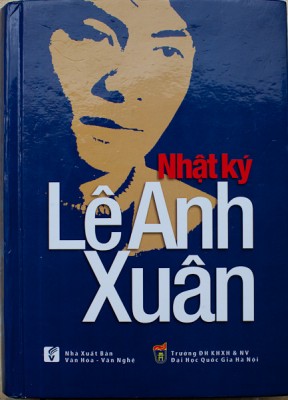
From that year onwards, the communication routes and trenches of the battlefield began to bear the footprints of the patriotic journalist from Ben Tre. Thanks to his historical sensibility and poetic heart, Le Anh Xuan quickly grasped the philosophical and poetic depth of the revolutionary reality in the South. Writing articles, poems, essays, and stories about heroes, the pen name Le Anh Xuan became a familiar and beloved name to readers of the Liberation Literature and Arts Magazine and people in both the North and South. His poetry collections, *The Rooster's Crow* (1965), *Nowhere Like the South* (1965), the epic poem *Nguyen Van Troi* (1968), the memoir *Keeping the Land*, and later poems in the *Coconut Flower* (1971)... moved people and soldiers nationwide and immediately recognized the style of a talent that had been foreshadowed in *Remembering the Homeland Rain* years ago. Le Anh Xuan continued to roam the battlefields. Poems like "Oh Coconut Tree," "Returning to Ben Tre," "Returning to My Ancestral Homeland," and "Nowhere Like the South" were continuously broadcast on the Voice of Vietnam radio station, deeply moving the hearts of compatriots and soldiers nationwide. Driven by a desire to contribute, to explore reality, and to create art, the poet refused to remain idle in the base camp. He sought every opportunity to participate in battles, unwilling to settle for the safe, albeit legitimate, position of a poet. He did not want to be merely a distant witness to history. In 1968, Le Anh Xuan set off, joining the second phase of the Tet Offensive. Before departing, he sent the editorial board of the Liberation Literature and Arts Magazine a poem he had stayed up all night writing. It was a poem about the heroic, defiant, and tragic death of an unknown soldier at Tan Son Nhat airport: the poem "The Stance of Vietnam." Sadly, the author never saw his poem published in the newspaper again. On May 24, 1968, Le Anh Xuan sacrificed his life on the western front of Saigon. Le Anh Xuan passed away, but his "Vietnamese Stance" remains. The poem quickly became a favorite song for generations of soldiers. When imagining the liberation soldier who died standing and shooting on the runway, leaving behind no name, many colleagues and friends from Hanoi University remember the slender figure and bright face of Professor Ca Le Hien from the North. Because the Fatherland needed him, he set aside a scientific career. But in return, he created a poetic career for himself. And most importantly, through his poetry and his example of fighting and sacrificing, he contributed to "making history." For half a century, in the hearts of millions of Vietnamese students and poetry readers, Le Anh Xuan has been a hero. To honor and preserve the invaluable spiritual relics of the martyrs who were former staff and students of Hanoi University, the University of Social Sciences and Humanities published the book "Remaining with Time." In the list of biographies and literary works of the martyrs, alongside names such as: Writer, Hero of the Armed Forces - Martyr Chu Cam Phong, Journalist - Martyr Hong Tan (who sacrificed himself alongside Le Anh Xuan), Poet - Martyr Nguyen Trong Dinh, Poet - Martyr Vu Dung… Le Anh Xuan's name shone brightly as a teacher and poet during the war. On May 18, 2011, the University of Social Sciences and Humanities, Vietnam National University, Hanoi, organized a seminar on the life and career of Le Anh Xuan. At this cultural and poetry forum, the faculty and students of the University were deeply moved and excited to learn that the Ho Chi Minh City Party Committee and People's Committee had directed the Union of Literature and Arts Associations of the City to prepare a dossier to propose that the State posthumously award the title of Hero of the Armed Forces to Martyr Le Anh Xuan. It was also at this forum that the diary entries of Le Anh Xuan, read aloud by teacher and Meritorious Artist Ca Le Hong (the Martyr's sister), deeply moved the audience. The faculty, students, and leaders of the University immediately recognized that Le Anh Xuan's diary was a priceless artifact. Work was carried out urgently. Thanks to the efforts of the Veterans Association, the University's Board of Directors, and the cooperation and assistance of the Martyr's family and the Ben Tre Provincial Museum, the manuscript of Le Anh Xuan's diary was finally typed and printed. The publication of the diary fulfills the shared aspirations and desires of many cultural and scientific institutions, local government organizations, and poetry lovers nationwide. The Ho Chi Minh City Culture and Arts Publishing House volunteered to publish this diary. Beyond the goal of introducing a cultural and intellectual heritage, the book also holds significance for the Publishing House as a tribute to a colleague. This is because the Liberation Literature and Arts Magazine, where poet Lê Anh Xuân worked, was the predecessor cultural organization of the Ho Chi Minh City Culture and Arts Publishing House today.

In this edition, we are not entirely satisfied with the textual aspects. The reason is that the original diary contains many blank spaces (possibly due to the intense fighting that interrupted diary entries, or perhaps these spaces were recorded in other notebooks?). Furthermore, many of the author's writings are in a symbolic style, making them impossible to decipher. When writing the diary, the author could not have known that his private thoughts and "monologues" would one day be brought to light, becoming shared knowledge for millions. Adhering to the specific rules of the diary genre and respecting the authenticity of the original work, we request that the publisher retain the content as it is. On the occasion of the publication of Le Anh Xuan's diary, the University of Social Sciences and Humanities would like to express its sincere gratitude to the Ho Chi Minh City Culture and Arts Publishing House for their generous cooperation, and to the family of the martyr for their invaluable assistance. We also thank the writers Anh Duc, Le Van Thao, Vien Phuong, Tu Son, Le Quang Trang, and especially the staff of the Ben Tre Museum in Ben Tre province for their cooperation, information, and historical materials during the editing process of this book. On the occasion of the publication of this diary, we earnestly hope to continue receiving any mementos, commemorative photos, and manuscripts of Martyr Le Anh Xuan that may still be scattered in the notebooks of writers, journalists, and colleagues who worked and fought alongside him in the past, at the University of Social Sciences and Humanities' Traditional Room, Vietnam National University, Hanoi (336 Nguyen Trai, Thanh Xuan, Hanoi). While awaiting the opportunity to add more materials and new diary entries, the University of Social Sciences and Humanities is pleased to introduce Le Anh Xuan's Diary to the staff, students of Hanoi National University, and readers near and far.
Hanoi, on the occasion of Vietnamese Teachers' Day 2011
Party Committee, Board of Directors, and Veterans Association of the University of Social Sciences and Humanities, Vietnam National University, Hanoi