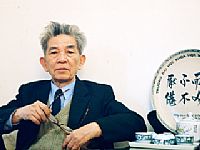
The Linguistics Department of the University of Social Sciences and Humanities (USSH), Vietnam National University, Hanoi, has undergone more than half a century (55 years) of development. From a department of the Faculty of Literature, Hanoi University (1956-1996) to its current status as the Faculty of Linguistics, USSH (1996-2011), the department has, in addition to its mission of training human resources for the country, made significant efforts in research and achieved many commendable scientific accomplishments. To commemorate this period of development, this article will attempt to summarize the main scientific research achievements of the Linguistics Department, USSH, over the past 55 years. The scope of this article encompasses research works (scientific reports, journal articles, published books) by faculty members who previously worked at the Department of Linguistics of the Faculty of Literature or who are currently working at the Faculty of Linguistics, University of Social Sciences and Humanities, including those who have moved to other institutions due to development needs. In addition to the conclusion, the summary includes the scientific achievements of the Department and the Faculty in the following seven main research areas:
- Studies on Vietnamese phonetics and vocabulary.
- Studies on Vietnamese grammar, semantics, and pragmatics.
- Studies on Vietnamese stylistics and dialects.
- Studies on the history of the Vietnamese language.
- Studies on the languages of ethnic minorities in Vietnam.
- Studies in comparative and regional linguistics.
- Studies on linguistic theory.
- Applied linguistics and Vietnamese linguistics studies.
1. STUDIES ON VIETNAMESE PHONETICS AND VOCABULARY
1.1. Regarding Vietnamese phoneticsSpeaking of the research achievements on Vietnamese phonetics by Vietnamese linguists in the former Linguistics Department and the current Faculty of Linguistics, one can name dozens of works published over the past few decades by Cao Xuan Hao.
Discussing the phonological interpretation of some vowel combinations with short vowels in Vietnamese.1962,
The problem of phonemes in Vietnamese - “The Problem of phoneme in Vietnamese,1975;
Phonology and Linearity – Phonologie et linerité,1985), by Nguyen Ham Duong (A
A syllable in Vietnamese - a basic unit of signal.1964;
Segmental and non-segmental phonemes,1987), Nguyen Phan Canh (
Some opinions on the phonological theory of final consonants in modern Vietnamese.1964:
The syllabic nature of language structure: An introduction to a non-isolated description of Vietnamese phonology.( , 1978), Doan Thien Thuat (
Contributions to the definition of multi-syllabic words by stress in Vietnamese, 1964, Vietnamese Phonetics.1977), Dinh Le Thu (
Discussing the glottal stop at the beginning of Vietnamese syllables, 1982,
The phonetic realization of the voiced-unvoiced opposition of initial consonants in Vietnamese.(1986)
Do Tien Thang (Preliminary Vietnamese intonation, 2009)vv Among those works,
Vietnamese phoneticsby Doan Thien Thuat (1977) and
Phonology and LinearityCao Xuan Hao's (1985) works are two that have had a profound influence in the academic world. With
Vietnamese phoneticsAccording to Doan Thien Thuat, for the first time, the research situation on Vietnamese phonetics has received "a comprehensive summary," "following the direction of Eastern research, utilizing experimental results, and also considering and proposing optimal phonological solutions for describing" the Vietnamese phonetic system with a phoneme system linked to its position in the four-component structure of Vietnamese syllables.
A Brief History of Vietnamese Linguistics(Nguyen Thien Giap 2005: 152). With rigorous argumentation, clear presentation, inheriting European phonological theory, combined with Eastern theory and Vietnamese language practice, to date
Vietnamese phoneticsDoan Thien Thuat's textbook on Vietnamese phonetics remains the most prestigious in the training programs of the Faculty of Linguistics and Literature faculties at many other universities. From a different perspective, arguing that the Vietnamese syllable is a whole and there is no basis, in terms of sound material or function, to allow it to be divided into four segmental elements, Cao Xuan Hao proposed the concept of "non-segmental phonology in Vietnamese." According to Cao Xuan Hao, although different in terms of segmentation, functionally, the syllable in Vietnamese has a similar function to the phonemes in European languages. In other words, the phoneme in Vietnamese is a non-segmental phoneme or "macrophoneme," unlike the phonemes in European languages which are segmental phonemes or "microphonemes." Cao Xuan Hao's concept of "super-segmental phonology" was first presented in
The problem of phonemes in Vietnamese(The problem of phoneme in Vietnamese, 1975)
and then in
Phonology and Linearity"Phonologie et Linéatité, 1985" (Vietnamese Phonetics and Linearity, 1985) made a significant impact on the field of phonetics research both domestically and internationally. Besides issues concerning Vietnamese phonetics, problems related to Vietnamese writing and spelling also attracted considerable attention: Nguyễn Kim Thản wrote.
Regarding the issue of reforming the Vietnamese writing system,1960,
Common Vietnamese spelling dictionary,1974,
Spelling handbook,1979. Phan Ngoc
Introducing a method for correcting spelling errors through vocabulary., 1981,
Correcting spelling errors for students., 1982. Doan Thien Thuat discusses
The written form of consonant clusters in Vietnamese syllables and their teaching in first grade at primary school., 1989, etc.
1.2. Regarding Vietnamese vocabulary
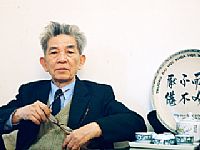
Along with phonetics, Vietnamese vocabulary is also a field that Vietnamese linguists in the Department/Faculty of Linguistics have pioneered and left their mark on, with the groundbreaking works of Nguyen Van Tu and later Nguyen Thien Giap. In Nguyen Van Tu's early and subsequent works on Vietnamese vocabulary, such as the section...
From the perspective of learningin Introduction to Linguistics (1961),
Modern Vietnamese vocabulary(1968)
Vietnamese words and vocabulary(1976), the issues of words, word identification, semantic structure of words, semantic relationships, origin and scope of use of Vietnamese vocabulary were mentioned, analyzed and described in detail, laying the foundation for the emergence of Vietnamese Lexicology in Vietnam in general and at the University of Social Sciences and Humanities in particular. Following this, inheriting the research achievements of Nguyen Van Tu and many other scholars, Nguyen Thien Giap conducted profound, scientific and systematic research on Vietnamese vocabulary through his works.
Vietnamese vocabulary (1975) and
Vietnamese vocabulary(1985) is highly regarded by lexicology researchers. In addition, lexicological content is also mentioned in most works.
Linguistic IntroductionCompiled by faculty and lecturers of the Department/Faculty of Linguistics (see section 7). Along with studying the Vietnamese vocabulary system, researchers also delve into examining smaller semantic vocabulary groups within the vocabulary system, such as homonyms (Nguyen Thien Giap:
Some thoughts on the phenomenon of homonyms in Vietnamese.1971), synonymous (Nguyen Van Tu:
Vietnamese thesaurus,1980,
Synonym groups in Vietnamese,1982), idiom (Nguyen Thien Giap):
Regarding the concept of idioms in Vietnamese(1975), Sino-Vietnamese vocabulary (Nguyen Thien Giap - Vu Duc Nghieu):
Elementary school Chinese-Vietnamese handbook,1999), etc.
2. STUDIES ON VIETNAMESE GRAMMAR, SEMANTICS, AND PRAGMATISM
2.1. Regarding Vietnamese grammarAnother aspect of Vietnamese linguistics that strongly reflects the research achievements of the Department/Faculty of Linguistics is Vietnamese grammar, at both the lexical and syntactic levels.
2.1.1. At the grammatical levelIt can be seen that issues related to word formation units and word formation patterns in Vietnamese are expressed profoundly and diversely through the research works of Nguyen Kim Than.
Studies on Vietnamese Grammar - Vol. 1, 1963), Nguyen Tai Can (
Vietnamese Grammar: Words - Compound Words - Phrases, 1975), Cao Xuan Hao (
Regarding the linguistic status of the language, 1985,
The identifying function and status of words, 1985), Nguyen Thien Giap (
Words and word recognition in Vietnamese, 1996), among which the research of Nguyen Tai Can, especially his work, had a significant influence on Vietnamese grammarians.
Vietnamese Grammar: Words - Compound Words - Phrases (1975)
.This work incorporates the concepts of Soviet Orientalists.
pattern(morphosyllabeme), Nguyen Tai Can established for
languageIn Vietnamese, the function of a grammatical unit, similar to a morpheme in European languages, is to systematically describe the word formation patterns of Vietnamese. "The proposal to apply and clarify the grammatical value of 'language' created a pivotal shift."
This has brought about profound changes in the understanding of Vietnamese linguists in general when describing the Vietnamese language, making the description of contemporary Vietnamese structure more accurate and true to its original nature."Furthermore, the Vietnamese noun phrase structure described in this work (applying the method of description based on positional distribution) has contributed significantly to improving and changing the classification of word classes, a very important aspect of grammatical research and description" (Vu Duc Nghieu, 2011). From this, the concept of studying Vietnamese word formation based on units has been formed.
languageThis, often referred to as the concept of the University, was later further developed in the research works of Cao Xuan Hao and Nguyen Thien Giap, in which
languageIt not only holds a position similar to that of a figurative figure, but even has "a position equivalent to" that of a figurative figure.
fromin European languages” (Cao Xuan Hao). Another issue at the grammatical level that also attracted the attention of Vietnamese linguists of the Department/Faculty is the issue of Vietnamese word classes, with word class classification tables leaving the mark of Nguyen Kim Than and Nguyen Tai Can. While Nguyen Kim Than (1963) classified Vietnamese word classes based on a set of both criteria: general meaning and syntactic relationship, Nguyen Tai Can (1975) relied only on purely grammatical criteria: the ability to organize phrases (main criterion) and the ability to organize clauses (supplementary criterion) to classify Vietnamese word classes, thereby drawing fairly clear boundaries of word classes and subclasses in Vietnamese. The concepts of word classes of Nguyen Tai Can and Nguyen Kim Than were adopted and developed in the later research works of Dinh Van Duc.
Vietnamese Grammar - Parts of Speech(1986) and
Lectures on Vietnamese grammarBut
Word categories from a functional perspective,(2010). These two works by Dinh Van Duc have approached the issue of Vietnamese word classes in a systematic and in-depth manner, in which Vietnamese word classes are not only scientifically classified but also meticulously described in terms of their nature, attitude, and grammatical function, as shown through their role in phrase structure. The issue of word class classification is also addressed by Nguyen Hong Con in his article.
Regarding the classification of word classes in Vietnamese(2003), with a classification method entirely based on the function of words. Not only concerned with the issue of defining and describing the Vietnamese word class system, researchers in the Department/Faculty of Linguistics are also interested in describing the grammatical characteristics and functions of word classes, subclasses, or phrases, with many in-depth research works that have attracted the attention of Nguyen Tai Can (
Nouns as a word class in modern Vietnamese( , 1975), Nguyen Kim Than (
Verbs in Vietnamese, 1977), Nguyen Lai (
Words indicating direction of movement in Vietnamese(1990), or Nguyen Van Chinh's articles on specific function words such as
but(2000),
Satisfied(2001),
fitand
new (2002)
keep(204),
Are not(2005), etc. In particular, Cao Xuan Hao's works on the classification of unit nouns and block nouns in Vietnamese (
The two types of nouns in Vietnamese,1980;
The distinction between units/quantities in Vietnamese and the concept of parts of speech.1988), regarding the structure of the phrase (
Regarding the structure of noun phrases in Vietnamese.Viet, 1998;
Phrase and phrase structure(1998) has brought about new approaches to relevant issues.
2.1.2. At the syntactic levelLinguists from the Department/Faculty of Linguistics have also published a series of research papers on Vietnamese syntax from various theoretical perspectives:
Research Affairs Vietnamese Grammar, Part 2(1964) by Nguyen Kim Than was deeply influenced by the Russian "ancestral" theory,
Vietnamese grammar(1975, in Russian) by Nguyen Tai Can and co-authors (IX Bystrov and NV Stankievich),
Vietnamese Grammar – Sentences(1980) by Hoang Trong Phien harmonizes traditional grammar and structural grammar,
Research Research on Vietnamese grammar from a hierarchical perspective with a core element.Liu Yunling's (1970) reveals a separatist tendency with a subject-predicate structure.
Vietnamese Sentence Components (1998)Nguyen Minh Thuyet and Nguyen Van Hiep's work leans towards SE Jakhontov's theory of sentence components.
Vietnamese – A Draft of Functional Grammar(1991) by Cao Xuan Hao follows the direction of Functional Grammar,
Vietnamese syntax(2009) by Nguyen Van Hiep follows the semantic grammar approach. The following statement by Nguyen Van Hiep (2009) on the influence of world syntactic theories on the study of Vietnamese syntax, “It can be said that most of the world’s important syntactic theories have had a certain influence on the study of Vietnamese syntax in some way,” is also entirely true for the study of Vietnamese syntax in the Department/Faculty of Linguistics. It shows the connection between the linguists of the Department/Faculty and major schools of linguistics in the world, even under the most difficult circumstances. Although the above research works have different scientific values, depending on their historical period, each work has left an academic mark in the flow of Vietnamese syntax research. Among them, it can be said that, although controversial,
Vietnamese – A Draft of Functional GrammarCao Xuan Hao's work is the most widely influential. The distinguishing feature of this work is its functional grammar approach to Vietnamese syntax, opposing Eurocentrism and using a subject-predicate structure to describe the syntactic structure of Vietnamese sentences instead of the traditional subject-predicate structure, which is only suitable for the syntax of European languages. From another perspective, the work...
Vietnamese syntaxNguyen Van Hiep's recently published work (2009) describing Vietnamese syntax from a semantic grammar perspective is also highly regarded by researchers, especially regarding the method of identifying, classifying, and describing Vietnamese sentence components, although the author still leans towards using the subject-predicate structure with certain modifications. It can be said that researchers in Vietnamese grammar at the Department/Faculty of Linguistics have adopted linguistic theories and research methods from around the world quite up-to-date and know how to apply them to the practical aspects of Vietnamese. At the level above the sentence, noteworthy are the studies of Tran Ngoc Them on paragraphs, texts, and textual cohesion.
Vietnamese text linking system(1985) by Tran Ngoc Them is considered the first systematic research work on Vietnamese text grammar, paving the way for later studies on text and discourse, one of which is
Vietnamese speech linking systemby Nguyen Thi Viet Thanh (1999). In addition to systematic research works on Vietnamese syntax, grammarians of the Department/Faculty of Linguistics also delve into specific structural types or sentence types of Vietnamese, contributing to clarifying the syntactic picture of Vietnamese:
The structure is "Name + is + Name"(Nguyen Duc Dan, Tran Ngoc Them)
Sentence without a subject with a predicate(Nguyen Minh Thuyet, 1981)
A type of sentence where the subject comes after the predicate.(Nguyen Minh Thuyet, 1983)
The structure of a Vietnamese sentence for conveying information.(Nguyen Hong Con, 2001)
Analyzing Vietnamese simple sentences according to the Topic-Comment structure.(Dao Thanh Lan, 2002)
The problem of passive voice in Vietnamese.(Nguyen Hong Con, 2004)
Vietnamese Grammar – Simple Sentences with Two Components(Nguyen Cao Dam, 2008), etc.
2.2. Regarding the semantics and pragmatics of VietnameseAt the semantic and pragmatic level of Vietnamese, there are also many valuable studies at both the levels of word meaning and sentence meaning. Studies on the meaning of Vietnamese words can be found in most lexicology textbooks by Nguyen Van Tu and Nguyen Thien Giap (cited in section 1.1) and the lexicology section in introductory linguistics textbooks (see section 7 below), in which the meaning of Vietnamese words has been classified and described in many aspects: semantic components (denotative meaning, conceptual meaning, pragmatic meaning, structural meaning), number of meanings (monosemy, polysemy), semantic relationships (synonymy, near synonymy, antonymy), semantic shifts (metaphor, metonymy)... Recently, Le Quang Thiem has published noteworthy studies on the meaning of linguistic signals in general and the lexical meaning of Vietnamese words in particular through his articles.
Advances in the interpretation of linguistic signals(2005)
Semantic layers and functional semantic types of vocabulary(2006), presented systematically in the monograph.
Semantics(2007). Regarding the grammatical meaning of words, it is noteworthy that studies on
Semantics of Vietnamese words indicating direction of movementby Nguyen Lai (2001), semantics and logic of Vietnamese function words by Nguyen Duc Dan (
Negation and rejection, 1983,
Semantics of function words1984, Lot
logic - semantics - syntax1987,
The logic of conjunctions,1994,
Logic and the Vietnamese Language, 1996, etc.), semantics and pragmatics of function words and the Vietnamese language by Le Dong (
Semantics and pragmatics of Vietnamese function words(1991, 1992), etc. The semantic-pragmatic aspect of Vietnamese sentences is an aspect that has attracted the attention of many researchers in the Department/Faculty of Linguistics. While in works on Vietnamese grammar influenced by traditional grammar (Nguyen Kim Than 1964, Nguyen Tai Can 1975, Hoang Trong Phien 1980), the issue of sentence meaning was often dissolved in classifying and describing sentences according to their communicative structure, in later works influenced by functional and semantic trends, sentence meaning is analyzed and described on many different levels. Ignoring the semantic-pragmatic opposition, it can be seen that...
In Vietnamese: A Draft of Functional Grammar(1991), Cao Xuan Hao (1991) distinguished five different types of sentence meaning: expressive meaning (expressed through the predicate framework), logical-linguistic meaning (expressed through the subject-predicate structure), modal meaning (expressed through modal means), illocutionary act (expressed through means of marking the illocutionary target), and informational focus (expressed through the informational structure of the sentence). In
Vietnamese syntax(2009), Nguyen Van Hiep distinguishes six types of meaning/information of sentences but categorizes them into two planes: the semantic plane with factual meaning (i.e., expressive meaning), modal meaning (excluding illocutionary modality), thematic meaning (corresponding to Cao Xuan Hao's logical-linguistic meaning); the pragmatic plane with factual segmentation information (statement-reporting), emphasis - the focus of information and illocutionary force (speech act). These works by Cao Xuan Hao and Nguyen Van Hiep truly marked a new development in the study of the semantic-pragmatic planes of Vietnamese sentences. Other semantic-pragmatic issues such as speech acts, explicit and implicit meaning, presupposition, conversational analysis, argumentation, etc., were introduced and applied to the analysis of Vietnamese linguistic data in the works of Nguyen Duc Dan (
Logic and the Vietnamese Language, 1996;
Pragmatics T1,1998), Nguyen Thien Giap (
Vietnamese Language Studies( , 2000). Particularly noteworthy are Le Dong's studies on linguistic aspects.
Meaning - pragmatics of the thesis structure(1993)
Semantics and pragmatics of the phenomenon of emphasis (1995)
and the question of identity(1996); by Nguyen Van Hiep on
Modal particles and modal particles(2005, 2007)
implicit convention(2006) and
thematic meaning of Vietnamese sentences (2006);by Nguyen Hong Con about
Information structure (2001), information focus (2004) and syntax variations the law of the sentence(2009, 2010), by Dao Thanh Lan on linguistic aspects
Vietnamese grammatical semantics of imperative sentences(2005, 2007, 2010).

3. STUDIES ON VIETNAMESE LEARNING STYLES AND DIALECTS
3.1. Regarding Vietnamese language learning stylesConsidered a crucial field of Vietnamese linguistics, closely linked to the functional variations of the Vietnamese language and very closely related to literature, stylistics has been incorporated into the teaching and research of the Linguistics Department since the early years of the Faculty of Literature, beginning with...
Textbook on Stylisticsby Phan Ngoc and then
Textbook on Rhetoricby Nguyen Phan Canh (1959),
Modern Vietnamese language learning styleby Hoang Trong Phien (1973). Based on inheriting and developing these initial achievements, Nguyen Huu Dat has produced textbooks.
Modern Vietnamese language learning style(1999)
Vietnamese learning styles and functional styles(2000), widely used both inside and outside the University of Social Sciences and Humanities. Not only limited to compiling textbooks and teaching, the Vietnamese stylistics experts of the Department/Faculty also conduct many in-depth studies on different functional stylistic variations of Vietnamese, especially artistic language, with valuable contributions:
"Exploring Nguyen Du's linguistic style in The Tale of Kieu"by Phan Ngoc (1985),
Poetic languageby Nguyen Phan Canh (1988),
Language and literary creationby Nguyen Lai (1991),
Vietnamese poetry in the light of modern linguistics.by Mai Ngoc Chu (1991),
Language of poetry(1993) and
The language of Vietnamese poetry(1996) by Nguyen Huu Dat, etc. The language of journalism and media also attracted the attention of Dinh Van Duc (
Crucial aspects of political and social news discourse in English and Vietnamese newspapers., 1999;
Vietnamese journalistic language in the early 20th century: An observation on the language of revolutionary Vietnamese journalism.(period 1925-1945), 2000), Nguyen Thien Giap
Articles on journalistic language in Nhan Dan newspaper and many other newspapers.). - The linguistic style of great cultural figures such as Nguyen Du and Ho Chi Minh is also discussed from different perspectives in Phan Ngoc's research works.
Exploring Nguyen Du's style in The Tale of Kieu, 1985) Nguyen Phan Canh
Initial steps in understanding the language of President Ho Chi Minh,1965;
Rhyme in Nguyen Du's *Truyen Kieu*1969, etc.); Nguyen Lai (
The depth of thought and revolutionary vision in Ho Chi Minh's language., 1989;
Ho Chi Minh and the Development of the Vietnamese Language, 1998;
The Vietnamese Language and the Great Cultural Figure Ho Chi Minh, 2003), Nguyen Thien Giap (
Lessons on how President Ho Chi Minh used idioms, 1988) Nguyen Huu Dat (
Nguyen Du's innovative use of the word "Spring" in his work *The Tale of Kieu*2002,
Characteristics of metaphorical techniques in Ho Chi Minh's poetry.2005) etc.
3.2 Regarding Vietnamese dialectsBesides functional stylistic variations, geographical dialects and social dialects, as geographical and social variants of the Vietnamese language, have also attracted the attention of many researchers. The pioneer and most significant contributor to the study of Vietnamese geographical dialects is Hoang Thi Chau, author of research works on Vietnamese dialects such as:
Vietnamese language across the country(1989)
dialect of the languageViet (2005). In these works, especially in
Vietnamese dialectology,The author proposed scientific criteria for classifying Vietnamese dialects, describing the characteristics of the dialects and identifying the regional variations of the Vietnamese language. To date, both domestically and internationally, this is the only research work and the only university textbook on Vietnamese dialects. In addition to geographical dialects, issues of socio-geographical dialects of Vietnamese are also addressed in Nguyen Kim Than's research.
The way people speak in Hanoi,1982;
Regarding the dialects of the Mekong Delta region,1984) and most recently Trinh Cam Lan with her work
The linguistic transformation of communities migrating to the capital (case study of the Nghe Tinh community in Hanoi, 2007).Approaching the issue of geographical and socio-dialectal language from a socio-linguistic perspective.
4. STUDIES ON THE HISTORY OF THE VIETNAMESE LANGUAGE
Building upon the achievements of researchers both domestically and internationally, over the past few decades, Vietnamese linguists in the Department/Faculty have considered the history of the Vietnamese language as one of their research focal points, concentrating on two main issues: 1) identifying the origins and developmental stages of the Vietnamese language, and 2) studying the developmental stages and certain aspects and states of the Vietnamese language in different specific periods. The first issue is mainly addressed in some works by Pham Duc Duong (
Regarding the ancestral relationship of the Viet-Muong group of languages,1979; Source
Vietnamese origin: from the Proto-Viet Muong to the Common Viet Muong,1983), Nguyen Tai Can (
Attempting to periodize the 12-century history of the Vietnamese language, 1998), Tran Tri Doi (
Regarding the delineation of historical stages in the development of the Vietnamese language,2004;
Vietnamese History Textbook (Draft)(2005). Among these,
History textbook in EnglishTran Tri Doi's (2005) *Viet (preliminary draft*) is the first work to systematically present issues related to the origins of the Vietnamese language in relation to languages in the same group and regional languages, defining and summarizing the stages of Vietnamese language development in history, in the form of a university textbook. The second issue has attracted more attention from researchers, with a series of works covering many specific issues of Vietnamese language history, from phonetic history, vocabulary, grammar, and issues of linguistic-cultural history and language contact. - Regarding the phonetic history of Vietnamese, the works that stand out are:
The origin and formation process of Sino-Vietnamese pronunciation (1979)
and
Vietnamese Historical Phonetics Textbook(1995) by Nguyen Tai Can. It can be said that, up to now
Origin and formation process of the methodread
Sino-VietnameseThis is the most comprehensive and systematic research work on the history of Vietnamese phonetics, in which "the root relationships, contact relationships between Vietnamese and related languages, between Vietnamese and Chinese; the influence of Chinese on Vietnamese and other minority languages in Vietnam... have been analyzed consistently and rationally within the overall context, making the issue viewed and presented comprehensively" (Vu Duc Nghieu, 2011).
Textbook on the history of Vietnamese phonetics (preliminary draft), 1995Nguyen Tai Can's work, also surveying the origins and evolution of the Vietnamese phonetic system through various stages, has been highly regarded by researchers both domestically and internationally. Recently, Tran Tri Doi published research results on the history of Vietnamese phonetics and the Viet-Muong languages, focusing on the formation of the tonal system and the rules of voiceless and nasalization, in his work.
Some comparative research issues - the history of the Viet-Muong language group. (2011)
,This marks a new milestone in the study of the origins and phonetic history of Vietnamese and related languages. Regarding the history of Vietnamese vocabulary, the research of Vu Duc Nghieu and Le Quang Thiem is noteworthy, as they have persistently and deeply focused on this topic. Vu Duc Nghieu has published a series of articles on the trends in the evolution of Vietnamese vocabulary throughout history.
(The degrees of similarity and divergence within a type of word group in Vietnamese,1999;
Some consequences of the monosyllabic and polysyllabic trends in the development of the Vietnamese language., 2004;
The development of Vietnamese vocabulary in the latter half of the 20th century, as seen in several dictionaries.2009) and ancient Vietnamese vocabulary in texts (
Some differences in vocabulary and grammar of Vietnamese across three texts written in the 17th-century Quốc ngữ script. 2010
; A survey of archaic words in three 17th-century Vietnamese texts,2010;
Some preliminary surveys of Old Vietnamese vocabulary in some Nôm texts.2011;
Literary vocabulary of the Old Vietnamese period: Some characteristics in its formation and development.(2011). The project
A brief history of Vietnamese vocabularyThe author's work, developed from the scientific research project of the same name (approved in 2009), systematically surveys the history of Vietnamese vocabulary from both diachronic and synchronic perspectives and will be published soon. It is certainly a significant contribution to the study of the history of Vietnamese vocabulary. Interested in the history of Vietnamese vocabulary in a more recent period, the modern era, Le Quang Thiem has written many articles on this topic.
Several linguistic issues in the text of "Dong Kinh Nghia Thuc"2001,
The transformation of Vietnamese socio-political vocabulary in the first 30 years of the 20th century (1900-1930)(2001) and in 2003 published the monograph.
History of Vietnamese vocabularyBut
period 1858-1845,Reconstructing the rich vocabulary of the Vietnamese language during a turbulent historical period. - Regarding the historical grammar of Vietnamese, researchers in the Department/Faculty of Linguistics focus primarily on the realm of function words and some grammatical phenomena in Nôm and Quốc ngữ texts from the 15th century onwards: Vũ Đức Nghiệu is interested in the meaning and function of function words in Nôm texts.
The evolution of the meaning and function of the word group "không, chăng, chẳng" from the 15th century to the present., 1986;
Function words in 15th-century Vietnamese in the Quoc Am Thi Tap and Hong Duc Quoc Am Thi Tap, 2006;
Function words in the phonetic transcription of Truyền kì mạn lục, 2010) also concerned about the issue
Monosyllabic, monosyllabic and polysyllabic, polysyllabic development in the historical development of the Vietnamese language.(2004
), Vietnamese coordinate disyllabic vocabulary units in the context of some Southeast Asian languages (1999).
Đinh Văn Đức paid attention to function words and grammatical phenomena of Vietnamese in the 17th-19th centuries.
Some observations on the grammatical features of verb modifiers in Vietnamese through some 17th-century Catholic texts., 1981;
Some observations on the grammatical features of Vietnamese word types in the 17th century.1983;
The general appearance of Vietnamese syntactic structure through some texts written in Quốc ngữ script in the 18th century., 2002;
One hundred years of Vietnamese literary language.2004
Comment on the changes in some Vietnamese grammatical phenomena from the 17th to the 19th centuries through textual observations (Nôm and Quốc ngữ).(2011), as well as the grammatical changes of Vietnamese in the 20th century, the results of which are shown through 4 scientific projects (1997 – 2005) and textbooks.
Lectures on the history of the Vietnamese language(20th century), published in 2005. - The collection and research of writing systems and texts also received special attention, with valuable research works on Nom script and Nom texts by Nguyen Tai Can.
Some issues concerning the Nôm script., 1985;
Documents related to the Tale of Kieu: Duy Minh Thi Edition 1872, 2002;
Documents on the Tale of Kieu: From the Duy Minh Thi edition to the Kieu Oanh Mau edition(2004), on the Vietnamese script and Vietnamese texts of the 17th-18th centuries by Nguyen Tai Can and N. Stankiev