The essence of the nation is encapsulated in the sticky rice cakes (bánh chưng and bánh dày).
On the occasion of the Hung Kings' Commemoration Day on the 10th day of the 3rd lunar month, Dr. Bui Duy Duong - Vice Dean of the Faculty - personally acted as a "cultural storyteller," introducing to students from Peking University (China) the traditional cakes offered to the Hung Kings. The legend of banh chung and banh day (traditional Vietnamese rice cakes) was vividly conveyed through hands-on experience. Here, international students went from amazement to delight as they discovered for the first time how to properly enjoy traditional banh chung: from the technique of peeling off the layers of fresh green dong leaves to the skillful use of the string used to wrap the cake to divide it into eight perfectly even portions... Each piece of cake, with its green color from the leaves, the rich and chewy taste of sticky rice and yellow beans, is not only visually appealing and delicious but also encapsulates the profound philosophies of life and the worldview of the Vietnamese people.
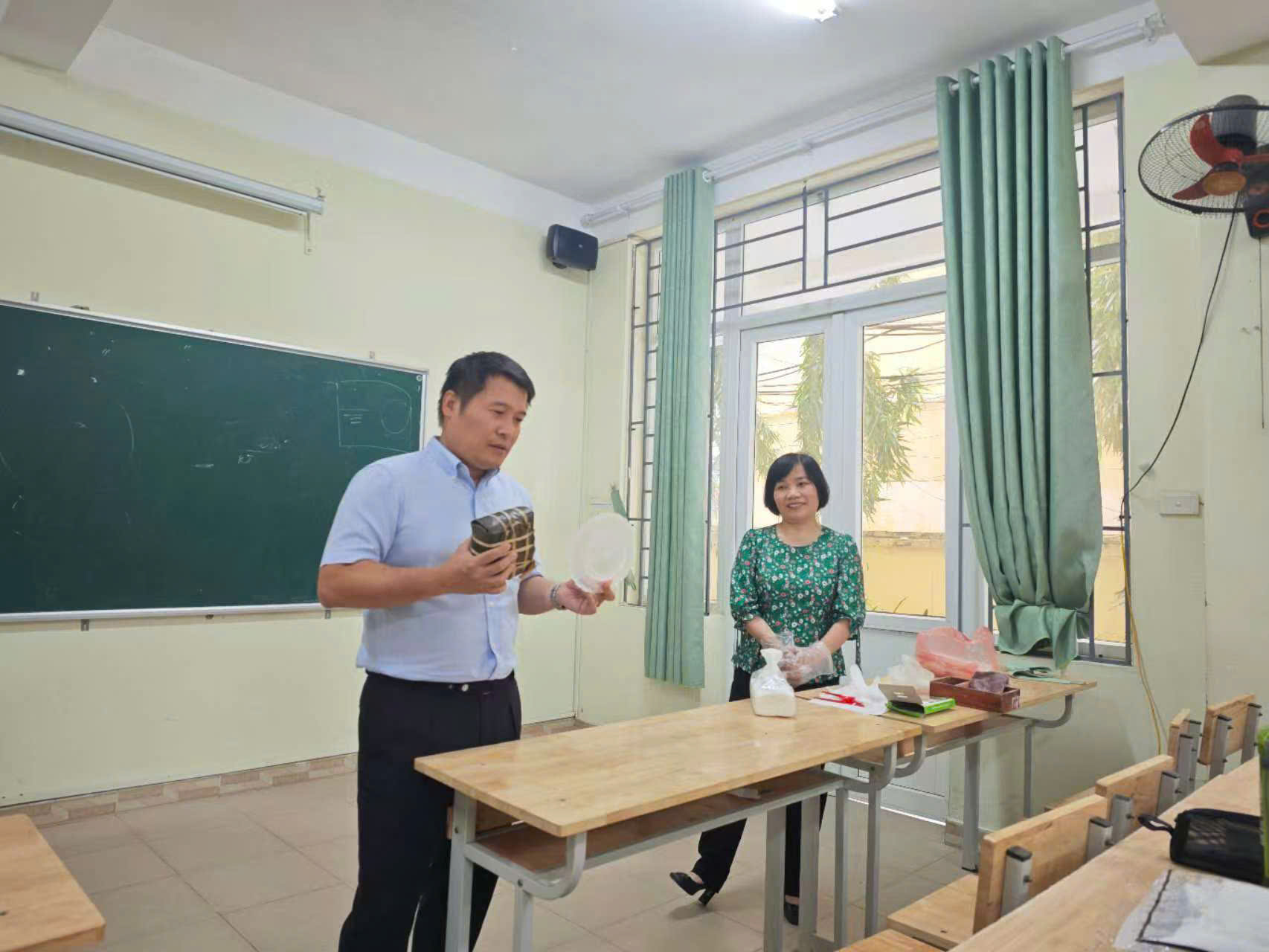
Dr. Bui Duy Duong personally introduced and guided international students on how to enjoy traditional banh chung (Vietnamese sticky rice cake).
"Cooking with CMC": Where language boundaries are blurred.
Continuing the experiential journey, the "Cooking with CMC" program (Cultural Ambassadors Club) opened up a space for vibrant and emotional interaction. With enthusiastic support from Vietnamese lecturers and students, international students transformed the Culinary Practice and Experience Room (75 Tran Dai Nghia campus) into a bustling international kitchen.
The highlight of the program was the enthusiastic participation of international students from Japan, China, and Poland, such as Sawa Shiota, Chihiro Izumi, Wang Ke, Liu Xiaoyun, and Martyna Oliwia Gawienowska… These young people readily "dived in" to the kitchen to prepare dishes with authentic Southern flavors, such as fragrant grilled spring rolls, savory mixed noodles, and refreshing fruit salad.
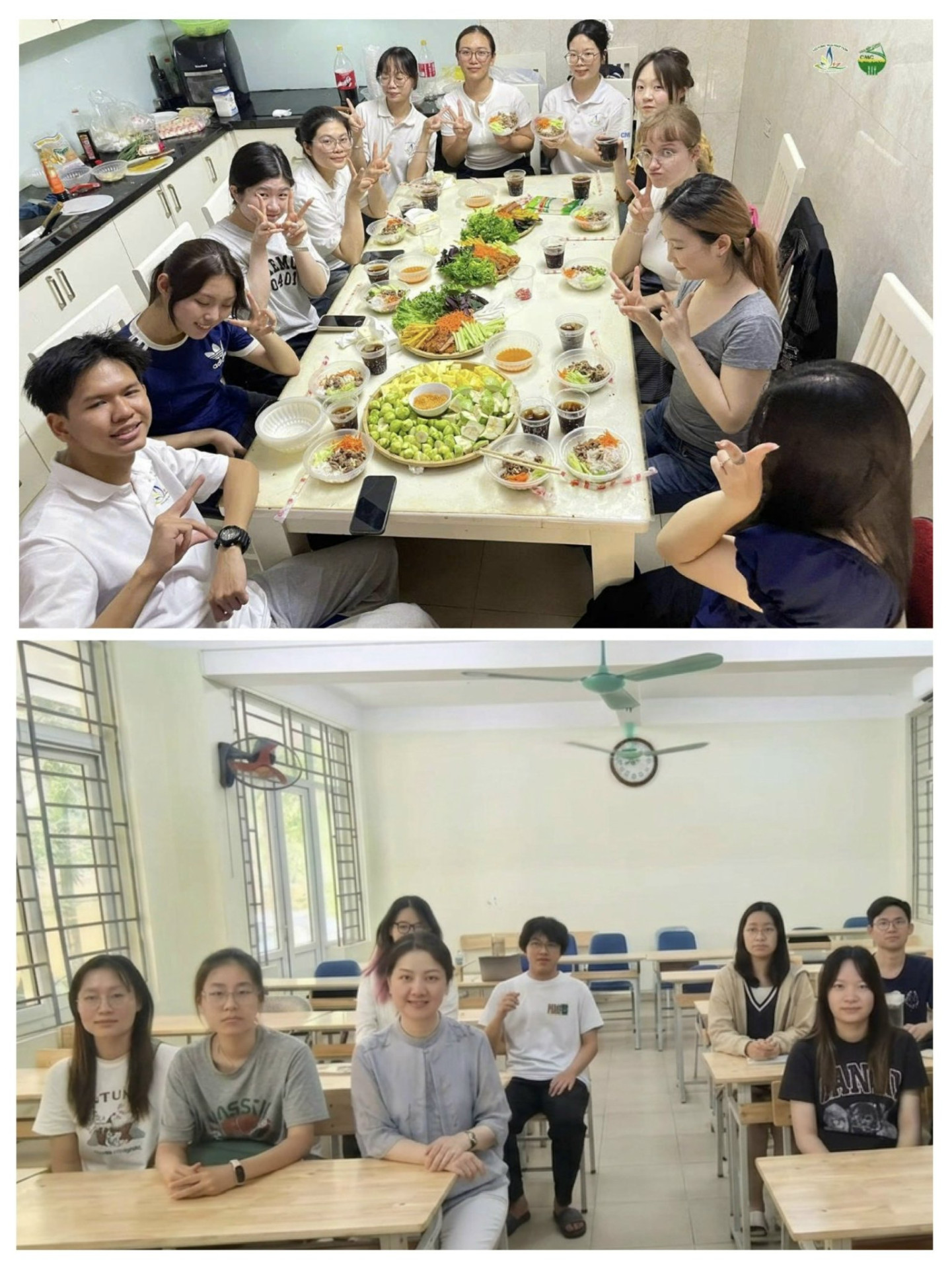
The international students were excited to experience the process of preparing Vietnamese dishes.
It's often said that the spices in a dish are the most powerful catalyst for emotion. Through each step of picking vegetables, preparing dipping sauces, or grilling spring rolls, initial awkwardness quickly gives way to harmonious cooperation. Familiar local ingredients suddenly become an invisible thread, transforming strangers into friends, gradually breaking down language barriers to understand the subtleties of Vietnamese culinary art.
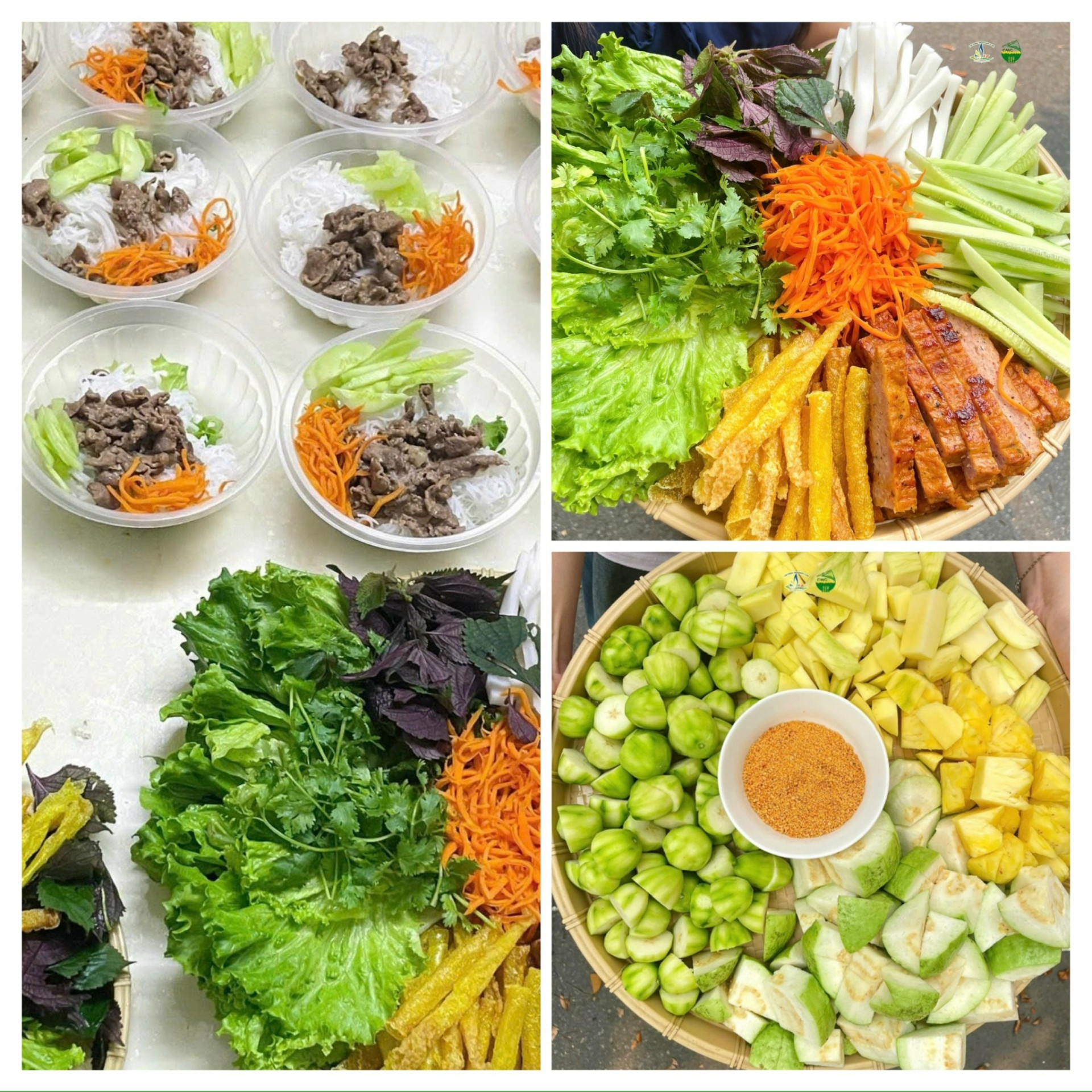
The finished products are unique dishes prepared by Vietnamese and international students themselves.
Flavors that preserve memories
The program concluded with radiant smiles, but its impact lingers on. In the special space of the Faculty of Linguistics and Vietnamese Studies, each dish served was not simply a culinary experience, but also a vivid testament to the power of cultural exchange. The simple yet rich flavors of traditional Vietnamese cuisine have been doing an excellent job of spreading Vietnamese culture and connecting young people who love the Vietnamese language and culture from all over the world.
Author:Department of Linguistics and Vietnamese Studies
Older news

