
Trường Đại học Khoa học Xã hội và Nhân văn - ĐHQGHN
Trang thông tin điện tử chính thức của Trường Đại học Khoa học Xã hội và Nhân văn, đơn vị thành viên của Đại học Quốc gia Hà Nội


| Chức vụ | Giáo sư thỉnh giảng |
| Đơn vị | Giảng viên thỉnh giảng người nước ngoài |

Current position
June 2024 – | Honorary Professor |
School of Sociology | |
Australian National University | |
https://researchportalplus.anu.edu.au/en/persons/david-moore/ |
Over the course of my academic career, I have held a range of research and teaching positions, including prestigious professorial roles, at the Australian National University, Curtin University and La Trobe University (details below).
Academic journal editorial/reviewer roles
2020 – current: Consulting Editor, Contemporary Drug Problems
2010 – 2020: Editor-in-Chief, Contemporary Drug Problems
2012 – 2020: Editorial Board Member, International Journal of Drug Policy
2002 – 2012: Associate Editor (Qualitative Research), International Journal of Drug Policy
Journal peer reviewer: Addiction, Addiction Research & Theory, Contemporary Drug Problems, Current Anthropology, Drug & Alcohol Review, Human Organization, International Journal of Drug Policy, Medical Anthropology, Australian & New Zealand Journal of Criminology, Social Science & Medicine, Sociology of Health & Illness
Book publisher peer reviewer: Ashgate, Palgrave Macmillan
Academic qualifications
1996 PhD, Anthropology, University of Western Australia
1987 MA, Anthropology, University of Western Australia
1983 BA(Hons), Anthropology, University of Western Australia
Prizes & awards
2012: 2011 Researcher of the Year, Faculty of Health Sciences, Curtin University ($5,000)
2012: The drug effect: Health, crime and society shortlisted for Australian Educational Publishing Awards
2007: Finalist, National Drug and Alcohol Awards (Research)
2007: Vice-Chancellor’s Award for Excellence, Curtin University
2005: New Independent Researcher Infrastructure Scheme Award, WA Health Department ($15,000)
1992 – 1995: National Campaign Against Drug Abuse Postgraduate Research Scholarship
1991: Syd Lovibond Prize for Young Scientists, National Drug & Alcohol Research Centre, University of New South Wales
Previous positions
Mar 2023 – March 2026
Adjunct Professor
Drugs, Gender and Sexuality Program
Australian Research Centre in Sex, Health and Society
La Trobe University
July 2019 – Mar 2023
Professorial Research Fellow
Drugs, Gender and Sexuality Program
Australian Research Centre in Sex, Health and Society
La Trobe University
Jan 2011 – June 2019
Professor & Program Leader (Melbourne Office)
National Drug Research Institute
Curtin University
Jan 2006 – Dec 2010
Associate Professor
National Drug Research Institute
Curtin University
July 2003 – Dec 2005
Senior Research Fellow
National Drug Research Institute
Curtin University of Technology
July 2002 – July 2003
Visiting Senior Research Fellow
National Drug Research Institute
Curtin University of Technology
July 2000 – July 2003
Senior Research Fellow
School of Health Sciences
Deakin University
Jan 1997 – Jun 2000
Lecturer in Anthropology
Department of Archaeology and Anthropology
Australian National University
1996: Overseas travel: Thailand, Nepal, India, England, Scotland, France, Spain, Portugal, Italy, Austria & The Czech Republic
1992 – 1995
Visiting Research Fellow
Addiction Studies Unit
Curtin University of Technology
Honorary Research Fellow
National Centre for Research into the Prevention of Drug Abuse Curtin University of Technology
1989 – 1992
Research Associate
National Centre for Research into the Prevention of Drug Abuse
Curtin University of Technology
1988 – 1989
Research Officer - MacDonald, Hales and Associates (social research consultancy)
Research funding
National competitive research grants
Bourne, Mooney-Somers, Pennay, Power, McNair, Moore and Lyons, Alcohol and tobacco use among lesbian, bisexual and queer identifying women. ARC Linkage Project (2022 – 2024, total: $291,517)
Fraser, Treloar, Moore, Edwards and Birbilis, Lived experiences of treatment for hepatitis C. ARC Discovery Project (2020 – 2021, total: $355,500)
Moore, Keane, Graham and Ekendahl, Analysing gender in research and policy on alcohol-related violence among young people. ARC Discovery Project (2018 – 2021, total: $530,000)
Fraser, Moore, Seear, Aitken and Stanton, Understanding performance and image enhancing drug injecting in Australia. ARC Discovery Project (2017 – 2019, total: $472,000)
Fraser, Kokanovic, Moore, Treloar and Dunlop, Experiences of addiction, treatment and recovery: An online resource. ARC Discovery Project (2014 – 2016, total: $499,000)
Moore, Dietze, Perez and Room, Developing the capacity to model the impact of interventions that target high-risk drinking among young Australians. ARC Discovery Project (2011 – 2013, total: $440,000)
Hellard, Dietze, Ritter, Lubman, Kinner, Williams, Dore, Maher, Moore and Power, Reducing the health, social and economic burden of injecting drug use in Australia. NHMRC Centre for Research Excellence (2010 – 2015, total: $2,485,000)
Room, Moore, MacLean, Vandenberg and Goltz, Understanding and reducing alcohol- related harm among young adults in urban settings: Opportunities for intervention. ARC Linkage Project (2010 – 2012, total: $240,000)
Moore, Dietze, Bammer and Perez, Understanding the barriers to improved access, engagement and retention of methamphetamine users in health services. NHMRC Project Grant (2008 – 2010, total: $756,000)
Fraser, Treloar and Moore, Under construction: the social and cultural politics of hepatitis C. ARC Discovery Project (2008 – 2010, total: $95,000)
Moore, Dietze, Maher, Bammer and Clatts, Improving understanding of psychostimulant-related harms in Australia: An integrated ethno-epidemiological approach. NHMRC Project Grant (2005 – 2008, total: $604,000)
Crofts, Moore and Locarnini, Injecting drug users: Social networks and molecular epidemiology of the hepatitis C virus. NHMRC Project Grant (2000 – 2002, total: $534,000)
Rumbold, Fitzgerald, Dietze, Morgan, Fry and Moore, An investigation of retail heroin markets from a public health perspective. NHMRC Project Grant (2000 – 2001, total: $188,000)
Other competitive research grants
Dietze, Fraser, Fitzgerald and Moore, Analysing addiction concepts for improved public health outcomes in Australia: A Victorian Pilot Study. Monash University Faculty Strategic Grant Scheme (2010, total: $47,000).
Room, Moore and MacLean, Improving understanding of ‘binge drinking’ and related harms amongst young Victorians. Victorian Health Promotion Foundation ARC Linkage Scheme (2008, total: $75,000).
Moore and Lenton, The harms associated with concurrent alcohol and party drug use amongst young people: Risk environments and the implications for prevention. Alcohol Education and Rehabilitation Foundation Research Grant (2005 – 2008, total: $120,000)
Moore and Northcote, A multi-site investigation of the social meanings of alcohol misuse among young adults in recreational settings. Alcohol Education and Rehabilitation Foundation Research Grant (2005 – 2008, total: $308,000)
Duff, Johnston and Moore, Research into the cultures and contexts of Ecstasy and related drug use in Victoria: New bases for prevention and harm minimisation. Victorian Premier’s Drug Prevention Council Research Grant (2005 – 2006, total: $65,000)
Moore, Rumbold and Dietze, An ethnographic study of heroin markets and health-related harm in Melbourne. VicHealth Project Grant (2000 – 2003, total: $225,000)
Moore, National Campaign Against Drug Abuse Postgraduate Research Scholarship. Research into Drug Abuse Advisory Committee, Commonwealth Department of Health (1992 – 1995, total: $69,000)
Moore, Hawks and Saunders, 1990-1991. Recreational drug use, with particular reference to Ecstasy, amongst a network of young people. Research into Drug Abuse Advisory Committee Research Grant, Commonwealth Department of Health (1990 – 1991, total: $7,450)
Moore, D., Medical and Health Research Infrastructure Fund. WA Health Department (combined funds 2007 – 2018, total: $168,500).
Publications
I have published five books, 14 book chapters and over 100 refereed journal articles, and currently have an h-index of 46 and an i10-index of 103.
Books
Keane, H., Moore, D., & Ekendahl, M. (2026). The trouble with drinking: Alcohol, public health and the regulation of life. Bristol University Press.
Fraser, S., Moore, D., & Keane, H. (2014). Habits: Remaking addiction. Palgrave Macmillan.
Fraser, S., & Moore, D. (Eds.). (2011). The drug effect: Health, crime and society. Cambridge University Press.
Moore, D., & Dietze, P. (Eds.). (2008). Drugs and public health: Australian perspectives on policy and practice. Oxford University Press.
Moore, D. (1994). The lads in action: Social process in an urban youth subculture. Arena.
Book chapters
Moore, D., Keane, H., Duncan, D., & Lenton, E. (2023). Handling complexity: Constituting the relationship between intoxication and violence in Australian alcohol policy discourse. In G. Hunt, T. M. J. Antin, & V. A. Frank (Eds.), Routledge handbook on intoxication (pp. 484-498). Routledge.
Fraser, S., Moore, D., Fomiatti, R., & Farrugia, A. (2023). Passion, reason and the politics of intoxication: Ontopolitically-oriented approaches to alcohol and other drug intoxication. In G. Hunt, T. M. J. Antin, & V. A. Frank (Eds.), Routledge handbook on intoxication (pp. 342-357). Routledge.
Keane, H., Moore, D., & Fraser, S. (2022). Multiple enactments of the brain disease model: Which model, when, for whom and at what cost? In N. Heather, M. Field, A. C. Moss, & S. Satel (Eds.), Evaluating the brain disease model of addiction (pp. 405-415). Routledge.
Moore, D. (2020). Masculinities and intoxication: Notes towards a co-constitutive approach. In F. Hutton (Ed.). Cultures of intoxication (pp. 211-235). Palgrave Macmillan.
Dwyer, R., Pennay, A., Green, R., Siokou, C., Barratt, M.J., Thomson, N., & Moore, D. (2012). The social contexts and cultural meanings of amphetamine-type stimulant use and their implications for policy and practice. In S. Allsop, & N. Lee (Eds.). Perspectives on amphetamine-type stimulants (pp. 56- 68). IP Communications.
Fraser, S., & Moore, D. (2011). Constructing drugs and addiction. In S. Fraser, & D. Moore (Eds.), The drug effect: Health, crime and society (pp. 1-16). Cambridge University Press.
Moore, D. (2011). The ontological politics of knowledge production: Qualitative research in the multidisciplinary drug field. In S. Fraser, & D. Moore (Eds.), The drug effect: Health, crime and society (pp. 73-88). Cambridge University Press.
Northcote, J., & Moore, D. (2010). Understanding contexts: Methods and analysis in ethnographic research on drugs. In P. G. Miller, J. Strang, & P. M. Miller (Eds.), Addiction research methods (pp. 287-298). Wiley-Blackwell.
Webster, I., Moore, D., & Dietze, P. (2008). The evolution of alcohol and other drug research, policy and practice in Australia. In D. Moore, & P. Dietze (Eds.), Drugs and public health: Australian perspectives on policy and practice. Oxford University Press.
Moore, D. (2005). Key moments in the ethnography of drug-related harm: Reality checks for policy makers? In T. Stockwell, P. Gruenewald, J. Toumbourou, & W. Loxley (Eds.), Preventing harmful substance use: The evidence base for policy and practice (pp. 433-442). John Wiley & Sons.
Moore, D., & Dietze, P. (2004). Overdose prevention and street-based injecting drug use: Why we’re heading in the wrong direction. In K. Harper (Ed.), Services directory for drug and alcohol users (pp. 288-290). Fitzroy Legal Service.
Moore, D. (2001). The anthropology of drinking. In N. Heather, T. J. Peters, & T. Stockwell (Eds.), International handbook of alcohol dependence and problems (pp. 471-487). Wiley.
Moore, D. (1996). ‘Recreational drug use’ and the work/leisure dichotomy. In B. Saunders, & C. Wilkinson (Eds.), Perspectives on addiction: Making sense of the issues (pp. 47-54). William Montgomery.
Moore, D. (1993). ‘Speeding, ecking and tripping’: Ethnographic notes from a small world of psychostimulant use. In D. Burrows, B. Flaherty, & M. MacEvoy (Eds.), Illicit psychostimulant use in Australia (pp. 71-90). Australian Government Printing Service.
Refereed journal articles
Nourse, G., Moore, D., & Fraser, S. (2024). Who veridicts health? Health professional discourses on performance and image-enhancing drugs (PIEDs), health, and masculinity. Contemporary Drug Problems, 51(4), 247-26.
Nourse, G., Fraser, S., & Moore, D. (2024). Masculine enhancement as health or pathology: Gender and optimisation discourses in health promotion materials on performance and image-enhancing drugs (PIEDs). Health Sociology Review, 33(3), 289-305.
Ferguson, N., Farrugia, A., Fraser, S., & Moore, D. (2024). Remaking the ‘angry Narcanned subject’: Affording new subject positions through take-home naloxone training. International Journal of Drug Policy, 123: 104253.
Moore, D., Fraser, S., Farrugia, A., Fomiatti, R., Edwards, M., Birbilis, E., & Treloar, C. (2024). Countering ‘the moral science of biopolitics’: Understanding hepatitis C treatment ‘non-compliance’ in the antiviral era. Sociology of Health & Illness, 46(3), 399-417.
Nourse, G., Farrugia, A., Fraser, S., Moore, D., & Treloar, C. (2023). Optimism and eternal vigilance: Gathering disease, responsible subjects and the hope of elimination in the new hepatitis C treatment era. International Journal of Drug Policy, 119: 104142.
Fomiatti, R., Farrugia, A., Fraser, S., Moore, D., Edwards, M., & Treloar, C. (2023). Post-crisis imaginaries in the time of direct-acting antiviral hepatitis C treatment. Time and Society, 32(1), 50-74.
Ekendahl, M., Keane, H., & Moore, D. (2023). The analytical, the political and the personal: Swedish stakeholder narratives about alcohol policy at football stadiums. Critical Policy Studies, 17(2), 258-275.
Duncan, D., Moore, D., Keane, H., Ekendahl, M., & Graham, K. (2022). The hammer and the nail: The triple lock of methods, realities and institutional contexts in Australian research on nightlife violence. International Journal of Drug Policy, 110: 103898.
Fraser, S., Moore, D., Farrugia, A., Fomiatti, R., Edwards, M., Birbilis, E., & Treloar, C. (2022). Exhausted practical sovereignty and lateral agency: Non-uptake of treatment for hepatitis C in the antiviral era. International Journal of Drug Policy, 107: 103771.
Farrugia, A., Moore, D., Keane, H., Ekendahl, M., Graham, K., & Duncan, D. (2022). Noticed and then forgotten: Gender in alcohol policy stakeholder responses to alcohol and violence. Qualitative Health Research, 32(10), 1419-1432.
Keane, H., Moore, D., & Graham, K. (2022). Part of culture or toxic substance? Realities in transition in Australian and Canadian alcohol policy documents. Contemporary Drug Problems, 49(4), 405-418.
Farrugia, A., Fomiatti, R., Fraser, S., Moore, D., Edwards, M., Birbilis, E., & Treloar, C. (2022). Hepatitis C cure as a ‘gathering’: Attending to the social and material relations of hepatitis C treatment. Sociology of Health and Illness, 44(4-5), 830-847.
Moore, D., Keane, H., Ekendahl, M., & Graham, K. (2022). Gendering practices in quantitative research on alcohol and violence: Comparing research from Australia, Canada and Sweden. International Journal of Drug Policy, 103: 103669.
Duncan, D., Keane, H., Moore, D., Ekendahl, M., & Graham, K. (2022). Making gender along the way: Women, men and harm in Australian alcohol policy. Critical Policy Studies, 16(1), 11-18.
Duncan, D., Moore, D., Keane, H., & Ekendahl, M. (2022). Obscuring gendered difference: The treatment of violence in Australian government alcohol policy. Social Politics, 29(3), 1057-1079.
Moore, D., Duncan, D., Keane, H., & Ekendahl, M. (2021). Displacements of gender: Research on alcohol, violence and the night-time economy. Journal of Sociology, 57(4), 860-876.
Fomiatti, R., Moore, D., Fraser, S., & Farrugia, A. (2021). Holding ‘new recovery’ together: Organising relations and forms of coordination in professional sociomaterial practices of addiction recovery. International Journal of Drug Policy, 97: 103357.
Fraser, S., Moore, D., Waling, A., & Farrugia, A. (2021). Making epistemic citizens: Young people and the search for reliable and credible sexual health information. Social Science and Medicine, 276: 113817.
Fraser, S., Moore, D., Farrugia, A., Edwards, M., & Madden, A. (2020). Exclusion and hospitality: The subtle dynamics of stigma in healthcare access for people emerging from alcohol and other drug treatment. Sociology of Health and Illness, 42(8), 1801-1820.
Moore, D., Keane, H., & Duncan, D. (2020). Enacting alcohol realities: Gendering practices in Australian studies on ‘alcohol-related presentations’ to emergency departments. Sociology of Health and Illness, 42(1), 3-19.
Moore, D., Hart, A., Fraser, S., & Seear, K. (2020). Masculinities, practices and meanings: A critical analysis of recent literature on the use of performance and image- enhancing drugs among men. Health, 24(6), 719-736.
Fraser, S., Fomiatti, R., Moore, D., Seear, K., & Aitken, C. (2020). Is another relationship possible? Connoisseurship and the doctor–patient relationship for men who consume performance and image-enhancing drugs. Social Science and Medicine, 246: 112720.
Seear, K., Moore, D., Fraser, S., Fomiatti, R., & Aitken, C. (2020). Consumption in contrast: The politics of comparison in healthcare practitioners’ accounts of men who inject performance and image-enhancing drugs. International Journal of Drug Policy, 85: 102883.
Fomiatti, R., Lenton, E., Latham, J., Fraser, S., Moore, D., Seear, K., & Aitken, C. (2020). Maintaining the healthy body: Blood management and hepatitis C prevention among men who inject performance and image-enhancing drugs. International Journal of Drug Policy, 75, 1-9.
Fomiatti, R., Latham, J.R., Fraser, S., Moore, D., Seear, K., & Aitken, C. (2019). A ‘messenger of sex’? Making testosterone matter in motivations for anabolic-androgenic steroid injecting. Health Sociology Review, 28(3), 323-338.
Latham, J.R., Fraser, S., Fomiatti, R., Moore, D., Seear, K., & Aitken C. (2019). Men’s performance and image-enhancing drug use as self-transformation: Working out in makeover culture. Australian Feminist Studies, 34(100), 149-164.
Fomiatti, R., Moore, D., & Fraser, S. (2019). The improvable self: Enacting model citizenship and sociality in research on ‘new recovery’. Addiction Research and Theory, 27(6), 527-538.
Fomiatti, R., Moore, D., & Fraser, S. (2017). Interpellating recovery: The politics of ‘identity’ in recovery-focused treatment. International Journal of Drug Policy, 44, 174-182.
Fraser, S., Pienaar, K., Dilkes-Frayne, E., Moore, D., Kokanovic, R., Treloar, C., & Dunlop, A. (2017). Addiction stigma and the biopolitics of liberal modernity: A qualitative analysis. International Journal of Drug Policy, 44, 192-201.
Moore, D. (2017). Making visible the politics and ethics of alcohol policy research. Addiction, 112(8), 1490-1494.
Moore, D., Fraser, S., Keane, H., Seear, K., & valentine, k. (2017). Missing masculinities: Gendering practices in Australian alcohol research and policy. Australian Feminist Studies, 32(93), 309-324.
Moore, D., Pienaar, K., Dilkes-Frayne, E., & Fraser, S. (2017). Challenging the addiction/health binary with assemblage thinking: An analysis of consumer accounts. International Journal of Drug Policy, 44, 155-163.
Murphy, D., Hart, A., & Moore, D. (2017). Shouting and providing: Forms of exchange in the drinking accounts of young Australians. Drug and Alcohol Review, 36(4), 442- 448.
Murphy, D., Wilson, J., & Moore, D. (2017). Playing hard: Young men’s experiences of drinking in inner Melbourne. Journal of Sociology, 53(2), 398-412.
Pienaar, K., Moore, D., Fraser, S., Kokanovic, R., Treloar, C., & Dilkes-Frayne, E. (2017). Diffracting addicting binaries: An analysis of personal accounts of alcohol and other drug ‘addiction’. Health, 21(5), 519-537.
Krusi, A., McNeil, R., Moore, D., & Small, W. (2016). ‘Because I’ve been extremely careful’: HIV seroconversion, responsibility, citizenship, and the neo-liberal drug-using subject. Health, Risk and Society, 19(1), 58-73.
Lamy, F., Quinn, B., Dwyer, R., Thomson, N., Moore, D., & Dietze, P. (2016). TreatMethHarm: An agent-based simulation of how people who use methamphetamine access treatment. Journal of Artificial Societies and Social Simulation, 19(2).
Manton, L., & Moore, D. (2016). Gender, intoxication and the developing brain: Problematisations of drinking among young adults in Australian alcohol policy. International Journal of Drug Policy, 31(5), 153-162.
Scott, N., Hart, A., C., Wilson, J., C., Livingston, M., Moore, D., & Dietze, P. (2016). The effects of extended public transport operating hours and venue lockout policies on drinking-related harms in Melbourne, Australia: Results from SimDrink, an agent-based simulation model. International Journal of Drug Policy, 32, 44-49.
Scott, N., Livingston, M., Hart, A., C., Wilson, J., C., Moore, D., & Dietze, P. (2016). SimDrink: An agent-based NetLogo model of young, heavy drinkers for conducting alcohol policy experiments. Journal of Artificial Societies and Social Simulation, 19(1).
Duff, C., & Moore, D. (2015). Evading and embracing normality: Estrangement and ambivalence in the accounts of methamphetamine consumers. Critical Public Health, 25(4), 488-503.
Moore, D., & Fraser, S. (2015). Causation, knowledge and politics: Greater precision and rigour needed in methamphetamine research and policy-making to avoid problem inflation. Addiction Research & Theory, 23(2), 89-92.
Moore, D., Fraser, S., Törrönen, J., & Eriksson Tinghög, M. (2015). Sameness and difference: Metaphor and politics in the constitution of addiction, social exclusion and gender in Australian and Swedish drug policy. International Journal of Drug Policy, 26(4), 420-428.
Pienaar, K., Fraser, S., Kokanovic, R., Moore, D., Treloar, C., & Dunlop, A. (2015). New narratives, new selves: Complicating addiction in online alcohol and other drug resources. Addiction Research & Theory, 23(6), 499-509.
Seear, K., Fraser, S., Moore, D., & Murphy, D. (2015). Understanding and responding to anabolic steroid injecting and hepatitis C risk in Australia: A research agenda. Drugs: Education, Prevention and Policy, 22(5), 449-455.
Duff, C., & Moore, D. (2014). Counterpublic health and the design of drug services for methamphetamine consumers in Melbourne. Health, 19(1), 51-66.
Duff, C., & Moore, D. (2014). Going out, getting about: Atmospheres of mobility in Melbourne’s night-time economy. Social and Cultural Geography, 16(3), 299-314.
Hart, A., & Moore, D. (2014). Alcohol and alcohol effects: Constituting causality in alcohol epidemiology. Contemporary Drug Problems, 41(3), 393-416.
MacLean, S., & Moore, D. (2014). ‘Hyped up’: Assemblages of alcohol, excitement and violence for outer-suburban young adults in the inner city at night. International Journal of Drug Policy, 25(3), 378-385.
Moore, D. (2014). Reflections on the enduring value of critical scholarship. Drug and Alcohol Review, 33(6), 577-580.
Thomson, N., & Moore, D. (2014). Methamphetamine ‘facts’: The production of a ‘destructive’ drug in Australian scientific texts. Addiction Research & Theory, 22(6), 451-462.
Dwyer, R., & Moore, D. (2013). Enacting multiple methamphetamines: The ontological politics of public discourse and consumer accounts of a drug and its effects. International Journal of Drug Policy, 24(3), 203-211.
Green, R., & Moore, D. (2013). ‘Meth circles’ and ‘pipe pirates’: Crystal methamphetamine smoking and identity management among a social network of young adults. Substance Use and Misuse, 48(9), 691-701.
Karasaki, M., Fraser, S., Moore, D., & Dietze, P. (2013). The place of volition in addiction: Differing approaches and their implications for policy and service provision. Drug and Alcohol Review, 32(2), 195-204.
Moore, D., & Fraser, S. (2013). Producing the ‘problem’ of addiction in drug treatment. Qualitative Health Research, 23(7), 916-923.
Dray, A., Perez, P., Moore, D., Dietze, P., Bammer, G., Jenkinson, R., Siokou, C., Green, R., Hudson, S., & Maher, L. (2012). Are drug detection dogs and mass-media campaigns likely to be effective policy responses to psychostimulant use and related harm? Results from an agent-based simulation model. International Journal of Drug Policy, 23(2), 148-153.
Perez, P., Dray, A., Moore, D., Dietze, P., Bammer, G., Jenkinson, R., Siokou, C., Green, R., Hudson, S., & Maher, L. (2012). SimAmph: An agent-based simulation model for exploring the use of psychostimulants and related harm among young Australians. International Journal of Drug Policy, 23(1), 62-71.
Small, W., Moore, D., Shoveller, J., Wood, E., & Kerr, T. (2012). Perceptions of risk and safety within injection settings: Injection drug users’ reasons for attending a supervised injecting facility. Health, Risk and Society, 14(4), 307-324.
Fraser, S., & Moore, D. (2011). Governing through problems: The formulation of policy on amphetamine-type stimulants (ATS) in Australia. International Journal of Drug Policy, 22(6), 498-506.
Fraser, S., & Moore, D. (2011). Harm reduction and hepatitis C: On the ethics and politics of prevention and treatment. Addiction Research & Theory, 19(4), 375-379.
Keane, H., Moore, D., & Fraser, S. (2011). Addiction and dependence: Making realities in the DSM. Addiction, 106(5), 875-877.
Lenton, E., Fraser, S., Moore, D., & Treloar, C. (2011). Hepatitis C, love and intimacy: Beyond the ‘anomalous’ body. Drugs: Education, Prevention and Policy, 18(3), 228- 236.
Small, W., Shoveller, J., Moore, D., Tyndall, M., Wood, E., & Kerr, T. (2011). Injection drug users’ access to a supervised injection facility in Vancouver, Canada: The influence of operating policies and local drug culture. Qualitative Health Research, 21(6), 743- 756.
Dwyer, R., & Moore, D. (2010). Beyond neoclassical economics: Social process, agency and the maintenance of order in an Australian illicit drug marketplace. International Journal of Drug Policy, 21(5), 390-398.
Dwyer, R., & Moore, D. (2010). Understanding illicit drug markets in Australia: Notes towards a critical reconceptualization. British Journal of Criminology, 50(1), 82-101.
Moore, D. (2010). Beyond disorder, danger, incompetence and ignorance: Re-thinking the youthful subject of alcohol and other drug policy. Contemporary Drug Problems, 37(3), 475-498.
Pennay, A., & Moore, D. (2010). Exploring the micro-politics of normalisation: Narratives of pleasure, self-control and desire in a sample of young Australian ‘party drug’ users. Addiction Research & Theory, 18(5), 557-571.
Rhodes, T., Stimson, G., Moore, D., & Bourgois, P. (2010). Qualitative social research in addictions publishing: Creating an enabling journal environment. International Journal of Drug Policy, 21(6), 441-444.
Siokou, C., Moore, D., & Lee, H. (2010). ‘Muzzas’ and ‘old skool ravers’: Ethnicity, drugs and the changing face of Melbourne’s dance party/club scene. Health Sociology Review, 19(2), 192-204.
Green, R., & Moore, D. (2009). ‘Kiddie drugs’ and controlled pleasure: Recreational use of dexamphetamine in a social network of young Australians. International Journal of Drug Policy, 20(5), 402-408.
Moore, D. (2009). ‘Workers’, ‘clients’ and the struggle over needs: Understanding encounters between service providers and street-based injecting drug users in an Australian city. Social Science and Medicine, 68(6), 1161-1168.
Moore, D., Dray, A., Green, R., Hudson, S., Jenkinson, R., Siokou, C., Perez, P., Bammer, G., Maher, L., & Dietze, P. (2009). Extending drug ethno-epidemiology using agent-based modelling. Addiction, 104(12), 1991-1997.
Fraser, S., & Moore, D. (2008). Dazzled by unity? Order and chaos in public discourse on illicit drug use. Social Science and Medicine, 66, 740-752.
Moore, D. (2008). Erasing pleasure from public discourse on illicit drugs: On the creation and reproduction of an absence. International Journal of Drug Policy, 19(5), 353-358.
Siokou, C., & Moore, D. (2008). ‘This is not a rave!’: Changes in the commercialised Melbourne rave/dance party scene. Youth Studies Australia, 27(3), 50-57.
Kerr, T., Small, W., Moore, D., & Wood, E. (2007). A micro-environmental intervention to reduce the harms associated with drug-related overdose: Evidence from the evaluation of Vancouver’s safer injection facility. International Journal of Drug Policy, 18(1), 37-45.
Dietze, P., Jolley, D., Fry, C., Bammer, G., & Moore, D. (2006). When is a little knowledge dangerous? Circumstances of recent heroin overdose and links to knowledge of overdose risk factors. Drug and Alcohol Dependence, 84(3), 223-230.
Higgs, P., Moore, D., & Aitken, C. (2006). Engagement, reciprocity and advocacy: Ethical harm reduction practice in research with injecting drug users. Drug and Alcohol Review, 25(5), 419-423.
Miller, P., G., Moore, D., & Strang, J. (2006). The regulation of research by funding bodies: An emerging ethical issue for the alcohol and other drug sector? International Journal of Drug Policy, 17(1), 12-16.
Moore, D., & Fraser, S. (2006). Putting at risk what we know: Reflecting on the drug- using subject in harm reduction and its political implications. Social Science and Medicine, 62(12), 3035-3047.
Loxley, W., Gray, D., Wilkinson, C., Chikritzhs, T., N., Midford, R., & Moore, D. (2005). Alcohol policy and harm reduction in Australia. Drug and Alcohol Review, 24(6), 559 - 568.
Moore, D., & Dietze, P. (2005). Enabling environments and the reduction of drug- related harm: Re-framing Australian policy and practice. Drug and Alcohol Review, 24(3), 275-284.
Moore, D. (2004). Beyond ‘subculture’ in the ethnography of illicit drug use. Contemporary Drug Problems, 31(2), 181-212.
Moore, D. (2004). Governing street-based injecting drug users: A critique of heroin overdose prevention in Australia. Social Science and Medicine, 59(7), 1547-1557.
Moore, D., & Rhodes, T. (2004). Social theory in drug research, drug policy and harm reduction. International Journal of Drug Policy, 15(5), 323-325.
Moore, D. (2002). Ethnography and the Australian drug field: Emaciation, appropriation and multidisciplinary myopia. International Journal of Drug Policy, 13, 271-284.
Aitken, C., Moore, D., Higgs, P., Kelsall, J., & Kerger, M. (2002). The impact of a police crackdown on a street drug scene: Evidence from the street. International Journal of Drug Policy, 13, 189-198.
Moore, D. (2002). Opening up the cul-de-sac of youth drug studies: A contribution to the establishment of some alternative truths. Contemporary Drug Problems, 29(1), 13-63.
Moore, D., & Maher, L. (2002). Ethnography and multidisciplinarity in the drug field. International Journal of Drug Policy, 13, 245-247.
Rhodes, T., & Moore, D. (2001). On the qualitative in drugs research. Addiction Research & Theory, 9(4), 279-299.
Moore, D. (1995). Raves and the Bohemian search for self and community: A contribution to the anthropology of public events. Anthropological Forum, 7(2), 193-214.
Moore, D. (1994). Vacating the committee chair: Paving the way for synthesis in the addictions. Addiction, 89(1), 16-18.
Moore, D. (1993). Beyond Zinberg’s ‘social setting’: A processural view of illicit drug use. Drug and Alcohol Review, 12(4), 413-421.
Moore, D. (1993). Ethnography and illicit drug use: Dispatches from an anthropologist in the ‘field’. Addiction Research, 1(1), 11-25.
Moore, D. (1993). Social controls, harm minimisation and interactive outreach: The public health implications of an ethnography of drug use. Australian Journal of Public Health, 17(1), 58-67.
Moore, D. (1992). Beyond the bottle: Introducing anthropological debate to research into Aboriginal alcohol use. Australian Journal of Social Issues, 27(3), 173-193.
Moore, D. (1992). Deconstructing dependence: An ethnographic critique of an influential concept. Contemporary Drug Problems, 19(3), 459-490.
Moore, D. (1992). Penetrating social worlds: Conducting ethnographic research into alcohol and other drug use within Australia. Drug and Alcohol Review, 1(3), 313-323.
Moore, D., & Saunders, B. (1991). Youth drug use and the prevention of problems: Why we’ve got it all wrong. International Journal on Drug Policy, 2(5), 29-33.
Moore, D. (1990). Anthropological reflections on youth drug use research in Australia: What we don’t know and how we should find out. Australian Drug and Alcohol Review, 9, 333-342.
Moore, D. (1990). Drinking, the construction of ethnic identity, and social process in a Western Australian youth subculture. British Journal of Addiction, 85, 1265-1278.
Special issues of journals: Editor
Moore, D. (Ed.). (2020). Rethinking ‘Change’ (Conference Special Focus). Contemporary Drug Problems, 47(3).
Moore, D. (Ed.). (2018). Making Alcohol and Other Drug Realities (Conference Special Issue). Contemporary Drug Problems, 45(3).
Moore, D. (Ed.). (2016). Encountering Alcohol and Other Drugs (Conference Special Focus). Contemporary Drug Problems, 43(2).
Seear, K., & Moore, D. (Eds.). (2014). Complexity: Researching Alcohol and Other Drugs in a Multiple World (Conference Special Issue). Contemporary Drug Problems, 41(3).
Moore, D. (Ed.). (2012). Beyond the Buzzword: Problematising ‘Drugs’ (Conference Special Issue). Contemporary Drug Problems, 39(4).
Moore, D., & Rhodes, T. (Eds.). (2004). Double Special Issue: Social Theory in Drug Research, Policy and Harm Reduction. International Journal of Drug Policy, 15(5-6).
Moore, D., & Maher, L. (Eds.). (2002). Special Issue: Ethnography and Multidisciplinarity in the Drug Field. International Journal of Drug Policy, 13(4).
Rhodes, T., & Moore, D. (Eds.). (2001). Double Special Issue: On the Qualitative in Drugs Research. Addiction Research & Theory, 9(4&6).
Selected conference/seminar presentations
Invited (100% expenses paid)
Moore, D. (2015). Analysing the constitution of ‘problems’ in alcohol and other drug policy: What can it tell us and why does it matter? Invited keynote paper presented at the International Society for the Study of Drug Policy Annual Conference, Ghent, Belgium, 20-22 May.
Moore, D. (2015). Challenging addiction. Invited plenary paper presented at the Australian Youth AOD Conference, Melbourne, 13-14 August.
Moore, D. (2014). Greater care, rigour and precision needed in research and policy on methamphetamine. Invited paper presented at the Drug Policy Modelling Program Symposium, Sydney, 1 December
Moore, D. (2013). A field in disarray? The constitution of alcohol addiction in expert debates. Invited paper presented at the Centre for Social Research on Alcohol and Drugs, Stockholm University, Sweden, 12 September.
Moore, D. & Fraser, S. (2012). Producing the ‘problem’ of addiction: Episodes of care in the alcohol and other drug treatment system in Victoria, Australia. Invited paper presented at the Centre for Alcohol and Drug Research, Aarhus University, Denmark, 23 October.
Moore, D. (2010). Beyond disorder, danger, incompetence and ignorance: Re-thinking the youthful subject of alcohol and other drug policy. Forefront Lecture presented at the BC Centre for Excellence in HIV/AIDS, Vancouver, 2 June.
Moore, D. (2009). Alcohol, risk and harm reduction: Drinking amongst young Australians. Plenary presentation at the Alcohol, Tobacco & other Drug Council (TAS) Alcohol Symposium, Hobart, 16-17 June.
Moore, D. (2006). Harm reduction and the drug-using subject: Available options & their political implications. Invited paper presented at the Drug & Alcohol Seminar Series, London School of Hygiene & Tropical Medicine, London, 17 May.
Moore, D. (2006). Pleasure minimisation in drug research discourses. Plenary presentation at the 9th Social Research Conference on HIV, Hepatitis C & Related Diseases, Sydney, 20-21 April.
Moore, D. (2006). Erasing pleasure in drug discourses: On the creation and reproduction of an absence. Plenary presentation at the Dangerous Consumptions IV Conference, Canberra, 4-5 December.
Moore, D. (2005). Cultural logics shaping interaction between drug users and drug service providers: Implications for policy and practice. Invited presentation at the Section for Medical Anthropology, Department of General Practice & Community Medicine, University of Oslo, March.
Moore, D. (2005). Biographical intersections and unethical research participants. Plenary presentation at ‘Ethnographic fieldwork and criminalised practices: Methodological, ethical, juridical and “human” dilemmas’. Section for Medical Anthropology, Department of General Practice & Community Medicine, University of Oslo, March.
Moore, D. (2004). Global/local connections: Street-based IDU, sex work and service provision in an Australian city. Plenary presentation at ‘Globalization, youth culture and drugs’, Kalmar, Sweden, April.
Moore, D. (2004). Harm reduction and the drug-using subject. Invited presentation at the Centre for Social Research on Alcohol & Drugs (SoRAD), Stockholm University, April.
Moore, D. (2003). Taking drug users seriously: The social and cultural aspects of harm reduction. Plenary presentation at 3rd Annual Conference, Addiction Research Centre, Trinity College Dublin. The Substance of Youth: Alcohol & Drug Use Amongst Young People, September.
Moore, D. (2003). Governing street-based injecting drug users: A critique of heroin overdose prevention in Australia. Invited presentation at the Department of Sociology, University of Helsinki, September.
Moore, D. (2001). Opening up the cul-de-sac of youth drug studies: A contribution to the establishment of some alternative ‘truths’. Plenary presentation at Kettil Bruun Society Thematic Meeting hosted by Stockholm University’s Centre for Social Research on Alcohol & Drugs, Skarpö, Sweden, April.
Postgraduate supervision
2018-2022 | Gemma Nourse | PIEDs, health and masculinity | PhD | Supervisor | La Trobe |
2018-2022 | Nyssa Ferguson | Take-home naloxone training | PhD | Co- Supervisor | La Trobe |
2013-2018 | Renae Fomiatti | A critical study of ‘recovery’ | PhD | Supervisor | Curtin |
2013-2017 | Adrian Farrugia | Drug education, gender & ecstasy | PhD | Co- Supervisor | Curtin |
2012-2018 | James Wilson | Youth drinking and moralities | PhD | Supervisor | Curtin |
2012-2016 | Aaron Hart | Drinking amongst young adults | PhD | Supervisor | Curtin |
2008-2015 | Nicola Thomson | Methamphetamine & service provision | PhD | Supervisor | Curtin |
2005-2012 | Amy Pennay | Alcohol & ‘party drug’ use | PhD | Supervisor | Curtin |
2005-2011 | Christine Siokou | Club/rave stimulant use | PhD | Supervisor | Curtin |
2005-2010 | Susan Hudson | Injecting drug use in Sydney | PhD | Co- Supervisor | UNSW |
2005-2010 | Will Small | Injecting drug use in Vancouver | PhD | Co- Supervisor | University of British Columbia |
2002-2009 | Robyn Dwyer | Drug markets and related harm | PhD | Supervisor | Deakin/Curtin |
1998-2000 | Lucy Fisher | Settlers in urban Zimbabwe | PhD | Advisor | ANU |
1997-2000 | Don Cameron | Youth and place in urban Japan | PhD | Advisor | ANU |
1997-2000 | Klara Hansen | Political culture in Norway | PhD | Advisor | ANU |
1997-2000 | Fiona Crockford | East-Timorese youth in Sydney | PhD | Advisor | ANU |
Selected other professional practice
2022 – 2023: Graduate Research Coordinator, Australian Research Centre in Sex, Health and Society
2019 – 2023: Category 1 Grants Advisor, Australian Research Centre in Sex, Health and Society
2013, 2015: Visiting Research Fellow, Centre for Social Research on Alcohol and Drugs, Stockholm University, Sweden
2007 – 2012: Co-Convenor, Victorian Substance Use Research Forum
2007: Member, Research Reference Committee, National Amphetamine-Type Stimulant Strategy
2005 – 2008: Member, Prevention Research Reference Group, Australian Drug Foundation
2004 – 2009: Graduate Studies Coordinator, National Drug Research Institute
2000 – 2023: Fellow, Australian Anthropological Society
External assessor: Australian Research Council, National Health and Medical Research Council, Victorian Health Promotion Foundation, Alcohol Education & Rehabilitation Foundation, Australian National University Research Evaluation Exercise
Promotion assessor: Australian National University (2), Monash University
PhD examiner: Edith Cowan University, La Trobe University, University of New South Wales (2), Australian National University, Flinders University
 Diễn đàn Nhân văn Mùa thu 2026: Hội tụ tri thức, kết nối học thuật trong nước và quốc tế
 Hành trình du lịch di sản Hà Nội: Các di tích tín ngưỡng đến gần hơn với người dân, du khách qua trải nghiệm công nghệ
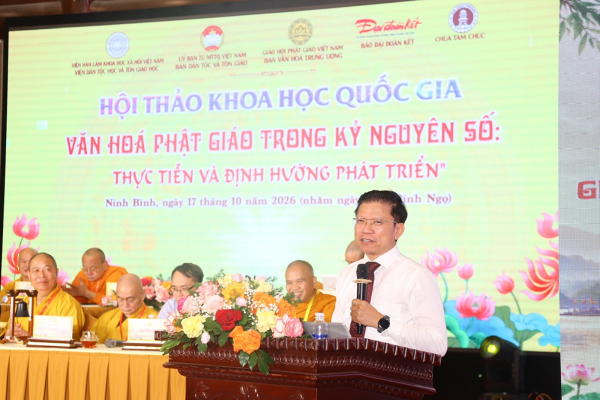 GS.TS. Hoàng Anh Tuấn: Số hóa và đưa tư liệu văn hiến Việt Nam từ nước ngoài trở về phục vụ nghiên cứu
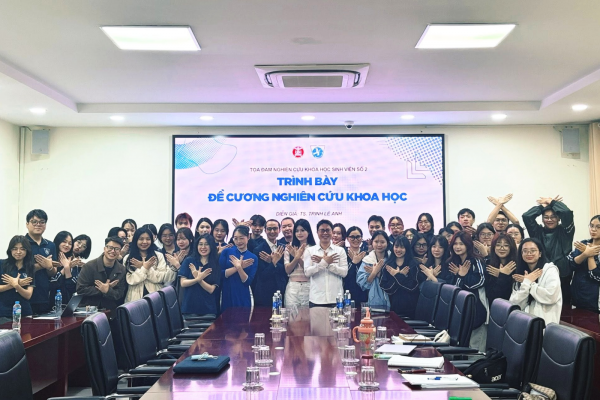 Đẩy mạnh phong trào Nghiên cứu khoa học sinh viên VNU-USSH với chuỗi tập huấn chuyên đề
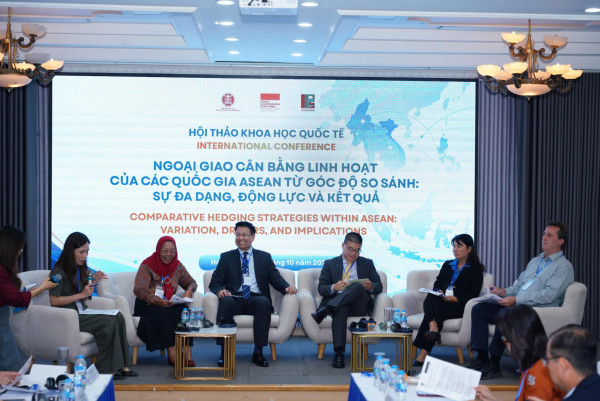 VNU-USSH thúc đẩy đối thoại học thuật quốc tế về tự chủ chiến lược và tương lai Đông Nam Á
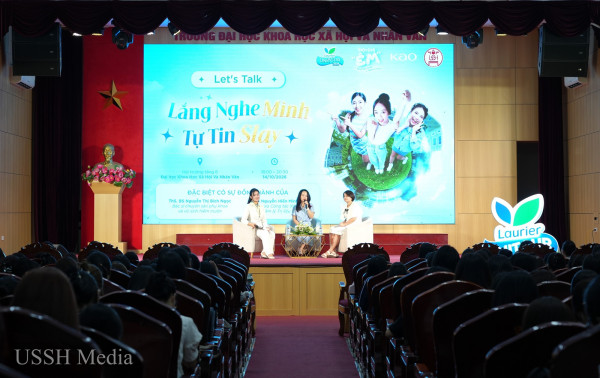 VNU-USSH đồng hành cùng tân sinh viên trên hành trình trưởng thành
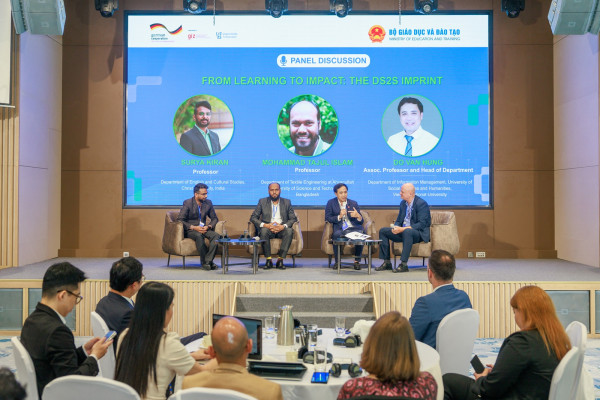 USSH đóng góp tích cực cho chương trình Kỹ năng số để thành công giữa Việt Nam, Bangladesh, Ấn Độ và Đức
 Thắp sáng "Vũ trụ Nhân văn" trong ngày hội chào đón tân sinh viên K71
 4 đơn vị của Trường ĐH KHXH&NV vinh dự được Chủ tịch nước tặng thưởng Huân chương Lao động hạng Nhì và hạng Ba
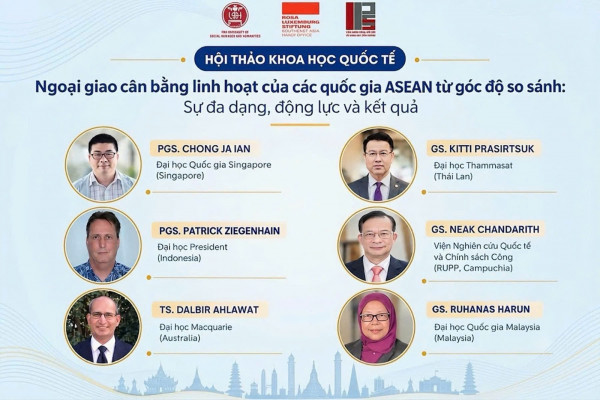 Hội thảo khoa học quốc tế tại VNU-USSH quy tụ nhiều học giả uy tín trong nước và quốc tế về nghiên cứu chiến lược ngoại giao của ASEAN