The curriculum focuses on equipping students with professional and modern knowledge and skills, contributing to the development of the community, society, and the country. Anthropology in Vietnam is rooted in ethnology, which originated in the 1930s with academic influences from France. Between the 1960s and 1980s, many young Vietnamese intellectuals earned PhDs in ethnology in the Soviet Union, Eastern European socialist countries, and domestically, creating a generation of ethnology experts who conducted in-depth research on cultural, social, economic issues and ethnic relations in Vietnam. These research results made a significant contribution to identifying the 54 ethnic groups in Vietnam, helping the Party and State to develop and refine policies on Vietnamese ethnicity, culture, and people.
In the context of the Doi Moi (Renovation) period since 1986, many young Vietnamese intellectuals received anthropological training at advanced universities in Europe, America, and Australia. From the early 2000s, Ethnology in Vietnam transformed and developed into Anthropology, following the model of countries in North America, Australia, and Western Europe. Anthropology in Vietnam not only has the capacity for international integration but also continues to train anthropologists with professional knowledge and skills, a deep understanding of the country's realities, society, culture, and people, making practical contributions to the planning, implementation, and evaluation of policies by the State and organizations both domestically and internationally.
The faculty of the Department of Anthropology and Religious Studies currently consists of professors with extensive research and teaching experience at universities both domestically and internationally. These professors have received their training at prestigious universities around the world, such as the University of Amsterdam, Leiden (Netherlands), the Australian National University (Australia), the University of Cambridge (United Kingdom), the Paris Graduate School of Social Sciences (France), and the University of Toronto (Canada).
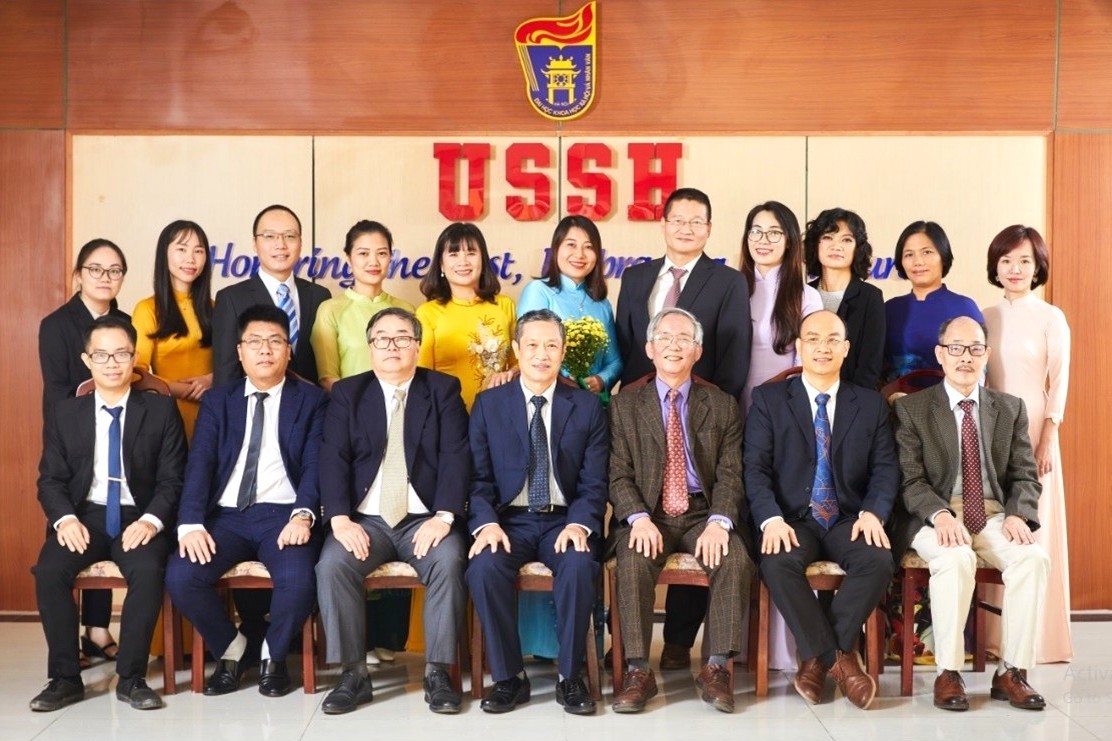
Faculty members of the Anthropology Department, Faculty of Anthropology and Religious Studies
The fundamental areas of knowledge in AnthropologyAnthropology is currently divided into five subfields: Anthropology, Cultural Anthropology, Linguistic Anthropology, Archaeological Anthropology, and Applied Anthropology. Anthropology explains the biological origins of humankind, evolutionary development, and genetic diversity. Cultural Anthropology studies human societies through ethnographic descriptions. Linguistic Anthropology is concerned with the nature of language and its use. Archaeological Anthropology, or archaeology, deciphers past societies. Applied Anthropology implies the application of anthropological approaches, methodologies, and knowledge to solve practical social problems.
The Bachelor of Anthropology program is one of the programs offered at all three levels (Bachelor, Master, and Doctorate) by the Faculty of Anthropology and Religious Studies, University of Social Sciences and Humanities, Vietnam National University, Hanoi. The unit has a long history, prestige, and many achievements in education, training, and scientific research, as well as contributing to the Party and State's policies on ethnic and religious issues. The training programs are highly internationalized, drawing on the anthropology training models of advanced universities in the US, Canada, Australia, etc. As a result, students in the Anthropology program study many subjects compatible with the training programs at universities in developed countries. The faculty applies modern teaching methods such as seminars, project-based learning, group work, and group discussions.
In the context of strong digital transformation, the Bachelor of Anthropology program is strengthening its curriculum by developing new modules such as Visual Anthropology and Digital Anthropology, incorporating updates from many prestigious universities worldwide. Associate Professor Dr. Nguyen Truong Giang, Head of the Department of Anthropology and Religious Studies, shared: “Digital anthropology will help us pursue diverse possibilities as we apply digital tools and methodologies to create more inclusive, participatory, and empowering community projects. Many communities exist on the internet. In-depth research shows that these communities also have their own customs, criteria, and operating mechanisms. Understanding these can lead to appropriate methods for creating momentum, which will be a very attractive issue and have a positive impact on society.”
With a teaching philosophy that places students at the center, the Faculty always supports students in developing their thinking skills and practical abilities based on their passions. In a dynamic, open, and creative academic environment, students of the Faculty of Anthropology and Religious Studies receive comprehensive education: from fundamental knowledge in the classroom to practical research experiences in the field, participation in extracurricular activities at museums and NGOs, and interaction with international students and scientists.
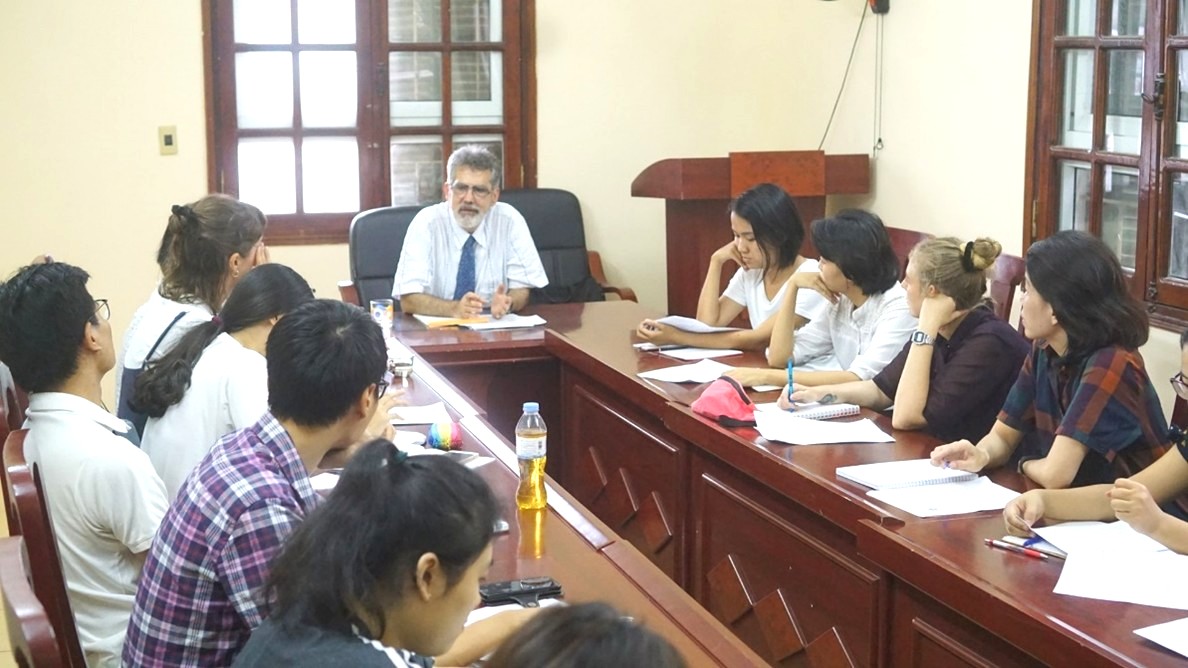
Dr. Frank Proschan, a Fulbright scholar (USA), teaches at the Department of Anthropology.
Practical training is a crucial activity for Anthropology students – students are introduced to communities to learn about their cultural lives, gain cultural experiences, and develop research skills. The purpose of practical training is to: (i) enable students to apply their ethnographic fieldwork knowledge to fieldwork and utilize qualitative and quantitative research methods in collecting and processing information on the research subject (specific communities) in the field; (ii) thereby gain a better understanding of the theoretical knowledge they have learned, and simultaneously see the difficulties and challenges in researching specific topics in the research area; (iii) thereby requiring students to be aware of the need to flexibly and creatively master the fundamental issues of the research problem from both theoretical and methodological perspectives.
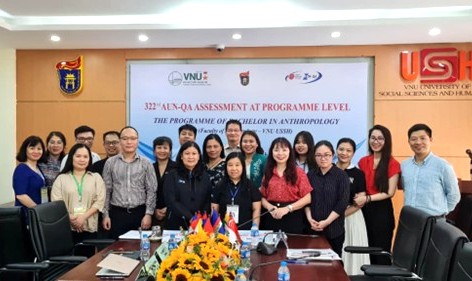
Working session with the ASEAN University Network Quality Assurance (AUN-QA) Quality Assurance Assessment Team, version 4.0, 2023
With a vision extending to 2035, the University of Social Sciences and Humanities – VNU Hanoi aims to leverage its strengths as a university of basic sciences, focusing resources on building the University into a multidisciplinary and interdisciplinary research university with a team of leading experts; developing several new and pioneering training programs and specializations that play a core role in training and research in basic sciences of the country, reaching regional and international standards; and ranking among the top 100 universities in Asia and the top 500 universities in the world. The University of Social Sciences and Humanities has implemented quality accreditation for many training programs. Among these, accreditation according to AUN-QA standards is a major goal of the university to improve the quality of training programs to an international level. The Bachelor of Anthropology program has completed two quality assurance assessment cycles by the ASEAN University Network Quality Assurance (AUN-QA) in 2017 and 2023, thereby affirming its training quality and expertise at the regional and international levels.
Job opportunities are abundant.With the knowledge, skills, and humanistic qualities acquired in school, Anthropology graduates have the opportunity to work in many professions within the social sciences and humanities, in the following job positions:
- Teaching and research on cultural, ethnic, religious, and social issues...
- Institutes and research centers, as well as political, cultural, and social organizations; universities and colleges with related academic programs;
- Human resource management, office administration, tour guide, tour operation management, etc.
- Project management expert; expert in evaluating the effectiveness of funded projects;
- Officials of the Ethnic Affairs Committee and the Religious Affairs Committee;
- Staff of the Administrative and General Affairs Department, and the Organization and Personnel Department;
- Department of Propaganda, Department of Culture, Information and Tourism;
- Editors and reporters for print newspapers and online news sites;
- Editors, reporters, and broadcasters of radio and television stations;
- Officers specializing in ethnic and religious issues in military and police agencies...
- Central and local government agencies related to the field of study in the areas of economics, politics, society, and culture;
- Media outlets: newspapers, radio stations, television stations, etc.
- Companies, associations, international organizations, non-governmental organizations, and other organizations that need to utilize anthropological knowledge;
- Military and police agencies...
Anthropology at the University of Social Sciences and Humanities, Vietnam National University, Hanoi, is not just a field of study, but a journey of self-discovery and exploration of the world around us. From focusing on the cultural, social, and economic aspects of the ethnic groups living in Vietnam, to gaining a comprehensive and in-depth understanding of Vietnam's cultural and social diversity and a better grasp of the challenges and opportunities for development of each ethnic group. Furthermore, based on analyses of the present, Anthropology has the ability to make predictions about the future development trends of these ethnic groups. This is a field of study with profound significance and offers many opportunities for young people with passion and enthusiasm.
Don't hesitate any longer! VNU-USSH is now welcoming you to apply for your first choice of major.The field of Anthropology does not require students to possess exceptional qualities to succeed in their careers. However, the following factors are considered important assets that can contribute to success in Anthropology:
- A passion for anthropology, a thirst for learning and research, is one of the keys to achieving success.
- Mastering a commonly used foreign language will help you broaden your horizons and reach beyond national borders.
- If you also possess creativity, imagination, and clear thinking, it seems you have a knack for anthropology.
If you are passionate about this fascinating field of study, feel free to apply for admission to the Faculty of Anthropology and Religious Studies, University of Social Sciences and Humanities, Vietnam National University, Hanoi, to have the opportunity to study in a professional training environment!
-----------------------------
Anthropology
Code: 7310302Training institution: Faculty of Anthropology and Religious Studies, University of Social Sciences and Humanities, Vietnam National University, Hanoi
Address: Rooms 308-314, Building A, 336 Nguyen Trai Street, Thanh Xuan District, Hanoi
government:
www.nhanhocvatongiaohoc.edu.vnFanpage:
https://www.facebook.com/KhoanhanhocE-mail:
nhanhocvatongiaohoc@ussh.edu.vnInformation about
Anthropology training program
Related articles:
Students from the 09 Basic Sciences majors at VNU-USSH continue to receive the Talent Attraction Scholarship.
Religious Studies at VNU-USSH: An engaging field of study in modern society.
Vietnamese Studies at VNU-USSH: From Vietnam to the International Stage
VNU-USSH Cultural Studies program: equipping students with a multifaceted perspective and broad knowledge base.
Journalism in the digital age: technology on a humanistic foundation.
Language and AI: When language opens the way to technology
Students majoring in Sino-Vietnamese Studies at VNU-USSH and their unique advantages.
Anthropology at VNU-USSH: From current analysis to future forecasts for development in Vietnam