Artificial intelligence (AI) is reshaping every field – from technology, media, and education to social governance. Linguistics is not standing idly by in this wave of transformation.
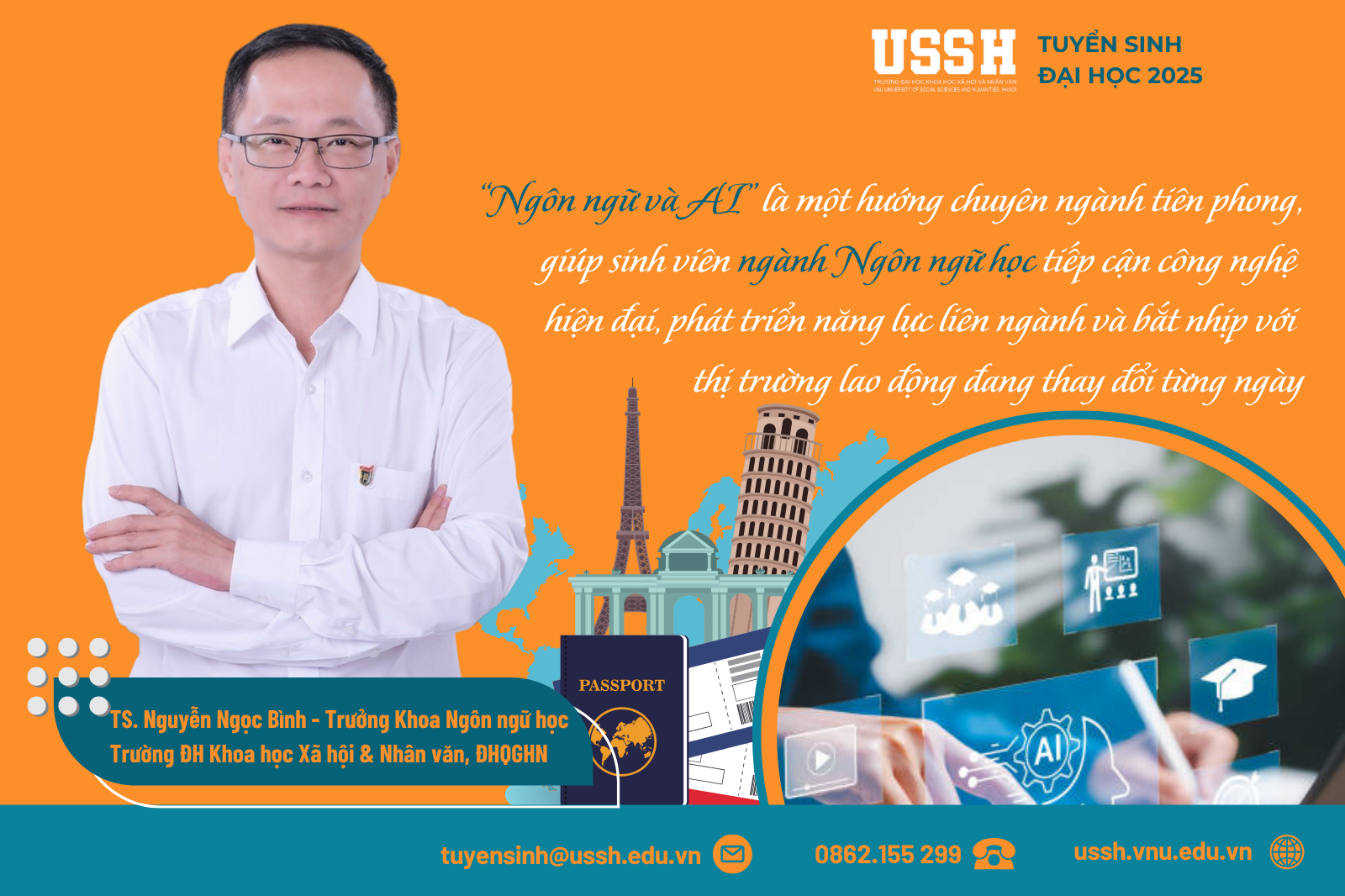
During a conversation with Dr. Nguyen Ngoc Binh - Head of the Department of Linguistics, Faculty of Social Sciences and Humanities, Vietnam National University, Hanoi, USSH Media had the opportunity to learn about the new specialization orientation "Language and AI," a pioneering initiative that helps linguistics students access modern technology, develop interdisciplinary skills, and keep pace with the ever-changing labor market.
Let's listen to Dr. Nguyen Ngoc Binh's sharing about the training philosophy, program content, career opportunities, and the role of alumni in the sustainable development journey of the Faculty of Linguistics.
The Faculty of Linguistics, University of Social Sciences and Humanities, Vietnam National University, Hanoi, was established in 1996 on the basis of the Linguistics Department of the Faculty of Literature, Hanoi University (1956-1996). The Faculty currently has 14 lecturers, including 4 Associate Professors, 7 Doctors, and 3 Master's degree holders, along with a team of collaborators nationwide.
This year, the Faculty has trained over 2,200 Bachelor of Linguistics graduates. Graduates from the Faculty of Linguistics are currently working in many universities, research centers, news agencies, cultural and educational organizations throughout the country.
PV: In the Linguistics program, at what year of study do students begin to specialize, and how many specializations are there?
Dr. Nguyen Ngoc Binh:The Linguistics major provides specialization orientation for students starting from the second semester of their second year, so that students can prepare to register for specialized courses in their third year.
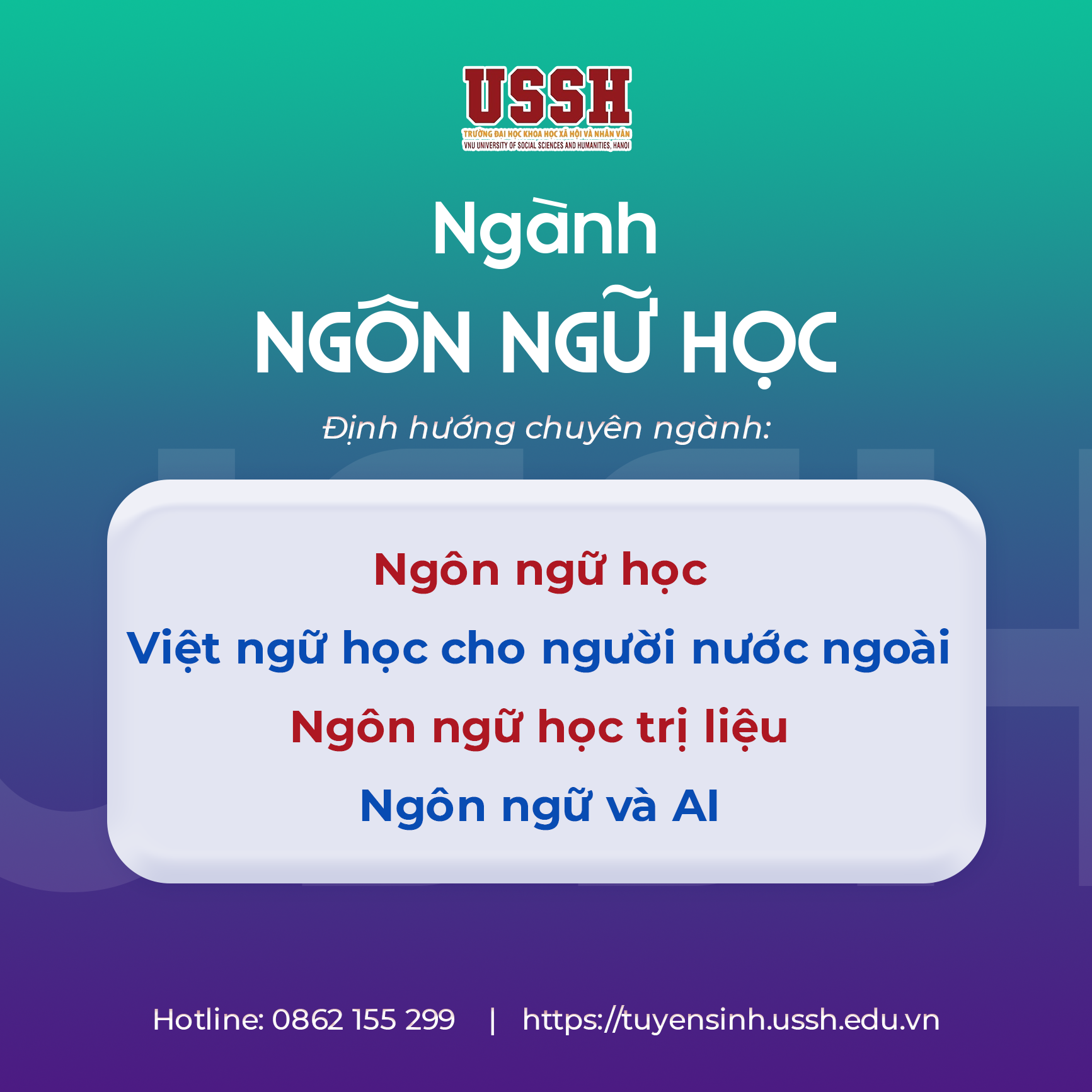
Currently, for the undergraduate program, the Faculty is operating a Linguistics major with four specializations: Linguistics, Vietnamese Linguistics for Foreigners, Linguistic Therapy, and Language and AI. Of these, the specializations of Linguistic Therapy and Language and AI are new specializations applied from the QH-2025-X cohort this year onwards.
In addition to general education and foundational knowledge of their respective fields of study, students have previously been equipped with a foundational understanding of linguistics, ranging from Introduction to Linguistics, Phonetics, Vocabulary, and Grammar to Semantics, Pragmatics, and Applied Linguistics, etc.
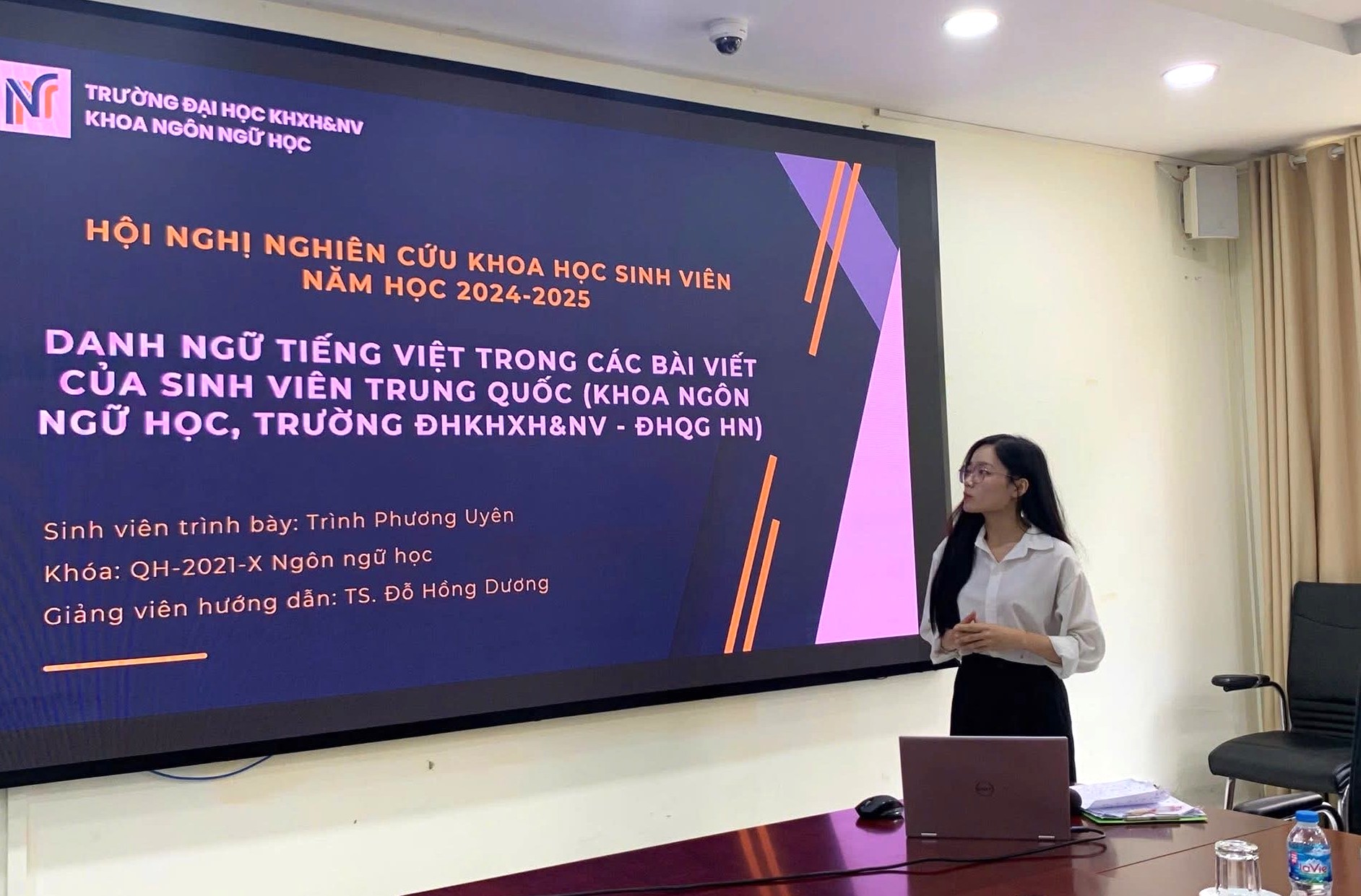
Linguistics students actively participate in student scientific research activities.
Interviewer: Could you please share some information about the curriculum and career opportunities for students in each major?
Dr. Nguyen Ngoc BinhGraduates from the Faculty of Linguistics are capable of working in a wide range of fields both domestically and internationally.
Students will learn from the most fundamental linguistic knowledge, ranging from General Linguistics, Phonetics, Vocabulary, Grammar, Semantics, Pragmatics, Applied Linguistics, Sociolinguistics, Languages of Ethnic Minorities in Vietnam, Comparative Linguistics, etc., to in-depth knowledge of language applications in diverse fields such as Journalism, Language, Communication & Marketing, Psycholinguistics, Language and Publishing, Literary Linguistics, Language Education in Schools, Methods of Teaching Vietnamese as a Foreign Language, Lexicography, etc.
Graduates can apply for positions in linguistics, Vietnamese studies, culture, and educational institutions both domestically and internationally. Specific job opportunities include:
- Teaching linguistics, Vietnamese linguistics, Vietnamese language and culture from secondary to university level at educational institutions in Vietnam and abroad; teaching Vietnamese language and literature in schools.
- Working as an editor at news agencies, publishing houses, radio stations, and television channels.
- Responsible for tasks related to the management and administration of language, culture, and communication in administrative, cultural, educational institutions and businesses.
For the Therapeutic Linguistics specialization, in addition to the foundational linguistics knowledge mentioned above, students will be equipped with in-depth knowledge of anatomical anatomy, language development, psycholinguistics, language disorders and pathologies, and clinical practice in language assessment, intervention, and rehabilitation. Graduates can work in speech therapy at hospitals, intervention centers, special education institutions, etc.
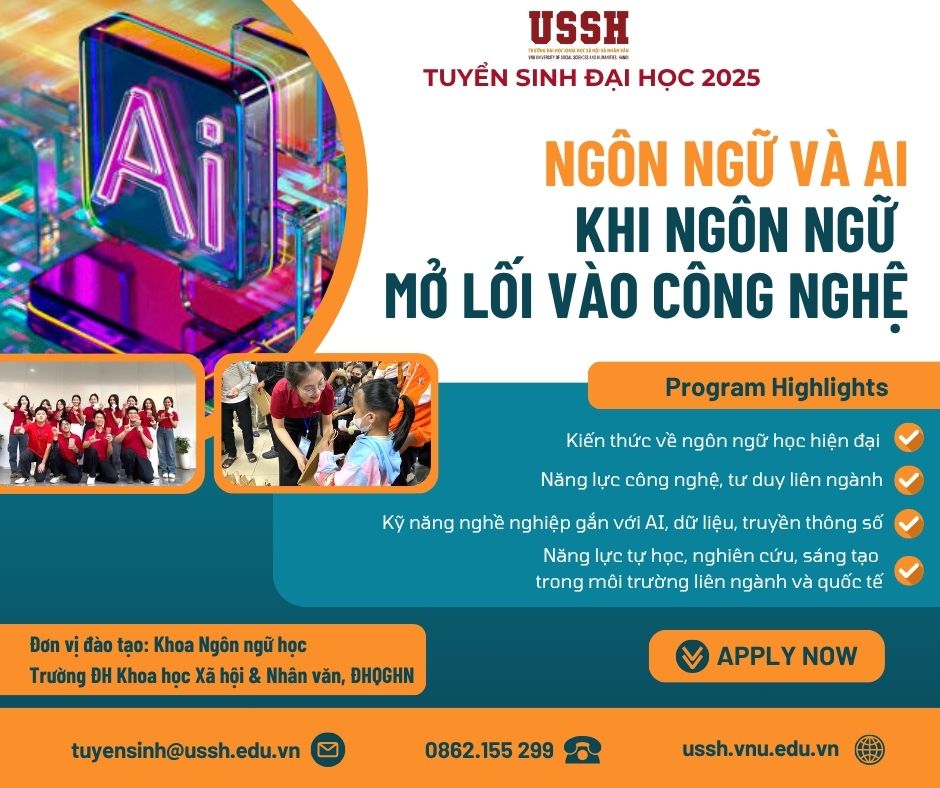
For the Language and AI specialization, in addition to the foundational linguistic knowledge mentioned above, students will gain in-depth knowledge of artificial intelligence, the operating mechanisms of natural language processing (NLP) models, systems such as machine translation, chatbots, virtual assistants, recommendation systems, semantic search, etc.; familiarize themselves with popular AI tools and libraries such as ChatGPT, DeepSeek, Hugging Face, spaCy, NLTK, etc.; data labeling methods, prompt engineering, AI content quality assessment (AI content QA), language optimization in digital products, and AI applications in various other language-related fields.
Graduates have opportunities to become researchers at AI and language institutes and centers, natural language processing specialists, machine translation system improvement specialists, linguistic testers for chatbots and voicebots, assistants, language data analysts for digital communication and marketing, digital content creators, etc.
After graduation, students can continue their studies at higher levels in linguistics or other social sciences and humanities fields, either domestically or internationally.
PV: With the keyword AI, the Linguistics and AI specialization is currently very new and attracting the attention of candidates applying for admission to the Linguistics major. Could you tell us, what knowledge and skills will students in this specialization be equipped with to meet the demands of the current labor market?
Dr. Nguyen Ngoc Binh:Throughout their four years of study, using a linguistic approach (not an AI approach), students will be equipped with:
- A solid foundation in modern linguistics: the phonetic, grammatical, semantic, and pragmatic structure of natural languages, psycholinguistics, sociolinguistics, communication theory, and applied linguistics, thereby understanding the profound nature of language processing performed by humans and machines.
- Technological competence and interdisciplinary thinking: basic knowledge of artificial intelligence and the operating mechanisms of natural language processing (NLP) models, systems such as machine translation, chatbots, virtual assistants, recommendation systems, semantic search, etc.; familiarity with popular AI tools and libraries such as ChatGPT, DeepSeek, Hugging Face, spaCy, NLTK, etc.
- Professional skills related to the AI, data, and digital media labor market: data labeling, prompt engineering, AI content quality assessment (AI content QA), language optimization in digital products: chatbots, learning assistants, artificial voice, EdTech applications.
- The ability to learn independently, conduct research, and innovate in an interdisciplinary and international environment. Students will study relevant modules on data science, AI ethics, machine learning, or participate in research groups on language processing and digital culture.
PV: Sir, what fields are alumni of the Linguistics department currently working in? How has the Faculty's alumni network supported the faculty's students in their studies, research, internships, practical work, and job opportunities?
Dr. Nguyen Ngoc Binh:Former students of the Faculty are currently working in a variety of fields, such as:
- Educational, training, and research institutions: teaching at universities, language centers, speech therapy centers; research at institutes and research centers both domestically and internationally.
- Media and press: reporters from Dan Tri newspaper, Education and Times newspaper, Agriculture newspaper, etc.
- Editing and publishing: Editor and translator for many major publishing houses such as the Education Publishing House, Vietnam National University Hanoi Publishing House, Kim Dong Publishing House, etc.
The Faculty of Linguistics is proud to have successful alumni in various fields of work, who have made and continue to make significant contributions to the development of the country, domestic and international agencies and organizations, such as: Assoc. Prof. Dr. Nguyen The Ky (Former Member of the Central Committee of the Communist Party of Vietnam, 12th term, currently Vice Chairman of the Central Theoretical Council and Head of the Literary and Artistic Criticism Theory Committee); Major General Nguyen Hong Thai (Former Deputy Editor-in-Chief of the People's Police Newspaper; Editor-in-Chief, Director of the People's Police Publishing House and Director of the Institute of Police History); Ms. Nguyen Thi Nhung, Deputy Director of the Student Affairs Department, Ministry of Education and Training…
The Faculty's alumni network has always been a dedicated supporter of the Faculty's students in their studies, research, internships, practical training, and job opportunities.
Many alumni who are teaching or researching at universities both domestically and internationally have participated in seminars, sharing academic knowledge, research experiences, postgraduate studies, and study abroad experiences with current students. Businesses and organizations where alumni work often prioritize recruiting interns, part-time and full-time staff from the Department of Linguistics.
Many successful alumni have returned to the school to share their career journeys, helping students to shape their personal development paths, etc.
Thank you very much, Teacher!
Contact information for admissions:
Training Department, University of Social Sciences and Humanities
Hotline: 0862.155 299 (Business hours)
E-mail:tuyensinh@ussh.edu.vn
Fanpage:https://www.facebook.com/tuvantuyensinh.ussh/
Related articles:
Students from the 09 Basic Sciences majors at VNU-USSH continue to receive the Talent Attraction Scholarship.
VNU-USSH Political Science Students: Unlocking their Potential in a Dynamic Learning Environment
VNU-USSH Cultural Studies program: equipping students with a multifaceted perspective and broad knowledge base.
Journalism in the digital age: technology on a humanistic foundation.
Students majoring in Sino-Vietnamese Studies at VNU-USSH and their unique advantages.
Vietnamese Studies at VNU-USSH: From Vietnam to the International Stage