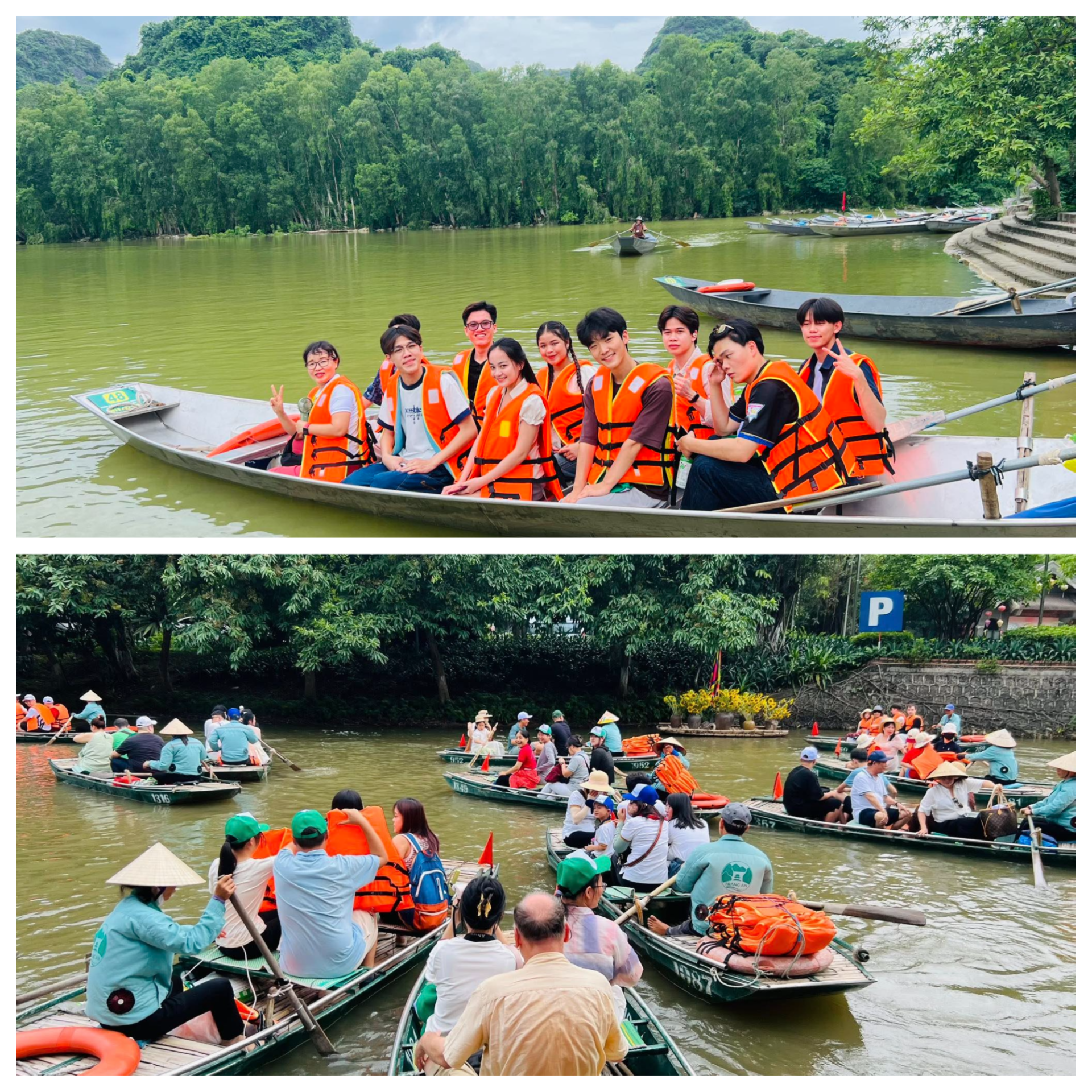
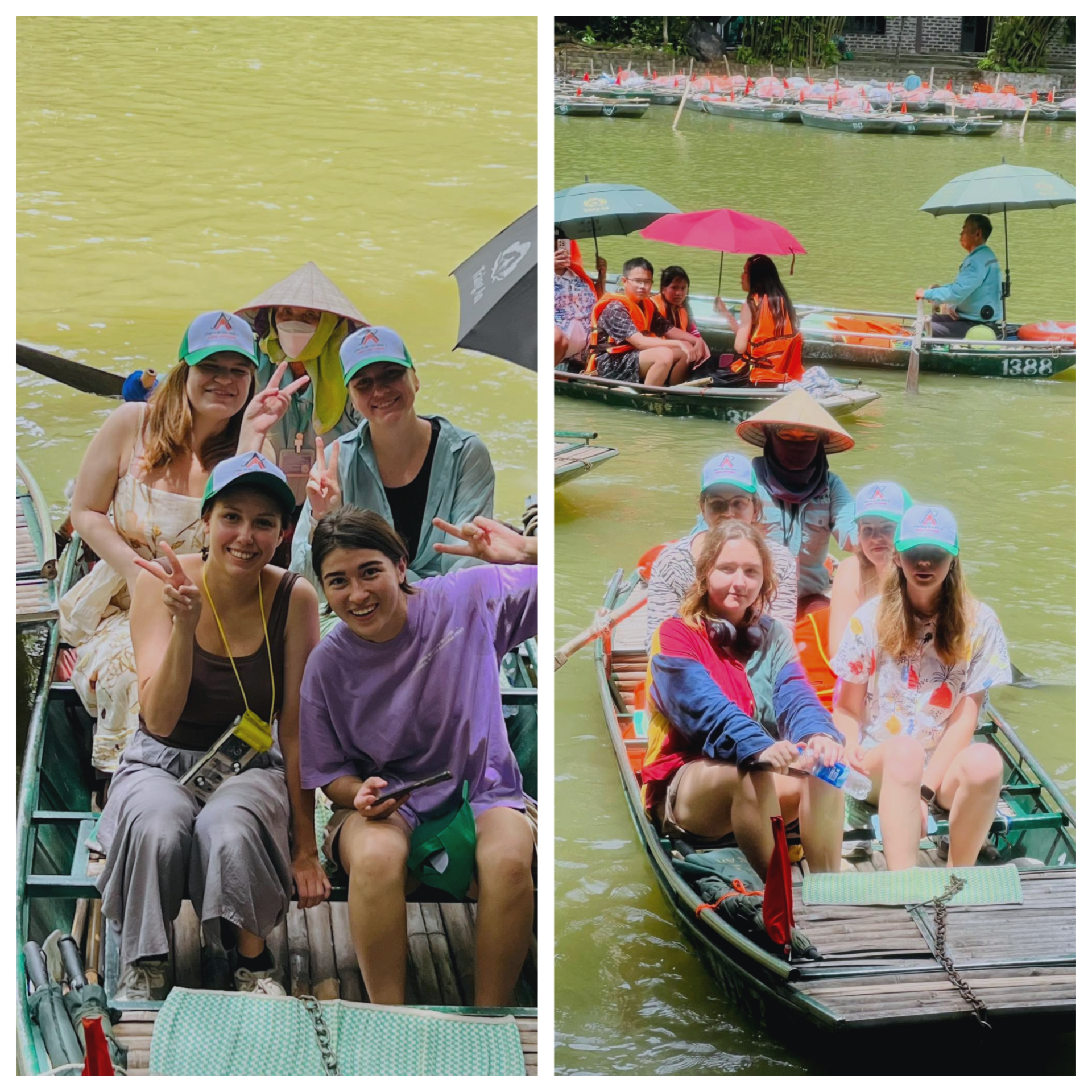
On the morning of June 17th, the group arrived at Hoa Lu Ancient Capital, Trang An Eco-tourism Area, and Thung Nham to explore the wonders of the region. The students witnessed firsthand and listened to explanations about Hoa Lu Ancient Capital – not only a complex of unique architectural and historical relics, but also the first capital, closely associated with the centralized feudal state of Dai Co Viet: the Dinh, Early Le, and Ly dynasties. They visited ancient temples and pagodas such as the temples of King Dinh Tien Hoang and King Le Dai Hành, Nhat Tru Pagoda, Am Tien Cave, and other majestic architectural structures nestled amidst towering mountains. Through each artifact and each story, the students gained a deeper understanding of a turbulent yet proud period in Vietnamese history, comprehending the unwavering will of their ancestors in building and defending the nation.

Continuing their journey, the students experienced a boat trip on the river, immersing themselves in nature at Thung Nham – Bird Garden. This eco-tourism area is famous for its pristine beauty, diverse ecosystem, and magnificent caves. They had the opportunity to ride boats through small rivers, admire majestic limestone mountain ranges, and unique cave systems such as But Cave and Mermaid Cave. The special highlight of Thung Nham is the Bird Garden, where thousands of birds of various species gather at sunset, creating an incredibly impressive and vibrant natural scene. From familiar species to rare ones, students were able to observe their behavior in their natural environment, gaining a deeper understanding of the importance of biodiversity conservation.
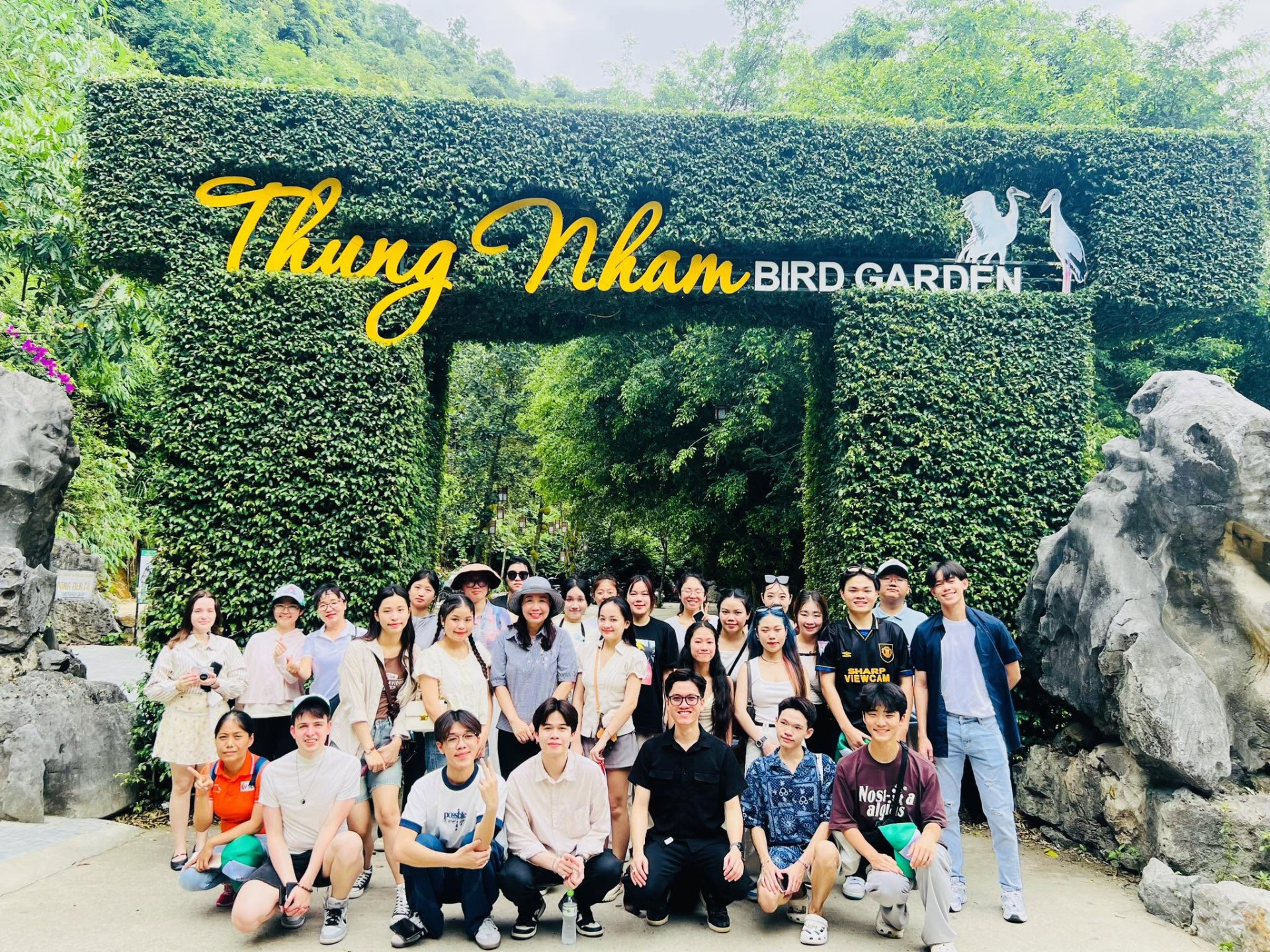
Visiting the Trang An Ecotourism Area – a World Heritage Site, students gained knowledge and experiences about the history and culture (spiritual culture, indigenous culture, and daily life of the local people) with the Trinh Temple system, Suoi Tien Temple, etc.; Khong Palace and Vu Lam Royal Palace; and knowledge about geology, geomorphology, and ecology, notably the majestic karst limestone mountain system, mysterious caves, and flooded valleys. The Trang An - Ninh Binh tourism complex can be considered a model of ecotourism, where nature conservation and sustainable ecotourism development go hand in hand.
In addition, the students shared their perspectives on a UNESCO World Heritage site and created memorable experiences throughout their studies at the Faculty of Vietnamese Studies and Vietnamese Language, University of Social Sciences and Humanities.
More than just a sightseeing trip, this was a multi-faceted field trip for international students studying at the Faculty of Vietnamese Studies and Vietnamese Language, University of Social Sciences and Humanities. During the two-day trip, the students had the opportunity to experience local culture, enjoy the unique cuisine of Ninh Binh, and immerse themselves in the peaceful life of the local people. It was also a chance for them to expand their knowledge of Vietnamese language, history, culture, and natural geography, and to network and foster understanding and respect for different cultures within the international student community.
Related articles:
Students from the Faculty of Vietnamese Language and Television and their journey of exchange and connection with students from Honghe Academy (China)