Reporter:
Professor, how do you assess the significance of the 14th National Congress of the Communist Party of Vietnam for the development of Vietnamese education, especially higher education?
Professor Hoang Anh TuanThe 14th National Congress, with its documents and the preceding breakthrough resolutions and pillars of development from the Politburo, holds immense significance, marking a historic turning point in the development of education, including higher education, in Vietnam.
This congress is of paramount importance, demonstrating a strategic shift in thinking and a breakthrough in the development of education and training, based on the view that "education and training is a top national priority, determining the future of the nation." Education, including higher education, is considered a pillar of national development in the new era, especially in terms of raising the intellectual level of the nation, comprehensively developing Vietnamese culture and people, and creating a high-quality workforce.
The Party's new viewpoints, policies, and orientations at the 14th National Congress are strategic in scope, strengthening the removal of institutional bottlenecks and transforming institutions from bottlenecks into driving forces for educational development. From the Party's guidelines to the State's policies and laws, and to the new cultural values, an unprecedentedly favorable institutional environment is being created for the development of education.
A key highlight is that the Party's documents provide clear direction and breakthrough resources, not only from the State, but more importantly, mechanisms to unlock and develop the internal strengths of educational institutions, mobilizing social resources, both domestic and international, including human, financial, and material resources, for the development of education. This involves creating and perfecting the educational development system by restructuring the national education system towards a lean, efficient, and strong model. With the new organizational structure and apparatus, coupled with a carefully selected and qualified leadership team after the Congress, the education sector, including higher education, possesses a strong and vibrant "body" ready to enter a new era.
Notably, with groundbreaking policies aimed at learners and teachers, demonstrating the superiority of socialist-oriented education, particularly emphasizing the philosophy of "learning goes hand in hand with practice," "theory is linked to reality," and "schools are linked to society," a new path has truly been opened for the development of education, including higher education in Vietnam, enabling the country's education system to reach the same level as advanced education systems globally.
Reporter:
What practical activities have universities, including the University of Social Sciences and Humanities, undertaken recently in preparation for the 14th National Congress of the Communist Party of Vietnam?
Professor Hoang Anh TuanI believe that universities have been very proactive in the preparation process: Party committees at universities have been deeply involved in providing feedback on documents and carrying out assigned tasks with the highest sense of responsibility.
For the University of Social Sciences and Humanities - Vietnam National University, Hanoi, the University Party Committee has proactively developed, promulgated, and organized the implementation of resolutions of the Politburo, especially those directly related to the fields of Education and Training and Science and Technology, such as Resolution 57, Resolution 59, and Resolution 71.
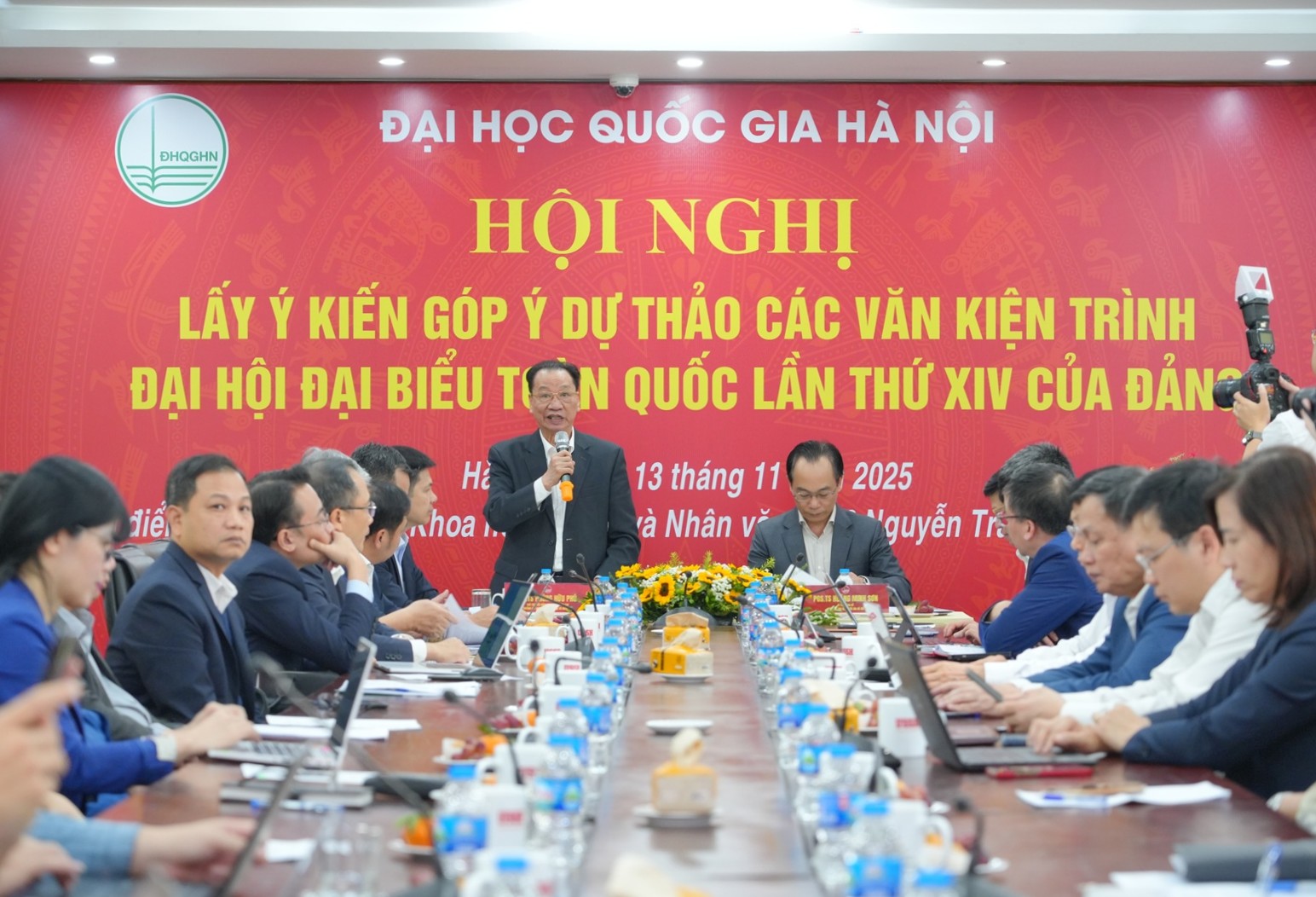
From the moment the draft Resolution was announced by the Central Committee for public consultation, the Party Committee of the University of Social Sciences and Humanities developed a plan, conducted research, and organized feedback on the draft document through various appropriate methods. Specifically, this included: organizing consultations through conferences; proactively advising the Party Committee of Vietnam National University, Hanoi and participating in conferences to provide feedback on the draft document of the 14th Party Congress; organizing consultations with experts, scientists, current and former leaders of the University; and collecting feedback from Party members and Youth Union members in Party branches and other mass organizations.
Scientists from the University of Social Sciences and Humanities participated in providing feedback on the draft documents to be submitted to the 14th National Congress of the Communist Party of Vietnam.
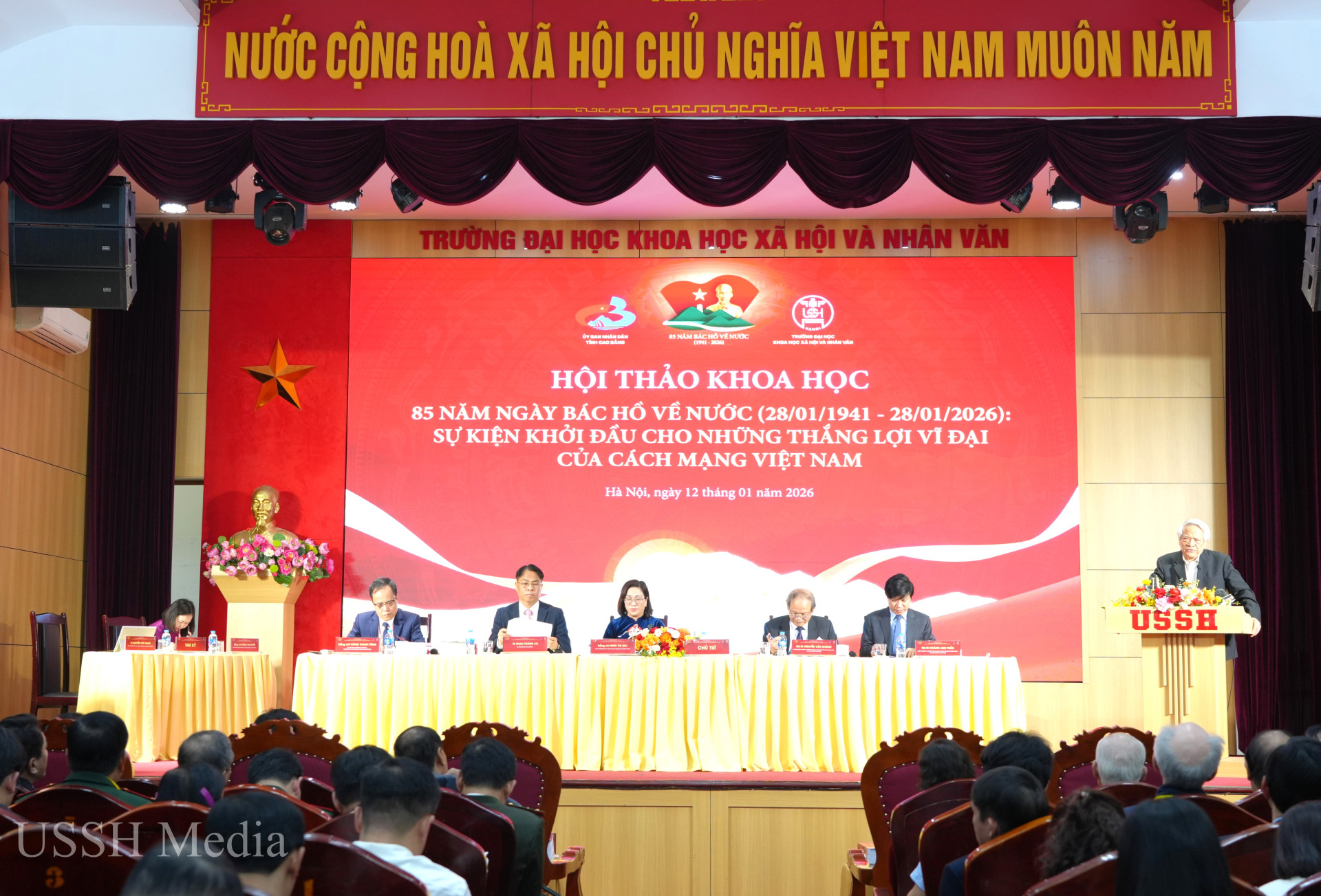
On the other hand, through contributing articles to scientific forums and journals; organizing scientific events to celebrate the 14th National Congress of the Party, such as coordinating with the People's Committee of Cao Bang province to organize the scientific conference: "85 years since President Ho Chi Minh's return to Vietnam (January 28, 1941 – January 28, 2026): The event that marked the beginning of the victories of the Vietnamese revolution".
In particular, the University's Party Committee has updated and seized opportunities regarding relevant policies and guidelines identified in the 14th Party Congress documents to proactively develop plans and implement policy advisory reports for ministries, sectors, and localities in several areas of the University's strengths in the coming time, such as: issues related to cultural development and the promotion of cultural resources; development of high-quality human resources; promoting the implementation of national policy advisory reports based on social sciences and humanities knowledge, etc.
The University of Social Sciences and Humanities, in collaboration with the People's Committee of Cao Bang province, organized a scientific conference: "85 years since President Ho Chi Minh's return to Vietnam (January 28, 1941 – January 28, 2026): The event that marked the beginning of the victories of the Vietnamese revolution."
Reporter:Besides Resolution 57 on the development of science and technology, Resolution 71 on breakthroughs in education and training development, and most recently the Politburo's Resolution 80 on the development of Vietnamese culture, how do you assess the relationship between these three resolutions, especially in the field of education?
Professor Hoang Anh TuanI believe that the Politburo's resolutions over the past period demonstrate a clear, consistent, and decisive strategic vision, placing people and culture at the center of sustainable development, while affirming the close organic relationship between politics and economics, science and technology, education and training, and culture. Resolution 57 places science, technology, and innovation as the key driving force; Resolution 71 emphasizes breakthroughs in education and training development linked to the development of high-quality human resources; and Resolution 80, for the first time, affirms that culture plays a fundamental role as a spiritual foundation, a soft power, and an endogenous resource, as a driving force for sustainable development. The overarching and very new point of these three resolutions is to put people at the center, knowledge as the foundation, and digital transformation and international integration as levers.
The University of Social Sciences and Humanities defines its pioneering mission as training elites, conducting interdisciplinary research, providing effective and practical policy advice, and connecting and disseminating Vietnamese cultural and humanistic values to the world. With a team of leading intellectuals and experts in the field of social sciences and humanities in Vietnam today, the University aims to become a top-tier knowledge center in Vietnam and the region, directly contributing to policy planning, providing scientific arguments for the Party and State in perfecting institutions, building national values, cultural values, and human standards for Vietnam in the new era, and building a solid socio-cultural foundation for the country's strong development.
The contributions of scientists from the University of Social Sciences and Humanities to the field of political theory research are recognized and highly appreciated.
PReporter:According to the professor, how should each higher education institution undergo significant reforms to demonstrate its social responsibility and role in national development in the new era, as outlined in the draft document of the Party Congress?
Professor Hoang Anh TuanIn this era of national progress, the urgent, decisive, and paramount task is to create breakthroughs in institutional policies, scientific and technological infrastructure, innovation, and high-quality human resources. In my opinion, higher education institutions need comprehensive and substantive reforms, strategic and synchronized, encompassing university governance, training, research, knowledge transfer, policy consulting, and international integration.
Leading higher education institutions need to shift strongly from 'scaling up' to 'improving quality and operational efficiency,' focusing on training high-quality human resources, talented individuals, elite personnel, and human resources for cutting-edge industries and strategic technologies, as well as human resources for fundamental sciences that are pillars of the country's sustainable development.
Leading higher education institutions must simultaneously be centers of knowledge creation and cutting-edge scientific research, as well as reliable, insightful, and effective centers for policy advice and strategic forecasting for the Party and the State.
The University of Social Sciences and Humanities not only invests in in-depth training and research in basic sciences but also pioneers and proactively connects Vietnamese knowledge with global knowledge, promoting a leading role in development thinking, building and nurturing the cultural values and human resources of Vietnam. At the same time, it must play a role as a top-tier policy consulting center, providing strategic forecasting and strategic thinking advice for national governance in the context of digital transformation, globalization, and deep international integration.
Thank you, Professor!
VOV2:Higher education institutions must take the lead in realizing the Party's resolutions.