Identifying the heritage value of Hoa Lam Vien
On January 13th, a scientific seminar titled "Hoa Lam Vien - The Royal Palace of the Ly Dynasty: Heritage Value and Orientations in the Development of the Cultural Industry Today" was organized by the University of Social Sciences and Humanities - Vietnam National University, Hanoi, the Hanoi Historical Science Association, and the Hoa Lam Vien Relic Management Board. This event commemorated the 80th anniversary of the first General Election (January 6, 1946 - January 6, 2026) and the 14th National Congress of the Communist Party of Vietnam.
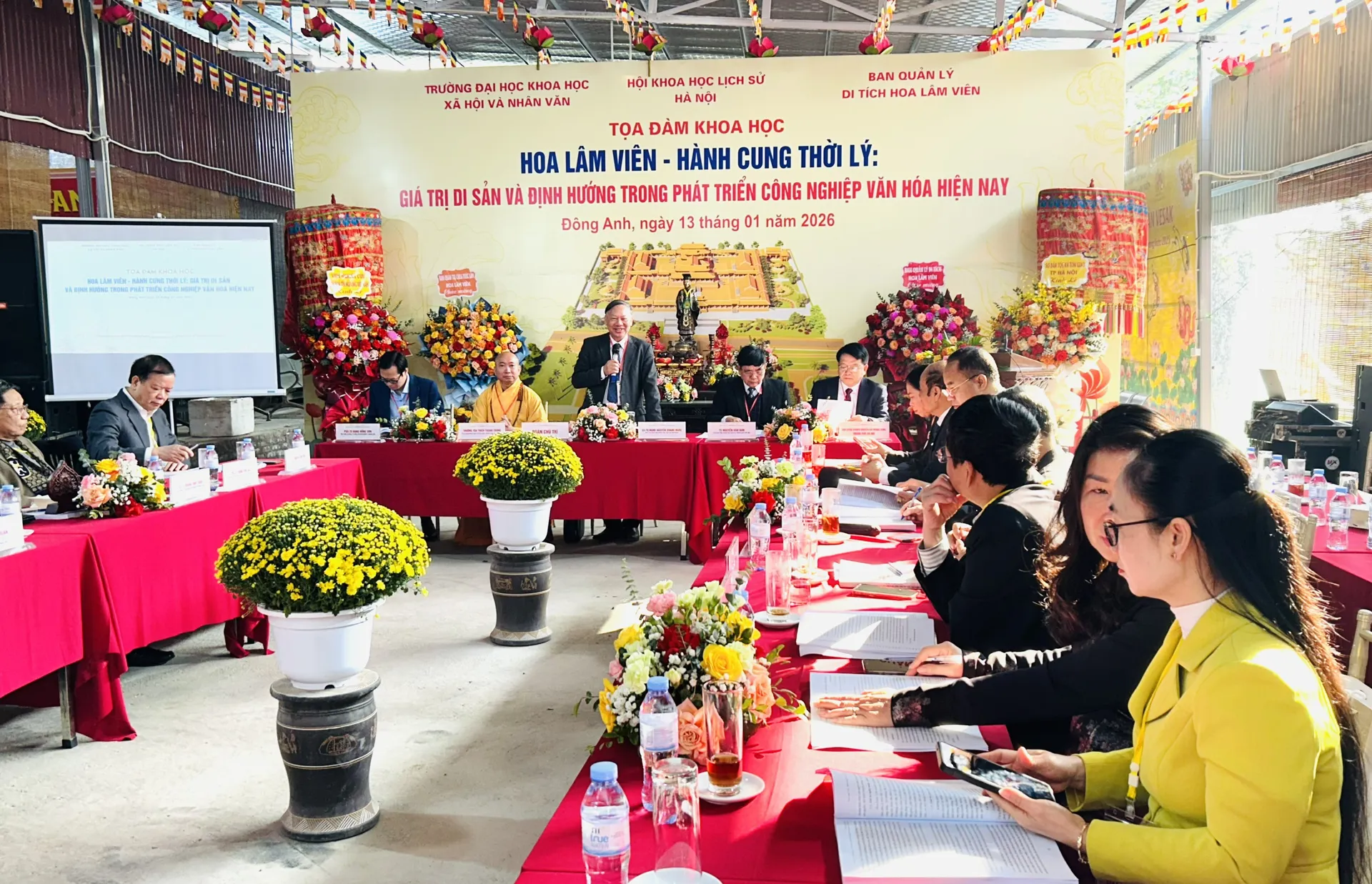
Professor, Doctor, People's Teacher Nguyen Quang Ngoc - Vice President of the Vietnam Historical Science Association, speaking at the seminar. Photo: Tran Oanh
Hoa Lam Vien – an important royal palace during the Ly Dynasty, associated with the homeland of the Ly Dynasty and the cultural and historical space of Dong Anh (Dong Ngan Co) region – is a typical case that brings together many layers of historical, cultural, archaeological, and communal memory. Fully identifying the value of the site and finding suitable models for preservation and promotion is crucial in the cultural industry development strategy of the Capital.
In his introductory report, Dr. Nguyen Van Son, Chairman of the Hanoi Historical Science Association, stated that the Organizing Committee had received 22 scientific papers from reputable professors, associate professors, and researchers in various fields, divided into three groups: Hoa Lam Vien and its origins and birthplace of the Ly Dynasty; the heritage value of Hoa Lam Vien Royal Palace; and promoting the heritage value of Hoa Lam Vien Royal Palace. All papers affirmed that Hoa Lam Vien was a typical royal palace of the Ly Dynasty; it was formed quite early (before the Ly Dynasty) and when Ly Thai To moved the capital from Hoa Lu to Thang Long, he chose Mai Lam to build Hoa Lam Vien Royal Palace at the same time as the construction of Thang Long Imperial Citadel.
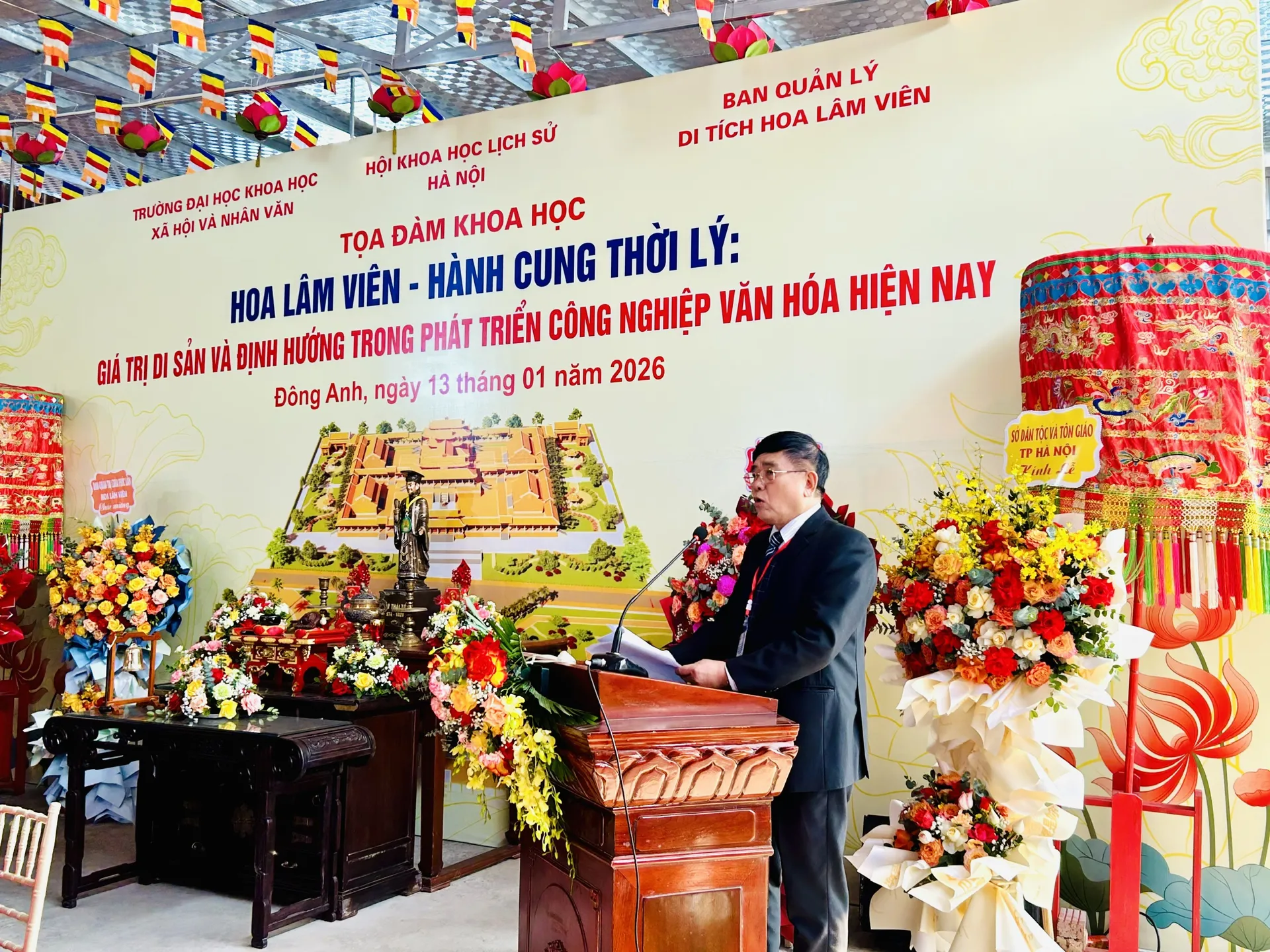
Dr. Nguyen Van Son – Chairman of the Hanoi City Historical Science Association, giving a speech. Photo by Tran Oanh.
From the rich and diverse discussions, it is clear that Hoa Lam Vien is not merely an object of historical or archaeological research, but a strategic cultural resource capable of directly participating in the socio-economic development and cultural industry of the Capital. Associate Professor Dr. Dang Hong Son – Vice Rector of the University of Social Sciences and Humanities – outlined the Hoa Lam Vien space, the results of archaeological research and excavation there, and predicted that the Hoa Lam Vien area is a vast region encompassing the entire area north of the Duong River (Thien Duc River) and a narrower area also limited to the water triangle: the ancient Thien Duc River to the East, the Duong River to the West and South, and Ngu Huyen Khe to the North...
Meanwhile, Associate Professor Dr. Tong Trung Tin – President of the Vietnam Archaeological Association – after studying the two stone steps carved with images of mythical crocodiles in the Hoa Lam Vien area, affirmed that these are the two most beautiful relics of mythical crocodiles from the Ly Dynasty that remain in Vietnam to date, and that these are also the only such sacred creatures in Vietnam. Associate Professor Dr. Tong Trung Tin suggested that further research is needed to clarify the typical architectural works of the Ly Dynasty in Hoa Lam Vien.
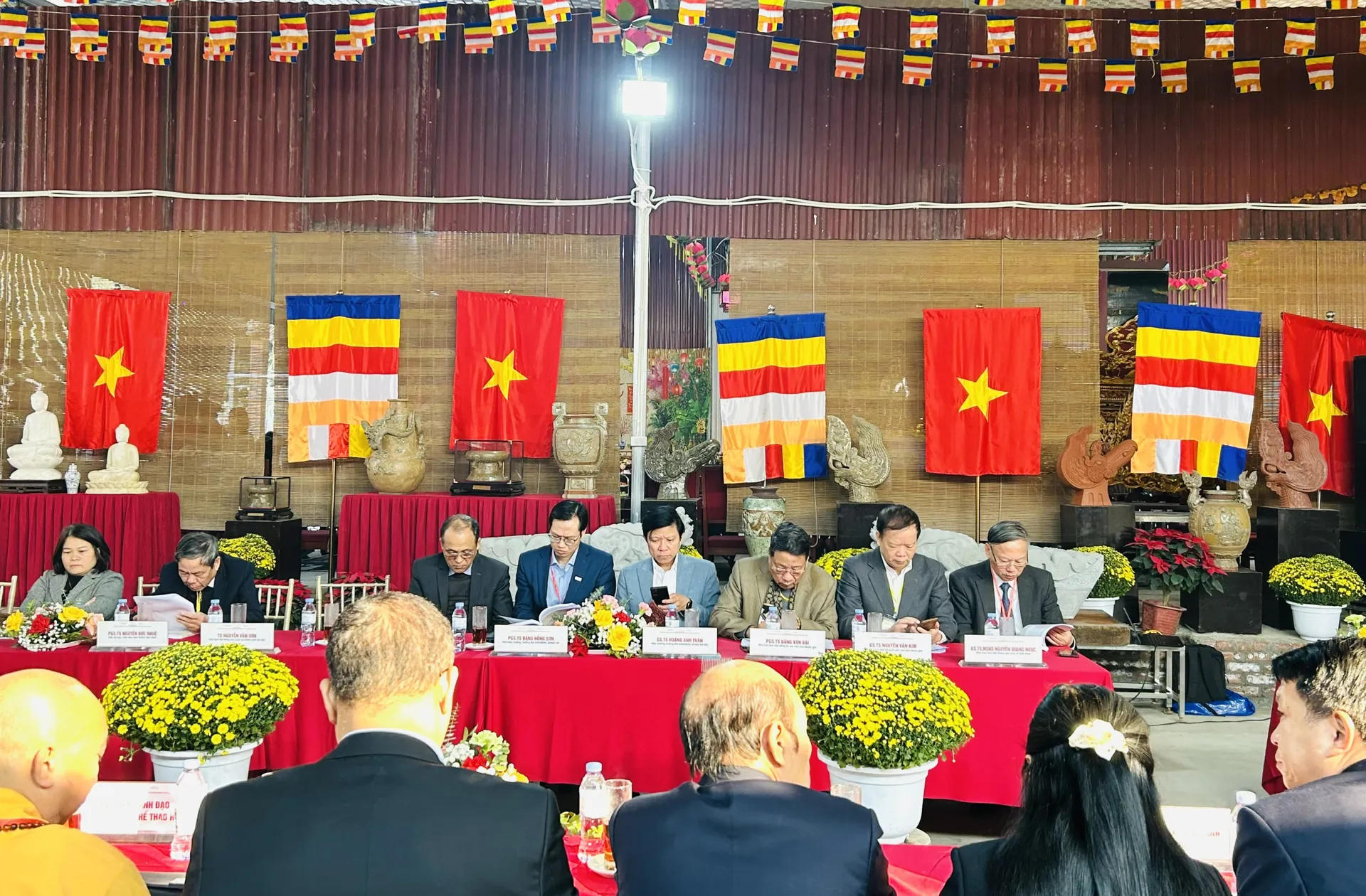
Delegates participating in the scientific seminar. Photo by Tran Oanh.
Professor Nguyen Van Kim, from the National Council for Cultural Heritage, stated that the context of the century of national independence began with the Battle of Bach Dang in 938, followed by Ngo Quyen establishing his capital in Co Loa in the spring of 939. This was followed by the Dinh and Early Le dynasties, and in 1009, Emperor Ly Thai To ascended the throne, establishing the Ly dynasty, the longest-reigning dynasty in Vietnamese monarchy history, lasting 216 years (1009-1225). This dynasty achieved many remarkable feats in governance and military affairs, characterized by a people-friendly monarchy with Buddhism as its main ideological foundation, opening up a brilliant Dai Viet civilization and laying the groundwork for the development of subsequent dynasties.
Connecting Hoa Lam Vien heritage site to the cultural axis of the Capital.
Hoa Lam Vien was an important royal palace during the Ly Dynasty. To promote the heritage value of Hoa Lam Vien Royal Palace, scientists and researchers believe that this site should be placed within the broader cultural heritage network and space of the Dong Anh area and Hanoi, especially in connection with Co Loa, Thang Long Imperial Citadel, and the Red River cultural axis.
According to Nguyen Hong Chi, Deputy Director of the Thang Long - Hanoi Heritage Conservation Center, in addition to its role as a royal palace, Hoa Lam Vien also holds profound spiritual significance as the birthplace of Empress Dowager Minh Duc Pham Thi Nga. The value of Hoa Lam Vien today lies not only in the ruins and artifacts buried underground but also in the vibrant spirit of the people and the efforts of the local government in its preservation and promotion.
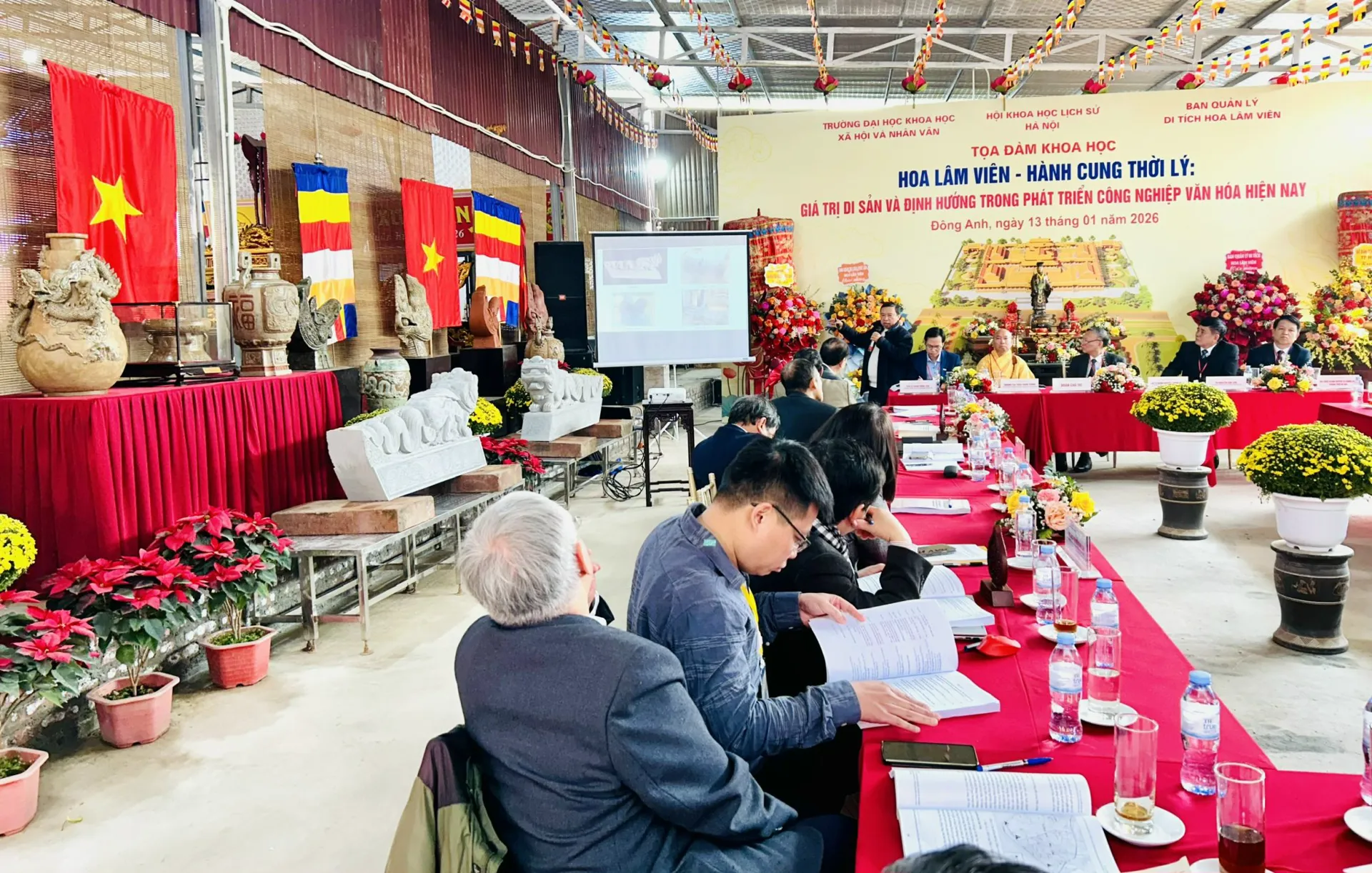
Scientists and researchers participate in the discussion at the seminar. Photo by Tran Oanh.
Based on the recognition of this diverse value, Ms. Nguyen Hong Chi proposed several solutions to promote the heritage value of Hoa Lam Vien Royal Palace and Co Loa Ancient Citadel in conjunction with the current development of the cultural industry. Solutions include integrated planning and connecting heritage axes, implementing integrated plans that do not separate individual relics but combine them into a unified heritage axis: Hoa Lam Vien - Co Loa Ancient Citadel. In addition, she suggested creating multi-sensory experiential tourism products; not just focusing on viewing and listening, but designing activities that allow tourists to become part of the heritage story, such as tours like "Memories of the Dynasty," linking with traditional craft villages, and river tourism. Simultaneously, she emphasized the application of technology and digitalization in the preservation and promotion of these values.
Sharing this potential, Dr. Nguyen Thi My Linh, Head of the Culture and Social Affairs Department of Dong Anh Commune, Hanoi City, believes that Hoa Lam Vien heritage site has potential for developing the cultural industry. To realize Hoa Lam Vien's potential, it is necessary to adhere to the principles of "preserving the original form - promoting creativity - connecting multiple sectors - aiming for sustainability," focusing on several key directions, including: developing cultural, heritage, and ecological tourism; building creative spaces based on heritage; developing creative cultural products and services; and educating, communicating, and disseminating the heritage.
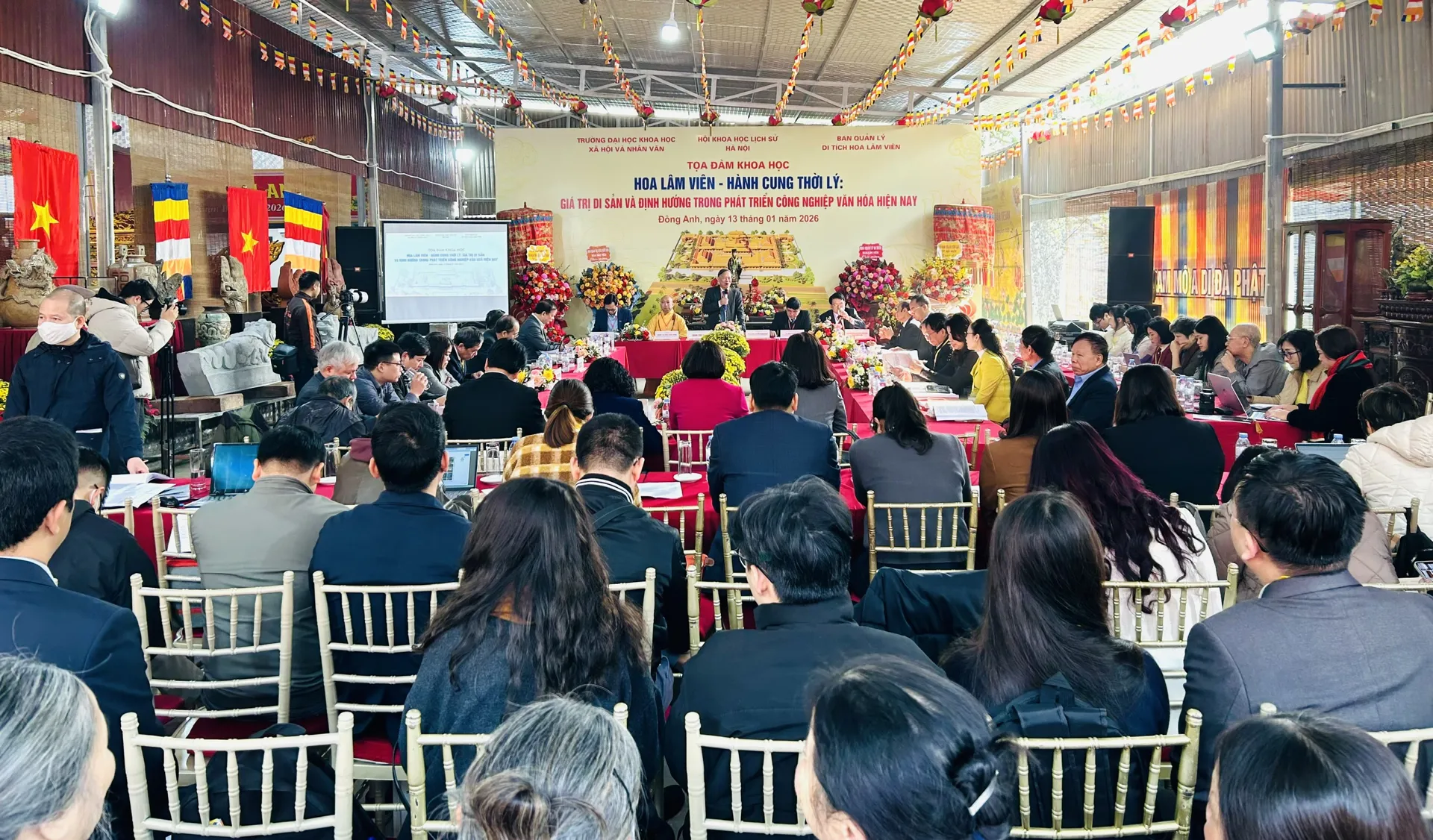
Overview of the scientific seminar "Hoa Lam Vien - Ly Dynasty Royal Palace: Heritage Value and Directions for the Development of the Cultural Industry Today". Photo by Tran Oanh
Overall, at the seminar, Professor Nguyen Quang Ngoc, Vice President of the Vietnam Historical Science Association, affirmed that Hoa Lam Vien in particular and Dong Anh commune in general possess rich and unique tangible and intangible cultural resources, ranking first in Hanoi and possibly even first in the country. This is an optimal condition for Hoa Lam Vien to develop a cultural industry encompassing all 13 fields (including 12 general fields and one unique culinary field specific to Hanoi).
In further discussions with the press, Professor Nguyen Quang Ngoc emphasized that Hoa Lam Vien is an inseparable part of Thang Long Imperial Citadel, closely associated with the homeland of the Ly Dynasty, and a place where cultural values of Northern Vietnam converge, crystallize, and spread. Promoting the value of Hoa Lam Vien within the overall context of Dong Anh commune and Hanoi city will create an enormous advantage for sustainable socio-economic development.
Author:According to the Economic & Urban newspaper.
Newer news
Older news

