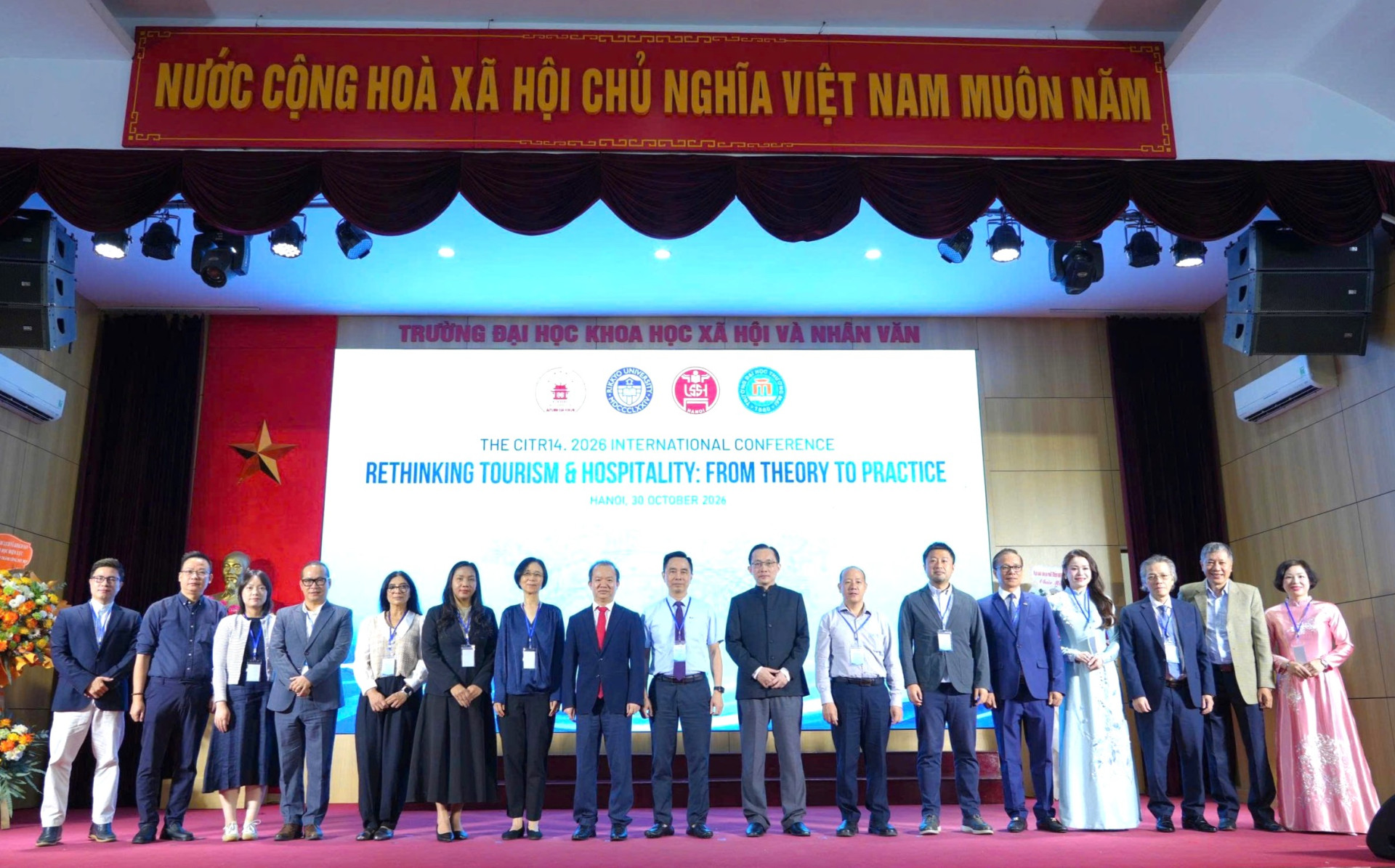
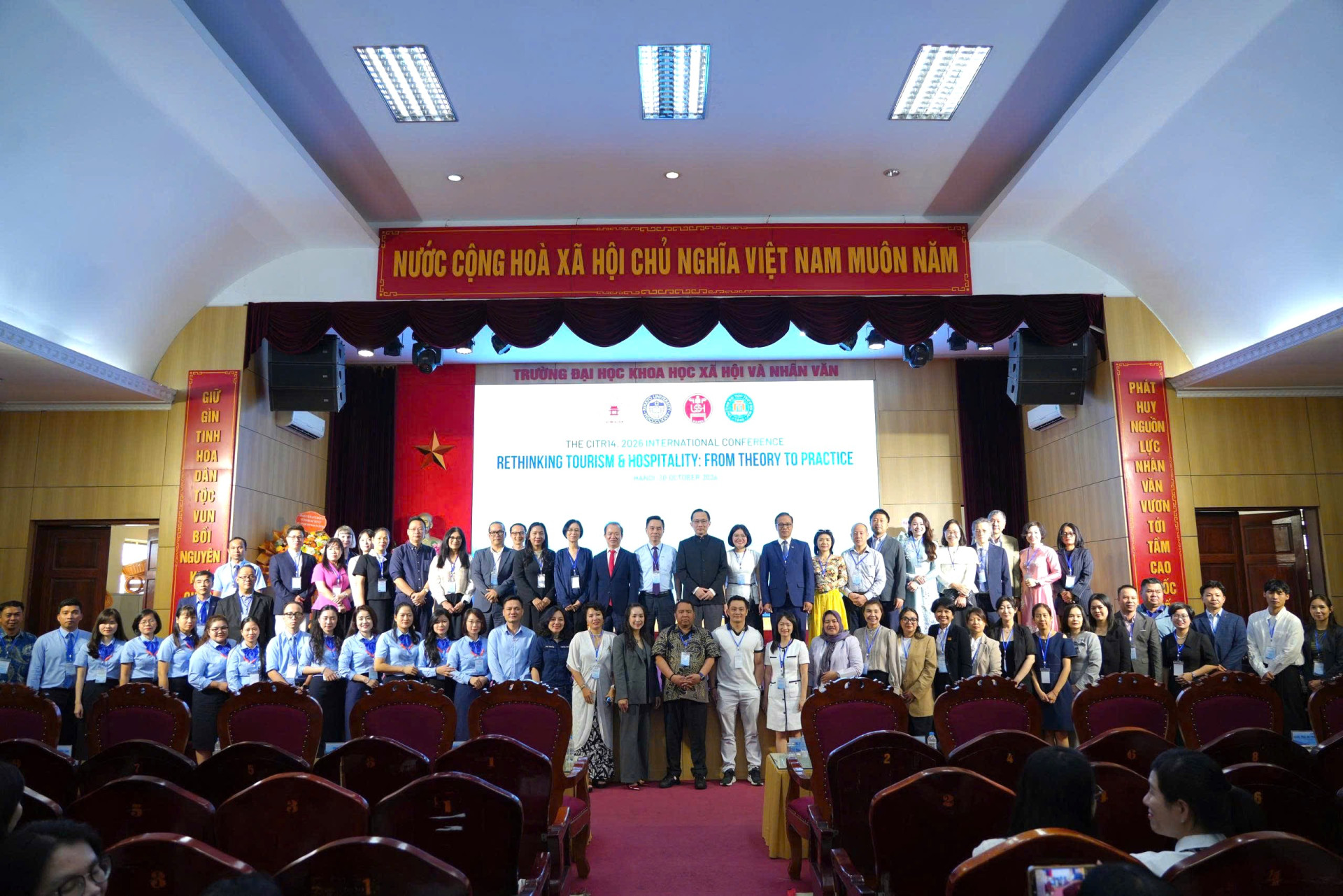
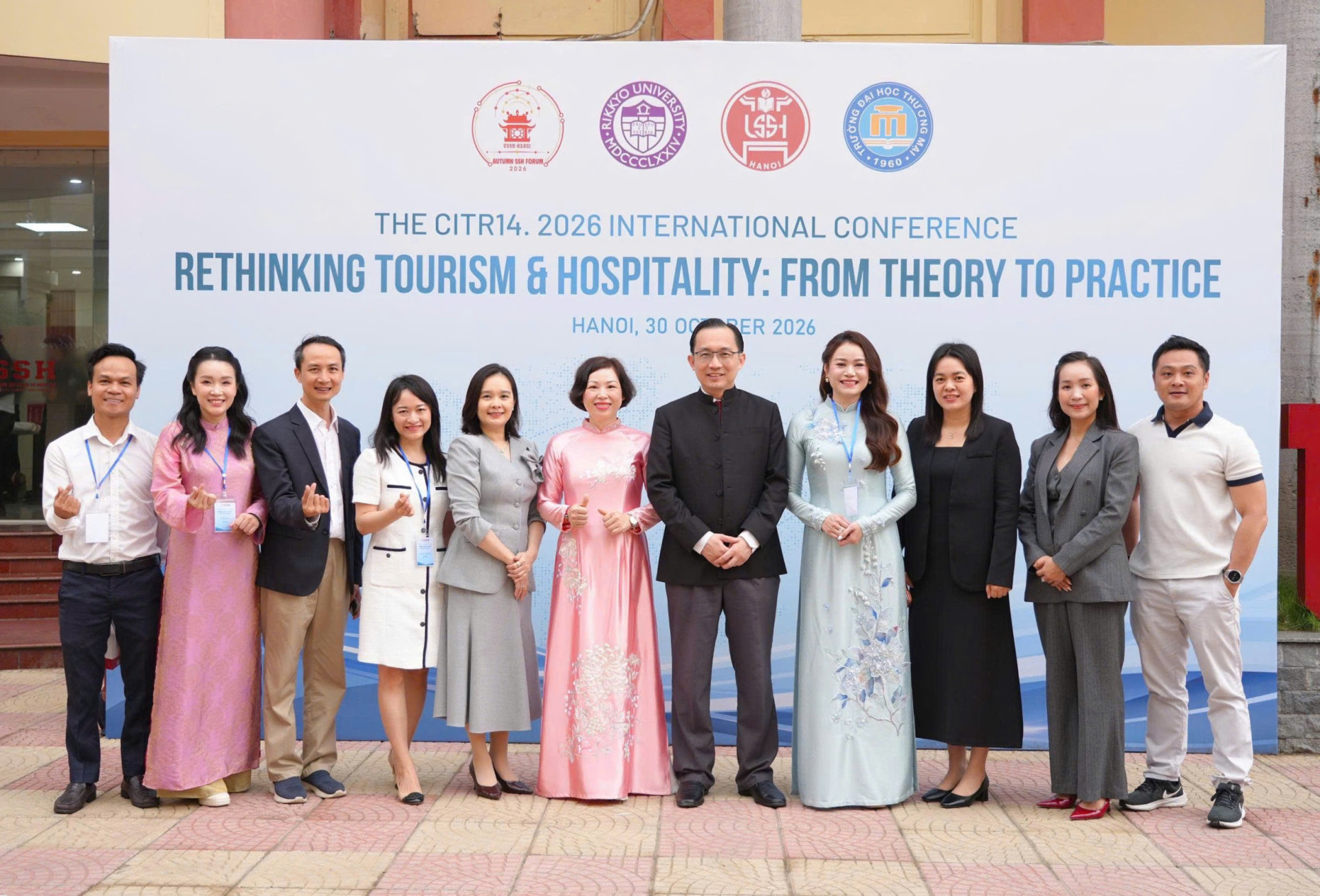
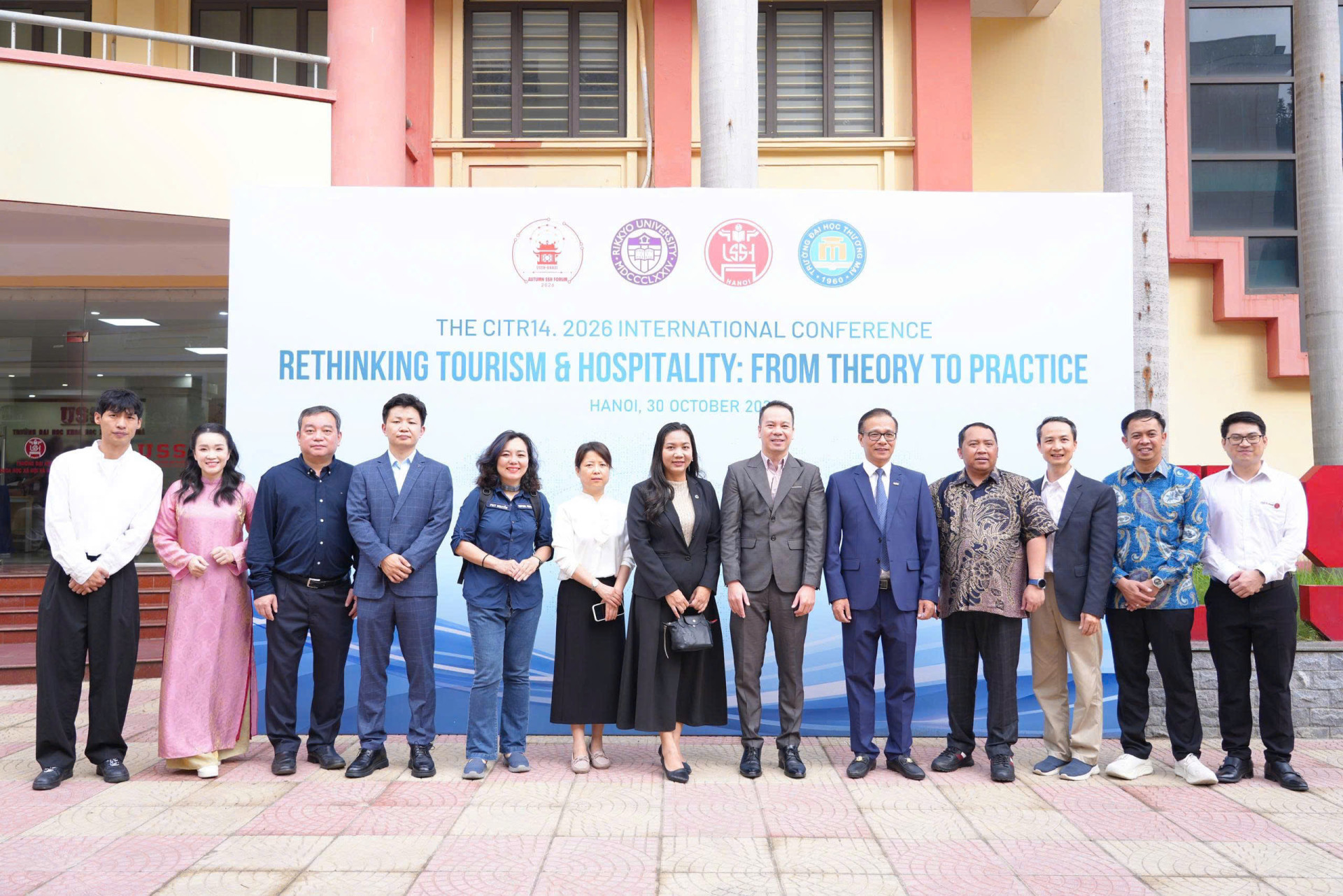
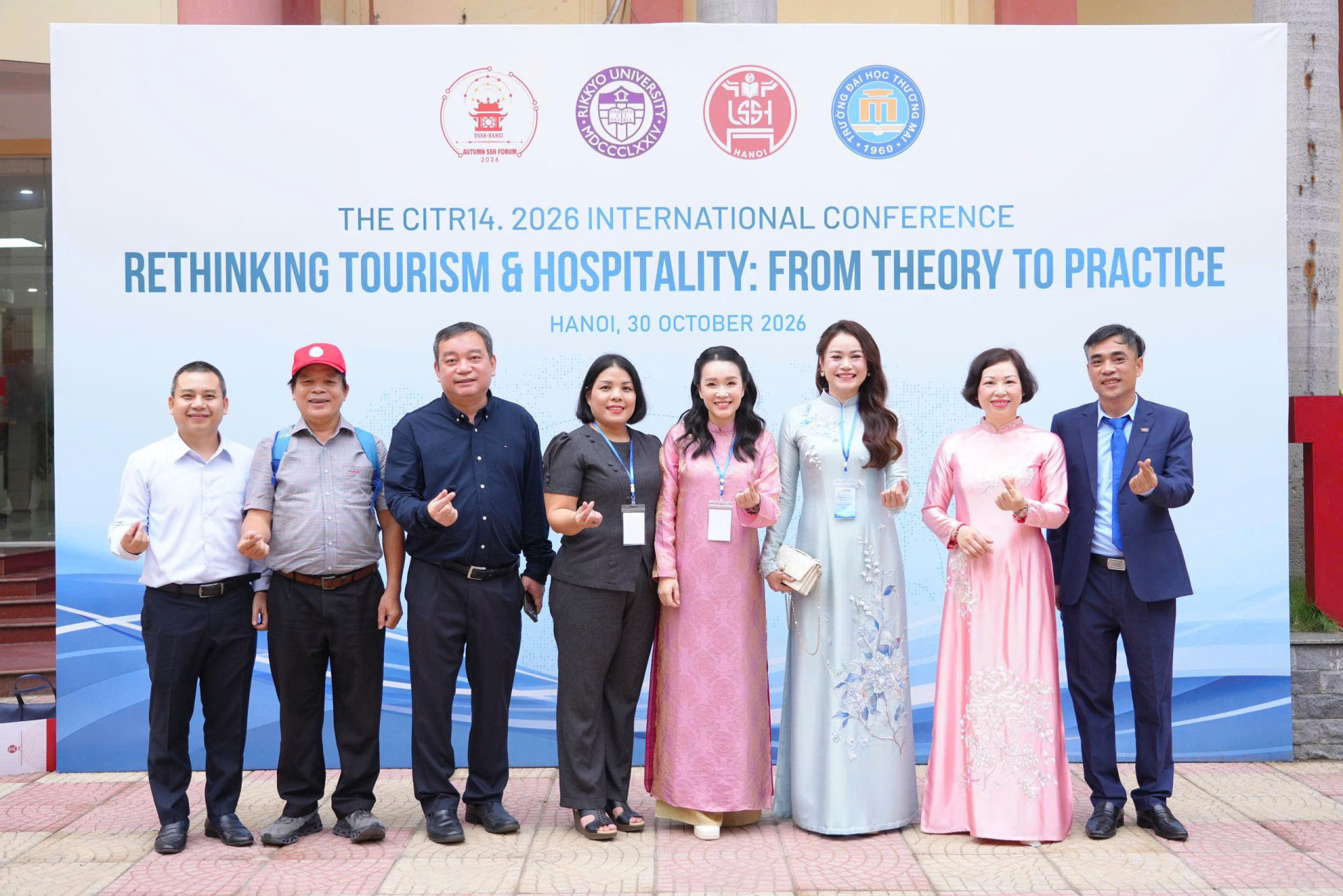
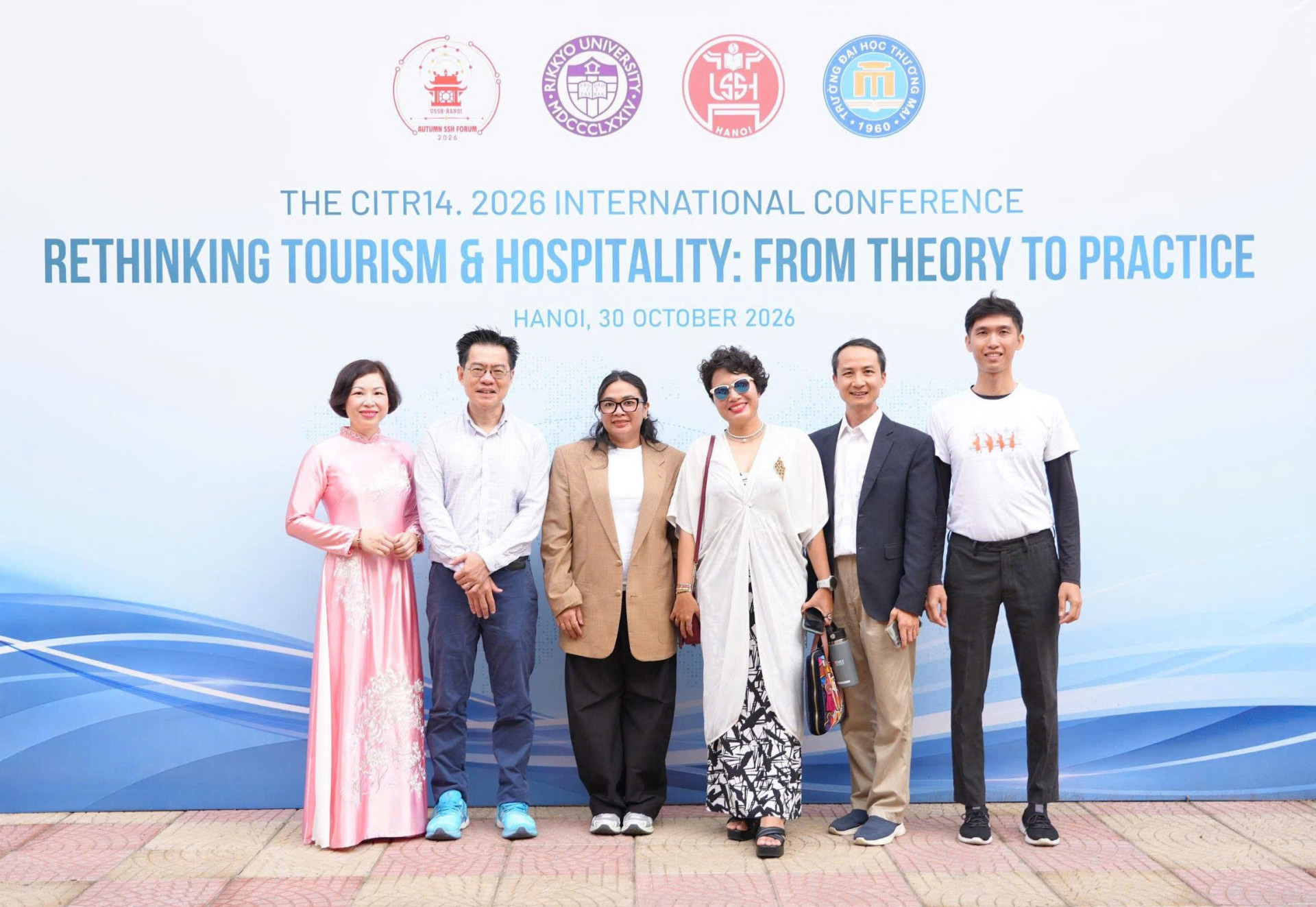
Các đại biểu tham dự hội thảo
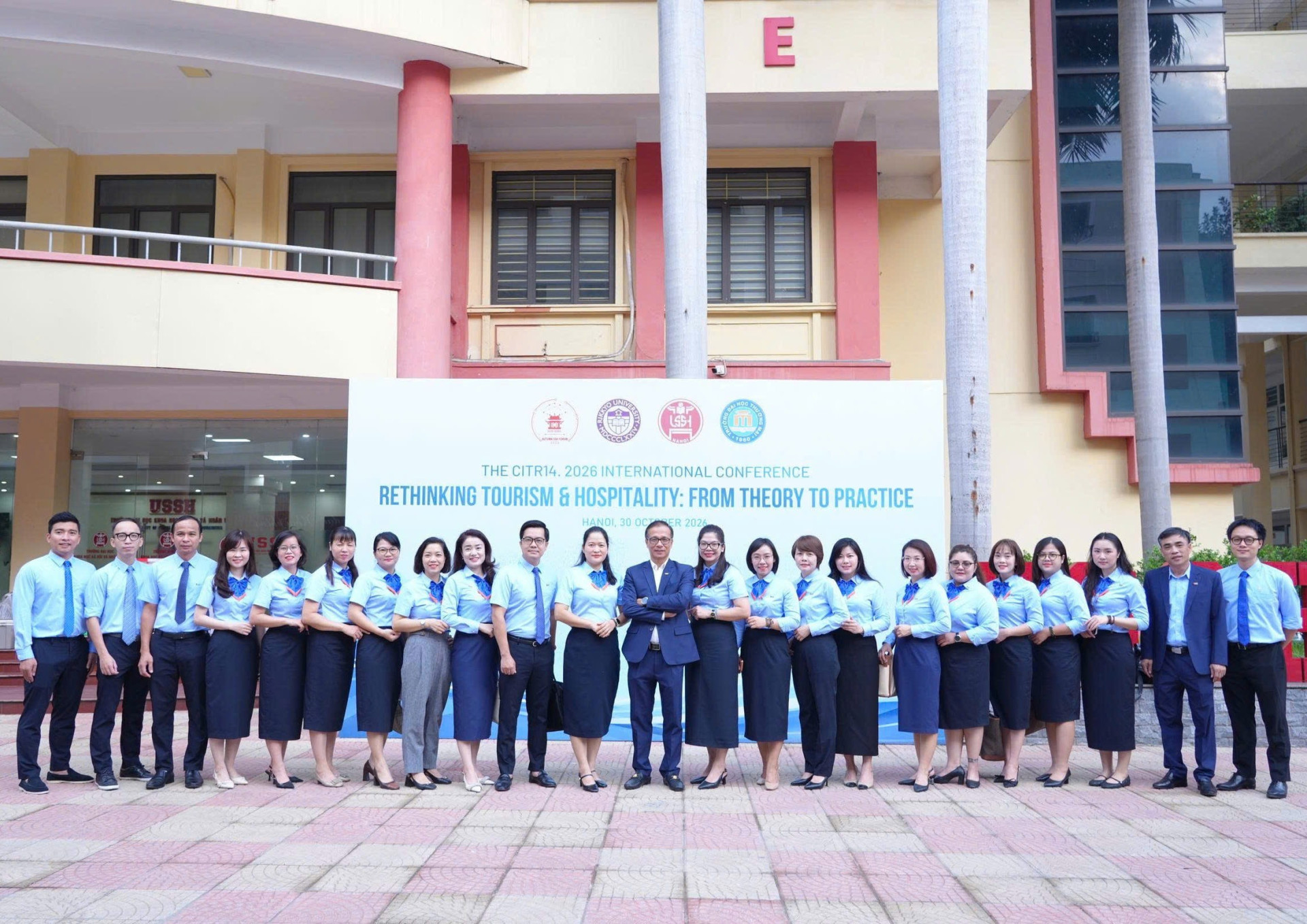
Hội thảo “CITR14.2026. Tái tư duy về du lịch và khách sạn: Từ lý thuyết đến thực tiễn” (Rethinking Tourism & Hospitality: From Theory to Practice) do Trường Đại học Khoa học Xã hội và Nhân văn, ĐHQGHN phối hợp với Trường Đại học Thương mại (Việt Nam) và Đại học Rikkyo (Nhật Bản) tổ chức, nhằm tăng cường đối thoại học thuật liên ngành, kết nối nghiên cứu với thực tiễn phát triển du lịch và khách sạn. Hội thảo thu hút sự tham gia của các nhà khoa học, chuyên gia trong nước và quốc tế, tập trung trao đổi những cách tiếp cận mới trong nghiên cứu, quản trị và phát triển du lịch bền vững.
Tái tư duy phát triển du lịch từ góc nhìn khoa học xã hội và nhân văn
Phát biểu khai mạc Hội thảo, PGS.TS Bùi Thành Nam, Phó Hiệu trưởng Trường Đại học Khoa học Xã hội và Nhân văn, ĐHQGHN, nhấn mạnh du lịch và khách sạn không chỉ là những ngành kinh tế tạo việc làm, thúc đẩy tăng trưởng, nâng cao năng lực cạnh tranh quốc gia mà còn gắn bó mật thiết với con người, văn hóa, bản sắc và sự hiểu biết giữa các cộng đồng.
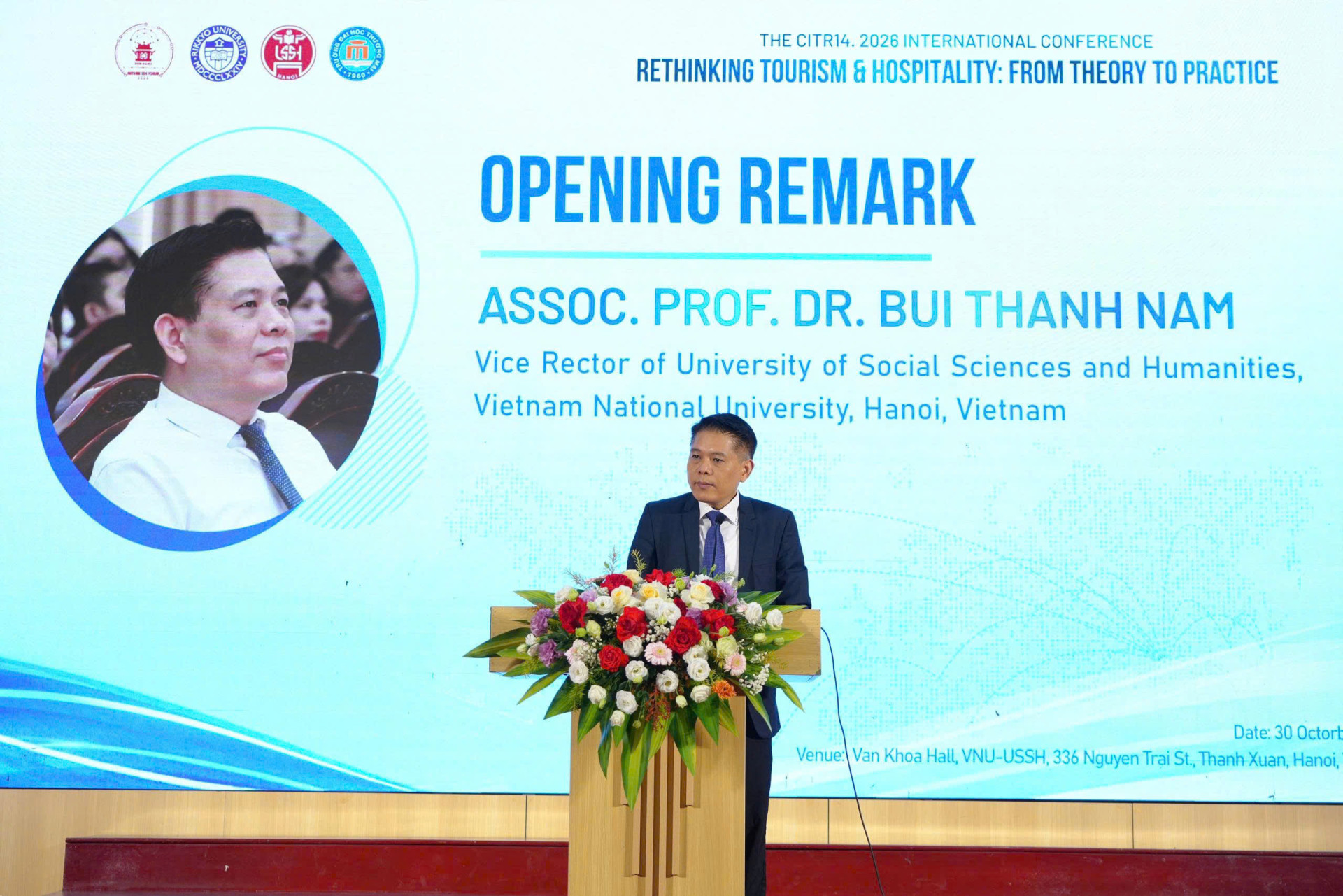
According to the Vice Rector, tourism research and development needs to be approached not only from economic and managerial perspectives but also from cultural, social, historical, psychological, and human development aspects. A multi-dimensional approach helps explain tourism motivations, tourist experiences, the relationship between tourism and local communities, as well as the impact of tourism activities on cultural heritage and the social environment.
In the context of green transformation, digital transformation, changing tourist behavior, and increasingly demanding requirements for sustainable development, Associate Professor Bui Thanh Nam emphasized that the spirit of "rethinking" does not mean denying accumulated knowledge, but rather proactively reconsidering assumptions, expanding approaches, and developing new knowledge suitable to changing realities.
For Vietnam, tourism development needs to be linked to the preservation of cultural heritage, improving the quality of experiences, increasing community participation, and ensuring a balance between economic benefits and social and cultural goals. This is also the responsibility of higher education institutions in training human resources and providing scientific arguments for policy planning.
Associate Professor Bui Thanh Nam hopes that the conference will open up joint research programs, collaborative initiatives, and valuable proposals with practical applications, contributing to building an innovative, people-centered, and sustainable tourism and hospitality industry.
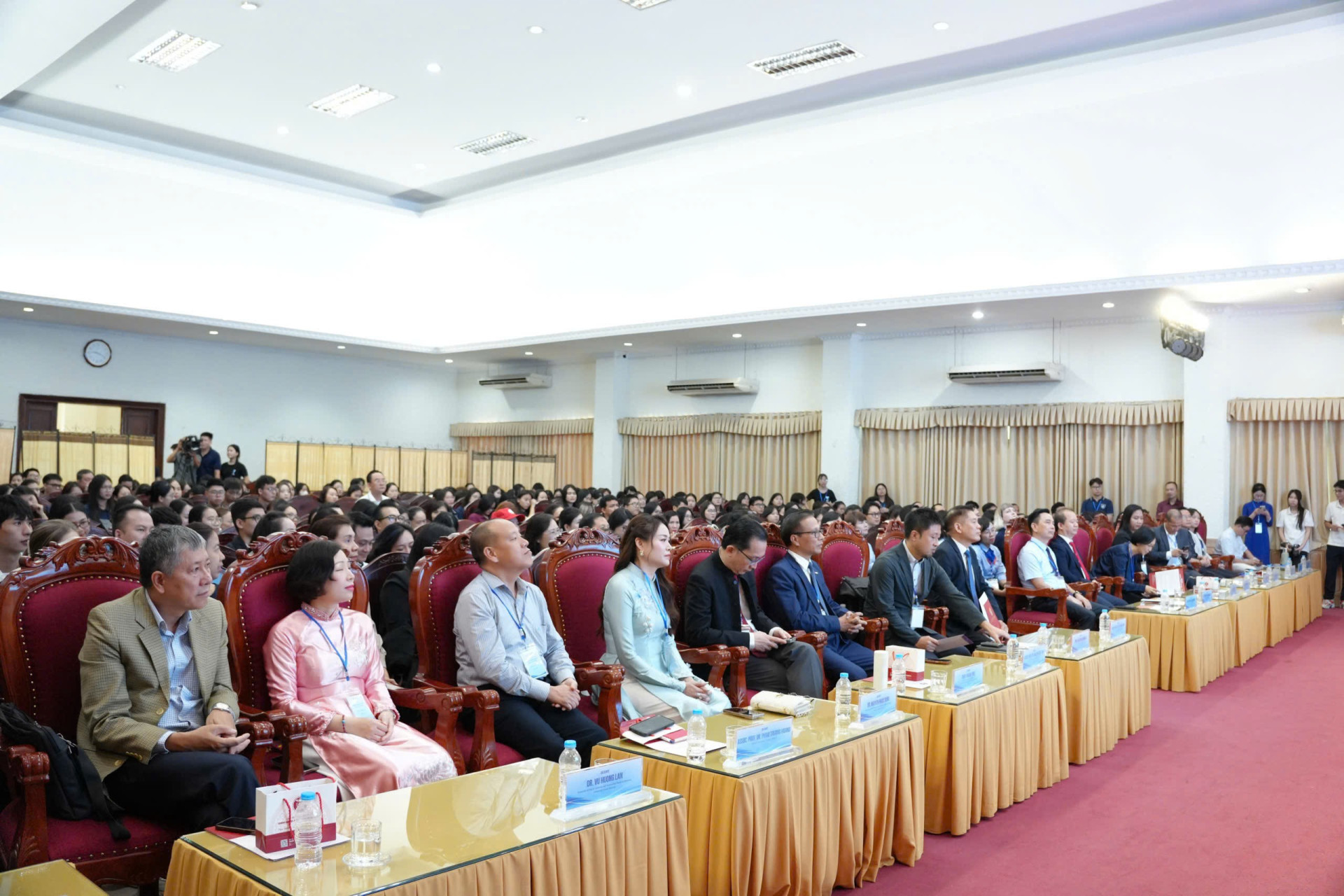
Connecting international scholars and promoting new approaches in tourism research.
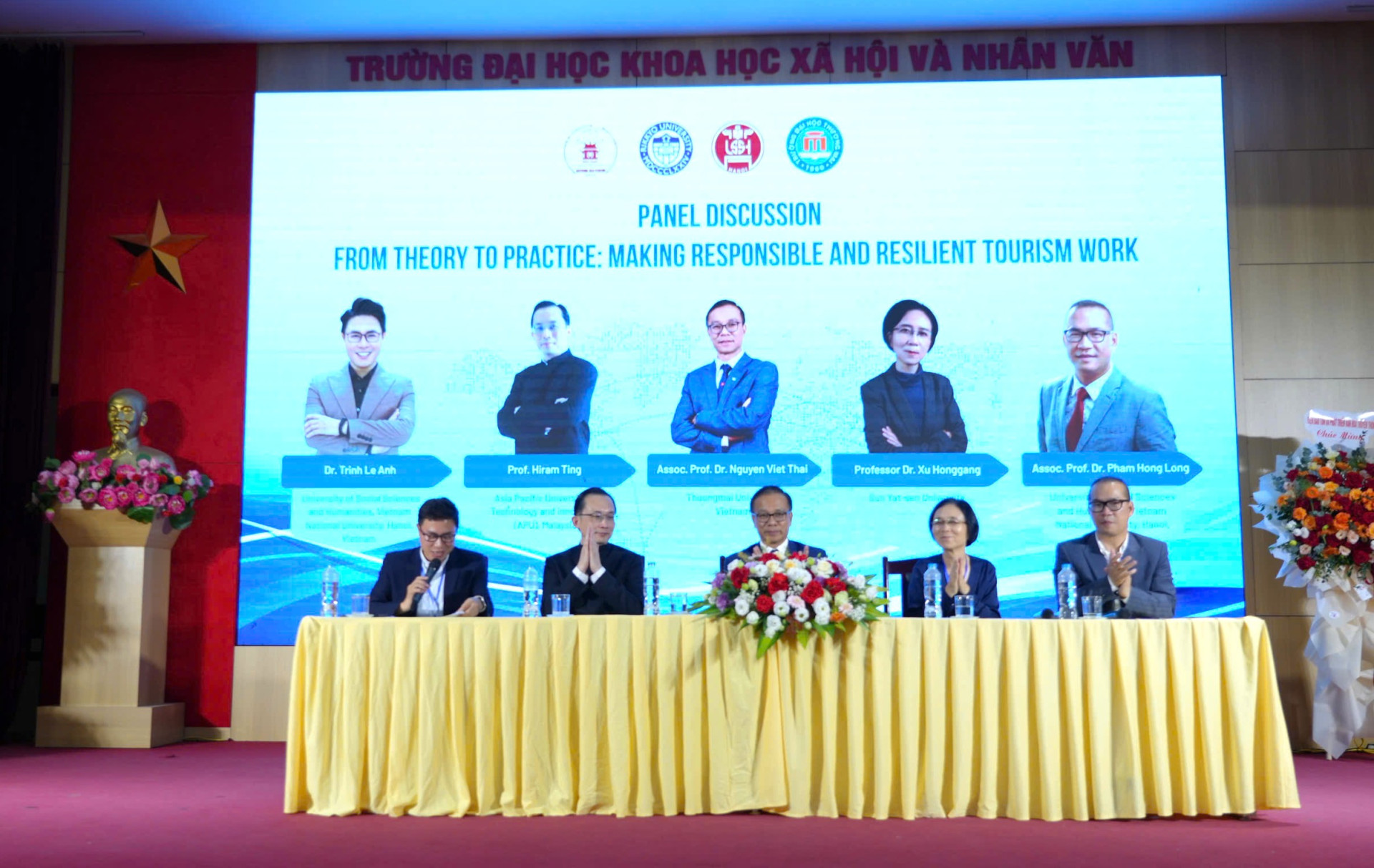
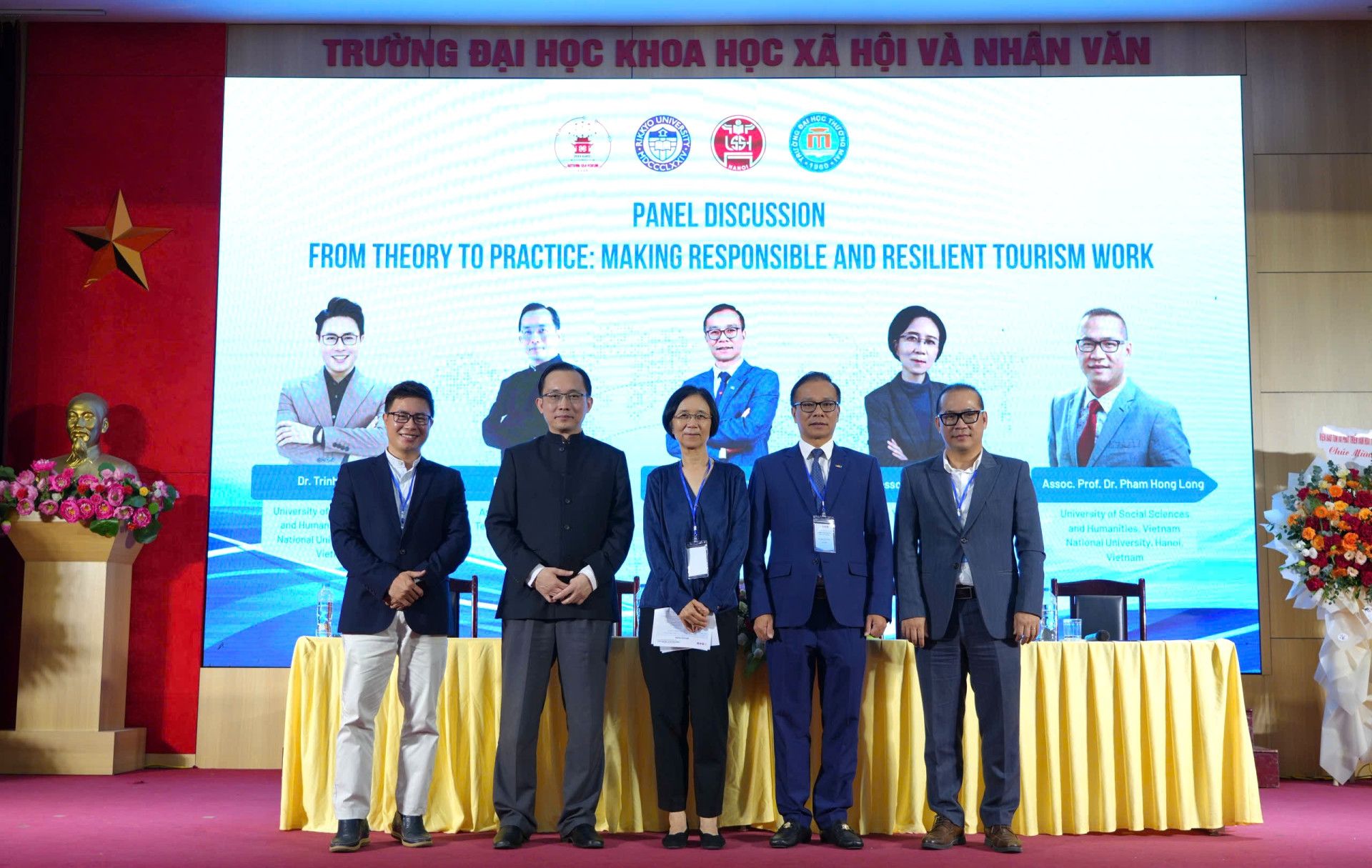
The workshop brought together experts from Japan, China, Malaysia, and Vietnam, with four main presentations on climate change, environmental management, responsible tourism, and human experiences.
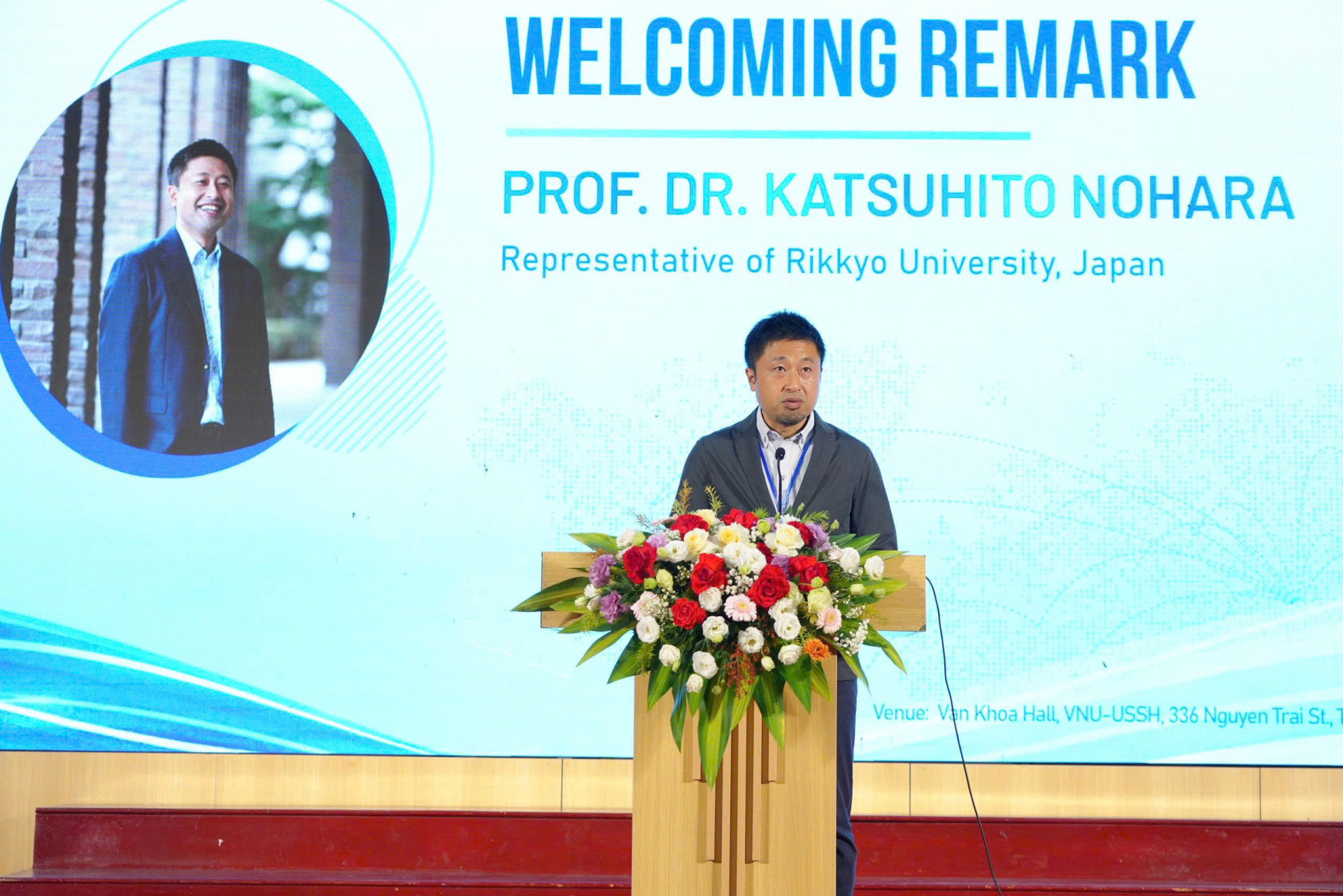
From an environmental economics perspective, Professor Katsuhito Nohara of Rikkyo University (Japan) presented a paper titled "Tourism in the Age of Climate Change: Insights from Environmental Economics," placing tourism development in relation to the impacts of climate change and the need for sustainable resource use.
From the perspective of destination management, Professor Xu Honggang, Head of the Department of Tourism Management, Sun Yat-sen University (China), presented a paper titled "Managing Wastes of Rural Tourism Village," addressing environmental challenges in rural tourism development and the need to integrate tourism activities with environmental protection and community development.
Emphasizing social responsibility in tourism development, Professor Hiram Ting, President of Responsible Borneo (REBORN), President of Sarawak Research Society, and Professor at APU University (Malaysia), presented a paper entitled “What Really Matters for Tourism? Driving Sustainability and Resilience through Responsible Tourism”.
Representing Vietnamese scientists, Assoc. Prof. Dr. Pham Hong Long, Chairman of the Science and Training Council, lecturer at the Faculty of Tourism Studies, University of Social Sciences and Humanities, Vietnam National University, Hanoi, presented a paper entitled "Human Experience as Strategic Resilience in Tourism Development," expanding the approach from economic and managerial factors to the role of experience and social values.
The presentations highlighted the need for interdisciplinary research, combining environmental economics, destination governance, and social sciences and humanities, to address the challenges facing tourism in the context of global transformation.
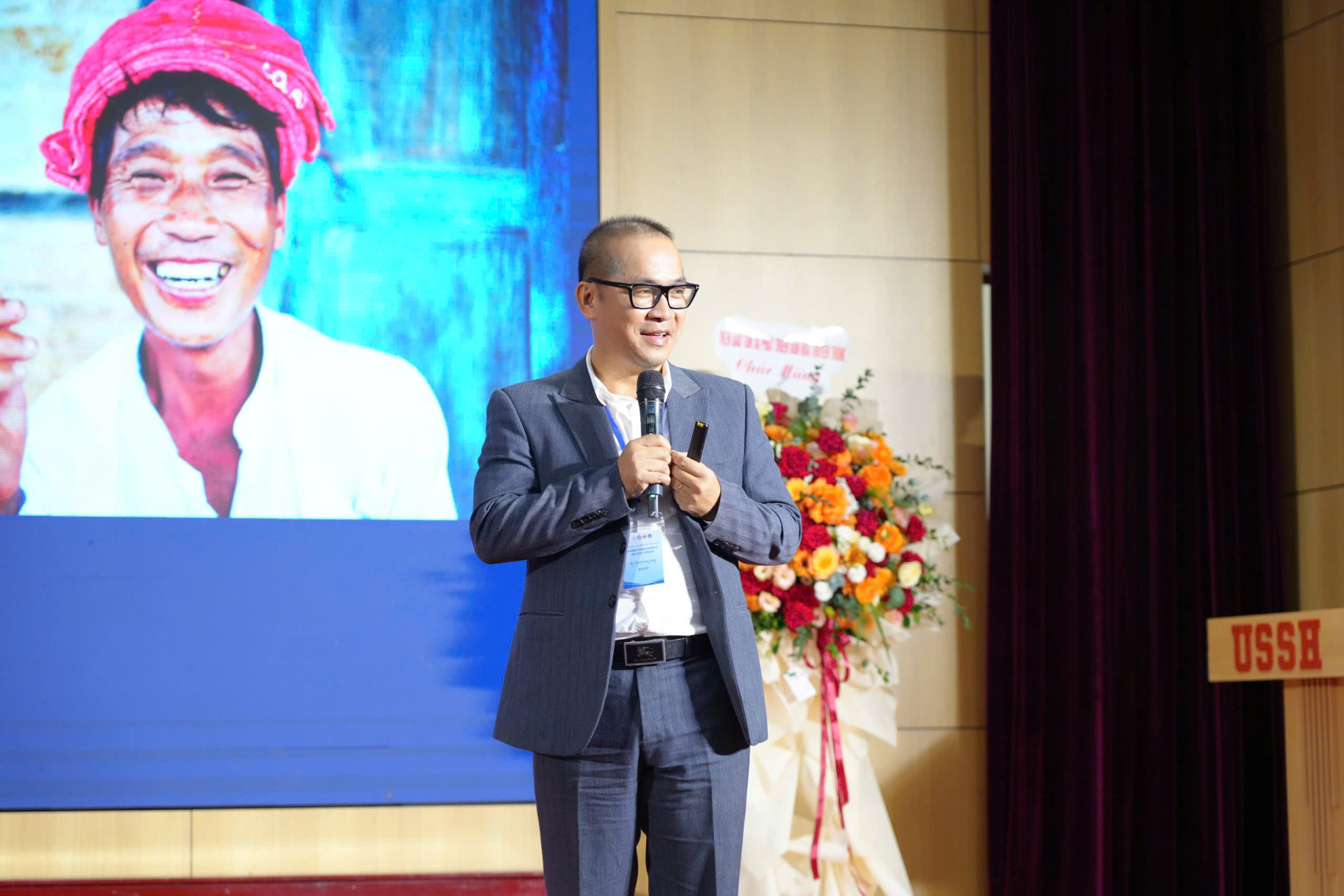
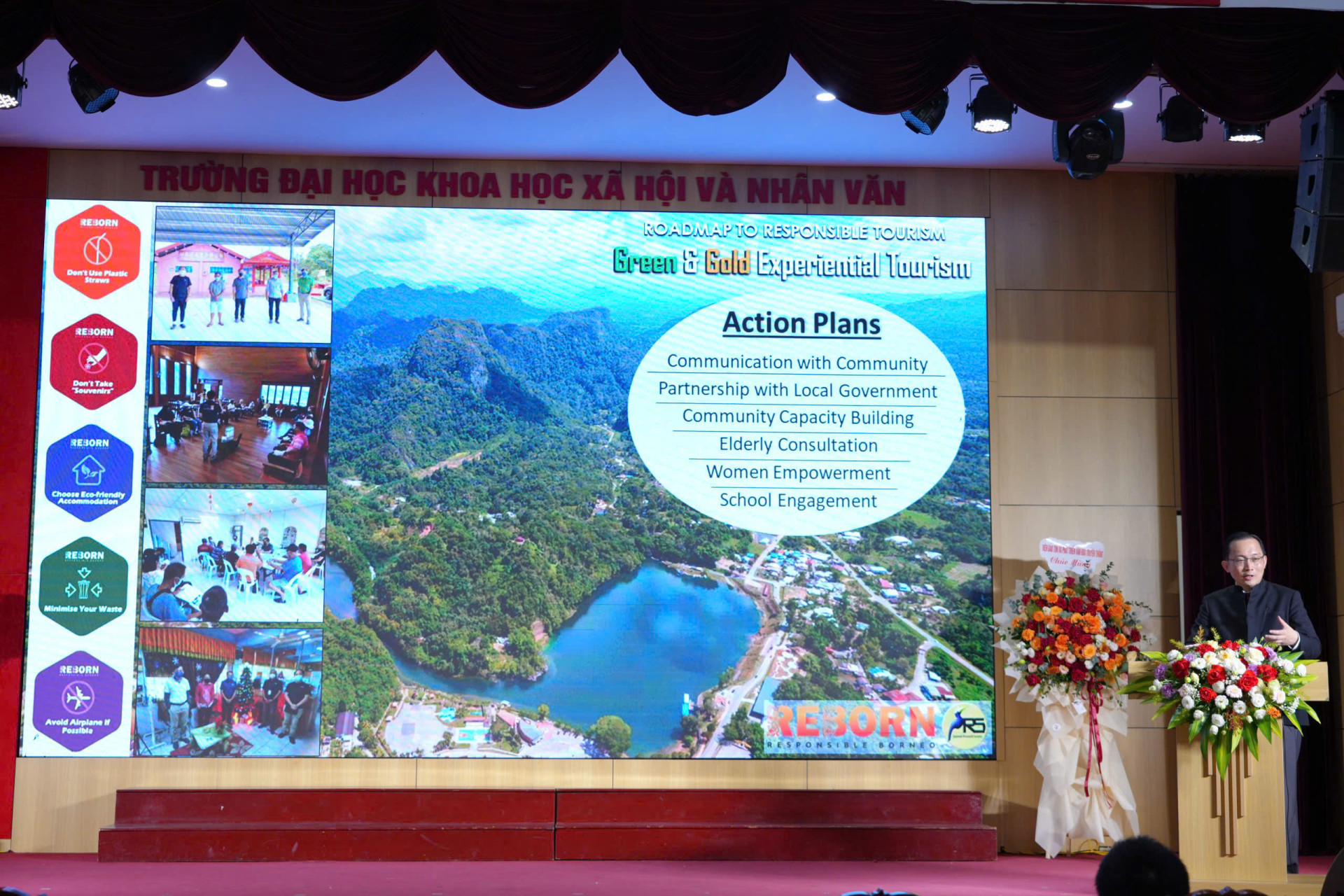
Connecting academic research with practical issues of tourism in Vietnam and around the world.
In addition to the main presentations, the CITR14.2026 proceedings showcase numerous studies on digital transformation, smart tourism, sustainable development, destination governance, tourist behavior, and heritage conservation.
In the technology sector, research on smart tourism applications integrating games in Can Tho, with 323 valid survey responses, highlighted the prominent role of experiential motivation and social influence on user interaction. Research on contactless technology in hotels in Vietnam, surveying 357 Gen Z and Millennials, noted the positive impact of ease of use and usefulness on customer satisfaction.
In the field of sustainable tourism, research in Ninh Binh, with 412 residents participating in the survey, shows that community capacity plays a crucial role in promoting participation and support for the development of renewable tourism. Meanwhile, research in Quynh Son Community Tourism Village, Lang Son, points out gaps in access to information, awareness, and levels of participation among local people, thereby emphasizing the need for information transparency in destination governance.
Heritage studies in Hoi An, Con Dao, Bat Trang, and Hanoi address issues related to authenticity, cultural experience, community participation, and value co-creation. Notably, research on creative tourism spaces in Hanoi's railway-side coffee street shows that the attractiveness and emotional experience of tourists do not necessarily equate to a deep understanding of the culture or a genuine connection with the local community.
Issues related to green consumption, ESG governance in hotels, wellness tourism, and the circular economy were also addressed, contributing to a broader discussion on the relationship between economic efficiency, environmental responsibility, and community benefit.
The workshop featured four parallel scientific reporting sessions, focusing on digital transformation and smart tourism; heritage interpretation and policy governance; post-pandemic tourism behavior, renewable tourism and value co-creation; and research papers by doctoral and postgraduate students.
Through the CITR14.2026 International Conference, the University of Social Sciences and Humanities, VNU Hanoi, continues to leverage its strengths in interdisciplinary research, enhance academic cooperation domestically and internationally, connect knowledge in social sciences and humanities with the innovative requirements of the tourism and hospitality industry, and contribute to providing scientific arguments for policy planning and sustainable tourism development.
Here are some photos from the workshop:
Related articles:
Author:Text: Thuy Dung, Photos: Ha Phuong
Newer news
Older news

