On the morning of October 24th, the University of Social Sciences and Humanities, Vietnam National University, Hanoi (VNU-Hanoi), organized the program “International Scientific Dialogue: Social Sciences and Humanities in the Age of Artificial Intelligence and International Integration”. This is a key activity within the framework of the Hanoi Autumn Humanities Forum 2026, which takes place from October 21st to 28th.
The forum comprised 21 workshops, seminars, and roundtable discussions, attracting approximately 1,300 scholars, including 250 international speakers. Topics spanned from culture, history, politics, international relations, education, language, media, and technology.
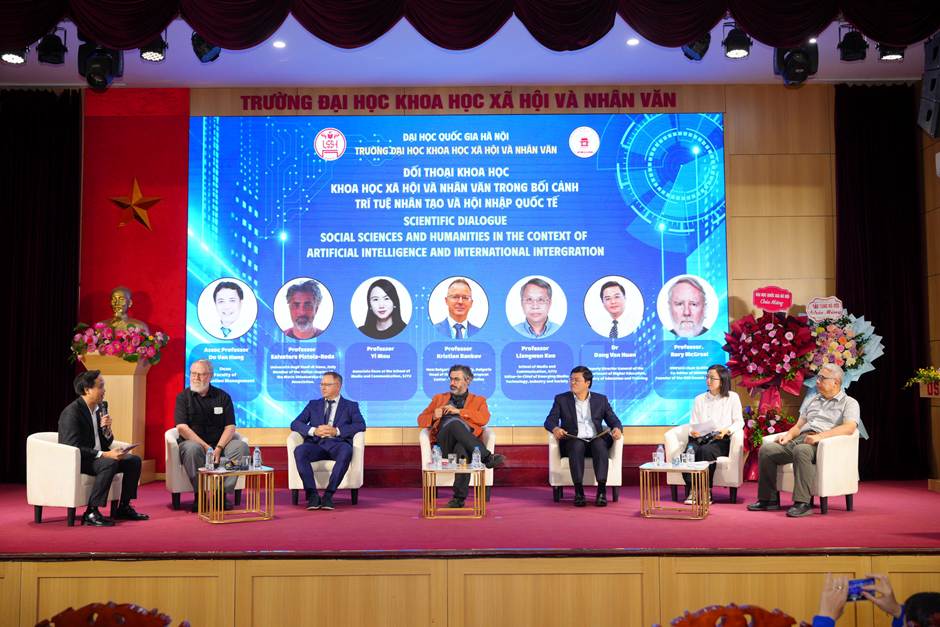
Delegates participating in the forum
Beyond simply sharing research findings, the Forum aims to connect interdisciplinary knowledge, enhance international cooperation, and clarify the potential contributions of social sciences and humanities to policy planning, cultural development, education, and addressing social issues.

Delegates cut the ribbon to inaugurate the Autumn Humanities Exhibition.
Social sciences and humanities must participate in shaping the future.
Speaking at the Forum, Associate Professor Bui Hoai Son, Deputy Head of the Central Propaganda Department, said: “The country is facing great opportunities along with many new challenges. Resolution No. 57-NQ/TW promotes science, technology, innovation and digital transformation; Resolution No. 59-NQ/TW broadens the vision of international integration; Resolution No. 60-NQ/TW sets out requirements for reorganizing the organizational structure; Resolution No. 71-NQ/TW emphasizes breakthroughs in education and training.”
Furthermore, Resolution No. 80-NQ/TW on the development of Vietnamese culture and Resolution No. 18-NQ/TW on building a disciplined, safe, civilized, harmonious, and developed society affirm a consistent spirit: development must be oriented towards people, caring for the quality of life and happiness of the people.
In particular, Resolution No. 25-NQ/TW on the Strategy for Ideological Work in the New Context requires innovation in research, forecasting, and understanding of the spiritual life of society. Ideological work needs to lead the way, accompany implementation, and be able to summarize from practice. To achieve this, it requires serious scientific arguments and the ability to listen to society with both data and human understanding.
Associate Professor Bui Hoai Son emphasized that technology can help a nation develop faster, but culture, ethics, and beliefs are what give that development depth. Artificial intelligence can process data, but it cannot replace humans in choosing fairness, compassion, or responsibility towards those who are easily left behind. A society needs not only to be smarter, but also more humane.
Mr. Son argued that social sciences and humanities must go beyond simply explaining past events: proactively predicting change, warning of risks, and contributing to finding a foundation of values for the future. From technological ethics and digital culture to family, education, and social beliefs, responsible interdisciplinary research is essential.
According to Associate Professor Bui Hoai Son, in today's era, artificial intelligence can help us answer more and more questions. However, machines cannot replace humans in deciding what society should develop for, what constitutes human dignity, and what values need to be preserved.
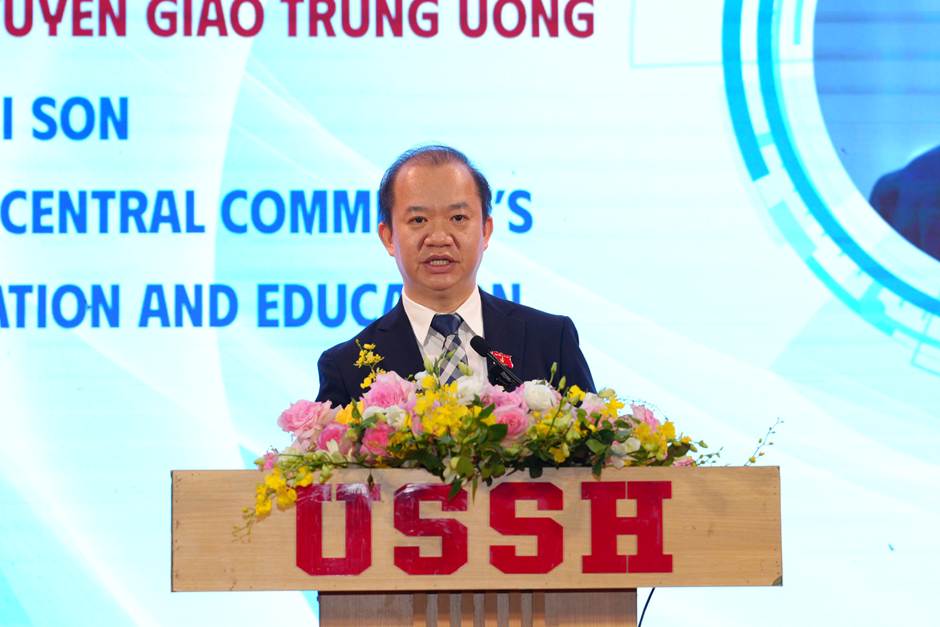
Associate Professor Bui Hoai Son, Deputy Head of the Central Propaganda Department
Associate Professor Bui Hoai Son shared three expectations for the university. Specifically:
First and foremost, let's bring research closer to the major issues facing the country and the concerns of its people. Each topic should ask itself: what does this discovery help us understand better, what decisions can we make more informed, and whose lives will it improve? Science is valuable when it respects the truth, is persuasive, and dares to tackle difficult problems.
Secondly, let's leverage interdisciplinary research. Practice isn't compartmentalized like textbooks. Artificial intelligence is also an ethical, legal, cultural, and educational issue; family stories are intertwined with economics, media, and social welfare. Universities should develop strong research teams, combining basic research with field surveys, data mining, and policy analysis, always upholding the integrity and honesty of scientists.
Third, let's build a stronger bridge between the lecture hall, policy advisory bodies, and real life. "A project shouldn't stop when it's completed; it needs to continue with clear recommendations, feasible solutions, and tangible changes. Students, trainees, and researchers should not only learn to know more, but also to listen, ask the right questions, and take responsibility for community issues," Mr. Son emphasized.
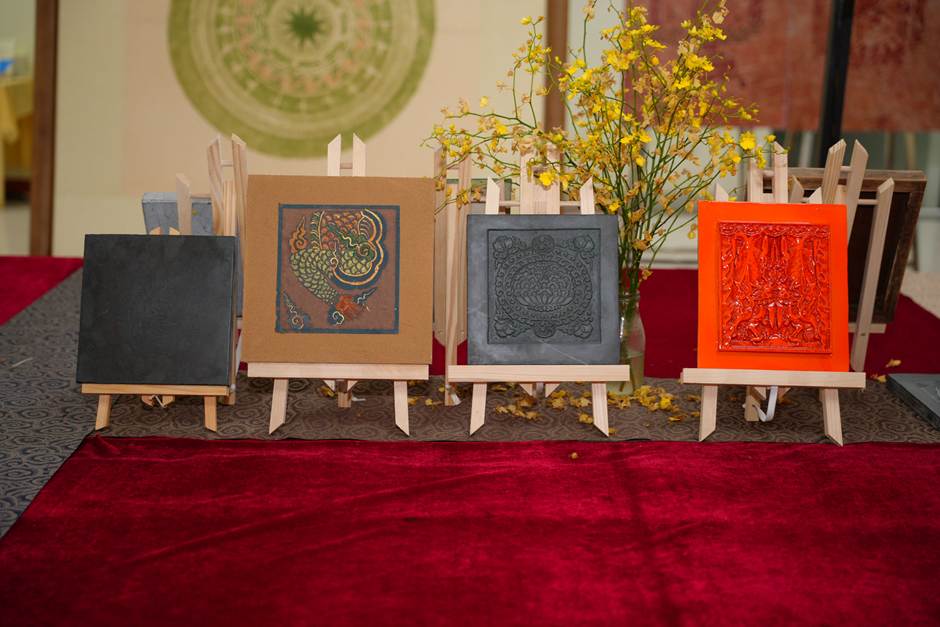
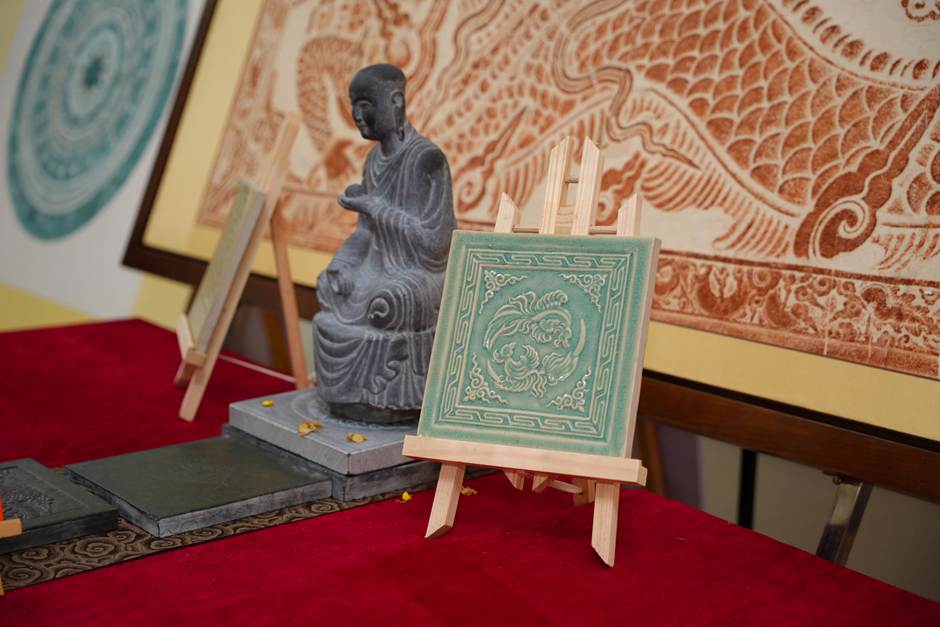
Cultural products exhibited at the forum.
Vietnam National University, Hanoi places a strong emphasis on Vietnamese studies and cultural soft power.
At the Forum, the Director of Vietnam National University, Hanoi (VNU), Bui The Duy, stated that VNU aims to become a world-leading center for Vietnamese studies, linking Vietnamese research with the innovation of development models and promoting national soft power.
These orientations place the University of Social Sciences and Humanities at the heart of research, training, policy consulting, and the dissemination of Vietnamese cultural values.
The Director of Vietnam National University, Hanoi, suggested that the university leverage its academic strengths, be a pioneer in interdisciplinary research, develop strong research groups, and enhance the application of artificial intelligence and digital data in research.
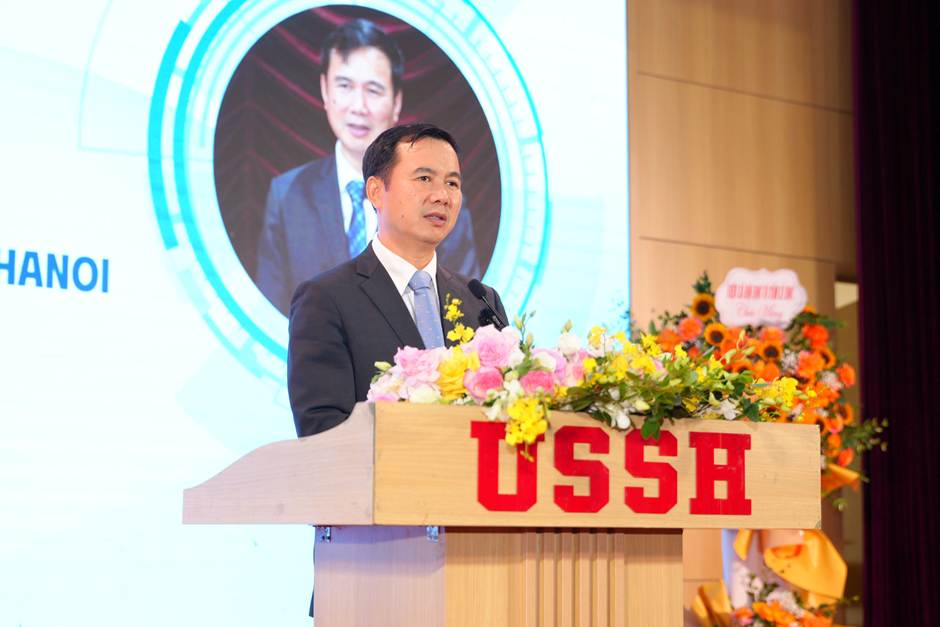
Director of Vietnam National University, Hanoi (VNU) Bui The Duy
According to the Director of Hanoi National University, AI and international integration open up opportunities to expand cooperation, innovate methods, and enhance research capacity, but at the same time, they pose a requirement to protect identity, privacy, the authenticity of information, and human values.
Therefore, the social sciences and humanities need to combine traditional academic depth with modern approaches, thereby generating knowledge capable of explaining, predicting, and proposing solutions to development problems.
Transforming knowledge into development value.
Professor Hoang Anh Tuan, Rector of the University of Social Sciences and Humanities, believes that the value of the Forum lies not in its organizational scale, but in its ability to generate new knowledge and transform that knowledge into development value.
In a world that often emphasizes growth rate, technological capability, and economic efficiency, the social sciences and humanities remind us that development cannot be measured solely by material indicators. Development also encompasses quality of life, governance capacity, community cohesion, cultural vitality, social justice, and human dignity.
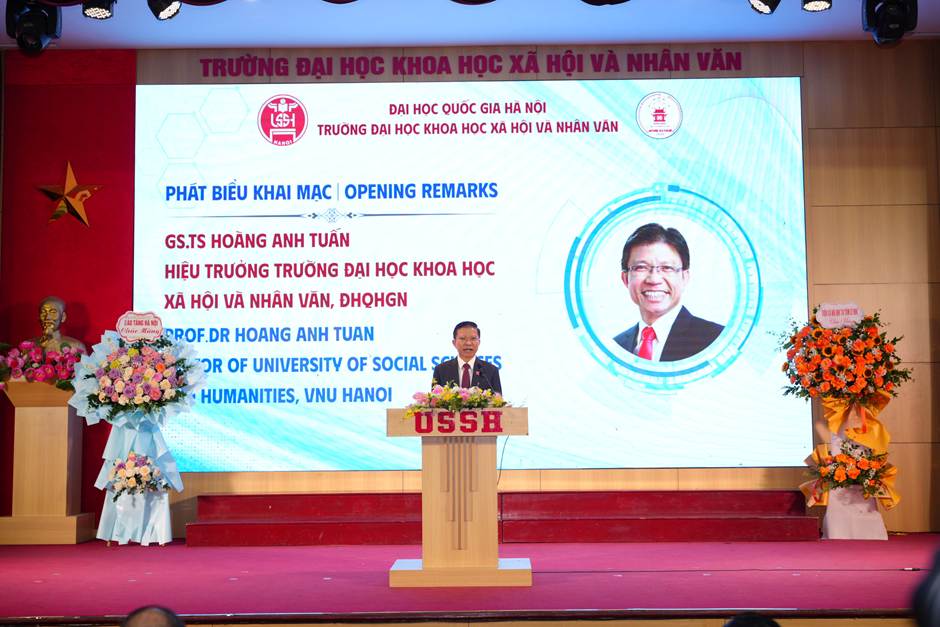
Professor Hoang Anh Tuan, Rector of the University of Social Sciences and Humanities
According to Professor Hoang Anh Tuan, technology can expand human capabilities, but knowledge about people and society is what helps determine what is worth doing, who it should serve, and what future it should lead to.
Therefore, the Forum aims to shift the role of social sciences and humanities from explaining social phenomena to participating in solution creation. Issues such as artificial intelligence, heritage, education, and governance all require an interdisciplinary approach, as no single field can fully address them.
Four key objectives have been identified: developing new knowledge, building sustainable collaborative networks, connecting research with policy and practice, and nurturing the next generation of scholars.
The school principal believes that the effectiveness of the Forum should be evaluated by the results after the event: published works, interdisciplinary research groups formed, collaborative programs implemented, and applicable policy recommendations.
"We need to strive towards one principle: every dialogue opens up a new direction of research; every research result adds practical value; every academic relationship becomes a possibility for long-term collaboration," emphasized Professor Hoang Anh Tuan.
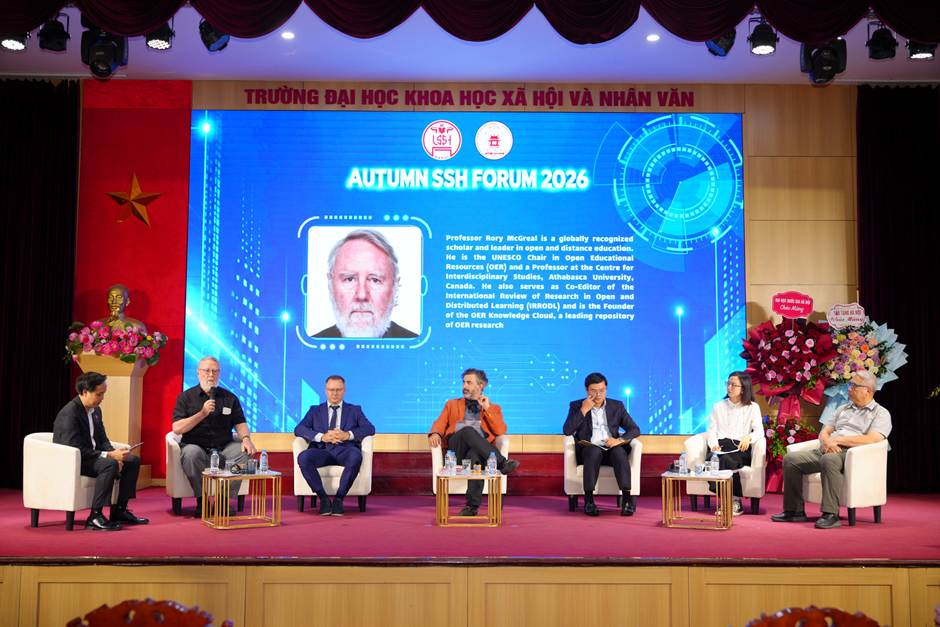
Delegates participating in the forum
In the dialogue program on October 24th, scholars focused on three main areas: AI, knowledge, and research; people, culture, and responsibility; and education, governance, and collaboration.
The discussion covered the application of AI in social sciences and humanities research, qualitative research, digital humanities, and digital archiving; it also addressed beliefs about AI, the authenticity of information, cultural identity, academic responsibility, privacy, and data protection.
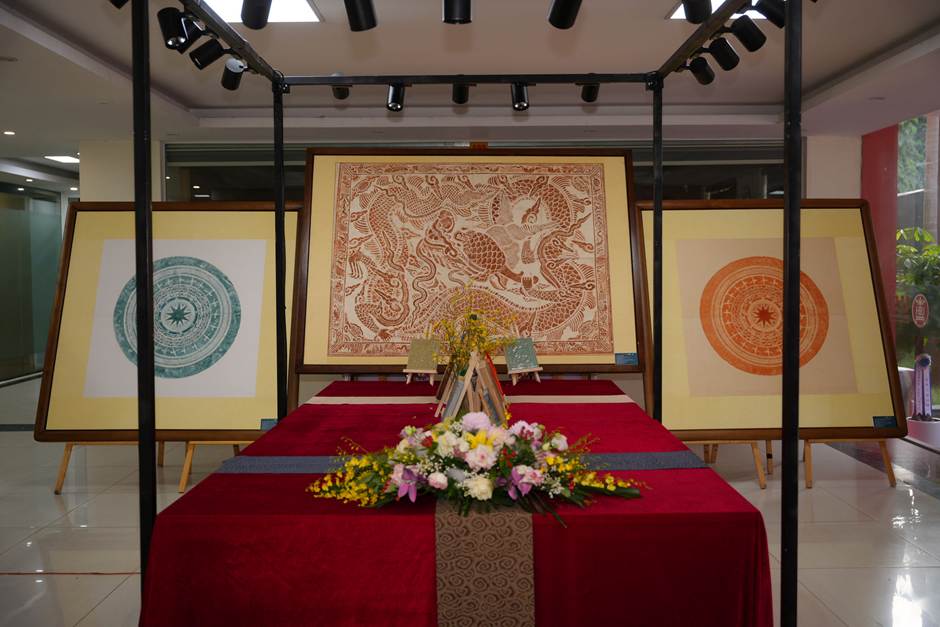
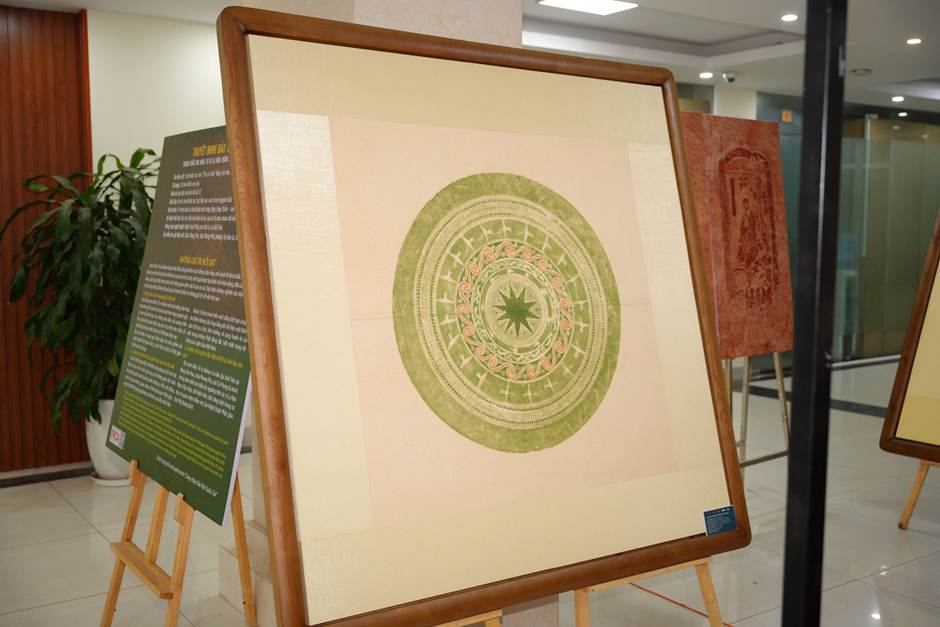
The Social Sciences and Humanities Exhibition, held from October 19th to 29th, showcases the Social Sciences and Humanities book series along with the "Ancient and Modern Wall Art" space. The exhibition displays 12 documents, including 4 paintings and 8 rubbings of inscriptions, patterns, and murals, thereby clarifying the role of original documents in the research and preservation of heritage.
The press reported on the event:
Government Electronic Newspaper: Social sciences and humanities proactively shape policies in the age of AI.
Vietnam News Agency News Report: Artificial intelligence is an irreplaceable part of human knowledge.
Vietnam Plus:The first ever Hanoi Autumn Humanities Forum 2026 will bring together 1,300 scholars.
People's Representatives Newspaper: Hanoi Autumn Humanities Forum 2026: Bringing humanities knowledge into creating development values.
People's Police: AI processes data but cannot replace humans in making fair and compassionate choices.
Tien Phong Newspaper: Tien Phong Newspaper and the University of Social Sciences and Humanities collaborate in many areas.
Tien Phong Newspaper:Global integration: What does Vietnam have to offer to avoid being assimilated?
Author:According to the People's Representatives Newspaper
Older news

