
Some even argue that,12 Years of SlaveryIt's closer to a documentary. Last year, Hollywood honored...Argo,It is also a film whose content is very close to a real event: the mission to rescue six American hostages kidnapped in Iran. Oscar 2014.12 Years of SlaveryIt is a continuation of that trend.
The 134-minute film closely follows the autobiography of the same name, recounting the tragic and heartbreaking life of Solomon Northup (played by Chiwetel Ejiofor), a free African-American carpenter with a talent for playing the violin, living in New York with a wife and two children. One day, he is tricked, kidnapped, and sold to plantation owners in the Southern state of Louisiana. From a free man, due to a single mistake, Northup is transformed into a slave overnight. He is sold from one owner to another without the right to defend himself. The harsh laws of the time allowed white owners to treat their Black slaves like animals, brutally beating them and ready to kill them at any time for any "trivial" reason. Having endured torment for 12 years, Northup was fortunate enough to meet a kind white Canadian man, Bass (played by Brad Pitt), whose kindness led to his release. However, his compatriots, the "black animals" of that time, were still living in slavery…
The issues of slavery, racial discrimination, and discriminatory policies against people of color, especially Black Africans, were a painful wound in American society for nearly two centuries (from the 17th to the latter half of the 19th century). A nation whose 1776 Declaration of Independence declared: “We hold these truths to be self-evident, that all men are created equal, that they are endowed by their Creator with the unalienable Rights, that among these are Life, Liberty and the pursuit of Happiness,” yet it was not until 1865, with the end of the American Civil War, that this painful wound was finally healed in America. This miracle was the result of many contributions, but no Black American can forget the greatest contribution of Abraham Lincoln, the 16th President of the United States. During his short term, from his official inauguration (March 4, 1861) to his assassination (April 14, 1865), Lincoln persistently pursued his humane and progressive policies. For him, the existence of the slave trade in a country once hailed as a paradise, such as... America is a source of pain and shame that needs to be erased as soon as possible. The film by African-American director Steve McQueen was honored at the prestigious 2014 Academy Awards, primarily for this reason.
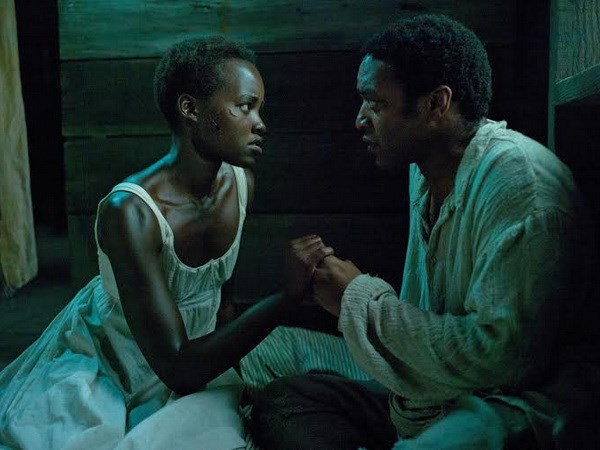
Actors Chiwetel Ejiofor and Lupita Nyong'o in a scene from a film (source: internet)
Hollywood films about slavery aren't limited to just Steve McQueen's movies. More recently, we've seen films like...The Helpby director Tate Taylor,Django Unchainedby director Quentin Tarantino,Abraham Lincolnby director Steven Spielberg, and a few other films. However, it wasn't until12 Years of SlaveryWith Steve McQueen, a Black director making films about people of his own race, viewers can come to know such a painful reality about the plight and inequality of Black people in the modern world. In an interview about how he came to make this film, Steve McQueen said: “I read this book, and I was completely shocked […]. Witnessing slavery basically sparked my passion to adapt this book into a film.”12 Years of SlaveryThe success began right from the start with the script. Screenwriter John Ridley, the author of the film's script, was immediately impressed with the subject matter after his first meeting with director Steve McQueen at Creative Artists Agency during the film's premiere.HungerIn 2008, his work. The film's authenticity is evident from the very form of the original work. In literature, autobiographies are considered works that tell the truth. The book is not long (315 pages in the Vietnamese translation published by the Women's Publishing House in June 2014), and it is brutally truthful in every detail. How can one take such a brutally truthful story and turn it into a fictional film without giving the viewer the feeling of watching a documentary? That was a significant challenge for this young, relatively unknown British filmmaker. However, perhaps because he is a person of color, like the main character Northup in the work, Steve McQueen's advantage was quite clear. With the encouragement and support of producer Brad Pitt, a very famous white actor with liberal views, Steve McQueen ultimately chose a realistic and unpretentious filmmaking style. That approach allowed him to fully grasp the story in the original work, and as a result, it resonated deeply with the audience.
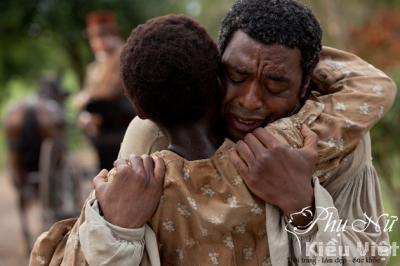
The talented cinematographer Sean Bobbitt also played a crucial role in creating the realistic and emotionally moving images. Shot on 35ml film with a 2.35:1 aspect ratio, the film presented viewers with expansive, sweeping views of the vast plantations of the Southern Louisiana in the mid-19th century. This contrasted sharply with close-up shots of the pitiful, dark, and sorrowful faces of the "human-animals" from a century and a half ago. The cast, mostly non-superstars, contributed significantly to the film's success, thanks in large part to their incredibly realistic performances. Chiwetel Ejiofor, in the role of Northup, the film's protagonist, with his bewildered expression and vacant gaze in almost every scene (except when he was still living with his wife and two children), truly excelled in his role. He fully deserved an Oscar for his leading role in the film, if only the supporting performance of Lupita Nyong'o (of Kenyan origin) hadn't been so outstanding.
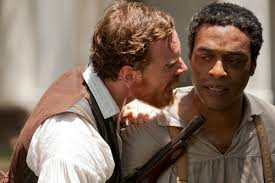
Epps (played by Michael Fassbender) and Northup (played by Chiwetel Ejiofor) (Photo: internet)
Let's try to analyze some of the elements that demonstrate the acting talent of the three actors in the film's three most important roles: Northup, Parsey, and Epps. Northup's portrayal, from beginning to end, shows his incredibly natural immersion in the role. From the moment he fell into the trap of the two traffickers with the promise of a lucrative job as a musician in a circus, this free man was never treated like a human being. The absurd and harsh laws of America at that time were unbelievably unjust. A man who was free, suddenly found himself enslaved overnight. He wasn't allowed to acknowledge his freedom. The beatings he received silenced him. In the film, we occasionally see this courageous man stand up against the oppressive power (the scene where he fights back against the foreman Jon Tibeats), but these are rare occurrences. For the remainder of the nearly 134 minutes of the film, we only see scenes of injustice and unfairness inflicted upon this poor man. Scenes of his back deeply scarred with horizontal and vertical lines; scenes of him being hanged from a tree, luckily not suffocating because his toes touched the ground, while his fellow slaves, though deeply sympathetic, stood watching like ghosts, none daring to risk saving their fellow victim. This makes us understand the harsh rules of the white masters. The viewer's heart swells with indignation. The character Patsey is no different. She is not only a slave who works tirelessly for her master's profit, but also transformed into a sexual tool, satisfying the lustful desires of the lecherous and cruel master Epps. The scene depicts Patsey being beaten at any moment by Epps' jealous wife, stripped naked, tied to a tree, and mercilessly whipped with a leather whip to the point that after the beating, her once thin, dark back was unrecognizable. It looked like a pool of red mud after a plowing. At one point, unable to bear the physical and mental pain, Patsey begged Northup to kill her to ease her suffering. The role of the master Epps (played by Michael Fassbender) is truly horrific. Just seeing him appear, observing his face closely, witnessing his treatment of the slaves in his house, especially the scene where he personally whips Patsey, the maid he sexually exploited whenever he felt lustful, sends shivers down the viewer's spine. Few would believe that such a thing ever happened…
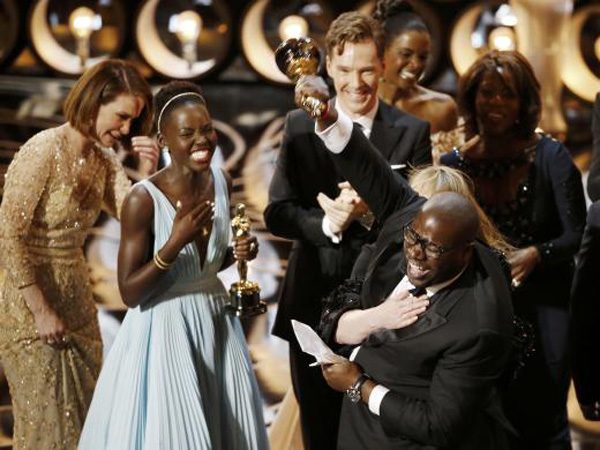
The cast and crew of 12 Years a Slave won Best Picture at the 2014 Oscars.
12 Years of SlaveryIt can be seen as a model of the classic Hollywood three-act structure, far removed from the "blockbuster" films of recent years. Without special effects or an overly expensive budget (only about $20 million), the film still raked in huge profits from viewers, simply by telling a simple story (in the first five months after its release, the film grossed approximately $160 million). According to the film crew, to ensure the authenticity of the story, the costume designer collaborated with Western Costume Design to create nearly 1000 costume designs for the actors. The set designer spent a great deal of effort collecting soil samples from three plantations in Southern Louisiana, where the characters appear in the film, to select the most suitable sample for the costumes. Regarding dialogue, to recreate the way slave owners and slaves spoke centuries and a half ago, the filmmakers had to do a lot of research, meet many people, and record many dialogue samples to choose the most appropriate way to speak. Actress Lupita Nyong'o, of Kenyan origin, who won an Oscar for Best Supporting Actress and studied acting at Yale, also played a significant role in the film's success. This is perhaps a lesson for Vietnamese cinema – a cinema still poor and lacking many modern facilities. Therefore, Vietnamese cinema can absolutely choose a realistic and simple approach to filmmaking to create works that touch the hearts of viewers. Of course, to achieve that, it also requires the talent of those involved and a "flexible mechanism" to allow artists creative freedom.
Author:Tran Hinh
Newer news
Older news

