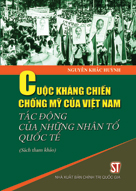
On the occasion of the nationwide celebration of the 35th anniversary of the liberation of Southern Vietnam, the National Political Publishing House released the book for readers.
Vietnam's resistance war against the US: The impact of international factors.By author Nguyen Khac Huynh.Author Nguyen Khac Huynh is a veteran diplomat who participated in the Paris Peace Accords on Vietnam and a reputable researcher of diplomatic history. Combining theoretical understanding with practical experience, and drawing on numerous domestic and international sources, especially his own notes, the book provides readers with a comprehensive overview, in-depth analysis, and much little-known information about Vietnamese diplomacy during the war of national liberation. Placing the Vietnam War within the context of the Cold War on a global scale, the book analyzes the international landscape in the struggle between the two sides, the political approaches, and the adjustments to foreign policy of each side during the arduous and fierce struggle. The book highlights the dramatic dynamics in the relationship between the three countries – the Soviet Union, China, and the United States – regarding the resolution of the Vietnam War. The author analyzes each pair of relationships: Soviet-Chinese, Soviet-American, and American-Chinese, before examining the overall triangle of the United States, the Soviet Union, and China. This highlights the similarities and differences between the two major socialist powers regarding the Vietnam issue, in their strategic calculations: on the one hand, supporting the common struggle against imperialism, led by the United States; and on the other hand, opposing each other to enhance their own prestige and influence in the national liberation movement and the world revolutionary movement. The Sino-Soviet conflict escalated to confrontation, even bloody conflict, leading both sides to seek compromise with the main opponent of socialism, the United States. The Vietnam issue was raised by US President Nixon with Beijing in discussions about Taiwan and with Moscow regarding the US-Soviet summit. Against this general backdrop, the author analyzes the influence of the major powers on the Vietnamese resistance war while highlighting the independent and self-reliant foreign policy of the Vietnamese Party and State.

Vietnam's political acumen and diplomatic experience are clearly and consistently demonstrated throughout the negotiations with the United States in Paris. The author guides the reader from the initial diplomatic activities in 1965-1967 to the decisive blow of the Tet Offensive in 1968, which forced the US to propose negotiations. The book devotes many pages to analyzing the cautious and skillful steps taken in the struggle against the opponent, the proactive response to the reactions of socialist allies, the strategic adjustments leading to the October 1972 Agreement, and the responses to the brutal US offensive in the "Christmas Eve bombing" at the end of December of that year. Using vivid source material, the author answers many "why" questions – why Johnson had to propose negotiations after the Tet Offensive, why the negotiations dragged on, why we "laid our cards on the table" to reach the October 1972 agreement, why the Saigon government "obstructed" Nixon, what was the purpose of the US bombing of Hanoi with B52s, why Nixon had to declare a halt to bombing to return to the negotiating table… The author's answers provide readers with many convincing arguments that clarify the convoluted explanations of the opposing side. Of course, with the brilliant victory of the Vietnamese revolution, the author also does not forget to mention the support of the people of the world, from countries engaged in the struggle for national liberation to the people, intellectuals, and politicians in capitalist countries and even in the United States itself. All of the above factors created international elements that significantly contributed to the victory of the national liberation struggle and the reunification of the country. The above work by diplomat Nguyen Khac Huynh is an important contribution to the study of Vietnamese diplomatic history, a precious gift to readers during these joyful days of celebrating victory.