Vietnam National University, Hanoi becomes a national center for knowledge and innovation.As a leading center for training, scientific research, technology application, and knowledge transfer across multiple disciplines and fields in Vietnam, on par with the region and among the top 500 universities in the world, the Vietnam National University, Hanoi (VNU) always considers science, technology, innovation, and digital transformation as one of the two pillars that build its prestige and brand, alongside training high-quality human resources and nurturing young talents for the country.
Over more than three decades of development, Vietnam National University, Hanoi (VNU) has effectively collaborated with localities in training high-quality human resources and providing policy advice, directly contributing to the socio-economic development of localities and the country.
Implementing Resolution 57 of the Politburo on breakthroughs in national science, technology, innovation, and digital transformation, and Resolution 03 of the Government, Vietnam National University, Hanoi (VNU) has promoted the implementation of the "three-party" linkage model: State - University, scientists - businesses, and associations. Through this cooperation model, VNU has fostered collaboration to solve specific problems of localities and businesses; provided policy advice and consultation to the State based on exploiting the potential, strengths, and resources of both sides and leveraging the intellectual capacity of VNU's scientific staff.
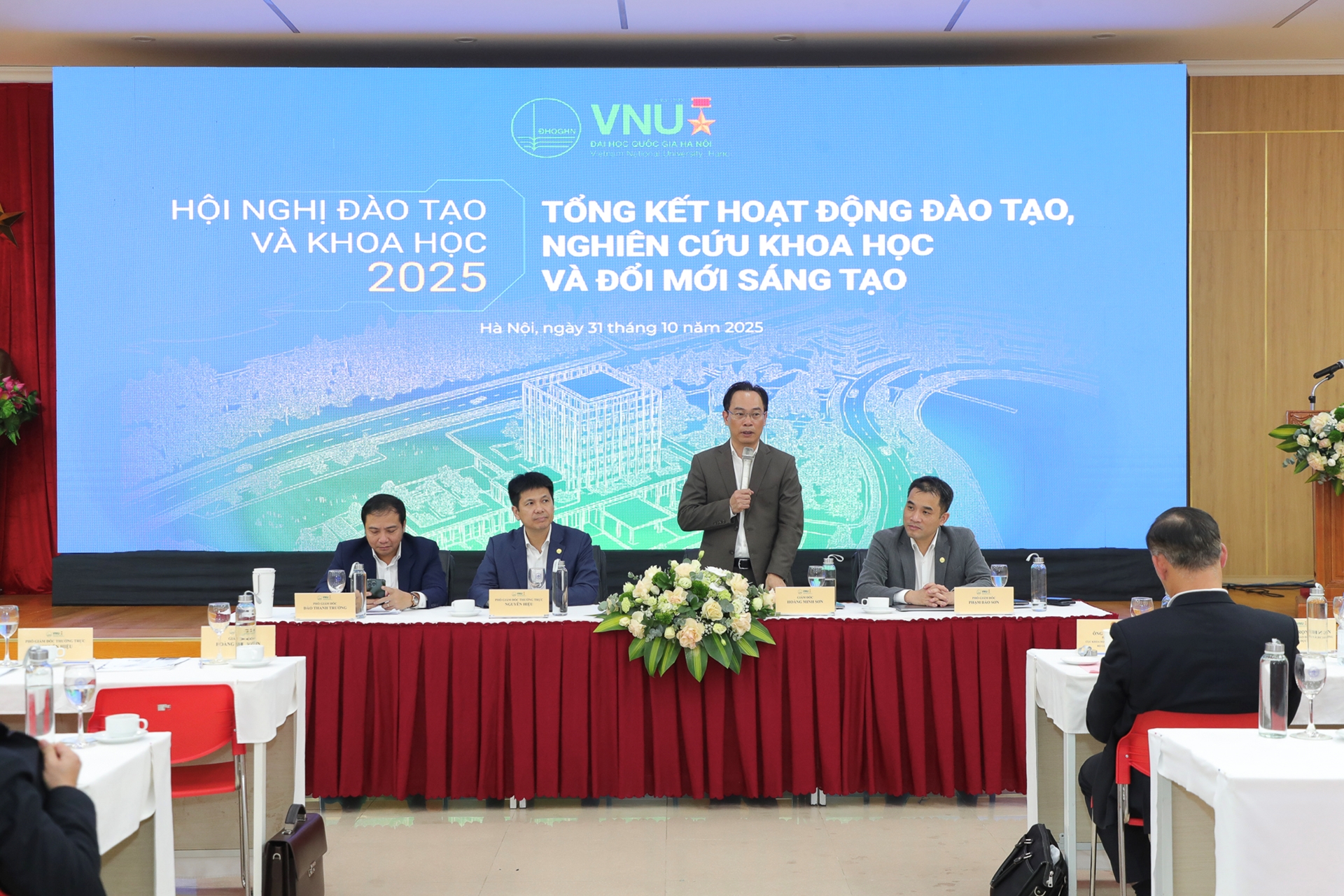
The Director of Vietnam National University, Hanoi, Hoang Minh Son, proposed shifting the focus of development from scale to quality of training, with particular emphasis on policy advice and social impact.
At the Vietnam National University, Hanoi's Training and Science Conference 2025, held at the end of October 2025, Director Hoang Minh Son emphasized that the capacity of Vietnam National University, Hanoi must be demonstrated in its ability to solve national and local problems and create research products with high applicability.
Vietnam National University, Hanoi (VNU) recognizes that collaborating with localities in human resource training, science and technology development and application, and promoting digital transformation is an extremely important task. This is not only a responsibility but also a commitment of VNU to contribute to the successful achievement of sustainable development goals in localities.
Partnering with localities in enhancing digital transformation capacity.In the context of the urgent need to train human resources to meet the requirements of operating a two-tiered government and building a modern, flexible, technology-based administration, in November 2025, Vietnam National University, Hanoi (VNU) collaborated with the People's Committee of Hung Yen province and the Vietnam Association of Public Administration to implement several contents of the training course "Training in knowledge and skills for digital transformation and technology application in public service activities," with the University of Social Sciences and Humanities directly carrying out the implementation.
The training course attracted nearly 500 officials and civil servants, including heads of departments at the commune level and civil servants from departments under the People's Committees of communes, from 104 communes and wards in Hung Yen province.
Comrade Pham Van Nghiem, Vice Chairman of the People's Committee of Hung Yen province, delivered the opening speech at the training course.
The training course lasted 5 days with the goal of fostering, equipping, updating, and enhancing knowledge and skills in digital transformation and the application of information technology in management, administration, and public service; contributing to promoting administrative reform, improving work efficiency, and enhancing the quality of service to citizens and businesses.
In this program, the University of Social Sciences and Humanities participated in implementing 5 lecture modules. The content of these modules included identifying bottlenecks, gaps, and obstacles, and solutions to overcome them when implementing the commune-level government model within the two-tiered local government model; training in data exploitation skills and IT application; and ensuring information and data security in public service at the commune level. In addition, trainees were equipped with skills in building and exploiting data to perform urgent tasks: completing the digitization of business processes; digitizing and cleaning up cadastral data; digital school records; and deploying AI applications…
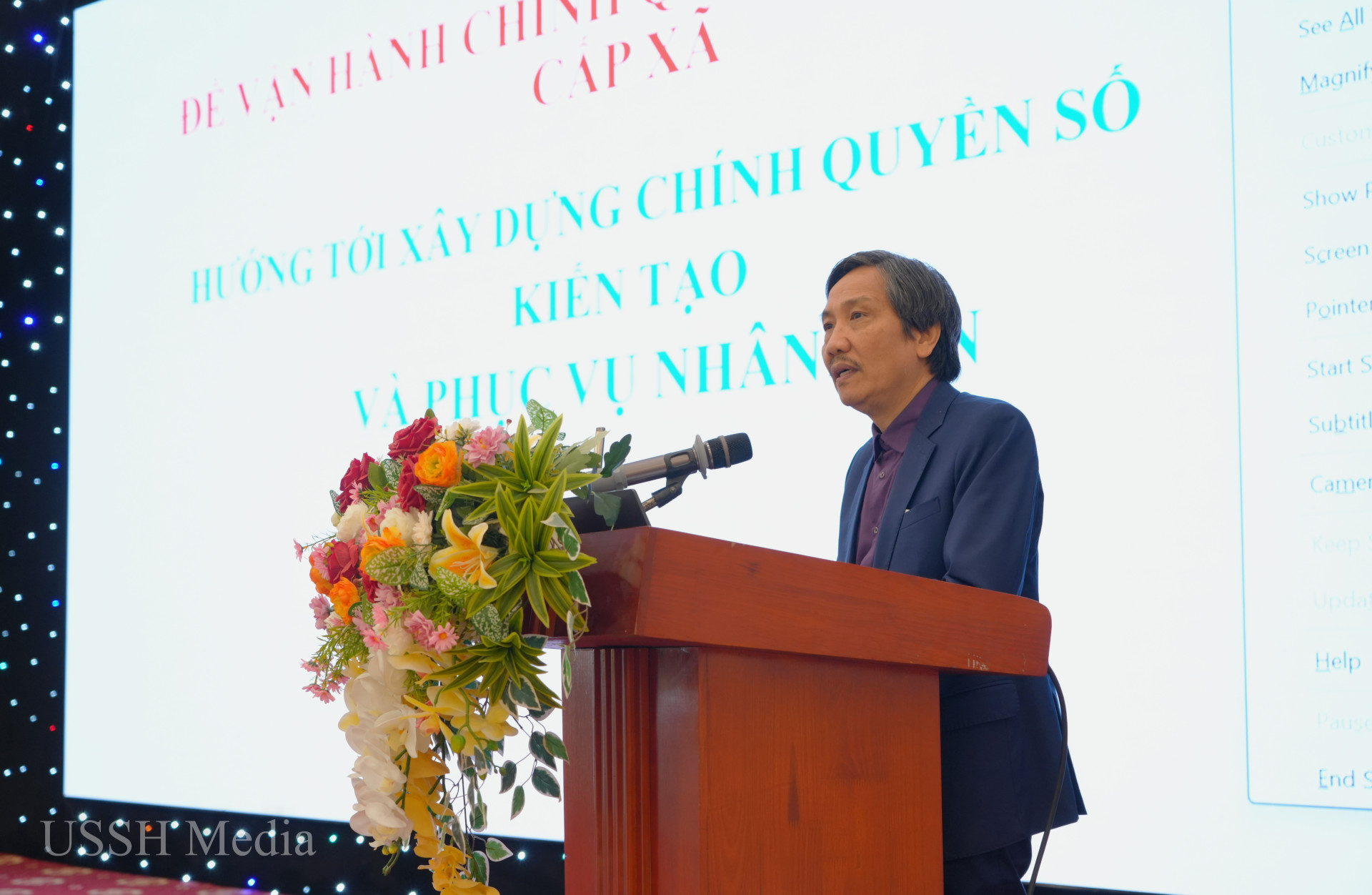
Professor Hoang Anh Tuan, Rector of the University of Social Sciences and Humanities, Vietnam National University, Hanoi, affirmed the university's commitment to collaborating with Hung Yen province in training and enhancing administrative and public service performance.
Dr. Tran Anh Tuan - President of the Vietnam Association of Administrative Sciences; Former Deputy Minister of the Ministry of Interior; Lecturer at the Faculty of Political Science, University of Social Sciences and Humanities, Vietnam National University, Hanoi, taught at the training course.
In the context of new development, Hung Yen is one of the leading provinces in promoting administrative reform, national digital transformation, and the requirement to build a professional and modern team of officials and civil servants. During the 2021-2025 period, the province's digital transformation efforts achieved many important results in digital infrastructure; digital government operation; public services; and digital society. Currently, the province is focusing on implementing a digital architecture framework suitable for the two-tiered local government organizational model and expanding the core systems of intelligent operations centers (IOCs) to the commune level. Therefore, the team of commune-level civil servants plays a crucial role, being the core force that directly determines the success of building a two-tiered digital government.
The training course for commune and ward-level officials in Hung Yen province affirms the commitment, responsibility, and capacity of Vietnam National University, Hanoi (VNU), including the University of Social Sciences and Humanities, in accompanying localities to improve the quality of human resources and public administration capacity in the context of digital transformation. Through the program, the knowledge and skills transferred not only contribute to addressing immediate urgent needs but also create a long-term foundation for building a modern and effective two-tiered local government. This is also a concrete step in realizing VNU's mission as a national knowledge and innovation center, closely linking training, research, and policy consulting with the practical development of localities.
The training course attracted the participation of nearly 500 commune-level leaders and officials from Hung Yen province.