Humanity is living in a turbulent era marked by pivotal shifts in human history. The Fourth Industrial Revolution, the explosion of Artificial Intelligence (AI), digital transformation, and cyberspace are fundamentally changing the way nations exist and develop. Furthermore, while globalization is progressing rapidly, it also contains many paradoxes: the world is flatter and more interconnected, yet also more deeply divided by geopolitical conflicts, the rise of nationalism, and cultural barriers.
In this context, Vietnam is facing a crucial historical turning point. After nearly 40 years of Doi Moi (Renovation), the country has accumulated new strength and momentum, but to break through and become a developed and prosperous nation by the middle of the 21st century, we need more than just economic growth. History has proven that Vietnam is not only a land of great wars of national defense, but also a place where brilliant civilizations converge and flourish. From the Red River - Dai Viet civilization in the North, the Champa civilization in the Central region, to the Oc Eo - Funan civilization in the South; Vietnam is truly a "crossroads of civilizations," where strong intrinsic values intersect with regional and global cultural currents (Southeast Asia, East Asia, India, and the West). It is this ability to adapt, integrate, and recreate cultural values on a solid indigenous foundation that has created the nation's vibrant vitality.
However, in today's era of knowledge-based economy and digital culture, the question "Who is Vietnam?" needs to be answered from a new perspective. We not only need to re-identify our identity (what is uniquely ours) but, more importantly, to identify our civilized values (what reaches a high level, is universal, and integrates internationally) as a foundation for venturing into the wider world. How can we ensure that the world perceives Vietnam not only through the lens of its glorious past but also as a nation of peace, creativity, and a positive contributor to the common civilization of humanity?
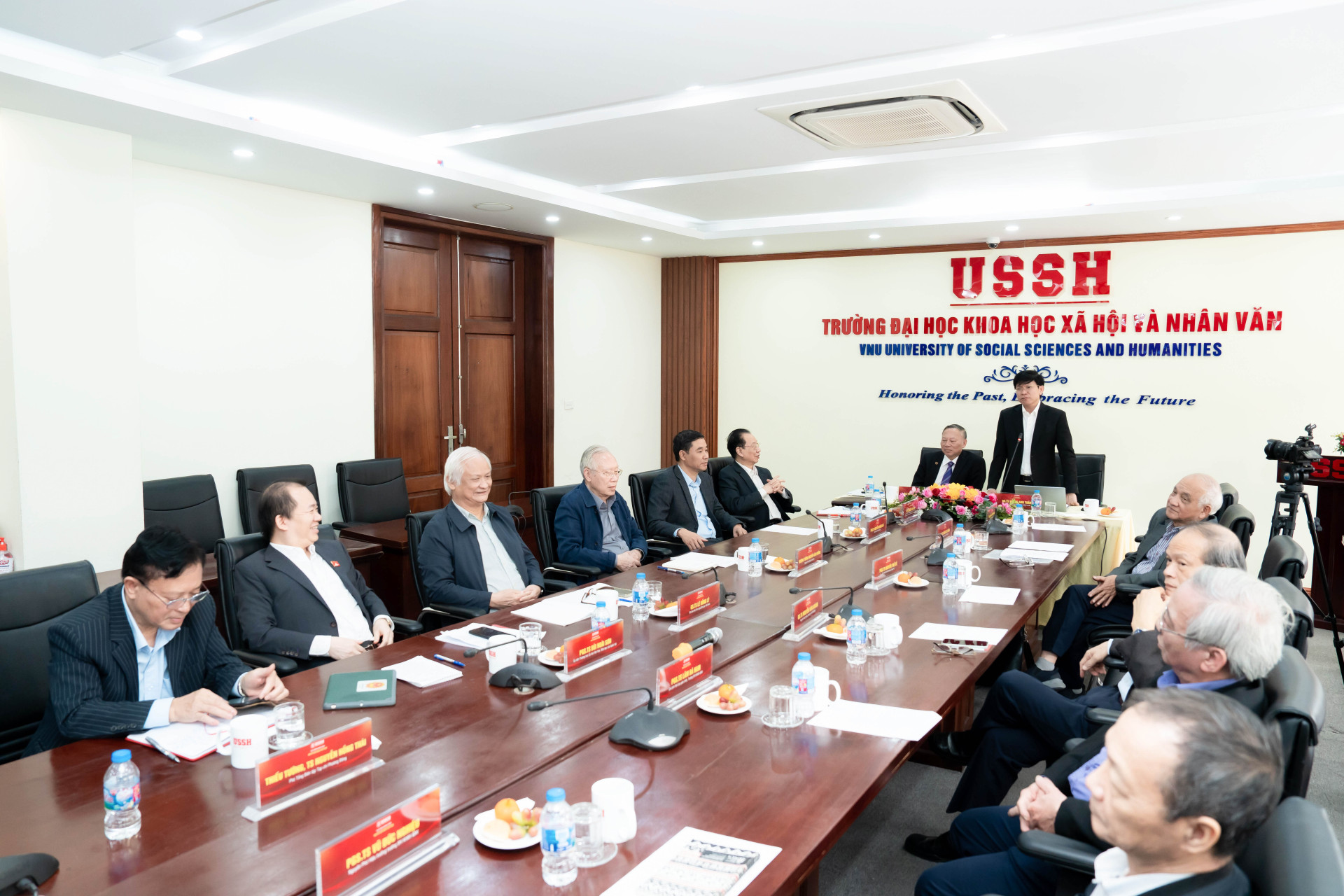
Based on these questions, on December 3, 2025, the University of Social Sciences and Humanities organized a scientific seminar with the theme "Discussing Vietnamese Civilization". The seminar brought together leading scientists and experts in many fields (history, archaeology, cultural studies, political theory, etc.) to discuss and deepen theoretical and practical issues, in order to fulfill the mission of social sciences and humanities in accompanying the development of the country.
Professor Hoang Anh Tuan - Rector of the University of Social Sciences and Humanities, Vietnam National University, Hanoi, delivered the opening remarks at the seminar.
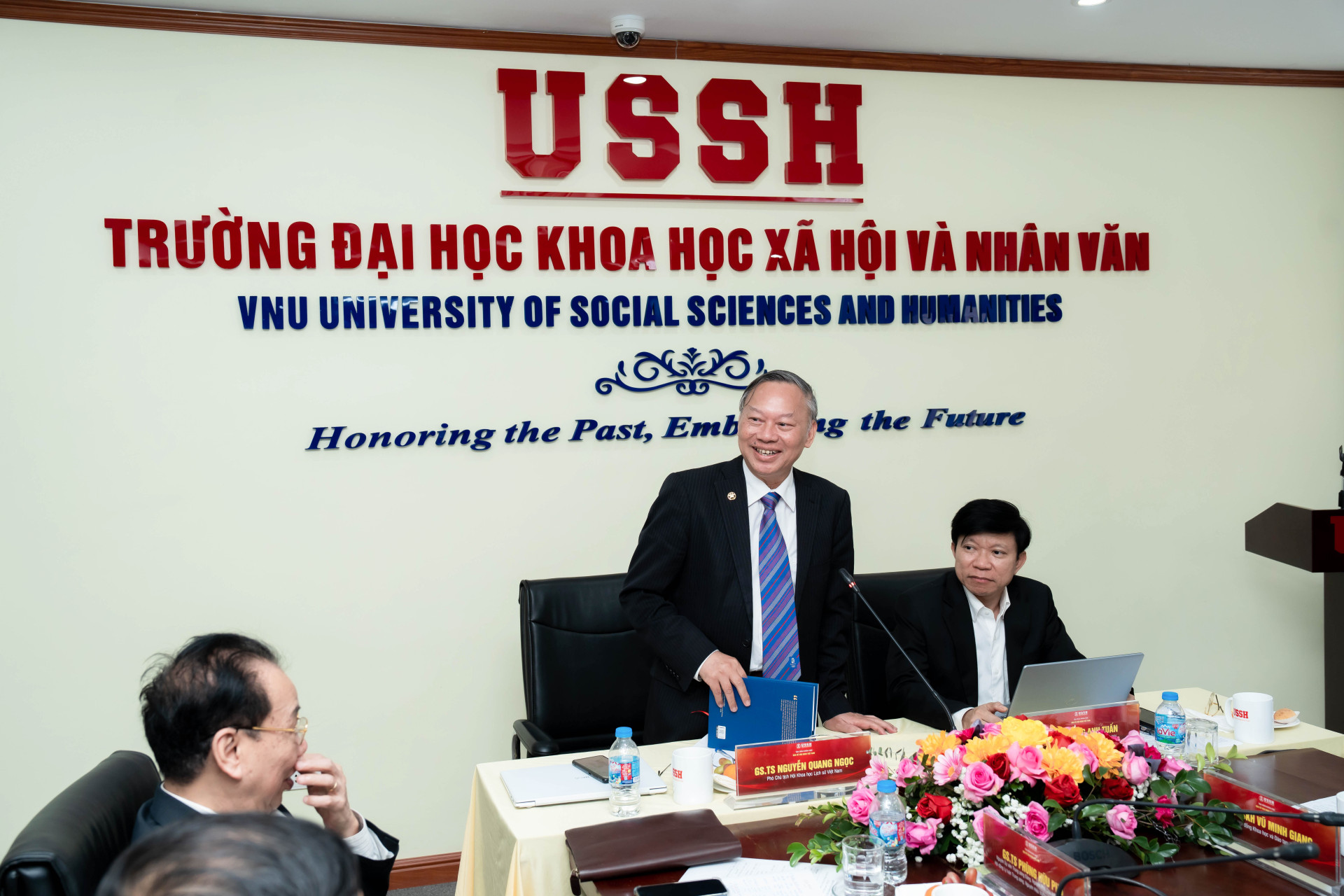
Professor Nguyen Quang Ngoc - Vice President of the Vietnam Historical Science Association, former Director of the Institute of Vietnamese Studies and Development Science, former Head of the History Department of the University of Social Sciences and Humanities - co-chaired the seminar.
The seminar aims to provide sound and objective scientific arguments about the process, structure, and identity of Vietnamese civilization from tradition to modernity, analyzing the context of the new era (AI, globalization, climate change, etc.) to identify opportunities and challenges for the development of Vietnamese civilization; and Ho Chi Minh's thought on culture and civilization. From this, scientists will offer valuable value orientations and scientific recommendations that can be directly used to advise the Party and State on policy planning for national development in the new period.
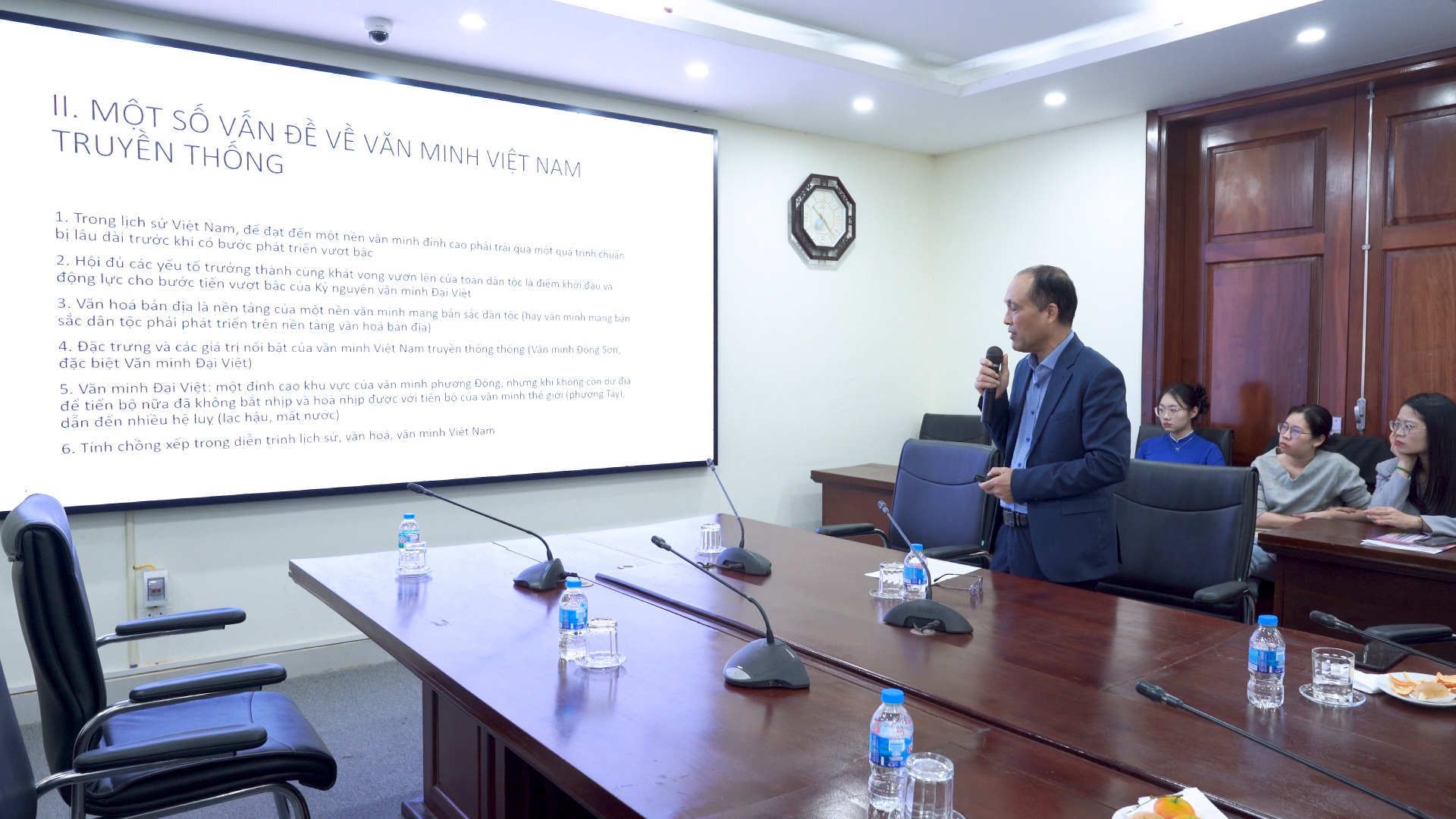
Associate Professor Vu Van Quan - Chairman of the Scientific and Training Council of the Faculty of History, University of Social Sciences and Humanities, presented a paper on the Structure and Characteristics of Traditional Vietnamese Civilization.
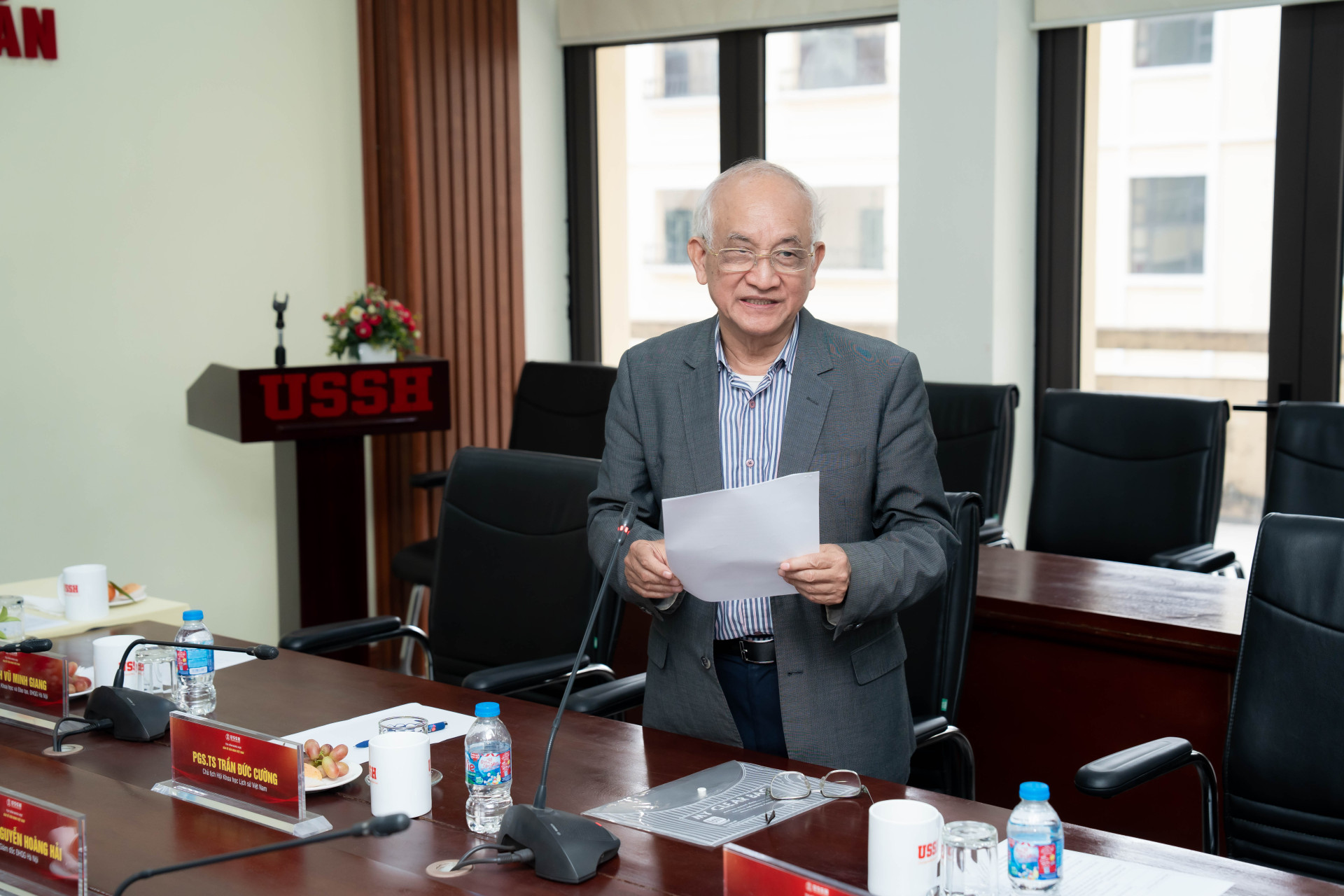
Associate Professor Dr. Tran Duc Cuong - President of the Vietnam Historical Science Association - presented a paper on Ho Chi Minh's thought on Culture and Civilization.
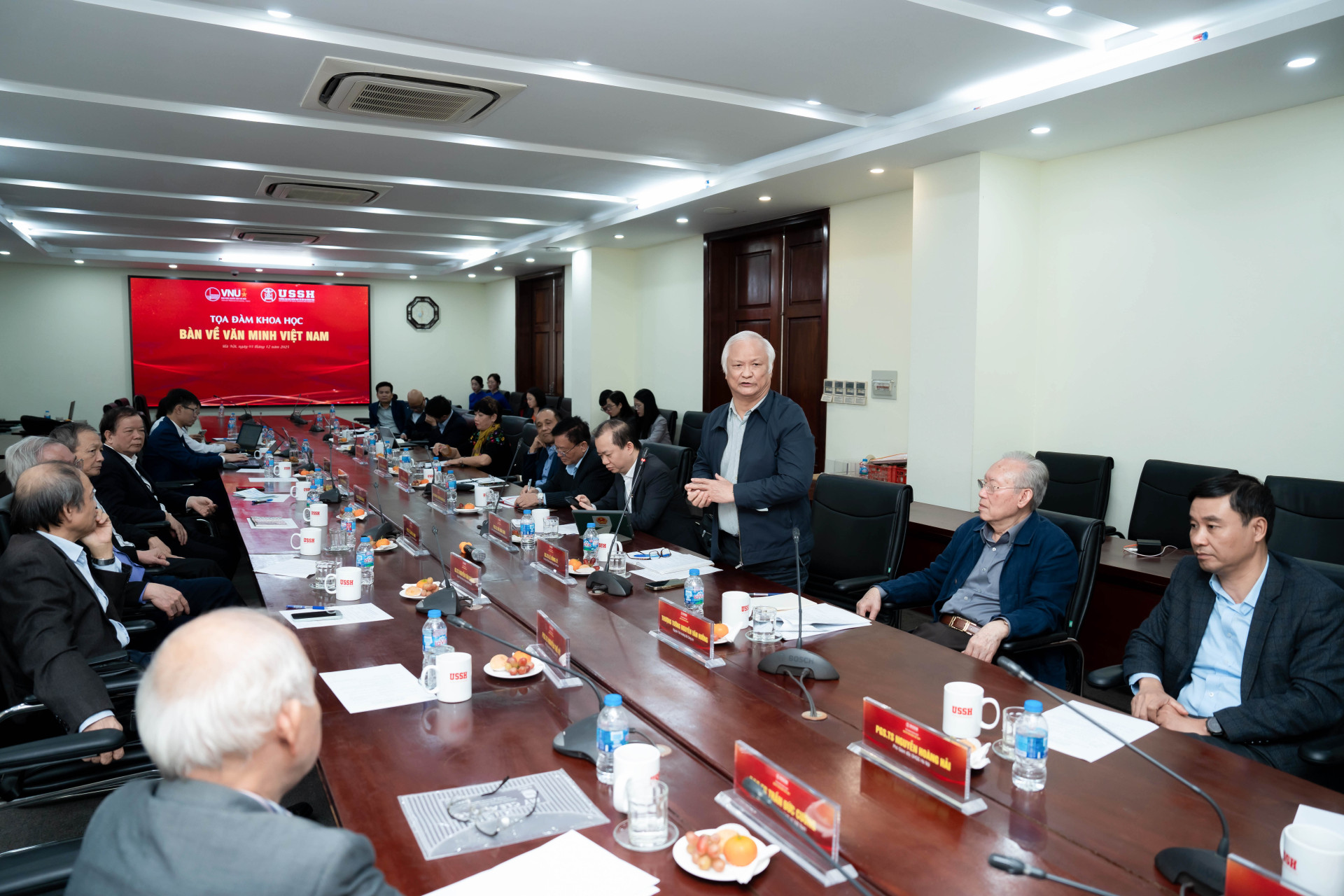
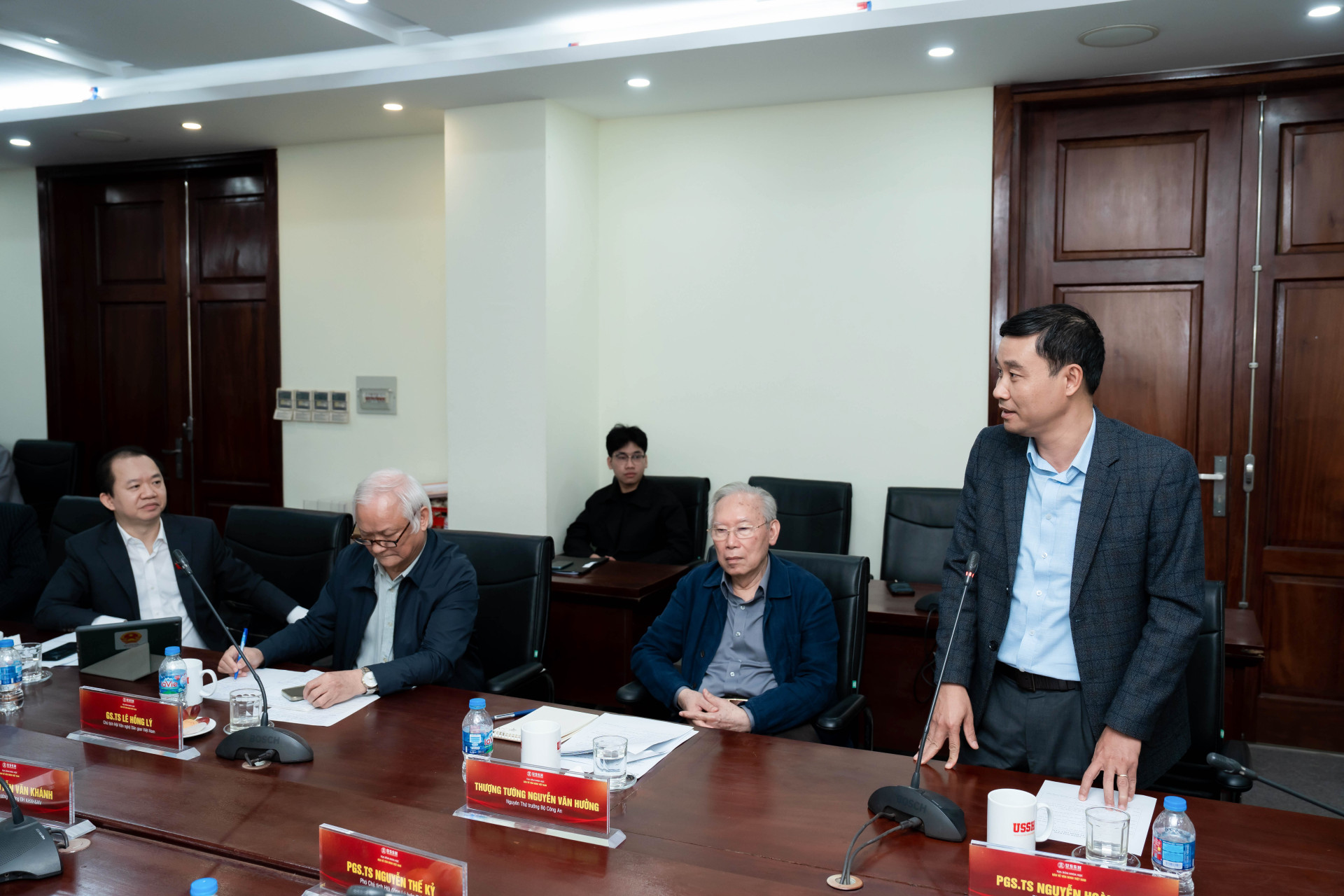
The seminar received numerous contributions from scientists discussing the structure and characteristics of Vietnamese civilization; and Ho Chi Minh's thought on culture and civilization. The discussions focused on clarifying the multi-layered nature of Vietnamese civilization, the intermingling of regional civilizations, and the adaptability of indigenous communities. Simultaneously, scholars analyzed Ho Chi Minh's approach to culture and civilization, emphasizing the protection of cultural and humanistic values in the context of rapid scientific and technological development, both nationally and internationally.
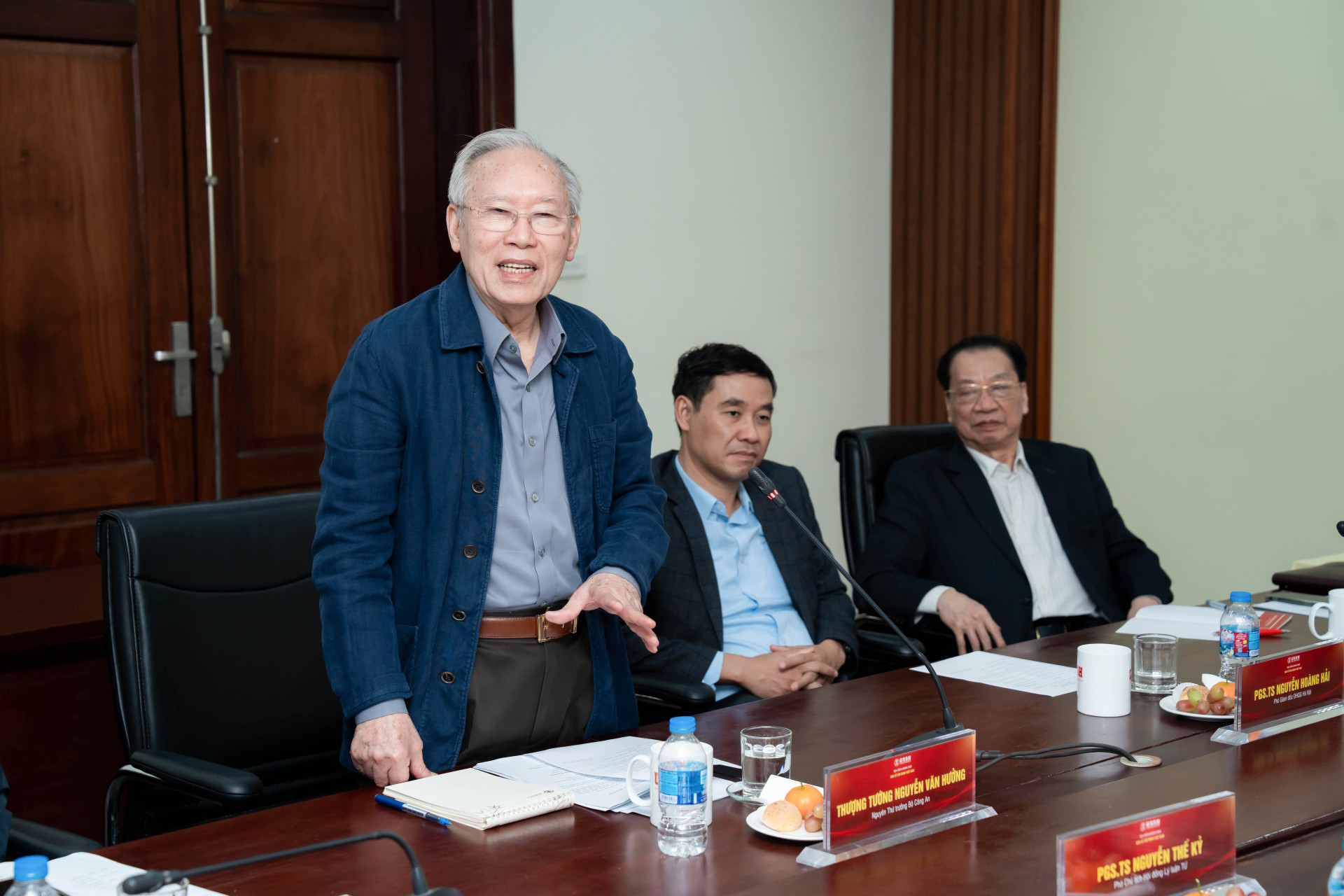
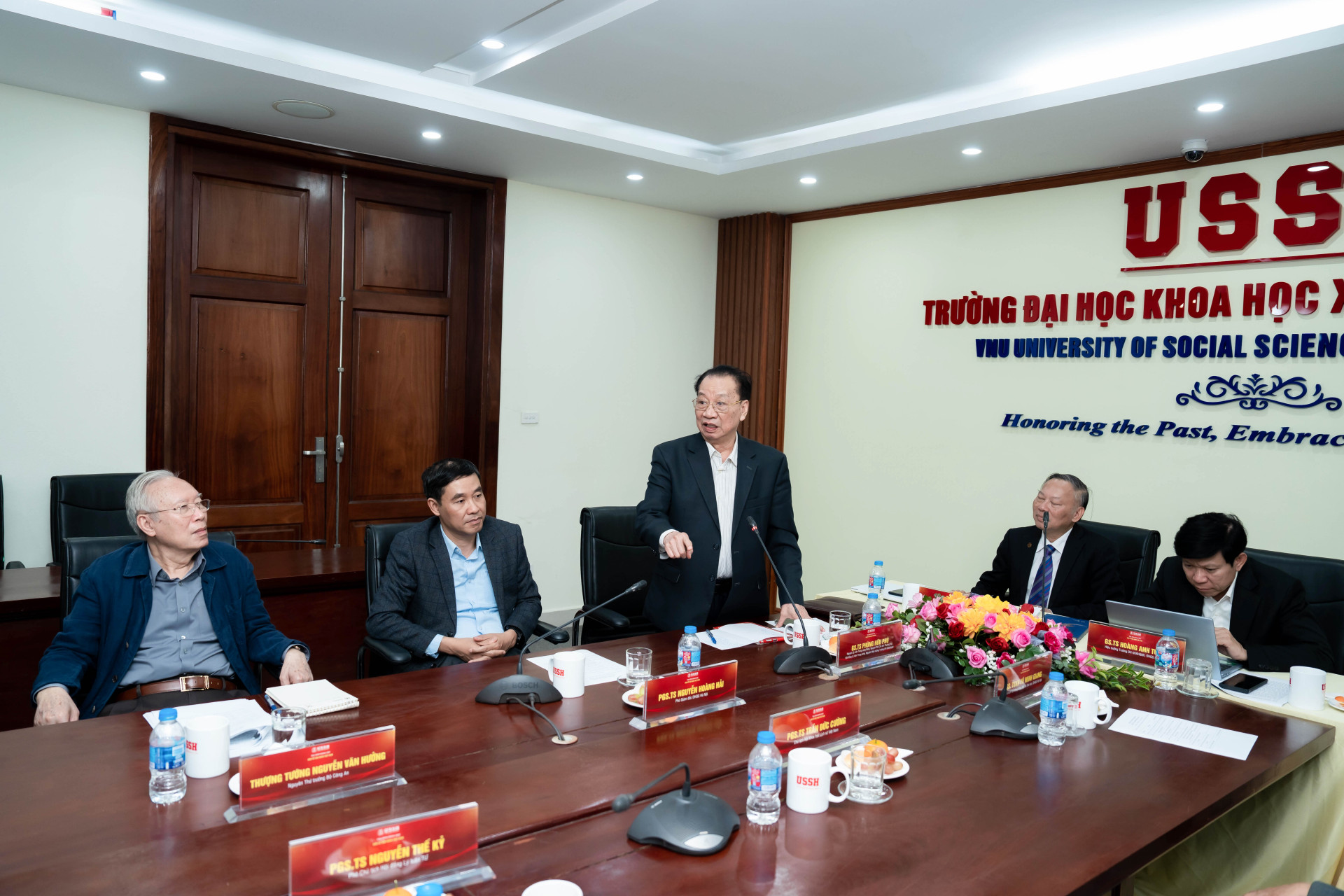
Lieutenant General, Doctor Nguyen Van Huong - Former Deputy Minister of Public Security, emphasized the need to identify the values of the civilization of the Ho Chi Minh era.
Professor Phung Huu Phu - Former Member of the Central Committee of the Communist Party of Vietnam, Former Standing Vice Chairman of the Central Theoretical Council, and the first Rector of the University of Social Sciences and Humanities.
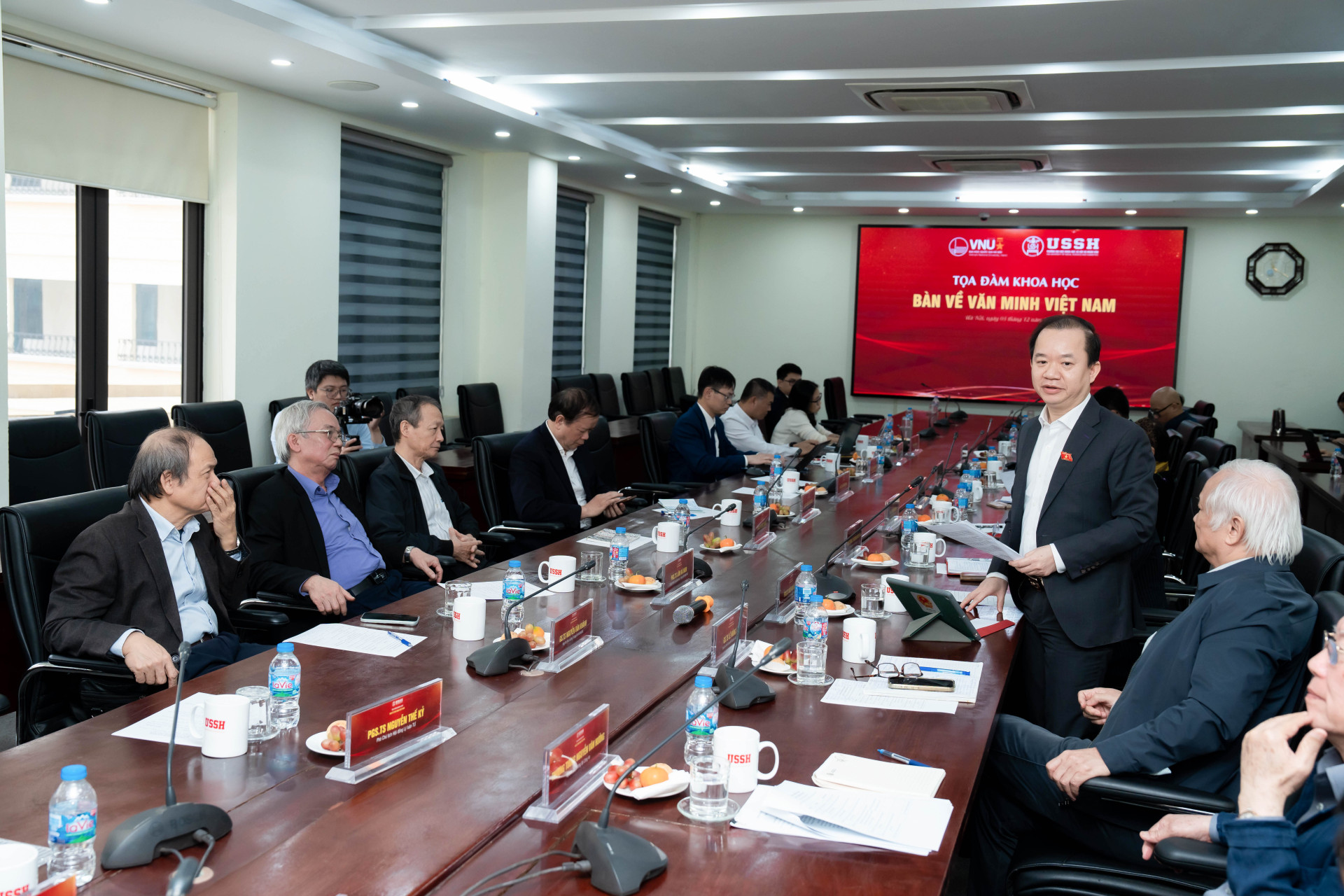
Associate Professor Bui Hoai Son, Standing Member of the National Assembly's Committee on Culture and Education, emphasized the importance of protecting cultural and humanistic values in the context of the rapid development of science and technology.
Professor Dr. Le Hong Ly - President of the Vietnam Folk Arts Association
Assoc. Prof. Dr. Nguyen Hoang Hai - Vice Director of Vietnam National University, Hanoi
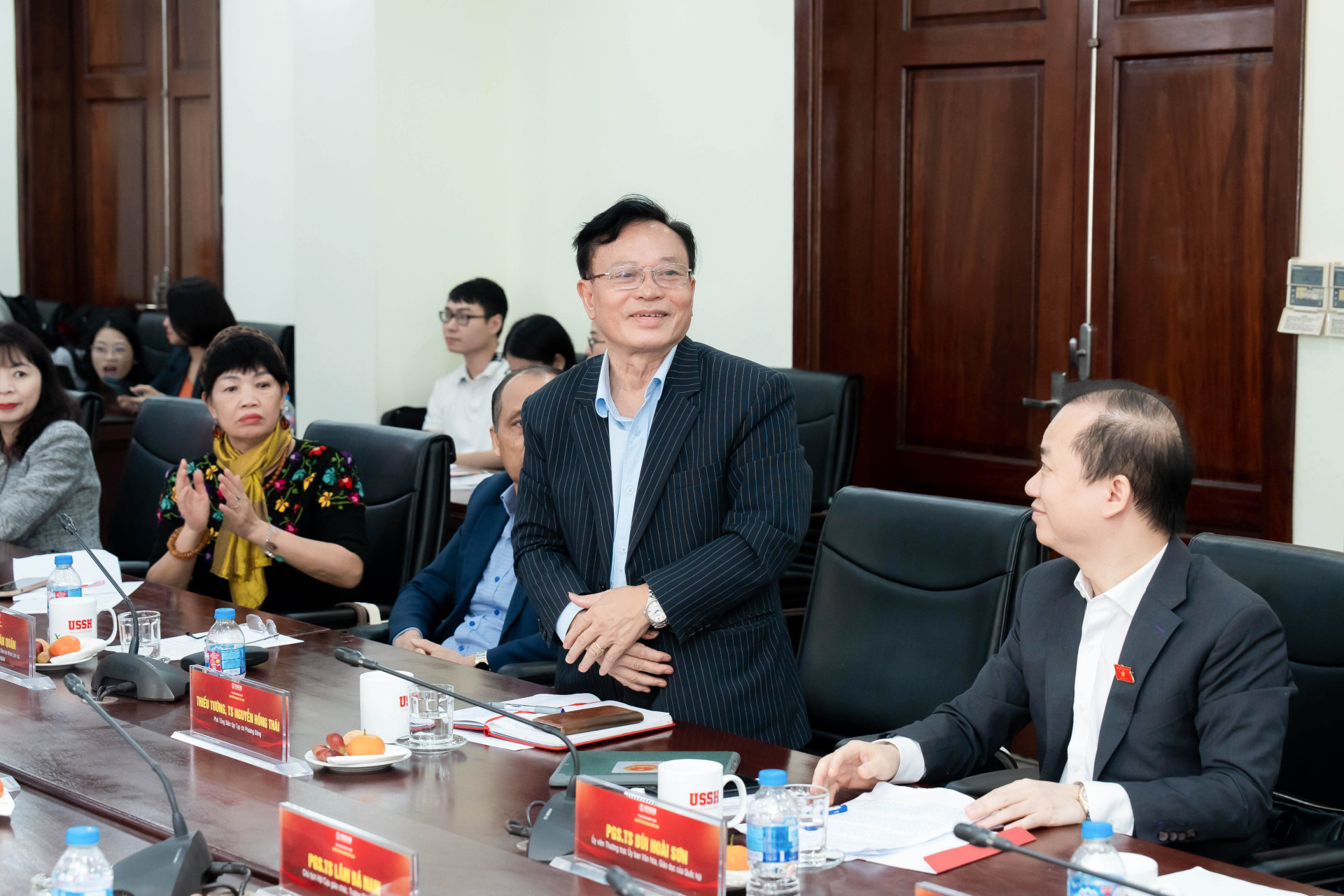
Major General, Dr. Nguyen Hong Thai - Deputy Editor-in-Chief of Orient Magazine
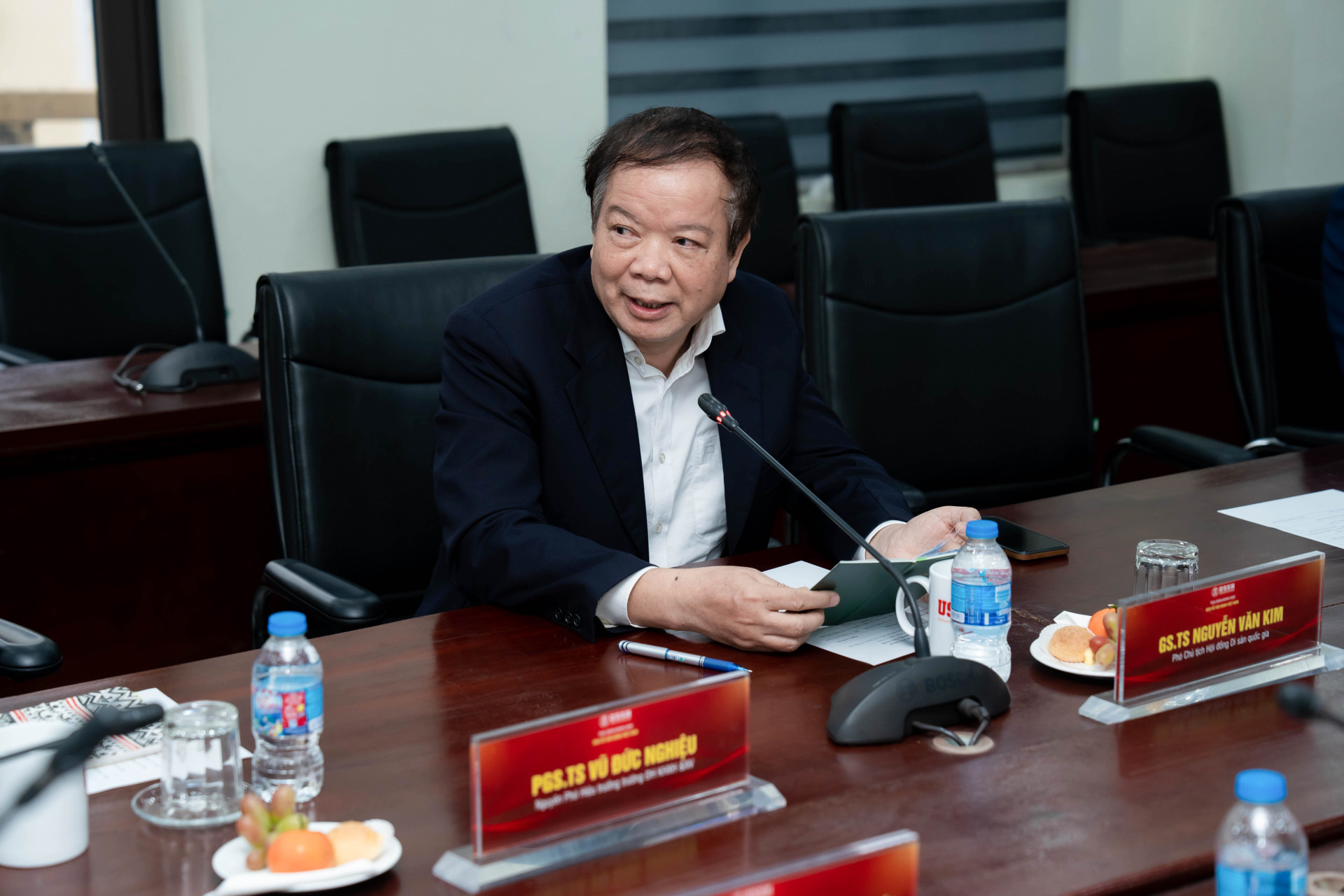
Professor Dr. Nguyen Van Kim - Vice Chairman of the National Heritage Council, former Vice Rector of the University of Social Sciences and Humanities.
Summarizing the content of the seminar, Professor Nguyen Quang Ngoc - Vice President of the Vietnam Historical Science Association, former Director of the Institute of Vietnamese Studies and Development Science, former Head of the History Department of the University of Social Sciences and Humanities - emphasized that the ultimate goal of the Vietnamese nation throughout all periods is to build a peaceful, independent, democratic, prosperous, and civilized country. This is also the theoretical, practical, and experiential basis from both domestic and international sources, giving us a solid foundation to believe in and act upon in the new historical conditions of the modern era. The discussions at the seminar showed that Vietnamese civilization emerged very early and is particularly diverse, formed from three major civilizations: the rice-farming agricultural civilization in Northern Vietnam, the Champa marine ecological civilization, and the Funan delta civilization. These three civilizations shaped the territorial form and the identity of Vietnamese consciousness. Despite enduring wars, natural disasters, and devastating historical events, Vietnamese civilization has always developed continuously and without interruption.
The Vietnamese nation was formed very early, with its strength stemming from its geostrategic location and its ability to overcome challenges from powerful forces. Patriotism and revolutionary heroism have become prominent characteristics of Vietnamese civilization, closely linked to the aspiration for peace, harmony, and harmonious development.
Scientists also emphasized that the people are the creators of Vietnamese civilization's values, and further in-depth research is needed to understand Vietnamese civilization in the past, present, and future.
Scientists also agreed that this seminar only raised initial requirements, suggesting issues to prepare for larger, more in-depth seminars in the future.
Following the seminar, the University of Social Sciences and Humanities will take the lead in compiling a report summarizing the opinions and suggestions of the experts to submit to the relevant authorities.