
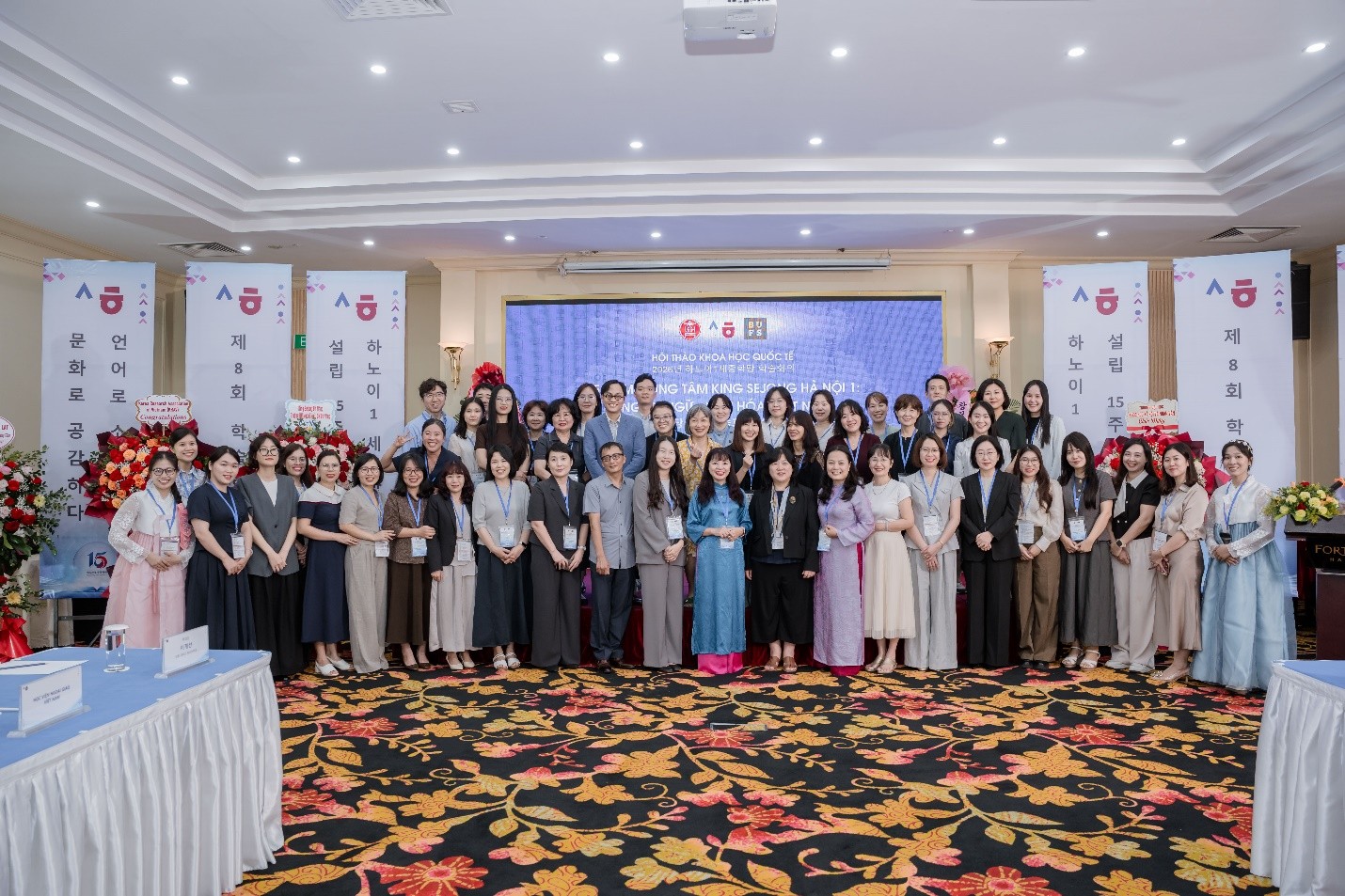
The workshop was attended by leaders from the University of Social Sciences and Humanities, Vietnam National University, Hanoi; the Korean Language and Culture Education Institute, Busan University of Foreign Studies; the King Sejong Foundation Representative Office, King Sejong Institute Headquarters in Vietnam, representatives from universities offering Korean language and Korean studies programs in Vietnam, and King Sejong Institutes nationwide. This was an opportunity to reflect on the 15-year journey of the King Sejong Center Hanoi 1, and to discuss new trends in Korean language education, cultural exchange, and connecting the people of Vietnam and Korea.
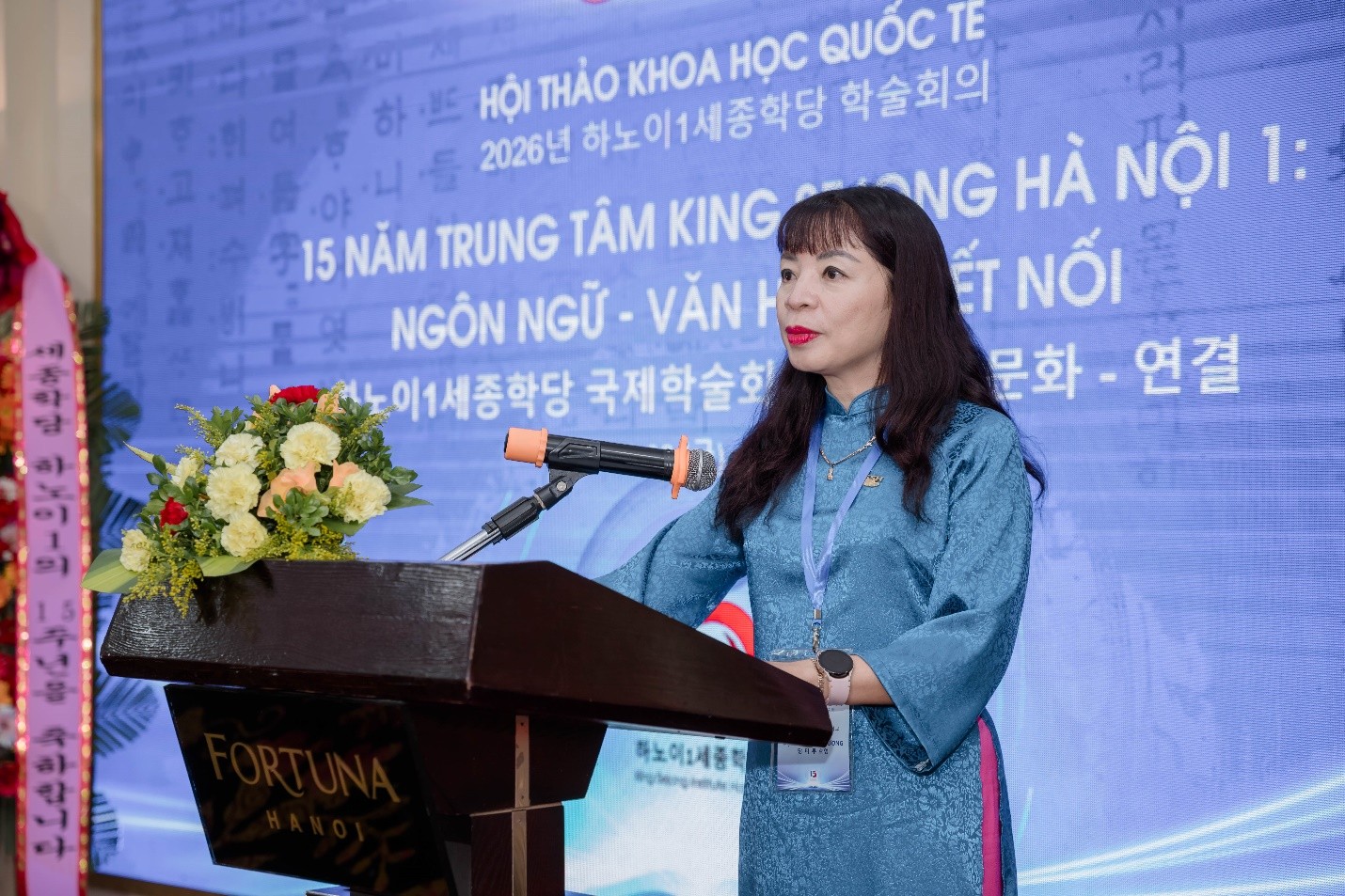
Assoc. Prof. Dr. Dang Thi Thu Huong - Vice Rector of the University of Social Sciences and Humanities, delivered the opening remarks at the conference.
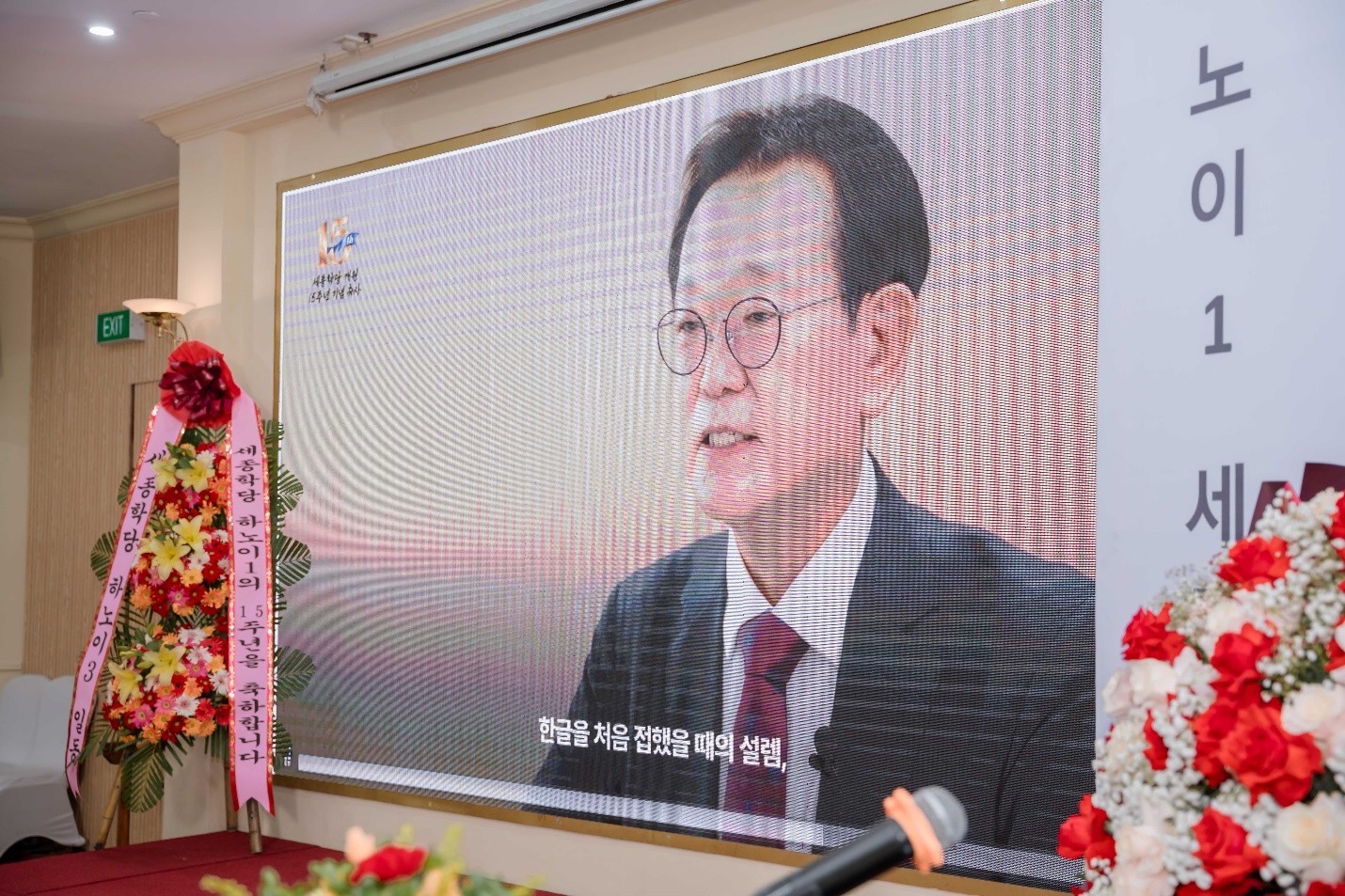
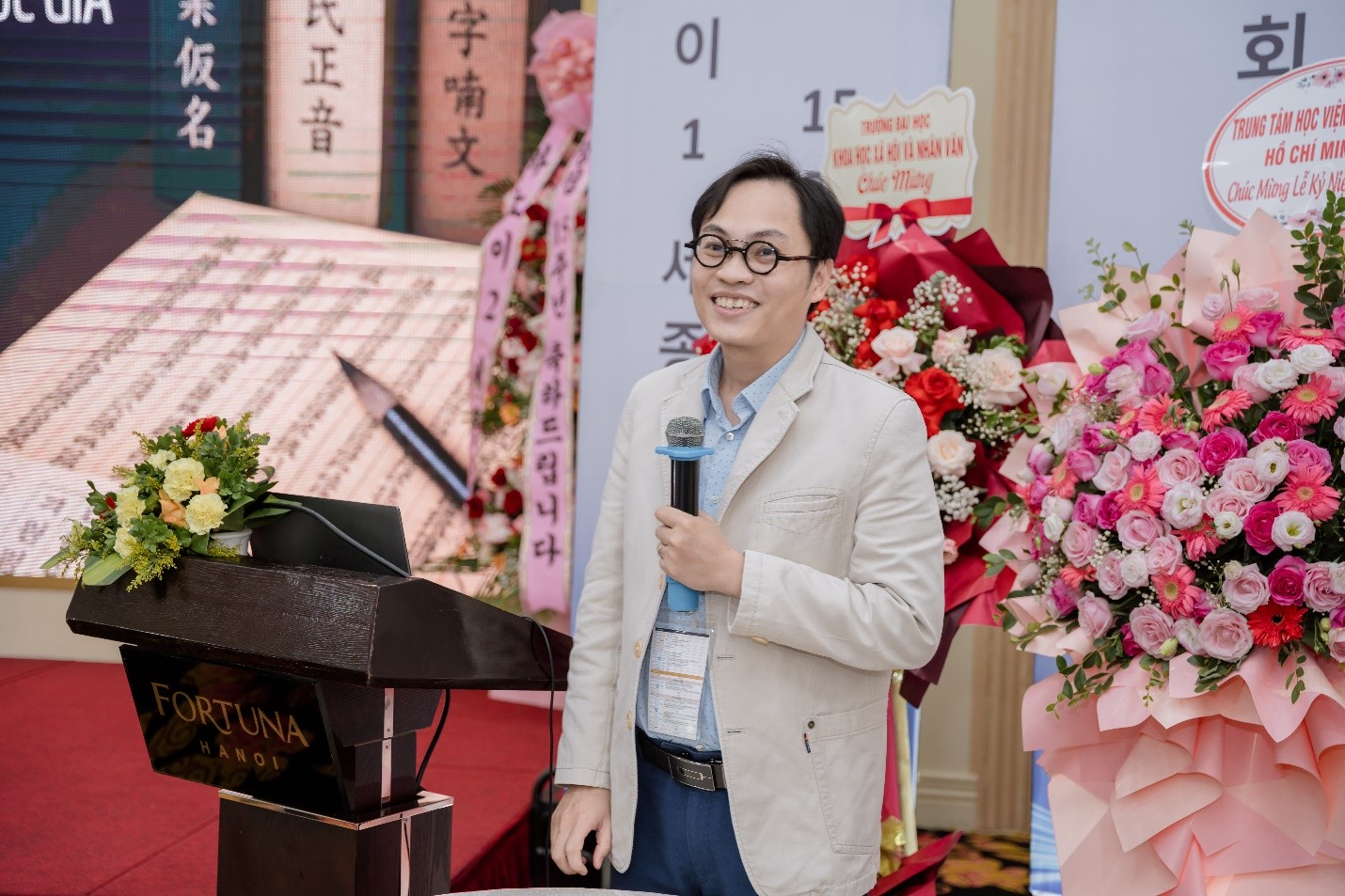
Mr. Chun Woo Yong, Chairman of the King Sejong Institute Foundation, delivered a speech at the conference.
From Korean language education to creating spaces for people-to-people exchange.
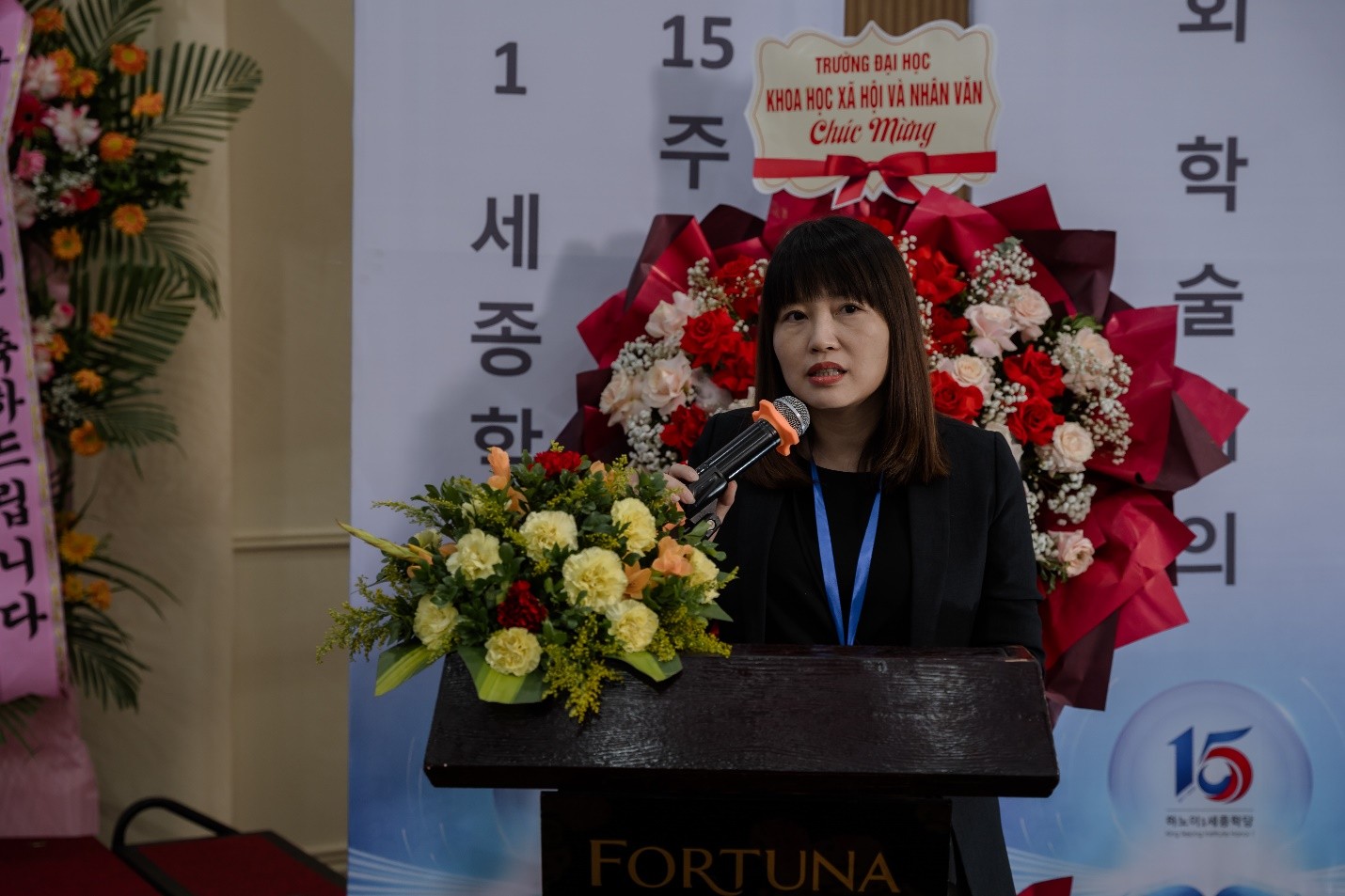
In her opening remarks at the seminar, Dr. Le Thi Thu Giang - Director of King Sejong Center Hanoi 1 - reflected on the Center's 15-year journey in relation to the development of Korean language education, Korean culture, and the increasingly deep connections between the people of Vietnam and Korea.
According to Dr. Le Thi Thu Giang, the 15-year milestone is not only an opportunity to statistically record the number of classes, students, or programs implemented, but more importantly, to recognize the changes that Korean language education has brought about for learners, their understanding of Korea, and the relationship between the people of the two countries. In the context of globalization and digitalization, Korean language education not only creates language proficiency but can also form interactive spaces, social networks, and transnational relationships, thereby becoming one of the foundations of people-to-people exchanges between Vietnam and Korea.
In reality, the motivations for learning Korean are becoming increasingly diverse. Besides academic, research, and career needs, many people begin learning Korean out of a love for K-pop, Korean dramas, movies, food, and culture. This process can develop from an interest in the culture, leading to a need to learn the language; from language learning expanding to communication, experiences, and new connections in academics, careers, and social life.
From that perspective, language education is not just about imparting knowledge. Culture can become a "gateway" leading learners to the Korean language; education transforms interest into knowledge; language creates the ability to communicate, and communication opens the conditions for forming relationships between people.
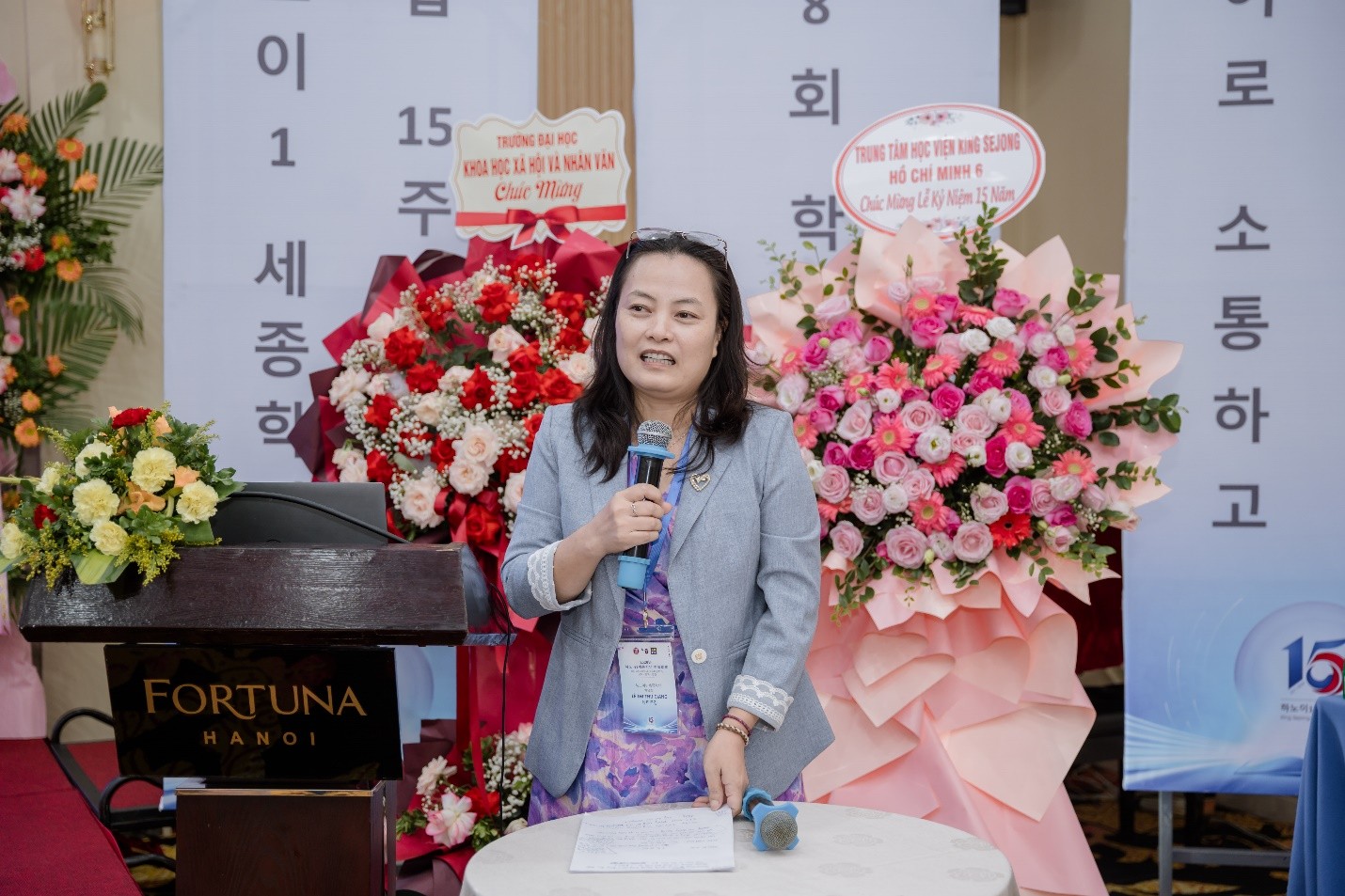
Dr. Le Thi Thu Giang delivered the opening remarks at the workshop.
King Sejong Center - More Than Just a Classroom
Looking back at its development, the King Sejong Center Hanoi 1 has not only created Korean language classes but also opened spaces for meeting and connecting: between Vietnamese students and Korean teachers, between learners with shared interests, between Vietnamese teachers and their Korean colleagues, as well as between students and opportunities for learning, career development, and collaboration after completing the course. When these small connections are maintained and continued over a long period, they can develop into larger social networks.
According to the opening remarks, the King Sejong Center can therefore be seen as a “transnational social infrastructure” – a space and mechanism that facilitates people meeting, interacting, and maintaining relationships across borders. The 15-year journey of the King Sejong Center Hanoi 1, in that sense, is not only the history of the development of a Korean language education institution but also contributes to the formation of spaces for Vietnam-Korea exchange.
In the context of rapidly developing digital technology, learning and interaction spaces are expanding from traditional classrooms to online platforms. However, digital connectivity is only truly meaningful when it creates genuine interaction and relationships that can be sustained. Therefore, a direction has been set towards a "borderless Sejong space," connecting classrooms, cultural activities, communities, digital platforms, and social networks.
From "classroom organization" to "experience design"
One of the key directions emphasized by Dr. Le Thi Thu Giang is to shift the mindset from "classroom organization" to "experiential learning design." Accordingly, learners should not only study grammar but also have opportunities to use the language in real-life interactions; not only receive cultural activities but also participate directly and co-create; and not only meet but also work together on shared projects and maintain connections after the program.
Furthermore, evaluating the effectiveness of Korean language education can be expanded beyond traditional indicators such as the number of learners, the number of classes, academic results, or satisfaction levels to include long-term social impacts: whether learners continue to participate in the community, maintain relationships, form academic, professional, and cultural networks, and become bridges for others.
From these analyses, the speech suggests three transformations in the next development phase: from scaling up to deepening connections; from individual programs to building an ecosystem; and from learners to communities. Based on this, the development model is envisioned as a "Center - Community - Network - Ecosystem" process, so that King Sejong Center Hanoi 1 becomes not only a place for Korean language training but also a connecting node in the Vietnam-Korea exchange ecosystem.
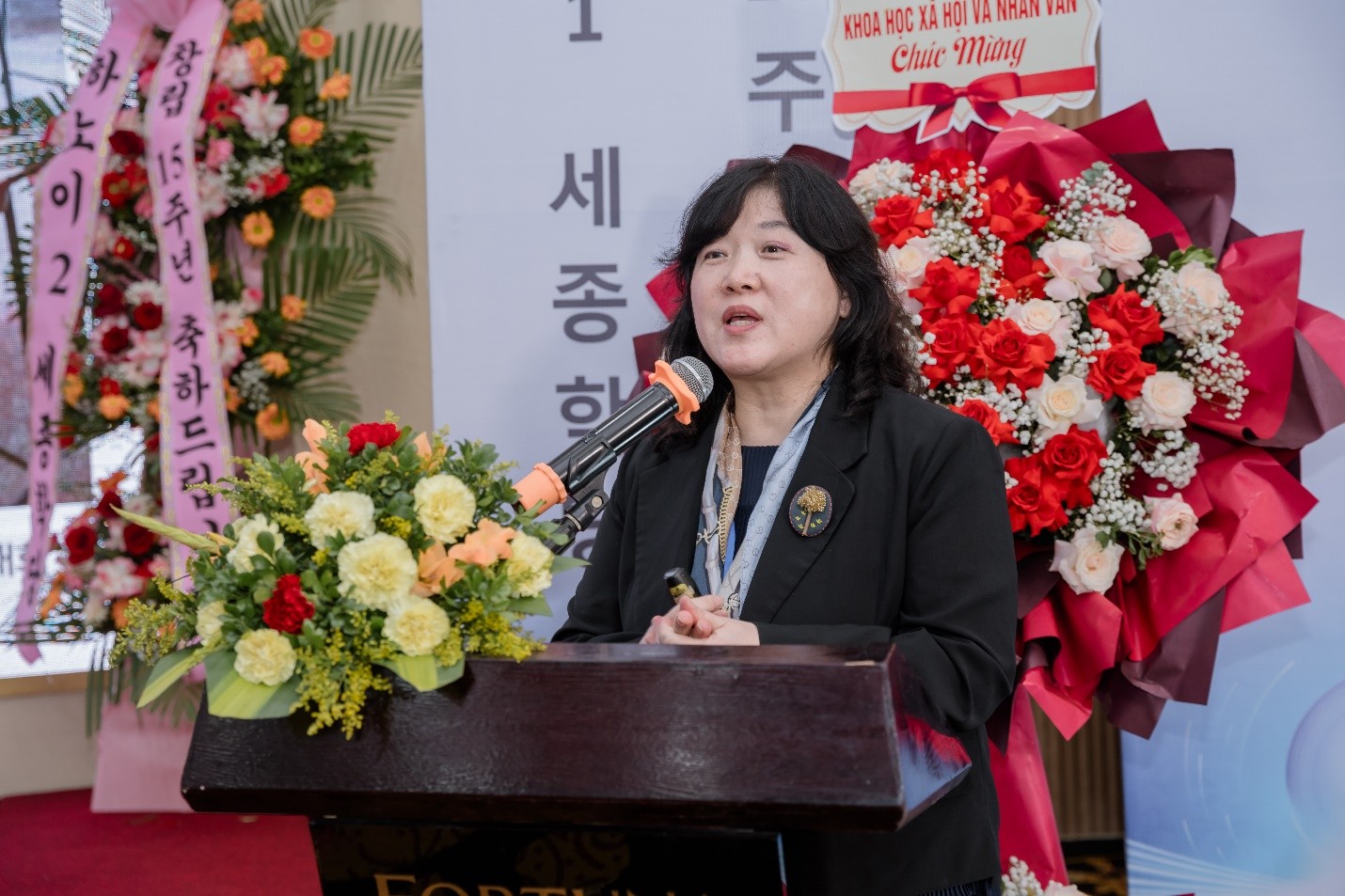
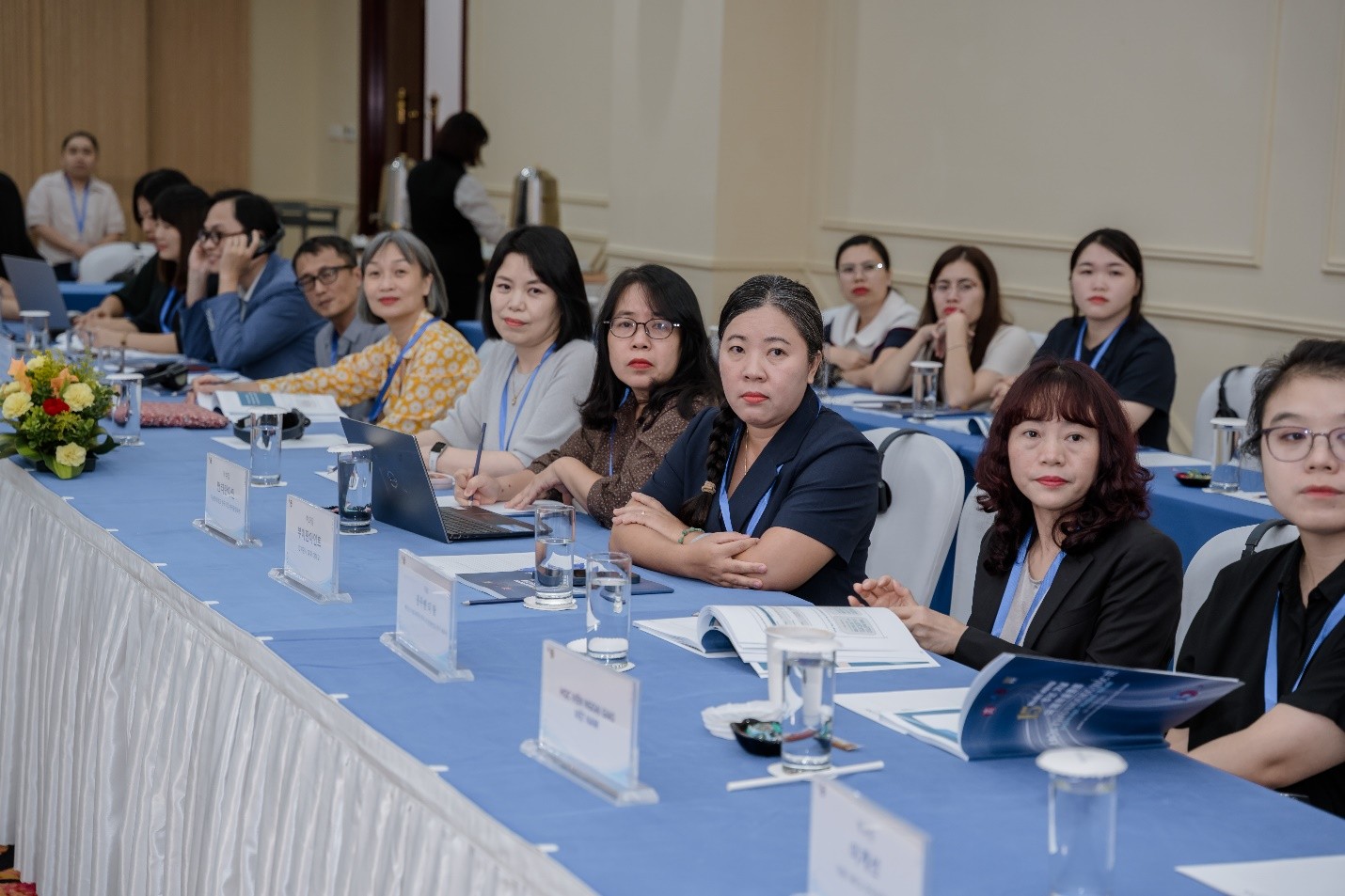
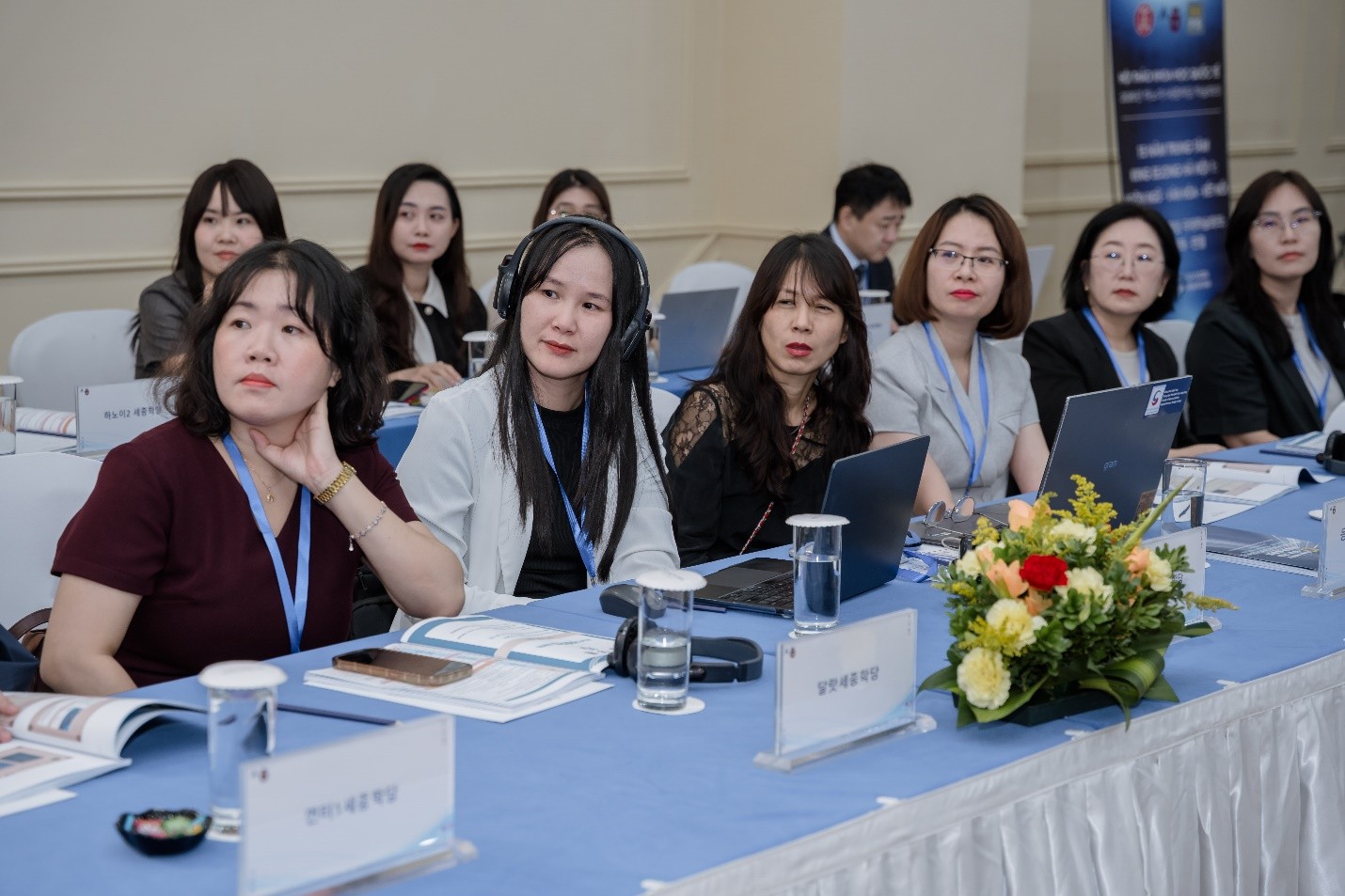
Within the framework of the Conference, experts, lecturers, and researchers shared and exchanged views on various issues related to Korean language education, teaching methods, language, culture, translation, people-to-people exchanges, and the application of technology in teaching. The discussion sessions contributed to creating a space for academic exchange, sharing experiences, and expanding cooperation between institutions training and researching Korean language and Korean studies.
The International Scientific Conference commemorating the 15th anniversary of the King Sejong Center Hanoi 1 is therefore not only an opportunity to look back on a period of development, but also to set directions for the next phase. From language to culture, from interaction to networking and people-to-people exchanges, Korean language education can contribute to creating individuals capable of understanding each other, communicating, cooperating, and maintaining relationships across borders. This is also the profound value of the message "Language - Culture - Connection" that the Conference aims for.
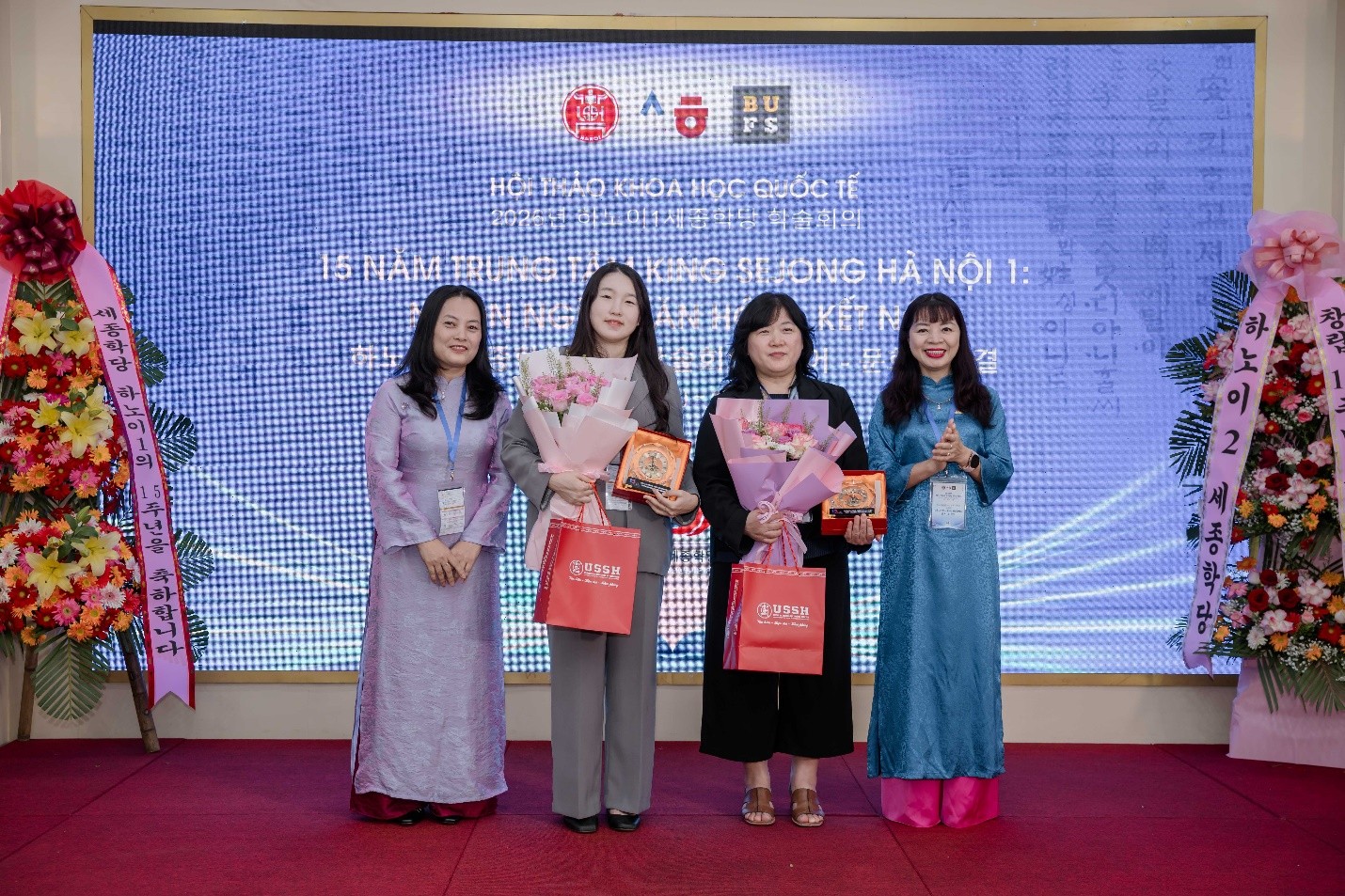
Here are some photos from the workshop:
Author:Text: Thùy Dzung, Photos: Organizing Committee
Older news

