
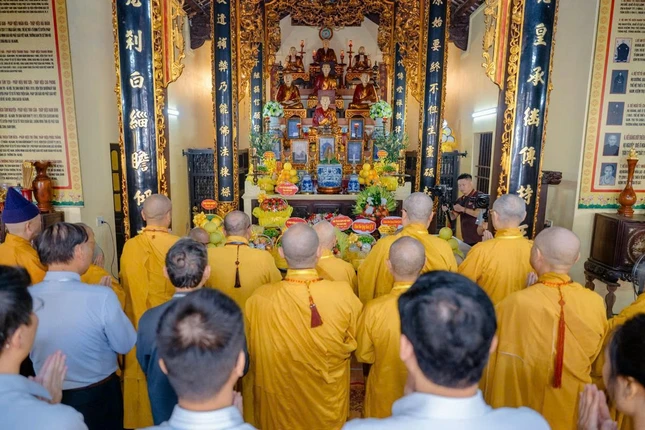
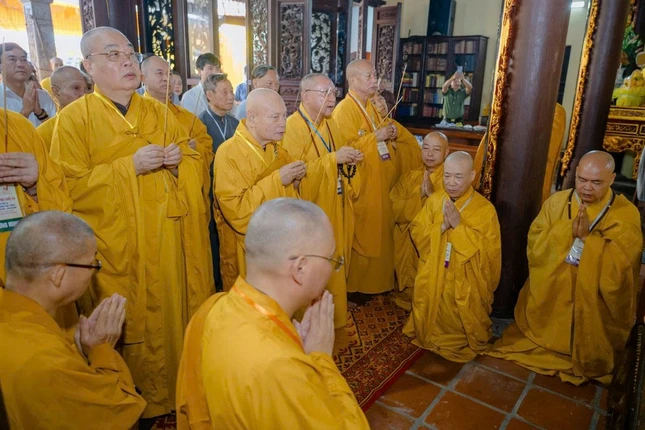
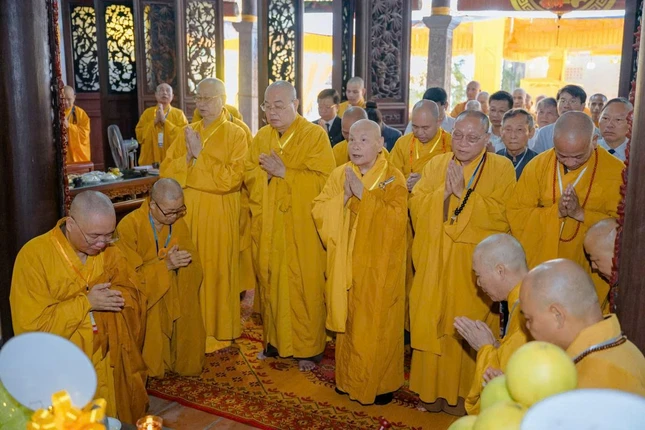
With reverence, we offer incense in remembrance and gratitude for the profound merits of the venerable ancestors and patriarchs who diligently founded, preserved, and nurtured the Dharma throughout the ages.
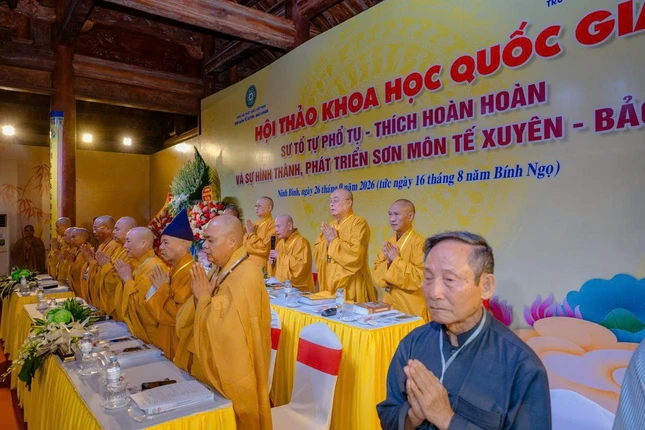
The event was organized to commemorate the 100th anniversary of the passing of Venerable Thich Hoan Hoan, the third patriarch of the monastic order (1926-2026).
Before the opening ceremony, in a solemn atmosphere, the venerable religious dignitaries and the monks and nuns, disciples and followers, respectfully offered incense in remembrance and gratitude for the profound merits of the successive Patriarchs who diligently founded, preserved, and nurtured the Buddhist tradition throughout the ages.
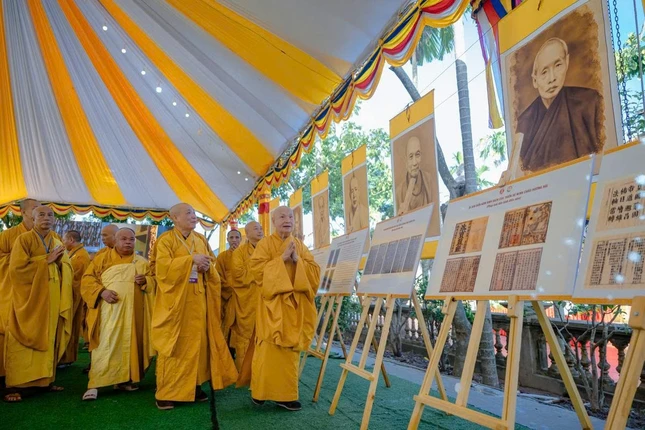
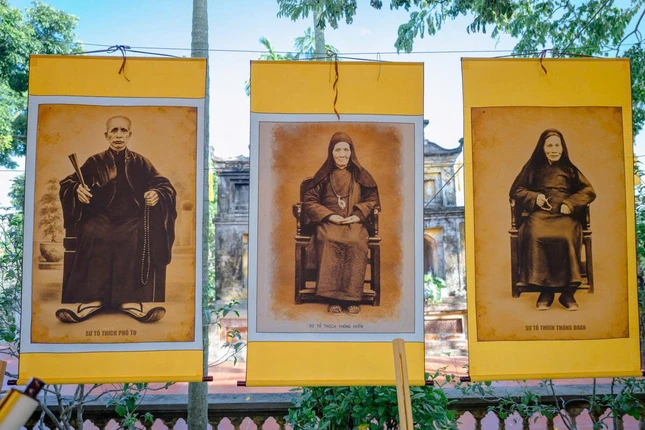
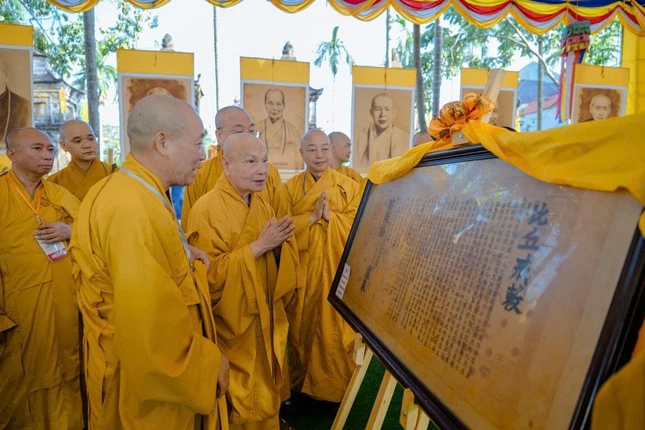
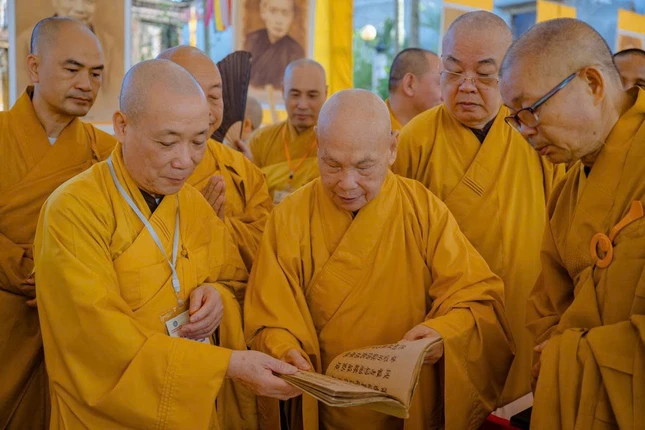
Visit the exhibition area showcasing the formation and development of the Te Xuyen - Bao Kham monastic order.
Attending and presiding over the seminar were Venerable Thich Thien Nhon, Vice Dharma Chief of the Council of Buddhist Elders, Chairman of the Executive Council of the Vietnam Buddhist Sangha; Venerable Thich Thanh Nhieu, Standing Member of the Council of Buddhist Elders, Standing Vice Chairman of the Executive Council of the Vietnam Buddhist Sangha; and other Venerable Elders who are members of the Council of Buddhist Elders.
The workshop was chaired by the Vice Presidents of the Executive Council: Venerable Thich Bao Nghiem (Head of the Workshop Organizing Committee), Venerable Thich Quang Tung, Venerable Thich Gia Quang, Venerable Thich Thanh Quyet, Venerable Thich Thanh Dien, Venerable Thich Quang Ha, Senior Venerable Thich Duc Thien (General Secretary), Senior Venerable Thich Thanh Phong; and Professor Hoang Anh Tuan, Rector of the University of Social Sciences and Humanities.
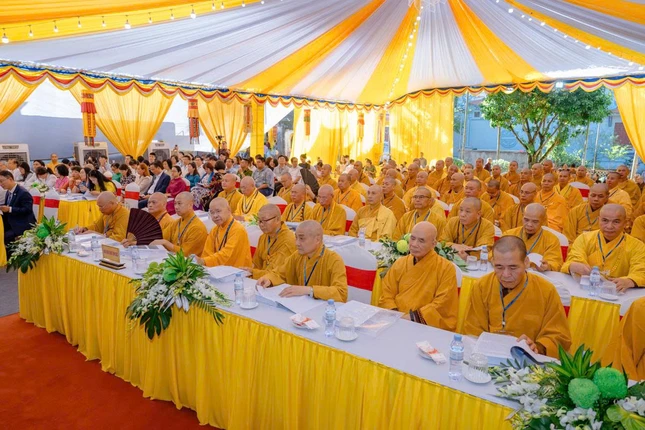
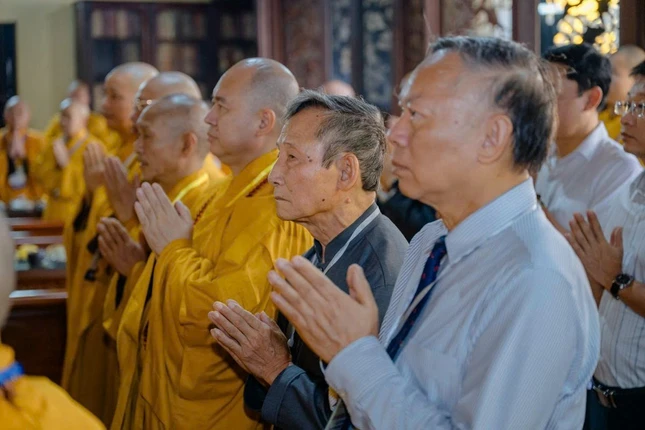
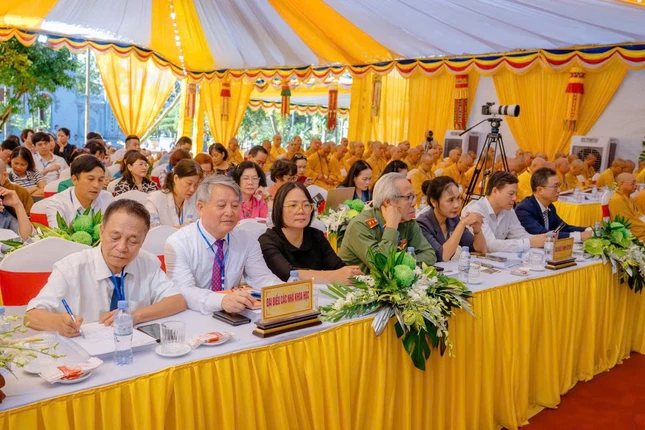
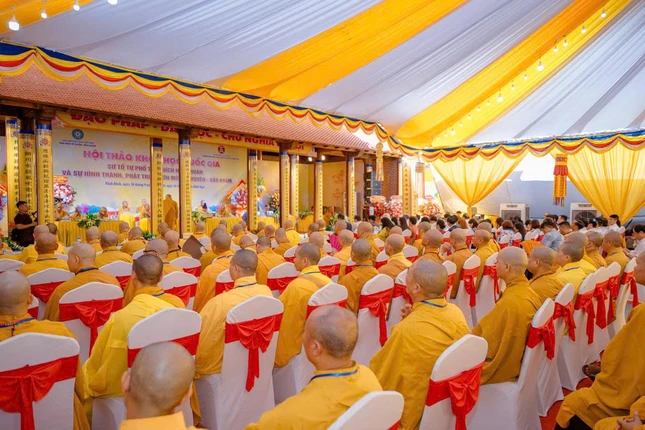
Venerable monks and delegates in attendance.
In his opening remarks at the seminar, Venerable Thich Bao Nghiem emphasized the significance of the 100-year milestone of inheriting the Dharma lineage since the passing of the Third Patriarch. He affirmed that the Te Xuyen - Bao Kham monastic order is one of the leading centers for Buddhist study, propagation of the Dharma, and training of monks in Northern Vietnam.
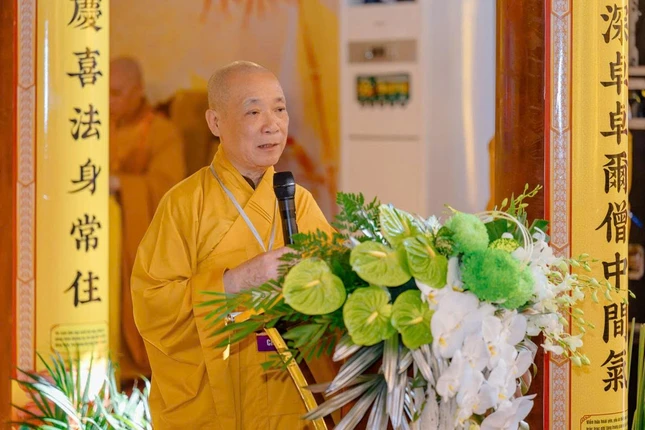
Venerable Thich Bao Nghiem delivered the opening speech.
According to the Venerable Abbot, Head of the Organizing Committee, this event is not only an opportunity to recall the profound merits of the founding masters, but also to open a large-scale academic forum to connect experts in interdisciplinary fields such as History, Buddhism, Sino-Vietnamese studies, and Archaeology, gradually collecting, systematizing, and clarifying valuable ancient documents that are still scattered in monasteries, clans, and archives.
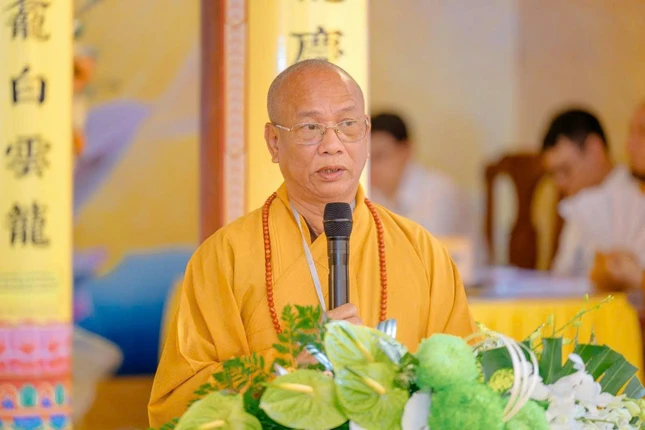
Venerable Thich Quang Ha delivered a welcoming speech.
On this occasion, representing the Buddhist community of Ninh Binh province, Venerable Thich Quang Ha, Head of the Executive Board of the Vietnam Buddhist Sangha of Ninh Binh province, delivered a welcoming speech to the esteemed religious leaders and scientists attending the conference. The Venerable expressed his joy and emphasized that the conference was an honor for the Buddhist community of the province, contributing to honoring the merits of the founding master of Pho Tu Temple and other historical Buddhist masters, while also encouraging local monks, nuns, and Buddhists to preserve the traditional Buddhist heritage.
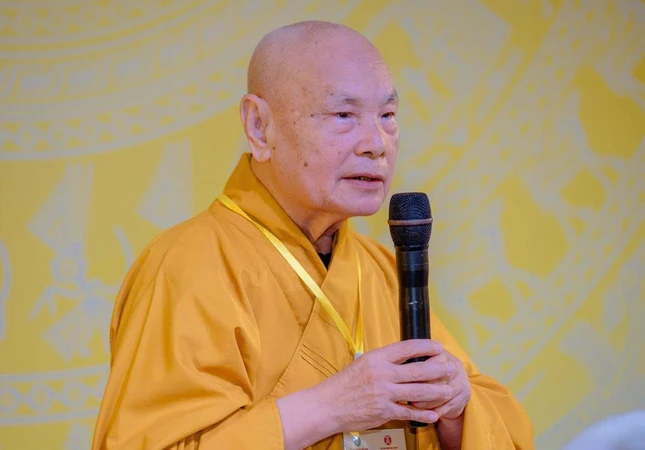
Venerable Thich Thien Nhon delivered a sermon.
In his opening remarks, Venerable Thich Thien Nhon expressed his joy and praised the sense of responsibility of the Organizing Committee. The Chairman of the Executive Council emphasized the pivotal role of the monastic orders and ancestral temples throughout more than two thousand years of Buddhism's companionship with the nation, and hoped that disciples and followers would always consider preserving the monastic tradition, strictly observing the precepts, and promoting the tradition of practice as the core of gratitude. He encouraged the monastic orders to proactively coordinate with specialized agencies to digitize ancient documents, inscriptions, and scriptures as soon as possible to keep pace with technological advancements and serve long-term research.
The Venerable Abbot emphasized: "The spirit of lineage transmission is not limited to historical records or tombs, but must be transformed into a resource for the study, practice, and service to humanity of Buddhist disciples today." Through this, the conference will paint a comprehensive and authentic picture of the life and religious career of the founder of Phổ Tụ Temple, clarifying the lineage of the temple and creating a source of accurate scientific documentation to supplement the glorious golden history of Vietnamese Buddhism.
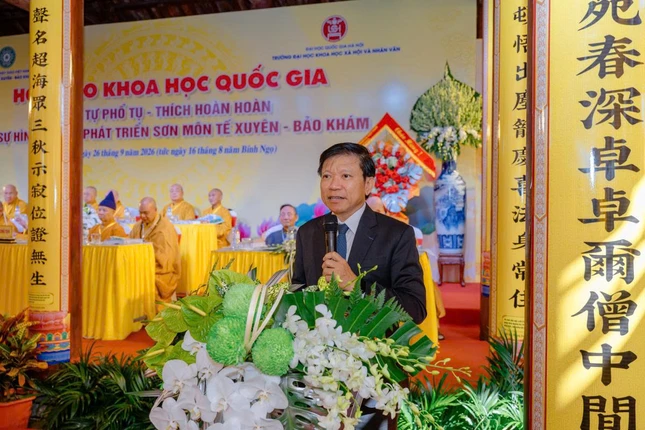
Professor Hoang Anh Tuan presented the opening remarks for the conference.
In his introductory remarks for the conference, Professor Hoang Anh Tuan, co-chair of the Organizing Committee, clearly stated that the Te Xuyen - Bao Kham monastic community is a typical representative of the Lam Te Nguyet Duong Zen lineage in the ancient Son Nam region, which originated and was passed down in Dai Viet from the 17th century. The central purpose of the conference is to express gratitude for the merits of our ancestors, while objectively and comprehensively assessing the immense contributions of Patriarch Pho Tu and other patriarchs to Buddhism and the nation. This is also an important prerequisite for exploring the system of inscriptions, rituals, genealogies, and ancient scriptures that are still preserved, thereby proposing effective solutions for preserving Buddhist heritage in the new era.
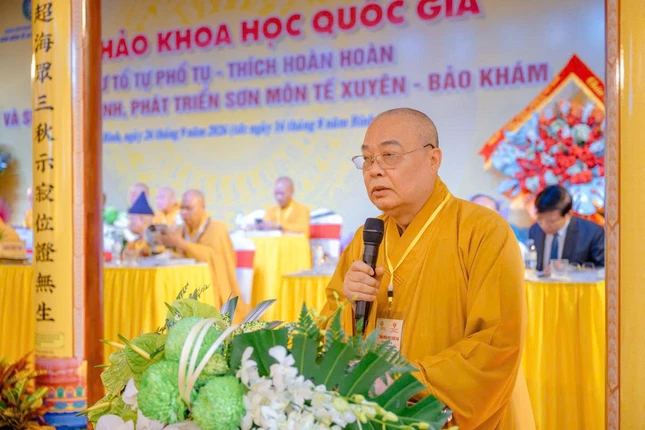
Venerable Thich Thanh Nhieu, the senior monk, presented his paper.
It is known that the Academic Council received more than 60 papers from research institutes, universities, and Venerable Monks and Nuns, from which 46 outstanding papers were selected for inclusion in the official proceedings. The research content revolves around three main themes: the immense contributions of Patriarch Pho Tu to the Te Xuyen - Bao Kham monastic order; the position and role of the monastic order in the flow of national history; and practical issues and solutions for promoting the cultural heritage of the ancestral place in contemporary society.
Following the opening session, the conference continued with specialized academic presentations: Venerable Thich Thanh Nhieu presented a paper entitled "The Contributions of the Founder of Pho Tu Temple - Thich Hoan Hoan in the Succession, Restoration of Ancestral Temples, Printing of Buddhist Scriptures, Propagation of Buddhism, Discipline, and Training of Monks"; and Venerable Thich Duc Thien presented a paper entitled "The Transmission Network of the Lam Te Zen School in Northern Vietnam in the 17th-19th Centuries: The Case of the Te Xuyen - Bao Kham Monastery". Afterwards, other venerable monks and researchers, including professors, associate professors, and doctors, also presented numerous in-depth academic papers.
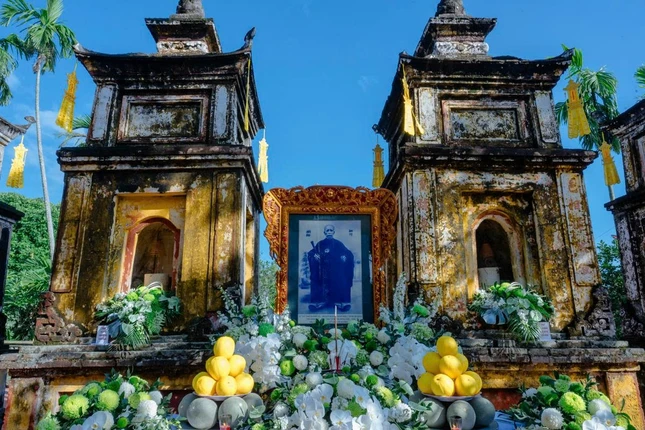
The portrait and stupa of the founding master of Pho Tu Temple (1844-1926) are located within the grounds of Te Xuyen Pagoda (Nam Xang commune, Ninh Binh province).
The founding master, whose given name was Pho Tu (1844-1926), secular name Doan, Dharma name Hoan Hoan, and religious title Tinh Quang, was the third patriarch of the Te Xuyen - Bao Kham ancestral temple in the former Ha Nam province (now Ninh Binh province), belonging to the Lam Te Linh Quang Nguyet Duong Zen school.
He entered monastic life at a young age, studying at many ancestral temples such as Doi Son and Hong An, becoming the 42nd generation disciple of the sect before succeeding as abbot of Te Xuyen - Bao Kham in 1890.
During his 36 years as abbot, the Venerable Master made many contributions to the development of the monastic order, training monks, translating scriptures, writing and organizing the engraving, printing, and distribution of Buddhist scriptures and monastic rules.
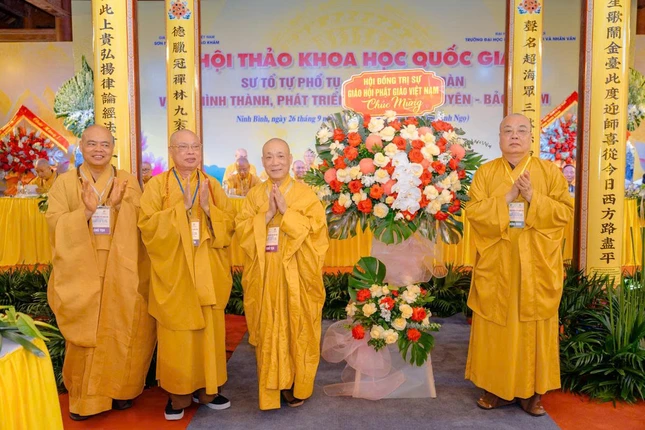
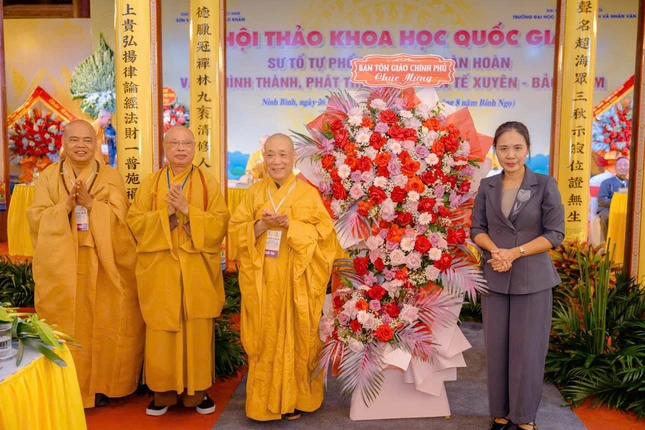
Here are some photos from the workshop:
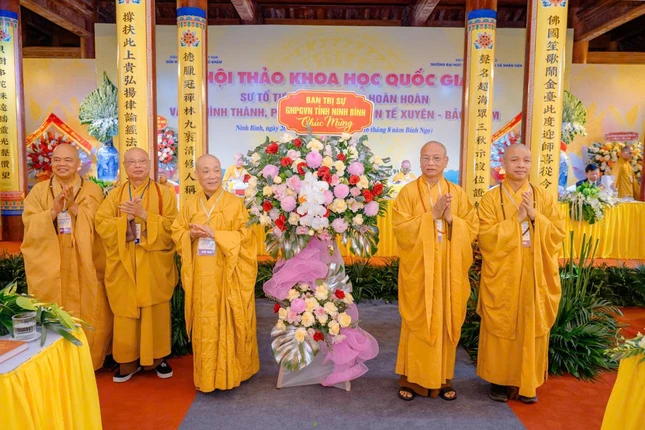
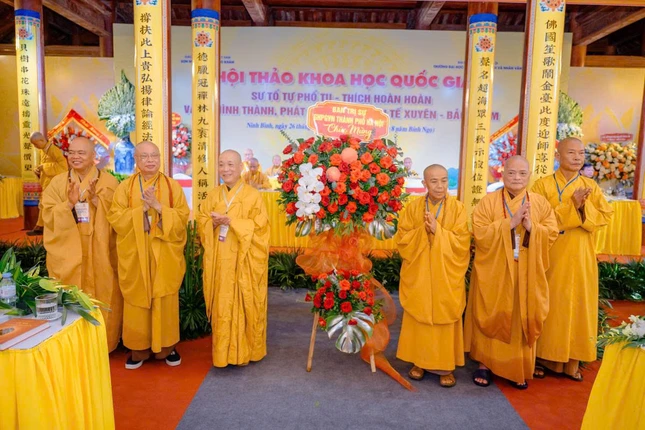
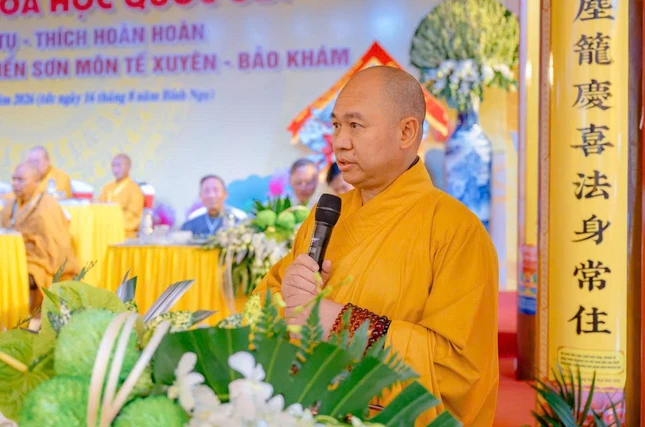
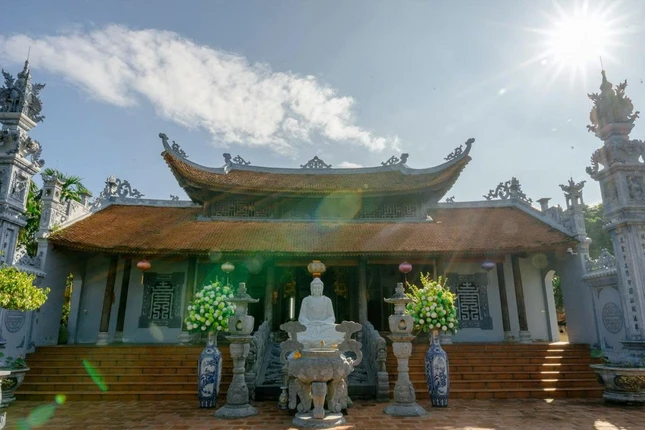
Te Xuyen Pagoda (Nam Xang commune, Ninh Binh province)
Author:According to Giac Ngo Online Newspaper
Newer news
Older news

