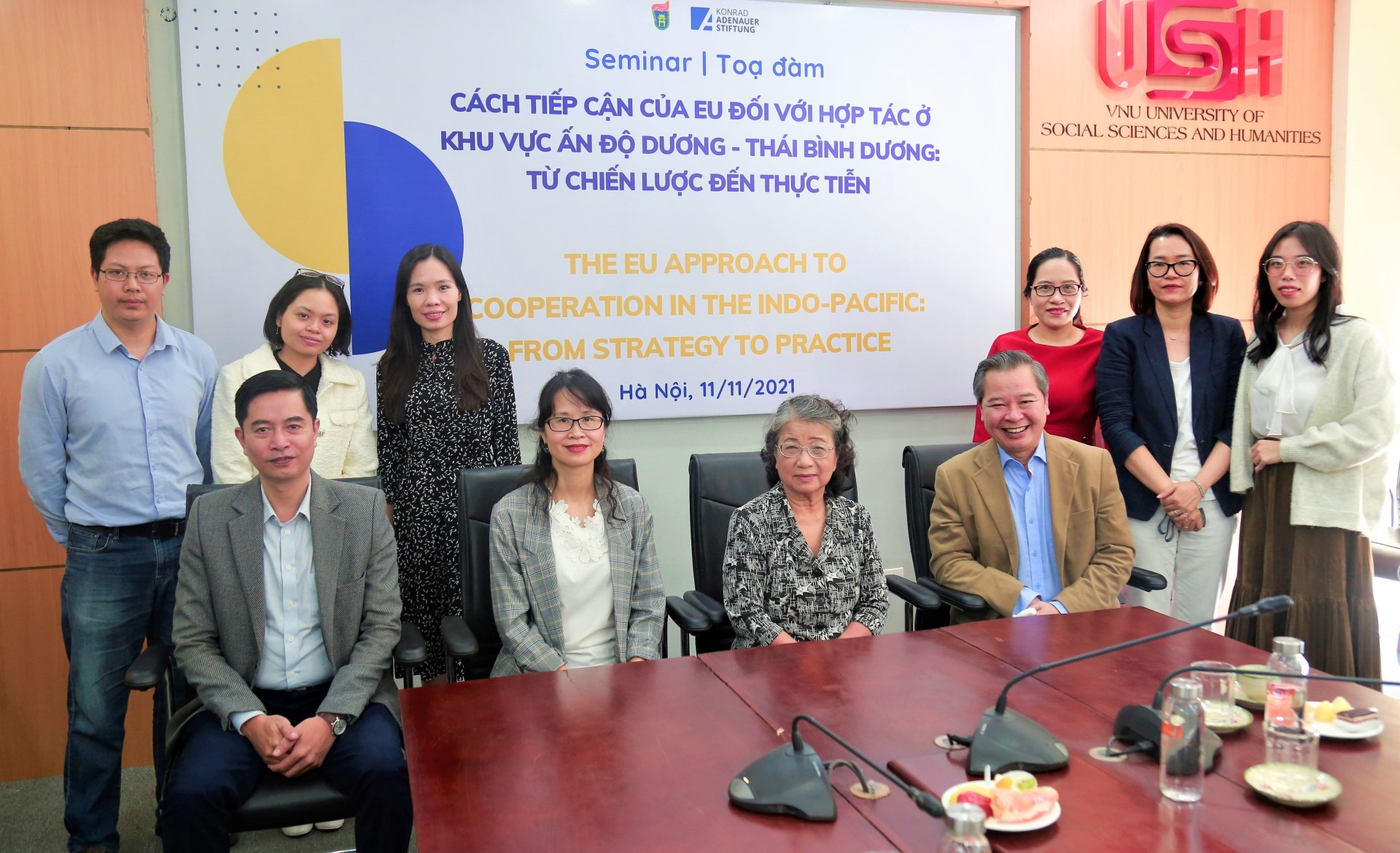
 Delegates pose for a commemorative photo at the seminar.
This research project was conducted by the Faculty of International Studies, University of Social Sciences and Humanities, with funding from the Konrad-Adenauer Foundation (Federal Republic of Germany). The project was divided into three phases, lasting from 2021 to 2023. Each phase lasted one year and focused on a set of issues concerning the European Union's approach to cooperation in the Indo-Pacific region.
 Ms. Pham Thi To Hang (Project Manager of the KAS Foundation) reviewed the cooperative relationship between the Foundation and the School.
To date, the research tasks of phase 1 (September 13 - November 15, 2021) of the project have been completed and compiled into a report consisting of 5 articles, addressing the EU's common cooperation strategy in the Indo-Pacific, the views and strategies of member states France, Germany, and the Netherlands, as well as Vietnam's perspective on this strategy. The seminar was organized to present the initial results and receive feedback and critiques from several experts in the field of international relations.
Professor Pham Quang Minh (Former Rector of the University of Social Sciences and Humanities) delivered the opening speech.
Opening the seminar, Professor Pham Quang Minh emphasized the importance and urgency of the research project in clarifying the content of the EU's new strategy with an increasingly important region on the map of international relations, as well as the impact of this strategy on member states, countries in the region, and the world in general. The research results will contribute to enhancing understanding and awareness of the new changes in the EU's foreign policy stance, thereby helping ASEAN countries like Vietnam to develop appropriate policies in line with their role in the Indo-Pacific region.
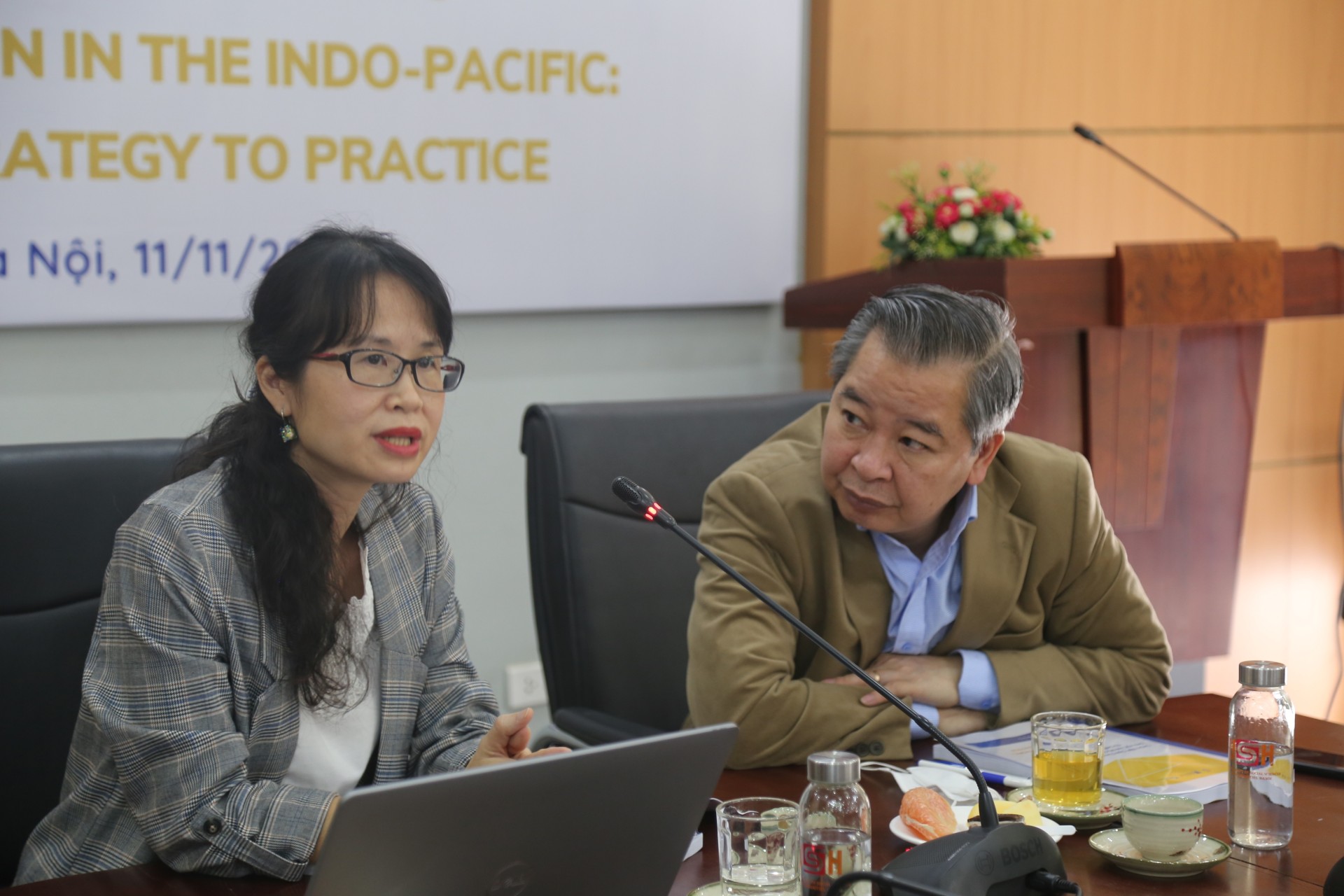
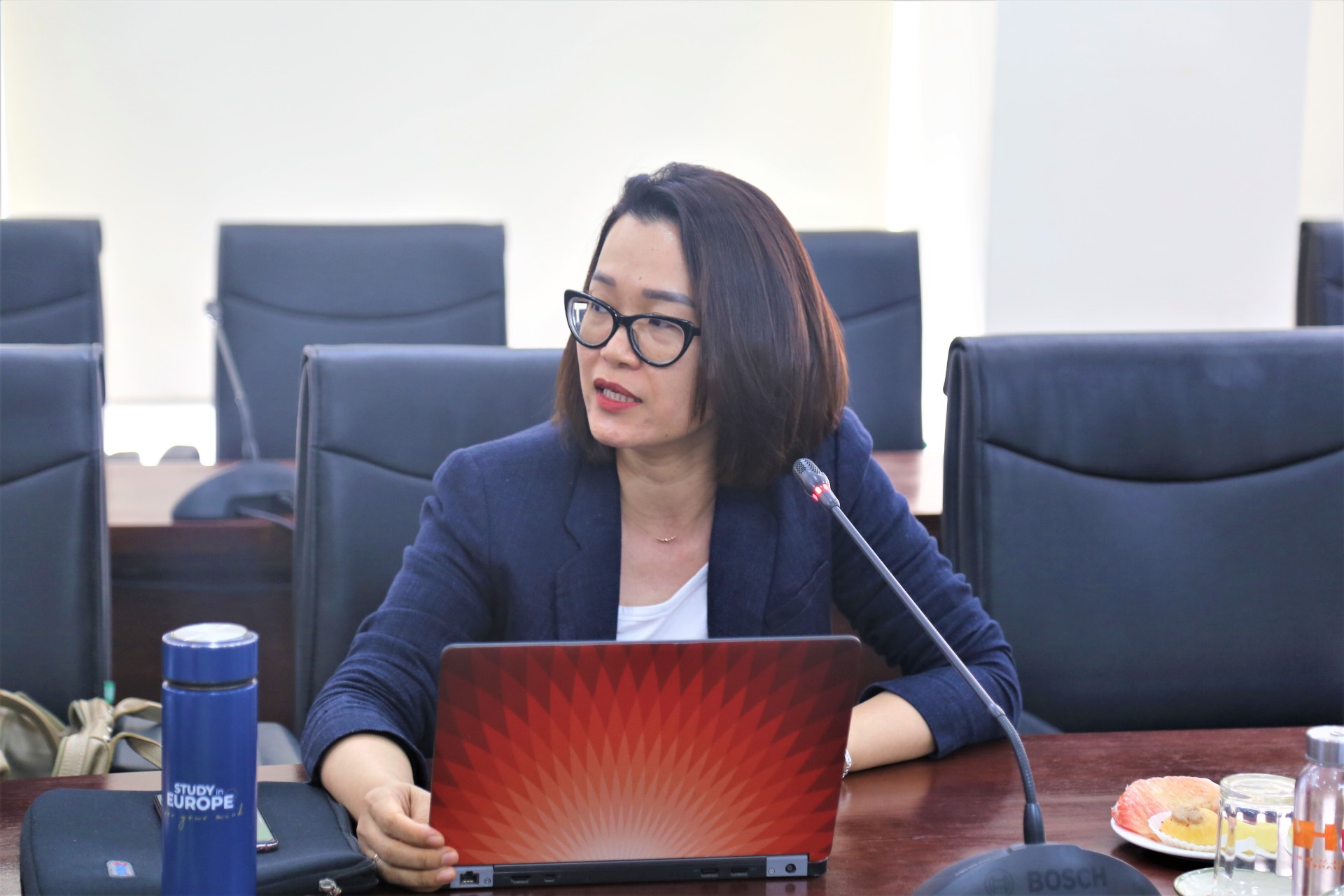 Associate Professor Bui Hong Hanh (Department of European Studies, Faculty of International Studies) presented the report's findings.
Next, the experts listened to the researchers present the preliminary results of the first report. The experts assessed the report as having high scientific content; a clear scope and research subject; a logical structure; clear writing style; and the use of rich and reliable source materials. The expert group also offered some additional comments, adjustments, and expansions to the report. On behalf of the research team, Professor Pham Quang Minh accepted the feedback. The team will proceed to finalize the report as an official scientific publication and develop a plan for implementing the next phases of the Project.
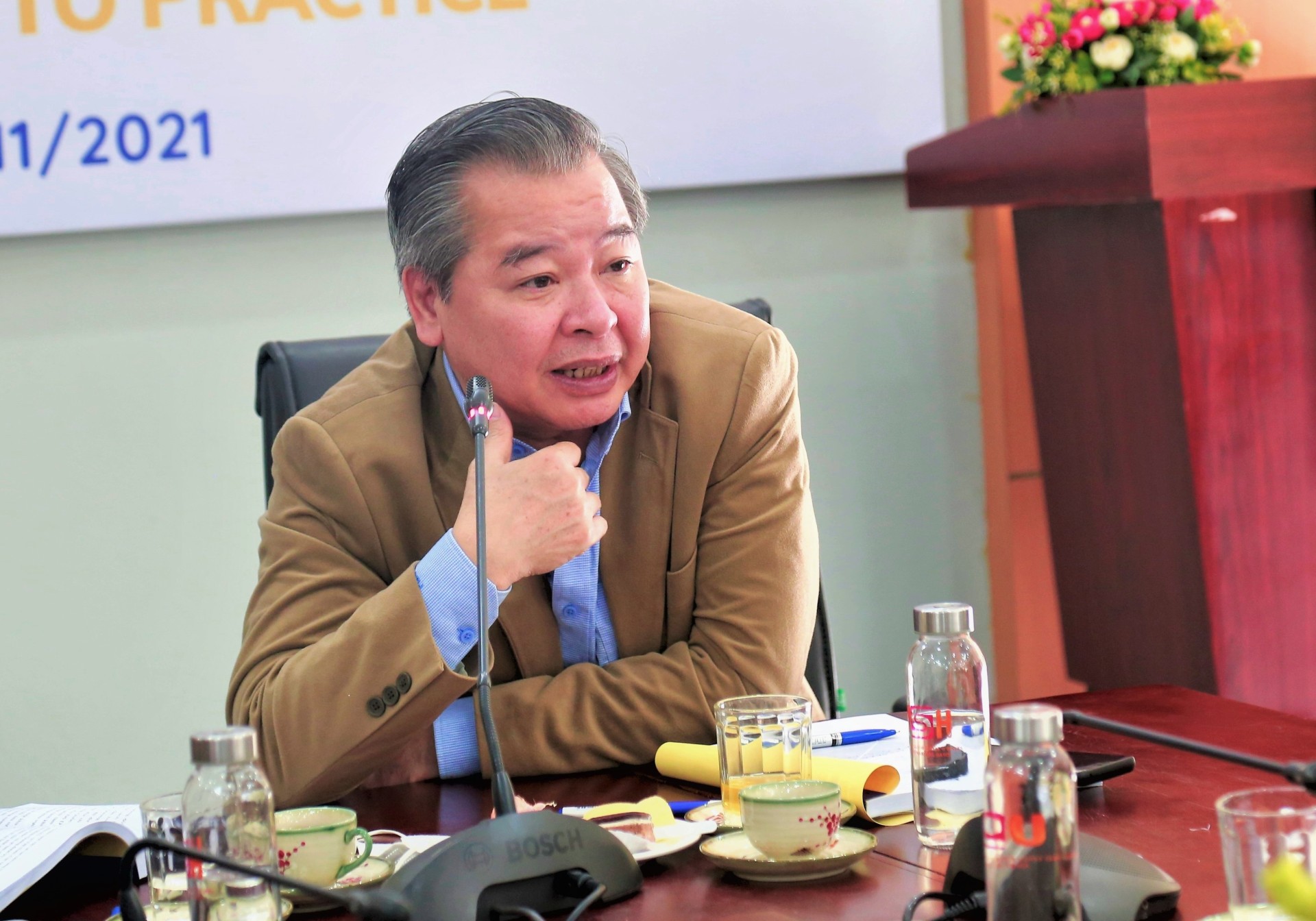
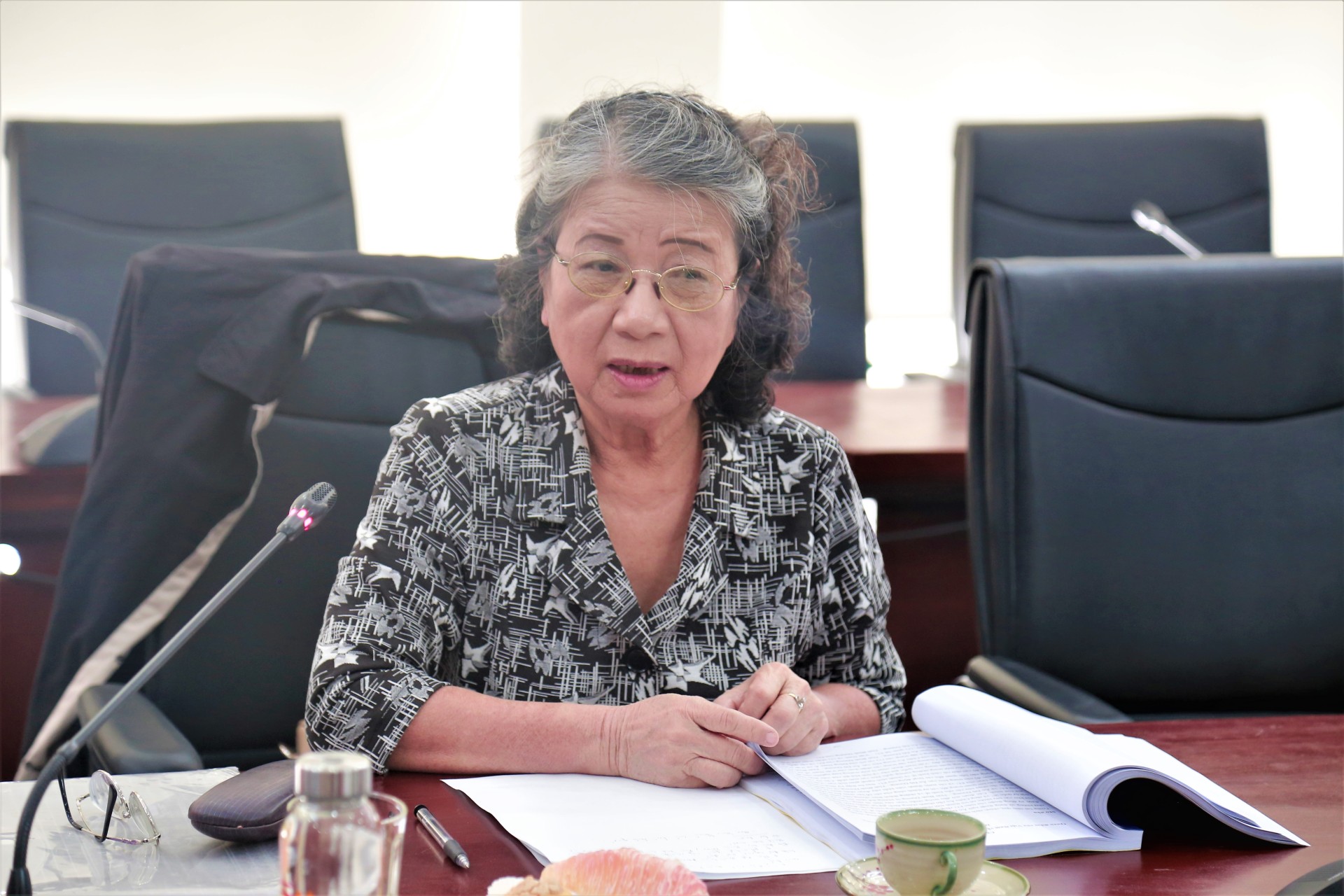 Associate Professor Dr. Nguyen Thu My (Former Director of the Institute of Southeast Asian Studies) commented on the research report.
The research project “EU Approaches to Cooperation in the Indo-Pacific Region: From Strategy to Practice” aims to understand the European Union’s approach to cooperation in the Indo-Pacific region and its impact on countries in the region. The project is divided into three phases, corresponding to the following research topics:
- Phase 1, implemented in 2021, focused on the EU and its member states' approach to cooperation in the Indo-Pacific region. Specific issues included: the content and origins of a common EU vision; the traditional, geopolitical conventions underpinning the EU concept of member states; the role of the EU and its member states in the Indo-Pacific region; and expectations regarding EU engagement in the region.
- Phase 2, implemented in 2022, focused on studying the perceptions and cooperation of groups of countries outside the EU, the United States, and China, and their strategic objectives in the Indo-Pacific region in relation to the EU and its member states. These groups of countries included industrialized nations such as Japan, Taiwan, and South Korea; ambitious powers such as India and Indonesia; and national communities such as ASEAN.
- Phase 3, launched in 2023, focuses on research into sub-areas related to the EU's current expansionary security policy. These specific areas include global transport security, the fight against terrorist threats, migration issues, international health policy, and, in particular, responding to and mitigating the impacts of climate change and global warming.
|