University of Social Sciences and Humanities - VNU Hanoihttps://ussh.vnu.edu.vn/uploads/ussh/logo-ussh-2_100_100.png
Thursday - September 17, 2026 15:48
History is the past, which can be as fleeting as the blink of an eye, or it can be a timeline spanning tens of thousands or millions of years. This past, however long or short, always contains varying degrees of change, shifts in dynasties, golden ages, dark periods, wise rulers and capable generals, and foolish rulers and officials... in each region and for each different social community. History, as the poet Victor Hugo thought, "is the echo of the past in the future and the reflection of the future on the past." Or, as ancient Greek historians believed, history "is the teacher of life" (Cicero), "a torch illuminating the path to the future." Similarly, as Eastern people believe, history is about "learning from the past to understand the present"... From a lesson perspective, history provides the present with three mirrors that can illuminate the past and open up a path for the future. Those three examples are: "By looking at people, one can discern good from bad," "By looking at actions, one can discern success from failure," and "By looking at history, one can discern the old from the new."
Therefore, history is the science of history. This discipline can encompass countless years within historical records to open up the future from the present. History, therefore, is one of the first sciences of societies when they enter civilization. And somewhere, in the West as well as the East, history appeared about two thousand years ago. Vietnam, a country with a long-standing civilization, saw the birth of history nearly a thousand years ago in the glorious Dai Viet civilization. Throughout its history, national historical writing agencies, historians, and historical works have not only played the role of recording the past, but have also consistently offered warnings for the future.
Modern Vietnamese historiography began to take shape in the early years after the August Revolution of 1945. After 1975, the country had many training and research institutions for compiling national history. Among them, the Faculty of History and Culture is the earliest established institution for training and research in history, cultural studies, and cultural management, enjoying high prestige both domestically and internationally.
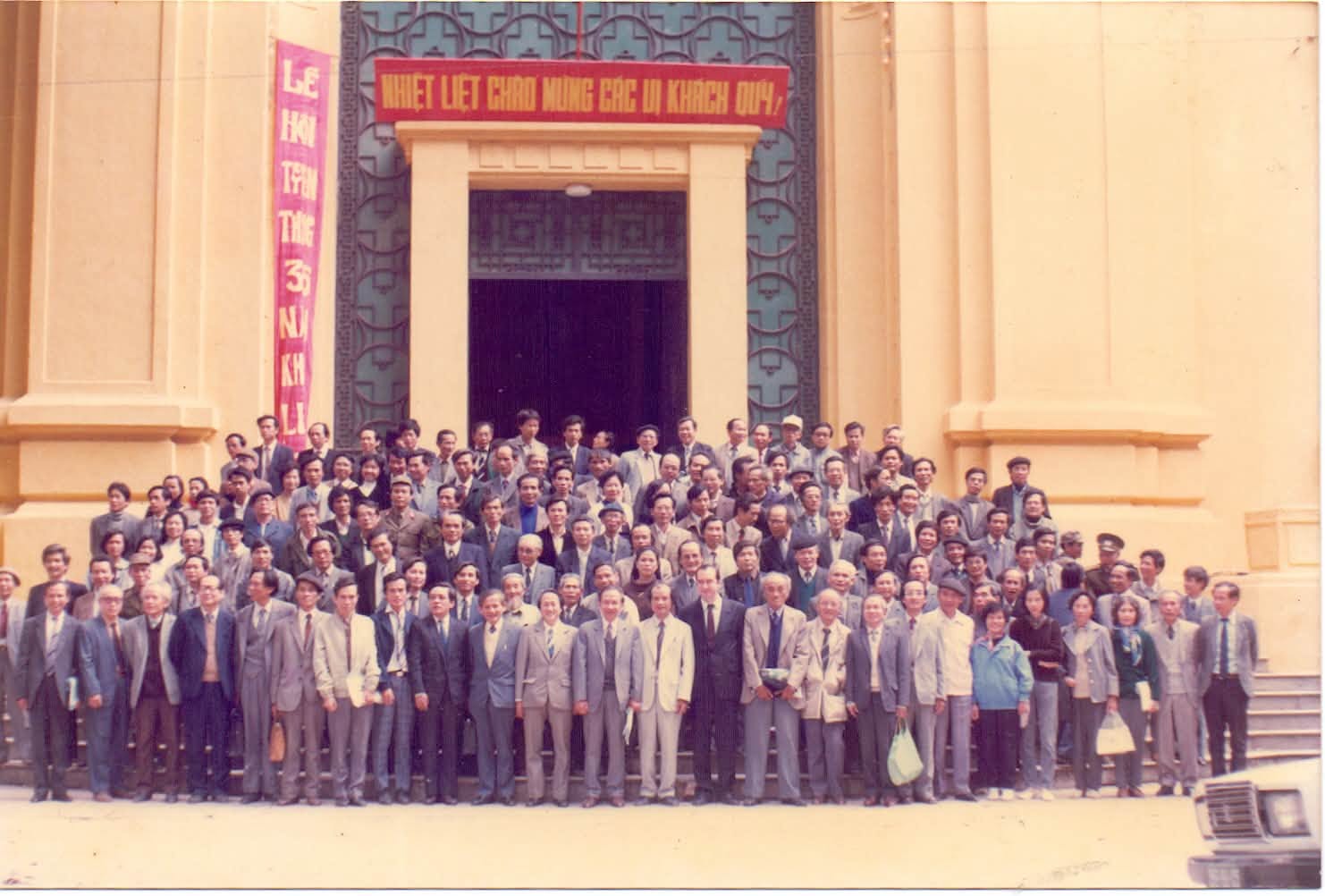
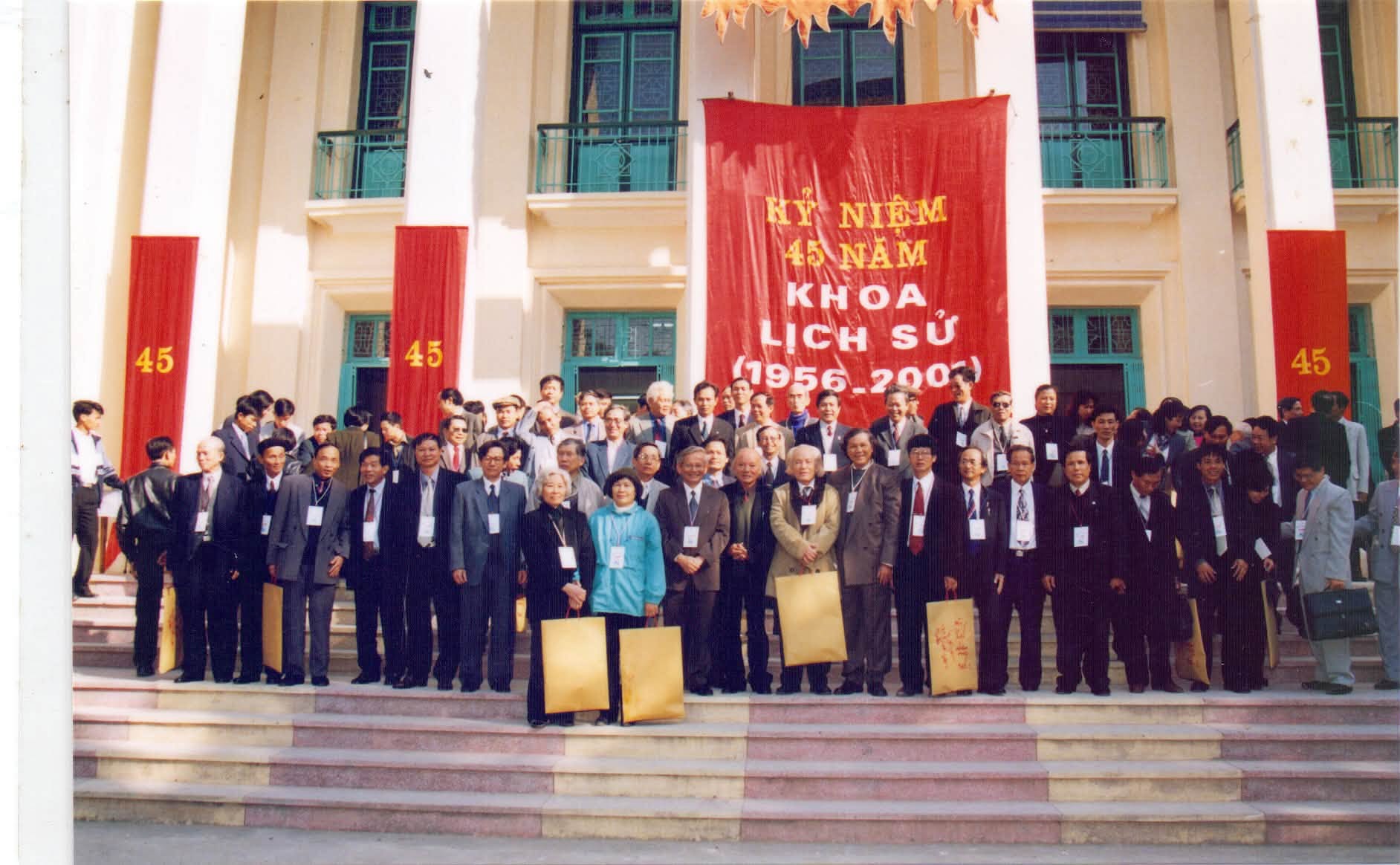
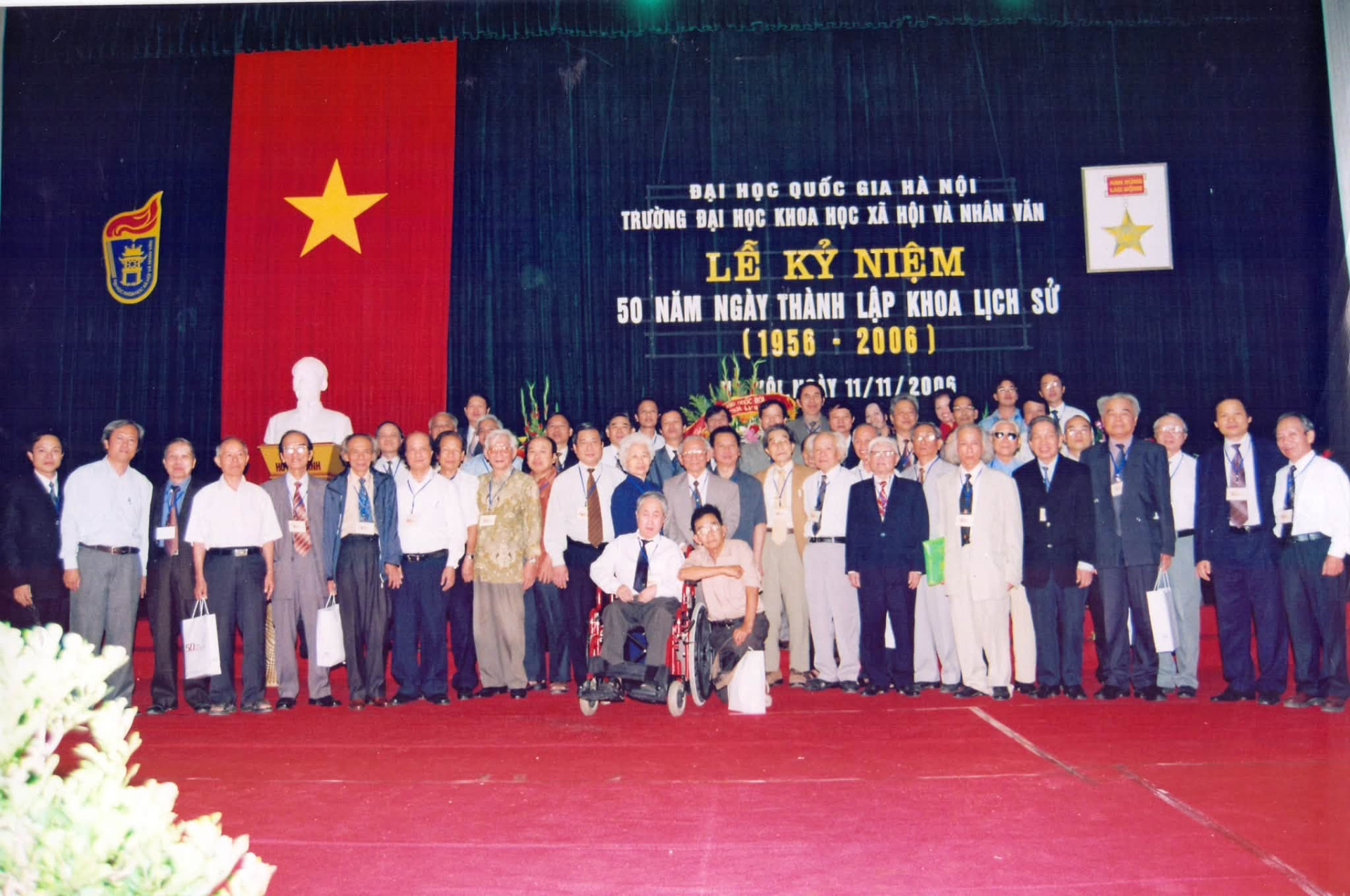
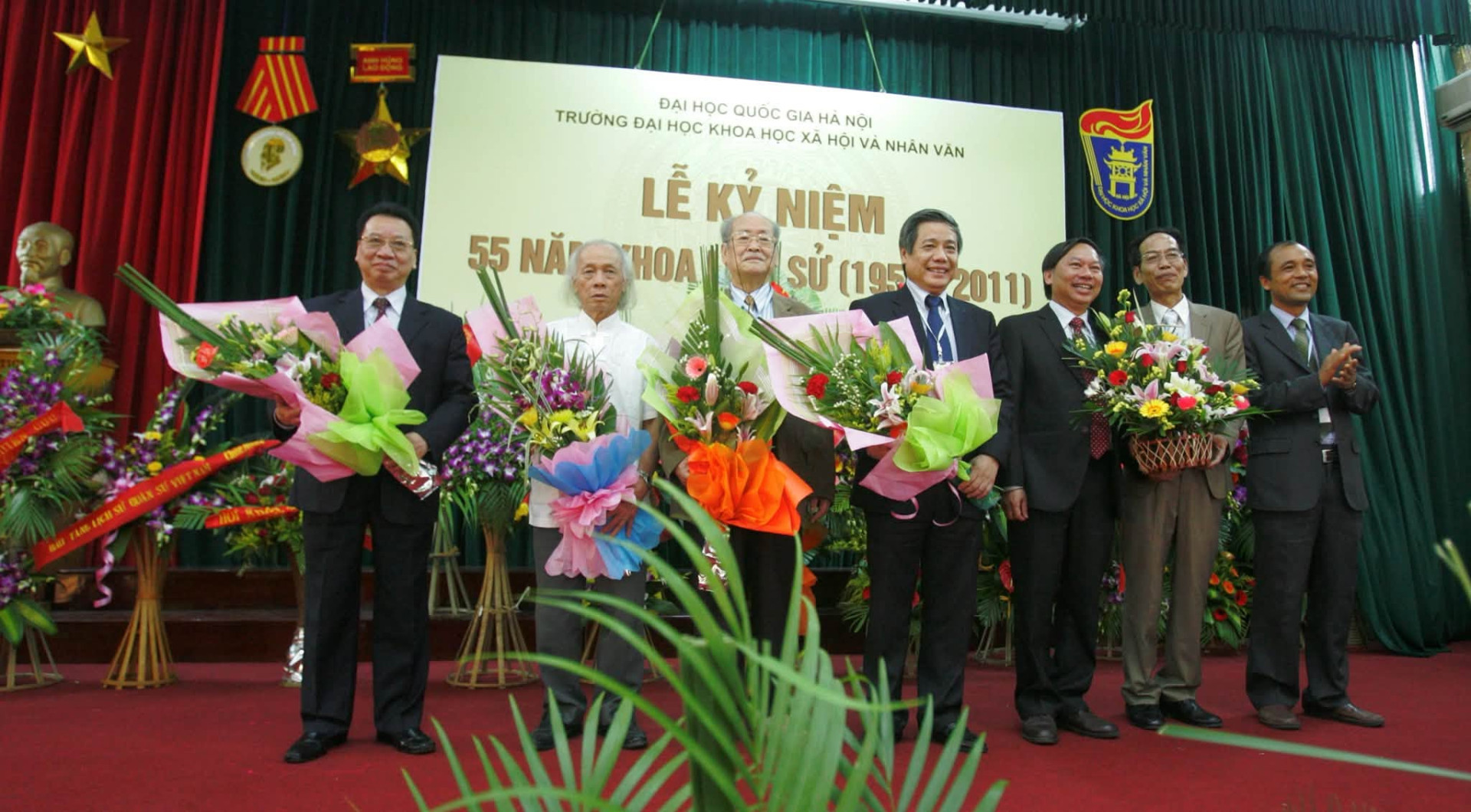
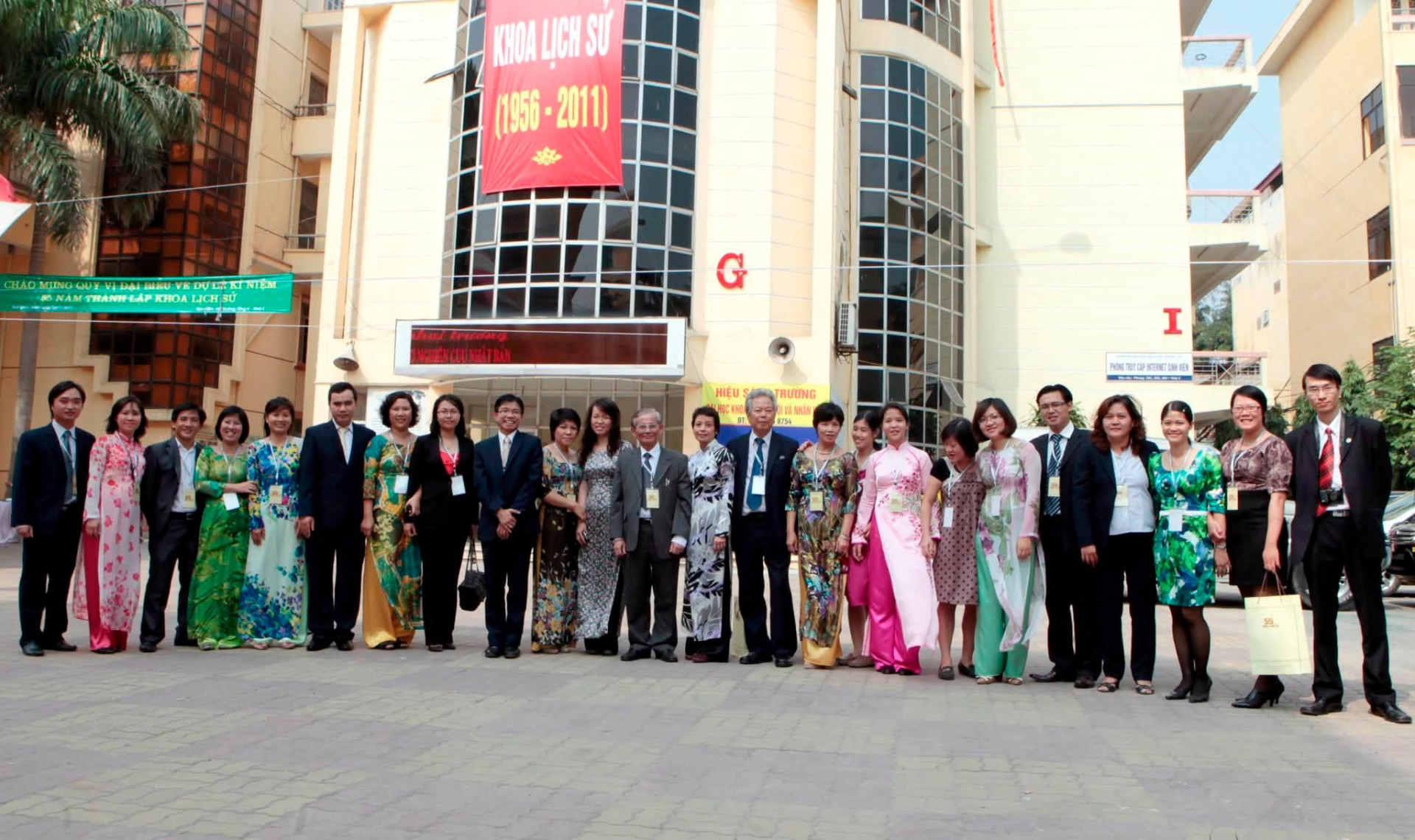
The Faculty of History (renamed the Faculty of History and Culture from April 2026) was one of the four original faculties of Hanoi University, now part of the Faculty of Social Sciences and Humanities - Vietnam National University, Hanoi. On October 10, 1945, President Ho Chi Minh issued Decree No. 45 establishing the Faculty of Literature in Hanoi, with History being one of its two departments. On June 4, 1956, Prime Minister Pham Van Dong issued Decision No. 2138/TC establishing Hanoi University, comprising the Faculty of Science and the Faculty of Literature, with the Faculty of Literature having two independent departments: Literature and History. In 1956, the Faculty of Literature was divided into two units: the Faculty of Literature and the Faculty of History. Since then, the Faculty of History and Culture has consistently been a leading center in Vietnam in the formation, training, research, and application of historical and cultural sciences.
With nearly 70 years of development and approximately 220 staff members, the Faculty of History and Culture has the following introductions:
1. To establish a prestigious and influential school of comprehensive historical studies both domestically and internationally.From the pioneering generation of the "Three Heroes" – the great scholars Dao Duy Anh, Tran Van Giau, and Tran Duc Thao; inherited, nurtured, and enhanced by the golden generation of the "Four Pillars" – Dinh Xuan Lam, Phan Huy Le, Ha Van Tan, and Tran Quoc Vuong; along with countless historians and educators over many generations, up to the present day.
2. Establishing various training and research programs in the humanities within the university.: Tourism Studies (1995, now the Faculty of Tourism Studies); Oriental Studies (1995, now the Faculty of Oriental Studies); Political Science (1995, now the Faculty of Politics and International Studies); International Studies (1995, merged with the Faculty of Political Science from 2026); Archival Studies (1996, now the Faculty of Archival Studies and Office Management); Library Science (1996, now the Faculty of Information Management); Ethnology (2010, now the Faculty of Anthropology and Religious Studies)... In addition, after 1975, many teachers went to the South to establish History departments at universities in the Central, Central Highlands and Ho Chi Minh City regions...
3. Trained 66 graduate courses (University level since 1956, Postgraduate level since 1980) with over 10,000 Bachelors, Masters, and Doctorates in Historical Sciences.
4. Contributing to the making of history in the Ho Chi Minh era.During the resistance war against the US, many student cadres participated in the fronts and battlefields, and many student soldiers from the Faculty bravely sacrificed their lives: Ngo Van So K12 (Quang Tri), Nguyen Van Tam K14 (Quang Tri), Le Van Doan K15 (1972, Quang Tri), Nguyen Van Toan K15 (1972, Quang Tri), Tran Anh Tuan K15 (1972, Southern Vietnam), Nguyen Van Tai K15 (Quang Tri)... In particular, the teacher, poet, and martyr Ca Le Hien - Le Anh Xuan (1968, Saigon), the artist who sculpted the majestic monument "The Stance of Vietnam in the 20th Century".
5. Published approximately 6,000 scientific papers.Approximately 10% consists of textbooks and monographs/reference books; nearly 5% are international publications; 15 works by 6 individuals received the Ho Chi Minh Prize; and 6 works received the State Prize for Science and Technology.
Dao Duy Anh: History of Vietnam from its origins to the end of the 19th century, Ancient history of Vietnam, Outline of Vietnamese cultural history, The country of Vietnam through the ages (Ho Chi Minh Publishing House, 2000).
Tran Van Giau: Resistance against invasion, Modern history of Vietnam, The Vietnamese working class from the founding of the Communist Party to the successful revolution, The South holds firm as a stronghold, The development of Vietnamese thought from the 19th century to the August Revolution (Ho Chi Minh's book, 1996).
Tran Duc Thao: Searching for the Origins of Language and Consciousness (Ho Chi Minh Publishing House, 2000).
Phan Huy Le: Vietnamese Cultural History: A Partial Approach (Ho Chi Minh Publishing House, 2017); Tracing the Roots (State Publishing House, 2000).
Ha Van Tan: Following the Traces of Ancient Cultures (Ho Chi Minh Publishing House, 2000).
Tran Quoc Vuong: Vietnam: A Geocultural Perspective, On the Land of a Thousand Years of Culture, Vietnamese Culture: Exploration and Reflection (Ho Chi Minh Publishing House, 2012).
Phan Dai Doan: Vietnamese Villages: Some Economic, Cultural and Social Issues (State Publishing House, 2005); A series of works on the History of Vietnamese Thought (Confucianism and Confucianism in Vietnam - Some Theoretical and Practical Issues; The Human Problem in Early Confucianism; History of Vietnamese Buddhism; History of Vietnamese Thought) (Authors: Nguyen Tai Thu, Minh Chi, Ly Kim Hoa, Ha Thuc Minh, Ha Van Tan, Phan Dai Doan, Nguyen Duc Su)
Phan Huu Dat: Some Issues on Vietnamese Ethnology (State Publishing House, 2005).
Nguyen Thua Hy: Thang Long - Hanoi in the 17th, 18th, and 19th Centuries (State Publishing House, 2012).
Dinh Xuan Lam: The Anti-Colonialist Movement in Vietnam (State Publishing House, 2022).
Many textbooks are used in the university system to teach history and culture throughout the country: History of the Primitive Communist Regime in Vietnam, History of the Feudal Regime in Vietnam, General History of Vietnam, The Historical Process of Vietnam, History of Vietnam, History of the Communist Party of Vietnam, Revolutionary Line of the Communist Party of Vietnam, Ho Chi Minh Thought, World History, History of World Civilization, Methodology of Historiography, General Overview of Historiography and Written Historical Sources of Vietnam, Fundamentals of Archaeology, Bronze Age, General Ethnology, Fundamentals of Vietnamese Culture, etc.
These translated historical documents have become important sources of historical data for Vietnamese history researchers: *Du Dia Chi* (Ha Van Tan); *Quan Trung Tu Menh Tap* (Phan Duy Tiep); *Viet Su Luoc* (Tran Quoc Vuong); *Viet Nam Vong Quoc Su* (Chuong Thau, Chu Thien)...
These monographs have become classics of research on Vietnamese history and culture:The Resistance War Against the Mongol Invasion in the 13th Century (Ha Van Tan, Pham Thi Tam), The Lam Son Uprising (Phan Huy Le, Phan Dai Doan) and the Land Ownership System and Agricultural Economy during the Early Le Dynasty (Phan Huy Le, Phan Dai Doan), History of the Vietnamese Government and History of the Vietnamese National Assembly (Le Mau Han), Revolutionary Movements in Some East Asian Countries from the Mid-19th to the Early 20th Century (Vu Duong Ninh), Phung Nguyen Culture (Han Van Khan), Precursors and Ancient Coins of Vietnam (Hoang Van Khoan), State, Religion and Law (Do Quang Hung), Ho Chi Minh's Strategy of National Unity (Phung Huu Phu), Naval Forces in the History of Resistance Against Foreign Invasion (Vu Minh Giang), Vietnam's Sovereignty in Hoang Sa and Truong Sa: Historical Documents and Facts (Nguyen Quang Ngoc), A Traditional Vietnamese Village in the Northern Delta (Nguyen Hai Ke), The Vietnam National Party in the History of the Vietnamese Revolution (Nguyen Van Khanh), Sa Huynh - Lam Ap - Champa: 5th Century BC to 5th Century AD (Some Archaeological Issues) (Lam Thi My Dung), Japan's Closed-Door Policy during the Tokugawa Period: Causes and Consequences (Nguyen Van Kim), Tran Trong Kim's Cabinet: Nature, Role and Historical Position (Pham Hong Tung), Tran Dynasty 1226-1400 (Vu Van Quan), Land Distribution Policy in Binh Dinh in 1839 through Land Registry Documents (Phan Phuong Thao)...
6. Led numerous major projects on Vietnamese history research.: History of the Vietnamese National Assembly (1991-1994), History of the Vietnamese Government (2001-2005), Southern Region (2008-2010), History of Vietnam (National History 2016-2018)... and State-level scientific research topics: Traditional values and people of Vietnam today, Political and social institutions in rural Vietnam, President Ho Chi Minh's ideology of national unity, History and current state of the political system in Vietnam, Scientific arguments and practical solutions to strengthen the relationship between the Party and the people in our country today, Southern territory and southwestern border in history, History of Vietnam's sovereignty over Hoang Sa and Truong Sa... It should be emphasized that these are all tasks commissioned by the State to the Faculty of History and Culture as a leading high-quality center, solving fundamental issues of the country in the fields related to history and culture.
Two policy proposals have been put forward to the Government: Research on Oc Eo culture and research on the South China Sea.
7. Early and extensive international cooperation:From the late 1950s, Soviet and Chinese archaeology professors participated in teaching and research collaboration at the Faculty. Throughout the 1960s and 1980s, cooperation within the socialist bloc continued uninterrupted. In the late 1980s and early 1990s, the Faculty expanded its cooperation with Western countries. Until 1990, the VH26 project (Vietnam - Netherlands) was the only social science project of the Ministry of Education and Training in collaboration with the Netherlands. Through the assistance of the Australian National University and the VH26 project, the Faculty of History and Culture established an internet-connected information office in 1994. This was also one of the first computers connected to the internet and the first email address in Vietnam.
Since 1995, the Faculty has actively expanded its training and research cooperation with training and research centers in historical sciences both domestically and internationally. The Faculty maintains close relationships with approximately 50 international training and research centers: California State University Fullerton, California Berkeley, California Riverside, San Diego State University, Montana, Princeton, Texas, Hawaii, Ohio (USA); University of Toronto (Canada); Australian National University, Monash (Australia); Leiden University, Amsterdam (Netherlands); Humboldt University, Passau University, Frankfurt University, Konstanz University, Giessen University, Greifswald University, Institute of Archaeology of the Federal Republic of Germany (Germany); University of Paris I, University of Paris VII, Institute of Military History of the French Ministry of Defence (France); National University of Auckland (New Zealand); National University of Singapore, Institute of Southeast Asian Studies (Singapore); National University of Tokyo, Osaka University, Hiroshima University, Kansai University, Showa University, Kanazawa University… (Japan); Seoul National University, Inha University (South Korea); Peking University, Sun Yat-sen University, Jilin University, Xiamen University, Wuhan University, Hunan University, Fudan University, Nanjing University (China); Cheng Kung University, Hualien University (Taiwan)...
Local cooperation has been strengthened over the past 20 years, aiming to apply basic scientific research to serve the community, especially in the areas of consulting, collaborative research, proposing solutions for management, preservation, restoration, and promotion of tangible and intangible cultural heritage in many localities nationwide, contributing to policy advice on socio-economic and cultural development during the drafting of local Party congress documents.
8. Awards and Recognition:
- Collective Labor Hero of the Renovation Period (Faculty of History and Culture, 2000) and individual Labor Hero (Professor Tran Van Giau, 2003); Labor Medals of the First, Second, and Third classes for the Faculty as a whole and many individuals within the Faculty;
- 6 Ho Chi Minh Prizes (Professor Tran Van Giau 1996, Professor Tran Duc Thao 2000, Professor Dao Duy Anh 2000, Professor Ha Van Tan 2000, Professor Tran Quoc Vuong 2012, Professor Phan Huy Le 2017);
- 5 State Awards (Professor Phan Huy Le 2000, Professor Phan Huy Le, Professor Phan Dai Doan 2005, Professor Phan Huu Dat 2005, Associate Professor Nguyen Thua Hy 2012, Professor Dinh Xuan Lam 2022);
- 1 Bui Xuan Phai Award (Associate Professor Nguyen Thua Hy 2019).
- International awards:
+ Professor Phan Huy Le: Fukuoka International Asian Culture Award, Japan (1996), Order of the Academic Palm Branch of the French Government (2002), Corresponding Member of the Academy of Inscriptions and Fine Arts of the Republic of France (2011); Doctor of the French Institute of Far Eastern Studies (France, 2016);
+ Professor Tran Quoc Vuong: Rockefeller Fellowship (USA, 1990); The Man of the Year 2000 (ABC, USA); 1/2000 Scholars of the 20th Century (IBC, Cambridge, UK, 2000); Senior Professor (Tokyo, Japan, 2000); Asian Pacific Who is Who (India, 2004).
+ ...
9. Social activities:
The Tran Van Giau Science Award was established in 2002 and annually awards prizes for research works in two fields: history and the history of thought of the Southern and South Central regions of Vietnam. The total value of awards (if any) each year is approximately 400 million VND.
The Dinh Xuan Lam History Foundation, established in 2017, annually awards prizes to undergraduate, master's, and doctoral students in History from Hanoi National University, Hanoi Pedagogical University, Thai Nguyen University, Hong Duc University, Vinh University, Hue University, Da Nang University, Quy Nhon University, and Ho Chi Minh City National University. It also awards prizes for historical research projects and activities promoting historical knowledge. The total value of awards each year is approximately 250 million VND.
10. Currently:
- Providing undergraduate and postgraduate training from bachelor's to doctoral levels in the fields of History and Culture:
+ 2 undergraduate programs: History, Cultural Studies.
+ 3 Master's degree programs: History, Cultural Studies, Cultural Management.
+ 2 doctoral programs: History, Cultural Management.
- The number of students enrolled annually under the Faculty's management: approximately 700 full-time students; approximately 30 Master's students; approximately 20 Doctoral candidates.
Mission and Vision: As a training department of the university, oriented towards the development of a research university, the Faculty of History and Culture has developed a development plan with objectives, directions, scale of development, guiding principles, priority tasks, etc., clearly demonstrating the Faculty's mission and vision until 2035:
Mission: To continue to be a reputable center for research and training of high-quality human resources; to research, create, and disseminate scientific and historical knowledge, serving the cause of national construction and defense.
Vision: To improve the quality of scientific research products to serve the training cause, meet the requirements of the labor market, and gradually integrate internationally in science and education.
Educational Philosophy: Mutual learning is defined as the educational philosophy of the Faculty of History and Culture in its strategy to maintain and develop the Faculty's position as a leading center in Vietnam in training, research, and application of historical and cultural sciences. This philosophy acknowledges and promotes the process of interaction between teachers and students, supporting each other's growth.
11. Development orientation:
Development goals
Continue to maintain and enhance Vietnam's leading position and role as a center with international prestige in training, scientific research, and transfer of research results, serving the community in the fields of historical science, culture, and heritage.
Development vision
- Maintain the organic development of the two pillars of History and Culture, the three training disciplines of History, Cultural Studies, and Cultural Management, and the two scientific orientations of basic and applied sciences; while being flexible in developing new tasks to suit the changes in the training, research, and application context.
- Developing in parallel with two directions: meeting the flexible needs of the labor market while maintaining and continuing to develop a suitable number of personnel in the field of basic science.
- Further strengthen collaborative research and community service activities; fulfill national responsibility in advising the Party and State on historical and cultural matters.
Development solutions
- Develop a high-quality workforce that meets and exceeds the university's average; from both sources: attracting high-quality personnel from outside and training graduates from the Faculty. Special attention should be paid to supporting and assisting faculty members to overcome the "average scientific trap" or "teaching machine trap," enabling them to continue researching and contributing to the narrow professional field they pursued since writing their dissertations.
- Building a large database on related fields and improving the capacity to meet data requirements for training, scientific research, and community service. Of particular importance are two tasks: digitizing documents and translating Sino-Vietnamese historical documents, foreign research works on theory, methodology, and new materials. Previously, during the 1960s-1980s, the compilation and high influence of these works were partly due to the support of a team of document translators who were profound Sinologists such as Chu Thien, Tran Le Nhan, Doan Thang, Ngo Lap Chi, Kieu Huu Hy, Tran Le Huu, Phan Duy Tiep...
- Enhancing the faculty's standing based on its output: outstanding publications domestically and internationally, distinctive textbooks, influential scientists, widely applied research products, successful alumni, etc. The demand for research on Vietnamese history and culture in the region and around the world remains high; however, most of this research utilizes materials published in English. Therefore, promoting the publication of research works, especially data-driven studies on Vietnamese history, is essential. The university and faculty need to have policies to support these international publications. The continued development of new textbooks (initiated since 2020) for the History and Culture majors should be accelerated and completed in the coming years.
- We propose that relevant agencies (Government, Ministry of Education and Training, Ministry of Science and Technology, Vietnam National University, Hanoi, University of Social Sciences and Humanities) should have specific policies for core national basic science fields: Mechanisms for receiving policy proposals (from the Government) demonstrating national responsibility; Mechanisms for commissioning research programs to address key national issues in history and culture (from Vietnam National University, Hanoi, Ministry of Science and Technology); Mechanisms to support academic exchange domestically and internationally (from Vietnam National University, Hanoi, University of Social Sciences and Humanities); seeking funding for rare academic directions, such as studying and translating ancient Champa and Funan scripts (from Vietnam National University, Hanoi, Ministry of Education and Training); Maintaining the development of specialized fields such as Historical Theory and Archaeology (from Vietnam National University, Hanoi, Ministry of Education and Training); Faculty members have individual time (1-2 semesters for every 3-5 years of service) to conduct in-depth research projects (for VNU, the University of Social Sciences and Humanities, etc.).
Author:Assoc. Prof. Dr. Dang Hong Son - Vice Rector of the University of Social Sciences and Humanities