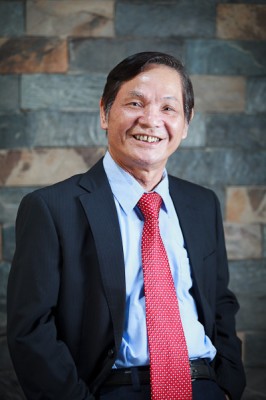
Professor Nguyen Van Khang (Institute of Linguistics) analyzed and affirmed the scientific contributions of Professor Nguyen Thien Giap in linguistic research through the series of works that were awarded the State Prize for Science and Technology in 2010: "Vietnamese Lexicology" (1985) and "Words and Word Identification in Vietnamese" (1996).
Just like the materials used to build a house, with bricks being the traditional material, language is indispensable.
fromand equivalent units such as
from(Just like building a house requires materials). Therefore,
fromIt is a natural occurrence in the linguistic system and in the study of
fromIt has become a central focus of linguistics. This simple way of thinking also means that,
fromThis is a problem that is both traditional and modern in the field of linguistics.
FromIt has become an indispensable part of general linguistics, with thousands of definitions derived from specific studies on the subject.
fromIn each language, and based on that, it is applied and further research is conducted extensively and continuously across all languages. In Vietnam, research on
fromIt has a long history. Especially when the issue...
from VietnameseIt became a subject of research in both grammar (lexical science) and vocabulary. Professor Nguyen Thien Giap, after graduating with a degree in linguistics from the Faculty of Literature at Hanoi University and being retained as a lecturer, quickly joined the ranks of vocabulary researchers. He entered the field of Vietnamese vocabulary research at a time when many others, including renowned Vietnamese linguists with extensive research and articles on Vietnamese words, were ahead of him. He joined the ranks of Vietnamese vocabulary researchers at a time when Vietnamese linguistics was at the height of structuralist research and
from VietnameseIt has become a central scientific content of Vietnamese linguistics at both the grammatical and lexicological levels of Vietnamese language.

Regarding the issue
from VietnameseThe question that is always asked is: what is a Vietnamese word (what constitutes a Vietnamese word) and what truly constitutes a Vietnamese word (the essence of a Vietnamese word). If we consider "syllabicity" as the fundamental, essential characteristic of the Vietnamese language, how should the issue of Vietnamese words be addressed in relation to this monosyllabic characteristic? Professor Nguyen Thien Giap follows an approach that, although previously mentioned, has not been thoroughly or comprehensively researched, namely:
Vietnamese words have a phonetic form in the form of a syllable. If we consider the morpheme as the meaningful unit of language, then Vietnamese words also coincide with syllables.Strictly adhering to this viewpoint, he argued that in Vietnamese, along with the basic vocabulary unit of "word," there is also another vocabulary unit called "phrase."
Phrases are pre-existing words in the Vietnamese language, which have the same value as individual words.He explained the concept of "language" as follows:
Unlike free phrases, expressions (compound words, reduplicated words, nominative phrases, idioms) all have syntactic properties in the relationships between their components.Concept
non-syntactic, according to him,
It's not that there are no syntactic relationships, but rather that syntactic relationships have deviated from the normal syntactic patterns of modern Vietnamese.According to his explanation, Vietnamese has "words, phrases, and sentences," and accordingly, concepts such as morphemes, simple words, compound words, derivative words, etc., if they exist, must also be explained through these three basic concepts. Compare this to the concept...
languagewhich he presented with the concept
phraseIn Indo-European languages, he argued that they are not entirely the same: semantically, the terms in Vietnamese are equivalent to derivative words, compound words, and fixed phrases in Indo-European languages. At this point, it is clear that, despite his additional explanations, the core concept he pursued—or, more accurately, the one he thoroughly implemented—is that "each syllable is a word."
simple words, complex words, compound words, reduplicated wordsin Vietnamese, which he translated
languagePerspective on
fromand
languageProfessor Nguyen Thien Giap's Vietnamese language appeared at a time when the journal *Language* was engaged in a lively and prolonged debate about...
sound, wordand
morphemeIn Vietnamese, he lined up and it was his turn to register and present his doctoral dissertation (now a PhD) to the linguistics community:
The problem lies in defining boundaries within the units commonly referred to as words in the Vietnamese language.(1983). I also attended that defense, and I vividly remember the "heated, tense atmosphere" when dissenting opinions arose regarding his thesis. But luckily for him, Professor Nguyen Tai Can - a man of profound knowledge both in science and everyday life - made a statement that gradually cooled the heated atmosphere of the hall, essentially saying that the issues raised were very good, and that they should refine their theories and knowledge so that we could continue the debate in the journal *Language*, and that this was the school's regulation… (at that time, the field of linguistics only had one journal, *Language*). This is understandable, as the viewpoint he thoroughly developed in his thesis seemed somewhat out of place with the prevailing view in Vietnamese at that time (and even now): that Vietnamese words consist of simple words, compound words, and reduplicated words. But things were different back then. It was the era of a planned economy (also known as the centrally planned economy), so all thinking followed a standardized approach. Linguistic research was no exception. For example, standardizing the Vietnamese language had to follow a normative approach, meaning there was a predefined framework to look within. If a word usage or utterance (now called a variant) didn't fit into the boxes of that framework, it would be considered wrong and non-standard. Going against a prevailing viewpoint associated with prominent figures was a significant risk in scientific research. I mention this not only to highlight Professor Nguyen Thien Giap's logical thinking and meticulous research on the Vietnamese language but also to showcase his scientific prowess. He was measured in his speech during scientific debates, gentle and subtle in his demeanor, but hidden within was a fierce determination… a determination that was persuasive through his hard work, creativity, intellect, and passion. I'm increasingly realizing that the viewpoint he expressed wasn't merely a matter of terminology or "arranging seating" for this or that unit. What good would that do if it were only a formal arrangement? For example, there have been articles that, focusing solely on formalities, have been confused about how to handle certain situations.
contemptIn Vietnamese, that is
contemptThe word is borrowed from Chinese (Sino-Vietnamese) and used in Vietnamese with two meanings: in the sense of "light",
contemptIt can only be used as a word-forming element.
hot air balloon); meaning "to disregard",
contemptused as a word (
I despise those who grovel.) is both a word-forming element (
contempt, disdain,
contempt). In response to phenomena such as
contemptThe other article has drawn a conclusion.
contemptIn Vietnamese, it's sometimes a word, sometimes not. Actually, there's nothing to complain about regarding this conclusion, because grammar at that time mainly focused on form and structure, without combining grammatical and semantic research. And it's not just in our country; even leading linguists like J. Layons have expressed the same opinion, essentially saying, "Let's consider..."
fromas
sentenceThese are the "default" units for working (to avoid the "effort" of debating). Professor Nguyen Thien Giap, in his research on Vietnamese words, has aimed at broader, more theoretical issues. This is evident in his subsequent research when he applied the centro-marginal theory of modern linguistics to the study of Vietnamese words. He argues that this conceptual approach to Vietnamese words is consistent with general linguistic theory, the tradition of Oriental studies, Vietnamese philology, and the characteristics of the Vietnamese language. According to him, this way of conceptualizing words...
languageThus, Vietnamese grammar will have a basis for studying related content beyond vocabulary. For example, is it still necessary to distinguish between morphology and syntax in Vietnamese, as general linguistics has done? It should also be added that, although the view that words coincide with syllables, which he pursued, remains only one of the viewpoints on Vietnamese words, his contribution lies in thoroughly adhering to that viewpoint through systematic and in-depth research into the Vietnamese language.

If there are prodigies in natural sciences, it's difficult to find them in social sciences. This is true of Professor Nguyen Thien Giap. Not relying solely on intelligence, Professor Nguyen Thien Giap's success today is due to his diligent, "hardworking bee" approach. He teaches, researches, and writes books. Teaching helps him "apply and test" his practical knowledge, reading helps him supplement his knowledge, and writing books is a manifestation of his intellect. Thanks to this, along with his research works on Vietnamese vocabulary, which have been reprinted many times, each time with updated knowledge and new practical data on the Vietnamese language, he also has other works such as...
Vietnamese Language Studies(2000),
A Brief History of Vietnamese Linguistics(Volume 1, 2005; Volume 2, 2007; editor-in-chief)
Linguistic research methods(2005)
Linguistics textbook(2008)
777 linguistic concepts(2010; Hanoi National University Award). Despite numerous published books and a vast following of students, Professor Nguyen Thien Giap maintains a simple, familiar lifestyle befitting an educator—a closed circle of teaching, reading, and writing. Congratulations to Professor, Doctor, and People's Teacher Nguyen Thien Giap on receiving the 2010 State Award for Science and Technology (awarded every five years) for his two works on Vietnamese vocabulary. The field of Vietnamese linguistics has gained new contributions from him. Colleagues share in his joy at his achievement. Generations of his students are proud of their teacher. Hanoi University and its Faculty of Literature, Hanoi National University, and the Hanoi University of Social Sciences and Humanities and its Faculty of Linguistics are delighted and proud to have educators like Professor, Doctor Nguyen Thien Giap.