From food to cultural stories
During their studies and experiences in Vietnam, cuisine is one of the things that leaves a lasting impression on international students. At the Faculty of Linguistics and Vietnamese Studies, students are introduced to typical Vietnamese dishes, learning about the ingredients, preparation methods, and cultural stories associated with each dish.
Interestingly, for international students, food is not just about taste. Through each dish, they have the opportunity to learn more about family life, customs, and the cultural diversity of different regions of Vietnam.
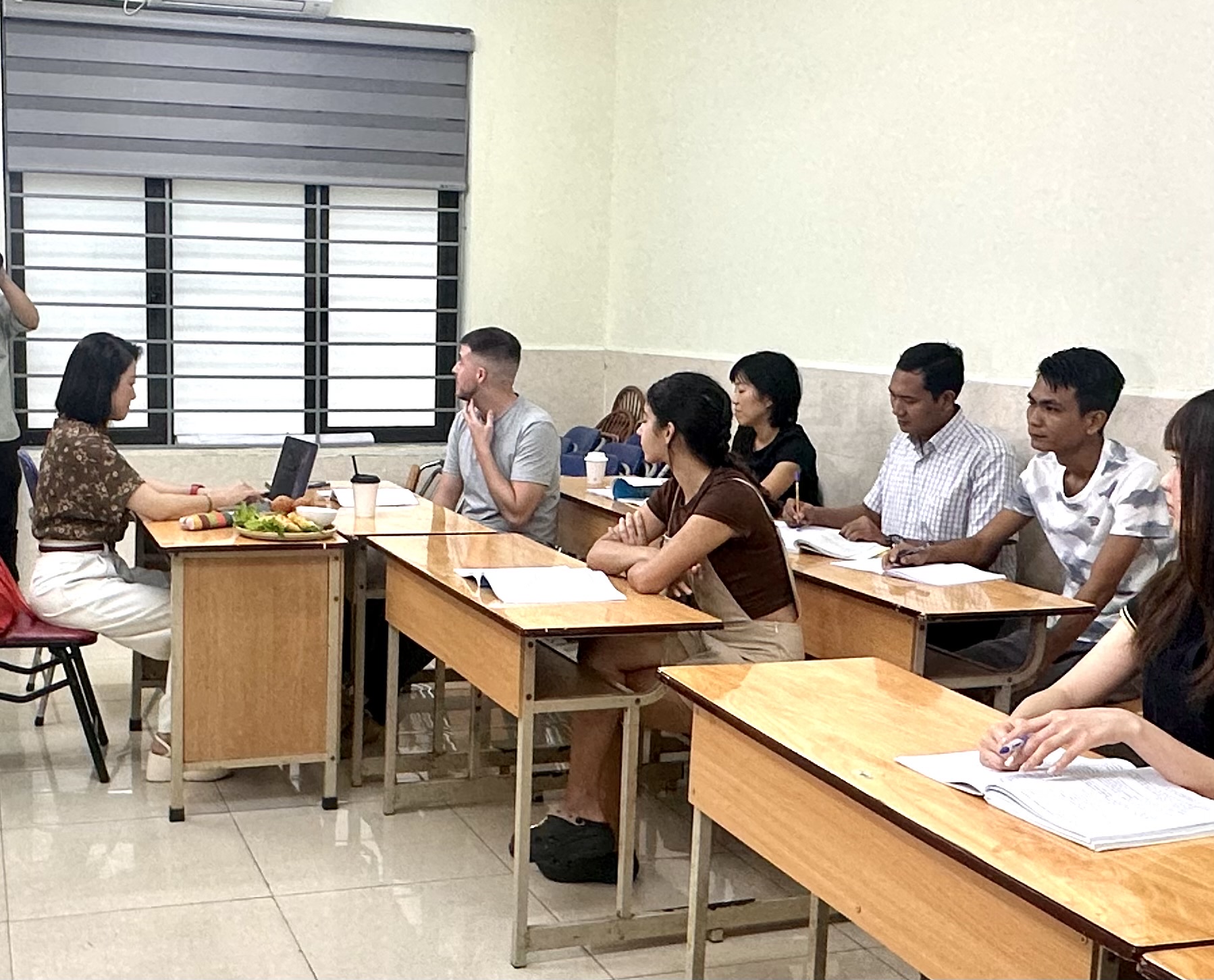
Starting with seemingly familiar dishes, the students began to ask many questions: Why do Vietnamese people often gather around the dinner table? Why is Tet (Vietnamese New Year) associated with traditional dishes? Why does each region have its own unique flavors?
These questions transform the exploration of Vietnamese cuisine into a vibrant cultural experience. Students not only "learn about another Vietnamese dish" but also gradually understand the cultural values embedded in the food and in the way Vietnamese people enjoy it.
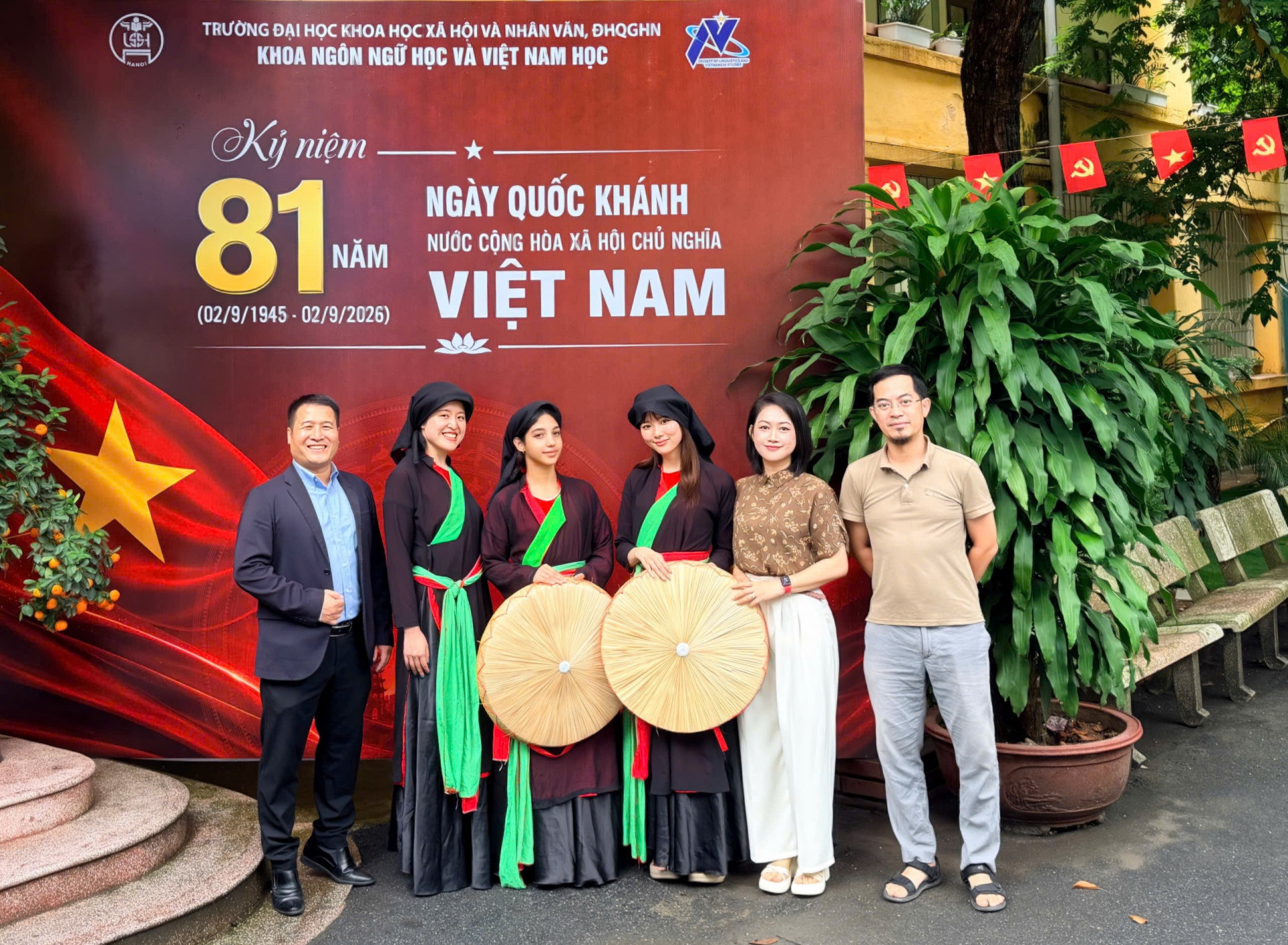
The first time singing Quan Ho folk songs.
While cuisine helps international students explore Vietnamese culture through taste, Quan Ho folk singing from Bac Ninh offers a completely different experience – a cultural experience through sound, language, and emotion.
During the practical session, international students were introduced to Quan Ho Bac Ninh, a distinctive folk song genre from the Kinh Bac region. They became familiar with the melodies, lyrics, and performance styles of Quan Ho songs, and also practiced singing them in Vietnamese.
Initially, pronouncing the lyrics, memorizing the melody, and performing the rhythm correctly were not easy for those learning Vietnamese. However, these initial difficulties created excitement. Students listened attentively, practiced each line of the song, corrected each Vietnamese sound, and practiced together.
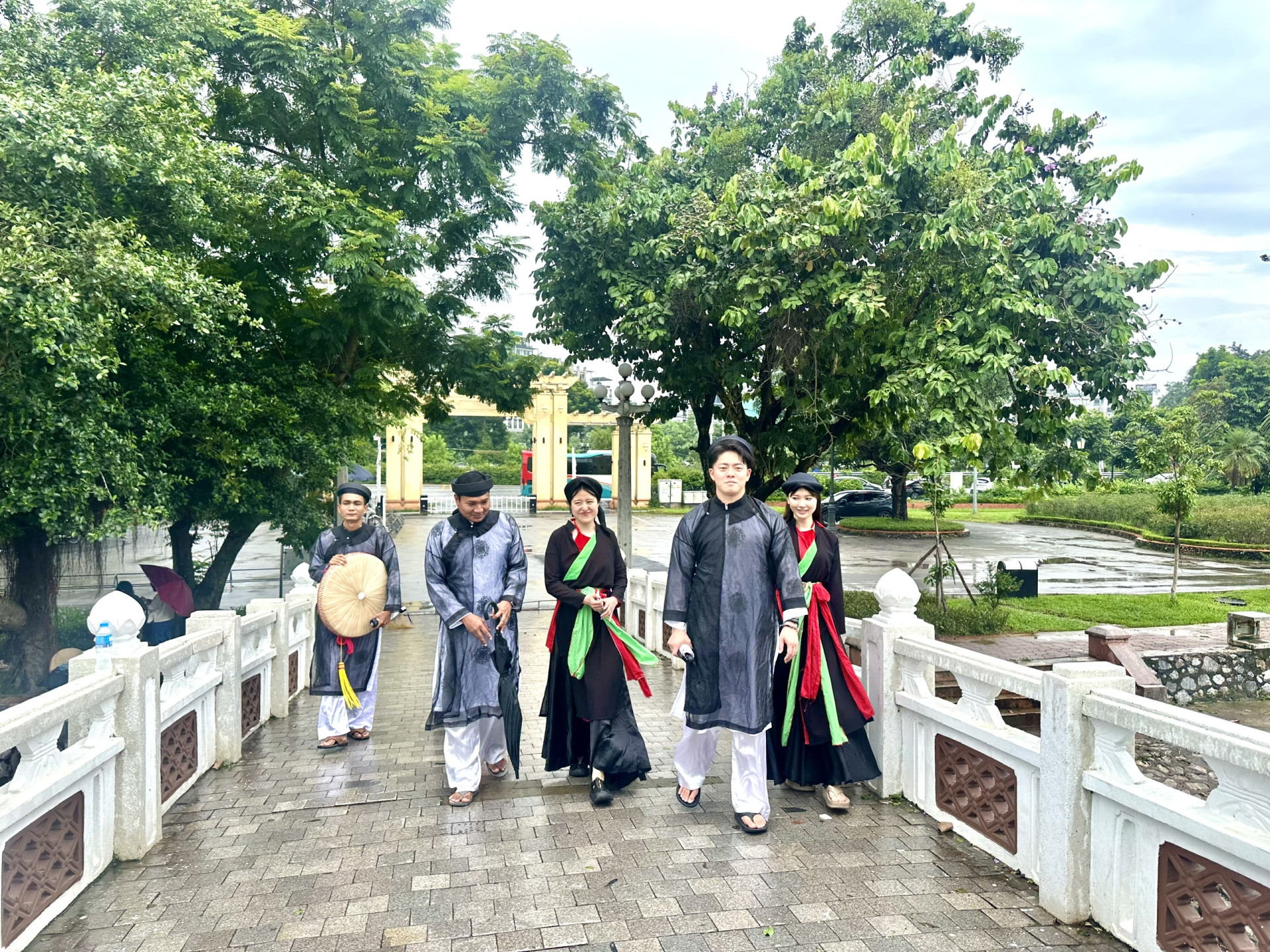
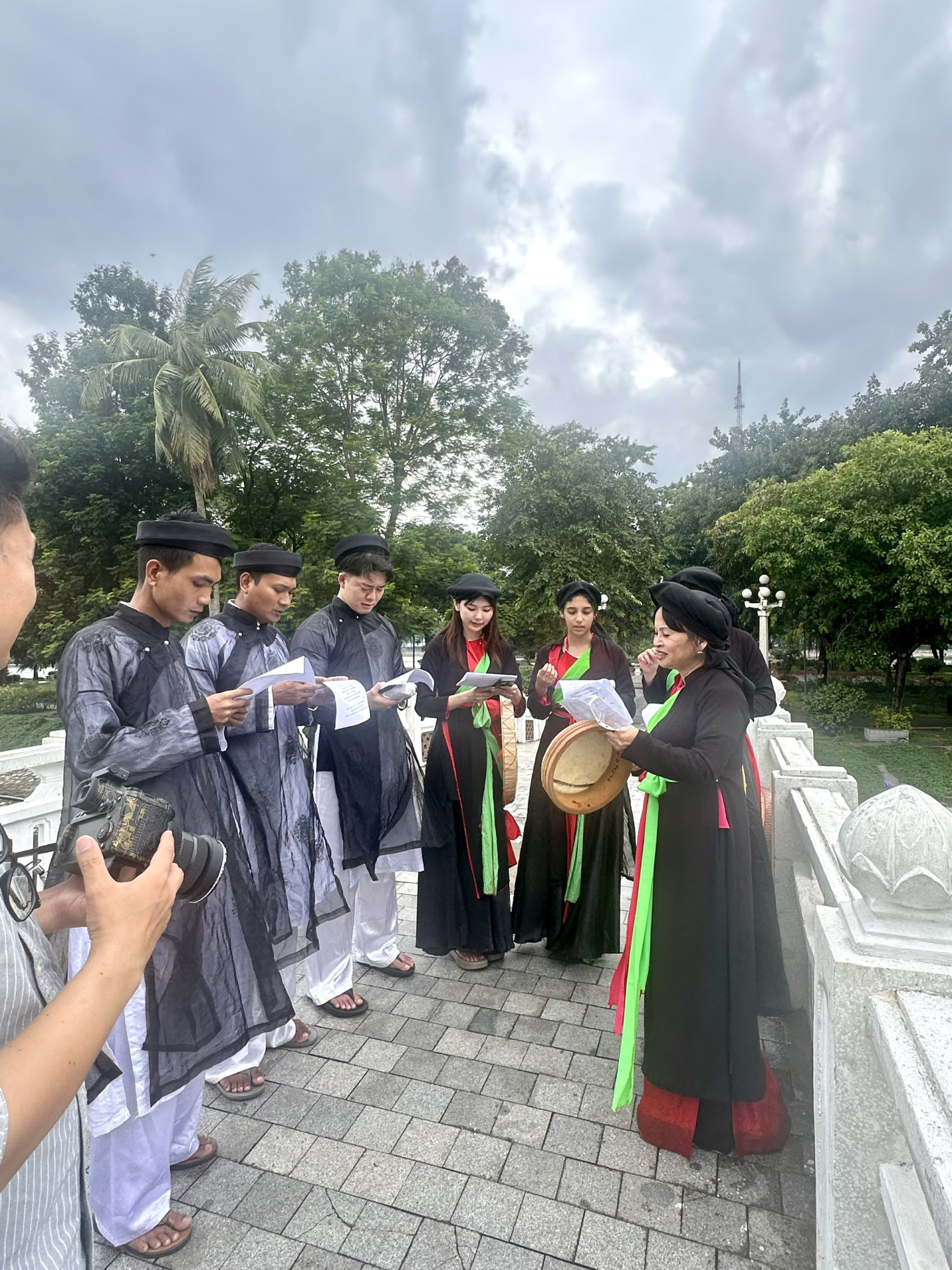
In particular, when students from different countries sing Quan Ho folk songs together in Vietnamese, the cultural exchange becomes very special. A Vietnamese folk melody is performed by voices with the timbres of many different countries.
A memorable aspect of these activities is that international students are not merely observing Vietnamese culture from the sidelines. The Department of Linguistics and Vietnamese Studies always creates opportunities for them to directly participate, practice, and experience. Through this, Vietnamese culture is no longer confined to textbooks or lectures. Culture becomes an integral part of academic life: the flavors of the food, the sounds of the songs, the use of the Vietnamese language in communication, and moments of interaction between young people from many different countries.
From the experiencer to the "cultural bridge"
A memorable experience in Vietnam may not end when the classes are over. After returning home, international students can tell their families and friends about the food they enjoyed, the Vietnamese phrases they learned, or the first time they sang a Quan Ho folk song.
In this way, international students can become natural "cultural bridges" between Vietnam and the world. They are not "ambassadors" in an official role, but the authentic experiences and feelings formed during their time studying in Vietnam can help them become "unofficial cultural ambassadors".
At the Department of Linguistics and Vietnamese Studies, such experiences are opening up a space for international students not only to learn Vietnamese and understand Vietnam, but also to "touch" Vietnamese culture through their own experiences.
Author:Department of Linguistics and Vietnamese Studies
Older news

