University of Social Sciences and Humanities - VNU Hanoihttps://ussh.vnu.edu.vn/uploads/ussh/logo-ussh-2_100_100.png
Wednesday - 09/04/2025 21:38
Like any honest work, the work of journalists produces valuable information for social life. The diligence and seriousness of the journalistic workforce have contributed to a vibrant press that is increasingly moving towards "professionalism, humanity, and modernity."
Students from the Institute of Journalism and Communication Training working at the studio of the University of Social Sciences and Humanities, Vietnam National University, Hanoi.
… The qualities that make a good journalist
Journalism not only conveys profound insights into pressing social issues but also captivates readers, reflecting the allure of a dynamic, creative, and dedicated profession that generates a powerful flow of information in social life. For many consecutive years, the Journalism program at the University of Social Sciences and Humanities, Vietnam National University, Hanoi, has consistently ranked among the top 5 programs with the highest number of applications.
Being in the heart of a leading institution in the country for social sciences and humanities provides journalism students with unique advantages. Fundamental knowledge in social sciences and humanities, including history, culture, society, language, psychology, and international affairs, is imparted systematically. This creates a solid foundation of social knowledge and practical skills. The training program also pays more attention to new aspects of media technology and the characteristics of modern media audiences to develop new, up-to-date subjects in journalism such as Data Journalism, Mobile Journalism, Multimedia, etc. Creative journalism incorporates many other knowledge modules such as economic journalism, journalism management skills, media administration, journalism and law, journalistic ethics, journalistic culture, characteristics of modern media audiences, etc., into the curriculum to create a rich and comprehensive body of knowledge for the journalism profession. "Journalists have a special mission: to create a flow of information in society, to speak the truth, to possess a high spirit of social critique, and to guide public opinion. With this mission, journalism training at the Institute of Journalism and Communication Training aims to provide society with a workforce in journalism and communication that possesses both professional ethics and expertise, good foreign language skills, multimedia journalism and communication skills, and media management and communication management skills, in order to meet the increasingly high demands of media organizations and employers," said Assoc. Prof. Dr. Dang Thi Thu Huong, Vice Rector of the University of Social Sciences and Humanities, Vietnam National University, Hanoi.
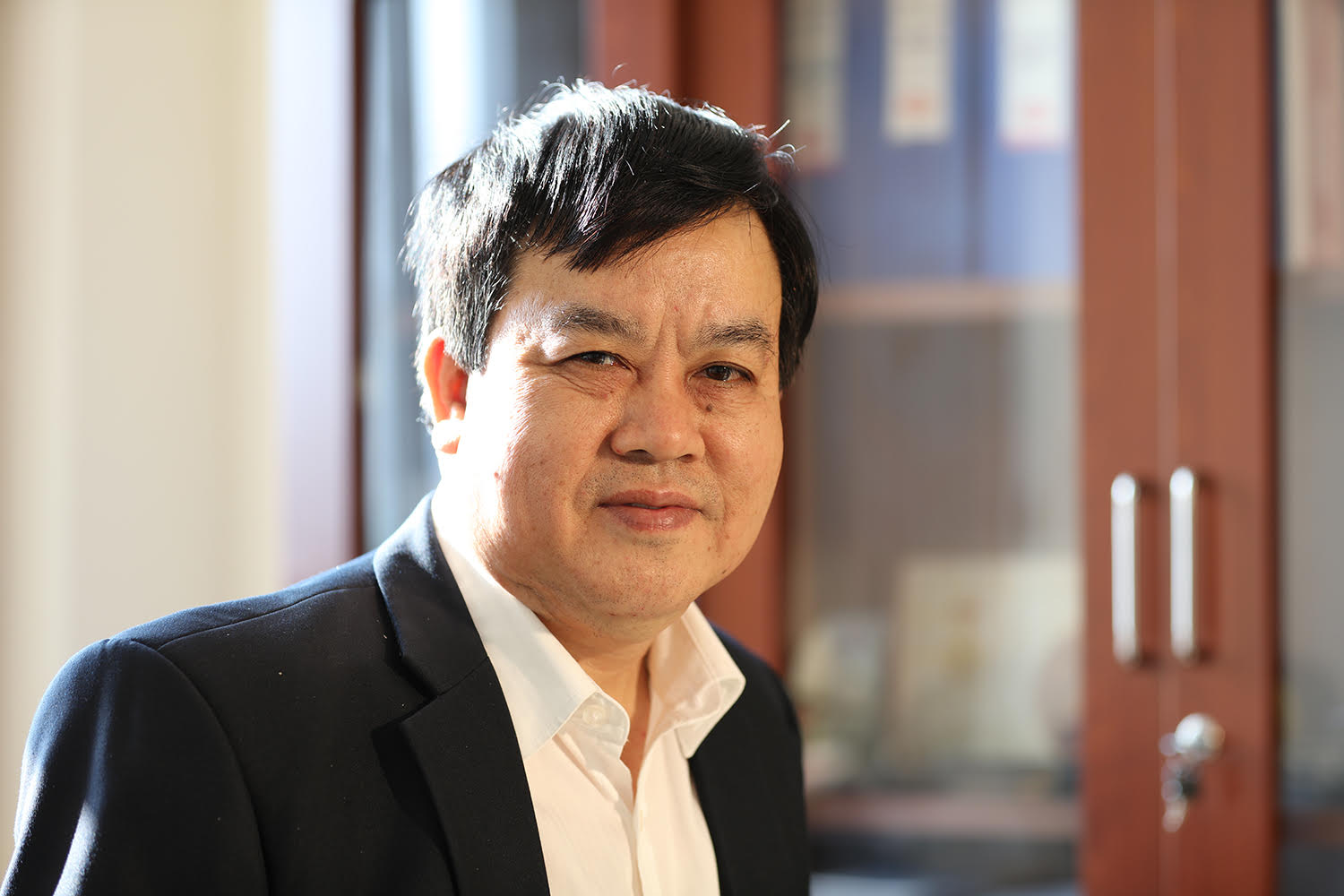
Assoc. Prof. Dr. Dinh Van Huong - former Head of the Faculty of Journalism and Communication (2001-2011), Senior Lecturer at the Institute of Journalism and Communication Training
A socially responsible journalist must first and foremost be responsible for every word they write. Those words cannot contradict current viewpoints and laws, cannot harm the community, affect the interests of the nation and its people, or damage the reputation and mission of the newsroom. Many journalists have not hesitated to change, actively and passionately learning to improve their theoretical knowledge, professional skills, and especially to access new technologies and trends in modern journalism to enhance the quality of their journalistic products. Therefore, amidst the many changes of the times and of journalistic life, journalists need to adapt, but still maintain their "passion," "courage," and "responsibility" to nurture their love for the profession and pride in the work they have chosen, contributing a small but useful part to society – Associate Professor, Doctor of Science, Meritorious Teacher Dinh Van Huong - former Head of the Faculty of Journalism and Communication (2001-2011), Senior Lecturer at the Institute of Journalism and Communication Training shared. The indispensable elements of journalism in the context of digital transformation… In the context of the strong digital transformation of the journalism and media sector, there is a need for changes in the training and development of human resources in journalism and media to adapt to new challenges and opportunities.
Director of the Institute of Journalism and Communication Training, Vietnam National University, Hanoi - Dr. Phan Kien
Dr. Phan Kien, Director of the Institute of Journalism and Communication Training at VNU-USSH, emphasized: In the context of an information society, media has become an institution that creates and controls the flow of information in society. Never before have we seen such a clear dependence of human life on media as today. Amidst the chaos and complexity of media platforms, journalism, more than any other medium, has become a place where the public places their trust. Among diverse, even contradictory, sources of information, the public will consider journalism as a place to verify the truth. Therefore, it can be said that journalism today is the most important tool for shaping public opinion in the context of media technology developing in many complex directions. This illustrates the crucial role of journalism training institutions today. When anyone can become a source of information and post it online, training journalists with the competence and qualities to shape and guide the flow of information in society becomes more important than ever. At the Institute of Journalism and Communication Training, students are equipped with a very solid foundation of knowledge. Inheriting the long-standing tradition of Hanoi University, it can be said that the University of Social Sciences and Humanities, Vietnam National University, Hanoi, currently has leading training programs in the field of social sciences and humanities nationwide. This is an important foundation that creates a difference between journalism and communication students at the university and those at other institutions across the country. With a good knowledge foundation, the tools, methods, and techniques of operation become simply skills. The character, life experience, and ethics of a journalist are forged by foundational knowledge, not by the skills in using the tools. Besides imparting knowledge with a team of well-trained personnel from advanced countries, we also focus on updating modern knowledge of global media, thereby innovating research and teaching methods, helping students to update and acquire knowledge easily and promptly. In the latest program update in 2023, our Institute's undergraduate Journalism program has promptly included the course "Digital Media Technology" in the curriculum. This course updates students with knowledge and skills related to the latest technologies in journalism and media, such as the SMAC converged system, algorithms and algorithm applications in journalism and media, Big Data technology, Artificial Intelligence technology, data analytics technology, virtual reality technology, augmented reality, etc.
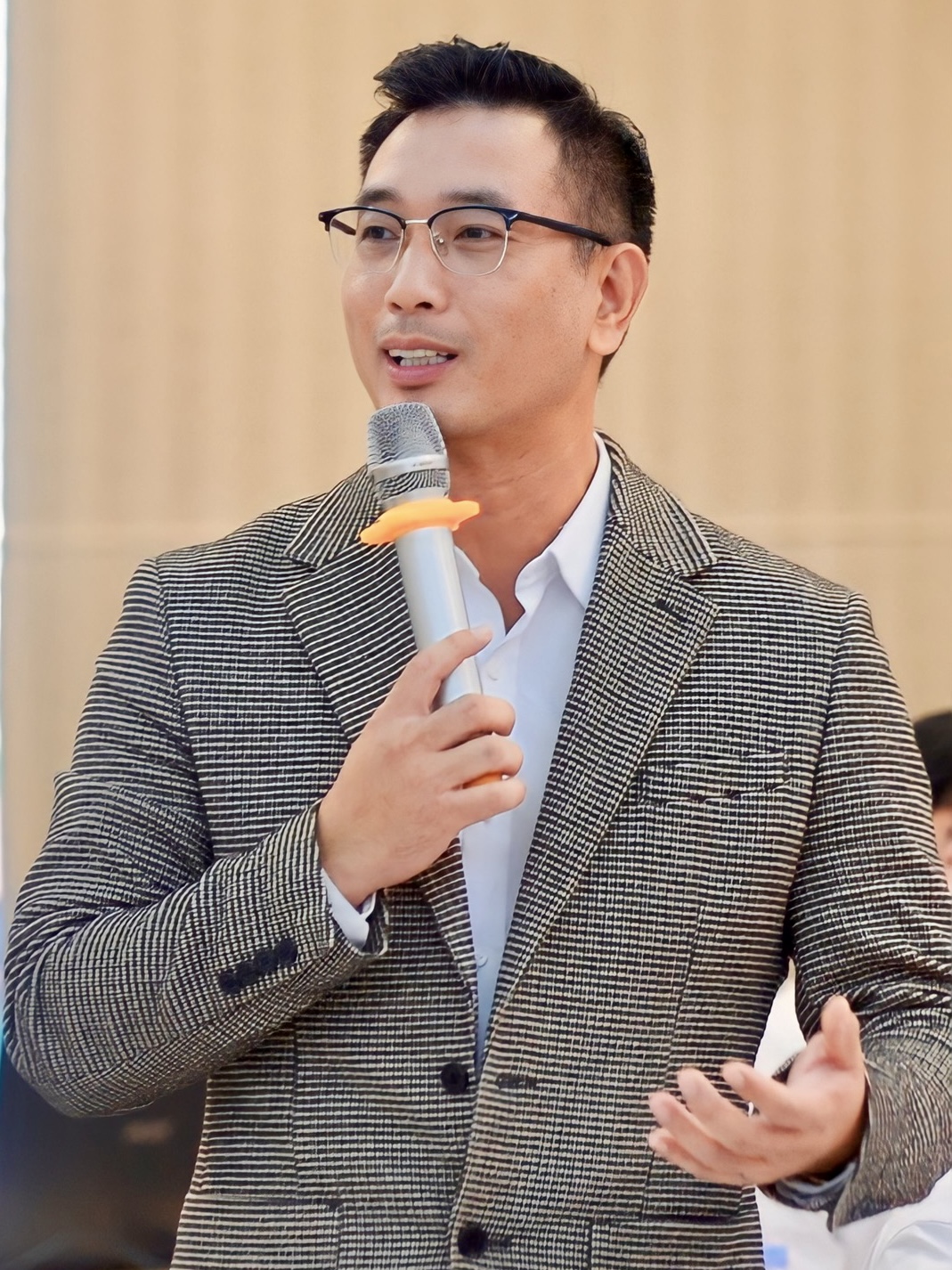
Dr. Do Anh Duc - Head of the Multimedia Communication Department, Institute of Journalism and Communication Training, University of Social Sciences and Humanities.
Sharing his thoughts on the evolution of journalism in the digital age, Dr. Do Anh Duc, Head of the Multimedia Communication Department at the Institute of Journalism and Communication Training, University of Social Sciences and Humanities, added: As someone who inspires future generations of journalists, teachers need to pay attention to important aspects such as: developing flexible training programs, providing students with diverse knowledge across multiple fields, especially knowledge of science and technology and new techniques such as artificial intelligence or machine learning. More emphasis should be placed on developing practical professional skills alongside foundational academic theoretical knowledge. Students need to be trained in content creation, project management, and the use of modern technical tools. For lecturers, it is necessary to regularly update their knowledge of technology and new trends in journalism and communication to support their teaching.
Lecturers must be at the forefront of researching and applying new technologies to impart knowledge to students. For training institutions, it is necessary to establish close cooperative relationships with media agencies, businesses, and employers to ensure that the quality of training program output aligns with the actual needs of the labor market. In addition, training institutions need to invest in facilities and practical training systems, creating opportunities for lecturers and students to participate in training program development projects to adapt to the evolving modern media environment.
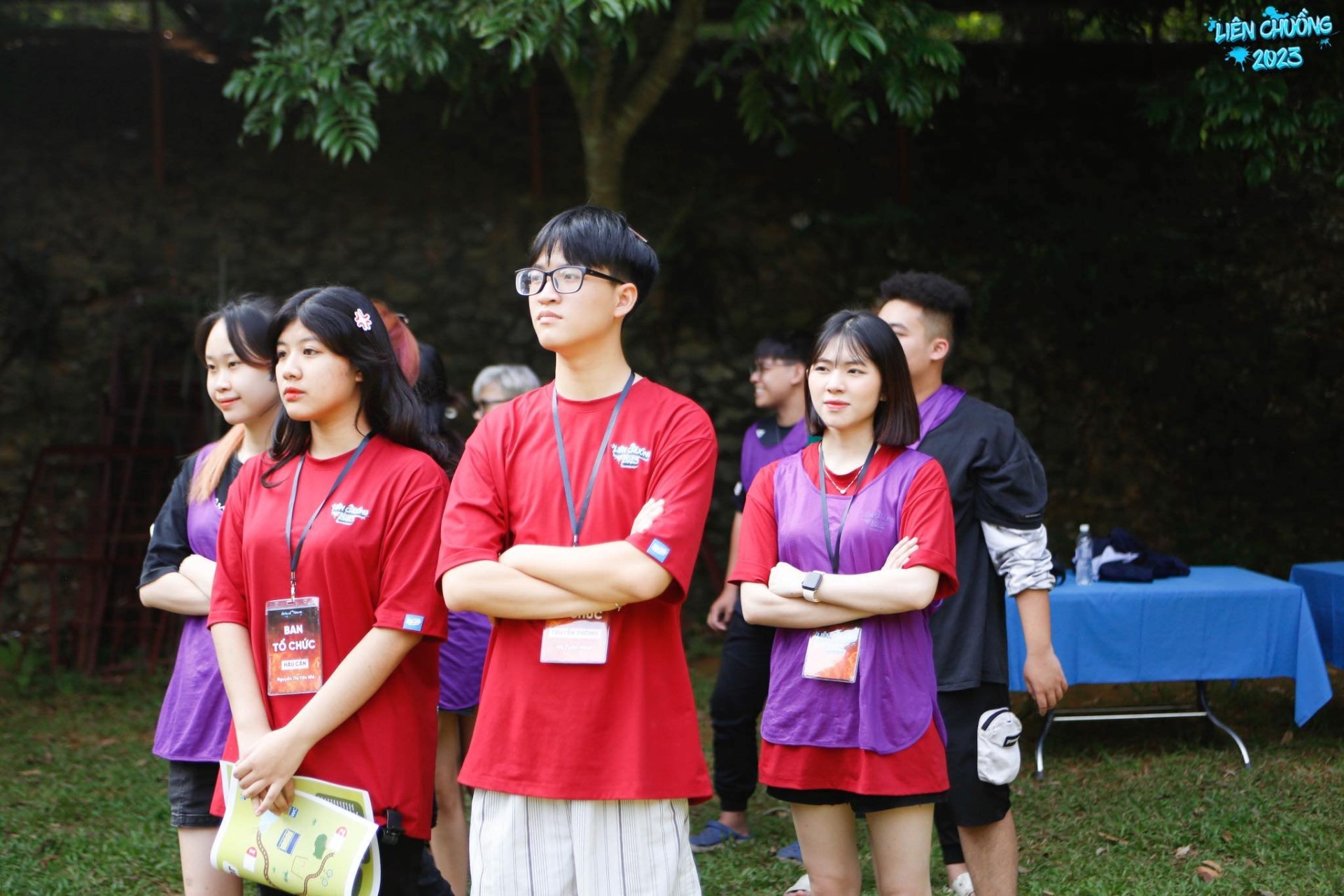
Ha Tuan Minh - a student from class K67 Journalism - participated in the Nhan Van Journalism Festival, an annual camping event for students of the Institute of Journalism and Communication Training.
Sharing his experience studying at the Institute of Journalism and Communication Training, Ha Tuan Minh, a student from class K67 of Journalism, said: "The learning process at the University of Social Sciences and Humanities in general and the Institute of Journalism and Communication Training in particular has given me fundamental knowledge not only in journalistic skills but also in learning and scientific research skills – a strength of the University, and also an indispensable skill when working in any field, especially journalism and communication. However, the most special thing that students learn when studying for a Bachelor of Journalism degree is not academic knowledge or professional skills, but a life attitude towards their profession: a journalist, a communicator, must first and foremost be an honest person. In an era where information power reigns supreme, those working in journalism and communication need compassion and a spirit of self-criticism more than anyone else so that the power in their hands can practically help the community." That's the best thing that I and other students have learned as journalism students at the Institute of Journalism and Communication Training.
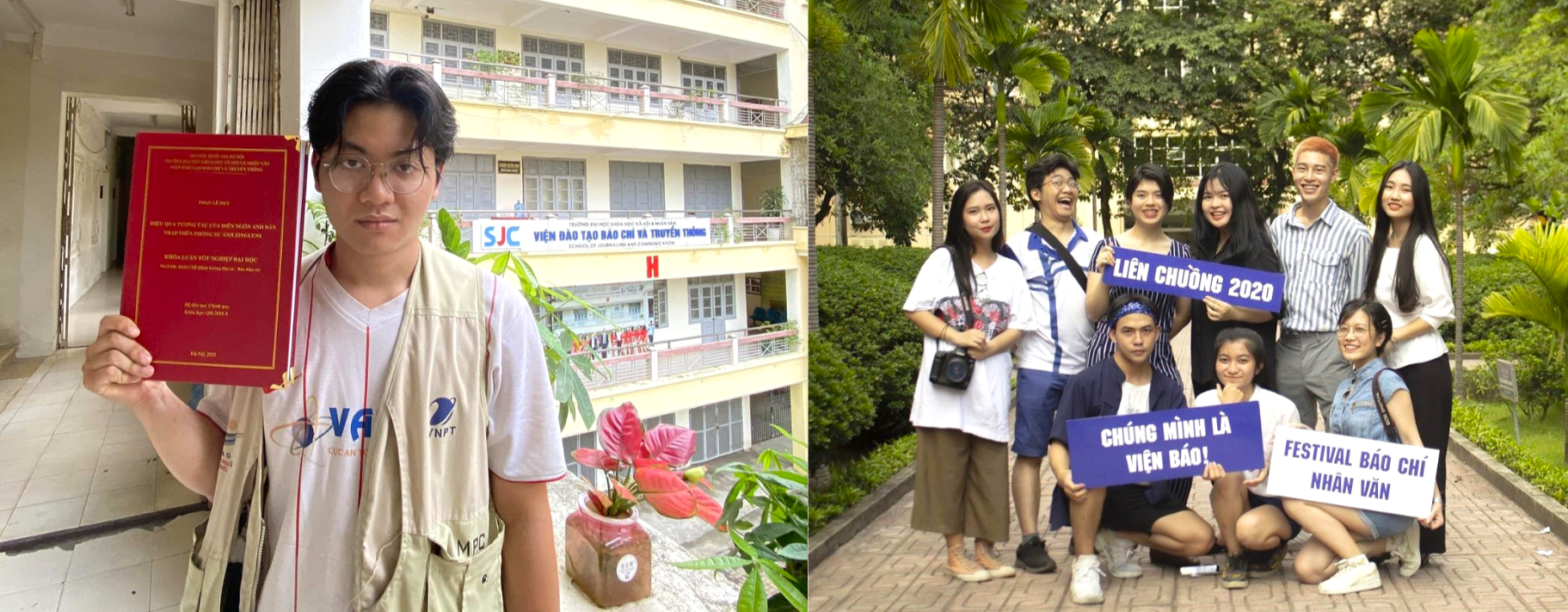
Expressing his feelings as a master's student at the Institute of Journalism, and also as a reporter working at an online newspaper in Hanoi, Phan Le Huy said that he learned a lot during his undergraduate studies at the Institute, so after graduation he worked while continuing his master's studies in Journalism. Le Huy said that students in master's programs have access to knowledge learned at the undergraduate level, but at a deeper level, with a greater focus on analytical and critical thinking skills. While the subjects initially seem similar to the undergraduate program, the learning, teaching, and problem-solving approaches at the master's level are very different; he entered a new and fascinating academic world.
Admission information for the Institute of Journalism and Communication Training, VNU Hanoi in 2024: • Major Name: Journalism • Program/Course Code: QHX01 (Standard Training Program) - QHX40 (High-Quality Training Program) • Training institution: Institute of Journalism and Communication Training