University of Social Sciences and Humanities - VNU Hanoihttps://ussh.vnu.edu.vn/uploads/ussh/logo-ussh-2_100_100.png
Saturday - December 27, 2025 10:47 AM
(People's Representatives Newspaper) On December 27, 2025, a scientific conference titled "The Founding Saints of the Ly Dynasty in the History of Vietnamese Buddhism" was held at the Tam Chuc Spiritual and Cultural Tourism Area in Ninh Binh province. This was a large-scale academic forum aimed at deciphering historical, religious, and cultural issues from a modern, interdisciplinary, and cross-sectoral scientific perspective.
A report by Ninh Binh Television on the seminar "The Founding Saints of the Ly Dynasty in the History of Vietnamese Buddhism"
The scientific conference was organized by the University of Social Sciences and Humanities, Vietnam National University, Hanoi, in collaboration with the Department of Culture, Sports and Tourism of Ninh Binh province; Tam Chuc Tourism Services Co., Ltd. and other relevant agencies and units. The conference attracted approximately 400 delegates, including scientists, scholars, researchers, lecturers, monks, Buddhists, and interested individuals from both within and outside the country.
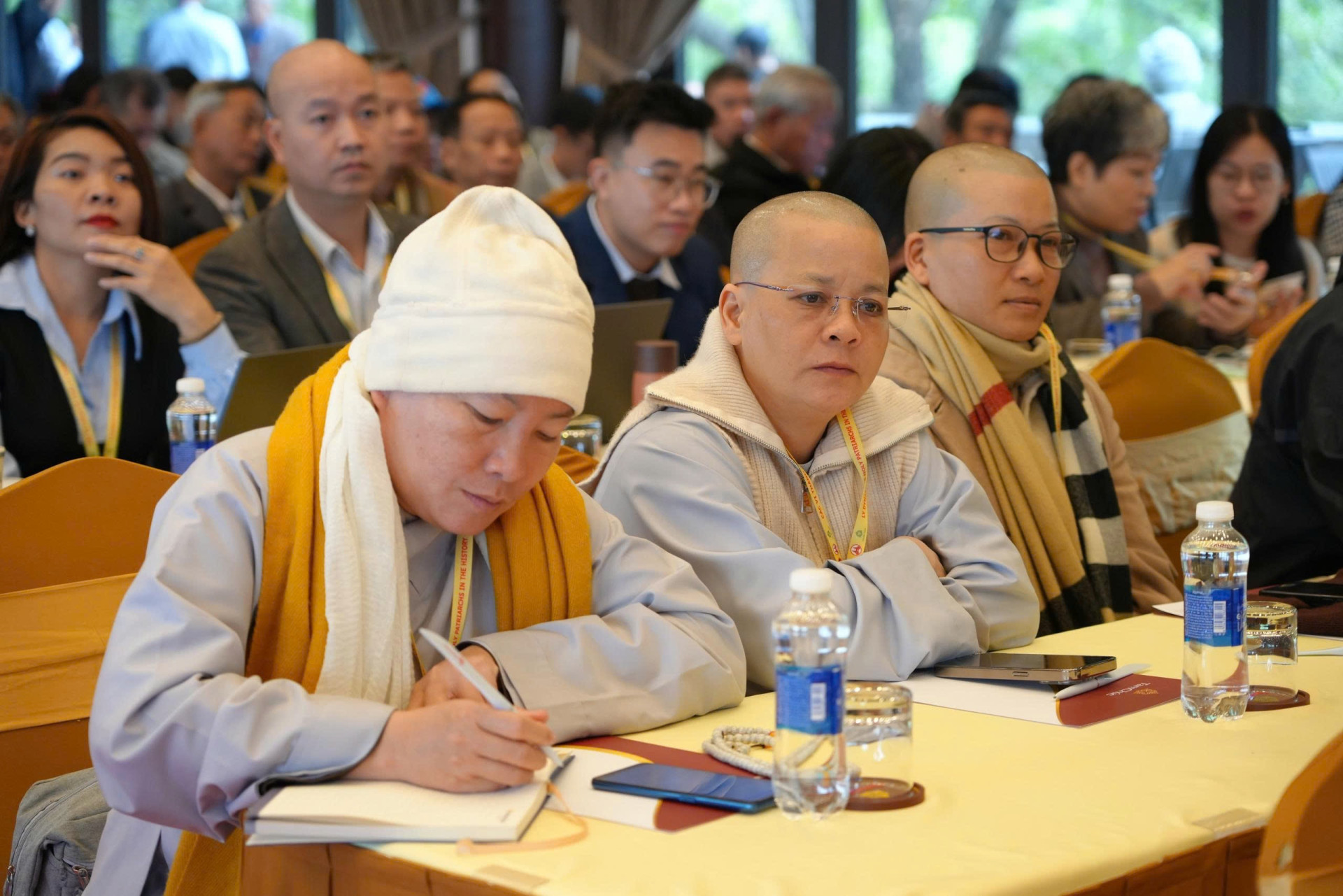
Delegates attending the workshop
The conference was organized to announce research findings and discuss various issues, such as: studying the historical and social context of Dai Viet during the Ly Dynasty; analyzing the role of Buddhism in shaping and developing culture, thought, and social ethics; and clarifying the significant contributions of Buddhism to the ideological, ethical, educational, and artistic foundations of Dai Viet. In addition, the workshop focused on collecting, compiling, and systematizing documents related to the tangible and intangible cultural heritage of the Three Patriarchs of the Ly Dynasty; conducting in-depth research to clarify their roles and contributions.
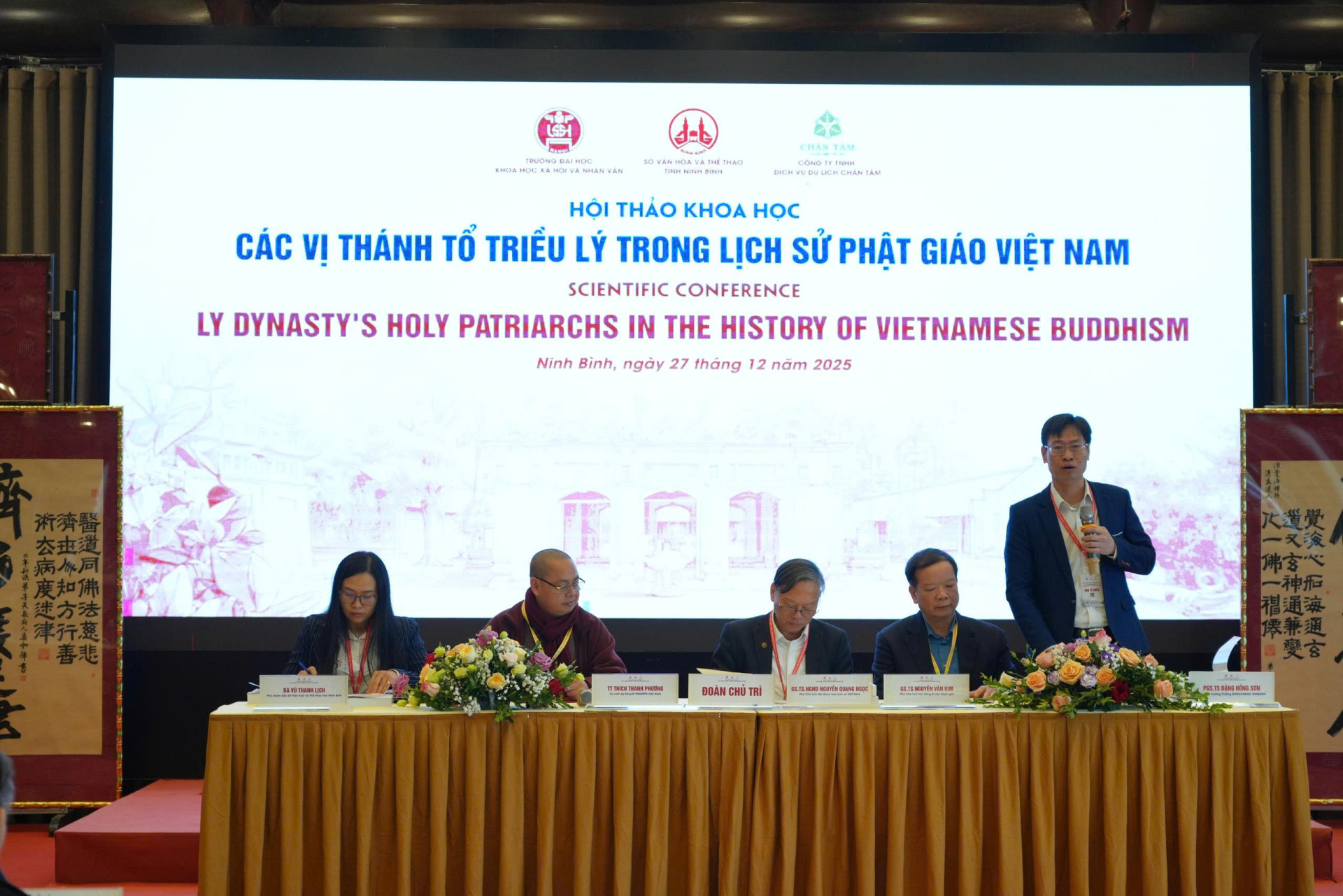
Conference organizing committee
The golden age of Vietnamese Buddhism At the workshop, delegates exchanged and discussed the value of the Three Patriarchs' heritage in contemporary life and how to promote this heritage to foster sustainable community and social development, contributing to the preservation and development of national cultural heritage. According to scientists, Buddhism was introduced to Vietnam in the early centuries AD. During its introduction and development, Buddhism proved to be a peaceful religion, capable of integrating with the traditional beliefs of the Vietnamese people. The compassionate and forgiving spirit of Buddhism contributes to educating people to live selflessly, harmoniously, and to promoting equality and social progress. Buddhism has also provided a favorable environment for the development of many forms of literature, art, architecture, sculpture, etc. In each historical period, Buddhism has left profound imprints, demonstrating its spirit of close connection and companionship with the nation. Many monks with the philosophy of "engaged Buddhism" have participated in helping society and the country, and their contributions are recorded in history. The Ly and Tran dynasties are considered the golden age of Vietnamese Buddhism. Under these dynasties, Buddhism played a crucial role, serving as a spiritual foundation in building the kingdom, creating a peaceful, prosperous, and people-friendly nation. Temples were not only centers of local culture and religion but also centers of education, disseminating knowledge and learning; monks became the intellectual class, contributing to the formation of the philosophical and ideological foundations of society. Many monks were appointed National Preceptors and participated in the political activities of the imperial court. Notable examples include the Three Patriarchs of the Ly Dynasty, namely Zen Master Minh Khong, Tu Dao Hanh, and Giac Hai, who left behind a significant Buddhist legacy in the nation's history.
The book was exhibited at the conference.
Marking a glorious era of civilization. In his opening remarks at the conference, Professor Hoang Anh Tuan, Rector of the University of Social Sciences and Humanities – Vietnam National University, Hanoi, and head of the conference organizing committee, emphasized: "The history of the Vietnamese nation spans thousands of years of nation-building and defense. Within this history, the Ly Dynasty (1009–1225) stands out as one of the most brilliant eras of civilization – an era of creation, enlightenment, tolerance, and comprehensive development. This was an era where Buddhism was not only a religion but also an ideological foundation, a national religion that went hand in hand with the nation's destiny."
Professor Hoang Anh Tuan, Rector of the University of Social Sciences and Humanities – Vietnam National University, Hanoi
According to Professor Hoang Anh Tuan, the phenomenon of "Holy Founder" or "Holy Monk" during the Ly Dynasty was a unique and rare feature in the history of Vietnamese thought and religion. Figures such as National Master Nguyen Minh Khong, Zen Master Tu Dao Hanh, Zen Master Duong Khong Lo... were not only religious figures but also became cultural symbols in the folk consciousness, contributing to national protection and peace, healing the sick, and serving as the founders of many traditional crafts. Professor Hoang Anh Tuan affirmed that the conference was a top-tier academic forum, with the participation of hundreds of papers from prestigious scholars both domestically and internationally, compiled in a meticulously researched scientific proceedings volume, demonstrating the appeal and importance of the topic. "The seminar not only looks back at the past with reverence, but also aims to draw valuable lessons about religious integration, cultural harmony, policies for valuing talent, and the 'engaged' spirit of Buddhism during the Ly Dynasty – values that remain highly relevant today for cultural revival and sustainable national development," Professor Tuan emphasized.
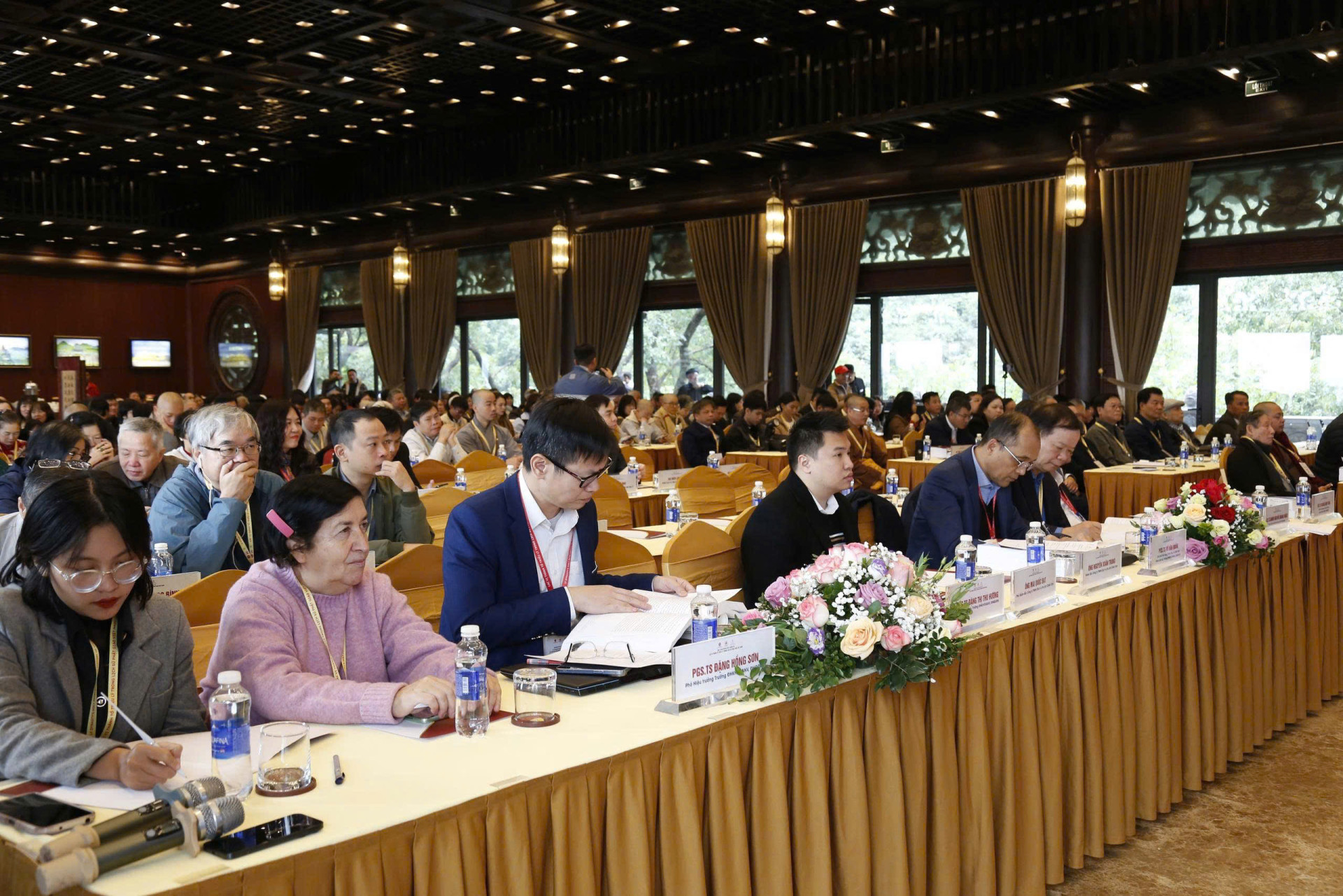
Delegates attending the workshop
The conference was organized to announce research findings and discuss various issues, such as: studying the historical and social context of Dai Viet during the Ly Dynasty; analyzing the role of Buddhism in shaping and developing culture, thought, and social ethics; and clarifying the significant contributions of Buddhism to the ideological, ethical, educational, and artistic foundations of Dai Viet. In addition, the workshop focused on collecting, compiling, and systematizing documents related to the tangible and intangible cultural heritage of the Three Patriarchs of the Ly Dynasty; conducting in-depth research to clarify their roles and contributions.
The workshop initiated and provided scientific arguments for the development of the cultural and spiritual tourism route "The Pilgrimage Path Following in the Footsteps of the Ancestral Saints of the Ly Dynasty".
Developing a cultural and spiritual tourism route: "The pilgrimage path following in the footsteps of the founding saints of the Ly Dynasty". The conference attracted nearly 100 scientific papers focusing on three main groups of issues: the historical, social, and Buddhist context of Dai Viet during the Ly Dynasty; the lives and achievements of the founding saints of the Ly Dynasty; and the legacy of the founding saints of the Ly Dynasty – identification, preservation, and promotion of its value. According to the Organizing Committee, a key objective of the conference is to initiate and provide scientific arguments for the development of a cultural and spiritual tourism route, "The Pilgrimage Path Following the Footsteps of the Ancestors of the Ly Dynasty," connecting typical Buddhist relics, cultural spaces, and centers. This model is expected to harmoniously combine scientific research, heritage preservation, and sustainable development, contributing to the dissemination of the cultural and spiritual values of Vietnamese Buddhism to the community and society. The workshop is also a significant scientific activity, continuing and expanding the research programs on Buddhism, religion, and beliefs that the University of Social Sciences and Humanities – VNU Hanoi has been implementing for many years. With its strengths as a leading training and research center in the fields of history, Buddhism, Sino-Vietnamese studies, anthropology, cultural studies, and heritage studies, the school has been leading and coordinating many national-level scientific projects and maintaining a network of academic cooperation with research institutes, universities, religious organizations, and cultural management agencies both domestically and internationally.
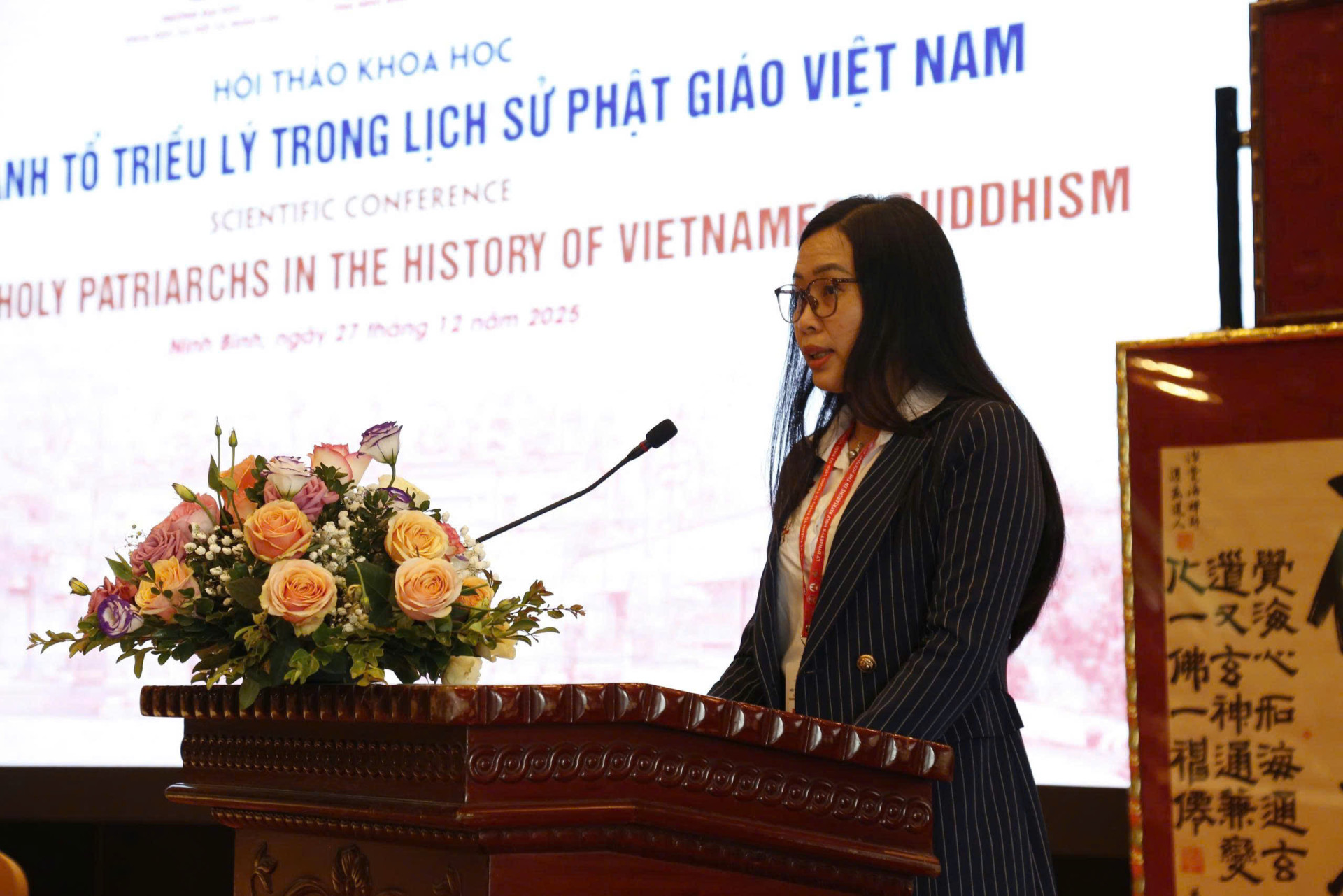
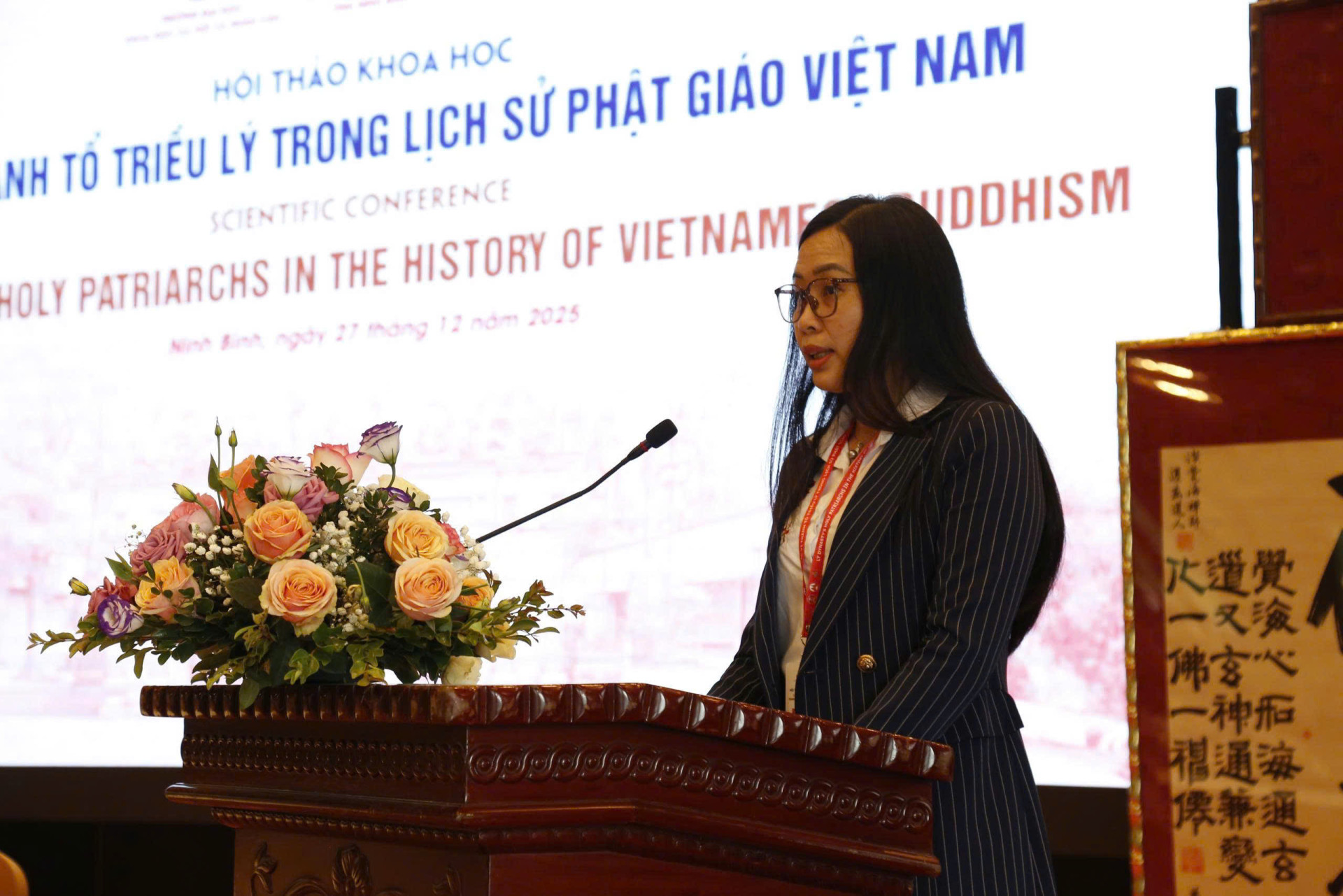
Ms. Vu Thanh Lich, Deputy Director of the Department of Culture and Sports of Ninh Binh province
Speaking at the workshop, Ms. Vu Thanh Lich, Deputy Director of the Department of Culture and Sports of Ninh Binh province, said that the workshop had contributed to clarifying the historical and cultural value of the founding saints of the Ly dynasty in the history of Vietnamese Buddhism, and at the same time supplemented the scientific basis for the preservation and promotion of cultural heritage values today. According to Ms. Vu Thanh Lich, Ninh Binh is a land with a rich history and culture, having served as the capital of the Dai Co Viet State in the 10th century and holding an important position in the nation's historical process. Throughout the Dinh, Early Le, and Ly dynasties, this land was closely associated with the formation and development of Vietnamese Buddhism. These values are still preserved and promoted today, becoming an important resource for sustainable development.