Identifying the changes in the country.
The seminar is an opportunity to look back on four decades of reform, clarify the changes in thinking and development practices of the country, summarize the achievements, limitations, and lessons learned from 40 years of reform associated with promoting international integration, and identify opportunities and challenges in the new context. Through this, it clarifies the scientific and practical arguments for planning and implementing national development policies in the new era.
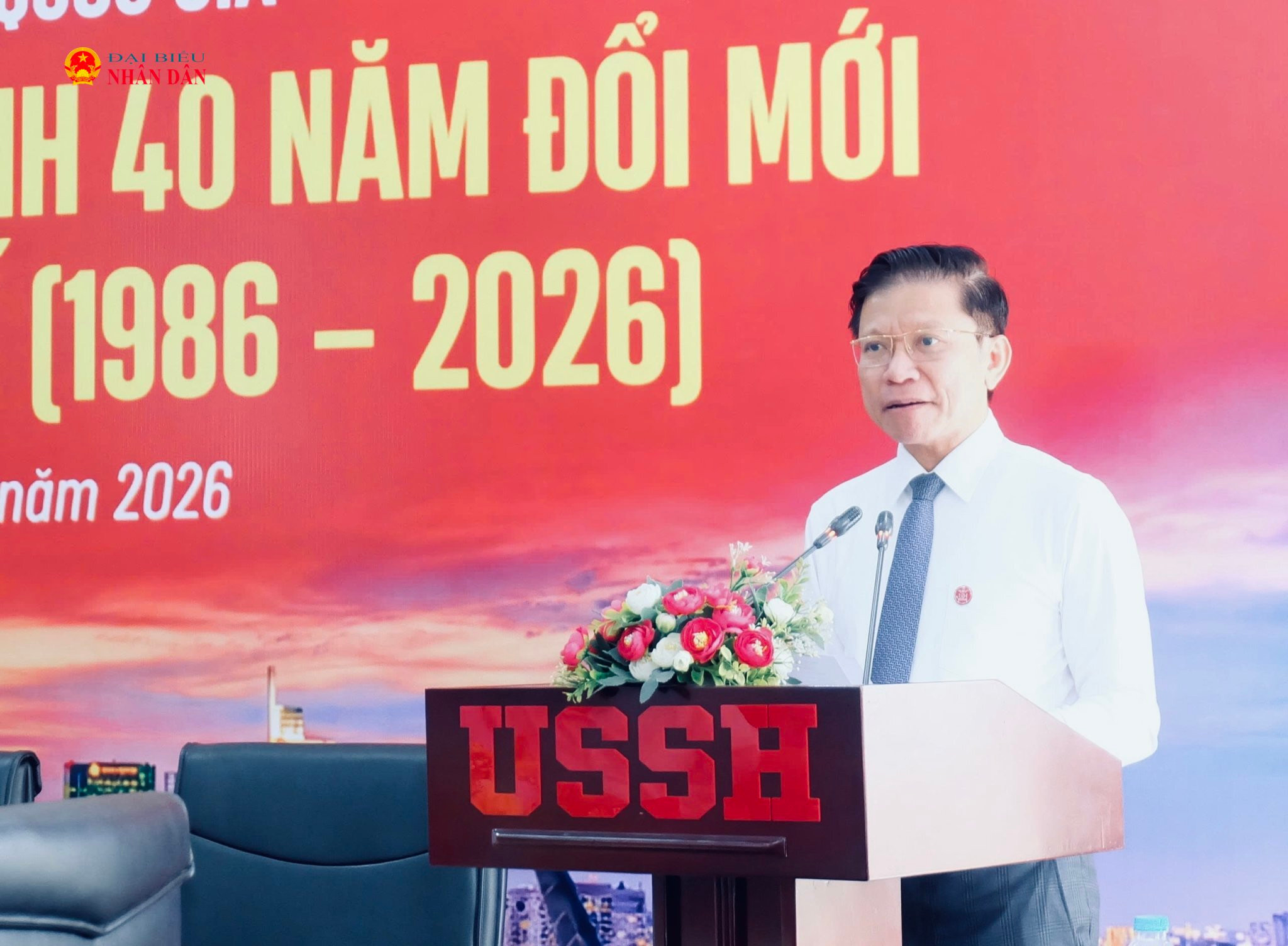
Professor Hoang Anh Tuan, Rector of the University of Social Sciences and Humanities, delivered the opening speech.
In his opening remarks, Professor Hoang Anh Tuan, Rector of the University of Social Sciences and Humanities, emphasized the significance of reviewing 40 years of reform and international integration to identify the country's transformations and clarify the challenges facing the new development phase.
In his opening remarks at the seminar, Associate Professor Dr. Vu Trong Lam, Director and Editor-in-Chief of the National Political Publishing House, emphasized that one of the important theoretical values of 40 years of Renovation is the increasingly clear development of the relationship between practice - theory - institutions - implementation. In this relationship, practice poses problems; theory plays a role in understanding, generalizing, and guiding; institutions transform understanding into a framework for action; and the capacity for implementation determines the degree to which policies are realized in practice.
Associate Professor Dr. Vu Trong Lam suggested five key issues for delegates to discuss from the perspectives of theory, practice, and current development requirements. Firstly, clarifying the developments in the Party's theoretical thinking and reform policies. Secondly, realistically assessing the achievements, limitations, and mechanisms that have driven the country's transformations over the past 40 years.
Third, to deepen the relationship between innovation, independence, self-reliance, and international integration. Fourth, to identify new issues and relationships arising in the current stage of development. Fifth, to propose orientations and conditions to ensure the continued comprehensive and synchronized promotion of the reform process in the new phase.
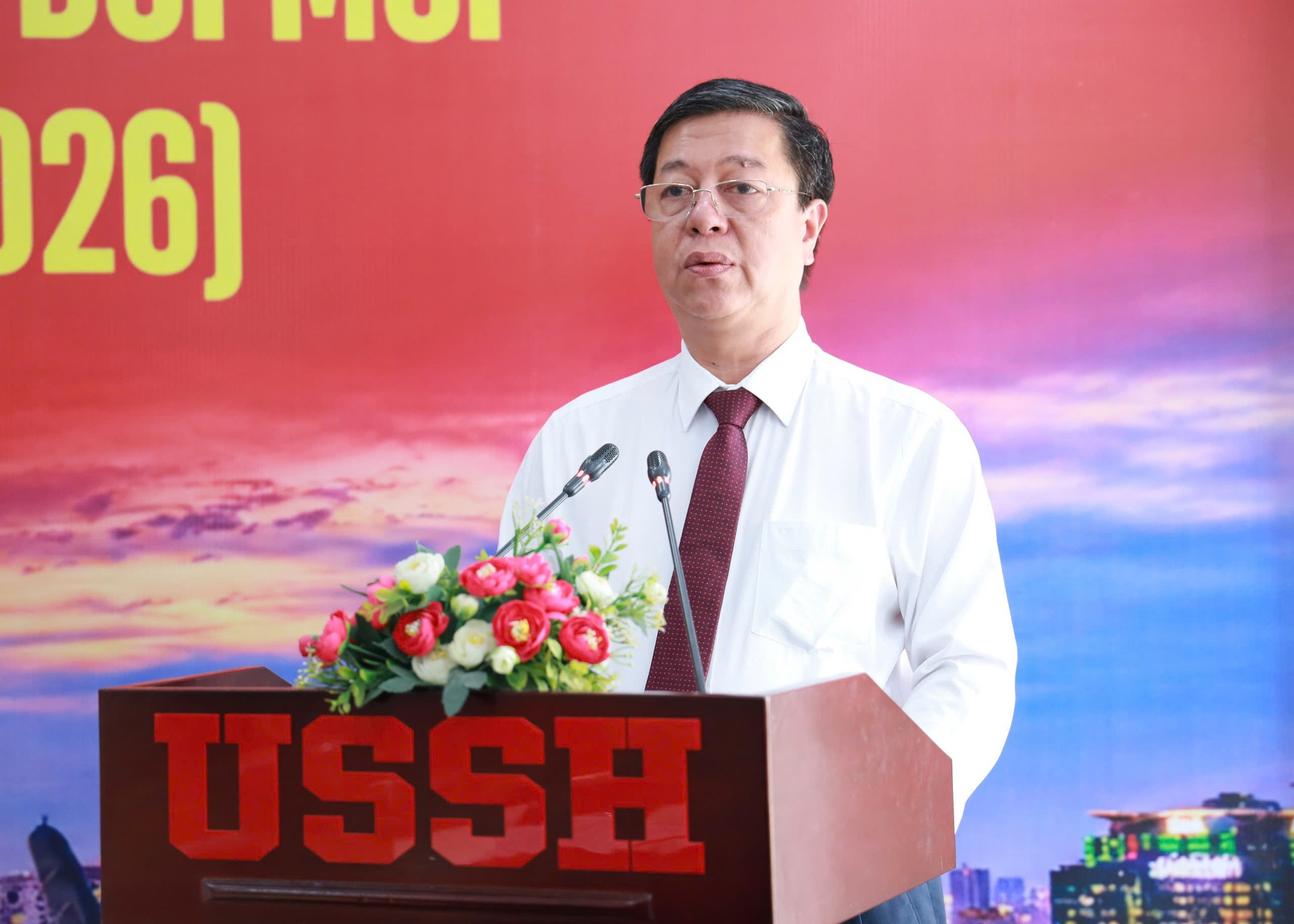
Associate Professor Dr. Vu Trong Lam, Director and Editor-in-Chief of the National Political Publishing House, delivered the opening remarks at the workshop. Photo: Organizing Committee.
The seminar program included two discussion sessions, focusing on areas of fundamental importance to the reform process. Many participants shared the view that it is necessary to continue linking the summation of practical experience with the development of theory. Forty years of implementing the Doi Moi (Renovation) process have generated a wealth of practical experience and data. Summarizing these experiences will help to better identify the causes of achievements, bottlenecks that need to be addressed, and new issues that require further research and clarification.
Discussions on ideological work, national defense, security, foreign affairs, and culture also emphasized the need to proactively adapt to changes in the international environment and the digital space, while maintaining development goals and ensuring national interests.
Expanding the space, resources, subjects, and methods of cultural development.
At the conference, many presentations and opinions clarified the Party's process of renewing its thinking on the role of culture in the new context, as well as the development of Vietnamese culture in the context of digital transformation and international integration.
Specifically, the presentations by Dr. Hoang Thi Hong Nga, Bui The Vinh, and Nguyen Vu Minh Chau (University of Social Sciences and Humanities) affirmed that the development in the Party's cultural awareness and guidelines during the đổi mới (renovation) period is gradually being reflected in practice. The prominent changes are identified in five aspects: preserving and promoting cultural heritage; developing human resources and building a cultural environment; promoting the role of the community; developing cultural industries; and digital transformation and expanding cultural spaces.
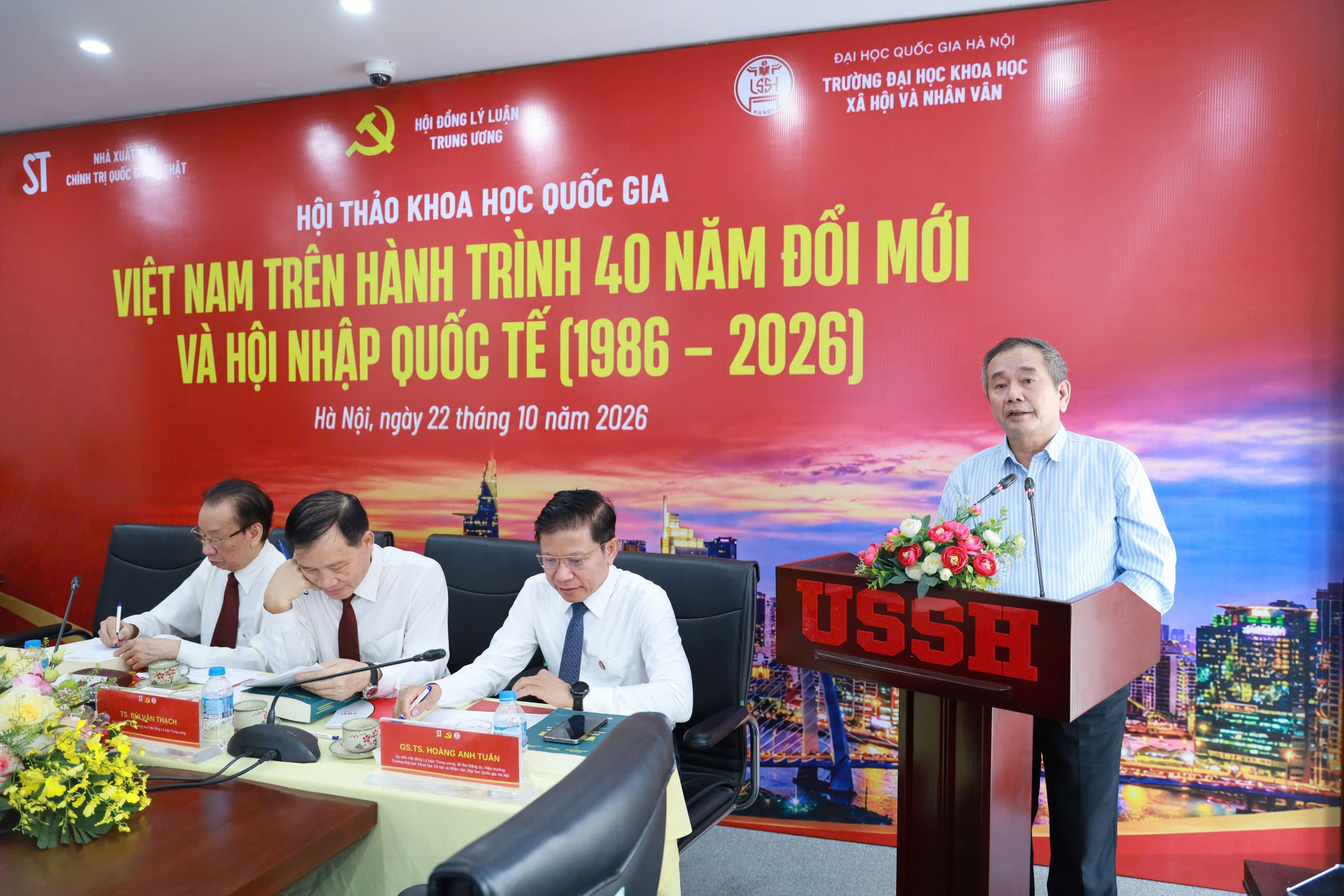
Professor Pham Hong Tung, PhD, from the University of Social Sciences and Humanities, presented his paper at the conference. Photo: Organizing Committee.
The main trends of transformation in Vietnamese cultural life were clarified in the presentation by Prof. Dr. Pham Hong Tung and Dr. Nguyen Thi Hue (University of Social Sciences and Humanities), including: changes in rural cultural life; increasingly strong internationalization; the formation and development of new Vietnamese cultural products that are "advanced and rich in national identity"; and the emergence of "virtual cultural life". These four trends do not occur in isolation, but always interact and are closely linked to each other to create the face of the new Vietnamese culture.
The presentations by Prof. Dr. Lai Quoc Khanh (Deputy Secretary General, Member of the Central Theoretical Council) and Dr. Pham Thi Thuy Van (Hanoi Pedagogical University 2) affirmed that 40 years of reform and international integration have expanded the space, resources, subjects, and methods of developing Vietnamese culture. The presentations also emphasized that developing Vietnamese culture in the new era is a process of transforming Vietnamese cultural values and human strength into the capacity for national development, national defense, and shaping the nation's future…
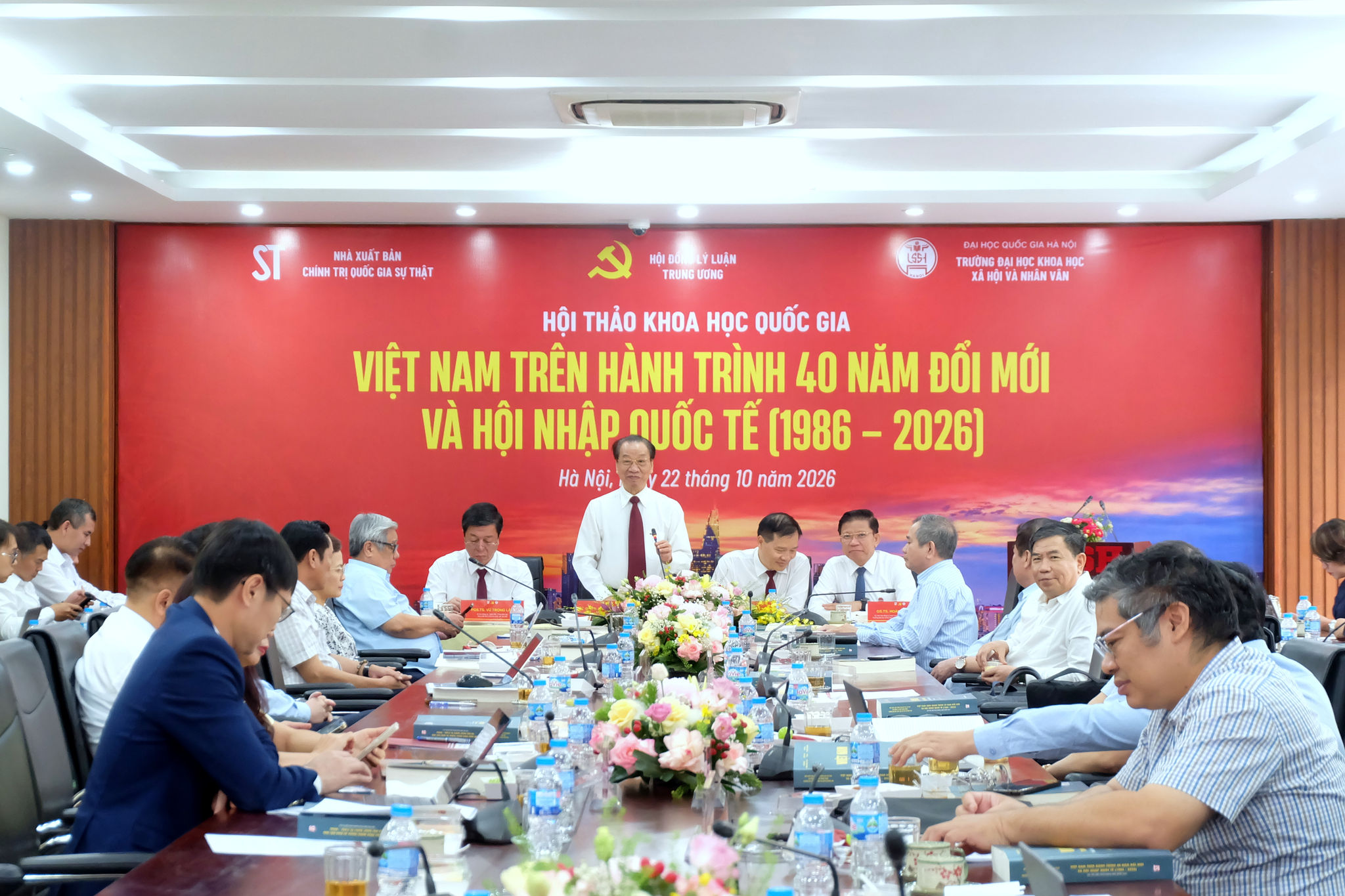
Conference scene
According to Dr. Pham Minh The from the University of Social Sciences and Humanities, the Party's views, policies, and orientations on cultural development have become increasingly complete and comprehensive, defining the role, position, and status of the cultural industry in the national and international economic structure, while also providing strategic directions for the development of the cultural industry.
The seminar contributes to summarizing practical experiences, developing theories, and disseminating information about the country's achievements; thereby inspiring a spirit of innovation, self-reliance, self-strength, and the aspiration for a prosperous and happy Vietnam in the new era.
Related articles:
People's Representatives Newspaper: Vietnam on its 40-year journey of reform and international integration.
VOV: Vietnam on its 40-year journey of reform and international integration.
News update: Identifying achievements and bottlenecks that need to be addressed after 40 years of reform.
People's Police Newspaper: Identifying achievements and bottlenecks that need to be addressed after 40 years of reform.
Sports and Culture Newspaper: Leveraging cultural resources in the digital age, building upon 40 years of reform.
Author:According to the People's Representatives Newspaper
Newer news
Older news

