Religious beliefs are not a 'treasure trove' to be exploited commercially.
The scientific seminar "Identifying the current situation, trends of change, and shaping solutions to promote the resources of beliefs and religions in ethnic minority communities in the midland and mountainous regions of Northern Vietnam" was held on the morning of October 22nd at the University of Social Sciences and Humanities, Vietnam National University, Hanoi.
Associate Professor Dr. Dang Hong Son - Vice Rector of the University of Social Sciences and Humanities, stated: Under the impact of economic development, migration and livelihood transformation, cultural exchange, tourism, and digital media, the religious and belief life of ethnic minority communities in the midland and mountainous regions of Northern Vietnam has evolved in many different directions. Some values are continued in new forms, while some practices face the risk of interruption in transmission or alteration of meaning.
"Leveraging resources does not mean instrumentalizing beliefs or simplifying heritage into mere economic products," Associate Professor Dr. Dang Hong Son emphasized.
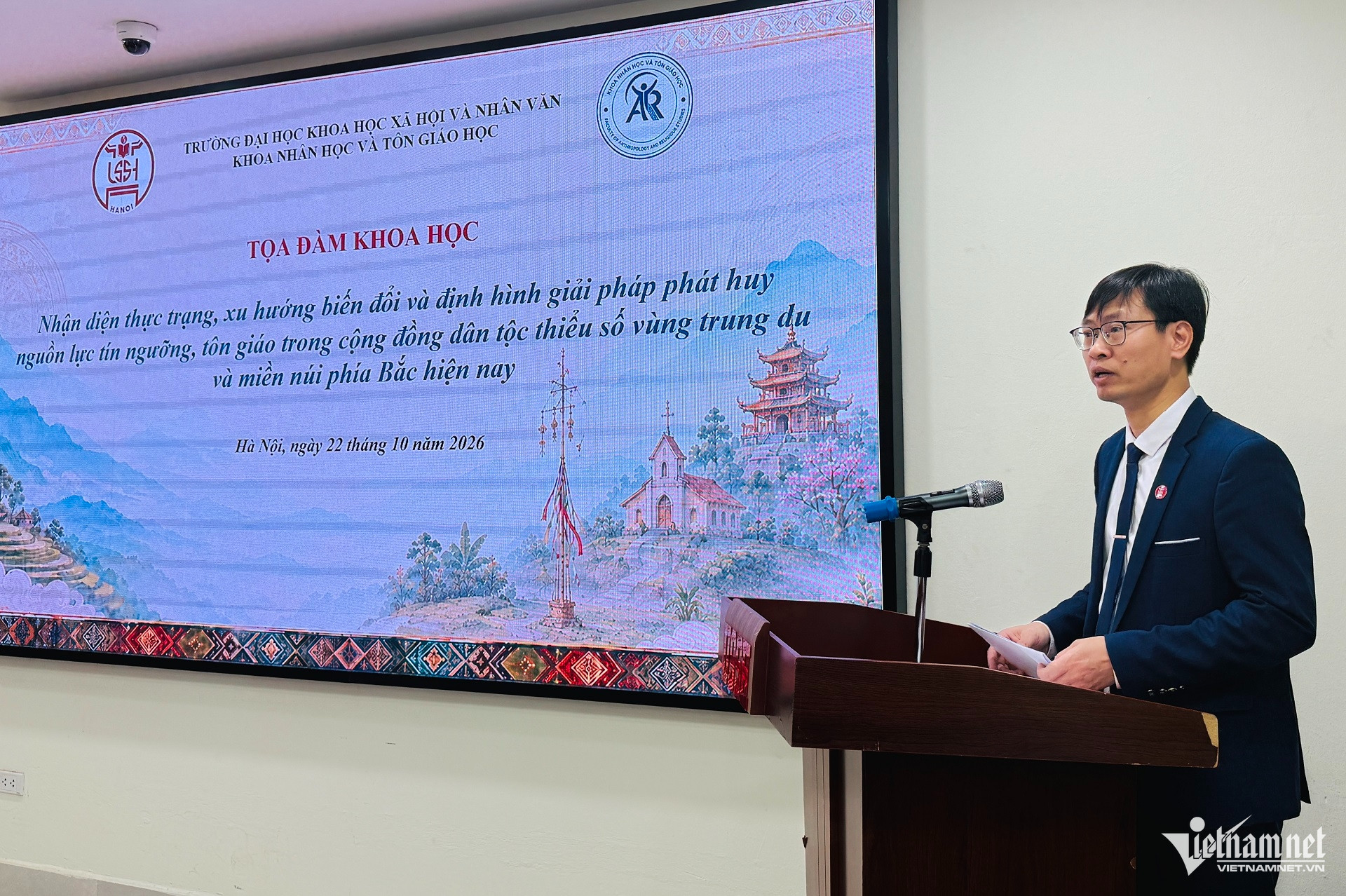
Associate Professor Dr. Dang Hong Son - Vice Rector of the University of Social Sciences and Humanities, delivered a speech at the seminar.
Sharing the same viewpoint, Associate Professor Dr. Nguyen Truong Giang - Head of the Department of Anthropology and Religious Studies - analyzed that when a ritual or indigenous knowledge is commercialized or transformed into a tourism product, the core question must be: Who preserves it, who decides, how is its value maintained, and who truly benefits? If it is reduced to a purely performance, the heritage will easily lose its sacredness and inherent vitality.
"Sacred spaces, ritual knowledge, and community memories cannot always be transformed into tourism products or publicly available data," Associate Professor Dr. Nguyen Truong Giang further noted when discussing the boundary between promoting their value and over-exploitation.
Innovating policy thinking: Using 'heritage vitality' as a benchmark.
Regarding cultural shifts in the highlands, Associate Professor Dr. Hoang Cam - Deputy Director of the Institute of Cultural Studies, Vietnam Academy of Social Sciences, commented that the processes of heritage preservation, theatricalization, or tourism adaptation of practices such as Mo Muong, the Coming-of-Age Ceremony of the Dao people, or Xoe Thai dance are always two-sided. Besides the risk of diminishing spiritual significance, if well-managed and with respect for the practitioners, integrating heritage into contemporary life creates new spaces and resources for communities to revive rituals, strengthen cultural authority, and take pride in their own identity.
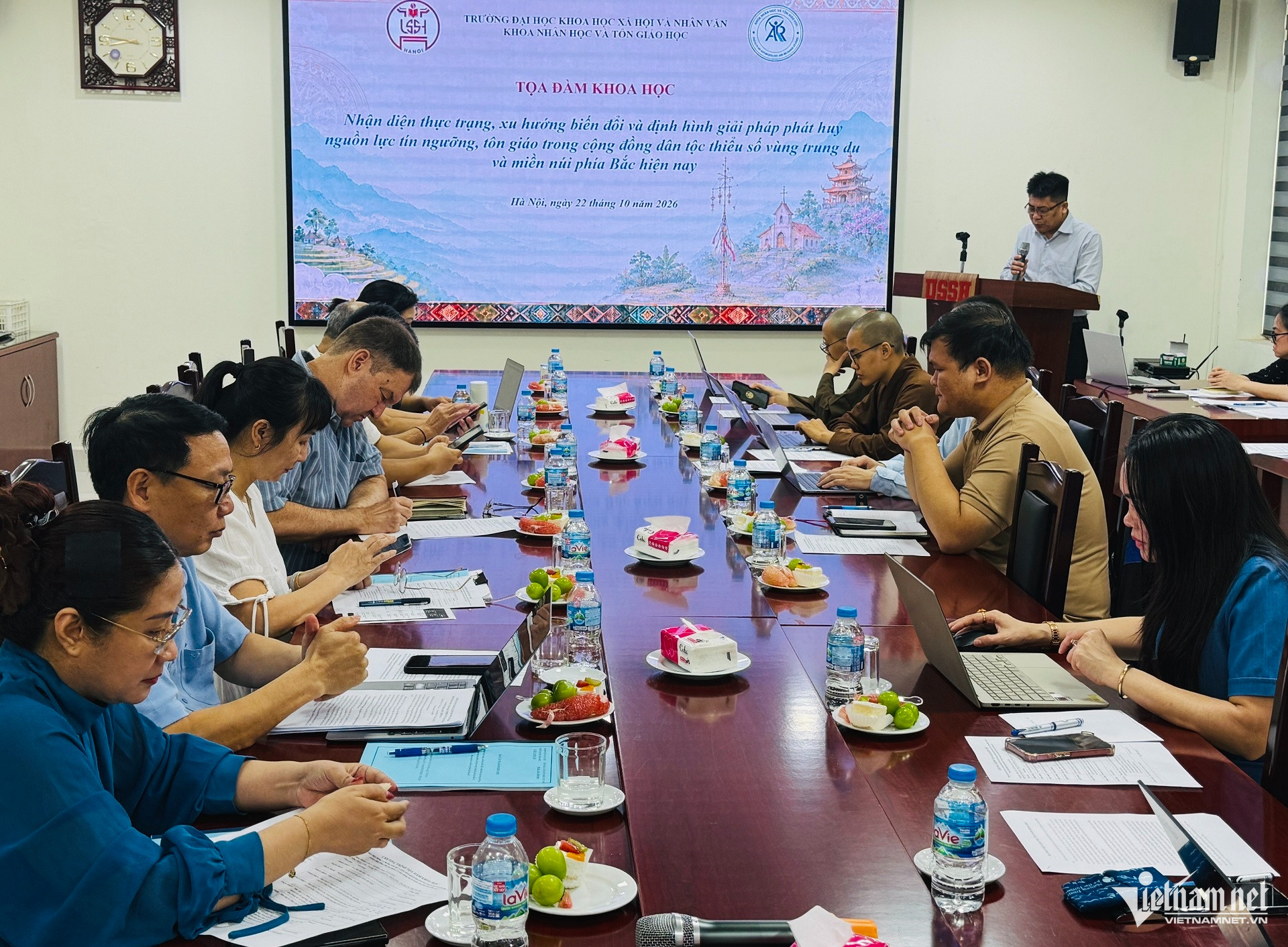
Overview of the seminar
According to information presented at the seminar, the research group from the Faculty of Anthropology and Religious Studies has proposed a draft Policy Advisory Report to the Ministry of Culture, Sports and Tourism and the Ministry of Ethnic Minorities and Religions.
A notable point of the report is the proposal to shift the focus of assessment from the number of events, titles, or tourist arrivals to the ability to maintain, transmit, and recreate heritage within community life.
"The issue is not just about how many more rituals to preserve or how many more structures to build, but how to ensure that practices meaningful to the community continue to have guardians, successors, space to exist, and conditions for self-renewal. A heritage can be widely promoted but still decline if the vitality of the practitioners gradually diminishes their ability to make decisions about their heritage," Associate Professor Dr. Nguyen Truong Giang recommended.
Related articles:
Commercializing highland rituals: What boundaries cannot be crossed?
Author:According to Vietnamnet newspaper.
Newer news
Older news

