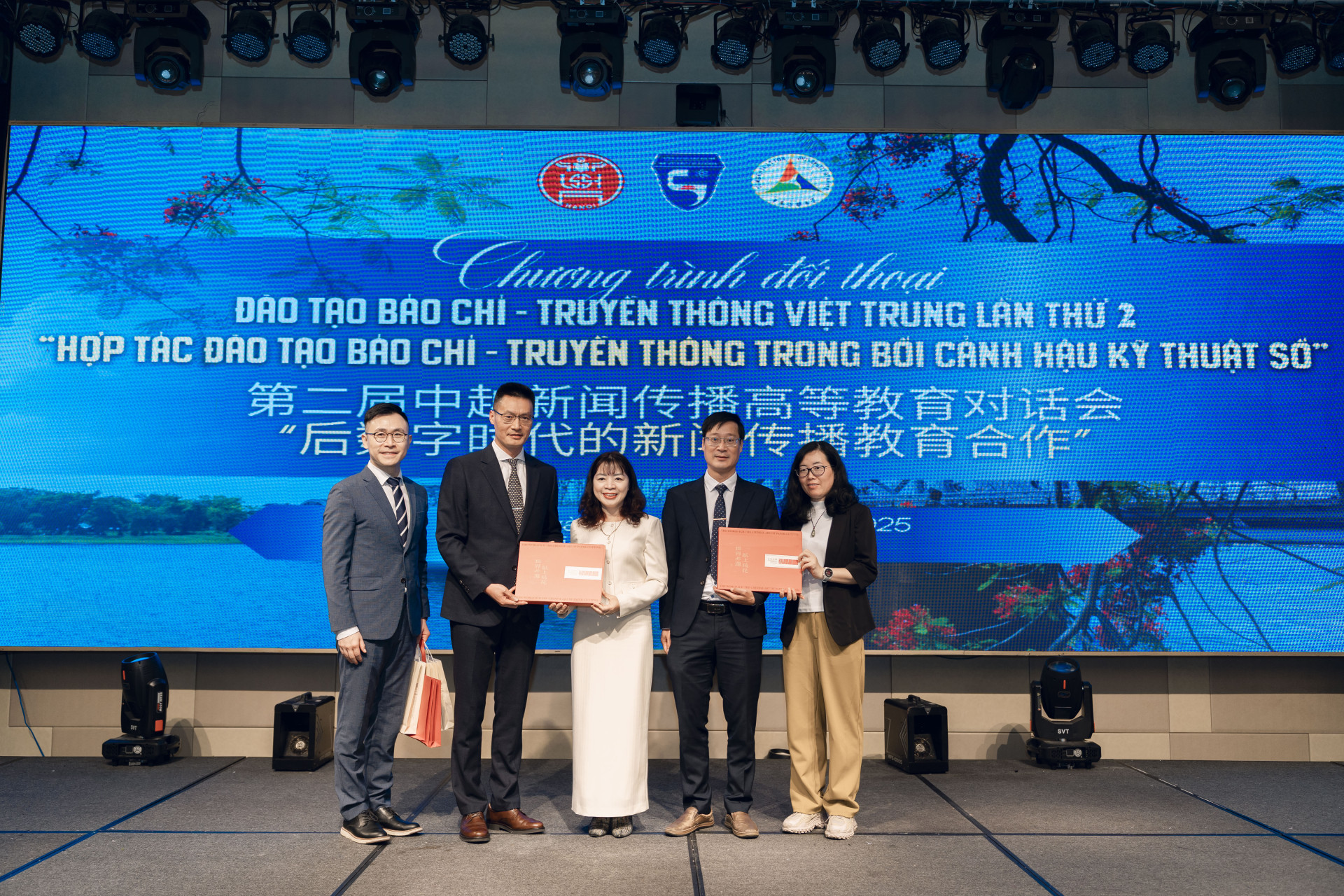
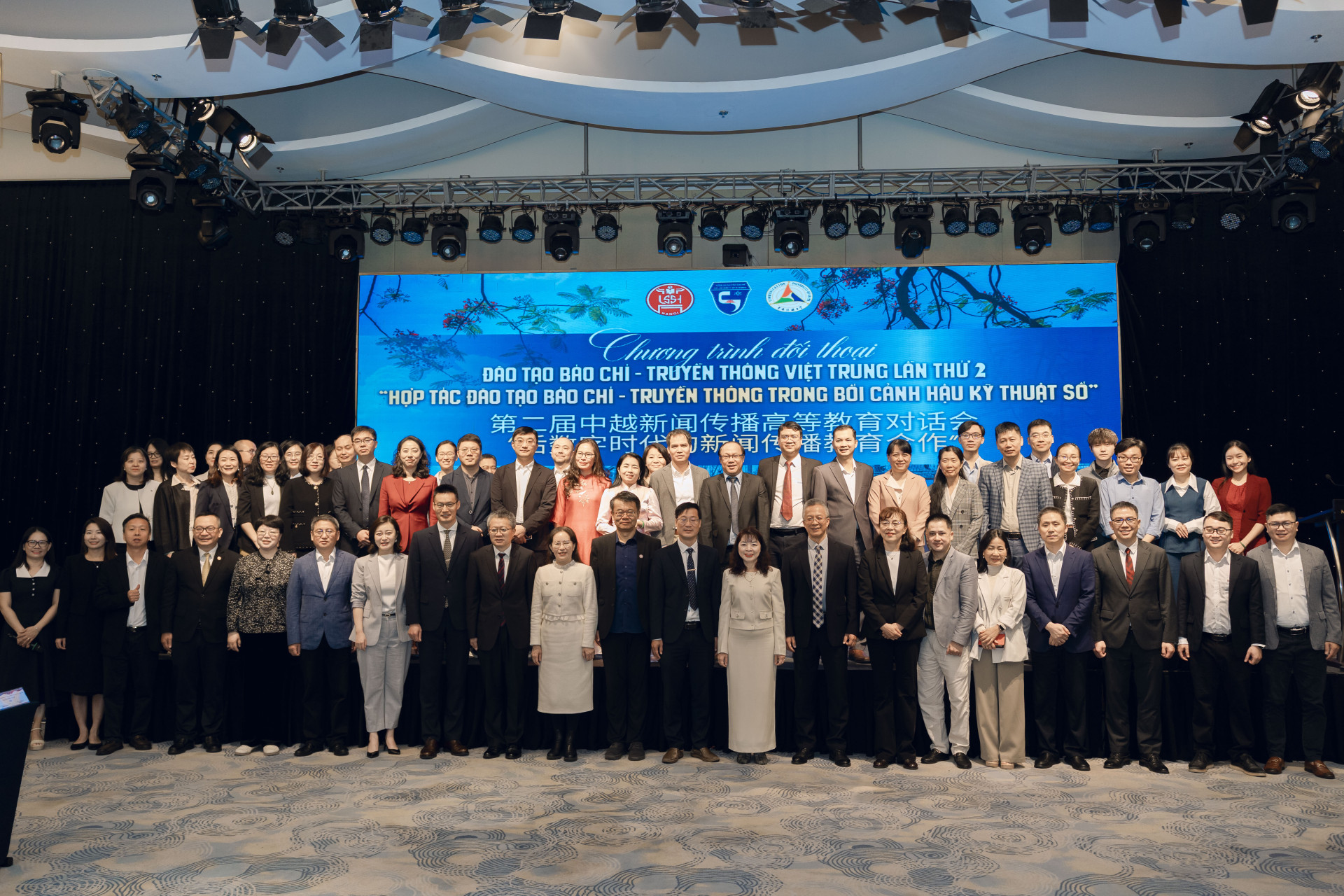
The conference was attended by leaders from the University of Social Sciences and Humanities, VNU Hanoi and the University of Science - Hue University, along with representatives from the Communication University of China (CUC) - the main partner from China. In addition, nearly 30 universities and research institutes from Vietnam and China also participated, including Peking University, Tsinghua University, Fudan University, Wuhan University, Yunnan University, Zhejiang University, Beijing Normal University, Capital Normal University, Central China University of Science and Technology, Jinan University, Shanghai Foreign Language University, Guangxi University for Nationalities, Guangxi University, Sun Yat-sen University, Beijing Foreign Language University, Zhejiang Communication Institute, Yunnan University of Finance and Economics, Diplomatic Academy of Vietnam, University of Social Sciences and Humanities (Vietnam National University Ho Chi Minh City), Vinh University, Da Nang University, Duy Tan University, Dai Nam University, Military University of Culture and Arts, Gia Dinh University…
This activity follows the success of the first Dialogue in Beijing in 2024, aiming to build a comprehensive and sustainable academic cooperation mechanism between journalism and media training institutions in the two countries.
With the theme "Cooperation in Journalism and Media Training in the Post-Digital Context," the conference focused on discussing key issues in the field: digital transformation in teaching, AI and Big Data capabilities, multi-platform media operation models, competency standards for modern journalists, and international cooperation models in the digital age.
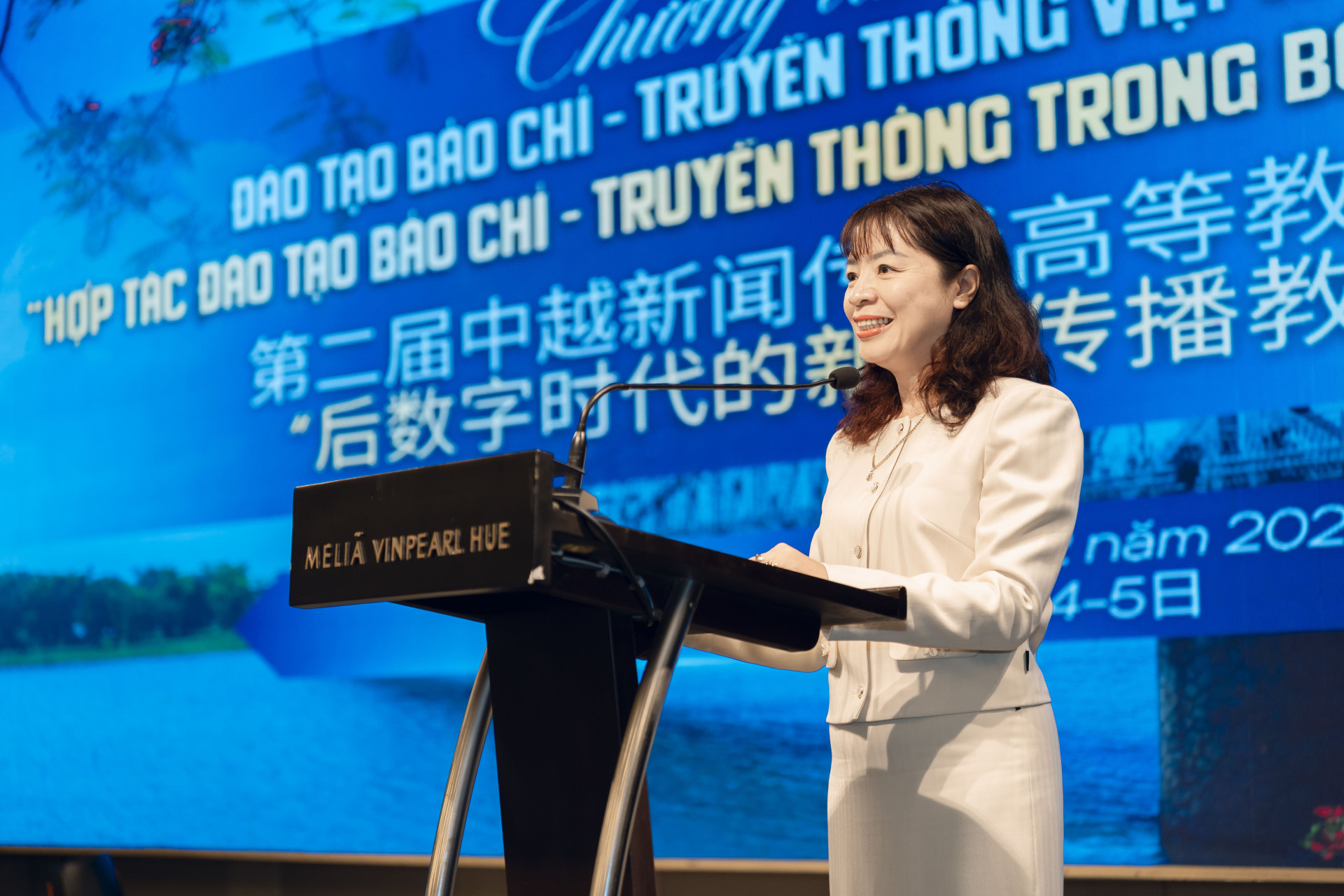
In the opening session, Associate Professor Dang Thi Thu Huong, Vice Rector of the University of Social Sciences and Humanities, Vietnam National University, Hanoi, emphasized the importance of strengthening academic cooperation among journalism and communication universities in the region. The Vice Rector affirmed: “In the context of global media operating on a deeply digitized platform, cooperation between training institutions not only aims to share knowledge but also contributes to developing the adaptability of journalism and communication human resources in the face of new challenges. The university is committed to working alongside Vietnamese and Chinese partners in creating advanced training programs, promoting scientific exchange, and building a network of dynamic young researchers.”
Associate Professor Dr. Dang Thi Thu Huong, Vice Rector of the University of Social Sciences and Humanities, Vietnam National University, Hanoi, delivered a speech at the event.
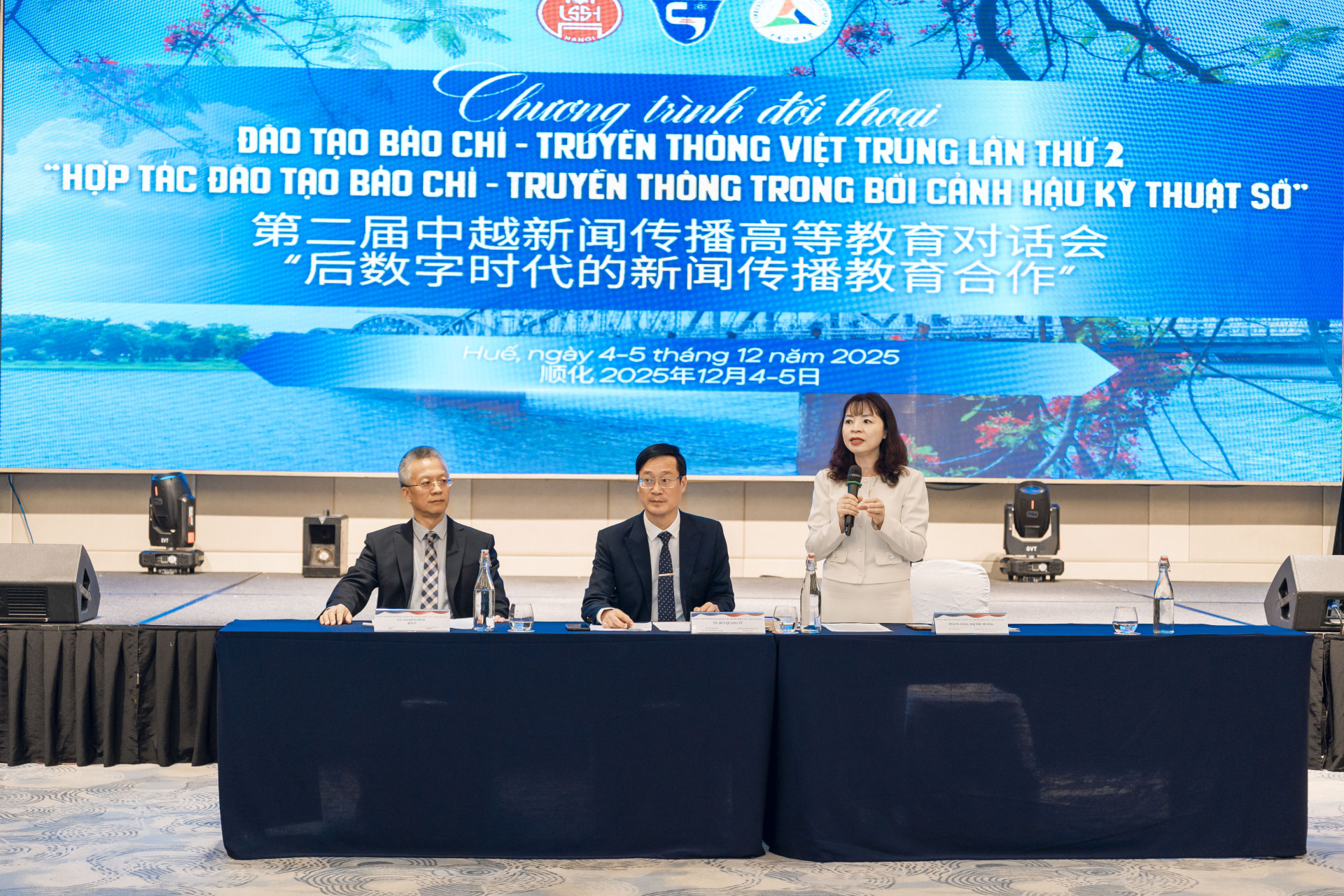
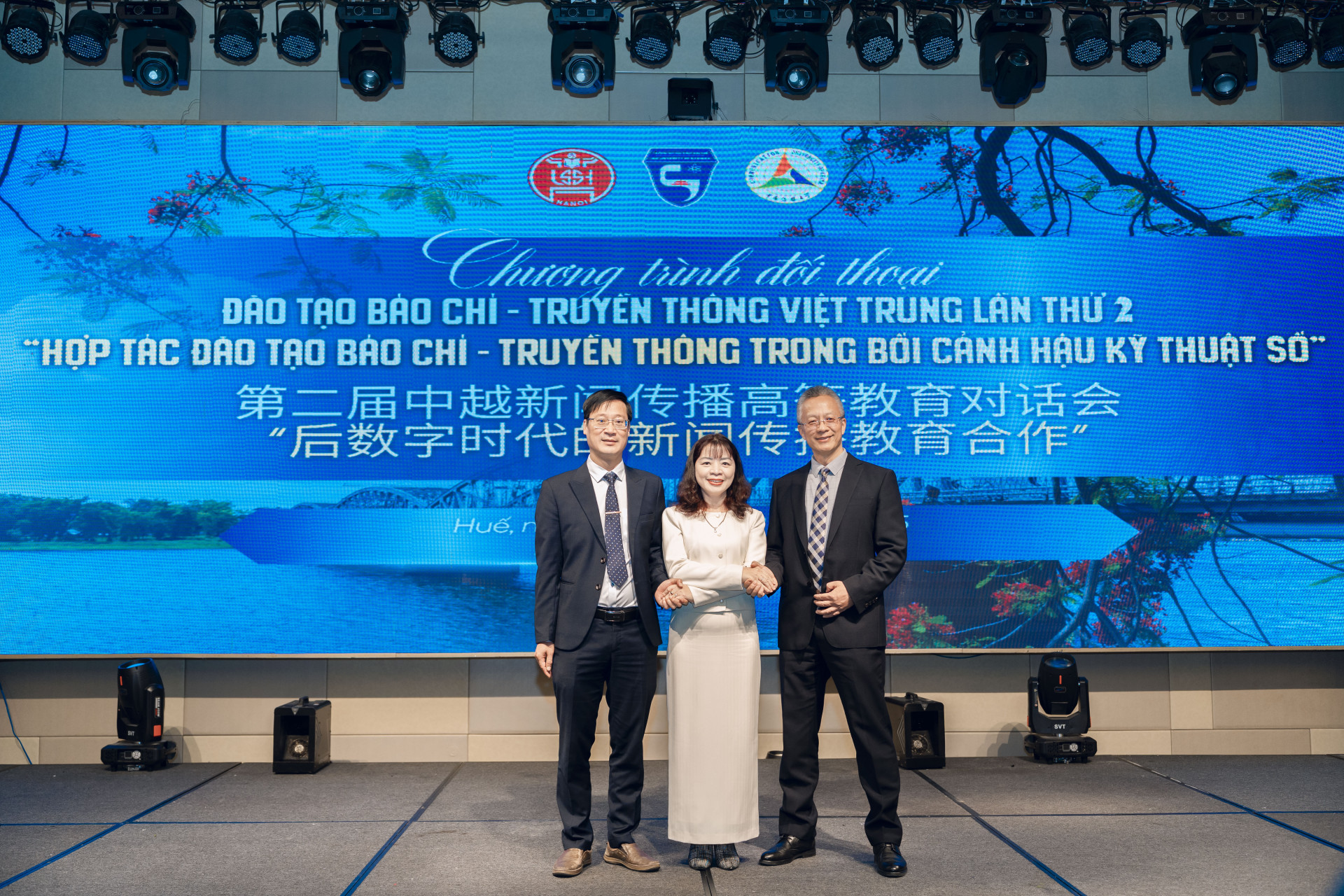
At the first dialogue session between universities, representatives from Vietnamese and Chinese universities presented important papers on modern training models, international cooperation strategies, the application of new technologies in training management, and the direction of curriculum innovation in the context of rapidly changing media. Many core issues were discussed in depth, including building a journalism and media education ecosystem in the age of artificial intelligence, innovating bilateral and multilateral cooperation mechanisms between training institutions, developing a model of "future journalists" in the digital transformation era, and strengthening the role of young academic exchanges in forming high-quality human resources. The final roundtable session of the morning saw the delegates agree on the step-by-step implementation of signing Memorandums of Understanding (MOUs) to realize the proposed cooperation directions.
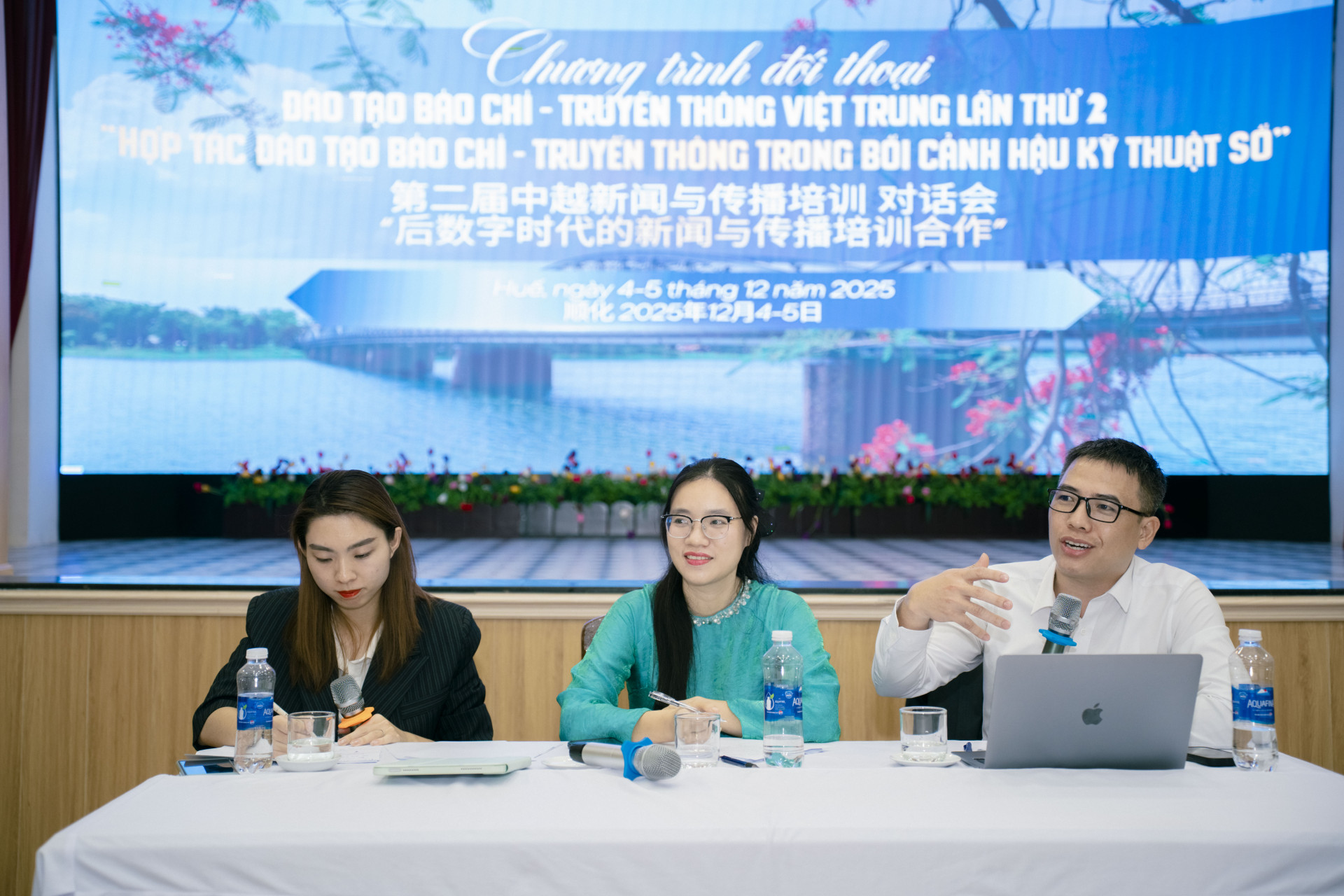
During the second dialogue session between experts and lecturers, many topics were discussed, such as digital transformation in journalism and media education; the application of AI and Big Data in training; and expanding international cooperation and academic exchange in the context of rapidly changing global media. The presentations clearly analyzed the structural changes in the field of journalism and media, emphasizing the increasing role of data, artificial intelligence, content automation, and new technologies in modern training models. Delegates also agreed that teaching methods need to be reformed towards interdisciplinary, practical approaches, and the application of high technology, in order to better meet the demands of the post-digital media environment.
Dr. Phan Van Kien - Director of the Institute of Journalism and Communication Training, Faculty of Social Sciences and Humanities, Vietnam National University, Hanoi, co-chaired the discussion session.
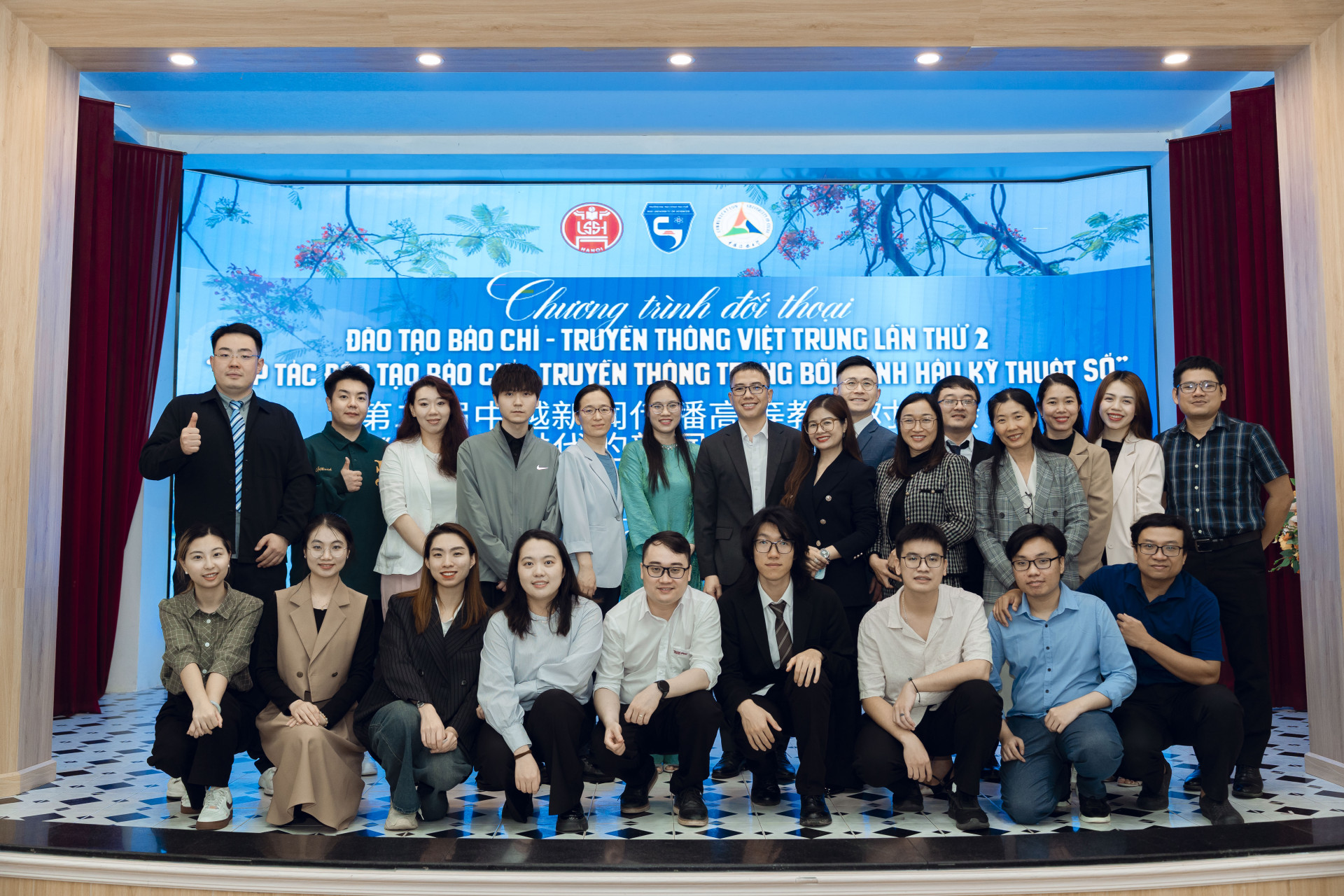
The third session of the dialogue among graduate students focused on the theme “Digital Media and Social Transformation in Vietnam and China: Multi-Approach – Multi-Discourse”. At the forum, graduate and postgraduate students presented new approaches in media research, ranging from analyzing digital media and social shifts in the region, analyzing big data and AI-generated media environments, to new research paradigms, media psychology, international communication, human-machine interaction, and climate trend analysis. The lively academic exchanges not only enriched the forum but also opened opportunities for networking and collaboration among young researchers from both countries, contributing to the formation of a dynamic and creative generation of media professionals in the post-digital context.
The 2nd Vietnam-China Journalism and Media Training Dialogue concluded with many practical results, affirming the pioneering role of the University of Social Sciences and Humanities, Vietnam National University, Hanoi and the University of Science - Hue University in promoting international academic cooperation.
This event provides crucial momentum for the formation of a Vietnam-China media and press cooperation network, contributing to the training of high-quality human resources for the region in the post-digital age. Simultaneously, the announcement of the 3rd Dialogue also opens up expectations for the strong and sustainable development of cooperative relations between educational institutions in the two countries in the future.