
In December 2013, for the first time, Vietnam National University, Hanoi (VNU) implemented a policy of direct support for scientists with valuable international publications in scientific journals listed in the ISI and Scopus databases. The University of Social Sciences and Humanities had two staff members who received support in this first phase: Ms. Tran Diep Thanh (Department of External Relations and International Cooperation) and Dr. Tran Van Kham (Department of Scientific Research Management).
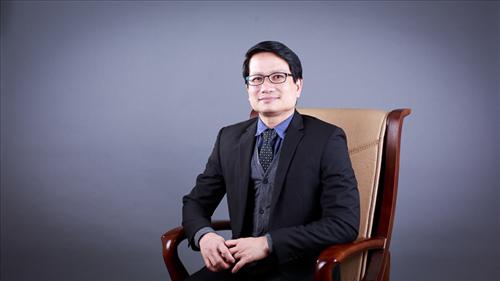
ButWhat significance do the policies of the Vietnam National University, Hanoi (VNU) to encourage staff and young staff members in scientific research, especially in publishing research results internationally, have for your personal scientific research activities?
Since starting my work at the Faculty of Social Sciences and Humanities, Vietnam National University, Hanoi in 1997, I have noticed that this is the first time Vietnam National University, Hanoi has had such a special policy to encourage and reward young scientists with international publications (articles published in international scientific journals listed in ISI, Scopus, or with high IF indices). Such an incentive policy has certainly been very meaningful to me personally. It's special not because of the monetary reward, but because my dedicated research paper, after being published, received valuable support and encouragement from the Vietnam National University, Hanoi Development Fund. For me, this is a great honor and a tremendous source of encouragement.
- In your opinion, what is the significance of international scientific publications for oneself?What gratitude do the scientists, and more broadly, the Vietnam National University, Hanoi, deserve?
As we all know, publishing research is essential for every scientist in general and young scientists in particular. Therefore, every scientist strives to publish their research both domestically and internationally. International scientific publication has an even greater significance because a domestic work will gain recognition from many international scholars abroad. Therefore, just one scientific paper by a young staff member of Vietnam National University, Hanoi (VNU) published in a foreign scientific journal with an ISSN means that staff member has contributed a small effort to affirming VNU's "brand" on the international "marketplace." In that sense, VNU's current incentive policy, in my opinion, is a strategic policy of VNU leadership aimed at building and developing VNU into a leading research university, ranking alongside prestigious universities in the region and the world.
- In your opinion, what conditions are necessary to have valuable scientific publications in international journals?
In my opinion, the most important condition is the "quality" of the published work. Most publishers want more and more readers to subscribe to and read their journals, and more and more scientists to submit articles to their journals; therefore, they pay close attention to maintaining and improving the quality and prestige of their journals. So, each article, in addition to meeting requirements such as language, format, and submission procedures, must be of high quality in terms of content and possess scientific novelty.
- Could you please share your personal experiences in conducting research, handling procedures, and contacting international scientific journals to get your work published?
The first time I published a paper, I didn't submit it directly to a journal; instead, I presented it at an international scientific conference. About a month after the conference, the organizers notified me that my paper had been selected for publication in a specialized journal, but I had to revise it according to the peer review comments if I agreed to publish it.
The second time I submitted my paper directly to the journal, I received two rounds of peer review. Finally, my paper was published almost a year after submission. My experience is that to get published in an international journal, you should accept peer review from scientists, patiently revise your paper, and wait for the editorial board's decision.
- What are your plans for your upcoming research activities?
I am still focusing my research on areas of expertise. Additionally, during the recent Cafe Program No. 4 in Ba Vi, a group of young scientists from the University of Social Sciences and Humanities exchanged ideas and proposed some common research directions. We will now finalize a proposal to submit to the leadership of Vietnam National University, Hanoi for approval and implement it together if accepted.
Author:Thanh Ha
Newer news
Older news

