General Journalism
From its early days, the Faculty of Journalism has gathered a dedicated and enthusiastic team of faculty and lecturers, many of whom are prominent and reputable scientists such as Prof. Ha Minh Duc, Assoc. Prof. Dr. Duong Xuan Son, Assoc. Prof. Dr. Dinh Van Huong, Assoc. Prof. Dr. Do Xuan Ha, Assoc. Prof. Dr. Vu Quang Hao, Prof. Dr. Do Quang Hung, Prof. Dr. Nguyen Thien Giap, Dr. Doan Huong, Assoc. Prof. Dr. Nguyen Thi Minh Thai, Dr. Trinh Ho Khoa, Professor Do Chinh, Professor Tran Quang, and many other professors… This team possesses both the profound depth of a generation of scientists whose prestige and reputation have become legendary in the field of theoretical criticism, and the elegant, romantic quality that has become the trademark of the "General Professors," as well as the sharp intellect and inspiring ability of masters of language, so that every time they lecture, students are mesmerized, and they also have the qualities of journalism: quick-witted, incisive, highly combative, and critical thinking…
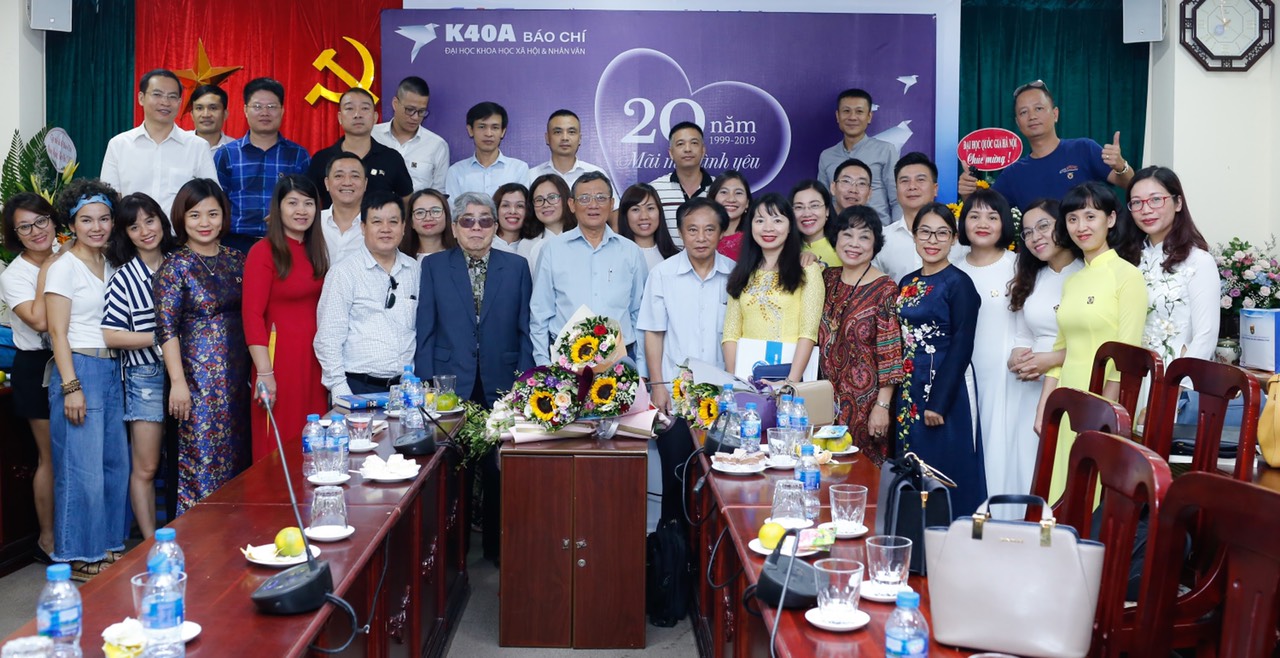
The academic knowledge, professional experience, and "General Journalism" style cultivated by the first professors who founded the Journalism Department laid a solid foundation for the Department's existence and development, enabling it to quickly grow and establish its position within the Social Sciences and Humanities sector of the Vietnam National University, Hanoi. For the past 30 years, this tradition has been nurtured and passed down, so that generations of journalists from the General Journalism Department always remember their alma mater, the cradle that nurtured their knowledge, giving them the ability to thoroughly understand issues and convey information to the public in the most humane way.
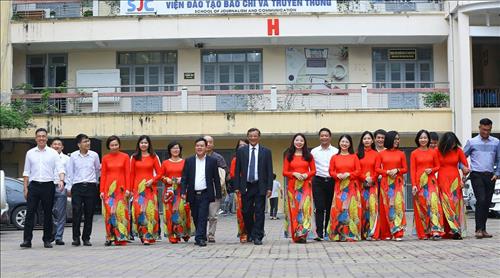
Continuing the legacy of previous generations, the current faculty of the Institute of Journalism and Communication Training largely consists of young, dynamic, and enthusiastic staff. 100% of the lecturers hold a Master's degree or higher, with 35% being Associate Professors and over 60% holding a PhD. Many faculty members received professional training in the Soviet Union, the United Kingdom, Australia, South Korea, Russia, and other countries, and are reputable experts in the field of journalism and communication research nationwide.
Besides its permanent staff, the Institute of Journalism and Communication Training also has more than 50 part-time and visiting lecturers who are experts in journalism, media management, and many reputable and experienced journalists. Among them, Assoc. Prof. Dr. Nguyen The Ky, Director General of the Voice of Vietnam Radio, and Dr. Ta Bich Loan, Head of VTV3 of Vietnam Television, both concurrently serve as Heads of Departments.
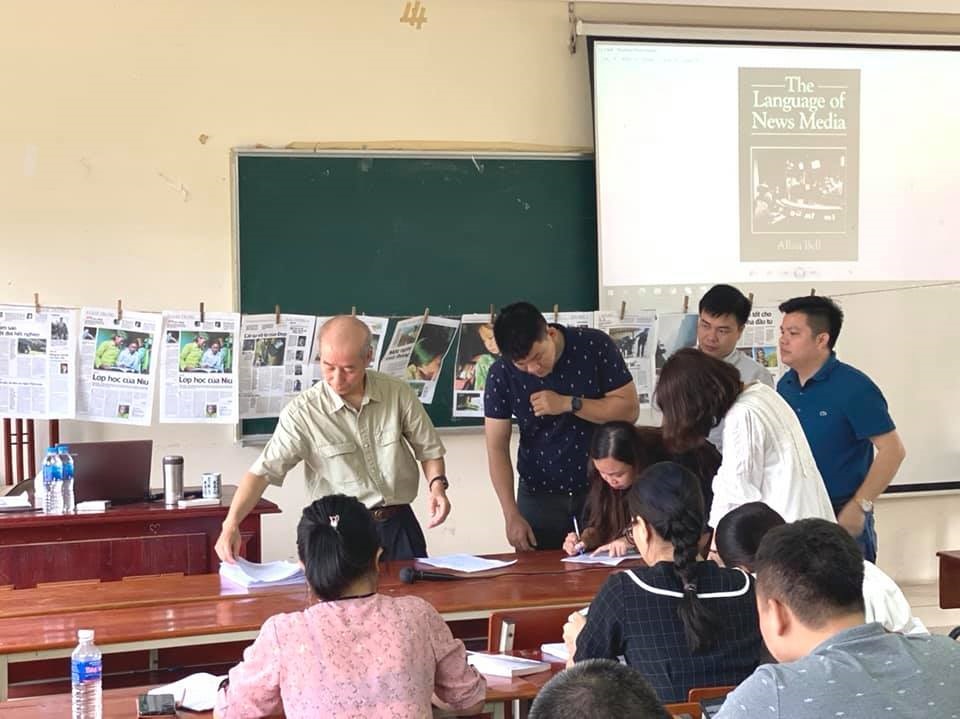
In Vietnam's leading training and research environment for social sciences and humanities, students at the Institute have access to and are imparted the most fundamental, foundational, and in-depth knowledge of social sciences and humanities disciplines. This important and valuable knowledge base helps future journalists create articles that resonate with readers, possessing cultural depth and a comprehensive understanding of society.
The state-invested equipment system, totaling nearly 60 billion VND, has enabled students and trainees of the Institute to study and work in a fundamentally modern and comprehensive journalistic environment, among the best in current journalism and media training institutions. Many student products have been broadcast and published on mass media channels, and many students of the Institute choose to create journalistic products instead of their undergraduate graduation thesis. The gap between training and practical journalism and media activities is gradually narrowing, with theory being more closely linked to practice as the Institute's training serves as a miniature newsroom.
From this school, more than 10,000 graduates, masters, and doctoral degree holders in journalism have spread throughout the country, working and contributing to the rapid flow of news, creating a continuous stream in society. Many alumni are journalists who are always on the front lines during critical moments of storms, floods, and natural disasters; many are leading writers in the fight against corruption and negative practices; hundreds of alumni have received national journalism awards and national journalism awards from various sectors and levels; many alumni have held and are currently holding key positions in the country's press and media system.
Journalism training and research in the context of modern media.
In the context of the media boom, teaching about new media, convergent and multimedia media, social media, and the development of modern journalism in the new media environment is an important part of the curriculum at the Institute of Journalism and Communication Training. In the spirit of continuous innovation, the Institute's training program has been supplemented with many new and modern modules such as...Mobile journalism, Data journalism, Content organization and creation of journalistic masterpieces, Reporting in emergency situations., and other specialized fields of journalism.
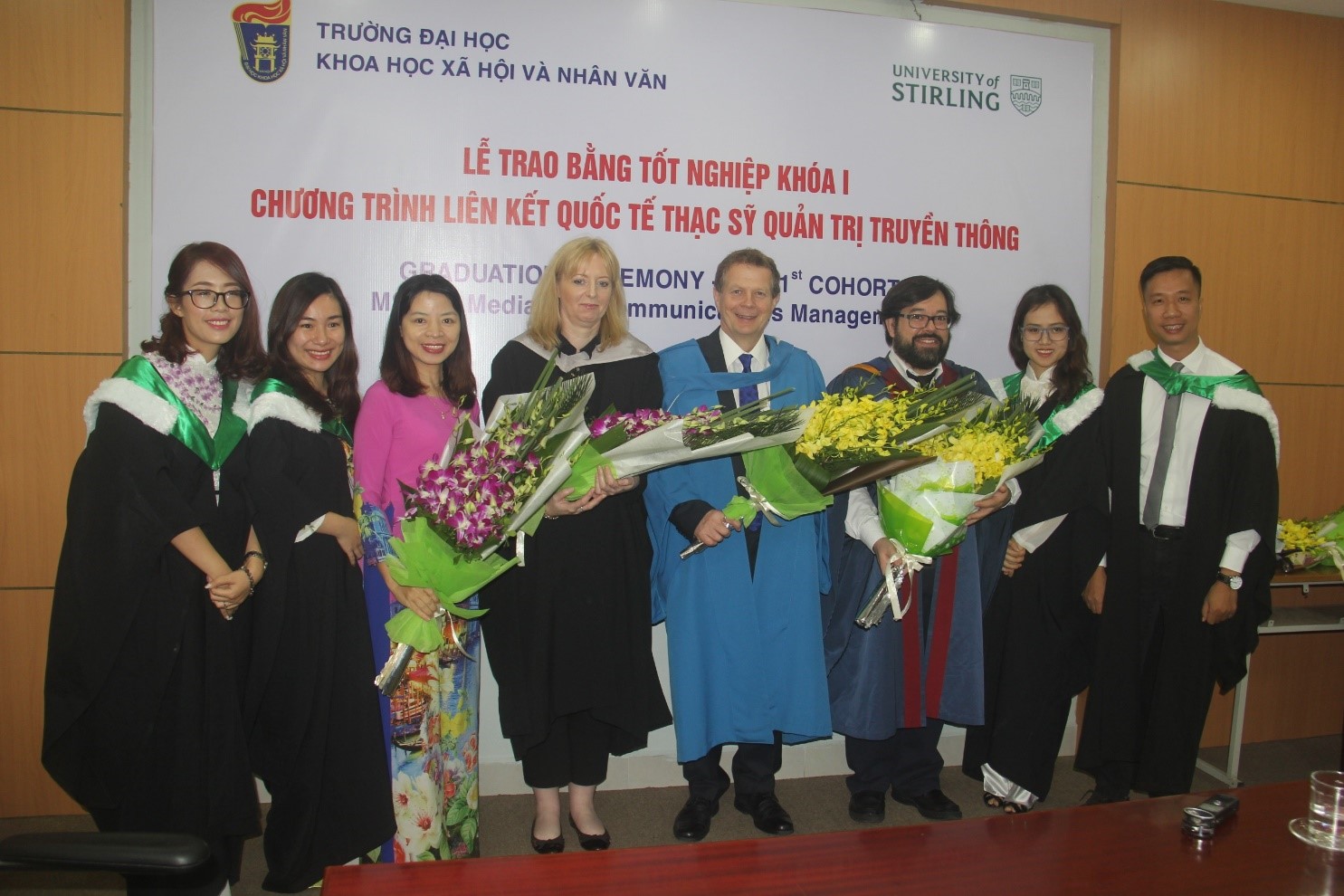
Currently, the Institute of Journalism and Communication Training provides comprehensive training at the undergraduate, postgraduate, and doctoral levels. Besides undergraduate programs in Journalism, Journalism (high quality), and Public Relations, the Institute is also offering Master's programs in Journalism (research-oriented and application-oriented), Media Management, and a joint program in Media Management (with Stirling University, UK), etc. The Institute's enrollment numbers for its programs consistently rank among the top three most popular, and for many years, it has led the entire university in postgraduate enrollment, including five postgraduate programs held in various locations across the country.
The Institute's faculty has compiled 20 textbooks and 24 specialized lectures, nearly 30 monographs, and translated more than 15 foreign journalistic documents. Many books have been reprinted multiple times, effectively serving the study and research of journalism and media in Vietnam. With these results, the Institute has provided nearly 70% of the textbooks, lectures, and specialized materials, many of which are not only essential reading for the Institute's lecturers and students, but also serve as handbooks for lecturers and students at many other universities.
Due to differences from Western countries in political institutions, socio-economic conditions, local circumstances, historical factors, and socio-cultural values—factors considered fundamental to shaping the models and defining the functions and tasks of various media outlets worldwide—Vietnamese journalism has a development model and functions and tasks that are distinctly different from those in Western countries.
Following the Doi Moi (Renovation) period, Vietnamese journalism adopted a media model that combined the unwavering principle of "journalism under the leadership of the Party and the State" with the principles of a socialist-oriented market economy. From a one-way, single-function press, Vietnamese journalism transformed into a multi-functional press, not only focusing on disseminating the Party's policies but also serving as a bridge and channel for social critique, creating a seamless flow of information within society and fostering close links between the Party, the Government, and the people. Simultaneously, it opened up avenues for the development of the media economy, connecting businesses with the public.
In addition to focusing on training, the Institute identifies in-depth research and the refinement of policy recommendations for leadership and management agencies as a key task.
Over the past five years, the Institute's faculty members have completed and successfully completed three state-level research projects, more than ten projects funded by the Nafosted Fund, the Asia Foundation, ministerial-level projects, VNU-level projects, and university-level research projects, achieving good and excellent results. The Institute of Journalism and Communication is currently implementing one state-level scientific research project on “Mass media and human development based on human rights." and compiling the National Geographic Atlas - Communication Volume - a key, special national-level task.
Over the past five years, more than 200 scientific articles by faculty members have been published in specialized scientific and theoretical journals and presented at domestic and international conferences. 102 high-quality student scientific reports from the Institute have been selected to participate in ministerial-level competitions, winning nearly 30 awards at various levels.
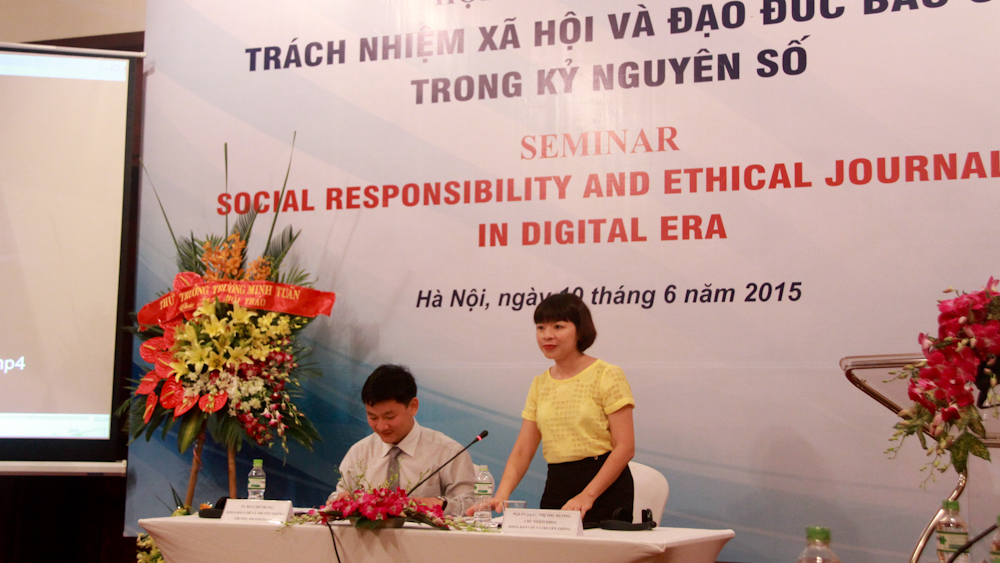
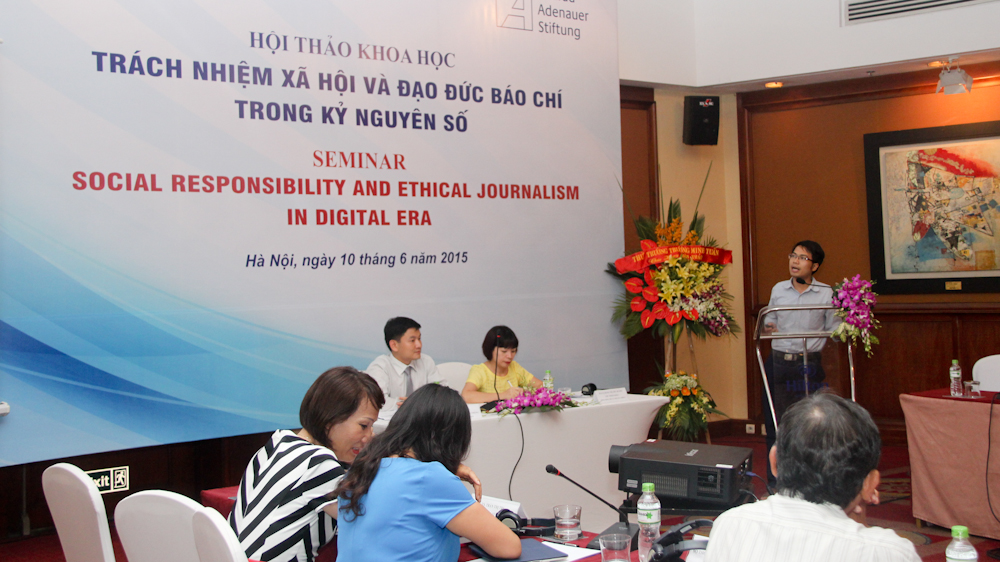
The Institute has organized numerous domestic and international scientific conferences, attracting the participation of hundreds of Vietnamese and foreign scientists. Many conferences have made a significant impact in the research community and have contributed to relevant agencies in managing and promoting the improvement of journalism quality in Vietnam today, such as the conference "Mass media culture in the context of a market economy and globalization.', “Social responsibility and journalistic ethics in the digital age”, “Social media, traditional media, and public opinion.”, 'Media management and information providers in the digital age”, …
Cooperation and development
The Institute is one of the key international hubs for research and training in journalism and media in Vietnam. Numerous collaborative projects have been implemented, resulting in the publication of many monographs, the training of dozens of staff members both domestically and internationally, and the gradual revision and improvement of the curriculum for Journalism and Public Relations to align with the development trends of the global and Vietnamese media industry. The Institute has also established a specialized library in foreign languages with over 100 books to support training and research in journalism and media.
In 2018, based on the integration of the Faculty of Journalism and Communication and the Center for Journalism and Communication Professional Training, the Institute of Journalism and Communication Training was established, marking a milestone as a pioneering unit in the University of Social Sciences and Humanities, developing from a faculty to an institute, preparing the groundwork for future university autonomy.
In 2020, celebrating its 30th anniversary, the Institute of Journalism and Communication Training was honored to receive the Excellent Emulation Flag from the Vietnam National University, Hanoi. The Journalism Department and the Center for Journalism and Communication Professional Skills were honored to receive commendations from the Vietnam National University, Hanoi, and many individuals received commendations and certificates of merit from various sectors and levels.
The profound lessons that have led to the success of the Institute of Journalism and Communication Training today are the spirit of solidarity and close ties between generations of teachers and students, the responsibility and dedication of the staff and lecturers, the thirst for knowledge and creative passion of the students, trainees, and researchers, and the close cooperation and support of press agencies, press management agencies, and domestic and international partners. Above all, it is the correct direction, the close attention and guidance, and the immense trust that the leaders of Vietnam National University, Hanoi and the University of Social Sciences and Humanities have bestowed upon the teachers and students of the Institute of Journalism and Communication Training.
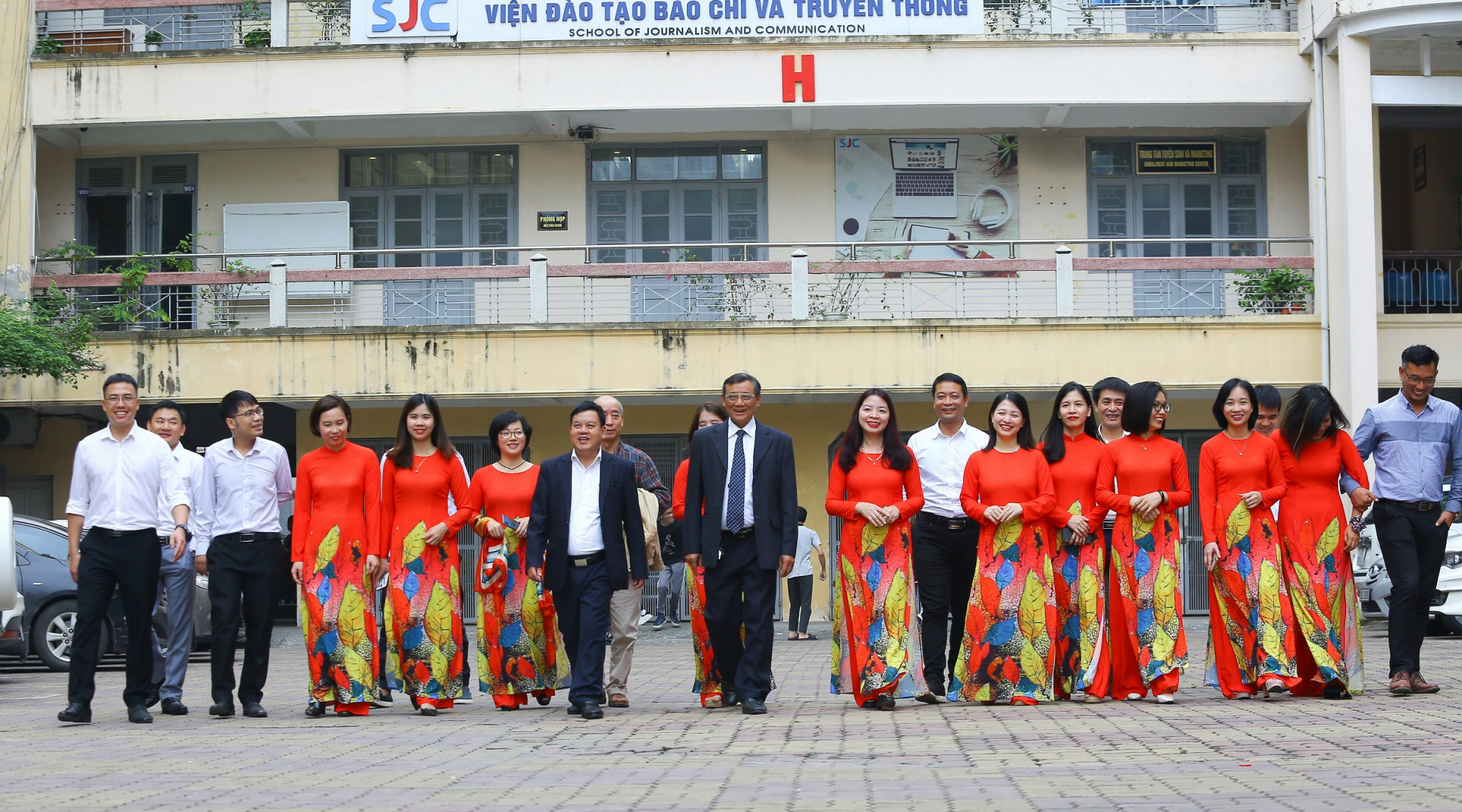
With the youthful energy and ambition of their 30s, the faculty and students of the Institute of Journalism and Communication Training will continue to leverage their internal strengths and collective power, attracting domestic and international resources to build and develop the Institute in depth and towards standardization and modernization within the overall development of the University of Social Sciences and Humanities and Vietnam National University, Hanoi.
Newer news
Older news


 USSH Hanoi Forum 2026