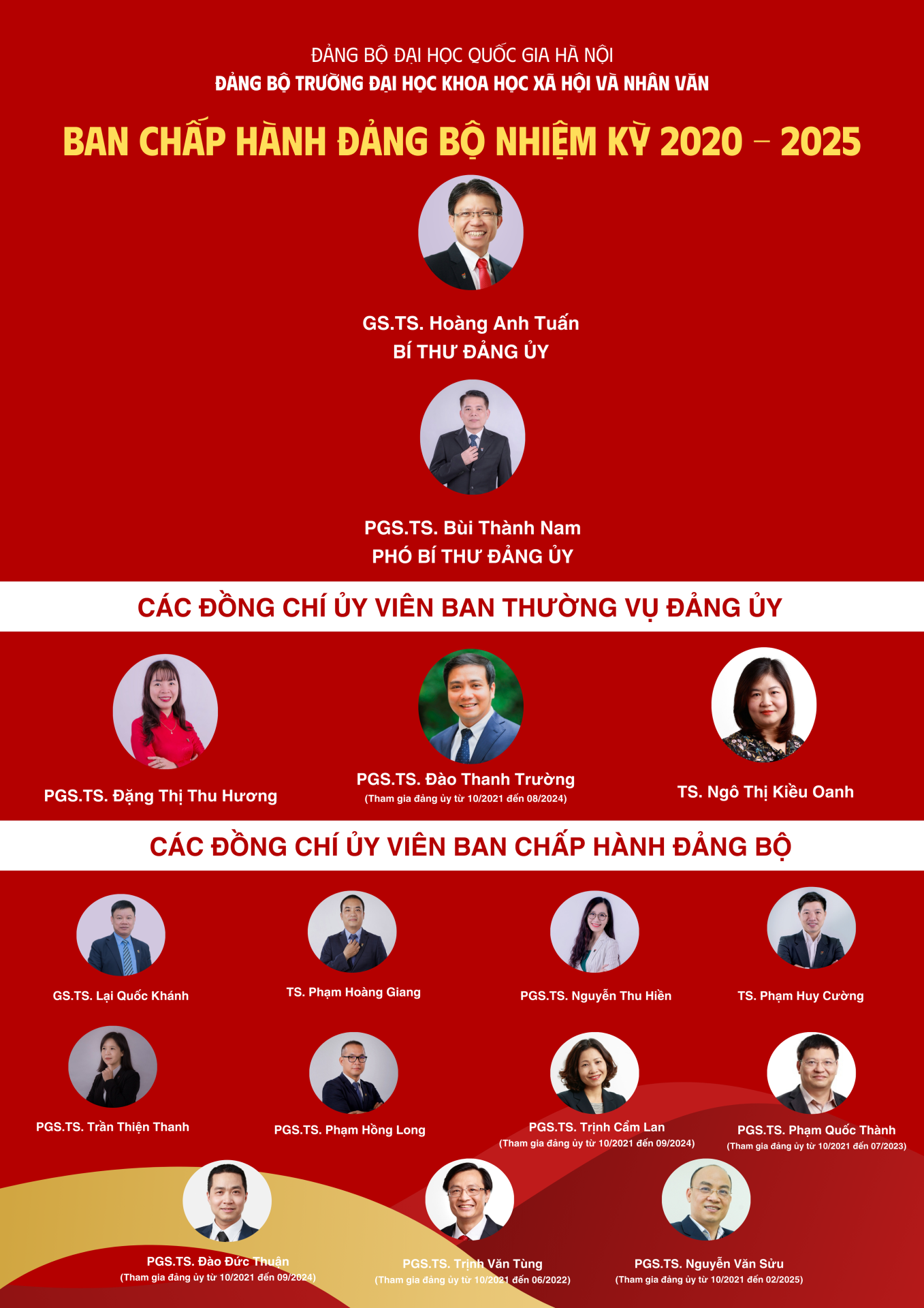
During the past term, the University's Party Committee overcame many difficulties and challenges, including the complex and unpredictable developments of the Covid-19 pandemic, significant changes in leadership personnel in some key positions; difficulties in building and developing the University according to the research-oriented university model; the requirement for university autonomy posing a major challenge to the field of basic science; and increasingly fierce competition in higher education both domestically and internationally…
In order to strongly promote the leadership role of the Party, comprehensively innovate all aspects of work, affirm the national and international position, and contribute to the development of Vietnam National University, Hanoi and the country in the new era, the University's Party Committee has adopted 05 important resolutions:
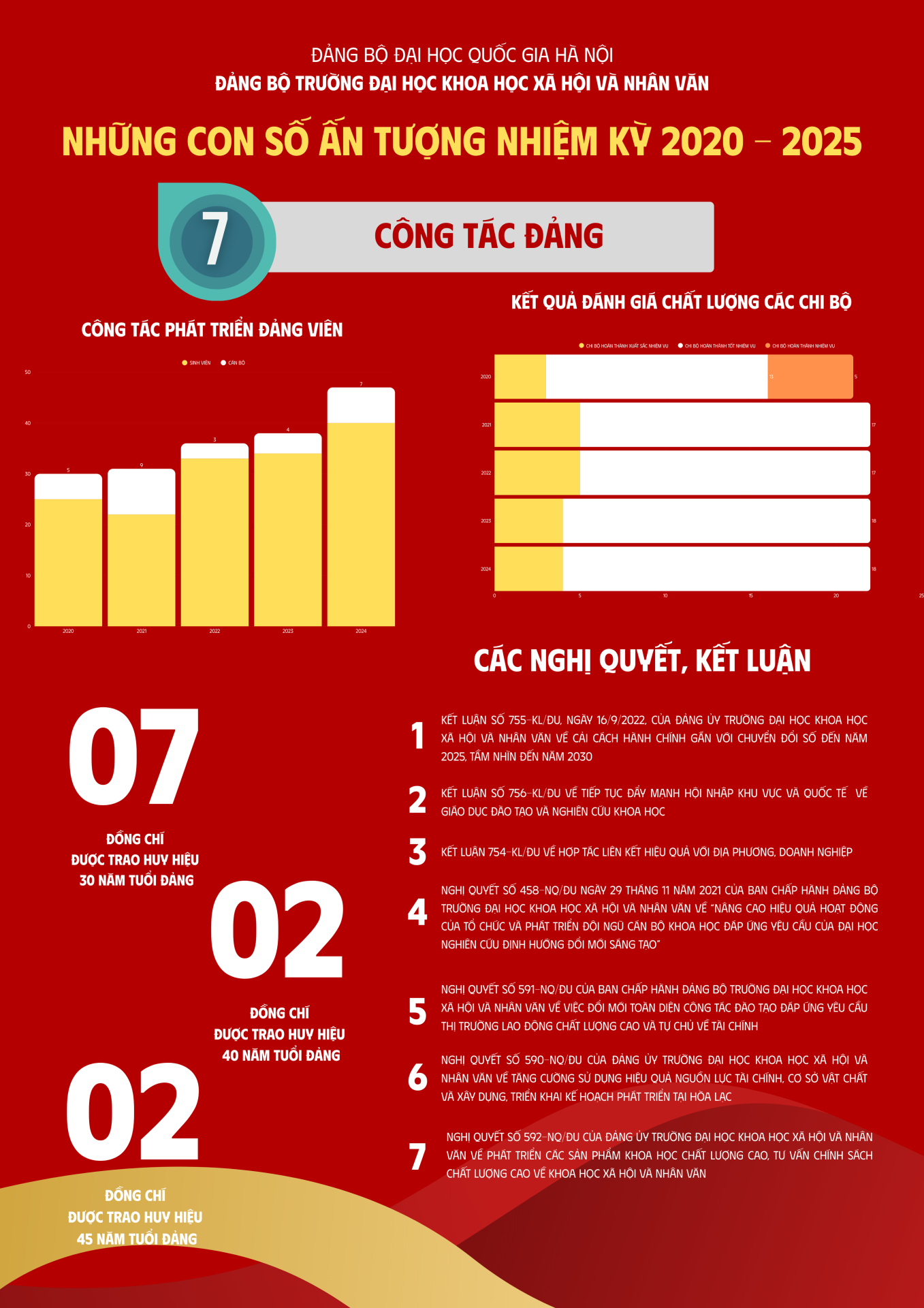
1. Resolution No. 156-NQ/DU dated January 21, 2021, on Enhancing the leadership role of Party committees and the effectiveness of inspection and supervision activities;
2. Resolution No. 458-NQ/DU dated November 29, 2021, on improving the efficiency of the organizational structure and developing the scientific staff to meet the requirements of an innovation-oriented research university;
3. Resolution No. 591-NQ/DU dated March 31, 2022, on comprehensively reforming training to meet the requirements of a high-quality and financially autonomous labor market;
4. Summary of Resolution No. 592-NQ/DU dated March 31, 2022, on the Development of High-Quality Scientific Products and Policy Consulting, a distinctive product set of the University of Social Sciences and Humanities;
5. Resolution No. 590-NQ/DU dated March 31, 2022, on strengthening and effectively utilizing financial resources, physical infrastructure, and developing and implementing a development plan in Hoa Lac.
(Source: Party Committee Office)
Based on the resolutions and conclusions of the Party Committee, the Board of Directors developed a work plan and successfully implemented the political tasks set forth.
1. Political and ideological education: strengthening unity and mobilizing all resources to build and develop the school.The School Party Committee actively leads and directs political and ideological education through various forms, linking it with Party building work, aiming to strengthen unity and create momentum for the construction and development of the School.
The Party Committee proactively developed, promulgated, and organized the implementation of specialized resolutions and conclusions; definitively resolved many outstanding issues related to organizational and personnel work, and strengthened the Party organization, creating unity and consensus throughout the entire Party Committee.
This also serves as an important foundation for the school to gather and mobilize all internal resources, attract external resources, and create a synergistic strength to consolidate stability and promote the school's development.
During the past term, the Party Committee and political and social organizations of the School achieved many accomplishments and received various forms of commendation.
2. Innovate personnel organization towards a modern research university model.In response to the school's development needs, the Party Committee has directed a vigorous review and streamlining of the organizational structure of level 3 and level 2 units, further reducing the number of administrative units.
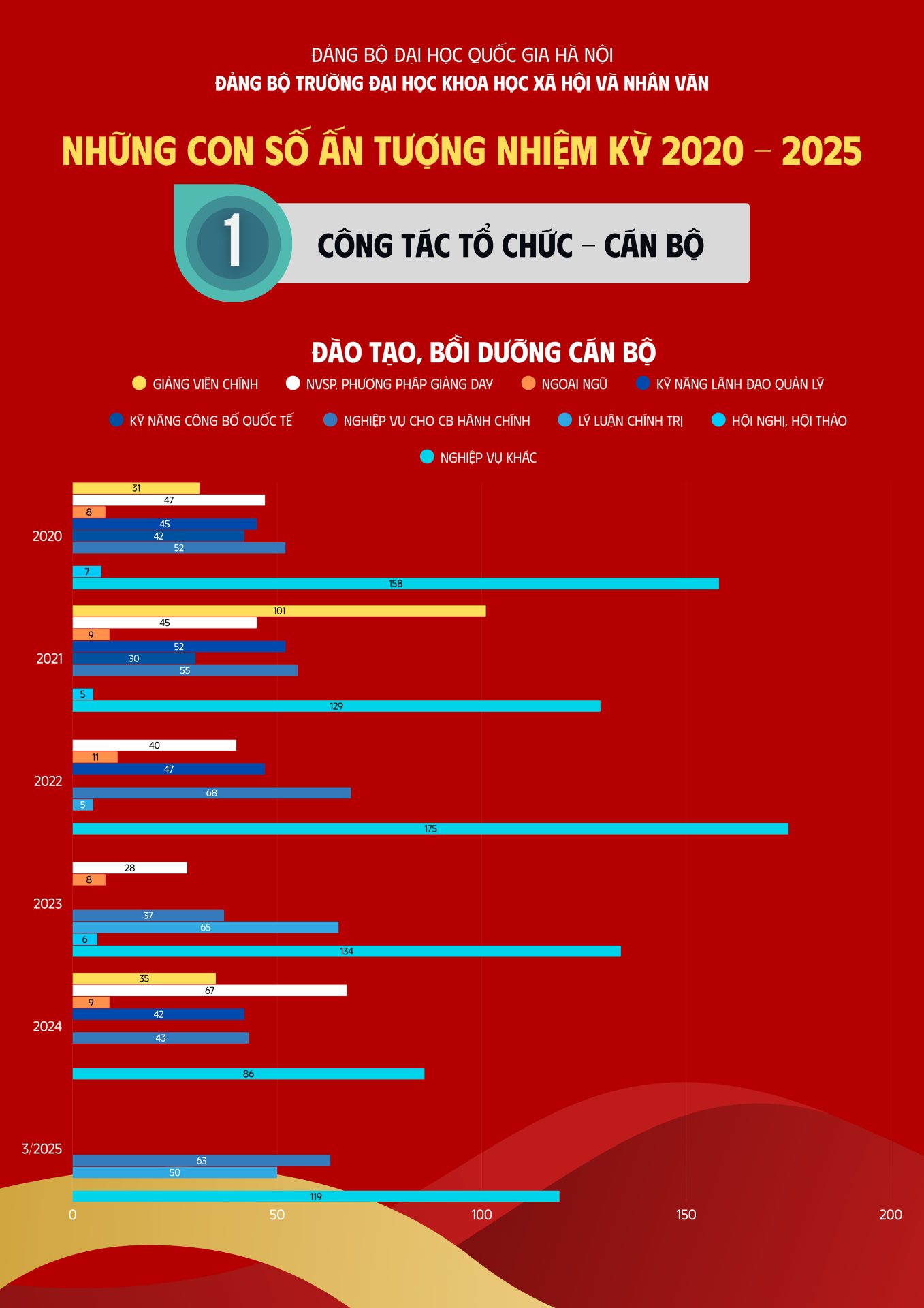
The Party Committee directed the rational use of human resources among units, prioritizing the attraction of high-quality personnel. 2024 was a breakthrough year in recruitment and personnel attraction, with 12 lecturers holding PhD degrees, including 3 Associate Professors, joining the university.
Despite challenges posed by mechanisms and policies, the University has successfully maintained a high-quality faculty, ranking among the best in the country, with 20.4% of faculty holding the titles of Professor or Associate Professor, and 81% holding the title of Doctor. The current faculty development strategy is shifting from achieving academic degree standards to achieving academic rank standards in the 2025-2030 period.
3. To innovate admission methods, support learners, improve training quality, meet social needs and international integration, the Party Committee of the University has resolutely directed the implementation of many synchronized and timely solutions:
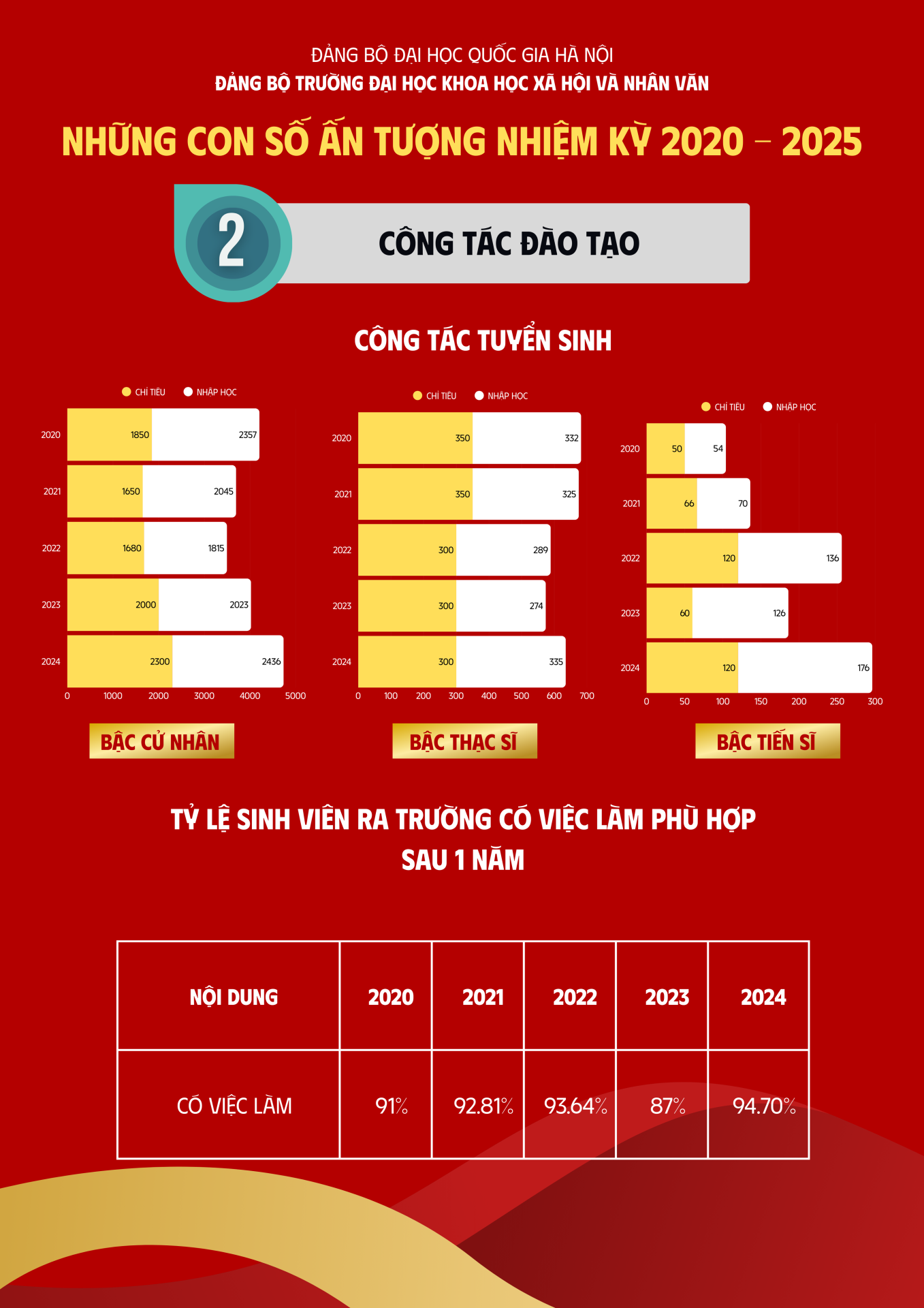
The university has comprehensively reformed its admissions and recruitment communication processes, ensuring that all assigned quotas are met and continuously improving the quality of its applicants. Entrance scores for all programs exceed the quality assurance threshold of Vietnam National University, Hanoi, with many programs having the highest entrance scores nationwide. The university has attracted a significant number of international students. Simultaneously, it recognizes credit transfers and strengthens student exchange programs with universities domestically, regionally, and internationally.
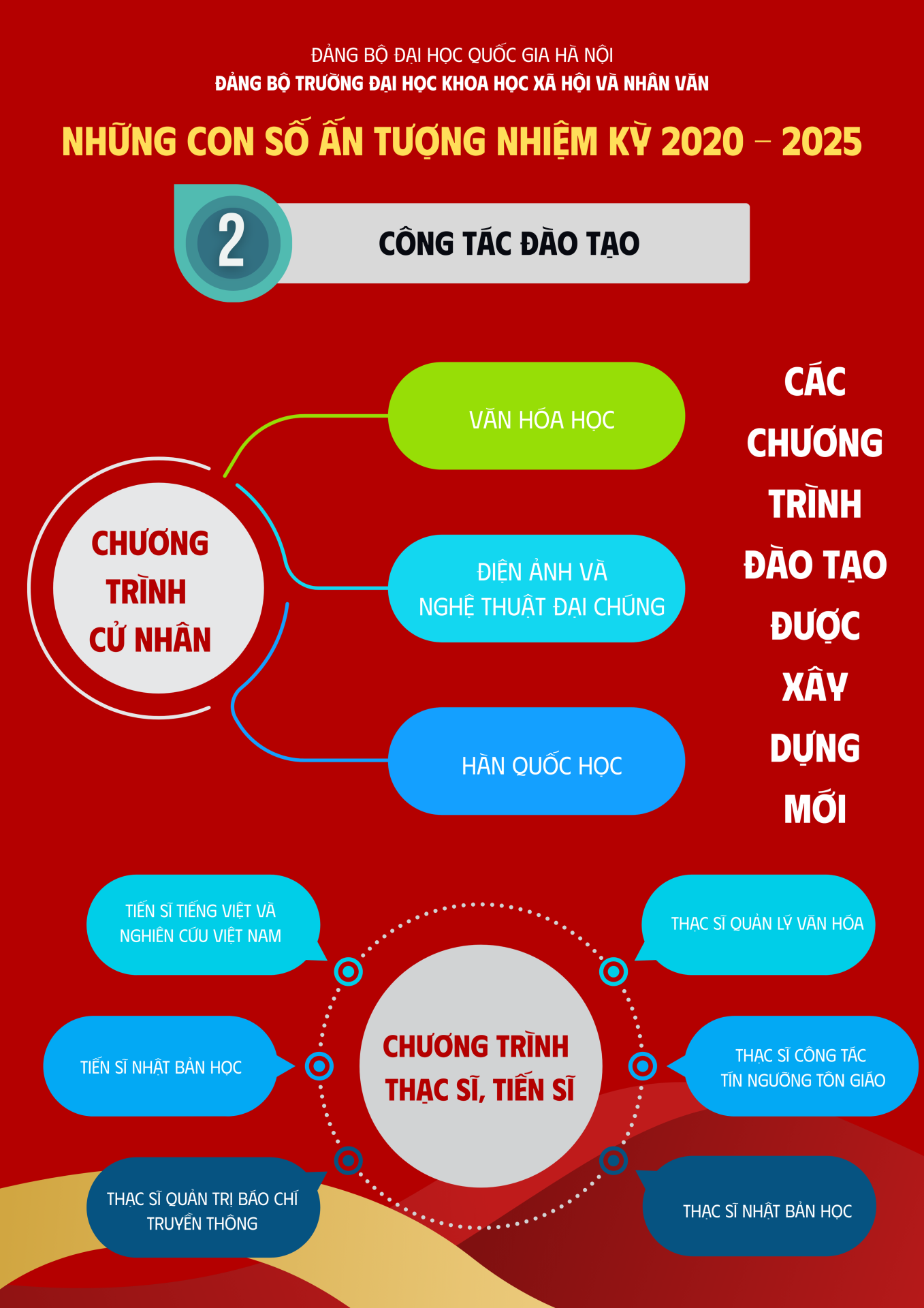
Developing and enrolling students in 13 new training programs; adjusting all training programs from bachelor's to doctoral levels in a systematic manner, emphasizing multidisciplinary, interdisciplinary, and internationalization of training programs; applying modern teaching methods, digital technology, and artificial intelligence, creating conditions for learners to access multiple fields, acquire broad and in-depth knowledge, and increase their employment opportunities.
Reforming the management of training at all levels and systems to become increasingly professional, formalized, and modern.
Implement a comprehensive set of solutions to improve the quality of teaching and learning, provide timely care and support for learners, and standardize student management processes in line with digital transformation.
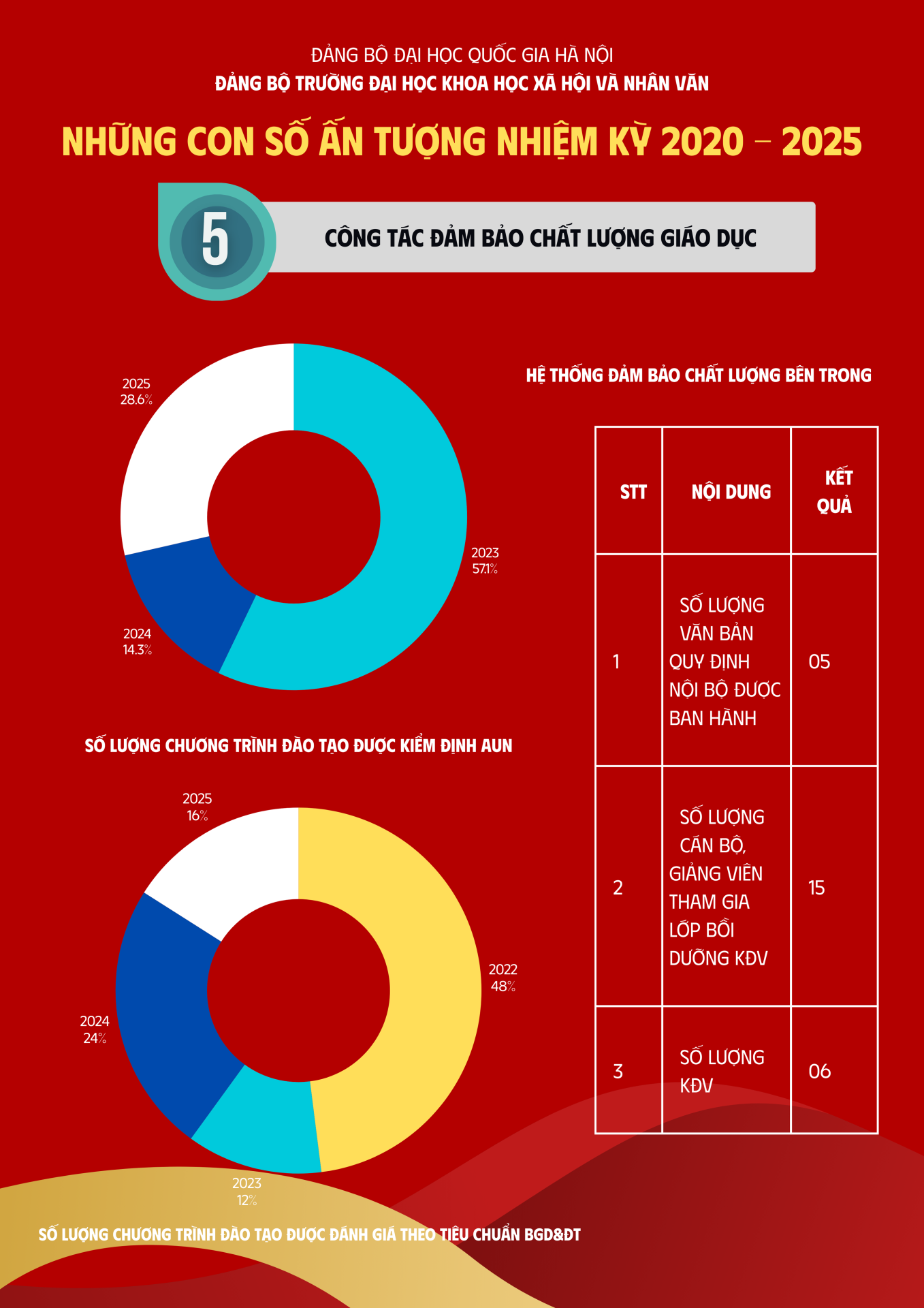
Improving the quality of training, committing to ensuring training quality, accreditation, and establishing economic and technical standards for 100% of eligible training programs will create an important and fundamental foundation for the University to implement autonomy by 2026.
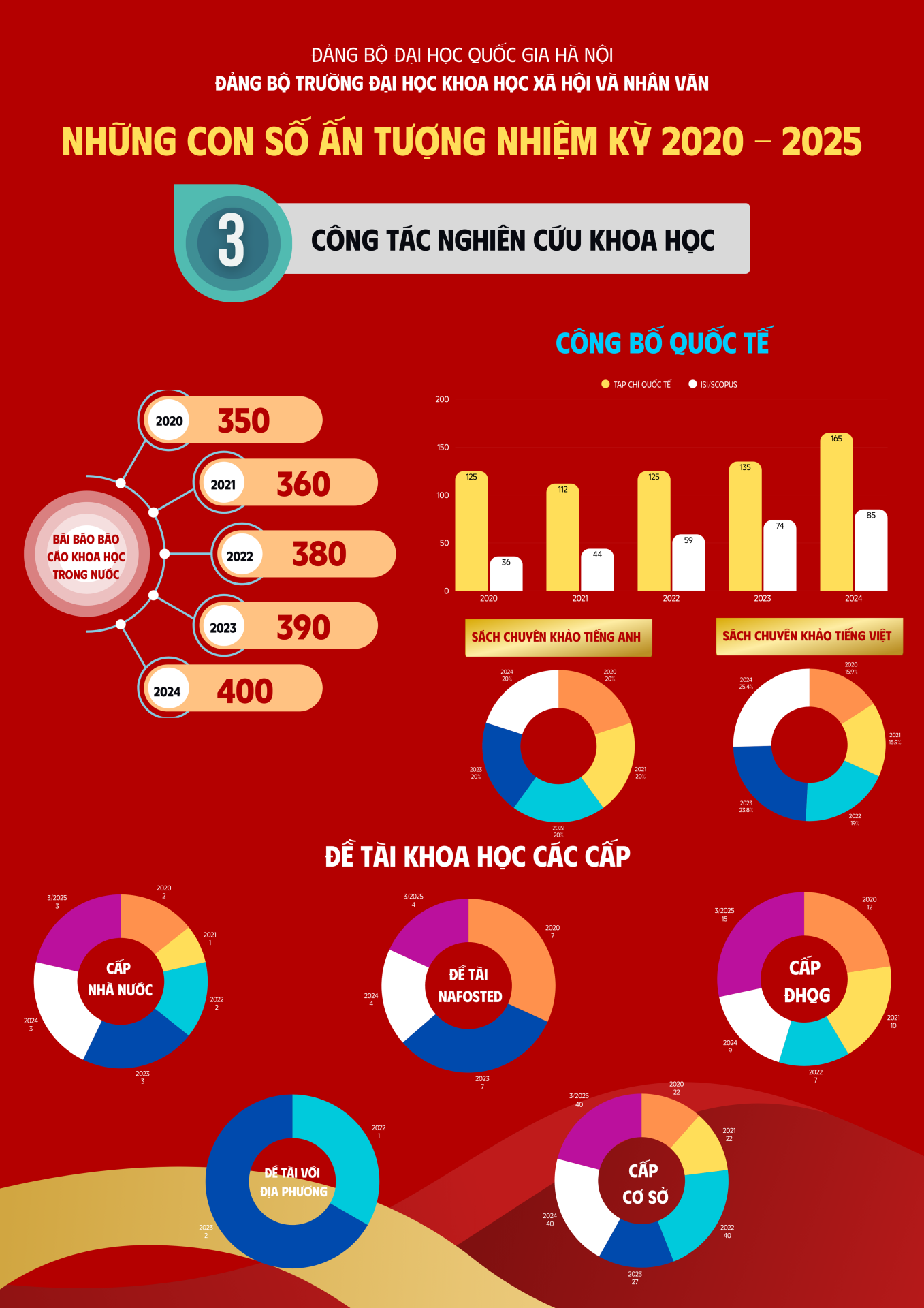
The University Party Committee directs the development of institutions and policies to create a legal framework and impetus for promoting the development of scientific research, creating high-quality scientific products, including high-quality policy advice, strengthening international integration, and gradually developing the University towards a research university orientation.
The School's team of scientists leads numerous scientific projects at various levels; many experts are assigned as project leaders for component tasks within major national scientific programs.
Many topics and seminars focus on pressing issues of social life, thereby extracting and proposing valuable policy advice for Party and State agencies at the central and local levels.
Scientific and technological work, oriented towards internationalization, has been strengthened and achieved many remarkable results.
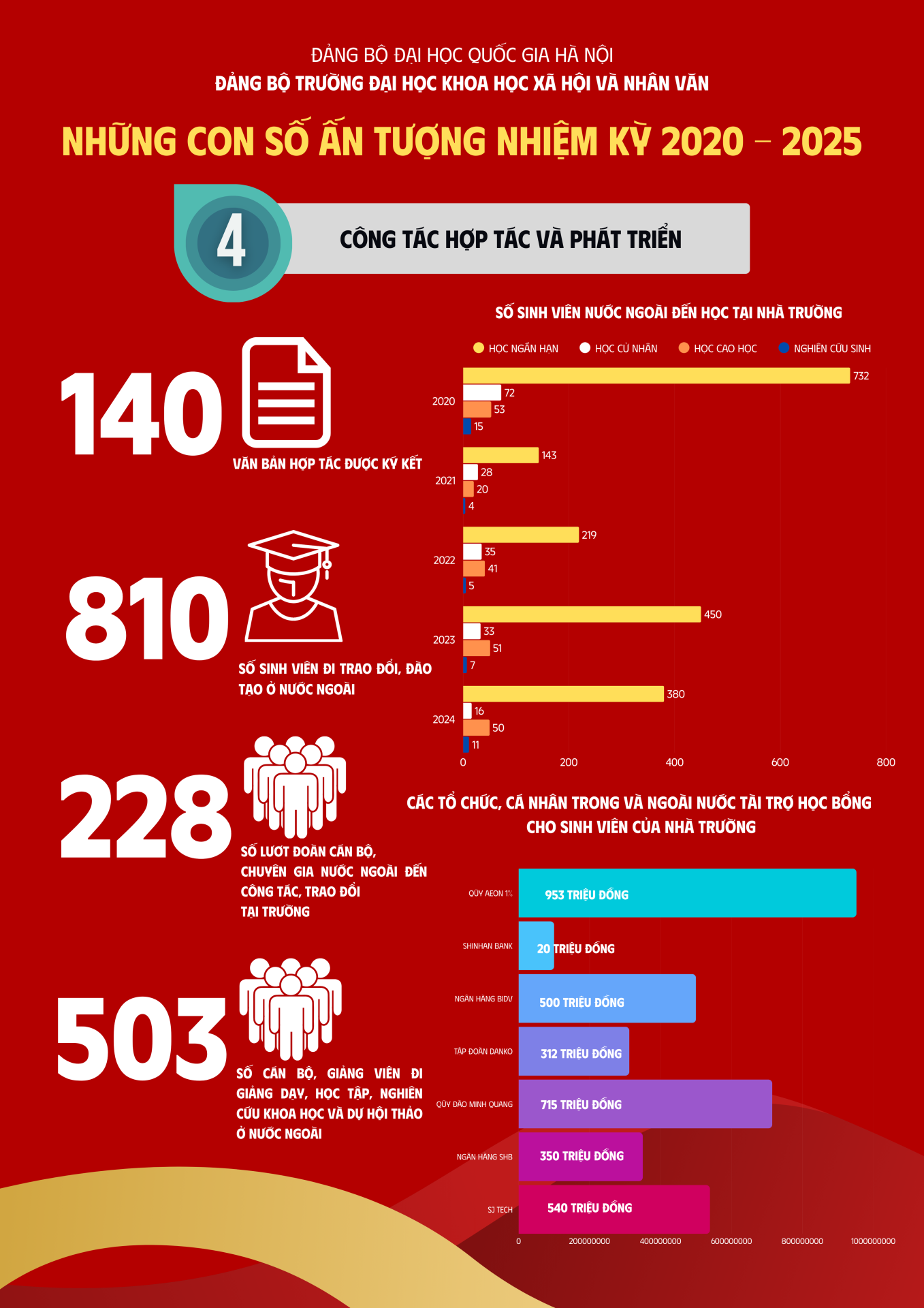
5. Expand domestic and international cooperation to develop and enhance the school's standing.The Party Committee of the University prioritizes expanding and developing in-depth cooperation with prestigious universities around the world, and promotes close cooperation with corporations and businesses through diverse and varied forms of collaboration.
The university has established cooperative relationships with more than 300 international universities and educational and scientific and technological organizations; attracting the highest number of international students to study and conduct research within the Vietnam National University, Hanoi, with over 1,000 international students each year.
Nearly 200 foreign experts have come to teach and conduct research, increasing the internationalization of the university's training and research programs.
Domestic cooperation is promoted to contribute to the implementation of local and national-level science and technology tasks, while also expanding training programs to enhance the capacity of staff in units, ministries, localities, and businesses.
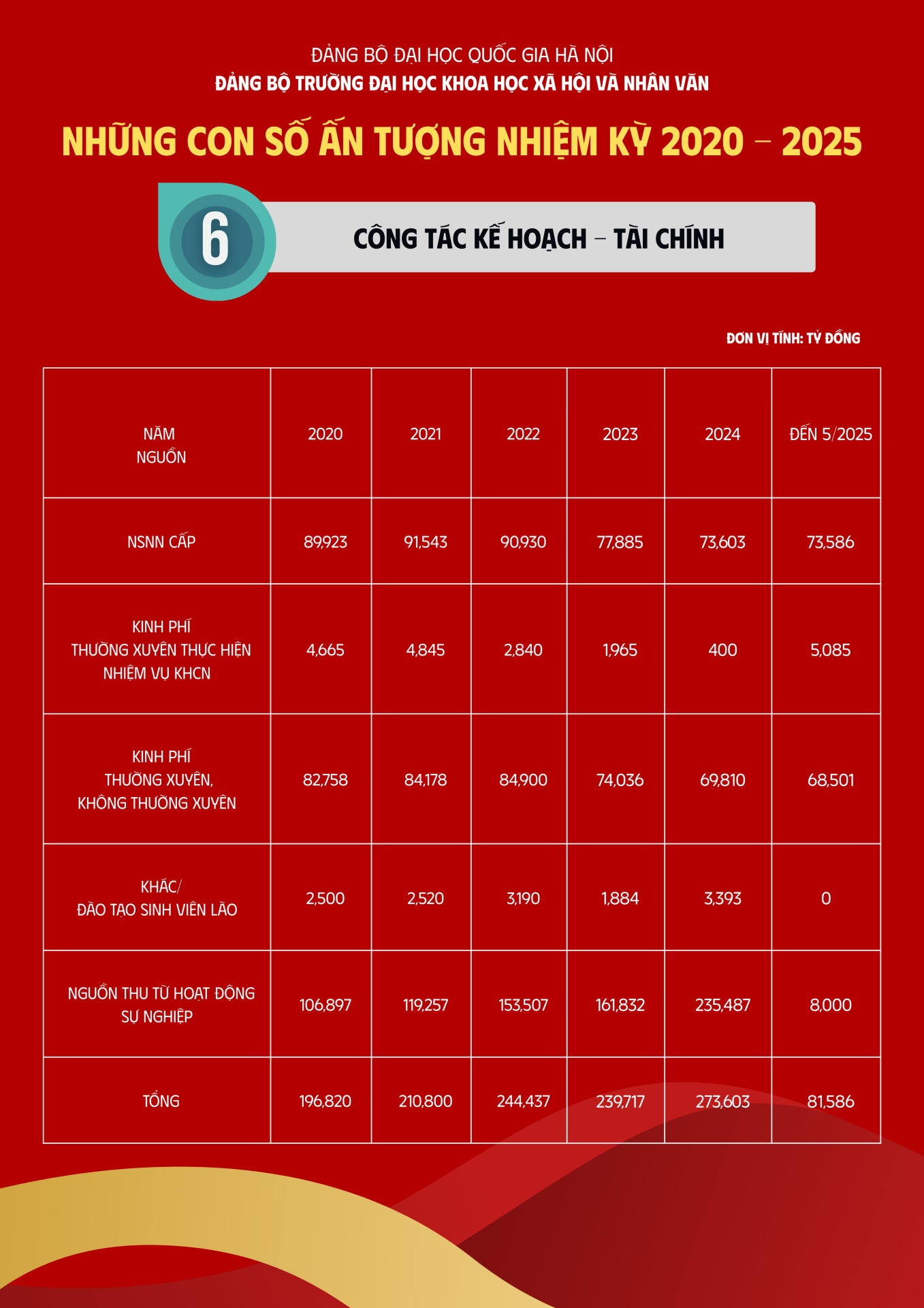
6. Diversify financial resources, modernize facilities and equipment to support training, scientific research, and international cooperation.The school currently has three main sources of revenue: government budget allocation (approximately 29%), tuition fees for all programs (58%), and service fees (13%).
The school focuses on increasing tuition revenue by raising the fee limits and expanding enrollment, and developing economic and technical standards for training programs with the potential to generate high tuition fees. As a result, in the period 2021-2024, the school's tuition revenue increased by 8-20% per year.
The Party Committee directed the streamlining of expenditure tasks and the practice of saving resources in order to focus investment on the staff, training, scientific research, and infrastructure improvement.
+ Expenditure on scientific research is implemented in accordance with legal regulations, increasing from 2 billion VND to over 10 billion VND per year.
The school campus has been renovated and is now spacious and modern.
+ Timely updating of state policies and regulations; ensuring that the income of civil servants and employees increases by an average of over 5% per year.
7. Promote administrative reform according to ISO standards, build advanced university governance, strengthen academic discipline, and spread a culture of quality assurance.The Party Committee of the School directs administrative reform in a decisive, rigorous, and effective manner, guided by the value system of "Professionalism - Friendliness - Efficiency".
The University Council for the 2023-2028 term was established; the coordination regulations between the Party Committee, the University Council, and the Board of Directors were developed and quickly put into practice, gradually forming a new university governance model in accordance with regulations.
Promoting information technology and digital transformation plays a crucial role in reforming university governance; reviewing and simplifying many administrative procedures to align with the digital governance model.
Inspection and auditing work has been reformed in terms of quality, becoming more in-depth and closely adhering to the content of the approved plan.
8. Continue to innovate working methods and promote the role of mass organizations in building and developing the school.Under the close and timely leadership and guidance of the Party Committee, mass organizations such as the Trade Union, Youth Union, Student Association, and Veterans Association have actively reformed their methods of operation, improved the quality and effectiveness of their activities, attracting a large number of staff and workers to participate in collective activities; building a unified and cohesive bloc, and effectively fulfilling their roles and responsibilities in building and developing the School.
9. Enhance the pioneering and exemplary role of Party members and cadres, build strong Party branches, and promote the comprehensive leadership role of Party branches and Party committees over units and the School.The Party Committee proactively and creatively leads and directs its work, adhering closely to the Party's principles and methods of leadership; it innovates inspection and supervision work, overcoming many limitations in Party development work and the management of Party member records, etc. It upholds the pioneering and exemplary role of Party members and cadres, working together with the School's collective to successfully complete the political tasks set forth in the Resolution of the Party Congress for the 2020-2025 term.
Taking place on the occasion of the 30th anniversary of the founding of the University of Social Sciences and Humanities (1995 - 2025) and the 80th anniversary of the tradition of the Faculty of Literature (1945 - 2025), the 29th Party Congress of the University's Party Committee is of special importance, summarizing the 5-year term of work (2020 - 2025) and looking back at the three decades of building and developing the University's Party Committee, thereby setting out the development direction of the University of Social Sciences and Humanities in the era of national progress.
Building upon the prestige and reputation of the Heroic University, all cadres and Party members of the University pledge to strive diligently, strengthen unity, resolutely innovate, and continuously create to successfully fulfill the tasks and targets of the 29th Party Congress; to ensure the University's continued sustainable development in the context of university autonomy; and to make a worthy contribution to the development of Vietnam National University, Hanoi and the cause of building and protecting the socialist Vietnamese Fatherland in the new era, an era of striving forward, all for the goal of a prosperous people, a strong nation, a democratic, just, and civilized society, and a prosperous and thriving country.