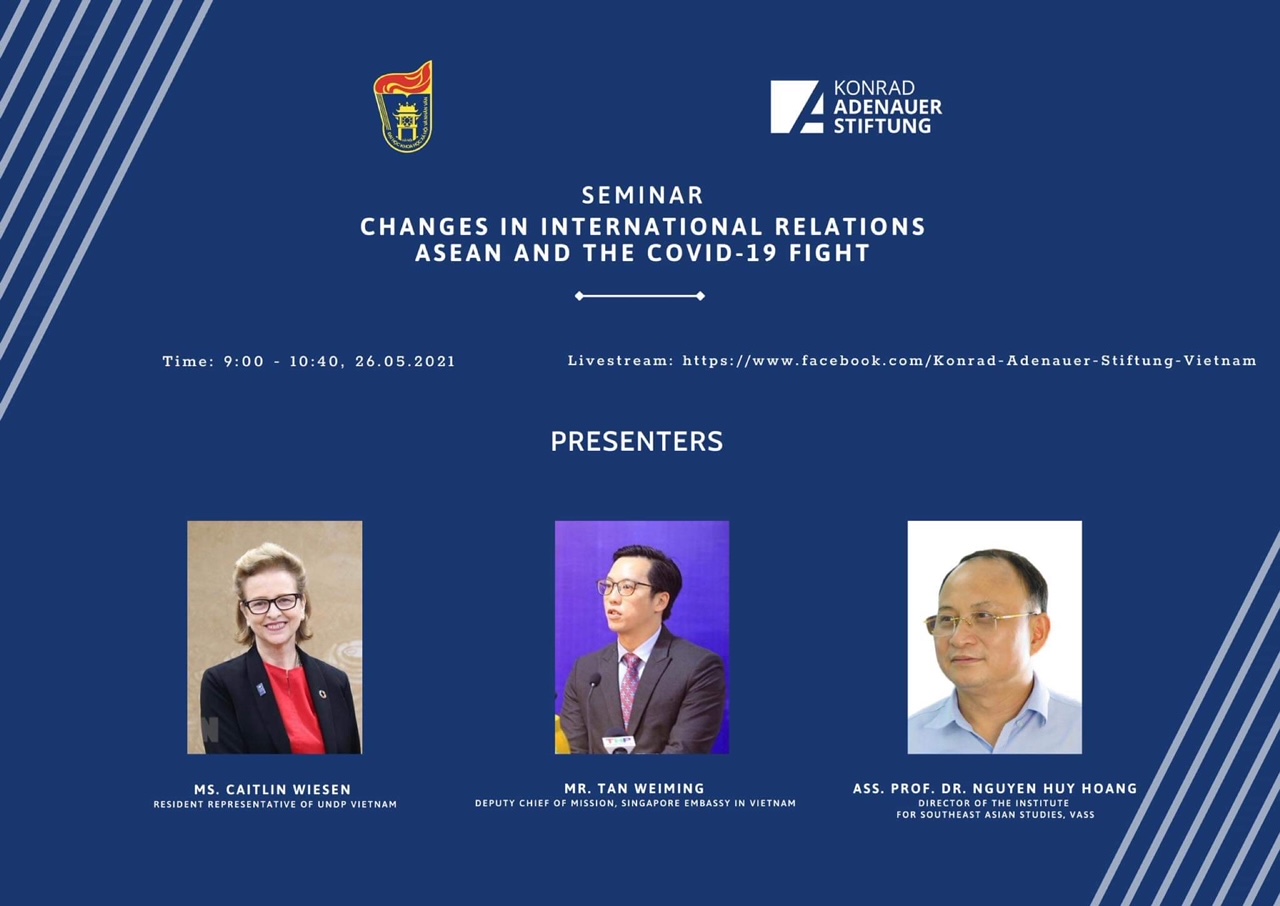
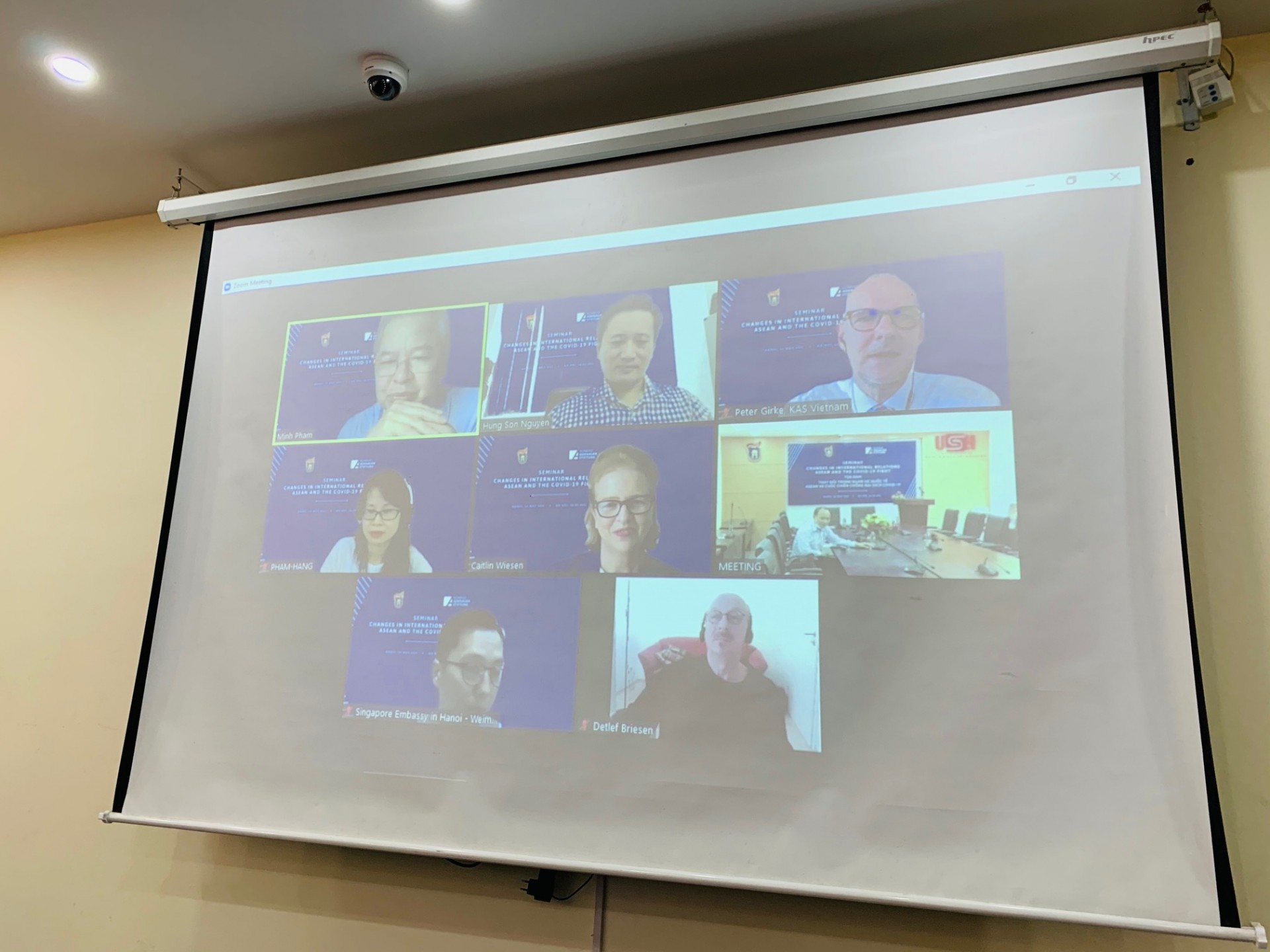
The three main speakers of the panel discussion.
The seminar heard three main presentations from the speakers: Ms. Caitlin Wiesen, Resident Representative of the United Nations Development Programme (UNDP) in Vietnam (“Looking over Fences”); Mr. Tan Weiming, Deputy Ambassador of Singapore to Vietnam (“Singapore's Covid-19 response strategy”); Assoc. Prof. Dr. Nguyen Huy Hoang, Director of the Institute of Southeast Asian Studies, Vietnam Academy of Social Sciences (“The impact of the Covid-19 pandemic and ASEAN's response.”).
Experts shared information reflecting the severe impact of the Covid-19 pandemic on ASEAN countries in economic, social, and welfare aspects; assessed the effectiveness of common solutions implemented by the ASEAN community to respond to the pandemic; analyzed lessons learned from countries successful in controlling the disease; affirmed the important role of solidarity, cooperation, and regional ASEAN action programs to combat Covid-19 and build post-pandemic development scenarios...
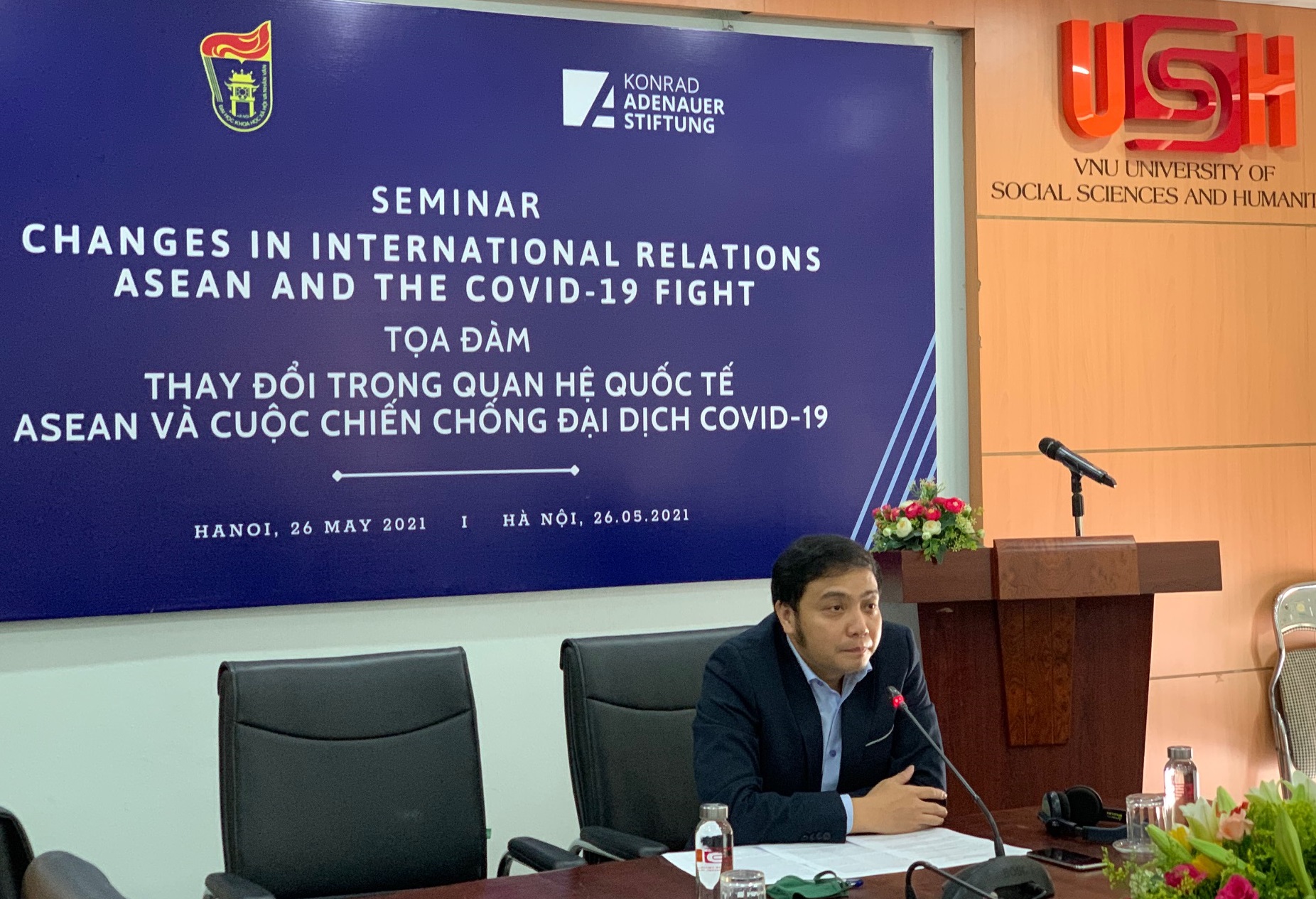
Vice Principal Dao Thanh Truong delivered the opening remarks at the seminar.
The COVID-19 pandemic is considered the greatest non-traditional security threat to humanity since World War II. As of May 21, 2021, after about a year and a half of the pandemic, the 10 ASEAN countries had 3,776,442 confirmed cases, including 74,782 deaths. All ASEAN members were severely impacted by the pandemic in economic, social, and livelihood aspects. Economically, the pandemic heavily affected many manufacturing and service sectors, causing a "freeze" in tourism, production supply chains, and labor supply. Socially, the pandemic caused social instability, a public health crisis, and widespread anxiety, threatening the peace of life. In terms of livelihoods, the pandemic disrupted people's lives, reduced incomes, and led to unemployment and poverty for a segment of the population. The ASEAN regional economy faced a severe recession as ASEAN's economic growth in 2020 plummeted, from 4.6% in 2019 to -4.2%. Countries experiencing deep economic declines included Singapore (-6.1%), Thailand (-6.8%), and the Philippines (-7.6%). Immediately upon the emergence of the Covid-19 pandemic, ASEAN took a series of timely response actions. On February 3, 2020, just four days after China notified the WHO about Covid-19, the Health Committee of the ASEAN Secretariat informed senior health officials of the organization about the new virus. ASEAN quickly responded...Chairman's Statement on ASEAN's Joint Response to Covid-19on February 14, 2010.
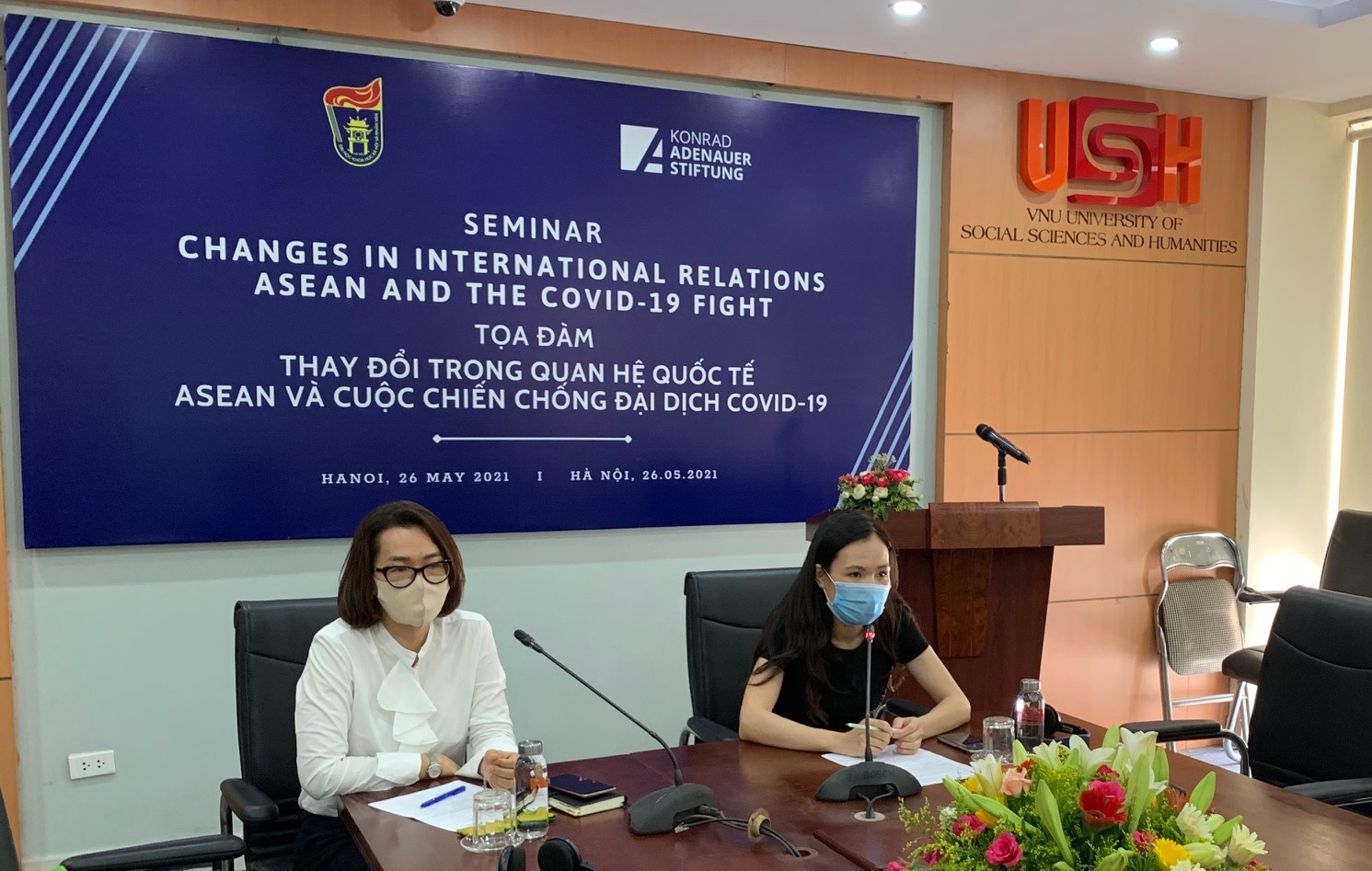
Diversity within unity: ASEAN member states have different approaches to controlling the pandemic and restoring the economy, ranging from border closures, contact tracing and community testing, contact restrictions and social distancing, vaccination, and herd immunity to economic stimulus packages, social welfare support programs, and accelerating digital transformation and technology application.
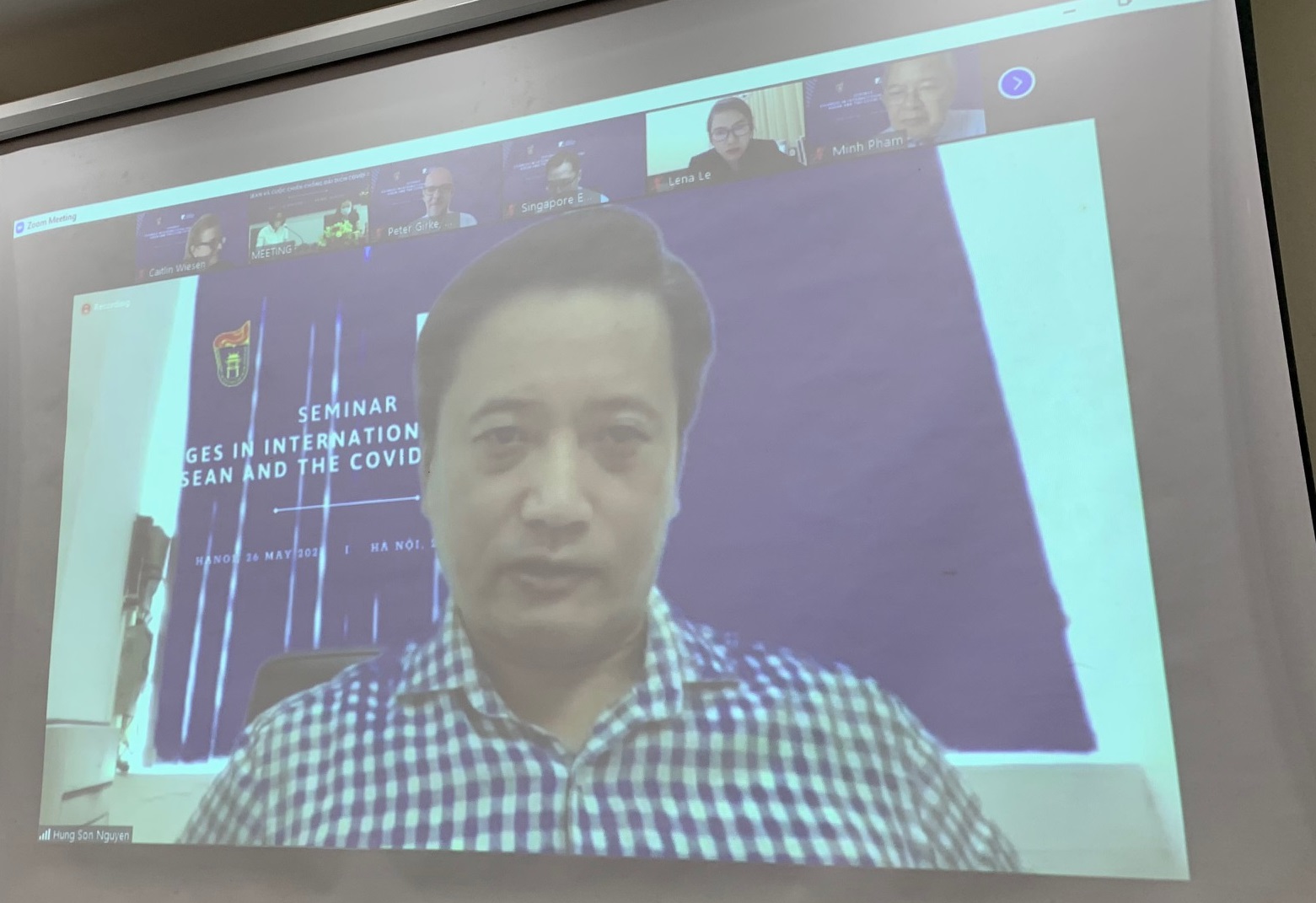
Dr. Nguyen Hung Son - Deputy Director of the Diplomatic Academy of Vietnam
Vietnam also successfully hosted the first ASEAN Women Leaders Summit. Under Vietnam's leadership, many initiatives on cooperation in responding to the Covid-19 pandemic were announced and implemented, such asASEAN Covid-19 Response Fund,Regional Emergency Medical Supplies Reserve,ASEAN Strategic Framework for Responding to Health Emergenciesand the ASEAN Health Centre responds to public health emergencies and emerging epidemics… Not only did Vietnam fulfill its role as ASEAN's rotating Chair, but it also emerged as a model with effective Covid-19 response solutions based on prioritizing the health and safety of its people. Vietnam responded quickly and persistently with contact tracing, containment, and thorough isolation of infected cases; transparent information and timely communication about government solutions. The trust and support of the people for the Government in the fight against Covid-19 was a crucial factor in Vietnam's initial results, thereby minimizing the negative impact on the economy. Therefore, Vietnam was the only ASEAN economy with positive growth in 2020.
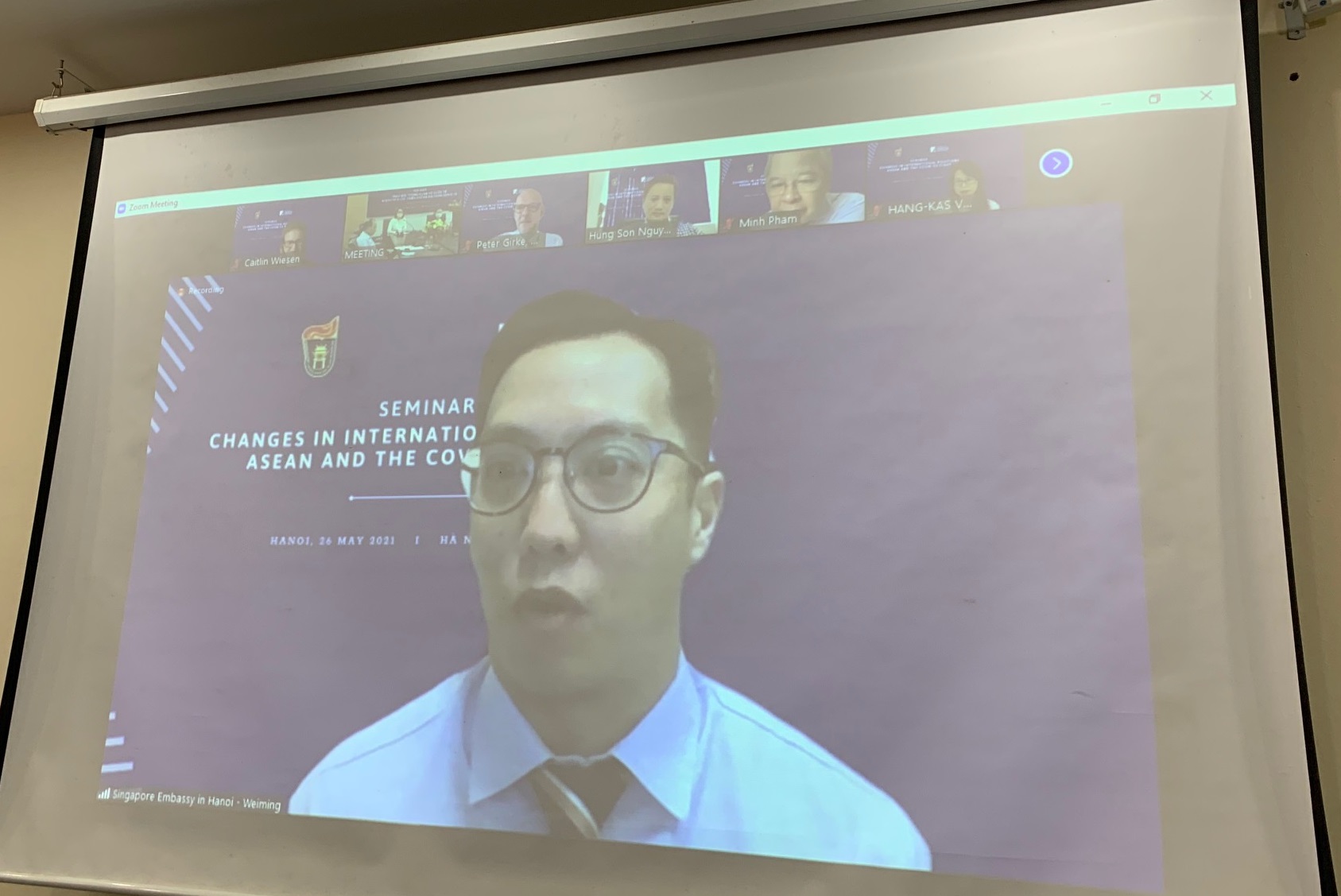
Mr. Tan Weiming, Deputy Ambassador of Singapore to Vietnam
According to Professor Pham Quang Minh, "Strengthening and building trust based on transparency, accountability, and prioritizing the people is key to helping Vietnam and ASEAN countries effectively combat the Covid-19 pandemic in the coming period." Similarly, Singapore boasts the highest Covid-19 testing and vaccination rates in the region – a key weapon in its effective fight against the pandemic. According to Mr. Tan Weiming, Deputy Ambassador of Singapore to Vietnam, Singapore's success in combating the Covid-19 pandemic was due to a cautious, gradual three-phase strategy: Phase 1 was "safe reopening," allowing only certain activities; Phase 2 was "safe transition," allowing broader reopening of social and economic activities; and Phase 3 was "national safety," where the country implemented vaccination combined with strict source control measures, allowing selective activities to take place in the "new normal."
"To be safe, we must be united."This was the message that experts unanimously agreed upon and shared at the seminar. Ms. Caitlin Wiesen, Resident Representative of the United Nations Development Programme in Vietnam, expressed: “Therefore, I hope that ASEAN will emerge stronger, not weaker, from the pandemic. And I am certain that UNDP will continue to support the Government of Vietnam and other countries in realizing the multilateral and regional vision outlined last November under Vietnam's chairmanship.”
Amidst the continuing unpredictable developments of the pandemic, scientists recommend that ASEAN exercise extreme caution and heightened vigilance. Associate Professor Dr. Nguyen Huy Hoang, Director of the Institute of Southeast Asian Studies, emphasized: “ASEAN governments and people need to make greater efforts and coordinate more closely, calling for community cooperation to quickly vaccinate the entire population, moving towards achieving herd immunity.” The important thing is that governments and people will have to adapt to the “new normal,” have contingency plans for worst-case scenarios, control risks, vaccinate on a large scale, create herd immunity, and aim for the dual goal of protecting people's health and safety while simultaneously re-establishing social stability and serving economic growth and development. More than ever, ASEAN needs to unite to jointly implement common solutions at the regional level, sharing information, experiences, and resources, both material and spiritual, to overcome Covid-19.
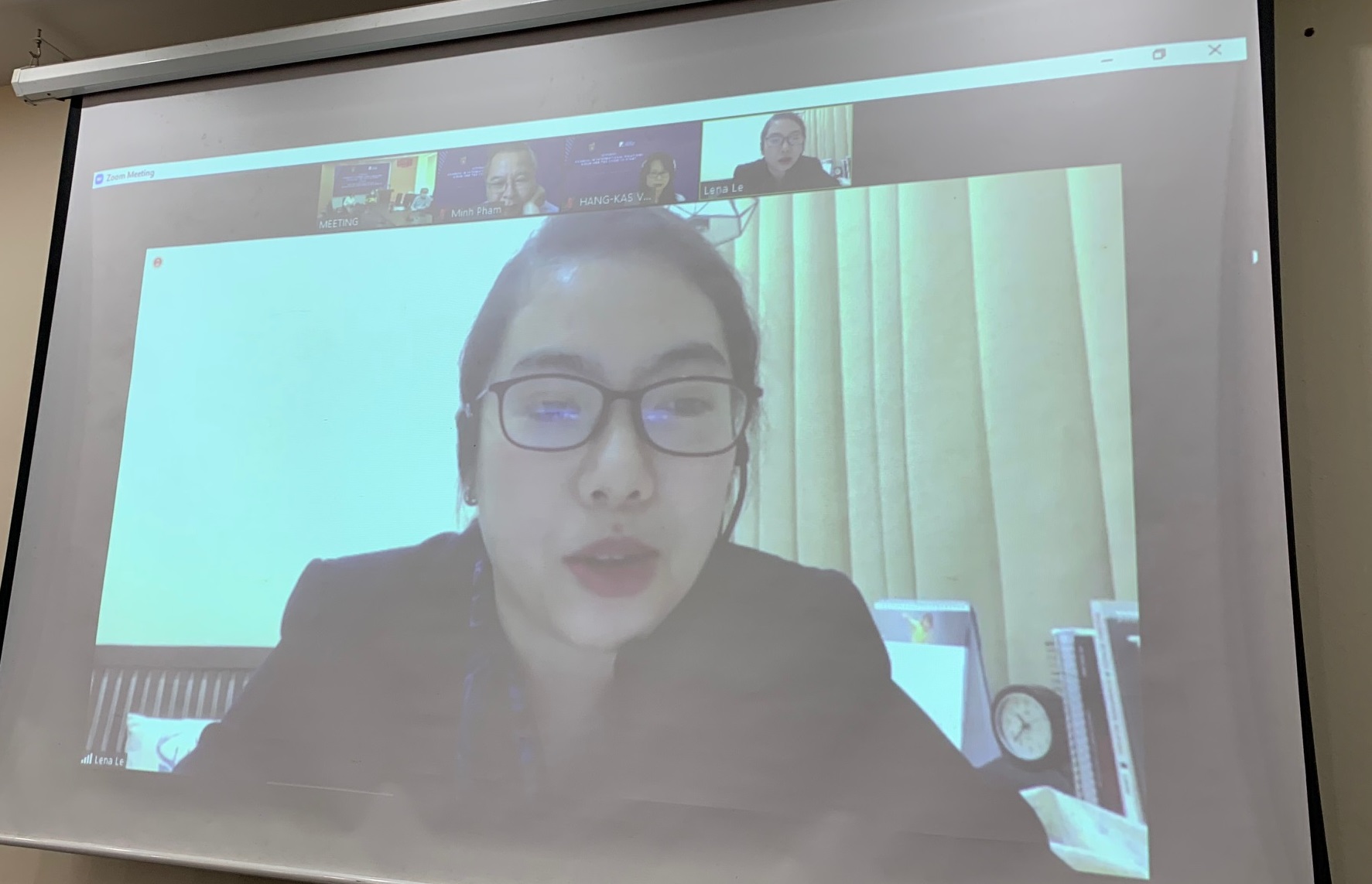
Dr. Lena Lena - Department of International Studies, Faculty of Social Sciences and Humanities, Vietnam National University, Hanoi
Experts shared information reflecting the severe impact of the Covid-19 pandemic on ASEAN countries in economic, social, and welfare aspects; assessed the effectiveness of common solutions implemented by the ASEAN community to respond to the pandemic; analyzed lessons learned from countries successful in controlling the disease; affirmed the important role of solidarity, cooperation, and regional ASEAN action programs to combat Covid-19 and build post-pandemic development scenarios...
Author:USSH
Newer news
Older news

