
The program was attended by school leaders, representatives from the Central Culture Committee of the Vietnam Buddhist Association, scholars, researchers, speakers, and more than 300 students from educational institutions in the capital city.
Attending and delivering the opening speech, Associate Professor Dr. Dang Thi Thu Huong - Vice Rector of the University of Social Sciences and Humanities - emphasized the significance of creating a space for dialogue on culture, ethics, and education within the university environment. Accordingly, values passed down through generations such as gratitude, filial piety, respect for family and teachers, and responsibility to the community are crucial in shaping the character of young people.
Based on the theme "The Fourfold Gratitude – Enlightenment in Life," the seminar focused on clarifying the values associated with the fundamental relationships of each individual, including gratitude to parents, gratitude to teachers, gratitude to the nation and society, and gratitude to all living beings. The content approached issues close to everyday life, thereby suggesting ways for young people today to receive, preserve, and express gratitude as they grow up.

Associate Professor Dr. Dang Thi Thu Huong emphasized the importance of creating a space for dialogue on culture, ethics, and education within the university environment.
Among the topics discussed in depth during the program, filial piety towards one's parents was particularly noteworthy. Dr. Le Thi Lien, Deputy Head of the Department of Anthropology and Religious Studies at the University of Social Sciences and Humanities, argued that in the context of technological advancements, changing lifestyles, and generational gaps, the way young people express their affection for their parents may differ from previous generations. Caring, sharing, striving for independence, learning, and asserting one's self-worth can all be expressions of love and responsibility towards family. These generational differences should be viewed with respect and understanding. Simultaneously, young people's opinions and choices should be accompanied by responsibility, clear direction, and tangible results.

Dr. Le Thi Lien - Deputy Head of the Department of Anthropology and Religious Studies, University of Social Sciences and Humanities
Director Tuệ Quang suggests three levels of filial piety: caring for one's parents, virtuous conduct, and moral conduct. From caring for parents to living ethically, studying, training, and self-improvement, filial piety is seen as a process of personal growth. Through this, gratitude towards one's parents is expressed not only through words or care but also through responsible living and striving to become a useful member of family and society.
From the family, the story of gratitude extends to school and the teacher-student relationship. In the university environment, showing gratitude to teachers is not just about well wishes or remembering them, but also through a serious learning spirit, a proactive attitude, a commitment to self-improvement, and the application of knowledge to practice. In the context of the internet and artificial intelligence increasingly expanding access to knowledge, the role of teachers is changing in terms of teaching methods, but their function of guiding, stimulating thinking, and accompanying students in their growth process remains crucial.

Director Tuệ Quang suggests three levels of filial piety: nurturing filial piety, virtuous filial piety, and moral filial piety.
Dr. Bui Huu Duoc, former Director of the Buddhist Affairs Department, Government Religious Affairs Committee, emphasized that young people need to bring honor to their families through their own morality and talent. Learning and self-improvement are not only processes of self-perfection but also practical ways to reciprocate the values passed down by family and teachers. From this perspective, gratitude is expressed through concrete efforts in learning, working, and how each individual contributes to the community.

Dr. Bui Huu Duoc - Former Director of the Buddhist Affairs Department, Government Religious Affairs Committee, shared his views at the seminar.
The discussions at the seminar highlighted the role of education in shaping character and building a cultural foundation for the younger generation. With its unique focus on human beings, society, and culture, the University of Social Sciences and Humanities not only aims to equip students with knowledge and professional skills but also emphasizes moral, cultural, and social responsibility education. For students, gratitude towards parents, respect for teachers, appreciation for those who have helped them, and responsibility towards the community are demonstrated through their learning, behavior, and life choices.
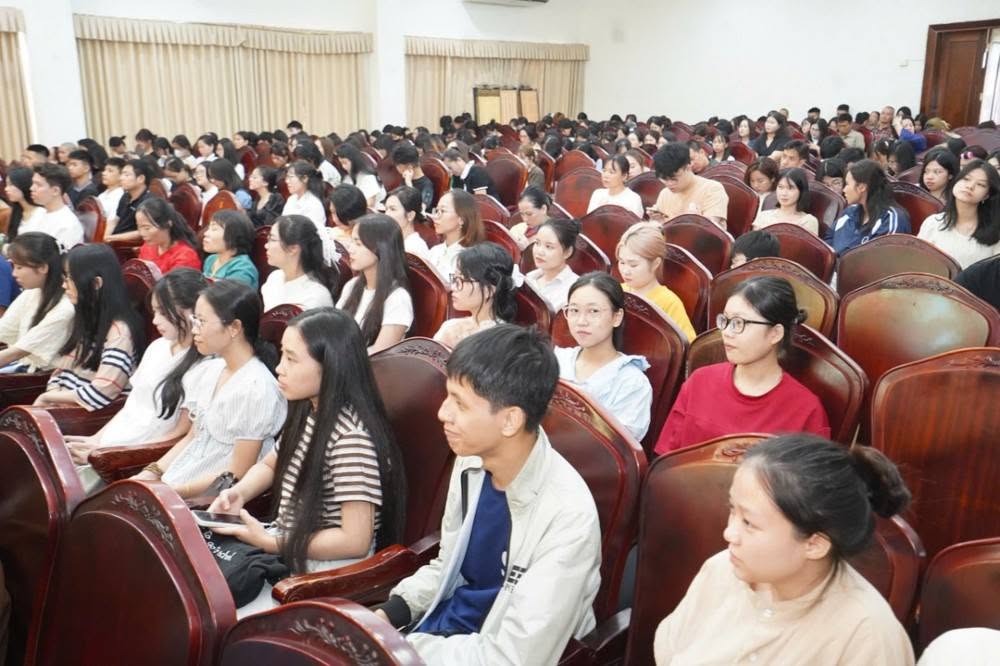
The seminar's content received attention and discussion from students of the University of Social Sciences and Humanities (Image source: Vietnamese Buddhist Culture).
The exchange between speakers and students was lively, with many questions revolving around filial piety, generational differences, expressing gratitude in modern life, the role of teachers, and the responsibilities of young people to the community. Through this, the seminar contributed to bringing traditional values closer to student life, encouraging young people to express gratitude through concrete actions such as becoming more mature towards their families, being more serious in their studies, respecting their teachers, and being more responsible to the community. The program also contributed to expanding the educational space beyond the classroom, creating opportunities for VNU-USSH students to dialogue about issues related to people, culture, and society.
Besides the seminar, within the framework of the "Lighting Up Gratitude During the Vu Lan Season" 2026 series of activities, many meaningful cultural, artistic, and experiential activities such as the "Fourfold Gratitude" calligraphy exhibition, the Tea Talk Workshop, the vegetarian charity program, and the "Lighting Up Gratitude During the Vu Lan Season 2026" art program will also be organized, contributing to spreading cultural, ethical values and the spirit of gratitude in the community.

Tea offering ceremony by the Tea Ceremony Committee, Central Culture Committee of the Vietnam Buddhist Association.


Associate Professor Dr. Dang Thi Thu Huong - Vice Rector of the University of Social Sciences and Humanities, presents a gift of gratitude to the Central Culture Committee of the Vietnam Buddhist Association.

Author:Ha Phuong, Xuan Bach – USSH Media
Newer news
Older news

