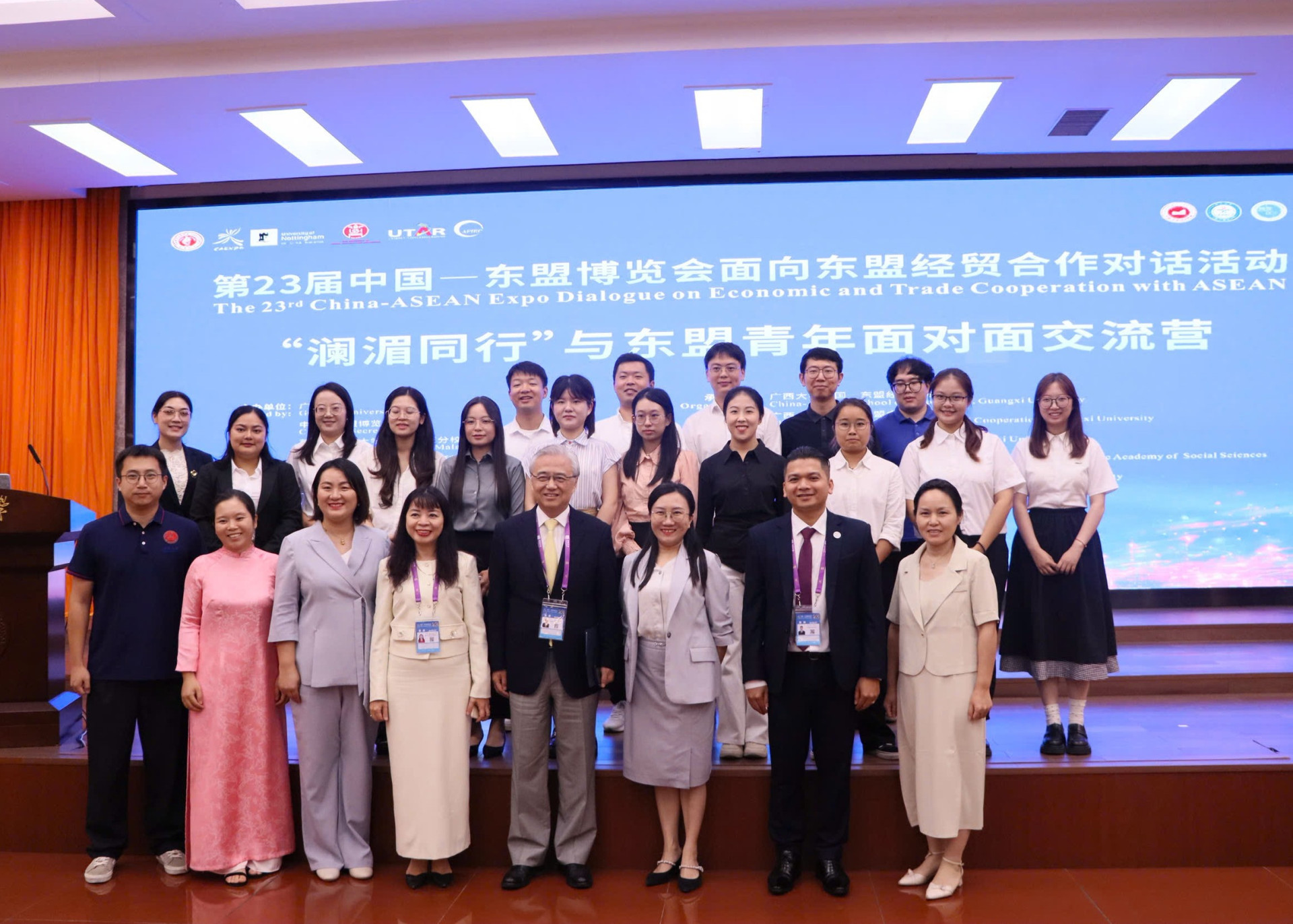
Attending the event were Ms. Tuy Quoc Hoa, Vice Chairperson of the Guangxi Zhuang Autonomous Region Government and Chairperson of the Guangxi Zhuang Federation of Industry and Commerce; Mr. Dich Tieu Chuan, former Deputy Director-General of the WTO and former Vice Minister of Commerce of China; Mr. Ho Toa Cam, Vice Chairperson of the China Association for International Economic Cooperation; Mr. Tu Hoa Nhuy, Party Secretary of Guangxi University; Professor Chung Chi Cuong, Vice President of Tunku Abdul Rahman University, Malaysia; Professor Hazel Melanie Anneza Ramos, Vice President of the University of Nottingham, Malaysia; and Associate Professor Dang Thi Thu Huong, Vice President of the University of Social Sciences and Humanities, Vietnam National University, Hanoi, along with many representatives from leading agencies, organizations, businesses, universities, and research institutes in China and internationally.
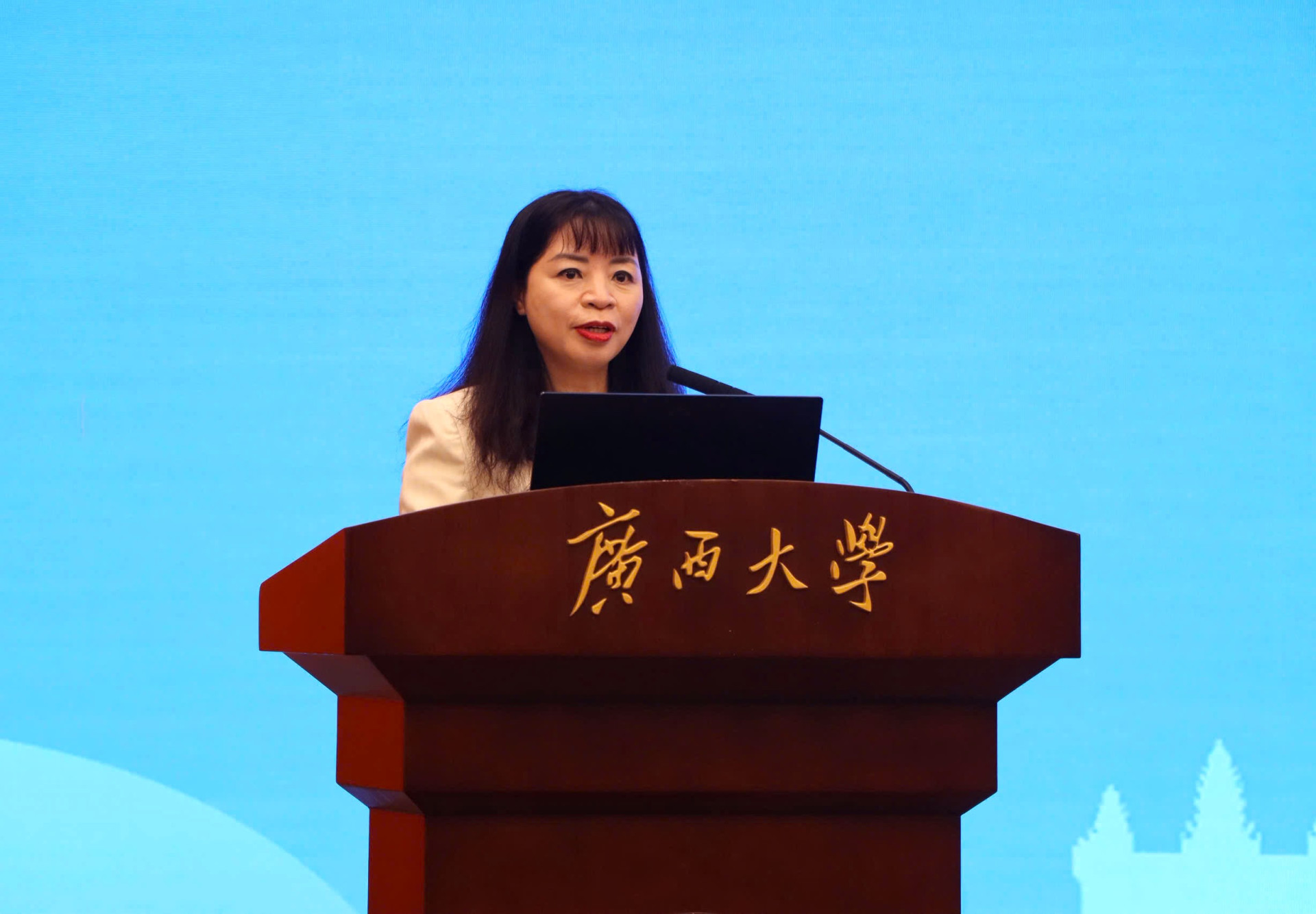
Associate Professor Dr. Dang Thi Thu Huong delivered the opening remarks at the China-ASEAN Economic and Trade Cooperation Dialogue Forum.

Delegates at the opening ceremony of the CAEXPO Green Book launch: “Report on Prospects for China-ASEAN Economic and Trade Cooperation (2026-2027)”
Speaking at the opening ceremony of the Forum, Associate Professor Dr. Dang Thi Thu Huong emphasized: The China-ASEAN Expo (CAEXPO) represents a unique model of multilateral cooperation and regional connectivity. It is the only trade fair in the world jointly organized by 12 countries – including China and all ASEAN member states – reflecting the enormous potential of the China-ASEAN Free Trade Area, a market with a population of approximately two billion people. China and ASEAN have become one of the most dynamic economic regions in the world, where trade, investment, technology, innovation, and digital transformation are increasingly creating new drivers for the region's development.
The forum "Dialogue on Economic and Trade Cooperation with ASEAN in 2026" is a key supporting activity of CAEXPO.
This dialogue program provides a particularly valuable platform, bringing together government officials, prestigious academics, senior policymakers, business leaders, and representatives from universities, research institutes, and policy advisory organizations to meet, interact, and contribute to a shared understanding of economic and trade cooperation between China and ASEAN.
The presence and active participation of prestigious universities from Vietnam and Malaysia, along with the China International Economic Cooperation Association, with Guangxi University—a national key university and a crucial institution in China's higher education system—playing a central role, has affirmed the essential role of higher education institutions and research institutes in regional cooperation.
Universities are not only centers for academic training and research, but are increasingly playing a crucial role as knowledge centers, consulting organizations, policy advisory bodies, and bridges connecting the government, businesses, and society.
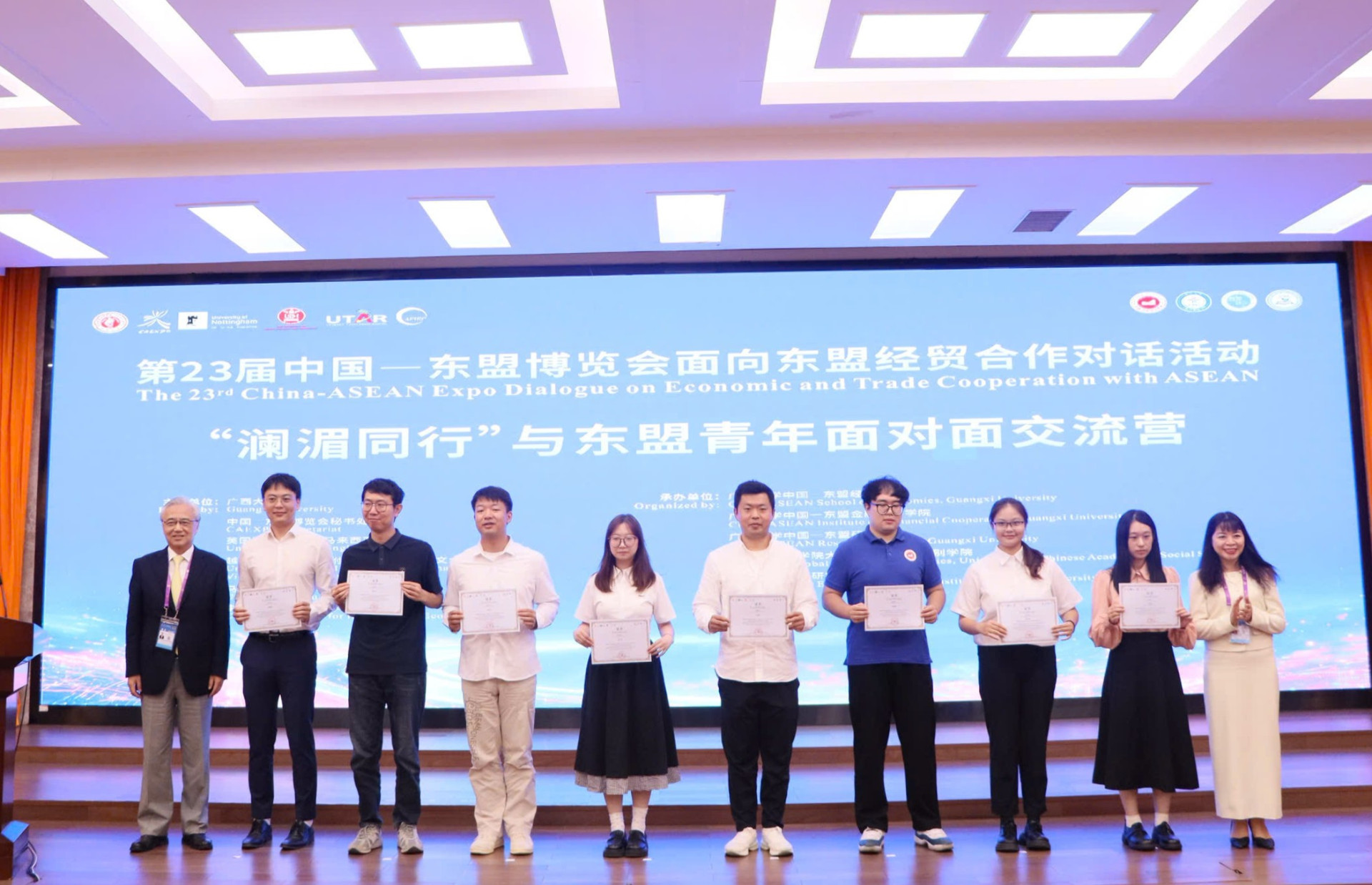
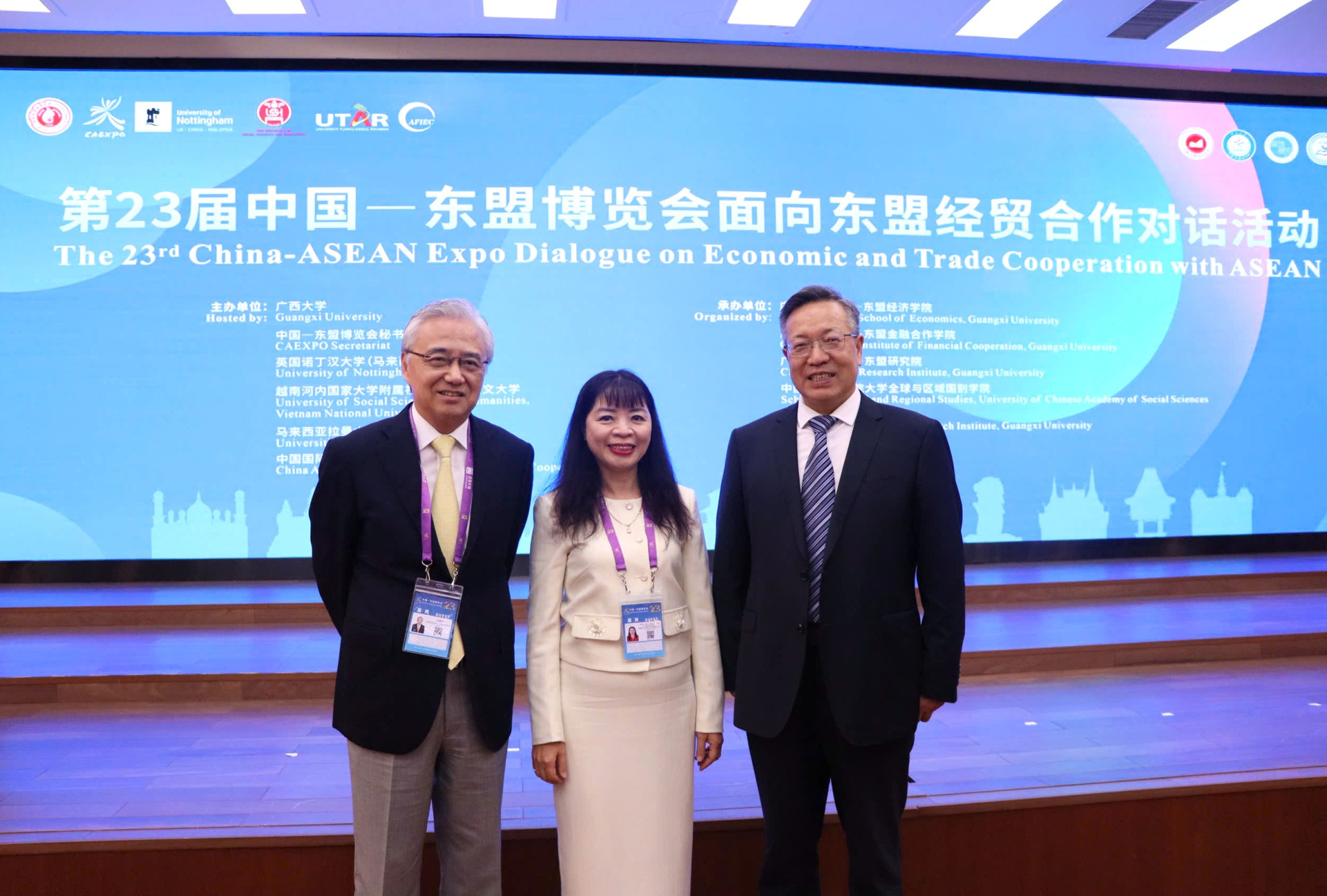
Vice Principal Dang Thi Thu Huong participated in the Forum's activities.
With the theme “Digital Intelligence as a Driving Force, Win-Win Cooperation: Developing a High-Quality China-ASEAN Free Trade Area (CAFTA) 3.0,” the discussions affirmed that digital intelligence and artificial intelligence are creating fundamental changes for economies, industries, finance, trade, and supply chains. Therefore, the development of CAFTA 3.0 requires a new level of cooperation – not only in traditional trade but also in areas such as digital infrastructure, smart industry, digital finance, green transformation, innovation, and regional value chains.
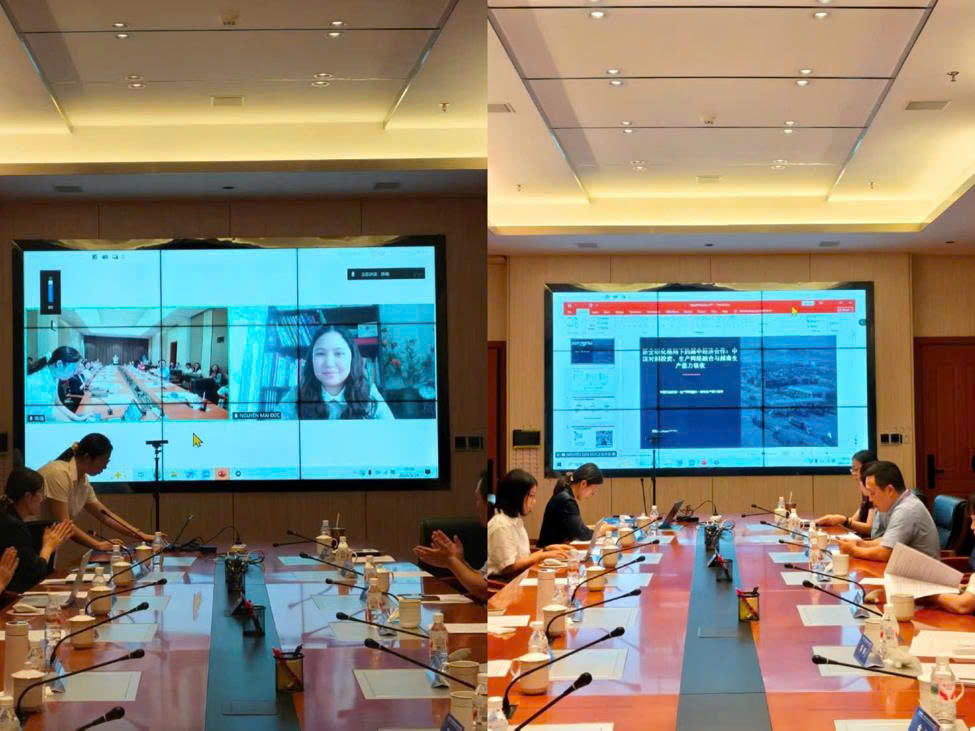
Dr. Nguyen Mai Duc (Faculty of Oriental Studies, University of Social Sciences and Humanities) presented his report online.
The forum's focus on major topics such as digital finance and smart finance, AI-based industrial collaboration, and new ways to upgrade and expand bilateral trade is extremely timely and strategically significant.
The forum is an important opportunity to bring academic knowledge closer to policy-making practices, and to bring policy challenges into academic research with practical value.
Author:Department of Science and Foreign Affairs
Newer news
Older news

