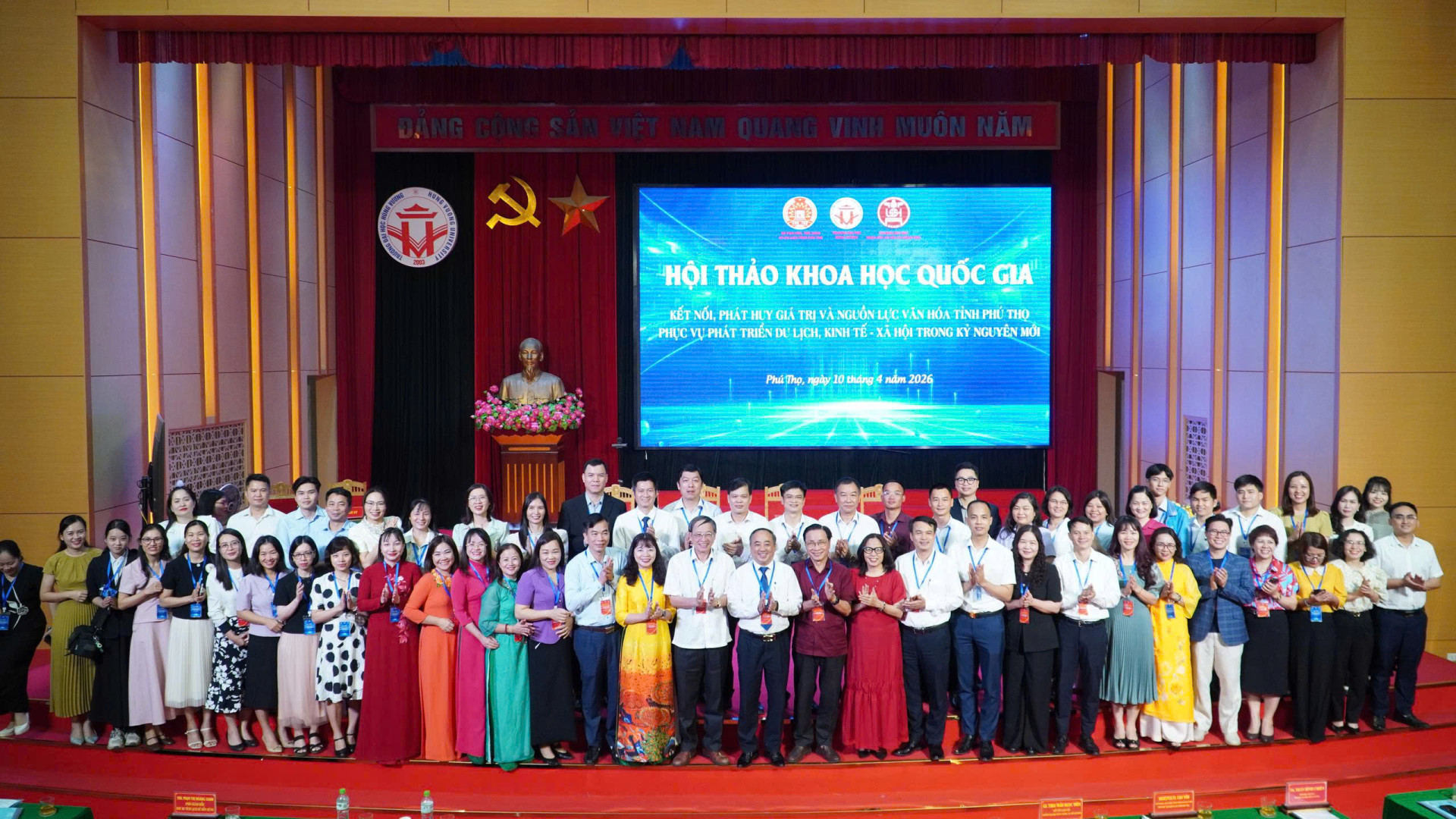
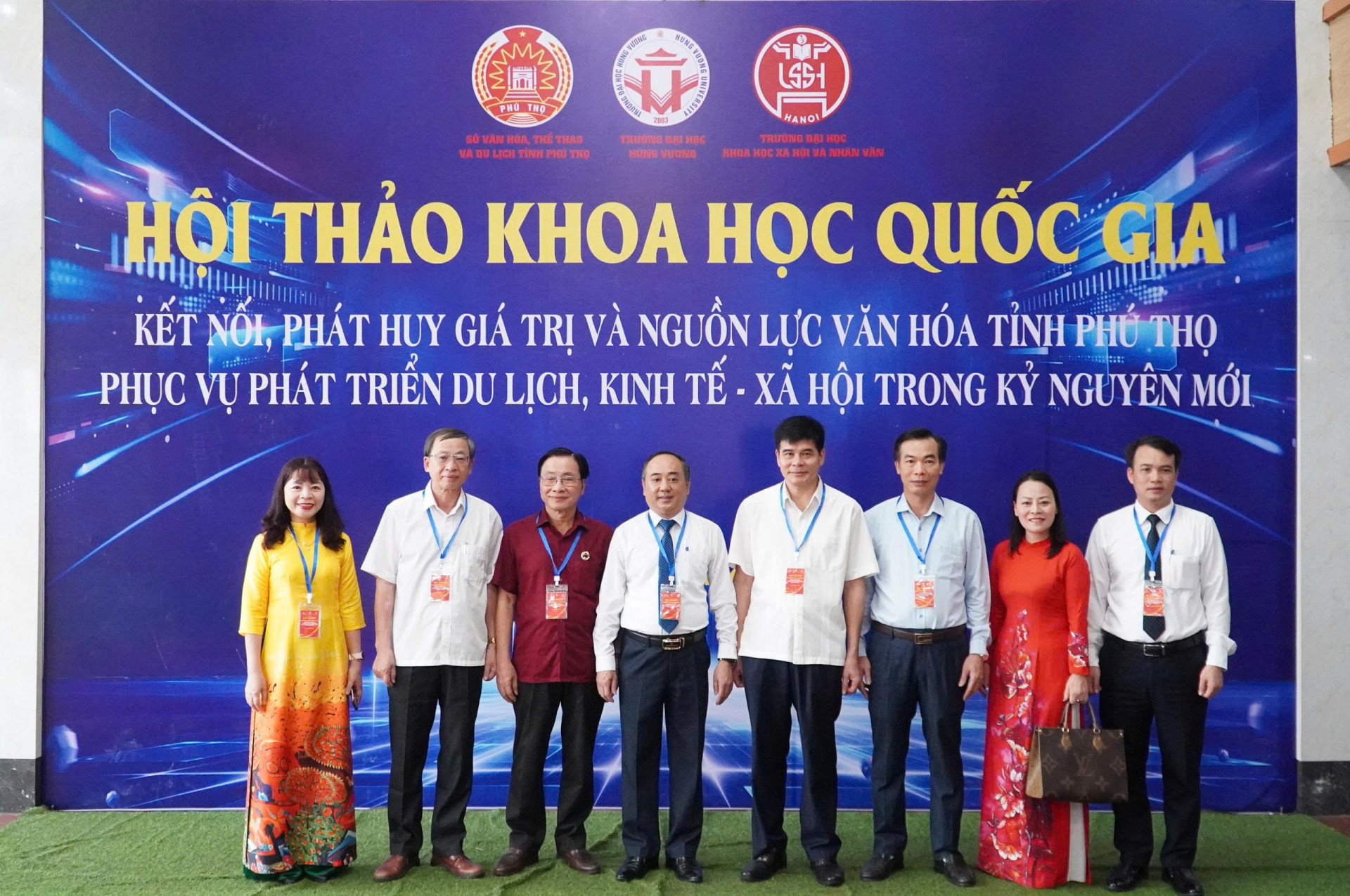
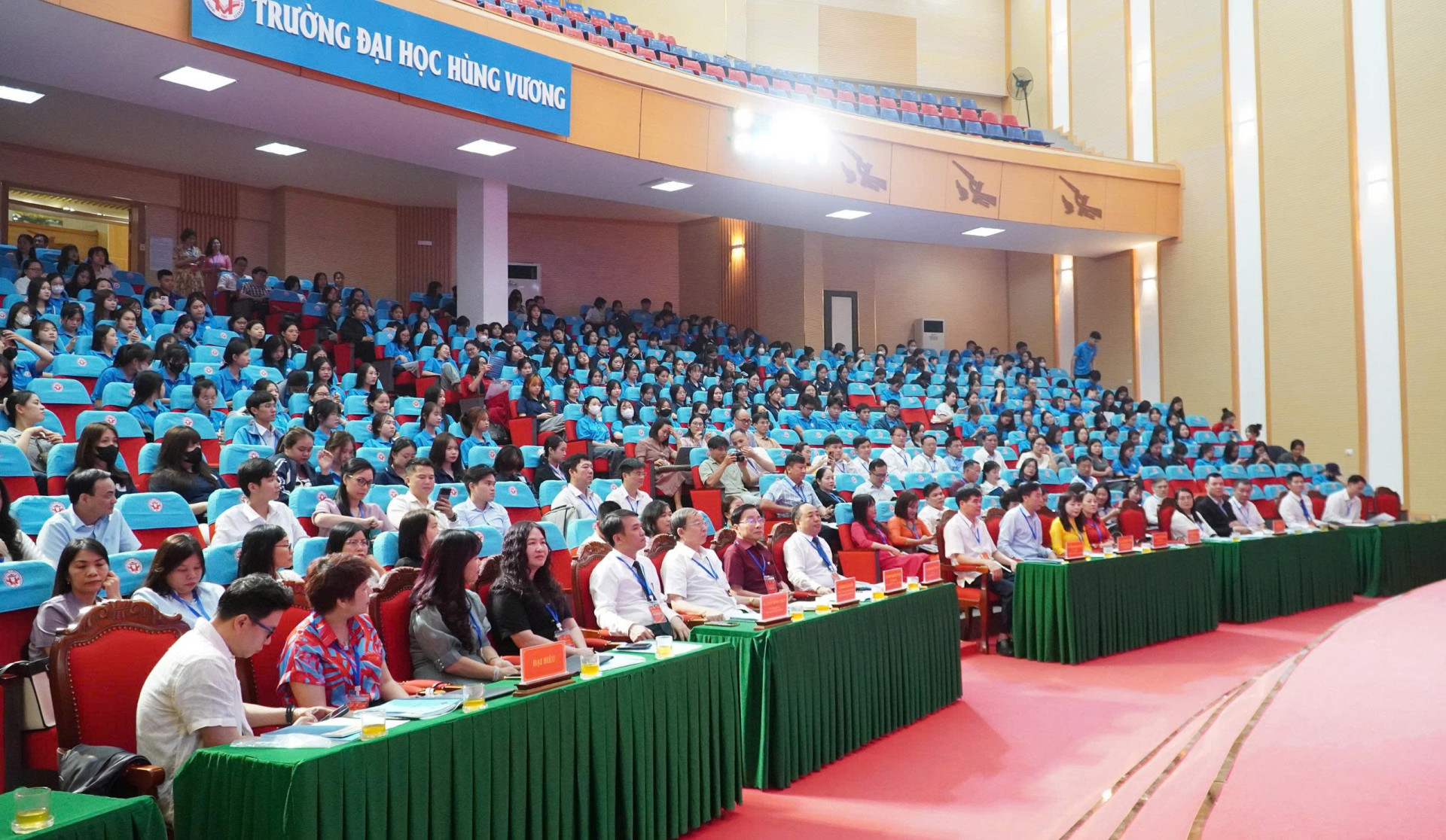
The workshop, organized by the Department of Culture, Sports and Tourism of Phu Tho province in collaboration with Hung Vuong University and the University of Social Sciences and Humanities - Vietnam National University, Hanoi (with the Faculty of Politics and International Studies as the focal point), aims to create an academic forum for exchanging theoretical and practical issues in promoting cultural resources in conjunction with sustainable development. In the context of localities facing the need to innovate growth models based on the effective exploitation of endogenous resources, the workshop is expected to contribute to clarifying the role of culture as a driving force for development, while also proposing interdisciplinary solutions that are consistent with the current trends of digital transformation and integration.
Attending the workshop on behalf of the Department of Foreign Affairs were Dr. Nguyen Dac Thuy - Director of the Department of Foreign Affairs, Chairman of the Phu Tho Heritage Association; on behalf of the Department of Culture, Sports and Tourism of Phu Tho province, Dr. Duong Hoang Huong - Director of the Department; on behalf of Hung Vuong University, Dr. Do Khac Thanh - Rector; and on behalf of the University of Social Sciences and Humanities, Assoc. Prof. Dr. Dang Thi Thu Huong - Vice Rector.
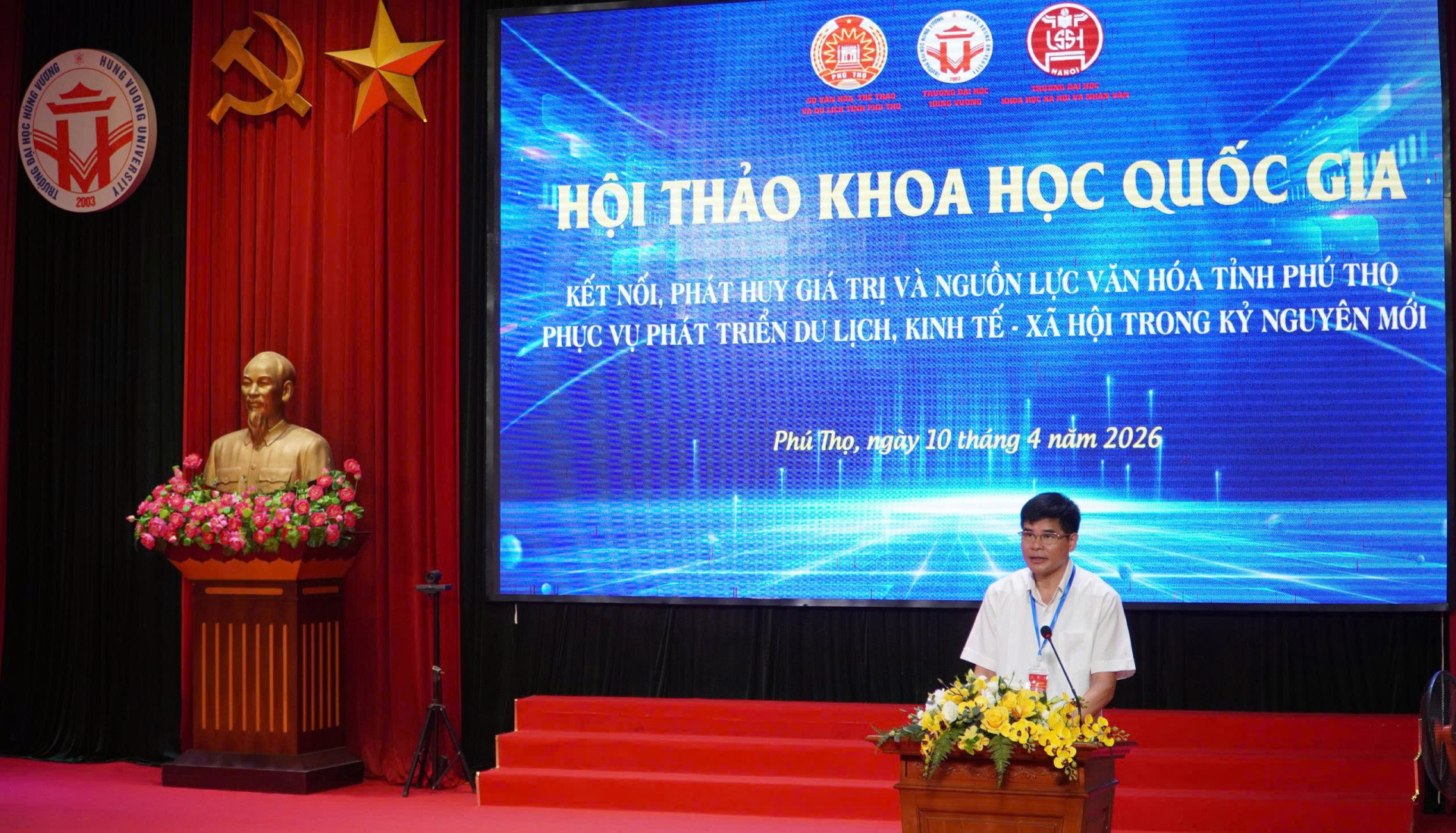
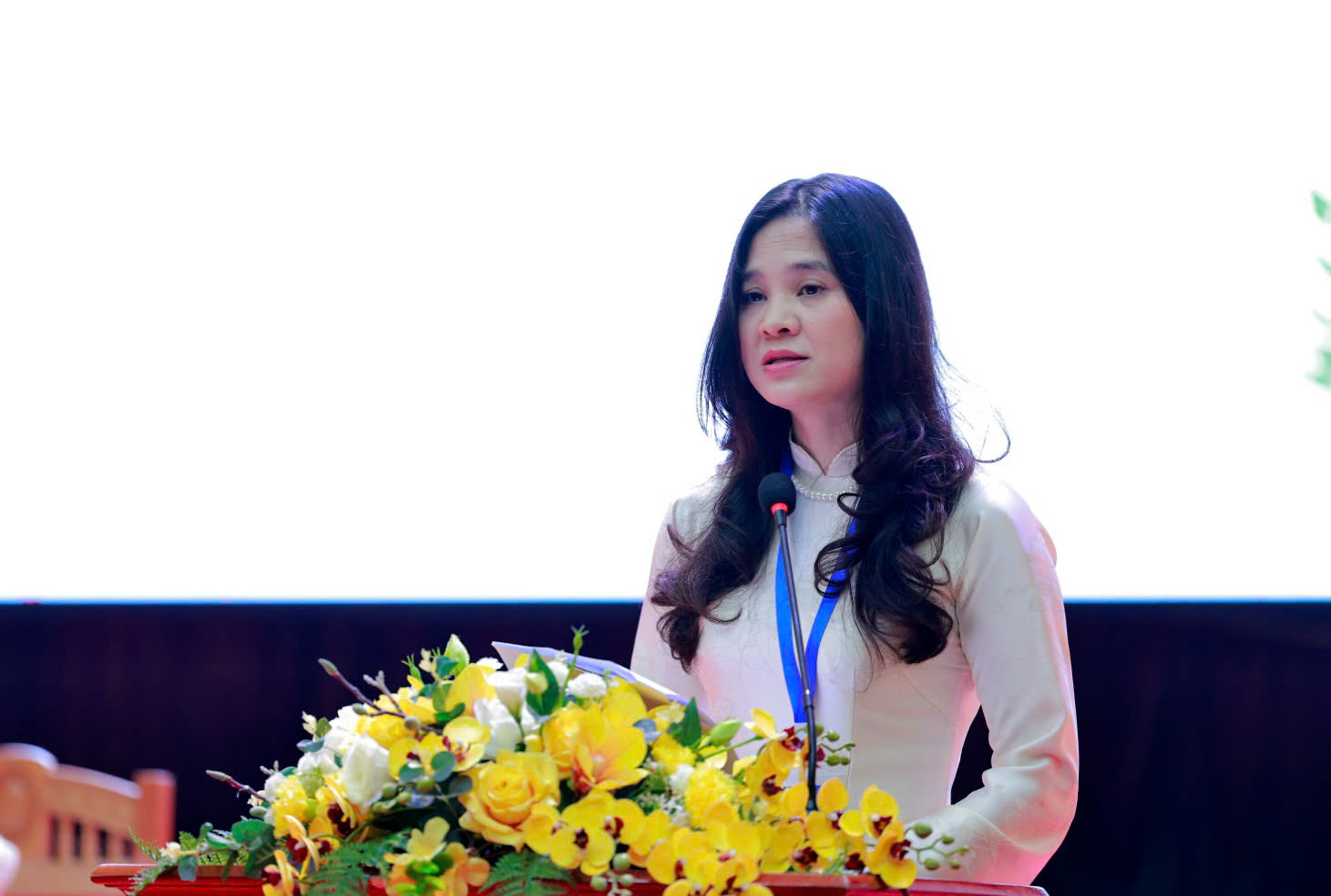
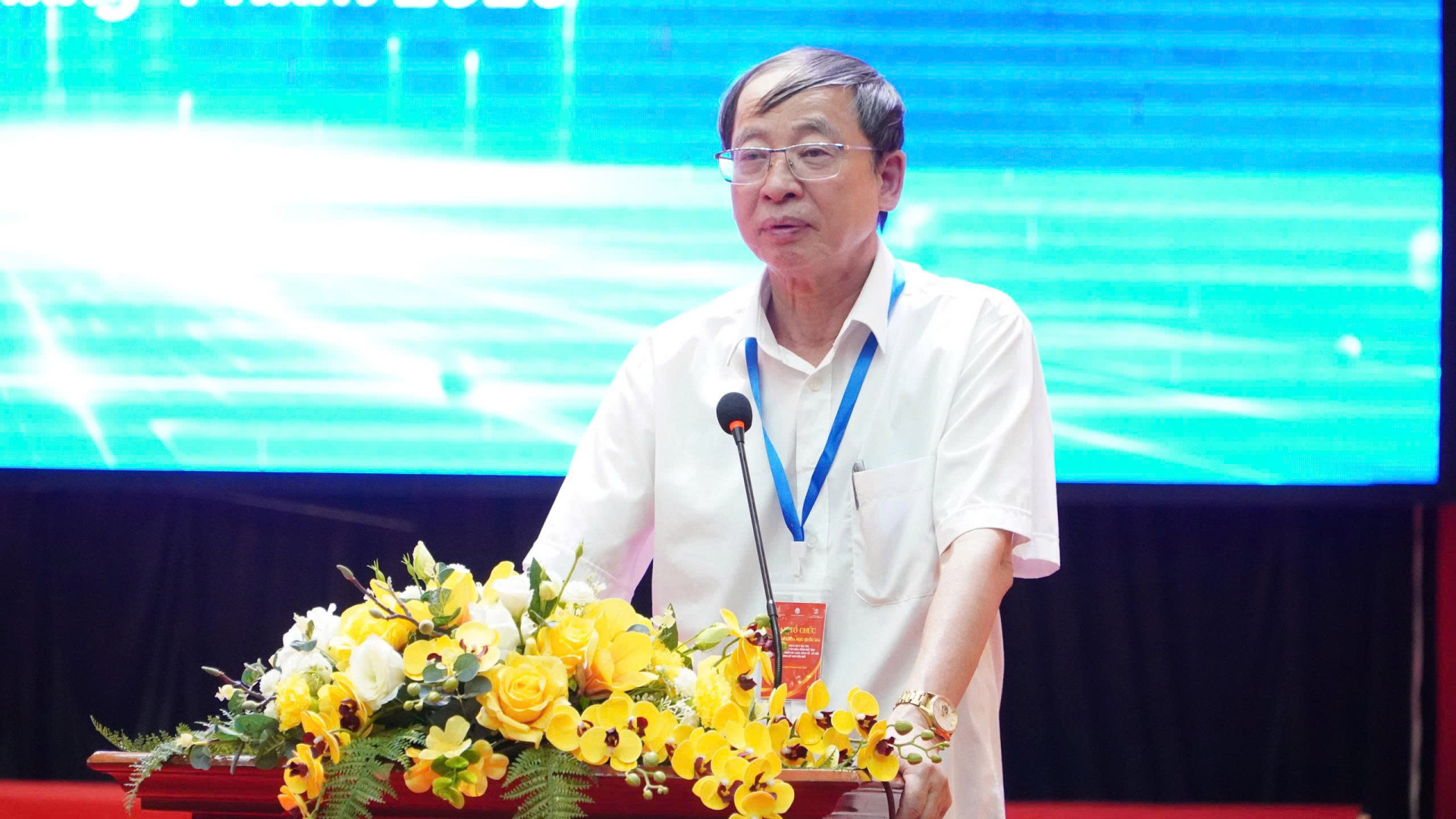
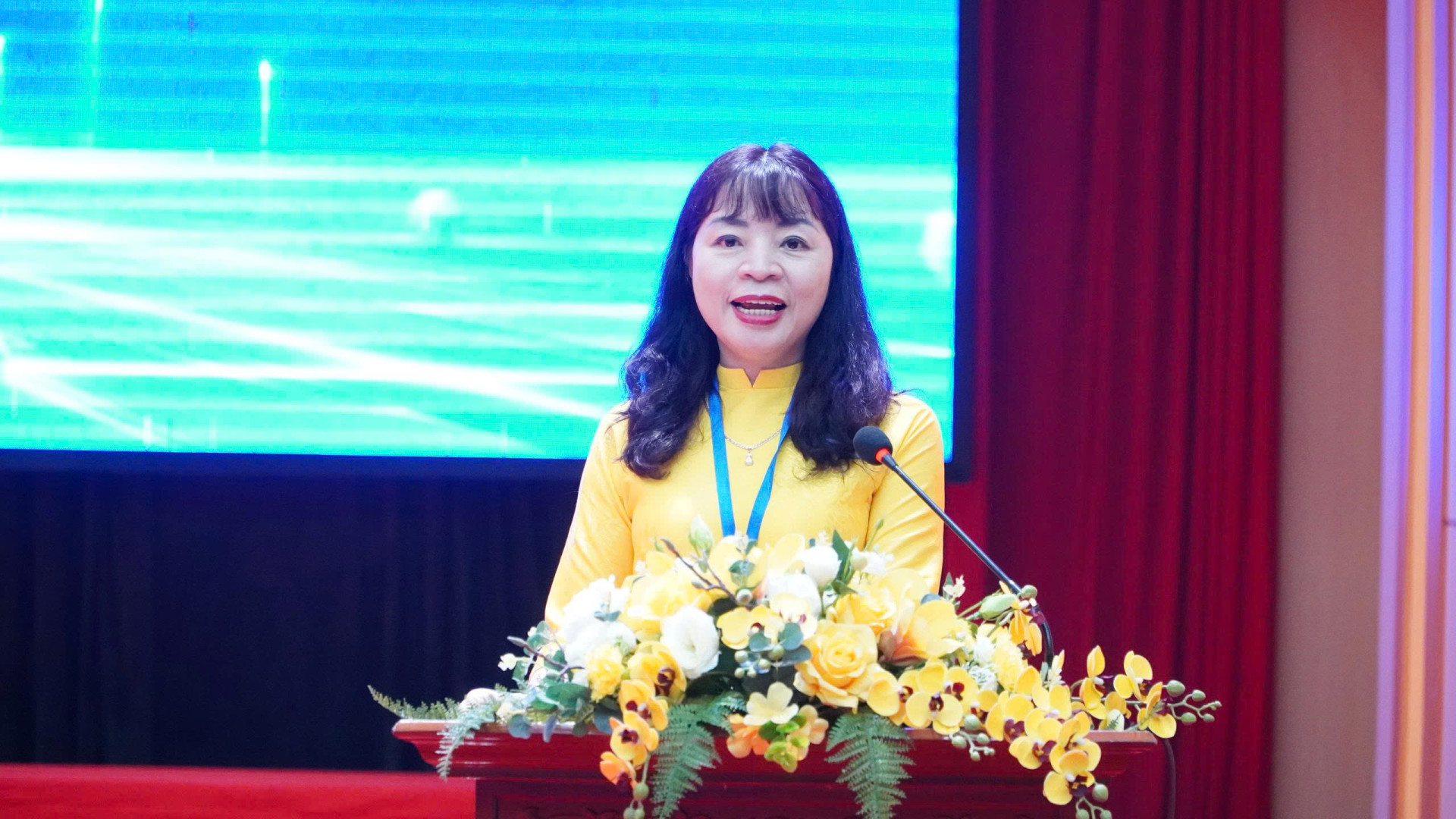
Dr. Duong Hoang Huong - Director of the Department of Culture, Sports and Tourism, delivered a welcoming speech at the workshop.
In her welcoming remarks at the workshop, Dr. Duong Hoang Huong, Director of the Department of Culture, Sports and Tourism of Phu Tho province, emphasized the special significance of the event in the context of the locality's efforts to exploit cultural resources for sustainable development. As the cradle of the nation, Phu Tho possesses a rich system of heritage sites, notably the Hung Temple complex and UNESCO-recognized heritage sites such as the Hung King worshiping belief and Xoan singing. In recent years, the integration of heritage preservation with tourism development has yielded positive results, contributing to affirming the role of culture as an important endogenous resource. However, in the face of the new demands of digital transformation, integration, and the development of a creative economy, the challenge is how to effectively transform cultural values into competitive tourism products while ensuring sustainable development. The Department of Culture, Sports and Tourism of Phu Tho province hopes that the workshop will provide further scientific arguments and practical proposals to improve policies, promote regional linkages, apply technology, and build the brand of cultural tourism in the ancestral land in the new phase.
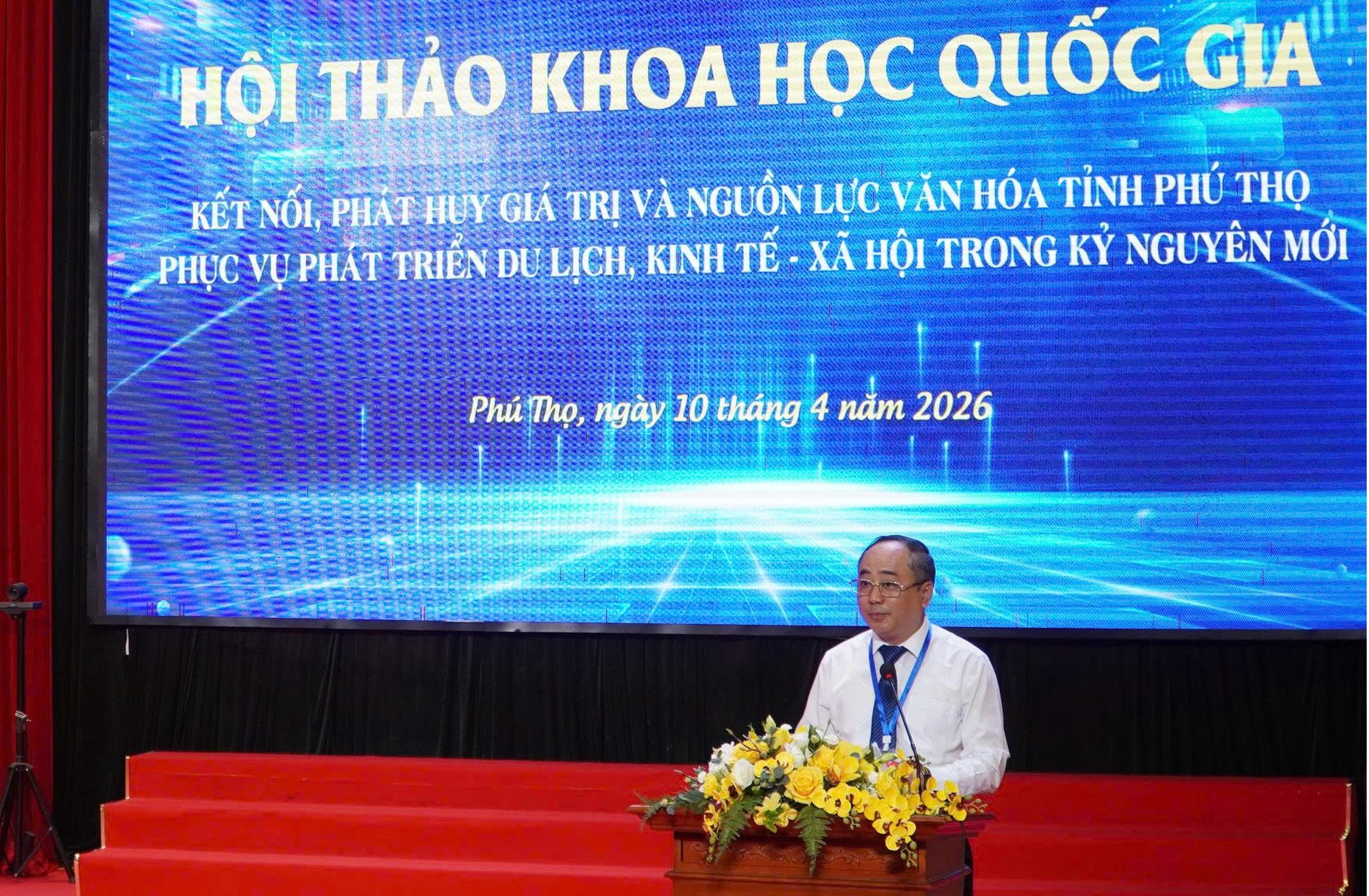
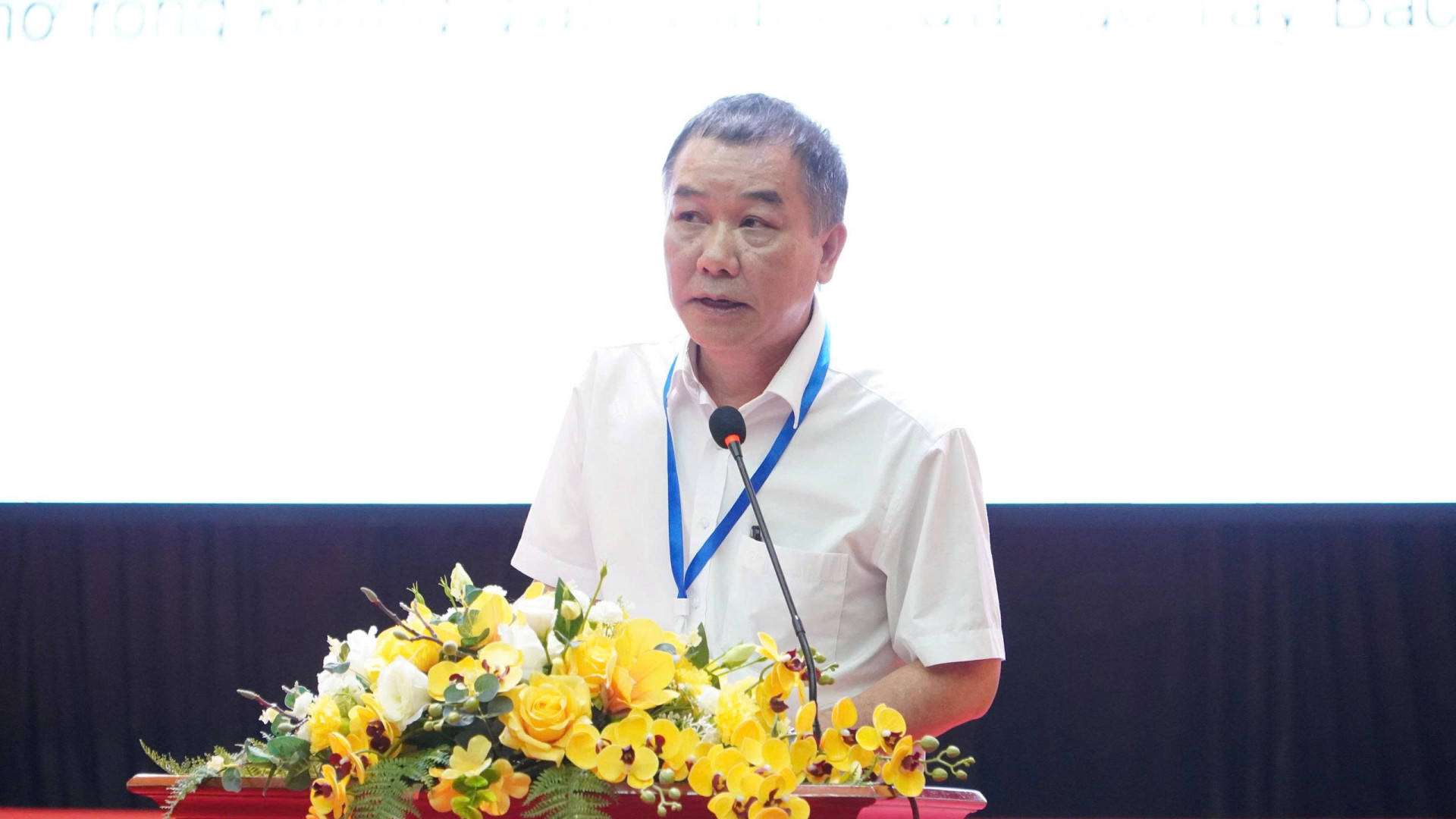
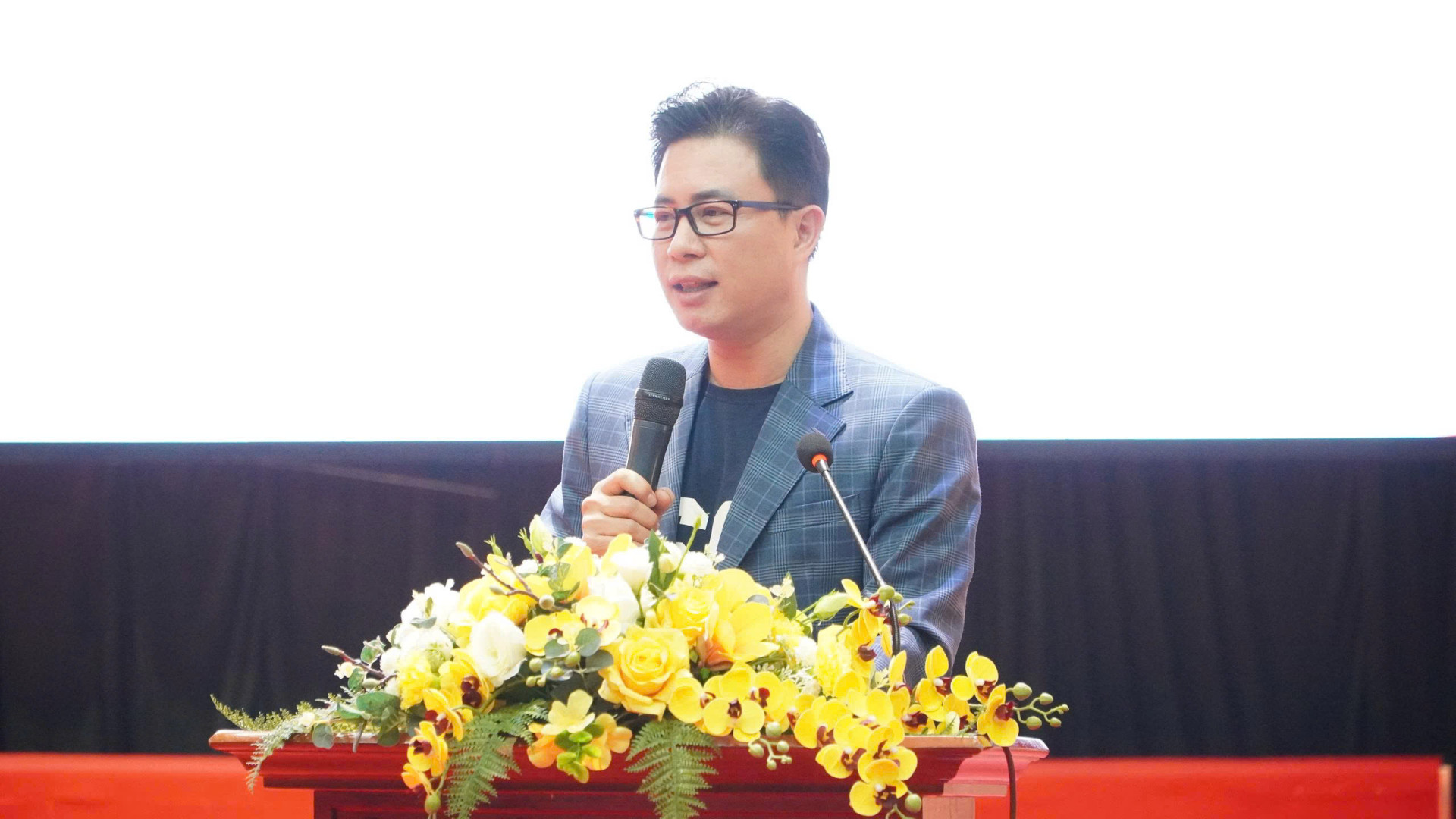
Dr. Do Khac Thanh - Rector of Hung Vuong University, delivered the opening remarks at the conference.
In his opening remarks at the conference, Dr. Do Khac Thanh, Rector of Hung Vuong University, stated that the Organizing Committee addressed the issue from the context of implementing new development orientations according to Resolution 80, which emphasizes the need to restructure development space and strengthen regional linkages. For Phu Tho, this is both an opportunity to expand cultural and tourism space and a pressing need for connecting and effectively utilizing cultural resources. The conference was identified as a scientific forum to clarify the role of culture as an endogenous driving force, while proposing interdisciplinary approaches in exploiting heritage, developing tourism, cultural industries, and the creative economy. Notably, the Organizing Committee received 137 papers from scientists, experts, and managers from many training institutions, research institutes, and practical agencies nationwide. The number and quality of papers demonstrate the widespread interest and timeliness of the conference topic. The discussions focused on four major areas: the theoretical basis of cultural resources; an assessment of the current state of the heritage system; models for economic development from culture; and the application of innovation and digital transformation in the cultural and tourism sectors. From there, the workshop aimed to provide scientific arguments and suggest solutions to form a cultural-tourism-economic value chain, contributing to positioning Phu Tho as a center of cultural heritage linked to sustainable development in the new era.
Following the introductory remarks, the workshop proceeded to the presentation session with diverse approaches, ranging from theory to practice. Scientists, experts, and managers successively exchanged and analyzed the issues raised in the preservation, exploitation, and promotion of Phu Tho province's cultural resources in conjunction with tourism and socio-economic development, thereby adding further perspectives, approaches, and solutions to the research problem.
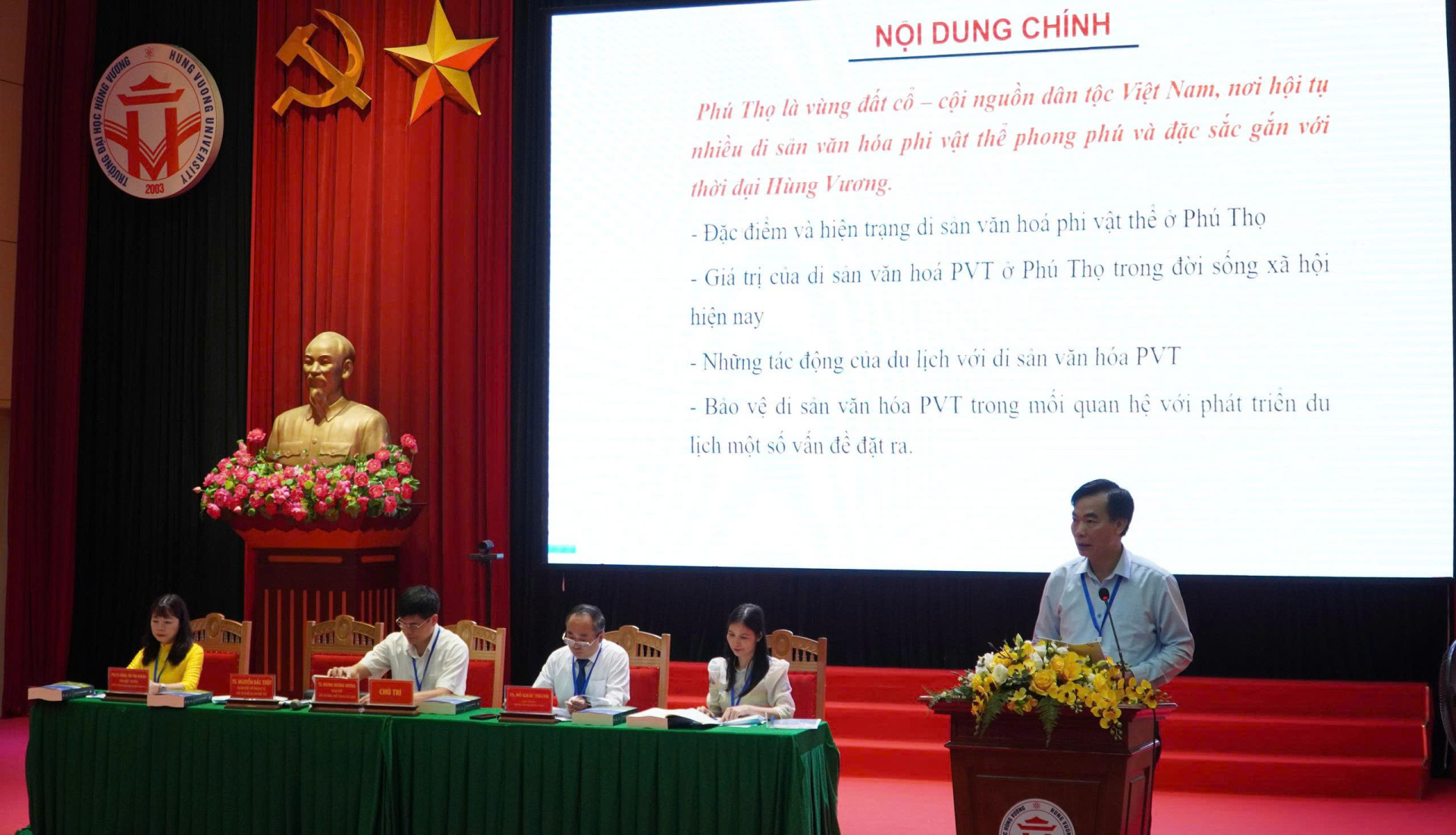
Dr. Nguyen Dac Thuy - Director of the Department of Foreign Affairs, Chairman of the Phu Tho Heritage Association, presented a paper entitled "Protecting Intangible Cultural Heritage in Relation to Tourism Development in Phu Tho - Issues to be Raised".
According to Dr. Nguyen Dac Thuy, Phu Tho possesses unique cultural values associated with the Hung King era and a diverse cultural space encompassing the Muong, Dao, Tay, and Cao Lan ethnic groups, along with a rich system of cultural heritage. This is a crucial resource for developing cultural tourism, creative industries, and the service economy in the new era. Based on this, the author analyzes the relationship between heritage preservation and tourism development, emphasizing the role of the community and the orientation towards sustainable development. These are important suggestions for managing and exploiting local cultural values.
Dr. Nguyen Thi My Linh from the Academy of Journalism and Communication presented a paper entitled "Linking Culture, Tourism, and Digital Technology in Phu Tho: A Driving Force for Socio-Economic Development in the New Era".
According to Dr. Nguyen Thi My Linh, the linkage between culture, tourism, and digital technology is a strategic driving force for socio-economic development in Phu Tho, especially in the context of territorial expansion after the merger of Hoa Binh and Vinh Phuc. The author analyzes how these three pillars interact, exploiting tangible and intangible cultural values to enhance tourist experiences, develop local industries, and promote the unique identity of the ancestral land. Although many results have been achieved, the development potential is still not commensurate with the available resources. Based on this, the paper proposes comprehensive solutions to improve mechanisms and policies; develop unique tourism products; promote digital transformation; and enhance the capacity of the community and businesses, aiming to build a smart, distinctive cultural tourism ecosystem linked to sustainable development in the new era.
Dr. Vu Truong Giang from the Regional Political Academy I presented a paper titled "Research and Proposal for a Sustainable Community Tourism Development Model in Phu Tho Province in the New Era".
Dr. Nguyen Truong Giang researched and analyzed Phu Tho's community-based tourism model within the context of expanding the region's spatial scope with Vinh Phuc and Hoa Binh, and proposed a sustainable development model based on three pillars: local community, government, and businesses/partners, emphasizing the role of the people and the exploitation of indigenous cultural values. The model is organized into three spatial layers: a heritage-spiritual center, an ethnic minority cultural belt, and an ecological belt; with community identity as the core of tourism products, expressed through homestays, cuisine, handicrafts, and festivals. Based on this, the presentation suggests an approach that links conservation with development, strengthens regional-sectoral linkages, promotes the green economy and digital transformation, contributing to affirming Phu Tho's position in the Northwest region's development space.
Ms. Pham Thi Hoang Oanh, Deputy Director of the Hung Temple Historical Relic Site, presented a paper entitled "Linking and promoting the value of the Hung Temple National Special Relic Site and the Hung King worshiping belief in sustainable tourism development".
According to Ms. Pham Thi Hoang Oanh, Hung Temple and the Hung King worshiping belief are sacred symbols of the spirit of "drinking water, remembering the source," playing a special role in the cultural and spiritual life of the nation. In the context of the increasing interest in spiritual, cultural, and humanistic tourism, strengthening linkages, exploiting, and promoting the value of the Hung Temple heritage and the Hung King worshiping belief has become an important direction, linked to sustainable tourism development, thereby contributing to promoting the image of the country, while preserving and spreading traditional cultural values.
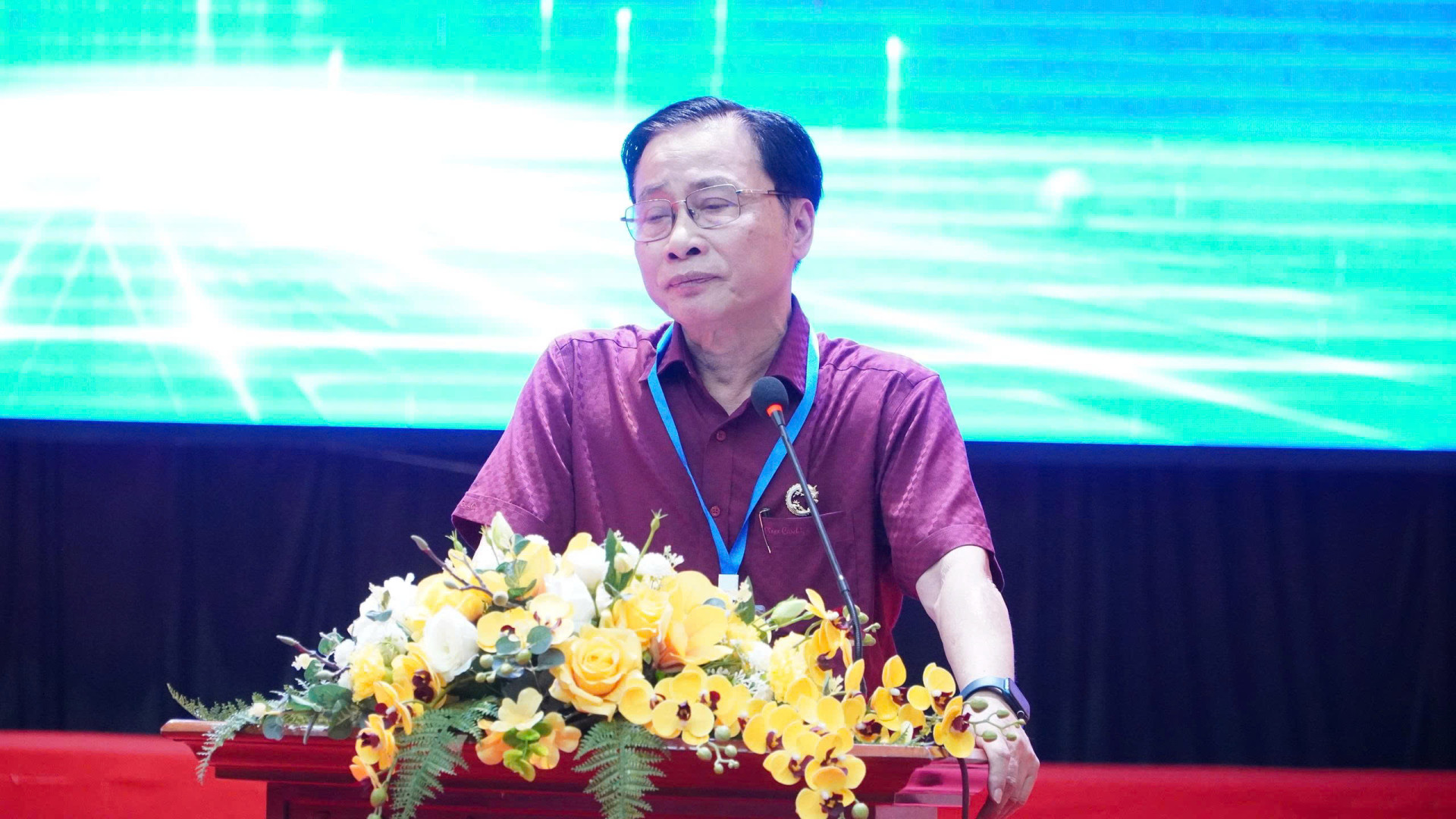
Prof. Dr. Tran Ngoc Them - Senior Advisor at Hung Vuong University, Ho Chi Minh City, shared his views at the conference.
According to Professor Tran Ngoc Them, in the current context, as connections between nations and peoples expand thanks to the development of science and technology, tourism has become an important channel for spreading cultural values to the world. Professor Tran Ngoc Them believes that, with the advantages after the merger, Phu Tho has the opportunity to become a leading locality in promoting Vietnamese culture, especially through heritage sites such as the Hung Kings worshiping belief, Xoan singing, and other heritages. From there, it is possible to continue developing research plans, creating dossiers, and proposing the recognition of new heritage sites, in order to further expand the scope of spreading the unique cultural values of the locality.
Associate Professor Cao Van - Former Rector of Hung Vuong University, Vice President of the Phu Tho Provincial Heritage Association, shared his views at the conference.
According to Associate Professor Cao Van, Phu Tho is a land of origin, possessing a long-standing and rich cultural heritage, creating a significant advantage for tourism development. However, reality shows that the province's tourism has not yet developed proportionally, lacking stability and connectivity. Therefore, strengthening linkages and connections is a key solution, especially the development of tourism routes along the Red River, Da River, and Lo River – areas with many historical and cultural relics and scenic spots. Organizing well-structured tours and routes associated with these areas is expected to contribute to attracting domestic and international tourists, while more effectively exploiting the local tourism potential.
Continuing the program, the workshop entered its second session, further clarifying and supplementing approaches and solutions for promoting cultural values in conjunction with tourism and socio-economic development in Phu Tho province.
Dr. Pham Thuy Quynh Nga from the Academy of Public Administration and Management presented a paper titled "Exploiting the vitality of Xoan singing heritage and the Hung King worshiping belief in the development of cultural tourism in Phu Tho".
According to Dr. Pham Thuy Quynh Nga, Phu Tho possesses two intangible cultural heritage sites recognized by UNESCO: Phu Tho Xoan Singing and the Hung King Worshiping Belief. These are not only unique spiritual values but also valuable cultural resources for sustainable tourism development in the new era. "Exploiting the vitality of heritage" should be understood in terms of promoting its value, not commercialization, combining preservation, creativity, and dissemination. The author proposes several key solutions such as: digitizing and communicating heritage, developing community-based experiential tourism products, and building the brand "Phu Tho - a land of living heritage." Promoting heritage values is not only about preserving the past, but also about unleashing creativity, pride, and motivation for the development of the people of Phu Tho in the era of integration.
Dr. Trinh Le Anh from the University of Social Sciences and Humanities presented a paper entitled "Management of Heritage Tourism Destinations in Phu Tho: The Case of the Khai Ha Muong Bi Festival".
Presenting at the workshop, Dr. Trinh Le Anh analyzed the destination management model in the context of the experiential economy, using the case of the Khai Ha festival of the Muong people in Muong Bi. Based on a 2026 survey, the study pointed out the lack of synchronization between the actual value of heritage and how it is promoted in the digital environment. It also identified several bottlenecks such as fragmented route connections, services that do not meet tourist expectations, and ineffective heritage promotion. Based on this, the author proposes a roadmap for professionalizing the heritage tourism brand of Phu Tho through three pillars: establishing a dedicated Destination Management Organization (DMO) to coordinate multiple stakeholders, implementing a "digital empathy" strategy to manage heritage content, and promoting a "co-creation of value" model linked to the role of local communities as key stakeholders. The study affirms that shifting from an "event organization" mindset to a "system management" mindset is the inevitable solution for Phu Tho to capitalize on its cultural resources as a sustainable strategic asset.
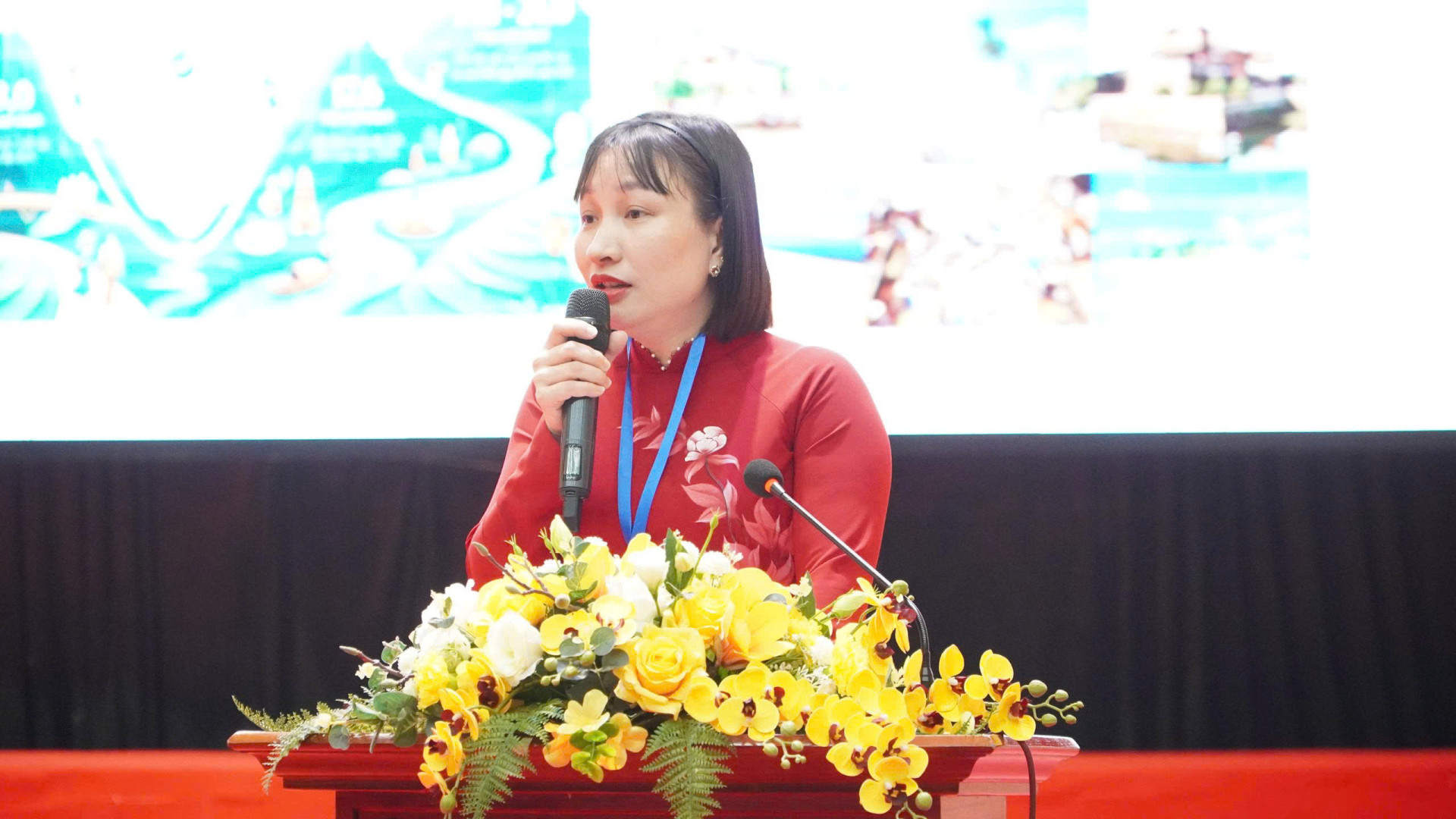
Assoc. Prof. Dr. Pham Thi Thu Huong – Hung Vuong University presented a paper entitled “Local Marketing Solutions for Tourism Development in Phu Tho Province”.
According to Associate Professor Pham Thi Thu Huong, after the merger, Phu Tho possesses many new potentials and advantages for tourism development, in the context of Vietnam's tourism shifting towards a "green - sustainable - digital" direction. Based on an analysis of the current state of local marketing activities, the author emphasizes the need to reposition the tourism brand, enhance competitiveness and attract tourists, and proposes several key solutions to leverage advantages and promote sustainable tourism development in Phu Tho in the new phase.
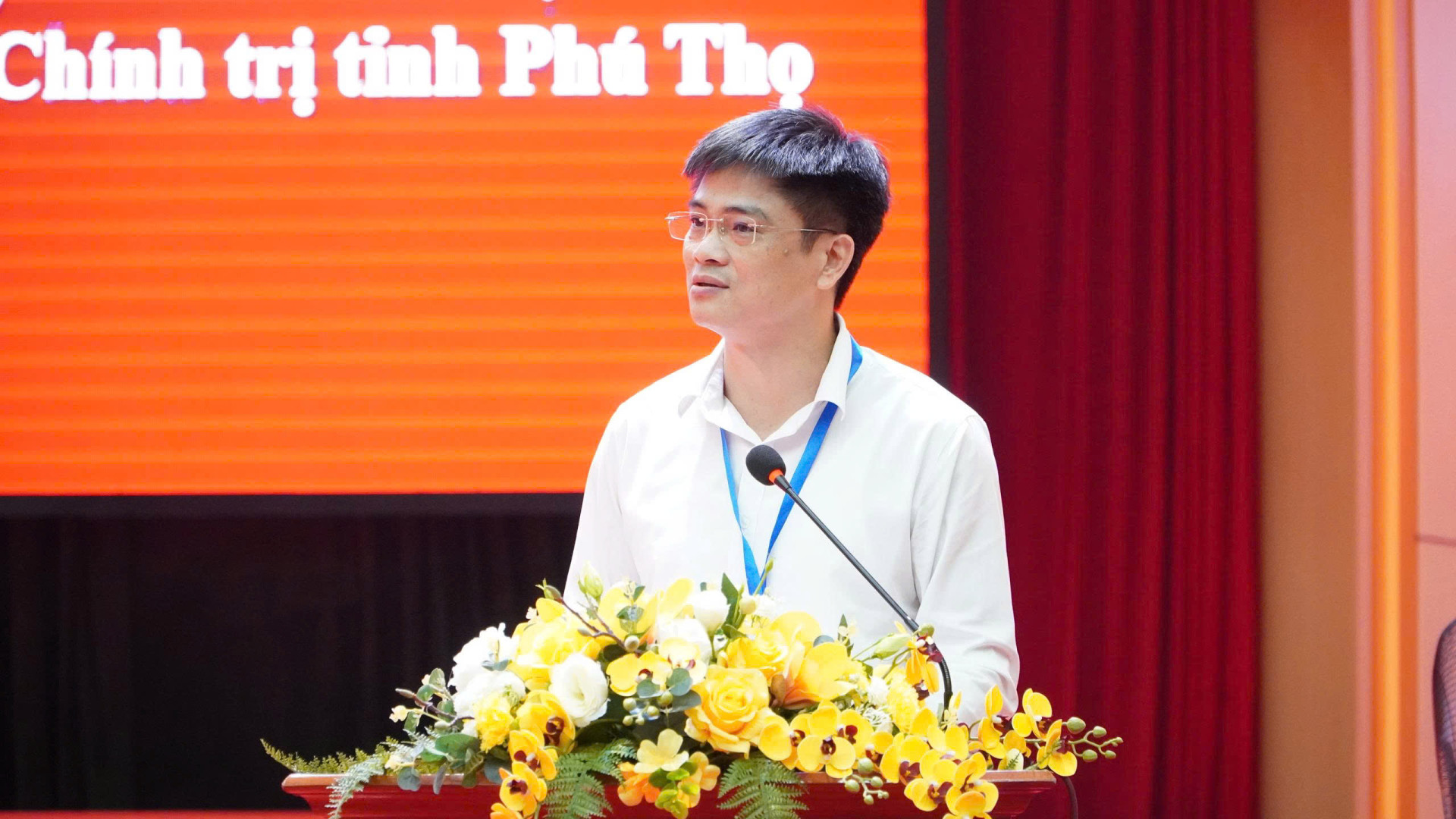
Dr. Nguyen Huu Phuoc from the Phu Tho Provincial Political School presented a paper entitled "Developing a dual tourism chain of culture, spirituality, and ecology in Phu Tho province in the new context".
Presenting at the workshop, Dr. Nguyen Huu Phuoc analyzed the basis for the formation, current situation, limitations, and prospects of developing a tourism chain combining culture, spirituality, and ecology in Phu Tho. With its unique geographical location, rich cultural and spiritual heritage, and diverse ecological potential, Phu Tho has many favorable conditions for forming a distinctive tourism chain; however, exploitation remains limited in terms of infrastructure, regional linkages, and service quality. Based on this, the author proposed solutions such as upgrading infrastructure, strengthening regional linkages, diversifying products, and applying digital technology, aiming for sustainable development and affirming Phu Tho's position in the region.
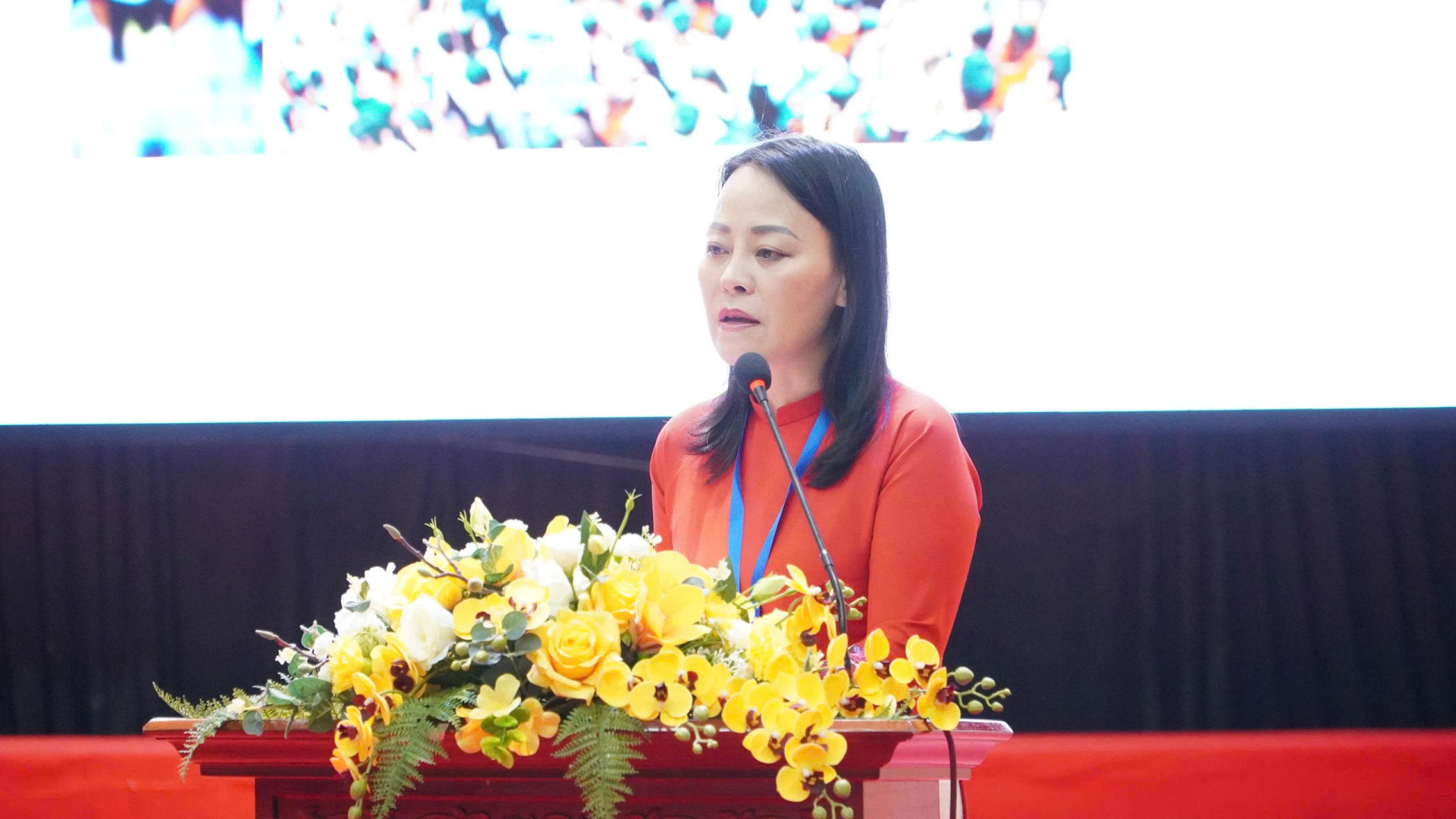
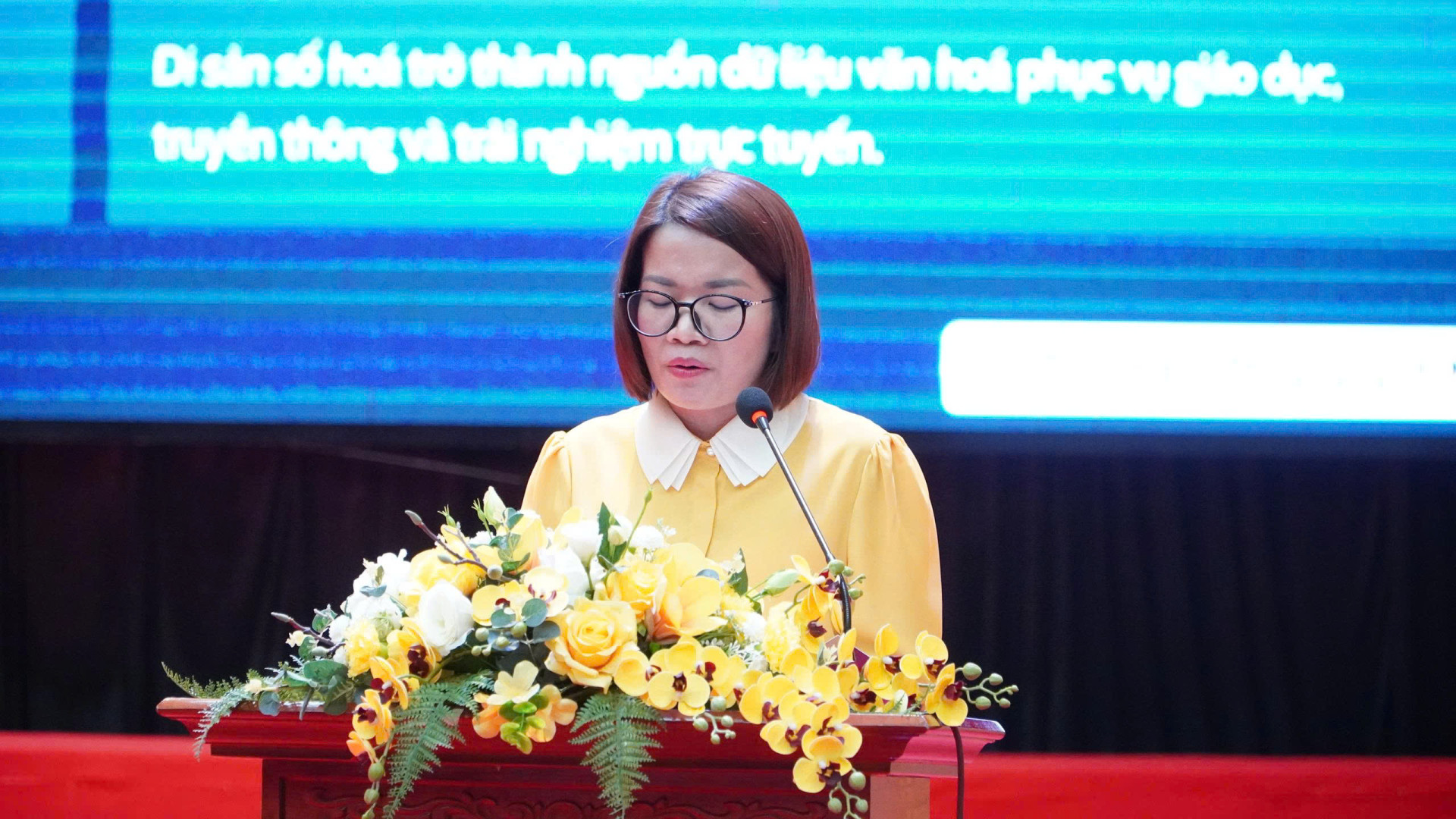
Assoc. Prof. Dr. Dang Thi Thu Huong, Vice Rector of the University of Social Sciences and Humanities, delivered the closing remarks at the conference.
In her concluding remarks at the workshop, Associate Professor Dr. Dang Thi Thu Huong, Vice Rector of the University of Social Sciences and Humanities – Vietnam National University, Hanoi, stated that after a period of serious and responsible work, the workshop had completed all its program content. The workshop received 140 papers along with many rich and diverse direct exchanges and discussions.
Firstly, the workshop affirmed that culture is not only a heritage to be preserved, but also an important endogenous resource for development; the cultural values of Phu Tho contain great potential if correctly identified, effectively connected, and promoted through appropriate methods. Secondly, the workshop clarified the relationship between cultural preservation and tourism development, emphasizing the need to build a development model where culture plays a guiding role, tourism becomes a channel for disseminating values, ensuring the authenticity of heritage and community participation. Thirdly, the issue of connectivity was raised in many aspects, from connecting heritage and destinations to linking stakeholders such as the State, schools, scientists, businesses, and the community, in order to form a cultural-tourism development ecosystem.
Based on the workshop results, several major directions for continued research were identified, including: further promoting interdisciplinary research on the cultural value system of Phu Tho province; strengthening coordination mechanisms among agencies, units, and localities; promoting the application of science and technology and digital transformation in the preservation, management, promotion, and development of cultural values, thereby enhancing public access and increasing the social and economic value of heritage.
Associate Professor Dr. Dang Thi Thu Huong stated that in recent years, the University of Social Sciences and Humanities has implemented many practical cooperation projects with localities, most notably the "Hanoi Heritage Tourism Journey" program with 4 itineraries and 28 historical sites integrated on electronic maps, using the H-Heritage application and QR codes at destinations, contributing to bringing heritage closer to tourists and the community.
Currently, the University continues to promote cooperation programs with many localities such as Hanoi, Quang Ninh, Ninh Binh, Nghe An, Phu Yen, etc., and deeply understands that a university is not only a place for training and research, but also a responsible entity in accompanying localities to identify values, unlock resources, advise on policies, and contribute to solving development problems arising from practice. The University of Social Sciences and Humanities wishes to continue expanding and deepening cooperation with Hung Vuong University, with the Department of Culture, Sports and Tourism of Phu Tho province, and with relevant departments, agencies, localities, businesses and communities to build upon the results of the Conference with practical, in-depth and long-term cooperation programs.
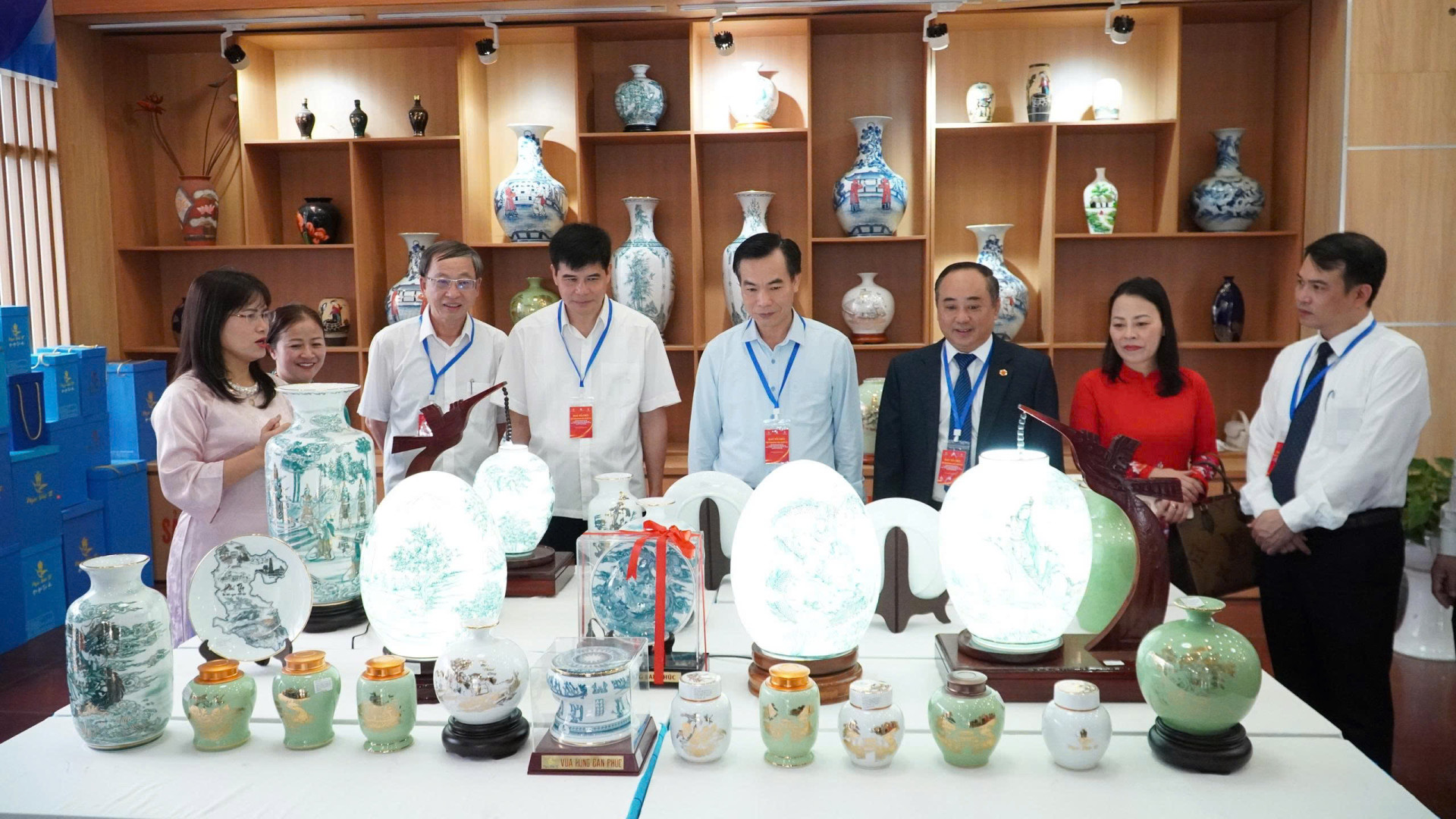
Here are some photos from the workshop: