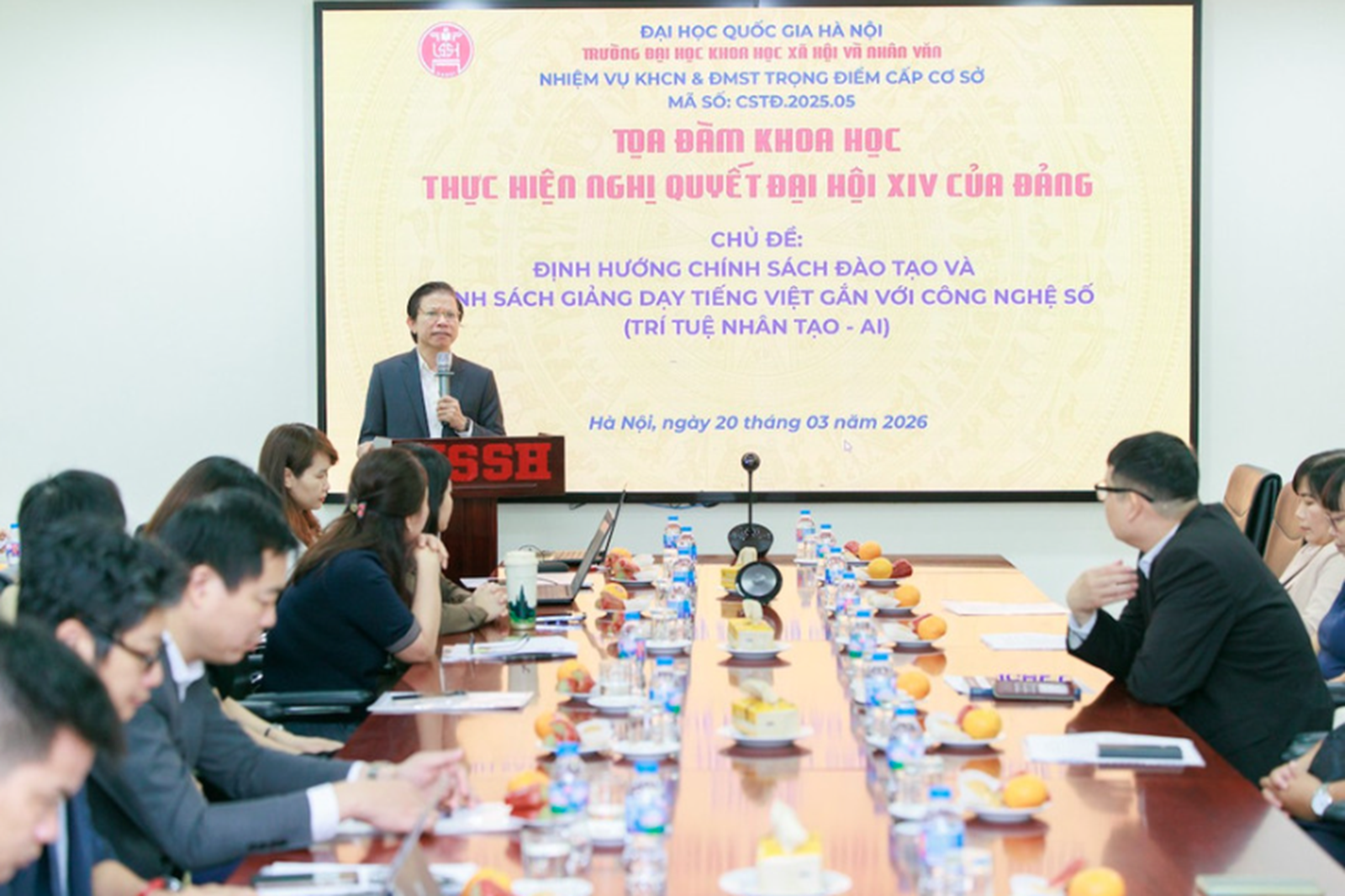
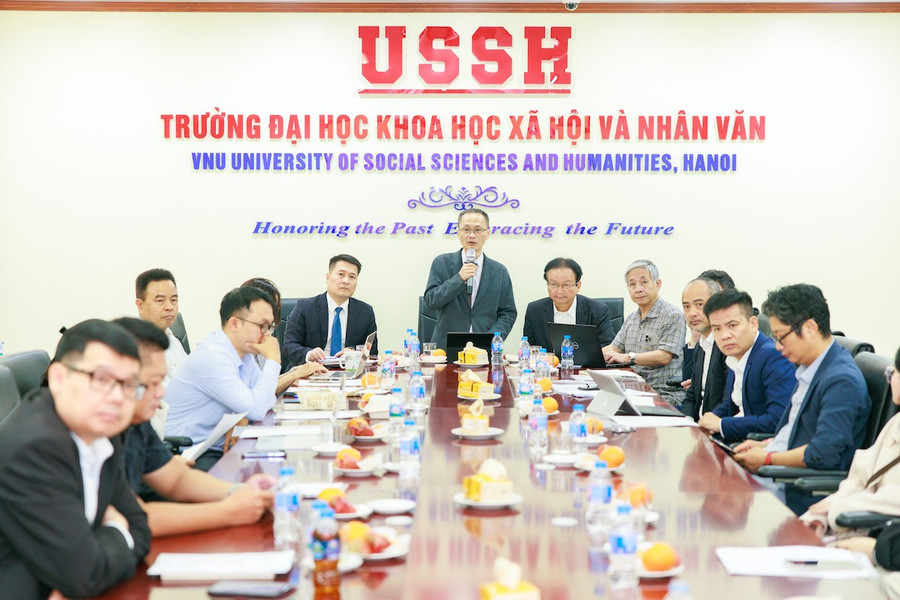
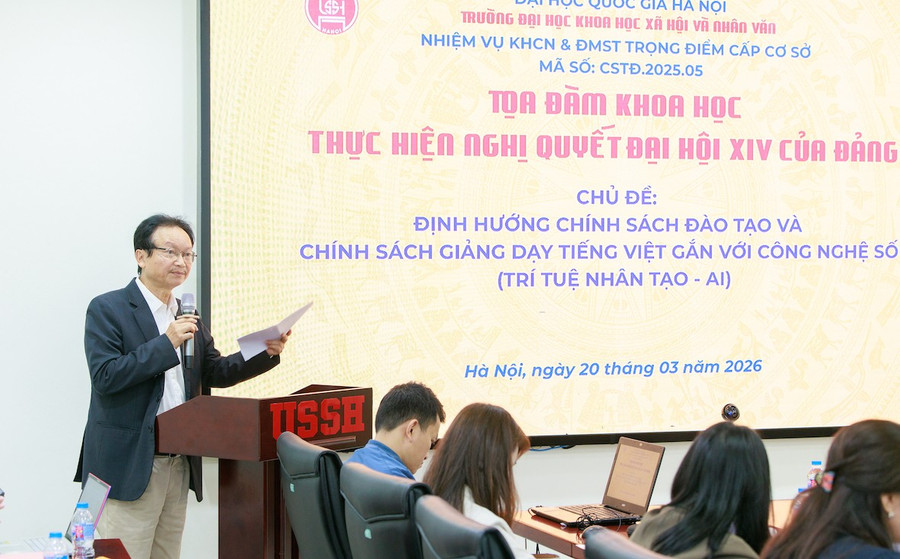
Professor Hoang Anh Tuan, Rector of the University of Social Sciences and Humanities, delivered a speech at the seminar.
The introductory report was presented by Dr. Nguyen Ngoc Binh, Head of the Department of Linguistics and Vietnamese Studies. Higher education and scientific research are entering a crucial transitional phase, in which traditional training models are gradually being supplemented and restructured by knowledge ecosystems based on technology. In particular, the social sciences and humanities, especially Linguistics and Vietnamese Studies, need to be re-evaluated from a strategic development perspective in the digital age.
Language is not only a means of communication but also the foundation of knowledge and culture for each nation. For Vietnam, the Vietnamese language is both a unique cultural heritage and the foundation of the spiritual and intellectual life of society. In the process of international integration, the Vietnamese language has also become an important means of promoting the image of the country, spreading Vietnamese cultural values, and strengthening connections between Vietnam and the international community.
Dr. Nguyen Ngoc Binh particularly emphasized the role of AI in language training.
From a national development perspective, the Vietnamese language can be seen as a crucial intellectual infrastructure of Vietnamese society. Preserving, developing, and disseminating the Vietnamese language is not only a cultural task but also a vital component of the national strategy for developing knowledge and soft power. In the context of increasingly deep international integration, enhancing the status of the Vietnamese language in the global academic and cultural sphere has become a strategically significant requirement.
"In recent years, the demand for learning Vietnamese worldwide has been increasing. Vietnamese has been included in the curriculum of many educational institutions and research centers abroad. At the same time, within the Vietnamese community overseas, maintaining and developing the Vietnamese language has become an important need to preserve cultural identity and strengthen ties with their homeland," Dr. Nguyen Ngoc Binh particularly emphasized.
The presentations by delegates, including scientists from both within and outside the country, highlighted the current limitations in the application of new technologies in language research and teaching in general, and Vietnamese language in particular. The teaching materials system is largely still built on traditional models; the exploitation of language databases and the application of artificial intelligence in language research and teaching have not yet been implemented in a coordinated manner.
Meanwhile, the experience of many countries shows that building national linguistic database infrastructure and developing technological tools for language has become a crucial element of knowledge development strategy in the digital age. Large linguistic databases, natural language processing systems, and intelligent learning platforms are opening up new approaches in language research and teaching.
The proposals put forward by the delegates were: For the Vietnamese language, developing linguistic data sources, building digital learning resource systems, and promoting the application of artificial intelligence in teaching are of particular importance. This is not only an academic issue but also a strategic one for the preservation, development, and dissemination of the Vietnamese language in the digital age.
A strategic vision is needed, linked to three key policy pillars: Developing digital infrastructure and knowledge for the Vietnamese language; Forming a digital ecosystem for Vietnamese language research and training; and Innovating Vietnamese language training programs and teaching methods in a digital environment. This includes building training programs that integrate technology, developing digital learning resource systems, online learning platforms, and smart learning support tools to meet the diverse learning needs of learners in the context of globalization.
The scientists focused on clarifying the following groups of issues: Identifying new development trends in Linguistics and Vietnamese Studies in the context of digital transformation and artificial intelligence; Assessing the current state of Vietnamese language training programs and teaching activities; Discussing the potential application of digital technology and artificial intelligence in Vietnamese language research and teaching; Proposing orientations and policy recommendations to develop training programs and improve the effectiveness of Vietnamese language teaching in the context of technology and integration. - Dr. Nguyen Ngoc Binh.