
A brilliant linguist, meticulous and perfectionist in nature, Do Tien Thang, a lecturer in the Faculty of Literature, ultimately succumbed to the persistent and long-term encouragement and urging of many colleagues and comrades: [Thesis title]Preliminary Vietnamese intonationHis book has been born. The issue of Vietnamese intonation has long been an idea and aspiration of many Vietnamese linguists, but transforming that idea into a tangible, scientifically convincing book is no easy feat. The book, eagerly awaited by his friends, is as beautiful and captivating as his third princess.
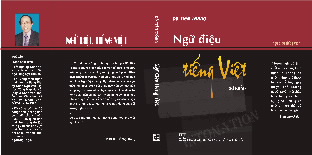
A brilliant linguist, meticulous and perfectionist in nature, Do Tien Thang, a lecturer in the Faculty of Literature, ultimately succumbed to the persistent and long-term encouragement and urging of many colleagues and comrades: [Thesis title]Preliminary Vietnamese intonationHis book has been born. The issue of Vietnamese intonation has long been an idea and aspiration of many Vietnamese linguists, but transforming that idea into a tangible, scientifically convincing book is no easy feat. The book, eagerly awaited by his friends, is as beautiful and captivating as his third princess.
After summarizing and properly evaluating the achievements of Vietnamese linguistics regarding intonation, the treatise presents its own concepts and approaches. The novelty of the treatise lies in placing Vietnamese intonation within the context of a typical tonal language, rather than imitating the intonation of European languages. From this, the author has constructed a very distinctive diagram for describing intonation. This diagram may be quite different from those accustomed to the intonation of non-tonal languages, but it is very simple and easy to understand, even for those unfamiliar with the field.

It can be said that the first important contribution of this treatise lies in the introductory section of the book. Besides providing a new approach and a specific framework, the author also reveals the true nature of Vietnamese intonation and, in particular, summarizes its five components: pitch, intensity, duration, rhythm, and intonation. Following this, the work successively examines the various types of intonation within the system as well as their functions:
In each of the aforementioned sections, the author includes an introduction, clearly presenting the relevant theoretical issues and offering counterarguments, if necessary, to help readers easily visualize the subject matter being described. With this research method, combined with empirical illustrations, the work provides a comprehensive and multifaceted picture of intonation as an extremely important element of language.
Another highlight of this first treatise on Vietnamese intonation is its presentation. Intonation, being the "soul" of the language, is not easily explained, but Do Tien Thang has done so spectacularly. The author "draws" each stroke and segment of the subject in a sequence from simple to complex, from monochromatic to multicolored, allowing the reader to gradually "read" the mystique of intonation. It can be said that the book is a rare example of writing that immediately captures attention from the title, a writing style that "puts the reader at the center." Therefore, its readership will certainly not be limited to linguists. It is regrettable that the author has not yet explored the rhythm and tempo of sentences in communication, in poetry, etc. If this could be done, "Vietnamese Intonation" would have an even wider readership.
I am pleased to recommend this book not only to Vietnamese readers but also to all those who are learning and love the Vietnamese language in every country and continent. Congratulations to the author and congratulations to the Hanoi National University Publishing House.
Author:i333
Newer news
Older news

