
Domestic events
On April 30, 1949, commemorating International Labor Day (May 1), President Ho Chi Minh sent a congratulatory letter to the people and soldiers. After analyzing the significance of May 1 in Vietnam, he outlined the main tasks of all strata of the population (soldiers, officers, farmers, workers, merchants) in the new phase: the phase of intensifying the resistance and actively preparing for a general counter-offensive.
On April 30, 1952, the Government of the Democratic Republic of Vietnam appointed Mr. Nguyen Luong Bang as the first Ambassador Extraordinary and Plenipotentiary of Vietnam to the Soviet Union.
On April 30, 1969, the Standing Committee of the 3rd National Assembly issued a communiqué approving the Charter of Agricultural Cooperatives. The adoption of this charter created conditions for consolidating and perfecting new production relations in rural areas, ensuring the comprehensive, strong, and sustainable development of agricultural production.
From April 30, 1970 to June 30, 1970, the South Vietnamese Liberation Army, with the spirit of saving a friend as if saving themselves, fought bravely alongside the Cambodian people and army, crushing the invasion of Cambodia by 100,000 American and Saigon puppet troops.
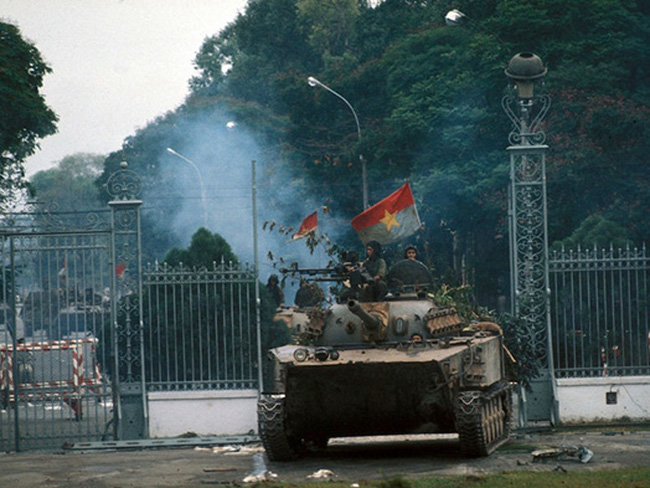
Liberation Army tanks advance into the Independence Palace. Photo: People's Army Film Studio.
At 5:30 AM on April 30, 1975, the Vietnam People's Army launched its final offensive, advancing straight into the heart of Saigon, capturing the Independence Palace, completely liberating the South, and unifying the country. This was the greatest and most complete victory, ending 30 years of the longest, most arduous, and fierce, yet also most glorious, war for the Vietnamese nation.
On April 30, 1992, the Electronic Warfare Department was established. The Electronic Warfare Department is an advisory body to the Ministry of National Defence and the General Staff, directing the activities of the entire military's electronic warfare forces and directly commanding the Ministry's strategic mobile electronic warfare units.
On April 30, 1993, the Fund for Supporting Young Talents was launched.
On April 30, 2011, the largest artificial seawater-filtered swimming pool in Asia was officially inaugurated and put into operation at Hon Dau International Tourist Area, Zone 3, Do Son, Hai Phong City.
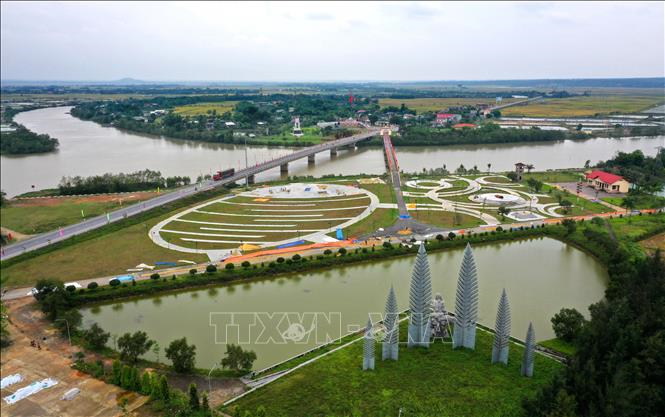
The special national historical relic complex of Hien Luong - Ben Hai (viewed from the South-North direction). Photo: VNA
On April 30, 2014, at the Hien Luong-Ben Hai historical site in Quang Tri province, a solemn ceremony was held to raise the flag symbolizing the reunification of the country and to receive the Prime Minister's certificate classifying the Hien Luong-Ben Hai historical site, the Quang Tri Citadel historical site, and other memorial sites related to the 81-day and 81-night battle of 1972 as Special National Historical Sites.
On April 30, 2015, Cho Ray Hospital in Ho Chi Minh City inaugurated the Cho Ray Oncology Center.
International event
On April 30, 1945, after winning many major battles on the European battlefields, the Soviet Army planted the victory flag on the roof of the German Parliament building in Berlin. Hitler, the German Nazi leader, committed suicide, and the Nazi regime came to an end.
On April 30, 1948, in Bogota (the capital of Colombia), 21 republics in the Americas signed the declaration establishing the Organization of American States (OAS).
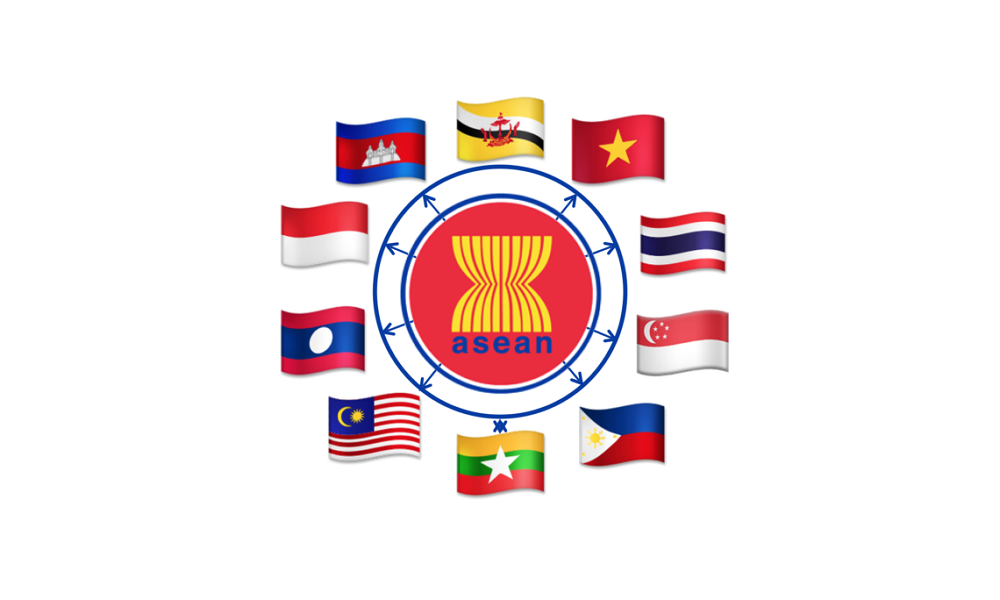
ASEAN currently has 10 member countries. Photo: Dangcongsan.vn
Following in the footsteps of the Great Leader
On April 30, 1947, in the Viet Bac War Zone, Uncle Ho attended a special session of the Government Council. Minister Le Van Hien's diary recounts: “Near evening, while we were having dinner, President Ho Chi Minh arrived in his secret uniform. This time, he was carrying a basket on his back, a gun on his shoulder, wearing a brown suit and a soldier's hat, his face half-covered, making him look like a hunter in the deep forest; no one could recognize him. He shook hands cheerfully with everyone, and then, more simply than anyone else, he asked for another bowl and chopsticks so he could eat with us while the meal was almost finished... At 7 pm, the Council meeting began. Everyone sat neatly around the mats spread out... Today's Council meeting had two sad pieces of news: the deaths of Mr. Huynh (Huynh Thuc Khang) and Mr. Nam (Hoang Huu Nam). He spoke about the fighting history of the two soldiers in the Government after everyone observed a minute of silence... The President spoke in a voice filled with pain, as if he had lost a brother and a son... Afterwards, he reported on the general political situation abroad and domestically…” The meeting didn't end until 3 a.m.
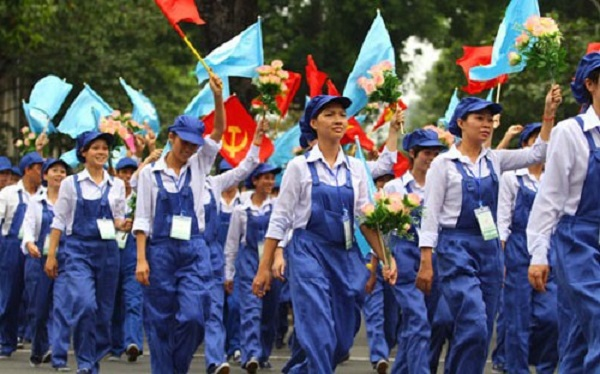
Illustration photo: Tintucvietnam.vn
On April 30, 1949, the day before International Labor Day, Uncle Ho wrote a congratulatory letter titled "The Main Task in the New Stage," in which he stated: "In other countries, this day is dedicated to labor, a day to review one's strength and fight for the interests of the class. In our country, regardless of age, gender, background, or social standing, the entire population unites as one, working diligently towards one goal: to kill the enemy and save the country. May 1st is a holiday for all our compatriots."
On April 30, 1964, speaking at the "Five Goods" Women's Festival, President Ho Chi Minh affirmed: "From the very beginning, our Party and State have implemented a policy of equal rights and equality for women with men." Analyzing the contents of the "Five Goods," he emphasized: "Increasing production and practicing thrift are the paths to building a victorious socialist society and building happiness for the people. Increased production is the right hand of happiness, and thrift is the left hand of happiness."
Regarding the concept of "family," Uncle Ho presented the idea: "Gia" means house, "dinh" means courtyard. In the old sense, family was limited to a house and a courtyard. That is, only caring for one's own parents, wife, and children to ensure their well-being and security, while ignoring the poverty and hardship of others. This was selfish and not good. In the new sense, family is broader and better. For example, people working together in a factory, an agency, or a cooperative... must all unite and love each other like brothers and sisters in a family… We have a song that says:
"Troubles and troubles cover the mirror's surface."
People of the same country should love one another."
(From the book "President Ho Chi Minh on this day in the past," National Political Publishing House - Truth, 2010).
Uncle Ho's teachings on this day in the past.
On April 30, 1964, at the "Five Good" Women's Festival, President Ho Chi Minh emphasized: "Increasing production and practicing thrift are the paths to building a victorious socialist society and creating happiness for the people. Increased production is the right hand of happiness, and thrift is the left hand of happiness."
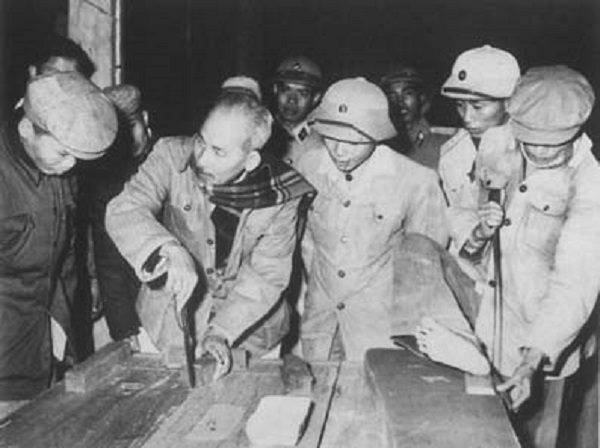
President Ho Chi Minh visited Garment Factory No. 10 and offered suggestions on how to cut and sew quickly, economically, and with guaranteed quality (January 8, 1959).
According to President Ho Chi Minh's viewpoint, production and saving are linked as a guiding principle. While urging everyone, in every sector and at every level, to regularly practice saving, President Ho Chi Minh also emphasized the importance of saving not being austere, but rather saving to improve and raise living standards. President Ho Chi Minh always reminded cadres, Party members, and the people to do well in increasing production and practicing saving, as this is a measure to increase accumulated capital for each individual, each family, and the entire society.
Author:Thuy Trang, People's Army Newspaper
Source:People's Army Newspaper
Newer news
Older news

