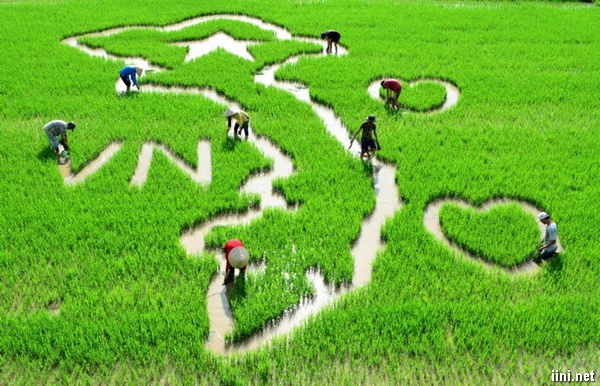
Someone once described Vietnam as a very beautiful and charming country, with its flowing ao dai dresses and simple conical hats... a Vietnam full of color. But after hearing those descriptions of Vietnam, only two words came to mind: "If only..." How wonderful it would be if I could admire and enjoy those beautiful aspects of Vietnam.
My name is Apichit Mingwongtham, my nickname is Aun (Ẳn), or in Vietnamese, Aun “A-un”. I am a person born blind in both eyes from Thailand. I am currently a second-year student in the Department of Vietnamese Studies, University of Social Sciences and Humanities, Ho Chi Minh City.
I graduated with a law degree in Thailand over 10 years ago, but driven by my love for the Vietnamese language, I was willing to abandon my stable life as a visually impaired man in my homeland and make my own way to Vietnam to learn Vietnamese. That's why I became a student at the Faculty of Vietnamese Studies, University of Social Sciences and Humanities, District 1, Ho Chi Minh City, at the age of 35. Simultaneously, I am also an online teacher specializing in teaching Thai to Vietnamese speakers and vice versa.
Even though I was the only visually impaired international student at the school, I always felt fortunate to have the opportunity to experience the Vietnamese language, people, and culture. These experiences left a deep impression on me about this S-shaped country.
A special connection with the Vietnamese language
So many people have asked me why I chose to study Vietnamese and why I'm so passionate about it, when there are so many other languages in the world. Some even speculated: "Do I want to marry a Vietnamese man?" or "Do I have Vietnamese blood in me?" Unfortunately, those two questions have nothing to do with my love for the Vietnamese language. As for the answer, let's go back almost 30 years to when I was a six-year-old child.
One day I visited my grandmother's house, and after chatting with her for a while, I suddenly asked, "Grandma, where did the neighbor go?"
"He went to work in Japan," she replied.
I asked curiously, "Which way did Japan go, ma'am?"
My grandmother probably didn't know how to answer back then, so she just said, "Go to Vietnam, my child."
"Where is Vietnam, Grandma?" I continued to ask, but she didn't answer anymore.
As soon as I got home, I asked my mother where Vietnam was. My mother said, "Vietnam is near Laos." Right after my mother's answer, the name Vietnam was inexplicably etched into the mind of that six-year-old child.
Because my family lives in northeastern Thailand (bordering Laos), we occasionally pick up a few Vietnamese radio channels. I asked my mother, "What language is this, Mom?"
My mother replied, "This is Vietnamese, son."
Then I started to get interested, wholeheartedly listening and imitating the voices of Vietnamese broadcasters at the time, even though I didn't understand anything. Looking back now, I can't understand why I liked it so much. This is probably why many Vietnamese people commented that my Vietnamese accent was no different from theirs. At that time, Vietnamese channels became one of my favorites. My parents were also very surprised that their son liked Vietnam so much when I was just a Thai child with no connection to Vietnam at all.
Until I was 12 years old, due to circumstances, my parents sent me to a school for the visually impaired in Bangkok, the capital of Thailand, and from that day on, I no longer heard Vietnamese radio. In a new city, with a new school and new friends, I had to learn many other things like any other normal child. Even though I could no longer listen to the radio, the words "Vietnam" always lingered in my mind.
Until I was a second-year law student at Thammasat University (Thailand), I was so fascinated by Vietnam and wanted to explore it, but circumstances prevented me from doing so because the biggest obstacle in my life was: I was completely blind. After much thought, I finally convinced my younger brother and sister, and "persuaded" a few friends to pack up and go to Vietnam to fulfill my long-held dream. Or rather, to find someone to guide me there. The three of us were able to go to Vietnam thanks to our parents, as none of us were earning any money at the time. Even though my Vietnamese language skills were only at the level of saying "hello" at best, after that trip to Vietnam, I always promised myself that one day, not too far in the future, I would set foot in Vietnam again, no matter what.
In late 2011, before going to Vietnam to study Vietnamese, I made some Vietnamese friends online, and that was a crucial turning point in my life. I asked them to teach me Vietnamese, but since I couldn't read or write, my only option was to learn through informal means. Thanks to their guidance, I began to develop the pronunciation and tones of the Vietnamese language.
When I first started learning, even though Vietnamese was a new language, I felt very familiar with it. It had such a strong appeal that once I started learning, I couldn't resist – a language that became more interesting the more I learned, with its rising and falling tones like a piece of music. I didn't want my Vietnamese skills to remain at the "basic" level. I started thinking: Am I going to keep learning Vietnamese like this without a system forever? If I'm going to learn, I might as well learn properly! With that thought in mind, in 2013 I mustered up the courage, quit my job, gathered all my money, packed my bags, and went to Vietnam alone with the sole purpose of learning Vietnamese.
So, I and the Vietnamese language have been truly connected for a long time. When asked why I chose Vietnamese, honestly, the old me didn't know how to answer properly, but today I can say it's because of one word: "destiny."
Vietnamese people through the eyes of a blind person - that's me.
Being completely blind in both eyes, life in my hometown near my family was already difficult at times, but life became even harder when I had to live alone in a foreign country, with a different language and culture. Fortunately, thanks to the kindness of the Vietnamese people, I was able to overcome the difficulties in my studies and daily life to achieve what I have today.
"When you drink water, remember the source." It's safe to say that my Vietnamese language skills have reached this point, and that I can sit here typing these lines, largely thanks to the hard work of my teachers and the unwavering support and help of my Vietnamese friends.
My journey of seriously learning Vietnamese began when I went to Vietnam and enrolled in a Vietnamese language course from April 2013 to August 2014. In my opinion, Vietnamese people are hospitable, affectionate, and approachable. When I first arrived, I was completely unfamiliar with the country and had no relatives here. However, my Vietnamese friends I met online spared no time to help me, picking me up from the airport, driving me around to find accommodation, and shopping for necessary items. They also helped me with food, finding restaurants and food that suited me, and even took me on tours throughout Vietnam, allowing me to experience life in a Vietnamese-speaking environment.
Not only that, my Vietnamese teachers and friends helped me a lot in learning Vietnamese. Initially, it was very difficult because I had to buy Vietnamese textbooks, and since I couldn't see, the whole book was like a blank sheet of paper to me. At that time, I needed soft copies to print into Braille. Because there were quite a lot of books, I had no choice but to ask my Vietnamese friends for help. I photocopied the books into different parts and asked my Vietnamese friends to type them into soft copies for me. No matter how busy they were, they were always willing to help, and some even stayed up late typing for me, each contributing a little so that the books would be ready before the course started. After everyone finished typing, I asked a friend to collect them and send them to Thien An Orphanage in Tan Phu District, Ho Chi Minh City, to print them into Braille. After typing and printing, the difficulties piled up again because I still couldn't read Vietnamese Braille. I had to make the effort to go to Thien An Orphanage again to ask Mr. Phong and Mr. Truong – two Vietnamese people in the same situation (visually impaired) working there – to guide me in learning to read Vietnamese from scratch. Fortunately, Vietnamese uses the Latin alphabet like English, so I was able to read Vietnamese after a short time. Because I couldn't see, I always carried a voice recorder to record what the teachers taught in class and then reviewed it at home. In addition, the teachers and my classmates nurtured my love for Vietnam and Vietnamese culture every day through interesting stories about the culture and people here, so that I would know how to "adapt to local customs" when living in a foreign country.
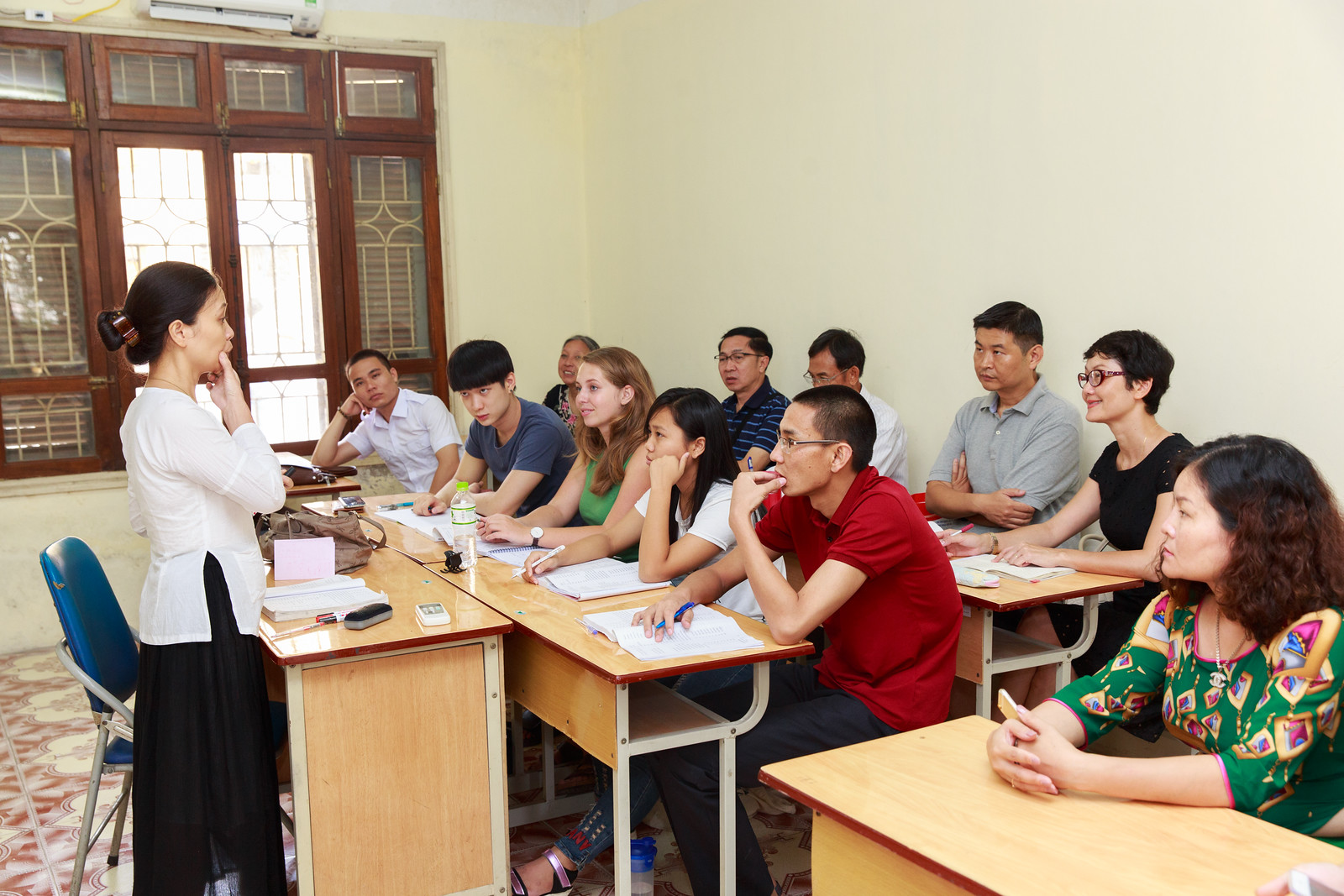
A Vietnamese language class for foreigners.
After returning to Vietnam for three years, in 2017, I decided to go back to Vietnam to take the Vietnamese Language Proficiency Test. Two weeks before the test, I made another trip to Vietnam to prepare for this important exam. Ironically, after all these years, I had never practiced typing Vietnamese with diacritics. As the test day approached, I once again had to ask a Vietnamese person to guide me on how to type with diacritics. I listened and followed each step, and after I finished typing, they even helped me proofread for spelling errors. Thanks to the help of the Vietnamese people, I achieved a 6/6 (C2 level) in that Vietnamese language proficiency test, and that's why I'm able to sit here today and write these words. Furthermore, the Vietnamese people not only helped me with my studies and daily life but also with my work. Speaking of which, I would like to mention a friend of mine, Ms. Cao Thi Minh Tam, an English teacher with extensive teaching experience both domestically and internationally. She is the one who helped me build my professional online foreign language teaching career as it is today. She helped me turn my dream of teaching foreign languages online into reality. Back then, when I was just starting out, I was unfamiliar with everything and didn't know how to begin. Despite being very busy, Tam didn't hesitate to guide me in everything related to teaching, such as helping me recruit students, manage classes, and suggesting I create a Facebook page called "Practical Thai" and my own YouTube channel – things that were incredibly important to my teaching career. She even helped me create a set of Thai language materials for Vietnamese speakers. Like so many other Vietnamese people I won't mention here, she always helped me without expecting anything in return. Thanks to her dedicated help, I have become a skilled online foreign language teacher and have earned the affection of many students. It's safe to say that Vietnam is like my second home, and the Vietnamese people are like my brothers and sisters. The kindness of the Vietnamese people towards me is like a debt I must engrave in my heart, because I could never repay it in this lifetime.
Even though I can't see, I've always felt the warmth and compassion of the Vietnamese people. I'm also always silently grateful for their hospitality and, especially, for the fact that the Vietnamese never discriminate against or treat a disabled person like me differently.
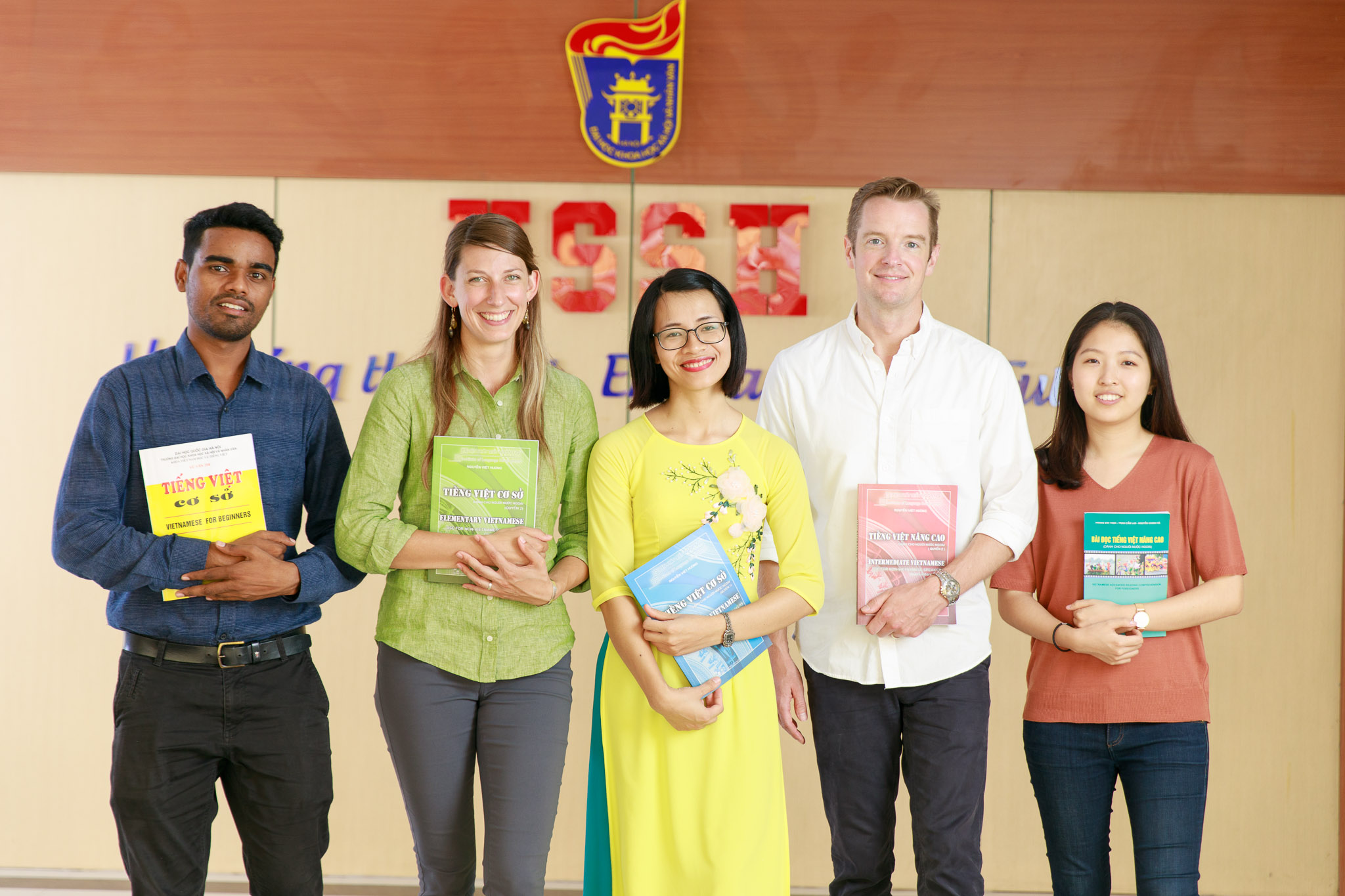
Foreign students studying Vietnamese at the University of Social Sciences and Humanities, Vietnam National University, Hanoi.
Impressions of Vietnamese culture
After learning Vietnamese and integrating into the Vietnamese community, my experiences have broadened my understanding of Vietnamese culture.
EtiquetteI find that the behavior of Vietnamese and Thai people has many similarities, which is reflected in proverbs and folk sayings from ancient times: "Respect elders, yield to juniors," "A greeting is more valuable than a feast," "Respecting the elderly brings longevity"...
Vietnamese people have always respected elders; for parents, filial piety is paramount.
"A father's love is as vast as Mount Tai."
A mother's love is like water flowing from a spring.
A heart devoted to honoring Mother and Father.
"To fulfill filial piety is the true duty of a child."
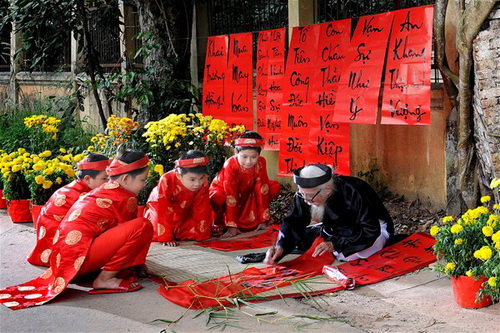
For teachers, the Vietnamese way of behaving is reflected in folk verses:
"Only by respecting your teacher can you become a teacher yourself."
"Without a teacher, you can't achieve anything."
"If you want to cross, build a bridge."
"If you want your children to be well-educated, then respect and revere their teachers."
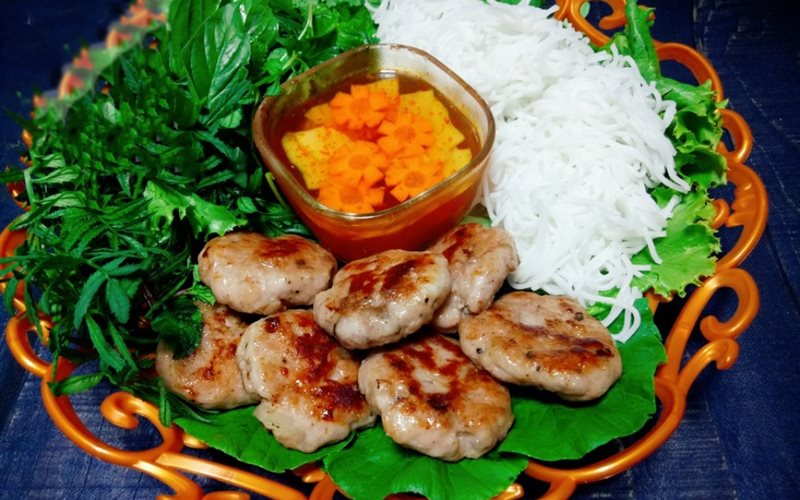
Culinary culture:Although I can't appreciate the beautiful scenery or the traditional Vietnamese clothing culture, as someone with a passion for food, I can absolutely enjoy Vietnamese cuisine just as well as any discerning Vietnamese food connoisseur. In my opinion, Vietnamese people know how to eat and prepare food in a way that harmonizes flavors and includes many healthy options. For example, a typical Vietnamese meal usually features a variety of dishes, each with many different ingredients combined to create a harmonious flavor that all family members can enjoy together. This is what impresses me most about Vietnamese culture. What I love most is the feeling of family members sitting down together to enjoy meals and chat after a hard day's work.
Speaking of Vietnamese cuisine, it would be a huge oversight if I didn't mention my favorite dishes. Among Northern Vietnamese dishes, I like Hanoi's bun cha the most. It's a dish that combines many ingredients like various herbs, cucumber, pork, rice noodles, dipping sauce, etc., and especially the way the meat is marinated and grilled is incredibly flavorful and aromatic. When you eat a piece of meat, the smoky aroma still lingers, which I really enjoy. I could eat two huge bowls of bun cha at once without getting tired of it.
When visiting Central Vietnam, my favorite dish is grilled spring rolls (nem nuong). The ingredients for grilled spring rolls are very simple: rice paper, various herbs, vermicelli, pork, crispy fried dough sticks, garlic, chili, and, of course, the dipping sauce. Although the ingredients seem simple, eating them is anything but, especially for a visually impaired person like me. But because I love them so much, I've tried to learn how to roll them from my Vietnamese friends. Because I eat grilled spring rolls so often, my "skill" in rolling them has improved considerably.
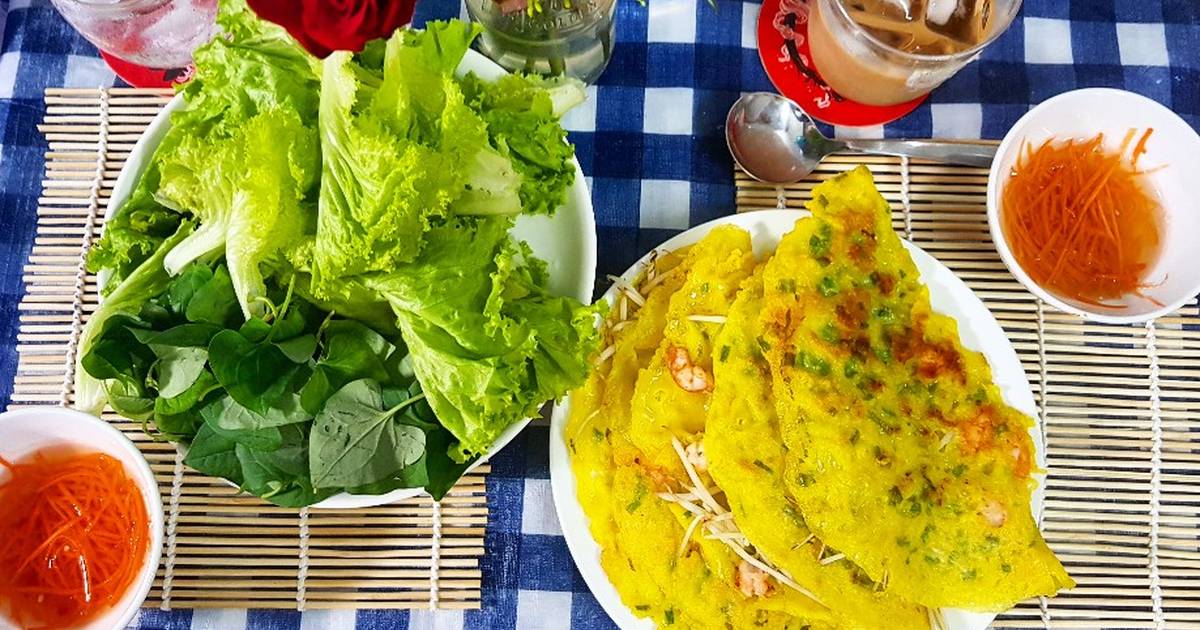
When talking about Southern Vietnam, it's impossible not to mention banh xeo (Vietnamese savory pancake), which includes: rice paper, vegetables, meat, mushrooms, onions, bean sprouts, shrimp, etc. This dish is quite easy to eat, and of course, for me, it's also easier to wrap than grilled spring rolls.
It's evident that most Vietnamese dishes contain vegetables, which is why the Vietnamese say, "Rice without vegetables is like pain without medicine."
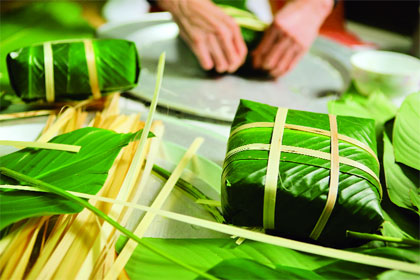
Customs and traditionsIn Vietnam, there are many different festivals and customs, but what impressed me most was hearing Vietnamese people say, "As joyful as Tet." This means that Tet is considered of paramount importance by the Vietnamese. Although I'm not Vietnamese, I once had the opportunity to visit a friend's house during Tet, and I realized that Tet is truly a time for families to reunite, gather together to bid farewell to the old year and welcome the new one. Especially during this time, descendants light incense for their ancestors, inviting the deceased to celebrate Tet with the family.
What I love most is the incredibly joyful and warm atmosphere of celebrating the Lunar New Year with my loved ones in my family. However, every time the Vietnamese New Year comes around, while everyone else returns to their hometowns to reunite with their families, I book a ticket back home because the Vietnamese New Year makes me feel homesick, missing the warm atmosphere of family gatherings.
In short, I and Vietnam are bound together by a deep love for the Vietnamese language. Vietnamese is a beautiful language with melodious tones and proverbs, and its folk songs, sayings, and idioms remain relevant and widely used in daily life. This is one of the reasons I am so captivated by the Vietnamese language. Beyond the language, the Vietnamese people are also a key factor in my love for Vietnam. In my perception, Vietnamese people are compassionate, friendly, approachable, open-minded, and willing to help others, even strangers. They also know how to harmoniously blend tradition and modernity in their daily lives. Despite the rapid development of the world, Vietnamese people integrate rather than "dissolve," maintaining their strong national identity. This is what impresses me so much, and I always feel incredibly fortunate to live in a country with such rich cultural heritage.
I will continue to develop my Vietnamese language skills, hoping that one day I can contribute a small part to becoming an "ambassador" connecting Vietnamese and Thai friendship. I would like to express my sincere gratitude and heartfelt thanks to the Vietnamese people and the country of Vietnam for always welcoming and supporting me – a visually impaired person learning Vietnamese, eating Vietnamese food, and living in Vietnam. If possible, I am always ready to do something to contribute to my second home, Vietnam.
Because they don't speak Vietnamese, my parents will never read these heartfelt words, but I still want to express my deepest gratitude and appreciation to them for not only not discouraging me but also always supporting me in learning this third language. Incidentally, I would also like to thank the Cultural Ambassadors Club, the Faculty of Vietnamese Studies and Vietnamese Language, University of Social Sciences and Humanities, Vietnam National University, Hanoi, for their sponsorship from the Dao Minh Quang Foundation, which gave me the opportunity to share my story.
Now, in my eyes, Vietnam is not about the outward beauty that people often talk about, but in my mind, Vietnam is always about the smiles that stretch along its S-shaped coastline.
Author:Apichit Mingwongtham
Newer news
Older news

