

A foundation built on 70 years of tradition.
On October 10, 1945, just over a month after our country declared independence, amidst the myriad difficulties of the new government, President Ho Chi Minh signed Decree No. 45 establishing the Faculty of Literature at the University, aiming to bring the nation "up to par with other countries around the world." More than a month later, on November 15, 1945, at the Grand Lecture Hall at 19 Le Thanh Tong Street, the first opening ceremony of the Faculty of Literature took place under the chairmanship of President Ho Chi Minh. The Vietnamese university system under the new regime was officially born. In his speech at the opening ceremony, Professor Nguyen Van Huyen, Director of the University Affairs Department, delivered a resounding and confident address:"We want this new university to be a powerful force in the fighting forces of the Vietnamese nation. We want it to be a bulwark for the protracted resistance to restore the entire territory and liberate the spirit of the nation. We are a nation with a thousand years of independent history and have created a unique civilization along the Pacific coast. We are a nation with a thousand years of independent history and have forged a unique civilization on the shores of the Pacific Ocean.""That is the core value, the tradition forged over the past 70 years and further enhanced by the achievements of 20 years of building and developing the University of Social Sciences and Humanities, Vietnam National University, Hanoi from 1995 to the present."
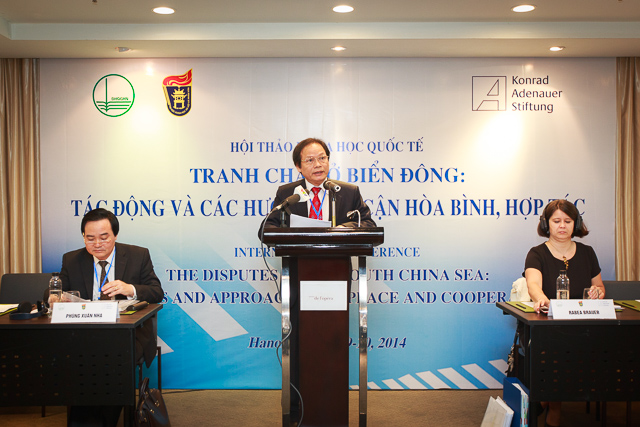
The University of Social Sciences and Humanities is a destination for academic exchange among scientists from both within and outside the country.
In 1956, the Government established Hanoi University on the basis of the University of Science, the University of Literature, the University of Basic Sciences, and the Preparatory University in Zone 4. The teachers who laid the foundation for the University of Literature, such as Professors Dang Thai Mai, Dao Duy Anh, Hoang Xuan Nhi, Hoang Nhu Mai, Tran Duc Thao, Tran Van Giau, Cao Xuan Huy, Nguyen Manh Tuong... and other scientists, along with their outstanding students, worked together to build Hanoi University from its early days.
In 1995, in response to the establishment of the Vietnam National University, Hanoi, the University of Social Sciences and Humanities was founded, separating from Hanoi University to meet the needs of society and the country's renewal and development in the new era. The university's progress over the past 70 years, along with the contributions of outstanding and talented scientists and teachers, and with a foundation of patriotism and national pride, has become the cornerstone for its rapid development into a leading university in the country in the social sciences and humanities.
Promoting the "Pioneering University Spirit" in the New Era
The spirit of Vietnamese universities is to build a national university system. This spirit is further concretized by the pioneering and noble mission of the University towards the country:The University of Social Sciences and Humanities, Vietnam National University, Hanoi, has the mission of leading the way in training high-quality, highly skilled human resources, conducting innovative research, and disseminating knowledge in social sciences and humanities, serving the cause of national construction and development."
To fulfill this mission, the Party Committee and the School's Board of Directors have always attached great importance to the development of human resources and the innovation of training programs, considering them core conditions for building and developing the School. The Resolution of the School's Party Congress for the first term (1996-1998) stated:Focus on building and developing a workforce that is sufficient in quantity and strong in quality, overcoming imbalances and the risk of a shortage of successor cadres.".
In line with this orientation, the University has considered the goal of building a highly qualified teaching staff as the decisive factor in the development of training quality and scientific research. Special attention has been paid to the training and development of young staff, with many preferential policies aimed at creating a sustainable source of personnel to meet the requirements of the reform and international integration process. To date, the university has 530 staff members, including 370 teaching staff, 25 teachers awarded the title of People's Teacher, and 56 teachers awarded the title of Excellent Teacher. The professional qualifications of the scientific staff have rapidly improved compared to the 1990s: 164 master's degree holders, 195 doctoral degree holders, 6 professors, and 91 associate professors. The number of staff with postgraduate degrees has reached 96%, of which over 51% hold doctoral degrees. Furthermore, the school places great importance on improving and enhancing its management capacity through the implementation of an administrative reform project based on ISO standards, which began two years ago. The transition from a highly bureaucratic management system to one with greater autonomy and accountability is a groundbreaking step in the school's development.

President Truong Tan Sang attended the opening ceremony at the University of Social Sciences and Humanities (September 2012).
The University of Social Sciences and Humanities, Vietnam National University, Hanoi, was established amidst the rapid pace of reform and international integration. Therefore, the University has resolutely prioritized and pursued the improvement of the quality and diversification of its training programs. Currently, the University comprises 16 faculties, 12 research and training service centers, one anthropology museum, one company, 10 functional departments, and one Institute for Policy and Management Research. The central task in the coming period is to focus on and continue expanding and developing high-quality, advanced training programs that meet the needs of society and contribute to the economic, cultural, and social development of the country, while also aligning with the development trends of social sciences and humanities in Vietnam and the world. One of the breakthrough solutions to achieve this goal is the rapid internationalization of its training programs. In particular, the university has focused on developing and implementing courses and training programs in English to attract foreign students and trainees to study at the university and in Vietnam. After several comprehensive and synchronized adjustments to the training programs, the university currently offers 22 undergraduate majors with 22 standard training programs, 6 high-quality training programs, and 1 internationally accredited training program. For postgraduate studies, the university manages 62 training majors, including 29 doctoral programs. The university's training programs are developed in three groups: 1) Basic sciences; 2) Applied sciences; 3) Interdisciplinary sciences. In 2007, the university transitioned from a semester-based training system to a credit-based system, aligning with international trends, while actively standardizing its training organization and management. The university's orientation in developing its training programs is to focus on both basic and interdisciplinary sciences to fulfill the primary mission of higher education in the social sciences and humanities in Vietnam; and to develop applied sciences to promptly meet the needs of socio-economic development and international integration, which the university's academic and human resource potential can best meet.
Reaching for scientific excellence and enhancing integration.
It can be said that, besides training and developing the staff, the third outstanding achievement of the school is scientific research, demonstrated in the knowledge and theories on building human resources and Vietnamese culture in the era of integration and globalization. Some research results of the school also contribute to providing arguments and scientific basis for the development and planning of the Party's policies and national development. The fact that 10 teachers have been awarded the Ho Chi Minh Prize and 16 teachers have been awarded the State Prize for science and technology is concrete evidence of the school's pioneering position and outstanding achievements in scientific research. Currently, the school is implementing...The University's science and technology development strategy until 2020; the program for developing high-quality scientific products to meet the socio-economic development requirements of the country, etc.
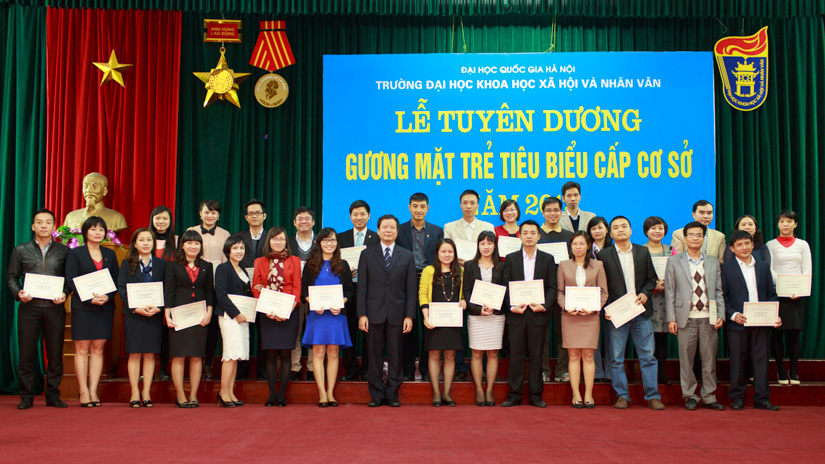
Building and developing the staff is a core task that the school always prioritizes. The school consistently encourages and rewards individuals and groups who have made outstanding contributions.
Extensive international cooperation is a rapid and effective way to access advanced knowledge and research methods, especially when aiming to become a research university. In international cooperation, the university builds upon its existing achievements while gradually approaching the common criteria and standards of regional and international universities. This allows it to create new values in Vietnamese social sciences and humanities, leveraging these as a comparative advantage and strength in cooperation and competition, affirming its position as a leading university in the country. As a result, the university has established extensive international relations with over 200 universities and international organizations across all continents. Many successful collaborative training programs, partnerships, and international scientific conferences have garnered significant academic recognition and prestige both domestically and internationally.
With 70 years of tradition and 20 years of development as an independent entity within the structure of Vietnam National University, Hanoi, the University of Social Sciences and Humanities has increasingly elevated its position, affirming its leading role in the country in research and training in social sciences and humanities. The University's achievements in training and scientific research are evidenced by prestigious titles: the First-Class Labor Medal (1981), the First-Class Independence Medal (2001), the title of Hero of Labor during the Renovation Period (2005), and the Ho Chi Minh Medal (2010). The profound lesson ensuring the University's success is the spirit of unity and cooperation among the unit, collectives, individuals, and generations of staff and students; it is the combined strength, both internal and external, mobilized to participate in the building and development of the University. We must always be proactive, positive, perceptive, and possess strong character to be ready to dedicate ourselves and take the lead in research and training. Without perceptiveness, we cannot keep up with the country's development needs. But without courage, we will not dare to think, dare to act, and cannot fulfill the mission of a pioneering soldier on the educational and scientific front of the country.
Author:Professor, Doctor, People's Teacher Nguyen Van Khanh
Newer news
Older news

