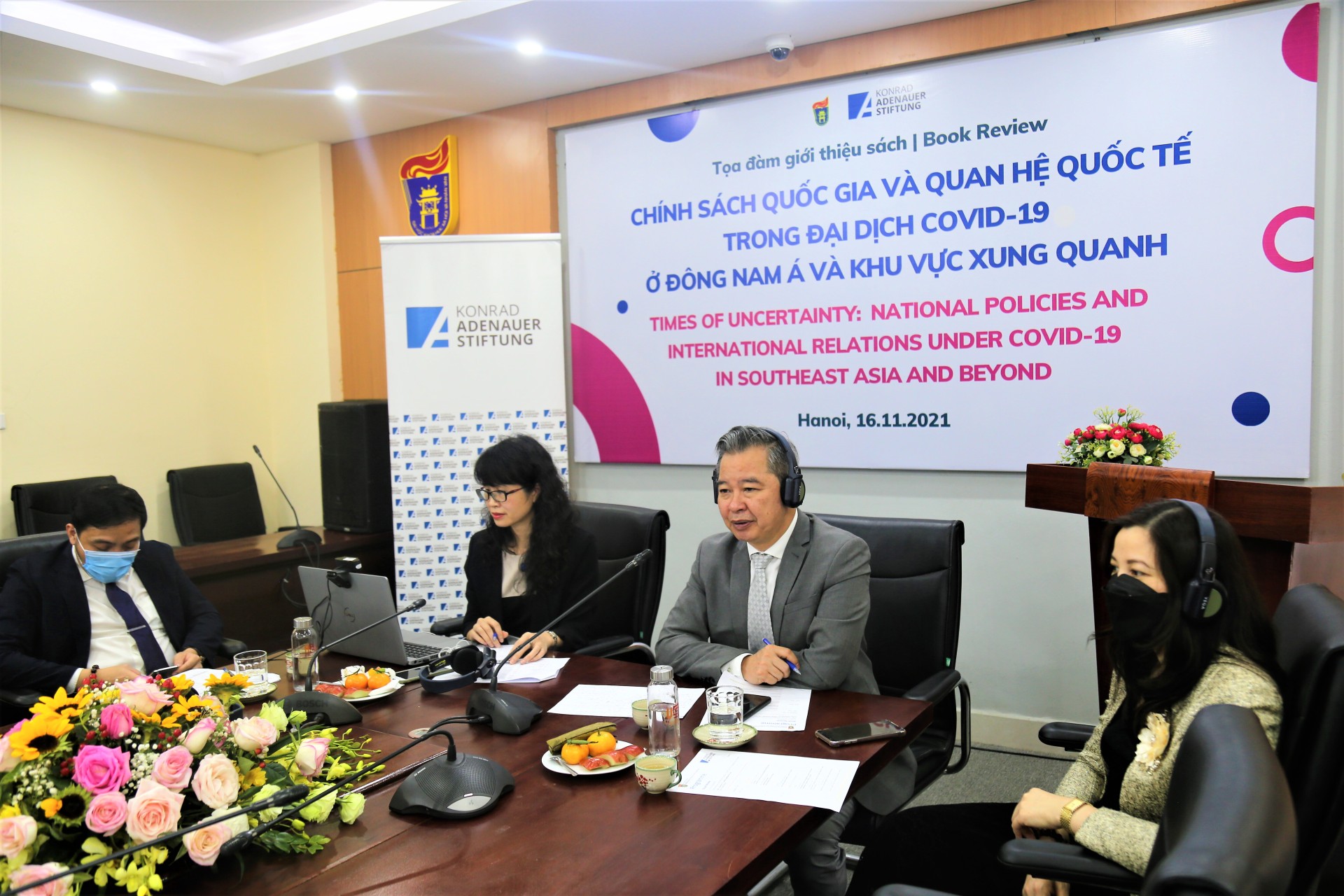
This book compiles opinions, research, and discussions gathered from a workshop organized by the University of Social Sciences and Humanities and the Konrad-Adenauer-Stiftung (KAS) Foundation, Germany, on the theme "ASEAN and the fight against the Covid-19 pandemic" in May 2021. In this publication, the authors, through their research, present different approaches to the effectiveness of national policies, specifically addressing the practicality of the "dual" objective of simultaneously ensuring the safety of citizens and economic development, as well as the means and resources to achieve it. The research also points out the limitations and advantages of the anti-epidemic policies of ASEAN countries and the surrounding region, thereby drawing valuable lessons.
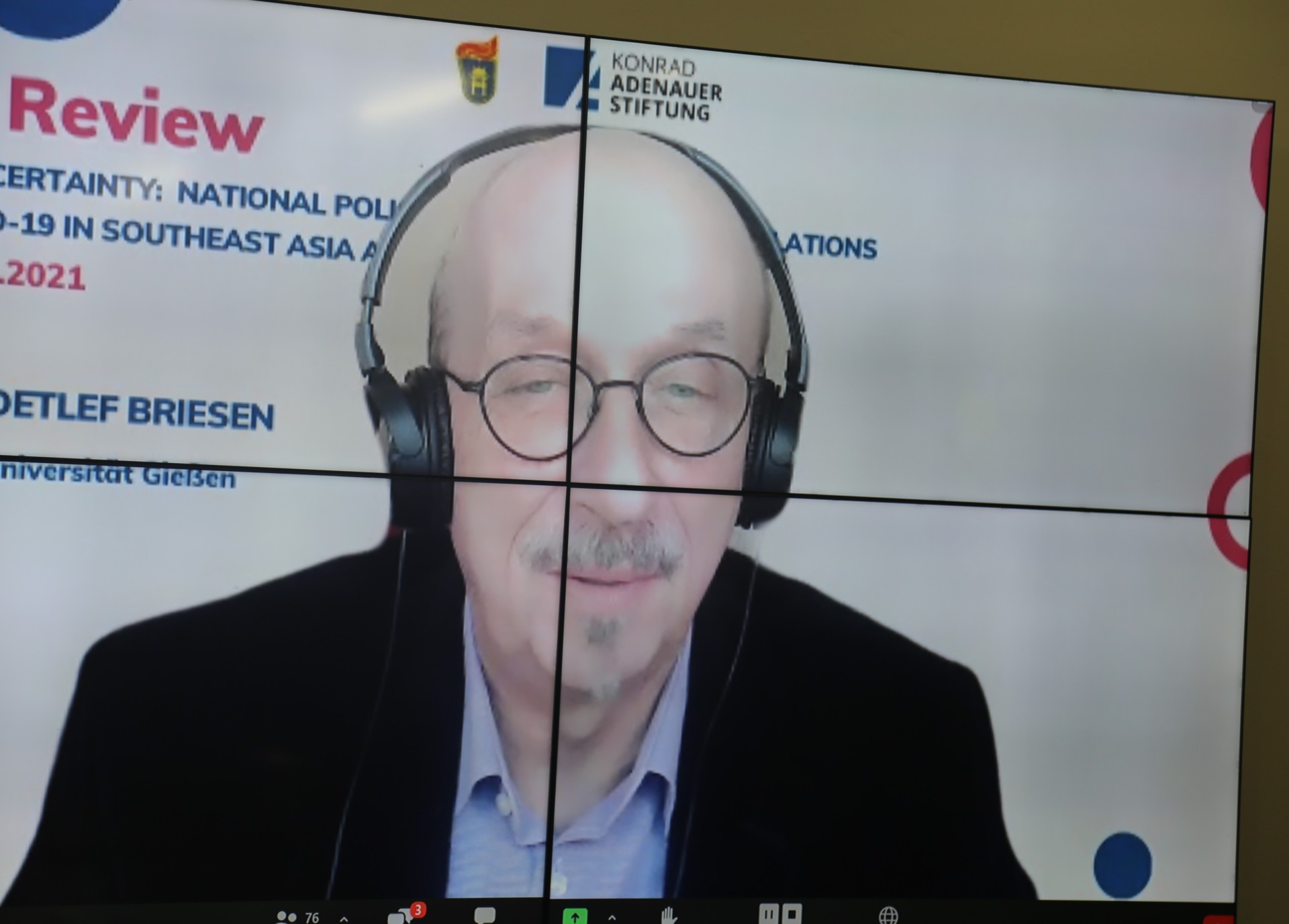 Dr. Detlef Briesen
Dr. Detlef Briesen, from Justus-Liebig Universität, Gießen, Germany, co-editor of the book, introduced the content and outstanding results of the research compiled in the publication. Accordingly, the book consists of three parts: The first part analyzes the developments of the Covid-19 pandemic in Southeast Asian countries and the policy responses of several countries in the region such as Cambodia, Indonesia, and Vietnam. The second part addresses cooperative efforts within the framework of the Association of Southeast Asian Nations (ASEAN) and among ASEAN member states to combat the pandemic. The third part provides a picture of the pandemic response process in countries outside Southeast Asia such as India, the European Union (EU), Japan, Sri Lanka, and China, thereby offering some lessons for Southeast Asian countries.
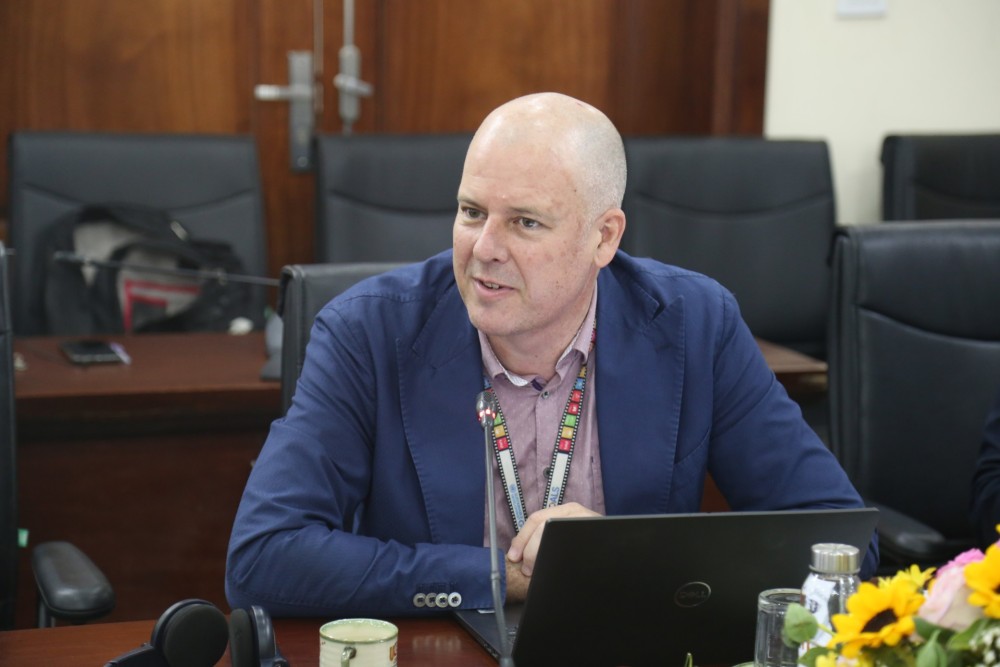 Mr. David Payne
Mr. David Payne, International Project Management Specialist at UNDP in Vietnam, speaking on behalf of UNDP, stated that the organization has been engaged with agencies of the Ministry of Health since the early days of the COVID-19 pandemic in Vietnam. UNDP has collaborated with Vietnamese agencies and departments with the aim of improving the effectiveness of pandemic prevention and control, promoting innovation, and creating an equitable and transparent environment in pandemic response. UNDP also highly appreciates the efforts of the Vietnamese government in pandemic prevention and control.
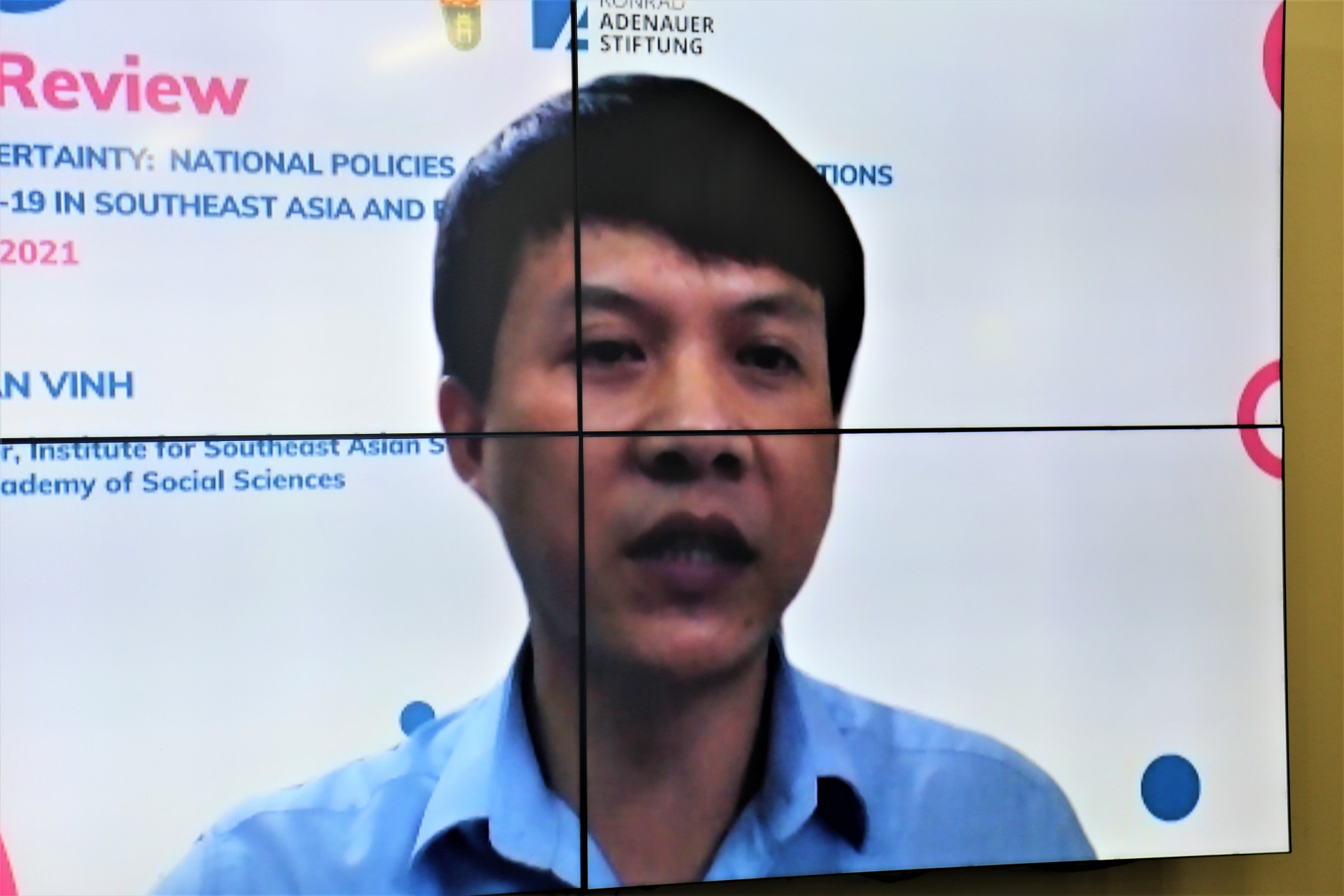 Dr. Vo Xuan Vinh
In a more in-depth discussion of ASEAN cooperation in the fight against Covid-19, Dr. Vo Xuan Vinh (Deputy Director of the Institute of Southeast Asian Studies, Vietnam Academy of Social Sciences) stated: While challenges remain in ASEAN cooperation, ASEAN has made collective efforts to combat Covid-19, such as: establishing agendas for epidemic prevention and control and developing multilateral response strategies; providing and supporting information to external countries when assistance is needed. ASEAN also serves as a center for coordinating financial and technical resources to support member states. Regarding the possibility of building an ASEAN-wide supply chain for developing vaccines within the bloc, ASEAN countries can share methods and technologies, establish a vaccine sharing fund; and connect with external countries such as South Korea to develop such a supply chain.
 Assoc. Prof. Dr. Patrick Ziegenhain
Associate Professor Patrick Ziegenhain (Department of International Relations, Presidential University, Indonesia) commented on the limitations and positive aspects of the Indonesian government's anti-epidemic policies: In 2020, the Indonesian government was criticized by the international community for its lack of enthusiasm in combating the pandemic due to the failure to implement strong social distancing measures. However, Indonesia did not implement strict social distancing, so businesses and individuals in the informal sector were able to survive even during the pandemic. In some economically disadvantaged areas of Indonesia, overly strict social distancing could not be implemented. On the other hand, Indonesia also actively implemented a vaccination program from February and March; with the current vaccination rate reaching 50%, and potentially 100% in Jakarta.
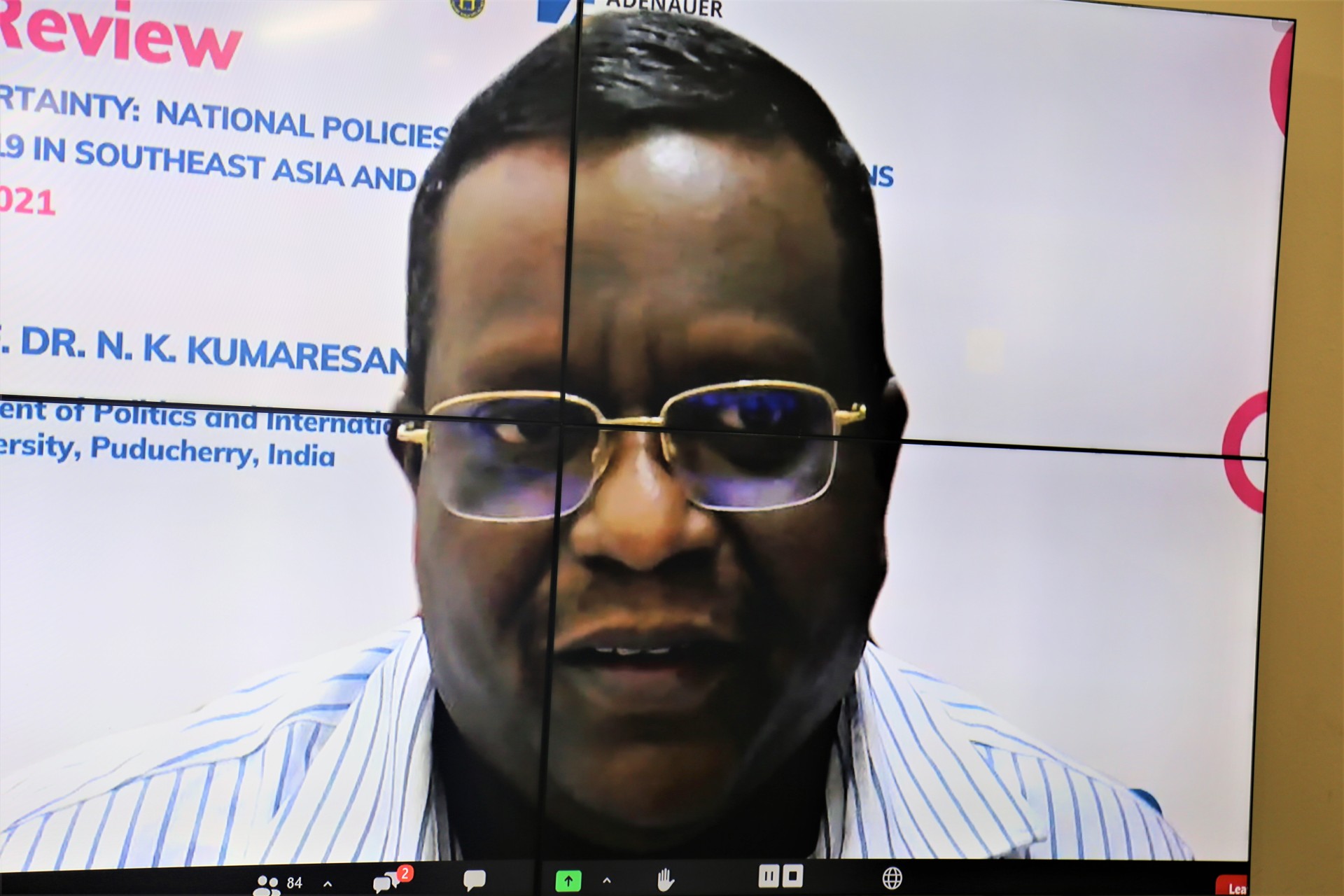
Assoc. Prof. Dr. Kumaresan Raja
Associate Professor Kumaresan Raja (Head of the Department of Political and International Studies, University of Pondicherry, India) emphasized that differences in knowledge and cultural systems in each country are factors to consider when implementing specific policies. For example, when India implemented lockdowns, it created many problems because the relationship between the people and the government was not based on a political and cultural foundation as in other countries. Furthermore, in Western countries, healthcare capacity reflects the government's capacity and public support for the government. India has not yet been able to build a healthcare system sufficient to meet the needs of its people; there is a disconnect between the central and state governments. In India, people do not trust vaccines but rely more on traditional folk remedies. Therefore, in the context of the Covid-19 pandemic, a key lesson learned is the need to curb nationalism and instead emphasize building global cooperation systems to coordinate efforts to combat the pandemic.
 Assoc. Prof. Dr. Tran Xuan Bach
Associate Professor Tran Xuan Bach (Deputy Head of the Department of Health Economics, Institute of Preventive Medicine and Public Health Training, Hanoi Medical University) commented on the positive aspects of Vietnam's approach to combating the pandemic. According to him, during the fourth wave of the pandemic, there are many similarities between Vietnam's policies and those of many other countries around the world. One of Vietnam's advantages is its preventive healthcare system, with a very strong testing and admission capacity. Another positive point is the rapid rollout of vaccines; one-third of the population has received both doses. Vietnam has also built effective contact tracing mechanisms. Currently, statistics show that Vietnam has approximately 100 million people, a large portion of whom have social media accounts; the government has sent pandemic prevention information to the public through these channels. Vietnam has also implemented social welfare packages for its citizens and society. In addition, there are cultural and social aspects that have impacted the pandemic response. The role of each locality in combating the epidemic is crucial, especially now that localities have been given more flexibility in this area. Therefore, Vietnam may very well be ready to transition to the new normal.