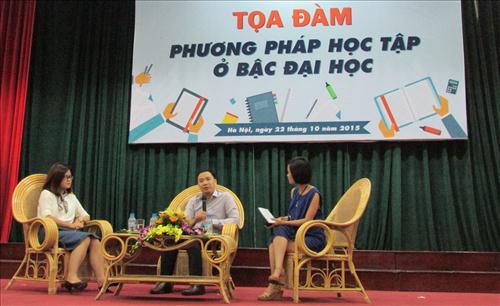
Students need to have clear goals in their studies.
The learning methods at the university level are significantly different from those in high school. University studies require students to be proactive in their learning, actively choosing textbooks and research materials. Furthermore, the university environment provides more opportunities for students to develop and be creative. This necessitates that students have clear goals during their time at university.
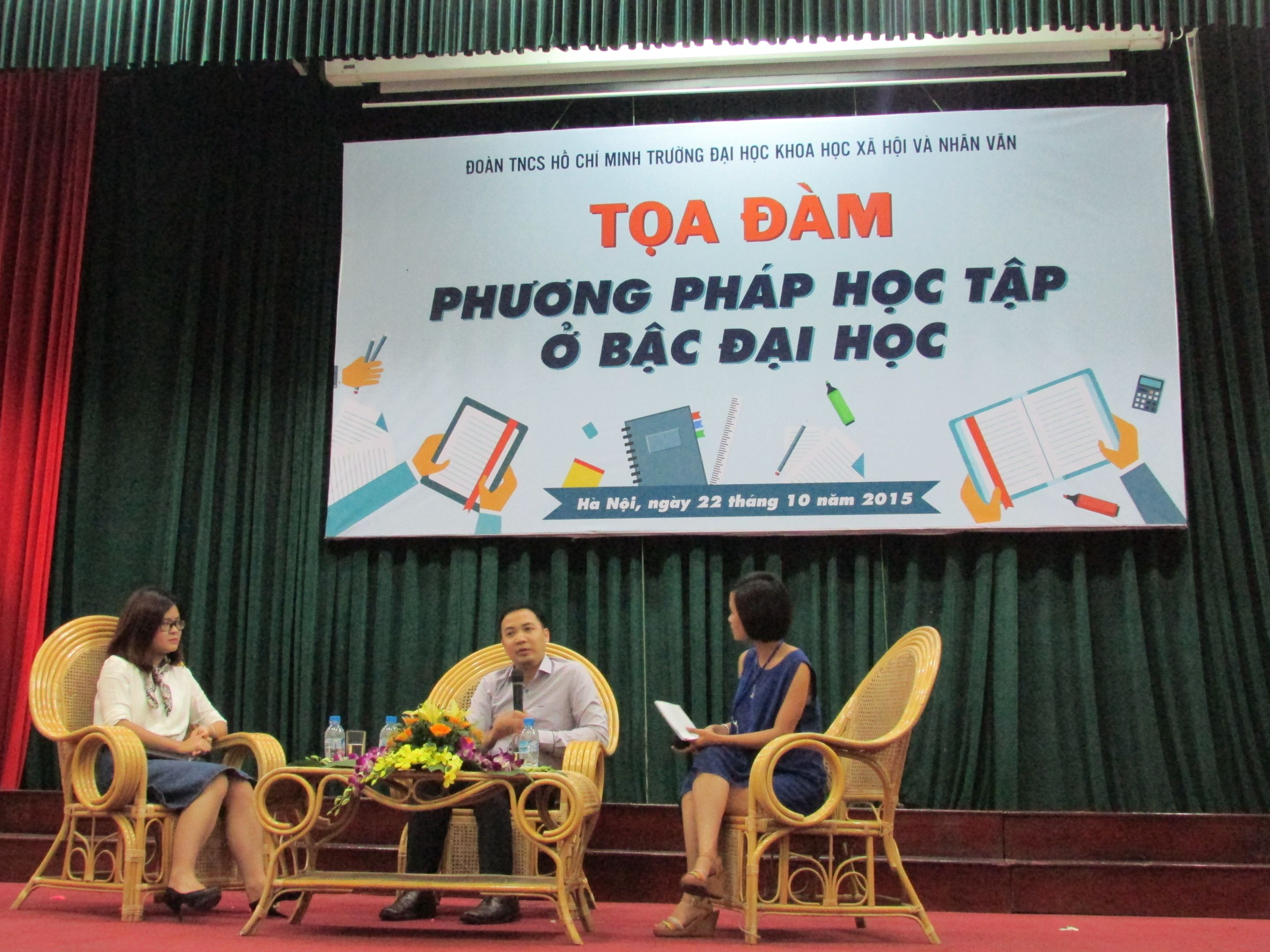
Sharing with new students, Dr. Nguyen Thu Hien (Deputy Head of the Faculty of Literature) said that studying at the university level requires more proactiveness and clear goals and plans. Firstly, proactiveness is demonstrated from the moment of entering the university, with a readiness to understand the curriculum of their chosen major. Secondly, proactive learning means that before starting any course, students prepare well for the lecturer's requirements; they review the syllabus and related materials beforehand. Thus, students who are proactive and well-prepared will absorb knowledge more effectively.
The delegates are participating in an exchange with the students.
"The difference is that learning has a purpose, meaning each student sets their own goals regarding the quality of their output or their learning objectives for a career. These different goals will serve as a general direction for each individual's learning method," affirmed Dr. Nguyen Thu Hien.
Addressing students' concerns about studying for exams using syllabi, Dr. Dao Duc Thuan (Head of the Department of Archival Studies and Office Management) frankly stated: “Syllabuses are required when lecturers do not provide them, giving students information about the curriculum for the next 15 weeks. However, syllabuses are not the only study materials; they only provide a technical framework for managing training and teaching, rather than focusing solely on knowledge. University-level assessments are not limited to what is in the syllabus but also include creativity to achieve high scores.”
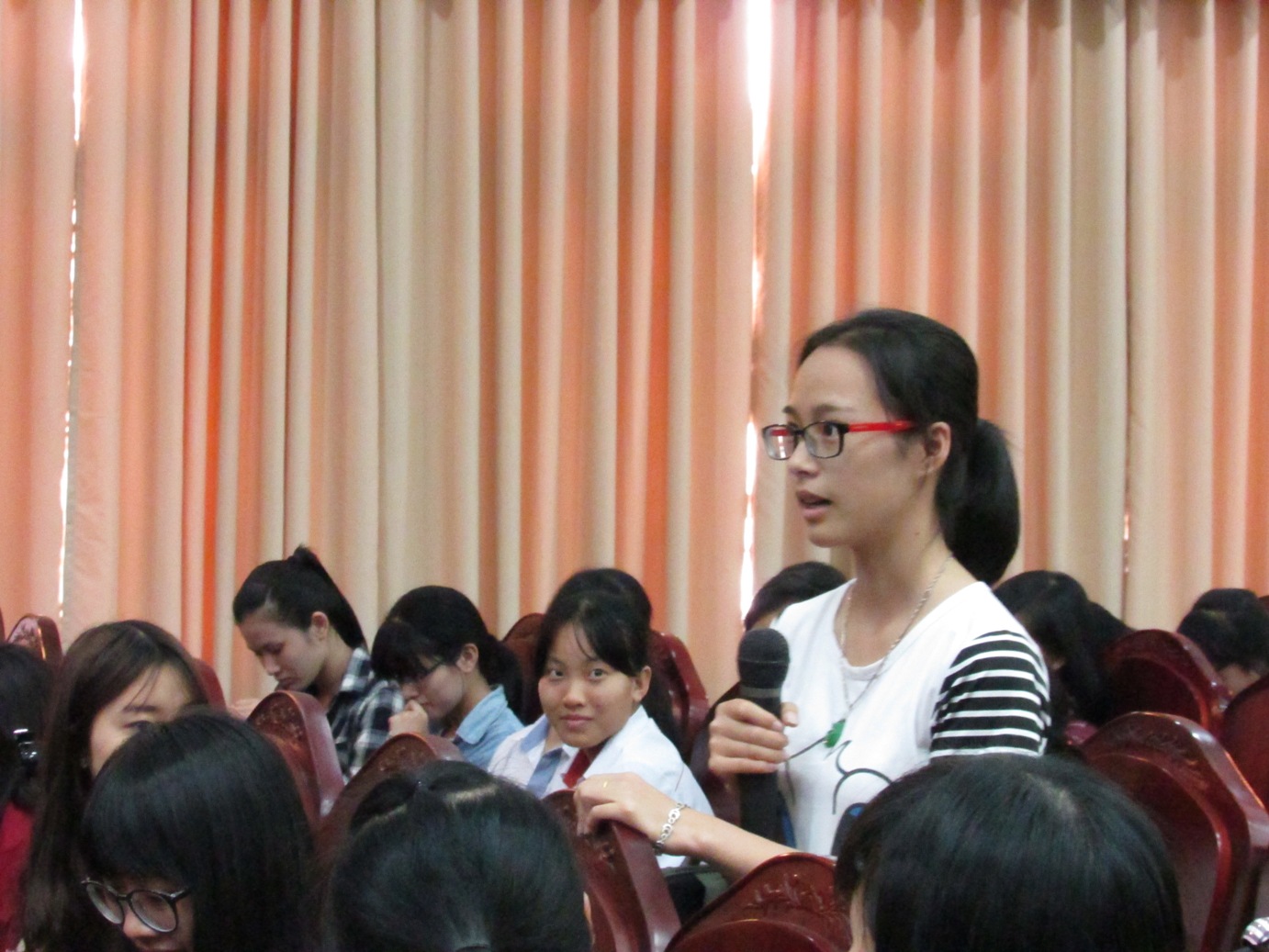
Many freshmen asked questions to the guest speakers.
Regarding general education courses, interdisciplinary knowledge, and related subjects, Dr. Dao Duc Thuan affirmed that this is supplementary knowledge, equipping students in the Social Sciences and Humanities majors, both for research and teaching later on. Regarding language barriers and challenges in approaching issues, students should proactively exchange ideas with classmates or lecturers, adhering to the standard learning outcomes.
"Love is a motivation for learning. Why not fall in love?"
These were some of the humorous moments shared during the panel discussion, as the guest speakers answered questions from new university students about balancing academics and romance.
Both Dr. Dao Duc Thuan and Dr. Nguyen Thu Hien openly stated: "If love is good for studying, then why shouldn't we be in love?" The guest speakers further explained that if love distracts us from studying, we won't receive support from teachers and family. Because love is the wings that open the door to the future, it's the driving force for both of us to move forward. Love, like studying, should be built on sharing and support.
Furthermore, balancing academic activities with social activities, including those related to the Youth Union and Student Association, is a matter of great concern for most new students. Dr. Nguyen Thu Hien shared her personal experience: “For Youth Union and Student Association leaders who want to spread positive influence, academic results must not be inferior to anyone, and reputation cannot be compromised. Experiences gained through Youth Union and Student Association activities are a good springboard for us students.”
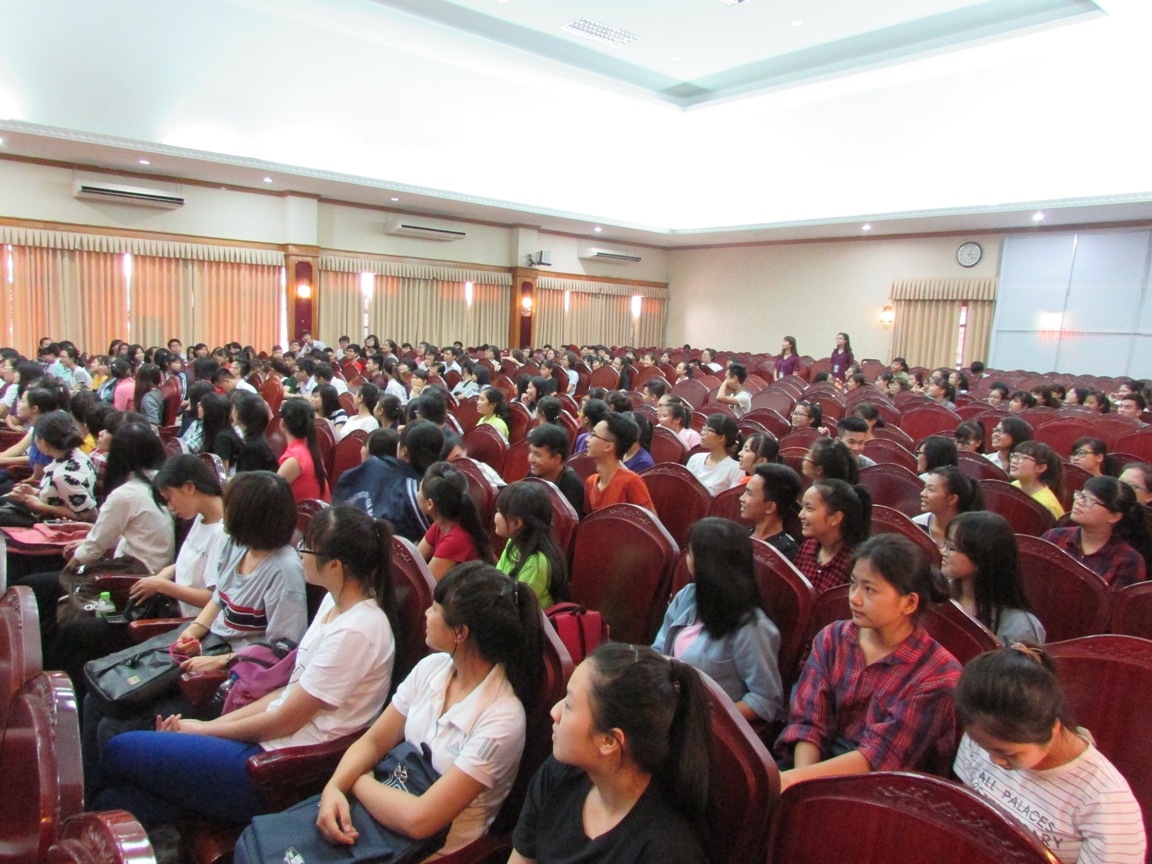
The program attracted many new students to participate.
Sharing the same view, Dr. Dao Duc Thuan said that, in addition to Youth Union activities, students need to supplement their foreign language knowledge because foreign languages are an important tool to seize many opportunities.
Meanwhile, Dieu Linh (Valedictorian of the K56 Sociology Department) shared her experience of achieving a scholarship by balancing her time between studying and participating in student union activities. Participating in student union activities is an opportunity and a motivation for students to strive in their studies. Besides attending classes, exchanging ideas with classmates and lecturers, Linh also studied independently at home, developing proactive learning methods.
Diệu Linh also added: “Students shouldn't label any subject; instead, they should apply the theories of the subjects to practice. For example, in the General Sociology course, students should boldly and proactively share their questions with their teachers to get answers.”
After more than two hours of lively discussion, the seminar on Study Methods at University organized by the Student Union concluded, marking the beginning of a series of seminars on study methods for specific majors that will be organized by the Student Union branches for their K60 members in the near future.
Author:USSH
Newer news
Older news

