The workshop was attended by leaders from the University of Social Sciences and Humanities, Thai Binh University, scientists from Seoul National University, the National University of Singapore, and several other universities and academies in Vietnam.
At the conference, scientists emphasized that today's world is more interconnected and interdependent than ever before. The boundaries between economics, politics, law, international relations, and governance are increasingly blurred. Every decision made in one field will have far-reaching impacts on other fields. Currently, Vietnam is undertaking the most vigorous administrative reform since the 1986 Doi Moi (Renovation) period, streamlining the apparatus, merging administrative agencies and localities to form a two-tiered local government model. New research on economics, politics, law, international relations, and local governance will provide important theoretical and practical foundations, contributing to advising ministries, departments, and localities in the new context of the country.
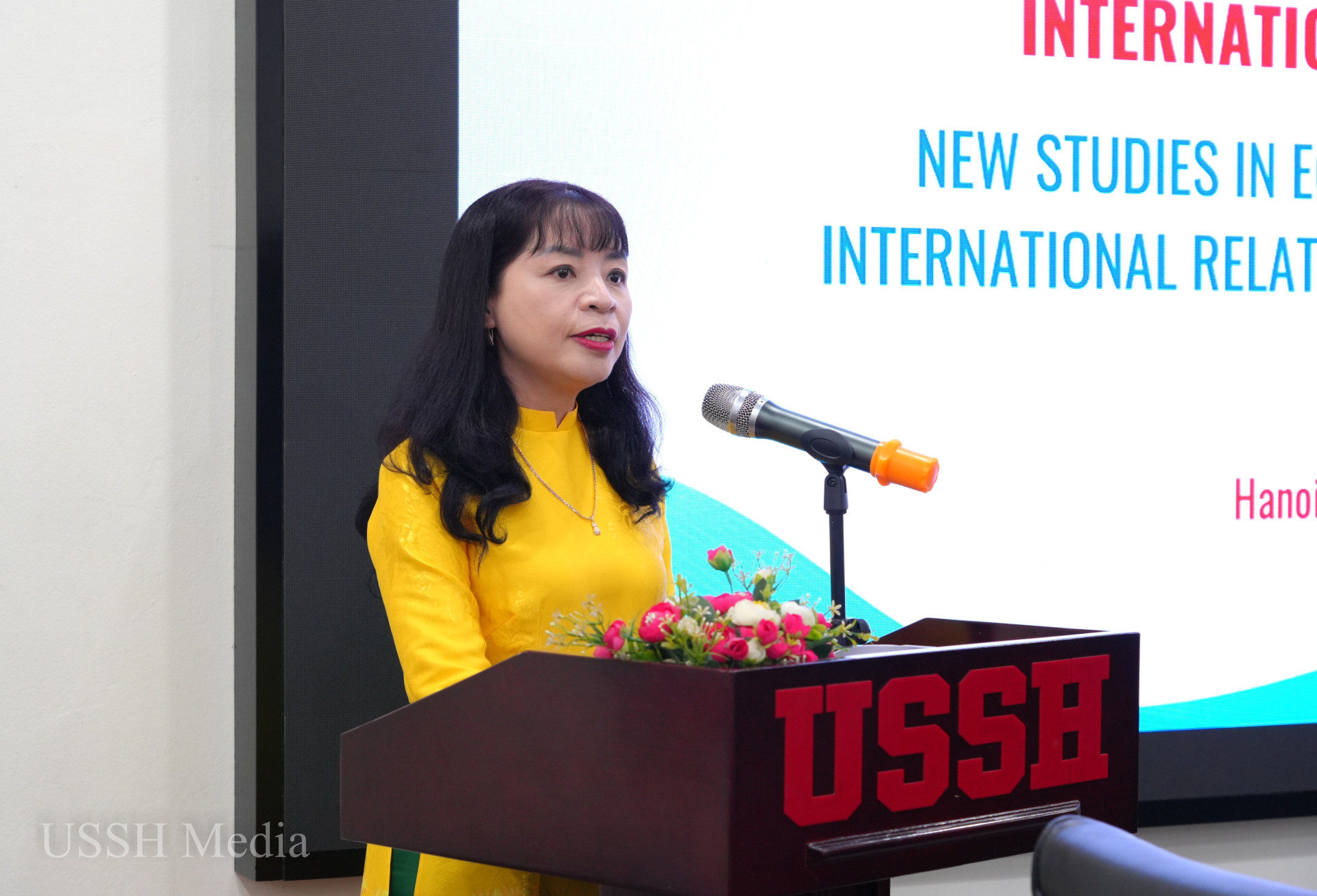
Associate Professor Dr. Dang Thi Thu Huong - Vice Rector of the University of Social Sciences and Humanities, delivered the opening remarks at the conference.
Assoc. Prof. Dr. Pham Quoc Thanh - Rector of Thai Binh University, Head of the Research Group on Vietnamese Politics, Law and Religion, Vietnam National University, Hanoi
According to scientists, the global landscape is undergoing profound and complex changes, marked by increasing strategic competition among major powers, the rise of protectionism, ongoing aid conflicts, and the emergence of non-traditional security threats such as climate change. Simultaneously, the rapid development of digital technology is driving the formation and rise of a circular economy.
These developments necessitate a rethinking of governance models and policy frameworks towards inclusiveness and sustainability. Vietnam is currently on the threshold of a new historical phase, shaped by macroeconomic processes, a pivot in foreign policy structure, and a comprehensive national vision, aiming to become an upper-middle-income country by 2030 and a developed, high-income country by 2045.
The increasing depth of international integration and the implementation of agreements such as CPTPP, EVFTA, and RCEP are transforming Vietnam's legal, economic, and governance systems. This transformation requires continuous innovation, policy reforms, and enhanced international integration capacity at both national and local levels.
Associate Professor Pham Quoc Thanh and Associate Professor Kim Yong Kyun (Director of the Vietnam Center, Asia Center, Seoul National University) co-chaired the discussion session.
Dr. Le Quang Hoa - Deputy Head of the Group, lecturer at the Ho Chi Minh National Academy of Politics, presented the introductory report at the conference.
The scientific issues of the conference attracted the attention and discussion of scholars, such as the issue of state organizational reform in Vietnam from a Korean perspective; the role of cognitive warfare in reshaping the world order; negative transformations of Vietnamese cultural values during the period of international integration and adaptation; the unification of Vietnam and Vietnam's perspective on international politics during the Cold War; Vietnam's political legacy and the history of Vietnam's loss of sovereignty; comparative studies of the governmental structure of Dai Viet during the Ly-Tran dynasties and the Goryeo dynasty of Korea…
The conference organizers received over 60 papers covering topics ranging from global politics and economics to economic management and local governance, with the aim of contributing to deeper research into the challenges facing Vietnam and seeking practical solutions. Notably, the conference received 6 papers from international scholars, demonstrating their interest in the research issues of the strong research group on Vietnamese politics, the rule of law, and religion.
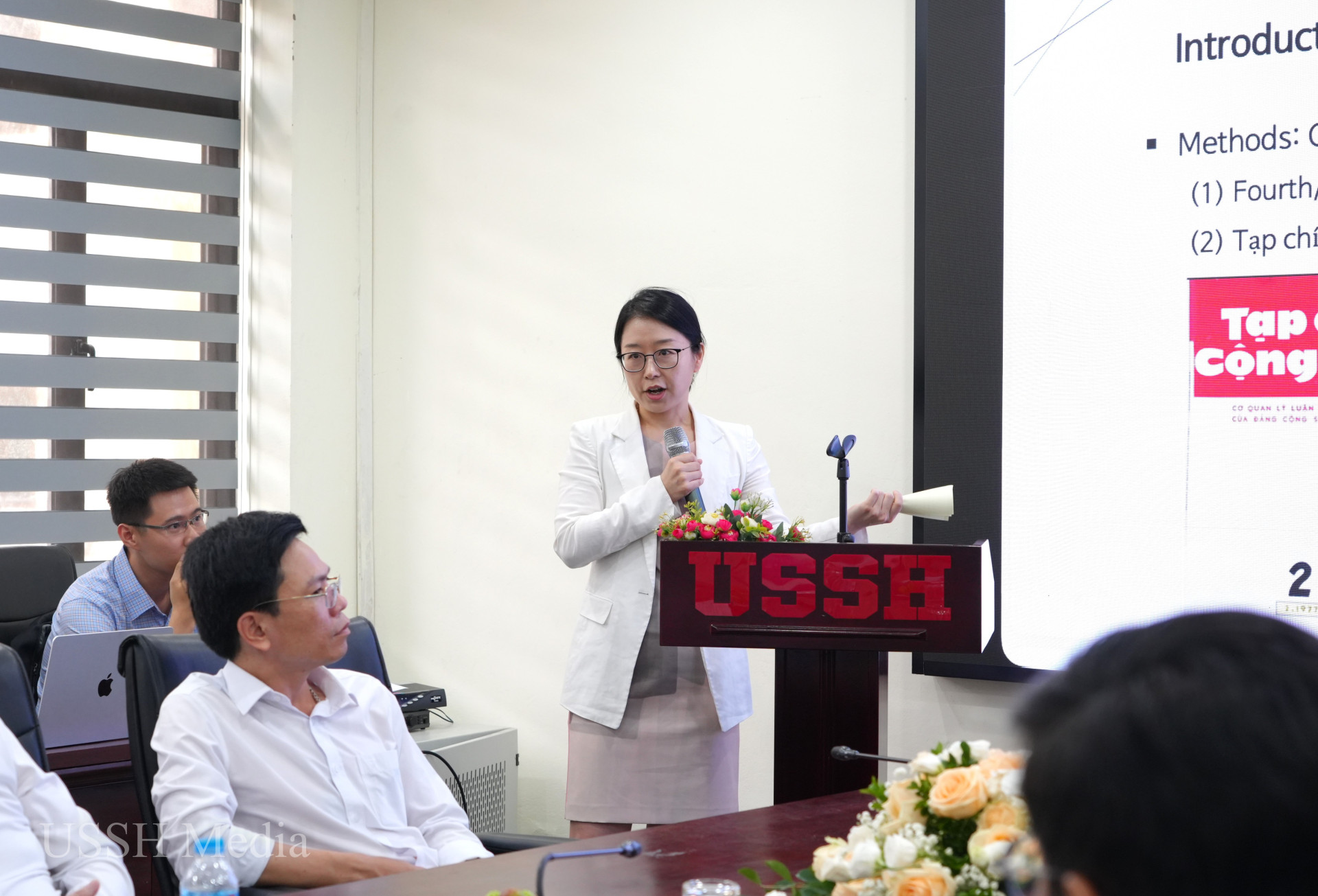
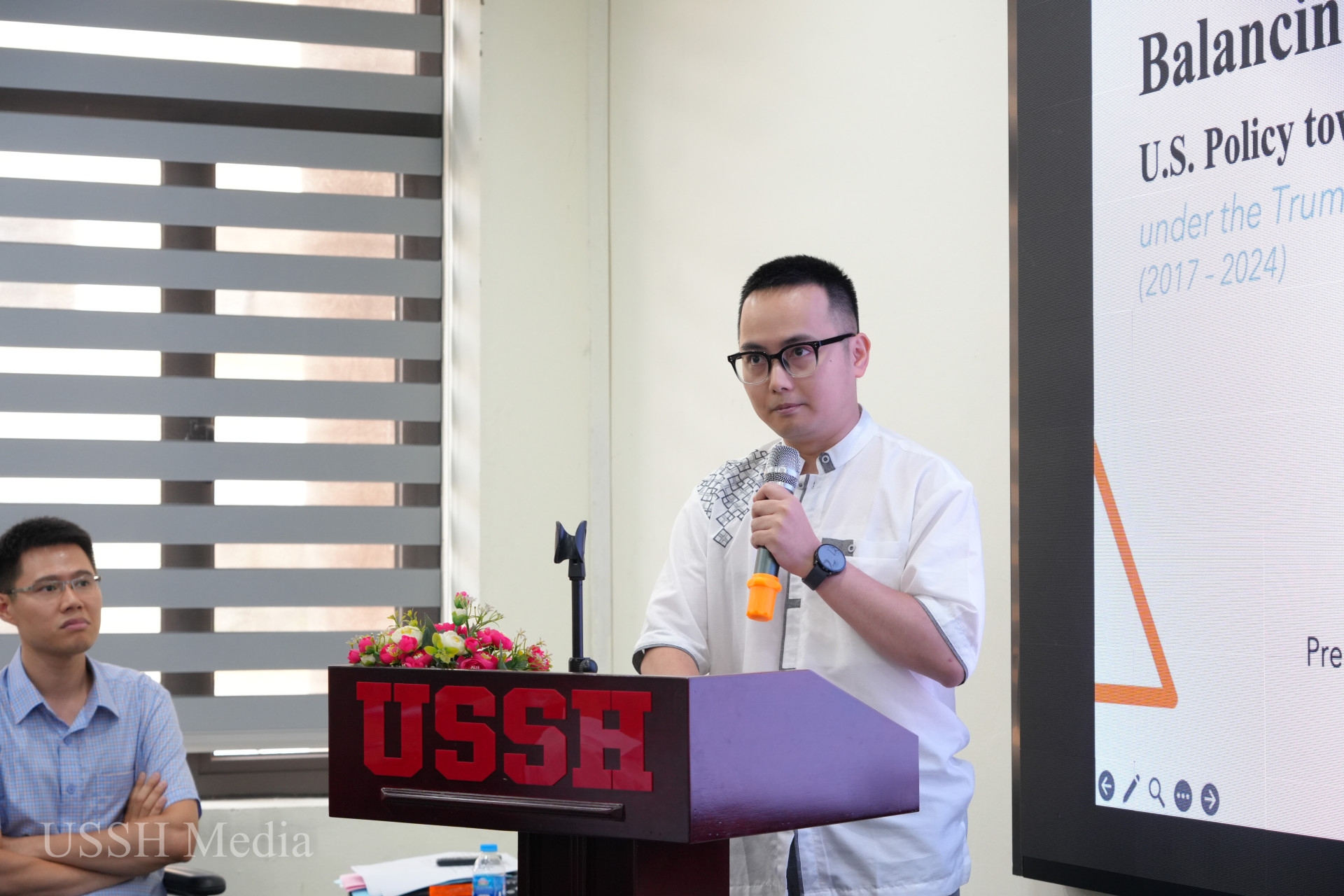
Vietnamese and international scientists presented papers at the conference.
Strong Research Group on Vietnamese Politics, Rule of Law, and Religion Established in 2016 and recognized as a strong research group at the Vietnam National University, Hanoi, with 11 members who are scientists from the University of Social Sciences and Humanities, the Ho Chi Minh National Academy of Politics, the University of Law, Vietnam National University, Hanoi, the National Academy of Ethnic Minorities, the Committee for Ethnic Minorities, the International School, Vietnam National University, Hanoi…
The main research direction of the NCM Group focuses on issues related to international experience in building political systems, political institutions, political models, and their relevance to Vietnam; the overall model of Vietnam's political system, the mechanisms of decentralization and delegation of power within Vietnam's political system; popular models of governance and ruling parties worldwide and their relevance to Vietnam; issues related to building a rule of law state, and international experience in building a socialist rule of law state of the people, by the people, and for the people…
Related articles:
The Vietnamese Politics, Rule of Law and Religion Research Group continues to be recognized as a strong research group at Hanoi National University.
University of Social Sciences and Humanities, Vietnam National University, Hanoi: Developing scientific and technological potential is a strategic direction.