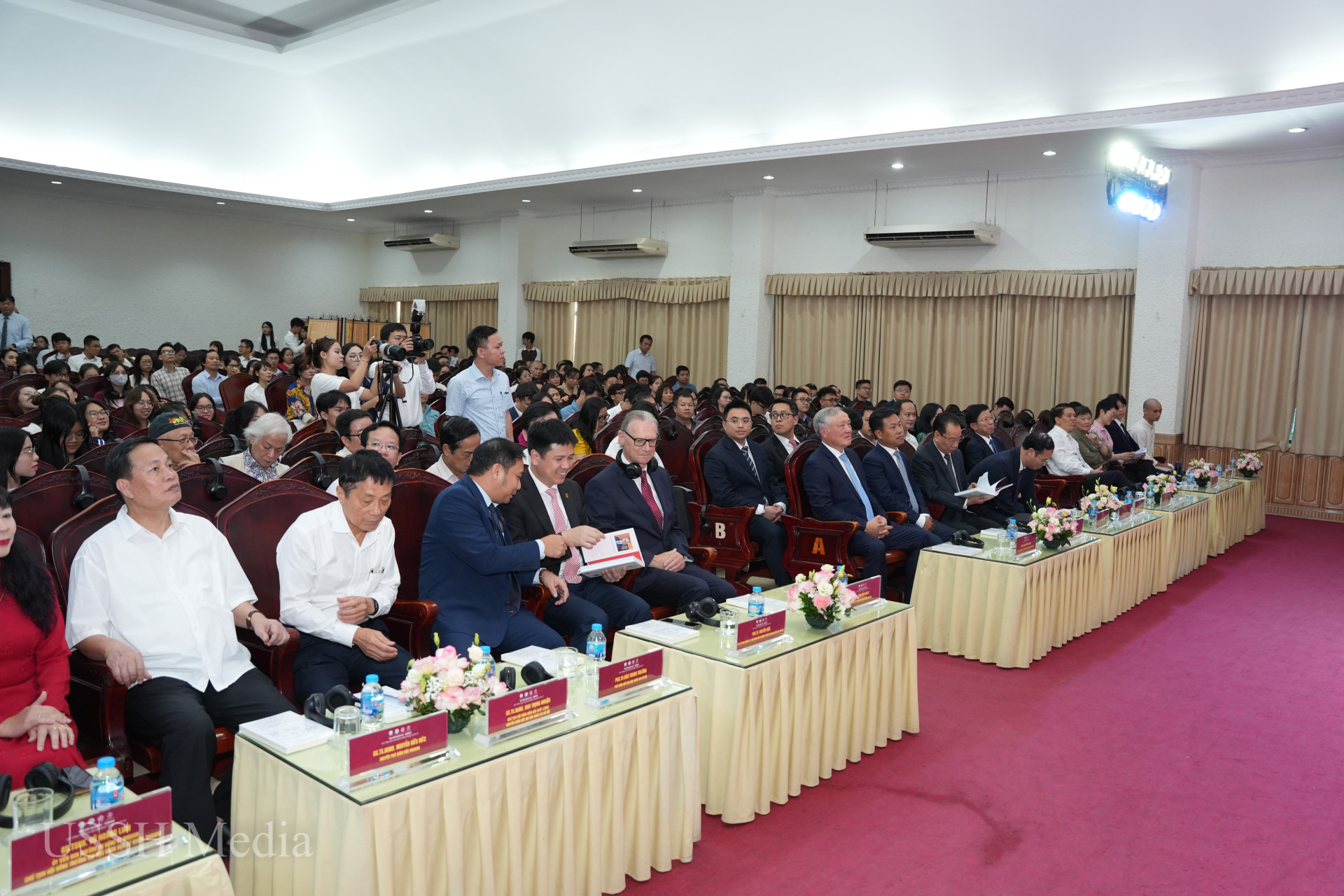
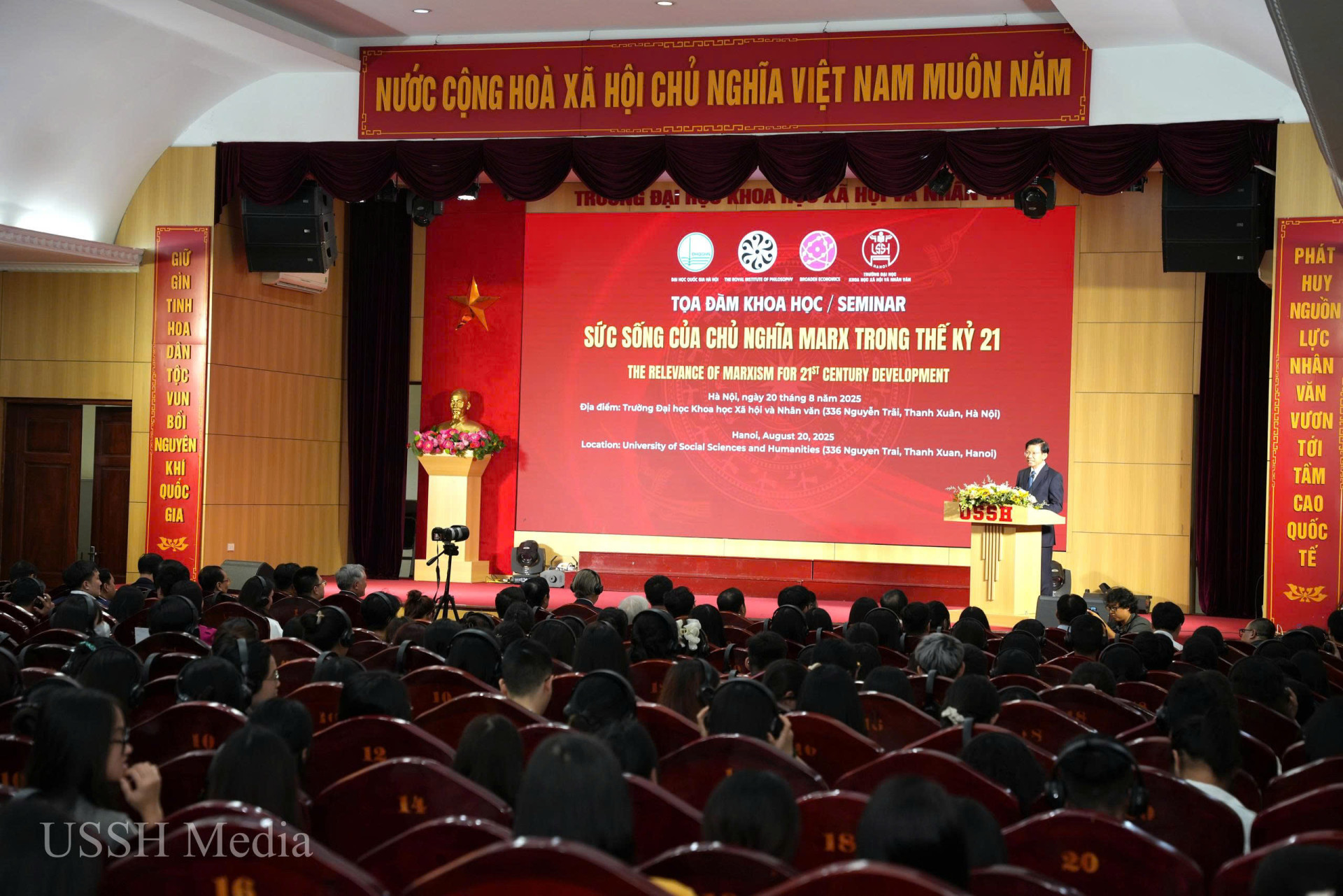
Attending the seminar were Politburo member and Standing Deputy Prime Minister Nguyen Hoa Binh; leaders from the Government Office, the Ministry of Education and Training, the Ministry of Home Affairs, the Ministry of Science and Technology, and the Vietnam National University. The seminar welcomed Professor Jonathan Wolff, a Fellow of the British Academy, Professor of Values and Public Policy at the Blavatnik School of Public Policy, University of Oxford, and currently President of the Royal Institute of Philosophy. He is also a political philosopher and author of numerous books and articles on moral philosophy and political philosophy.
In the context of the contemporary world, with its profound economic, political, technological, and social transformations, a reassessment of the value of classical theories is an urgent need. The seminar, "The Vitality of Marxism in the 21st Century," introducing Professor Jonathan Wolff's book "Introduction to Political Philosophy," is not only an academic event but also a meaningful forum, affirming the enduring vitality of Marxist thought and opening up fresh perspectives on political philosophy for Vietnamese readers.
The seminar was attended by delegates from government agencies, central ministries and departments, and reputable scientists.
Affirming the enduring value of MarxismIn his opening remarks at the seminar, Professor Hoang Anh Tuan, Rector of the University of Social Sciences and Humanities, Vietnam National University, Hanoi, emphasized: “How can Marxism engage in dialogue and adapt to new opportunities and challenges, from globalization and the Fourth Industrial Revolution to diverse democratic movements? I believe that through today's exchanges, we will not only see the continuation of Marxist thought but also find practical suggestions for creative application in the Vietnamese context – a country steadfastly pursuing the socialist path with its own unique identity.”
Professor Hoang Anh Tuan, Rector of the University of Social Sciences and Humanities, delivered the opening remarks at the seminar.
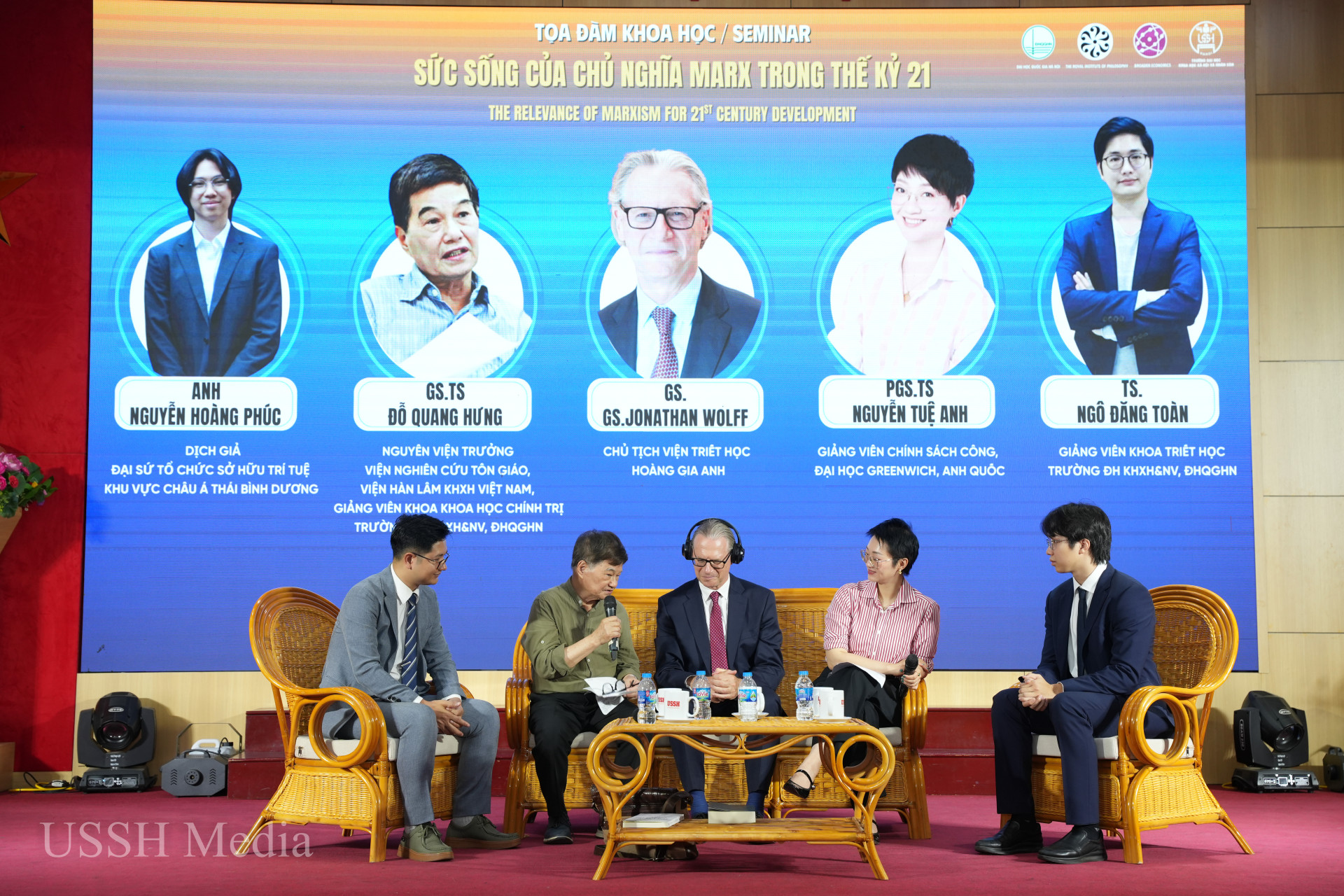
In his presentation titled "The Vitality of Marxism and Socialism in the 21st Century," Professor Jonathan Wolff outlined ways to strengthen and build socialism in the face of 21st-century challenges, particularly in developing countries. Drawing on his works such as "Why We Need to Read Marx Today," "An Introduction to Political Philosophy," "Equal Cities," and "The Human Right to Healthcare," Professor Wolff delved into the contradictions in development processes, such as the conflict between high economic growth and social equity, the relationship between market economic development and quality public services and social safety nets, and the role of the State in ensuring and enforcing justice.
Regarding the question, "Should the State provide free healthcare and education? Is equality achievable, and should we strive for it?", Professor Wolff argued that, while absolute equality may be unrealistic, addressing erosive disadvantages and promoting human dignity are paramount goals. According to him: "True equality must transcend economic indicators or income, and help shape how people live, interact, and are valued in society." Professor Wolff also emphasized that developing this vision requires proactive public policies with a solid ethical foundation, aimed at empowering individuals and communities. This lecture will contribute theoretical and practical insights to the development of socialism in Vietnam in the new era.
Professor Jonathan Wolff delivered a presentation on the topic "The vitality of Marxism and socialism in the 21st century".
It is evident that, in the face of scientific and technological transformations, especially the Fourth Industrial Revolution, Marxist theory on the mode of production and the contradiction between productive forces and relations of production is increasingly demonstrating its predictive power. The development of artificial intelligence, the platform economy, and automation has brought to light issues of inequality, the alienation of workers in a "virtual world," and the concentration of capital in the hands of a few giant technology corporations. Marxism provides a lens through which to fundamentally analyze these phenomena, going beyond superficial appearances. Furthermore, global challenges such as climate change, migration crises, and pandemics clearly demonstrate the limitations of purely capitalist solutions that prioritize profit. Marxist thought on a sustainable society, for the common good of all humanity rather than the private interests of any particular class or nation, has become extremely relevant. It suggests that humanity should move towards a more balanced, cooperative, and humane model of development.
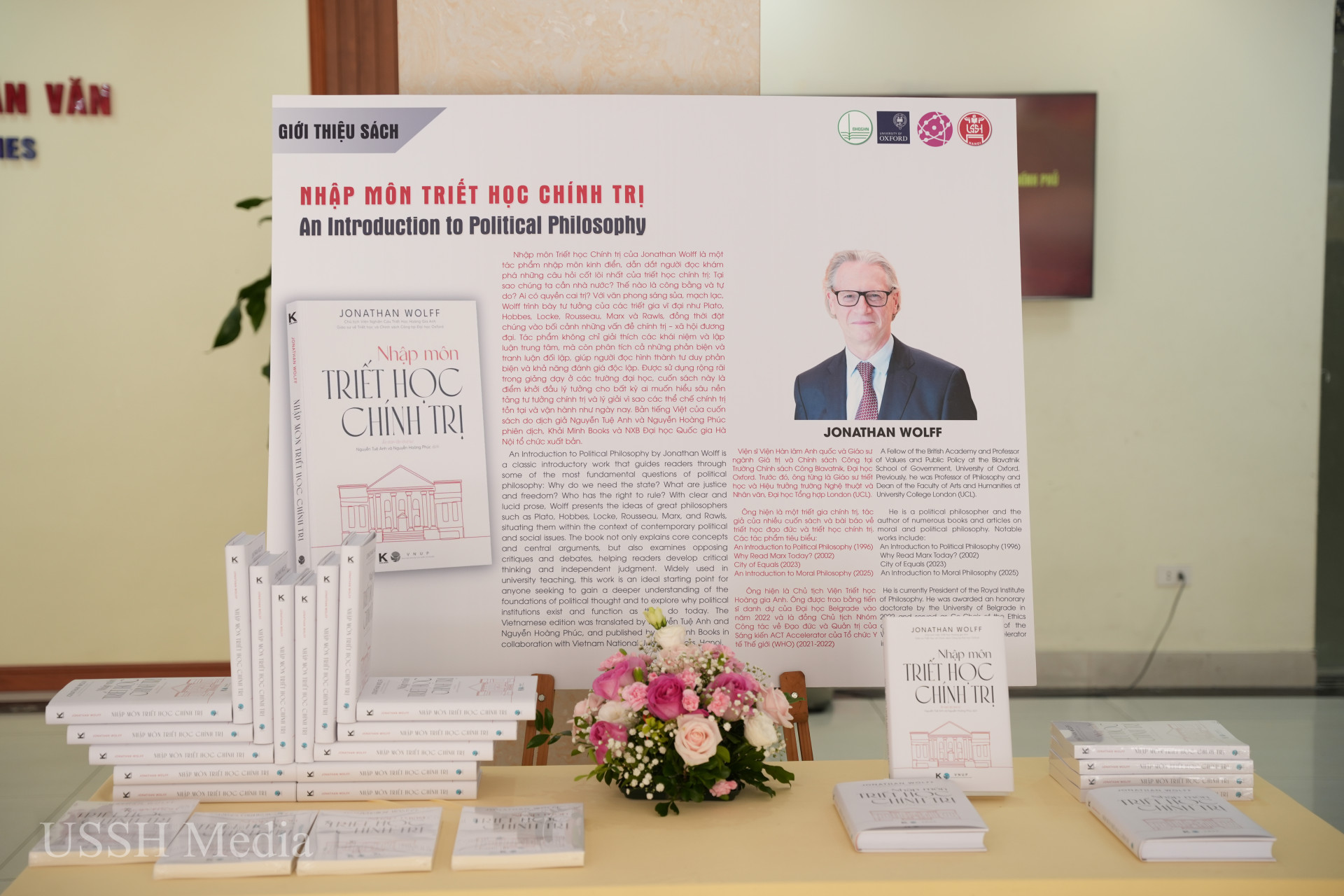
Introducing the book: "Introduction to Political Philosophy" - a bridge connecting knowledge to the public.During the seminar, Professor Jonathan Wolff's book "Introduction to Political Philosophy" was launched for the first time in Vietnam. Professor Wolff delves into the contradictions in the development process, such as the conflict between high economic growth and ensuring social equity, between market economic development and ensuring the quality of public services and social security networks, and the role of the State in guaranteeing and enforcing justice.
Associate Professor Dr. Nguyen Tue Anh (University of Greenwich, UK) introduces the book "Introduction to Political Philosophy," which she co-translated.
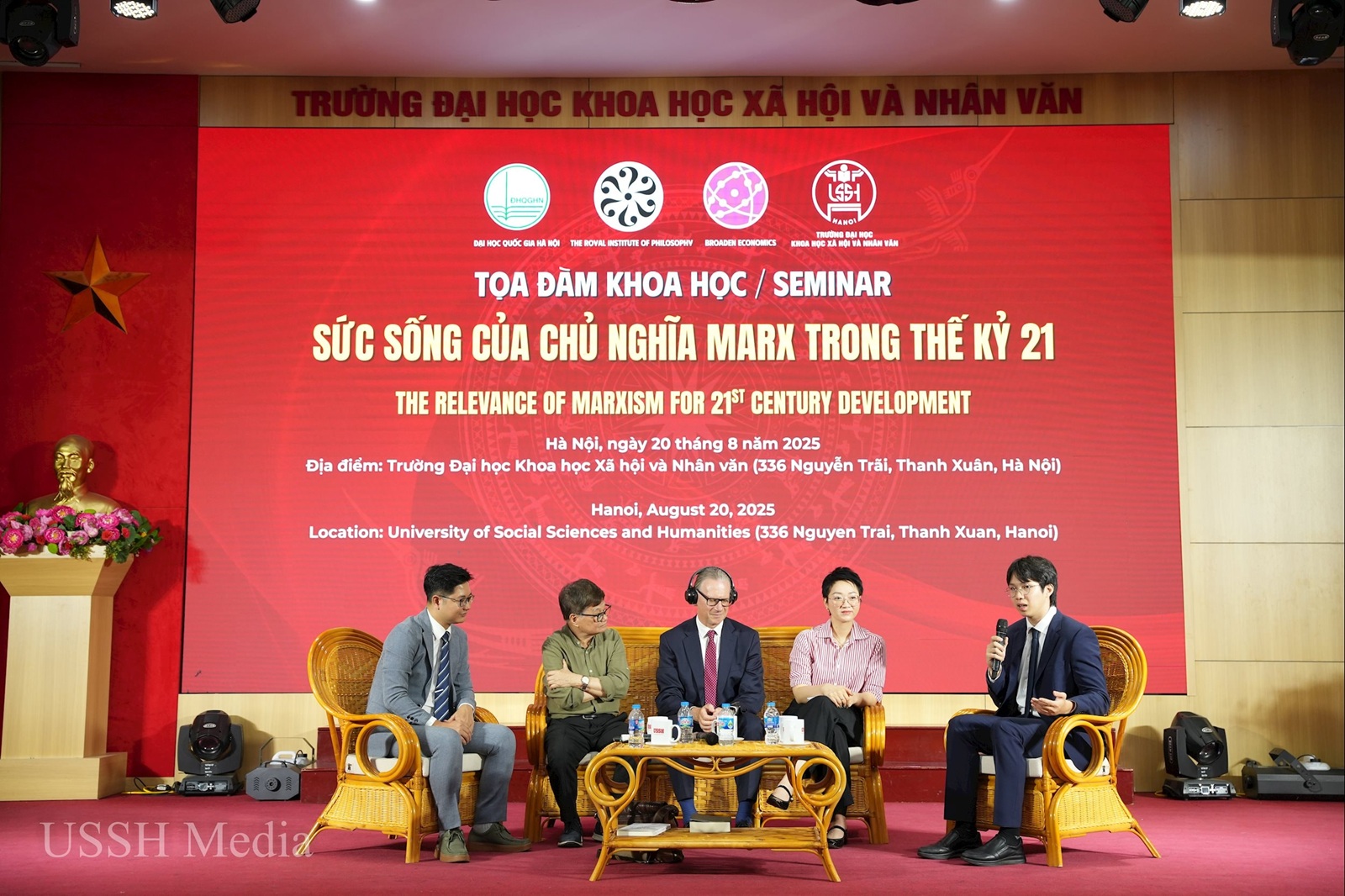
Scientists from the University of Social Sciences and Humanities participated in an open seminar with Professor Jonathan Wolff and scientists from Greenwich University and the Asia Pacific Regional Intellectual Property Organization.
The exhibition space displaying Professor Jonathan Wolff's book "Introduction to Political Philosophy" at the University of Social Sciences and Humanities, Vietnam National University, Hanoi. The book's particular value lies in the fact that it dedicates a significant space to presenting and analyzing the immense contributions of Marxism to the broader landscape of political philosophy. Instead of being isolated, Marx's ideas are placed in dialogue with other philosophers such as John Rawls (with his theory of justice) or Robert Nozick (with his individualistic liberalism). This approach not only helps readers gain a deeper understanding of Marxism but also reveals its influence and debates with other schools of thought, thereby affirming Marx's undeniable position in the flow of human thought.
For Vietnam, a nation steadfastly pursuing a socialist path with its own unique identity, discussing the vitality of Marxism is of particular importance. The seminar and the book offer valuable lessons on the creative application and development of Marxism in new conditions. It's not about mechanically applying rigid principles, but about mastering the methodology to solve the practical problems of the country. Issues such as building a rule of law state, developing a socialist-oriented market economy, ensuring social justice, or protecting the environment can all find profound insights from studying both Marxist theory and contemporary political and philosophical debates. Professor Wolff's book, therefore, is a valuable reference document, contributing to "providing insightful perspectives" for policy-making and planning, aiming towards building a "democratic, just, and civilized society."
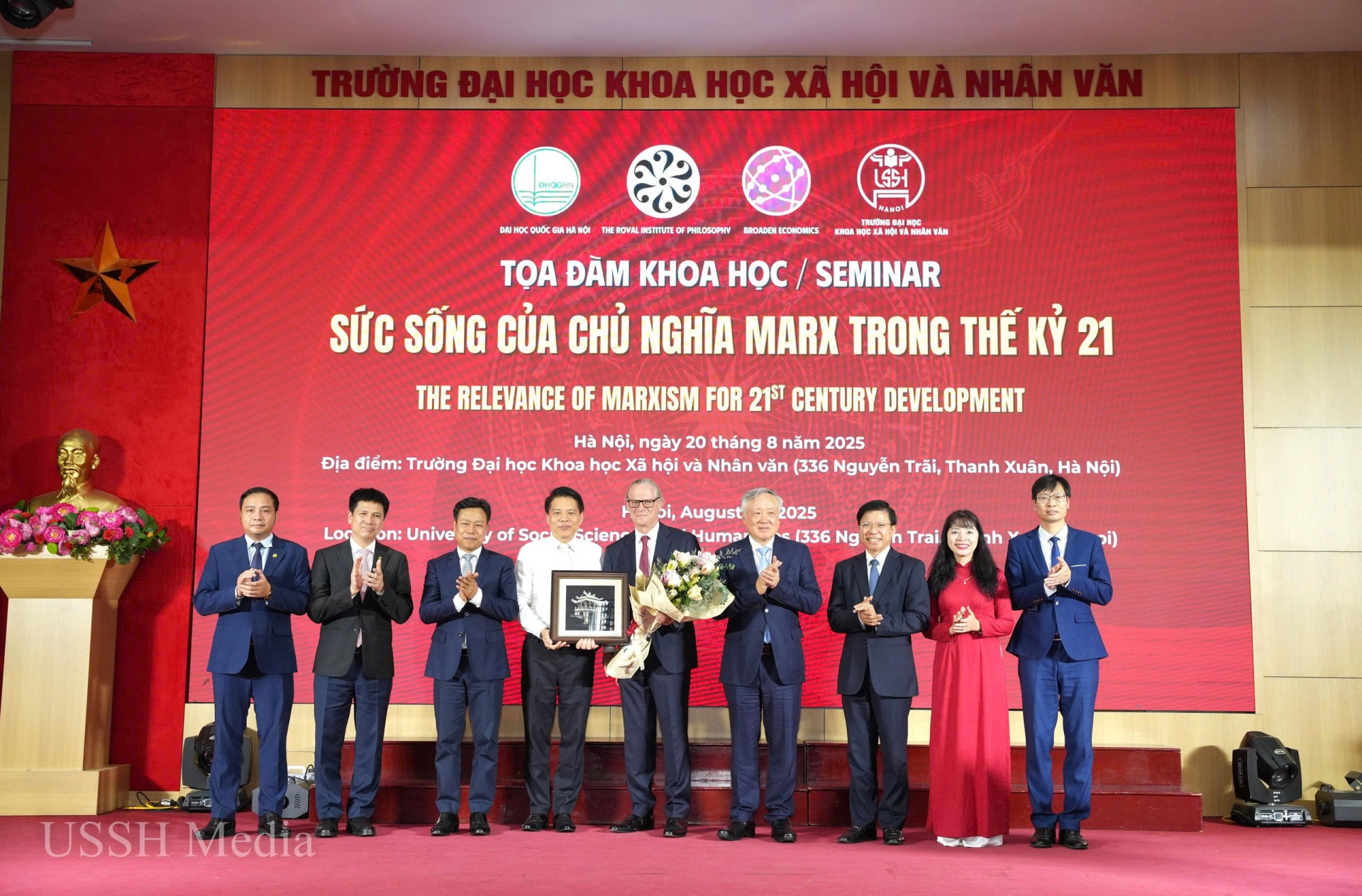
Deputy Prime Minister Nguyen Hoa Binh, leaders of Hanoi National University and the University of Social Sciences and Humanities respectfully presented a commemorative gift to Professor Jonathan Wolff.
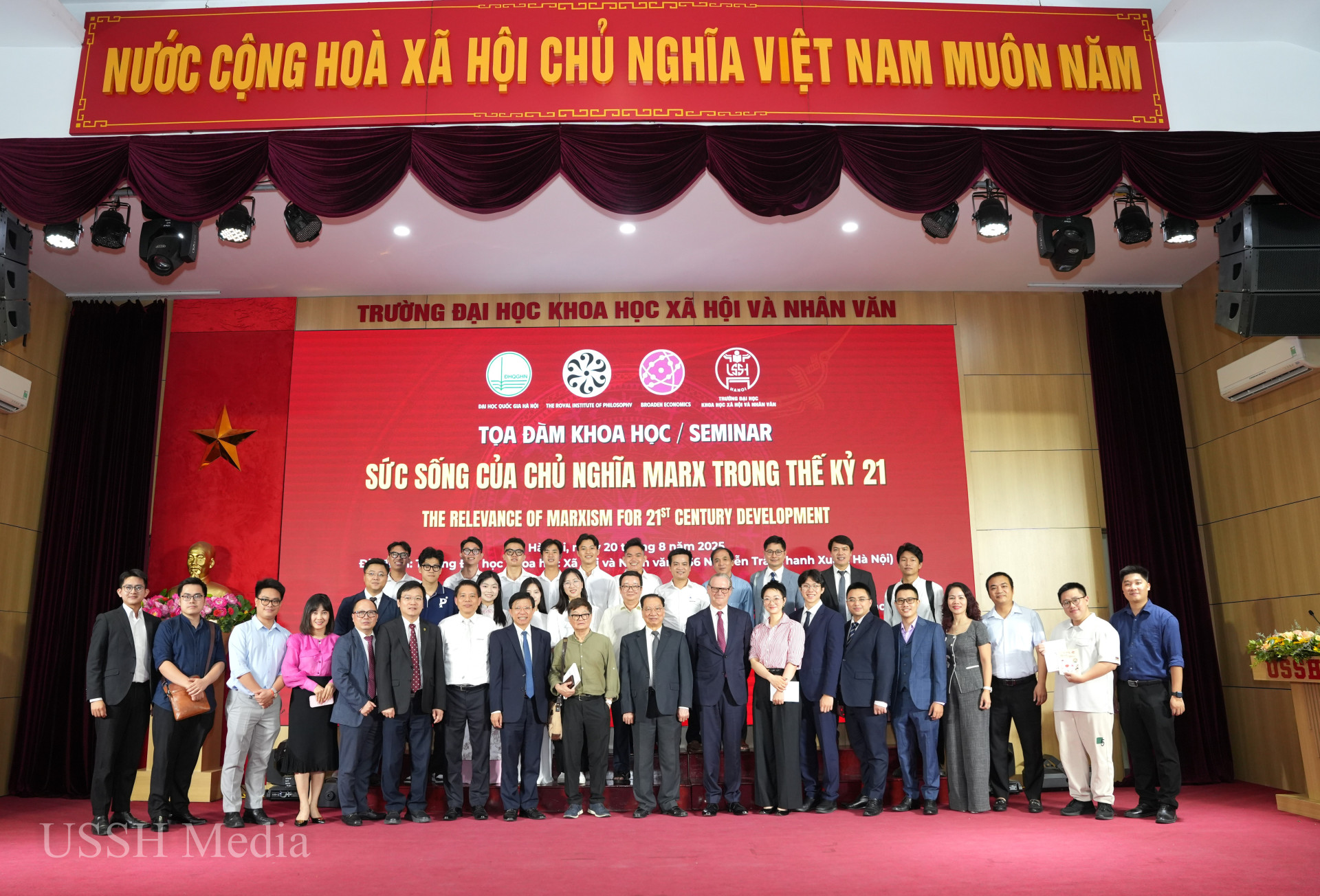
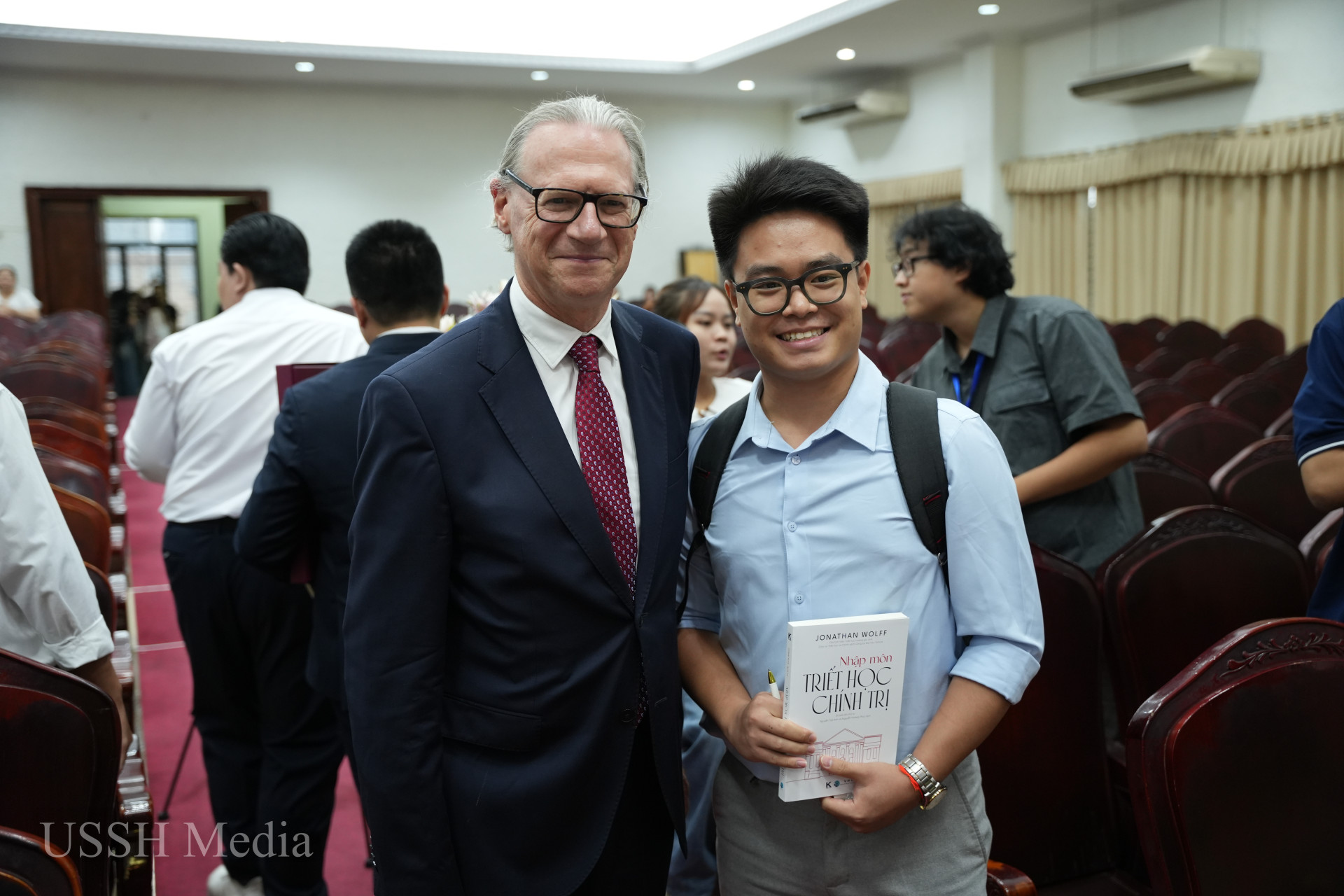
Professor Jonathan Wolff poses for a commemorative photo with the delegates in attendance. The symposium, "The Vitality of Marxism in the 21st Century," which introduced the book "Introduction to Political Philosophy," successfully sparked profound and practical academic discourse. The event not only affirmed Marxism's continued importance as a theoretical system capable of explaining and transforming the world, but also brought political philosophy—often considered abstract—closer to the public. Through multi-faceted dialogues, we see that the true vitality of a doctrine lies not in its immutability, but in its ability to dialogue, adapt, and continue to pose profound questions for humanity. In the turbulent 21st century, continued research, application, and creative development of Marxism, based on its scientific methodology, is key to solving global challenges and building a better future for all.
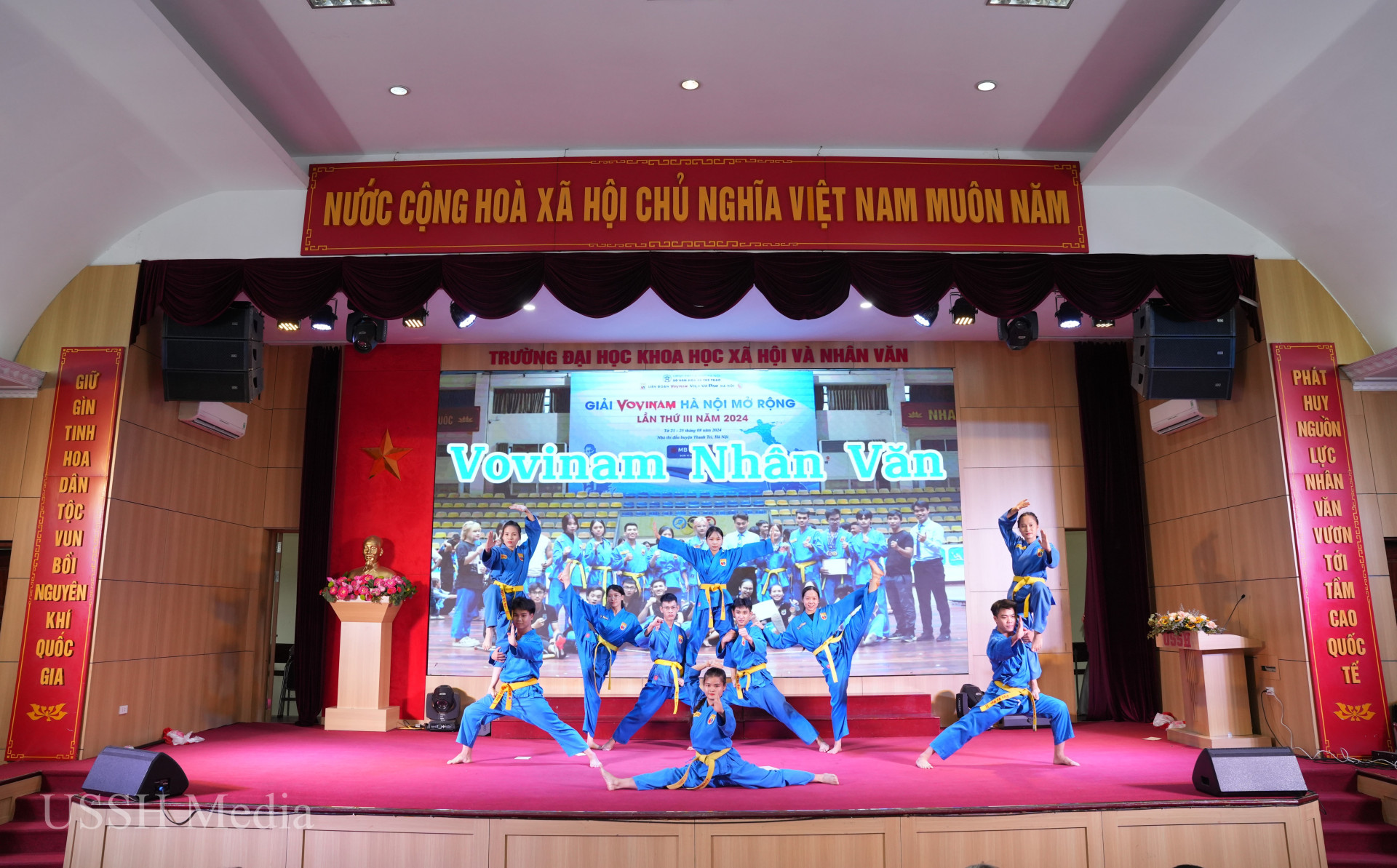
Here are some photos from the seminar held on August 20, 2025, at the University of Social Sciences and Humanities, Vietnam National University, Hanoi: