

This page commemorates the 80th anniversary of the school's tradition and 30 years of development.University of Social Sciences and Humanities

From Japanese Studies to Japanese Studies
As a student of the 26th cohort of the Faculty of History, Hanoi University, after graduating, he was retained by the university to work in teaching and research, and has been associated with Hanoi University and then the University of Social Sciences and Humanities from 1986 to the present.
With the country undergoing reforms and international relations becoming more open, considering himself part of a "lucky" generation, from 1990 to 1999, this young lecturer actively taught at the History Department while also working as a scientific assistant to Professor Phan Huy Le at the Center for Vietnamese Studies and Cultural Exchange (the predecessor of the Institute of Vietnamese Studies and Development Science, Vietnam National University, Hanoi today). It was within the academic environment of the Department of History and the Center that lecturer Nguyen Van Kim had the opportunity to learn from many renowned educators and scientists such as: Dinh Xuan Lam, Phan Huy Le, Tran Quoc Vuong, Ha Van Tan, Vu Duong Ninh, Phan Dai Doan, Nguyen Thua Hy, Nguyen Quoc Hung, Vu Minh Giang, Nguyen Quang Ngoc,... and at the same time meet and receive knowledge from international scientists, especially Japanese history and archaeology experts such as professors: Sakurai Yumio, Furuta Motoo, Kikuchi Seiichi, Momoki Shiro... The knowledge accumulated during his years of study in Vietnam and his time studying and researching in Japan (Kanazawa University, 1992-1993; Tokyo National University, 1995-1996 and 2000-2001), along with the serious attitude, passion for science, and high responsibility of Japanese scholars, as well as their historical thinking and research methods. The scientific achievements of the Japanese... motivated the young researcher to delve deeper into Japanese history, especially the modern period.
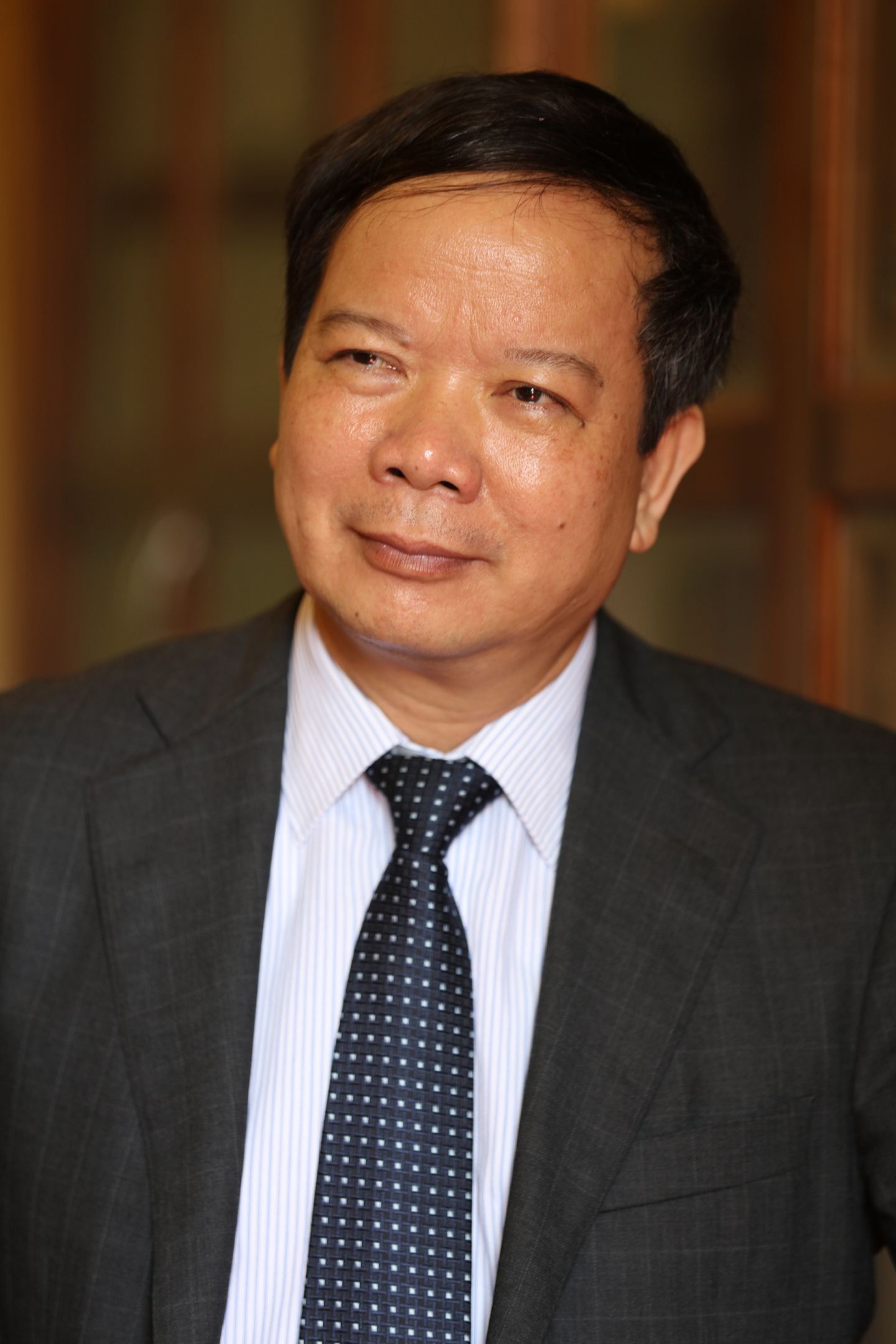
Professor, Doctor Nguyen Van Kim/Photo: Bui Tuan
With guidance and assistance from many Vietnamese and Japanese scientists, lecturer Nguyen Van Kim focused his research on the history of Japan during the Edo period (1600-1868), with a focus on the policy of isolationism.sakoku) which the Tokugawa Shogunate pursued. Doctoral dissertation.Japan's Closed-Door Policy During the Tokugawa Period - Causes and ConsequencesThis dissertation was successfully defended at Hanoi National University in 1999 under the guidance of Professor Vu Duong Ninh and with the professional advice of Professor Sakurai Yumio. The dissertation contributed to clarifying a question in the research community: why, and in what context, while pursuing a policy of isolationism, Japan still achieved fundamental and remarkable development. Thanks to this, in the 18th and 19th centuries, Japan escaped the common "historical destiny" of Asian nations: being conquered and enslaved by Western powers. Furthermore, Edo is considered the peak period of development for the Japanese feudal system. This was a pivotal stage, preparing the essential conditions and prerequisites for the establishment of the first modern state in Asia.
These fresh and bold insights and interpretations in the research work were highly appreciated by the Doctoral Thesis Examination Council and the Scientific Council for the Award of the Vietnam Historical Science Association. Dr. Nguyen Van Kim was honored to receive the award from the Vietnam Historical Science Association and the Pham Than Duyat History Award Fund.Second(No First Prize awarded, 2000) for outstanding dissertation. Along with that, the monograph developing from the dissertation, published by The World Publishing House in 2000, was praised by renowned historians such as Professor Phan Huy Le and Professor Sakurai Yumio as the first work written about the Japanese feudal system, contributing to building the foundation for the field of Japanese studies, which was very new in Vietnam at that time.
In the years that followed and up to the present day, Professor Nguyen Van Kim has continued his research on Japan, but the scope of his research has broadened to include Japan within the context of international relations and trade in the 16th and 18th centuries. He has repeatedly shared with his students and colleagues that the focus of research on Japanese history should be on the following issues:sakokuThe international relations of the Edo government laid the fundamental knowledge base for further expansion and development of later research directions. In fact, the treatises he later wrote on Japan demonstrated a profound vision and deep understanding of the subject matter. Through this, the author also quickly grasped and boldly offered summaries and assessments of Japan's unique development path and model, in comparison with the common and distinct historical and cultural characteristics of other Asian and European countries.
Establish the "Asian Trade Research" group.
In the late 1990s, upon being entrusted with the responsibility of heading the Department of World History, he recognized the need for fundamental changes in research and training orientation to adapt and integrate with the general trends of the academic environment in the region and the world. In a country still facing many difficulties like Vietnam, with extremely limited human and material resources, as Deputy Head and then Head of the Department, Dr. Nguyen Van Kim boldly proposed several new research directions and fields, and quickly developed a plan for focused research and training at all three levels: undergraduate, master's, and doctoral. The main principle stated and defined was: "Research in World History must originate from Vietnam's position, placed within the context of and for the benefit of Vietnam."
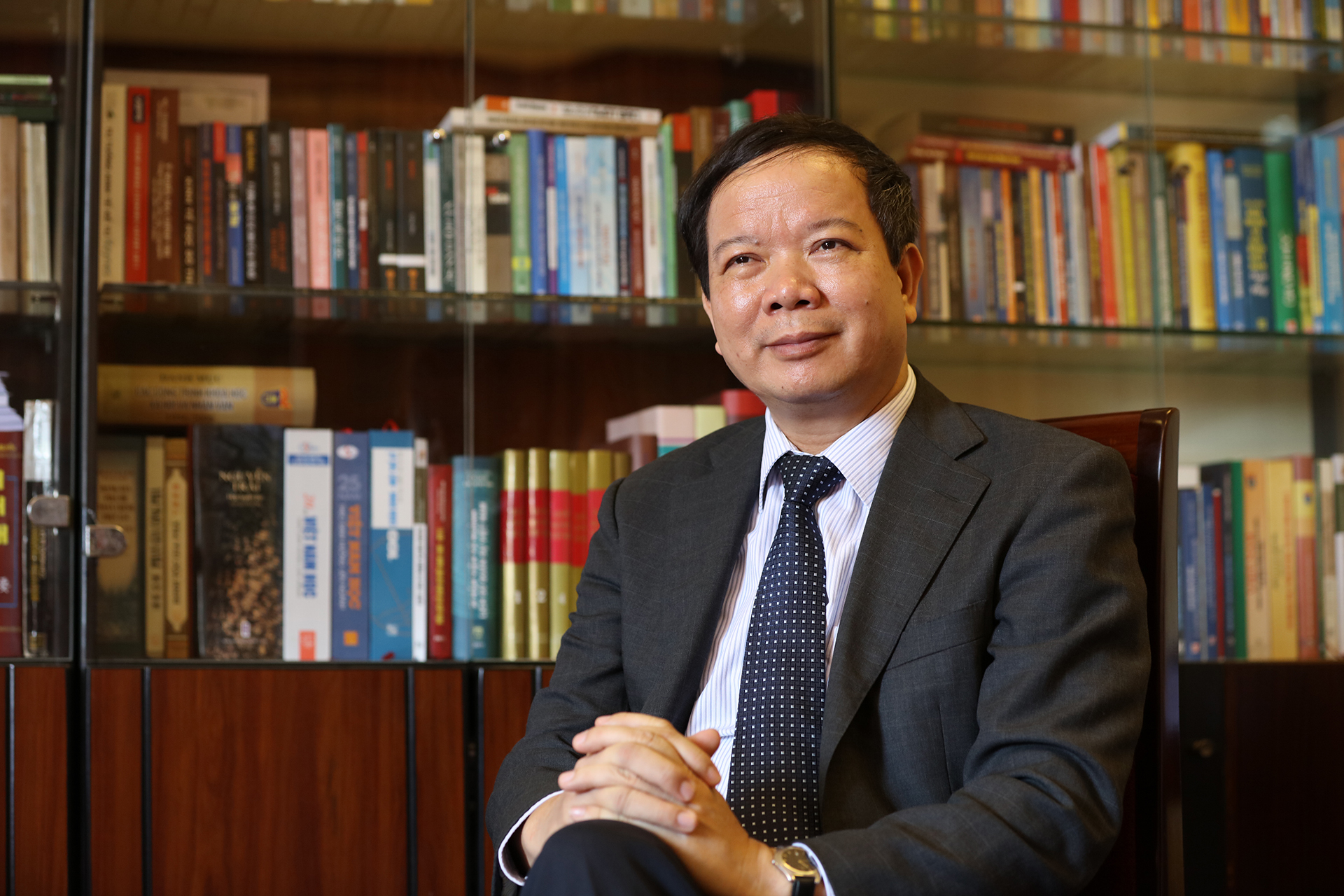
Professor Dr. Nguyen Van Kim is the Party Secretary and Vice Rector of the Hanoi University of Social Sciences and Humanities. (Photo: Bui Tuan)
With his knowledge and professional sensitivity, Professor Nguyen Van Kim always thinks, explores, and constantly encourages students, graduate students, and doctoral candidates to choose and delve into issues that remain unclear points and gaps in the understanding of researchers both domestically and internationally, and which are of international interest. Recognizing the outstanding achievements of researchers in the history of resistance against foreign invaders and in the fields of rural areas, agriculture, and farmers, he initiated the formation of a research group comprising young lecturers, staff, and students, determined to pursue a new research direction on the East Sea, particularly the issue of maritime trade and diplomatic relations between Vietnam and other Asian countries. This decision demonstrates the vision and profound sensitivity of a professional educator and researcher.
In 1999, based on a number of members of the Department of World History, Faculty of History,Asian Trade Research Group(Group of Asian Commercial StudiesThe research group, initiated by Dr. Nguyen Van Kim, was established. After 15 years of development, in 2014, the group was one of the first 14 "Strong Research Groups" to be honored with a Certificate of Merit from the Director of Vietnam National University, Hanoi. In 2015, the group was further recognized as one of the 21 "Strong Research Groups" of Vietnam National University, Hanoi.
The group regularly receives dedicated advice, assistance, and effective support from the University of Social Sciences and Humanities, as well as many reputable scientists at major universities and academic centers both domestically and internationally. This research orientation is increasingly affirmed as contributing to clarifying the typical characteristics of Vietnam's history, culture, and position as a coastal nation. Vietnam has a long-standing maritime culture, a maritime-oriented mindset, the capacity to exploit the sea, and ancient communities that early on ventured out to conquer and control coastal areas, islands, and even oceanic archipelagos such as Hoang Sa and Truong Sa...
Looking back over more than 15 years of building and development, a journey that is not too long for implementing a research direction, but the professor and members are always proud to have overcome many obstacles and difficulties.Asian Trade Research GroupWe have built a research team spanning multiple generations. The bonds between teachers and students, colleagues, and the genuine trust and affection shared within the group, like a family, along with the shared challenges and difficulties in research and life, have become sacred values of the Group.
With 30 years of professional experience, Professor has always believed that selecting, building, and developing research resources, especially key members who are passionate about their work, is a vital factor for the survival of the Group. To this day, many members of the group understand Professor's determination to establish the research direction, but they still cannot fully comprehend why, back in the 1990s, when resources for research and development were scarce and understanding of the sea and the role of the marine economy was limited, he still made such a decision. As a result, he pioneered the building of a strong research group with many mature members. First and second-generation members are now working in universities, research institutes, and management agencies, making significant contributions to research, training, and knowledge dissemination at the central and local levels.
As his students, we always feel secure and proud that during our initial, uncertain days after graduation, Professor Nguyen Van Kim was always there to support, encourage, and motivate us to excel in life and work. We believe in him, in his enthusiasm, his perspective on scientific issues, and his determination to pursue the research directions he has taught us. With the support of him and our colleagues in the group, each member of the Department and the group also gains more strength to complete research tasks, to embark on exploring the lands, trading ports, sources of goods, and the diverse and multifaceted relationships that have occurred throughout Vietnamese history.
In terms of research, some of the works that he has participated in organizing, compiling, or editing include:Japan and Asia - Historical Connections and Socio-Economic Transformations,Vietnam in the Asian trade system of the 16th-17th centuries, Japan's relations with Southeast Asia in the 15th-17th centuries, The Vietnamese people and the sea.,Van Don - Vietnam's international trading port. Vietnam in the East Asian World - An Interdisciplinary and Regional Studies Approach,Vietnam - A tradition of maritime economy and culture…These works have received much attention from researchers, administrators, and society. Through these works, the maritime economic tradition, the history of maritime trade, the maritime-oriented mindset, and the extensive diplomatic relations of the Vietnamese people have been affirmed. For the Group Leader, The growth of each team member and their contributions and professional discoveries (however small) in the research are always a source of joy and pride.,the most important and meaningful achievement.
Over three decades dedicated to research and teaching, Professor Dr. Nguyen Van Kim has supervised dozens of undergraduate students in their graduation theses, and 32 graduate students and 4 doctoral candidates have successfully defended their dissertations/dissertations. To date, he has published over 150 research papers and books, both jointly and individually, domestically and internationally, such as:Japan-Vietnam cultural exchange in the modern era: Japanese street and ceramics exchange.(Japanese, 2002), Lion and Dragon: Four Centuries of Dutch - Vietnamese Relations(Dutch and English, 2007)The Formation of the “Oceanic Network” in East Asia before the Opening of Ports and Subsequent Developments: Focusing on Hoi An(English, 2010)Asian Comparative Folklore(Korean and English, 2011)Researching the history of cultural exchange between Korea and Asia in the modern era.(Korean, 2013),Tradition and Trade Activities of the Vietnamese(English, 2013)Early modern Southeast Asia, 1350-1800(English, 2015)Van Don - An International Sea Port of Dai Viet(English, 2015)… Professor Dr. Nguyen Van Kim also chaired and participated in many national-level, ministerial-level, and equivalent scientific research projects. He has received numerous awards and prizes for scientific research from Vietnam National University, Hanoi and other management agencies.
Passionate and dedicated to science, Professor Dr. Nguyen Van Kim is also gratefully regarded by many generations of students as a teacher wholeheartedly devoted to the cause of educating people. He always showed the utmost affection for his students. Many students were "discovered" by him in their first or second year of study, and under his guidance and mentorship, they gradually matured and became lecturers at universities, researchers at institutes and scientific and administrative agencies.
Over the years, despite his busy administrative duties, Professor Nguyen Van Kim has always made time to research and analyze source materials, perfecting his articles, works, and research projects. He always believes that only through research can one teach effectively and profoundly. And only through in-depth research can one "ignite" enthusiasm and scientific thinking in students, graduate students, and doctoral candidates. With his persistent work ethic, creative ability, and meticulous work ethic, he continues to regularly publish scientific works and actively participate in guiding students, graduate students, and doctoral candidates. For Professor Nguyen Van Kim, his love for teaching, scientific research, passion for innovation, and high sense of responsibility in training and developing staff remain as strong as when he first started his career.
|
PROFESSOR, DR. NGUYEN VAN KIM
+ Workplace: Department of History. Board of Directors. + Management position: Head of the Department of World History, Faculty of History (2004 to present). Deputy Head of the Department of History (2000-2009). Vice Rector of the University of Social Sciences and Humanities (2009 to present). Secretary of the Party Committee of the University of Social Sciences and Humanities (April 2015 to present).
1.Japan's closed-door policy during the Tokugawa period - Causes and consequences.World Publishing House, 2000. 2.Japan's relations with Southeast Asia in the 15th-17th centuries,Hanoi National University Publishing House, 2003. 3.Vietnam in the Asian World - An Interdisciplinary and Regional Studies ApproachNational Political Publishing House, 2011. 4.Vietnamese people and the sea(Editor), The World Publishing House, 2011. 5.Van Don - Vietnam's international trading port., National University of Hanoi Publishing House, 2014.
+ Second Prize (no First Prize awarded) from the Vietnam Historical Science Association and the Pham Than Duyat History Award Fund for the workJapan's closed-door policy during the Tokugawa period - Causes and consequences.. + Award for Outstanding Scientific Work of Hanoi National University in 2007 for the workReform movements in some East Asian countries in the mid-19th and early 20th centuries (edited by Professor Vu Duong Ninh). + Certificates of merit for the Team Leader and membersGroup Studying the history and trade relations of AsiaPart of the "Vietnam National University Hanoi Strong Research Group in 2014". + Award for Outstanding Scientific and Technological Work of Hanoi National University in 2014 for the workVan Don – Vietnam's international trading port.. |
Author:Nguyen Pham