The curriculum taught by Mr. Nguyen Loc isVietnamese literature in the late 18th and early 19th centuriesApproximately 60 lessons. When we were studying, this curriculum was still being written by the professor. In 1973-1974, I wrote my thesis (second semester, third year) and my graduation thesis (then called a thesis, recently renamed a graduation thesis) under his guidance. Sometimes he would invite me to the Institute of Social Sciences Information (26 Ly Thuong Kiet Street) to give feedback and make corrections to my still very immature writing. I saw him diligently processing old documents, books, and newspapers, including the Han Nom books that were still stored in the library at that time (I also frequently met Professor Dinh Gia Khanh reading books at this address). The bookVietnamese literature in the latter half of the 19th centuryNguyen Loc's work was published earlier, in 1974, while Volume I of the series...Vietnamese literature in the late 18th and early 19th centuriesFirst published in 1976, Volume II was published in 1978 by the University and Vocational High School Publishing House, edited by Mr. Luong Van Dang. Thousands of pages of meticulously written work by him and other teachers in the department represent a typical achievement of more than a decade of research on classical literature before 1975.
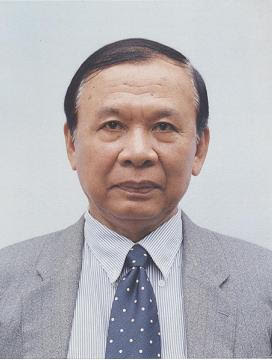
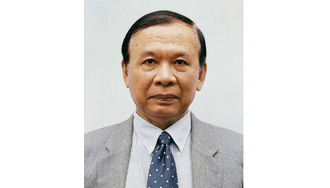
Associate Professor, Distinguished Teacher Nguyen Loc
It must be said that writing a history of Vietnamese literature up to the 1970s was not entirely a new endeavor. The books...OutlinegoodGrassThese books were compiled by earlier researchers starting in the early 1960s. However, due to various reasons, primarily the fact that the translation of medieval poetry and literature in the 1960s was still in its infancy, the comprehensiveness of literary materials in the aforementioned books was limited. Furthermore, the theoretical foundation and research methods for literary history were not readily available. It can be said that from the mid-1960s, the Faculty of Literature, Hanoi University, had a very sound investment strategy in translating and annotating medieval poetry and literature, as well as foreign books on literary theory and research methods. Translations such as...The origins of the novel(Kojinov)A Brief History of China(Lu Xun)History of Chinese Literary Criticism(Guo Shaoyu)Wenxin Diaolong(Liu Xie)Poetic art(Aristotle)Poetics of Classical Russian Literature(Likhachiov) etc. and etc. have provided significant support to the research and teaching work of the teachers. Professor Loc and the teachers in the Department of Classical-Modern-Folk Literature (and generally the teachers in other departments), by utilizing the achievements of translating Sino-Vietnamese literature, have been able to adopt the theoretical achievements and research methods of literary history from around the world; especially through their diligent work and talent, they have completed a textbook on the history of Vietnamese literature that still retains its scientific value and international stature to this day.
Looking at the number of published works by Professor Nguyen Loc, it's easy to see that he wrote few articles or journals, although from very early on, in 1957 and 1958, he wrote on...Journal Literature, History, GeographyThere were a few articles by him before. At that time, he was in his twenties, not yet in university, working as a Chinese translator at the Central Party's International Affairs Steering Committee. Nine years later, he wrote again.Regarding the characters' language in The Tale of KieuaboveLiterature Magazine.It wasn't until almost 20 years later that the teacher posted another article.Literature MagazineWe discussed the periodization of literary history. I remember that since being retained to teach in the same department as him, I happened to learn that the reason he rarely published articles in this specialized journal was due to a personal reason related to a certain high-ranking official in charge of the journal.
But every cloud has a silver lining. Today, our generation of young researchers spends the whole year spreading our energy and time across various conferences and seminars, so very few produce works of the same academic scale and scope as Professor Loc's generation. Because he was less distracted by trivial activities and focused solely on his research, Professor Loc left behind several thousand pages of valuable writings. Among the dozens of books that Nguyen Loc published, five major works of high academic value must be noted:Vietnamese literature in the latter half of the 19th century(University and Vocational High School Publishing House, 1971, reprinted 1976);Vietnamese literature in the late 18th and early 19th centuries(2 volumes, University and Vocational High School Publishing House, 1976, 1978);Tay Son literature(Nghia Binh Department of Culture and Information, 1986 and reprinted by the Social Sciences Publishing House) (Anthology of Vietnamese Literature, volumes 9A and 9B, 1993);Vietnamese traditional opera art(Culture and Information Publishing House, 1994) andDictionary of Vietnamese Traditional Opera(Editor, Social Sciences Publishing House, 1997). For him, writing about Tay Son literature and traditional Vietnamese opera (Tuong Hat Boi) was not just an academic matter, but also a sacred act of gratitude from a son of the Central region of Vietnam living in the North.
Reading through Nguyen Loc's works, one can easily see one thing:judgment The literary criticism is very subtle and insightful. with theory and methods new, modern researchAny author or work within the scope of his research is illuminated by his insightful observations. Nguyen Loc rejects the simplistic, facile, and somewhat vulgar sociological writing style that some contemporary scholars have fallen into. He confided in me about his principle of seeking and highlighting the essence of an author or work, combining the inspiration of a critic with the capabilities of a researcher inclined towards generalization. This writing style, while seemingly simple at first glance, is not easy to emulate. Professor Loc often uses the image of a rice sifter to compare his research work. The rice sifter holds a sieve full of rice and chaff in both hands, slightly tilting it to one side (the dominant hand raised higher than the other), rotating it several times to collect the chaff, some unhulled grains, and impurities in the middle of the sieve, then scoops them away, leaving only the rice grains. Then, the rice is pounded in a mortar until white, and finally, the rice mixed with bran is poured into a sieve and sifted as if sifting, allowing the bran to fall into a winnowing basket, resulting in clean rice. Researchers also have to sift through the bran and impurities mixed in with the rice to extract the purest grains. The ability to distinguish what is secondary, what is bran and impurities, from what is the essence and core from a large body of work is a criterion for evaluating a researcher's talent. Professor Loc often told me about the image of a ball of yarn: a skilled weaver can knit a beautiful sweater from a 500-gram ball of yarn, but a clumsy weaver will leave the yarn tangled, even though it still weighs 500 grams, without any recognizable shape.
It can be said without exaggeration that he was the first to summarize the fundamental characteristics of Vietnamese literature from the 18th to the first half of the 19th centuries by comparing them with previous literary periods, using concise, firm, confident, and easy-to-remember summaries: the fundamental characteristics of literature in the 10th-15th centuries areaffirming national identity;The fundamental characteristics of literature from the 16th century to the first half of the 18th century are:affirming the feudal state;And the fundamental characteristics of literature in the latter half of the 18th century and the first half of the 19th century are:to discover humanity and affirm the true values of humankind.Professor Nguyen Loc's arguments are usually very clear, concise, and solid, reflecting the confidence of someone who has grasped the essence of the subject being described. Regarding Ho Xuan Huong, he envisioned her as a poet of women, a satirical poet, and a lyrical poet who loved life; regarding Cao Ba Quat, he summarized him as a poet with strong character, a soul full of empathy and love. The subheadings he presented on Nguyen Du were the result of a process of sifting through the creative works of this great poet. He offered insightful and concise observations on Nguyen Du's classical Chinese poetry on historical themes, clearly distinguishing it from the dry, historical narratives of Confucian scholars... In general, Nguyen Loc is among the few researchers capable of seamlessly combining theoretical thinking and refined textual criticism. His writing and teaching style is a model I have silently emulated for many years in university lectures, though unfortunately, it is difficult to emulate him.
Professor's works are undoubtedly superior in many aspects compared to many current doctoral dissertations. Unfortunately, due to a rather rigid policy in the 1980s, professors were required to defend their published works to receive their doctoral degrees. While most researchers and professors at the Institute of Literature and the two universities (General University and Pedagogical University) accepted this requirement, my professors in the same department, such as Professors Tran Dinh Huou, Nguyen Loc, Chu Xuan Dien, and Bui Duy Tan, absolutely refused to accept this formality (Professors Hoang Nhu Mai, Nguyen Loc, and Tran Huu Ta even invited Minister Tran Hong Quan to the headquarters of the Ho Chi Minh City Association for Literary Research and Teaching to question this unscientific practice, but unfortunately, nothing changed). And without a doctoral degree, one cannot be awarded the title of professor. That's why these professors, a senior generation with so many scientific and educational achievements, only reached the rank of Associate Professor. I don't know if they've changed that very formal and rigid policy they once had towards these professors. But ultimately, it doesn't mean much to them, because from the beginning, they made their own choice. They valued substance over superficiality. I learned that a few years ago, the University of Social Sciences and Humanities in Ho Chi Minh City proposed that Professor Loc apply for the title of People's Teacher, but he didn't. It seems Professor Chu Xuan Dien did the same. We young colleagues in the Ancient-Modern-Folk Studies Department, Faculty of Literature, Hanoi University, such as Tran Ngoc Vuong, Nguyen Hung Vy, and myself, were fortunate to work and study alongside Professors Dinh Gia Khanh, Tran Dinh Huou, Bui Duy Tan, Nguyen Loc, and Chu Xuan Dien – serious and self-respecting scientists.
Incidentally, we should also mention royalties in the past. In short stories...A person from HanoiNguyen Khai, Mrs. Hien's husband, wrote textbooks published between 1946 and 1954. With the money from book sales, he bought two houses in Hanoi. Mr. Loc once revealed to me that the royalties from the book...Vietnamese literature in the latter half of the 19th centuryWith the money from selling a bicycle and a radio-cassette player, he bought a two-room apartment on the first floor of building D1 in the Nguyen Cong Tru residential complex (before that, his family lived in the school's residential complex in Lo Duc - now Cam Hoi alley). He recounted that when he moved to Ho Chi Minh City, he sold that apartment for about five or six gold bars (a considerable sum). Nowadays, with books published in quantities of around 500 to 1000 copies, the royalties are at most two or three gold bars. From the 1990s to the present, Mr. Loc's books have been continuously reprinted. This time, he combined both sets into one very thick volume and gave it a title.Vietnamese literature from the latter half of the 18th century to the end of the 19th century.Each subsequent edition was printed in quantities of up to 3000 copies (by June 2012, it had been reprinted 9 times). One might think this is some compensation for the hard work the professor put in, though it's still not entirely deserved, especially compared to today's multi-billion dollar scientific projects.
Since Professor Nguyen Loc transferred to the Faculty of Literature at Ho Chi Minh City University, I've had few opportunities to meet him. I only know that he began participating in social activities. Besides being the head of the Faculty of Literature, he also co-founded the Ho Chi Minh City Association for Literary Research and Teaching with Professor Hoang Nhu Mai and other professors. He was also a key founding member of Van Hien University – the first private university specializing in social sciences. But with the honest and straightforward character of a scientist, he sometimes encountered "accidents" in these social activities. Was it a case of "beauty and virtue being tainted" or the harsh realities of life that a true scientific researcher might not fully understand? Once, when I visited him, I told him: "You can only work in a clean environment." Many times I regretfully think: if only he had continued researching and writing, we would surely have received even more high-level scientific works.
|
Associate Professor, Distinguished Teacher Nguyen Loc
+ Workplace: Faculty of Literature, Hanoi University. + Management position: Head of the Department of Classical-Modern-Folk Literature (Vietnamese Literature), Faculty of Linguistics and Literature.
1.Vietnamese literature in the latter half of the 19th century,University and Vocational Training Publishing House, 1971; reprinted 1976 2.Vietnamese literature in the late 18th and early 19th centuries(2 volumes), Publisher University and Vocational College, 1976, 1978; reprinted 1992. 3.Nguyen Du, the man and his life,Da Nang Publishing House, 1985; reprinted 1990. 4.Poems by Ho Xuan Huong(Research and introduction), Literature Publishing House, 1985. 5.Lament of the Royal Concubine(Research and introduction), Literature Publishing House, 1986. |
Author:Assoc. Prof. Dr. Tran Nho Thin

